
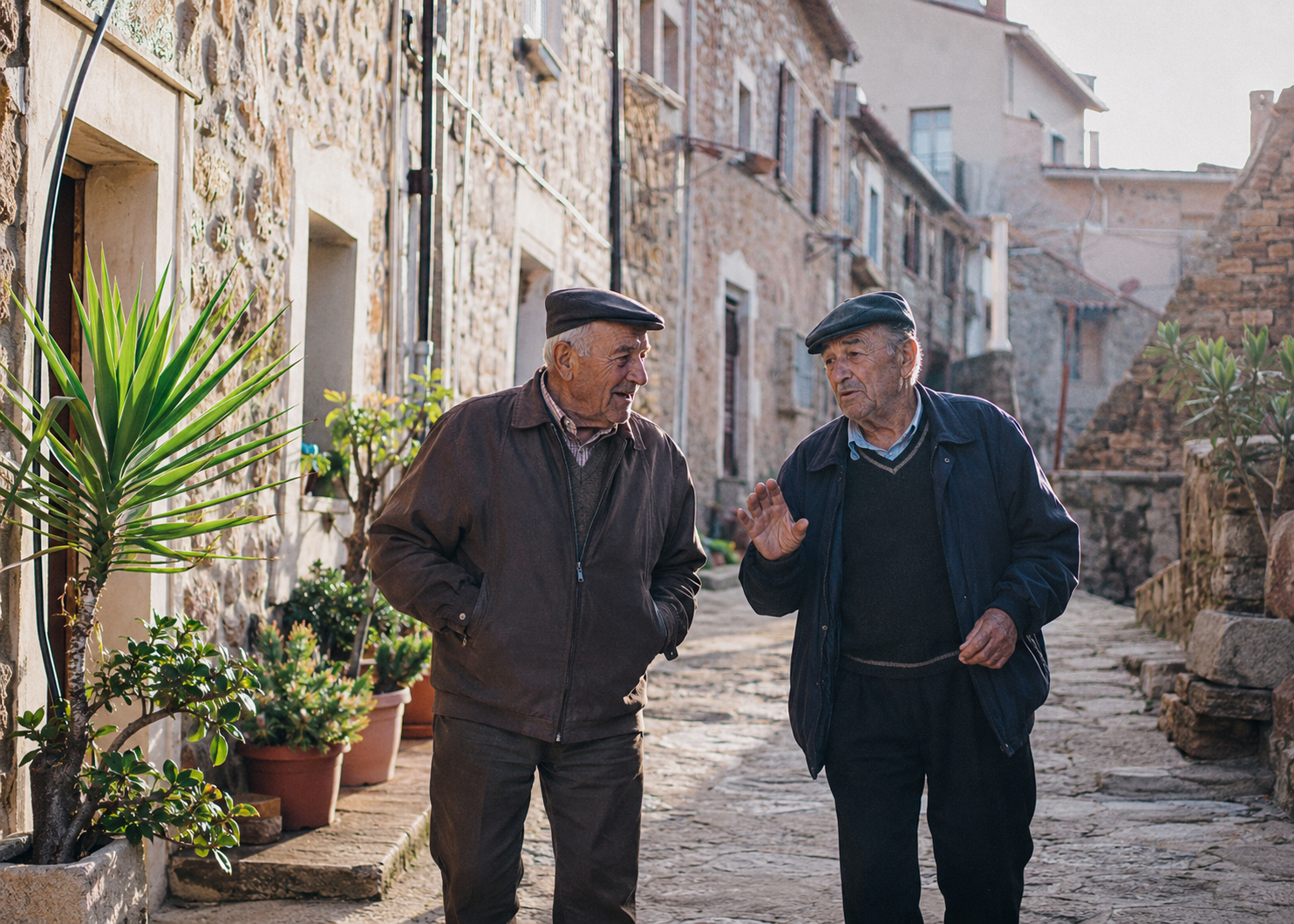
In the mountainous heart of Sardinia, in a cluster of villages in the central-eastern highlands, men live to be a hundred at a rate found almost nowhere else on earth, and this is the genuinely remarkable part, they do so at nearly the same rate as women. Almost everywhere in the world, female centenarians vastly outnumber male ones, often by four or five to one, but in this corner of Sardinia the ratio is close to even, an oddity striking enough that researchers gave the region a name, the Blue Zone, and have spent decades trying to understand what is going on. The answer, as far as anyone can tell, is not a single magic bullet but a way of life, and at the center of it is a daily habit that modern Americans have very largely abandoned.
Before going further, honesty requires a note, since the Blue Zone idea, popular as it is, has drawn real scientific scrutiny in recent years, with some researchers questioning the quality of the age records that underpin the longevity claims, and the debate is genuine and unresolved. So this piece treats the Sardinian story not as settled gospel but as a well-studied and plausible case with real questions attached, and draws from it not a guaranteed formula but a reasonable and well-supported lesson about how the way people live may shape how long and how well they live. With that said, here is what the Sardinian case actually shows, the daily habit at its heart, and what an American might honestly take from it.
What Sardinia Actually Shows
It helps to be precise about what the Sardinian Blue Zone is and what makes it remarkable, since the specifics matter.
The Sardinian Blue Zone is a specific area, the mountainous central-eastern part of the island, particularly the province of Ogliastra, identified by researchers in a study called AKEA, from a Sardinian toast meaning may you live to a hundred, as having an unusual concentration of people who reach extreme old age. What makes it especially notable to researchers is the male longevity, since in this zone the ratio of male to female centenarians is close to one to one, against a national Italian ratio of roughly one man to four or five women, an unusual prevalence of very old men that suggests something in either the environment or the genes of this place favors male longevity in a way found almost nowhere else. This male-centenarian phenomenon is the distinctive signature of the Sardinian Blue Zone, the thing that first drew the researchers and that still puzzles them, the old men of the highlands living on at a rate that defies the usual pattern.
The region’s isolation is part of the story, since the central Sardinian highlands have long been a relatively isolated, genetically distinct population, with little immigration and a traditional way of life persisting longer than in more connected places, which gives researchers both a possible genetic explanation, rare longevity-favoring variants concentrated in an isolated population, and a preserved traditional lifestyle to study. Whether the longevity owes more to the genes or the lifestyle is part of the ongoing debate, likely both, but the lifestyle is the part that might transfer to others, the part worth examining, since genes cannot be borrowed but habits can. The Sardinian Blue Zone, then, is a specific isolated highland region notable above all for its very old men, studied for decades for the secrets of its longevity, and it is to the lifestyle, the transferable part, that we should look for any lesson.
The Daily Habit At The Center
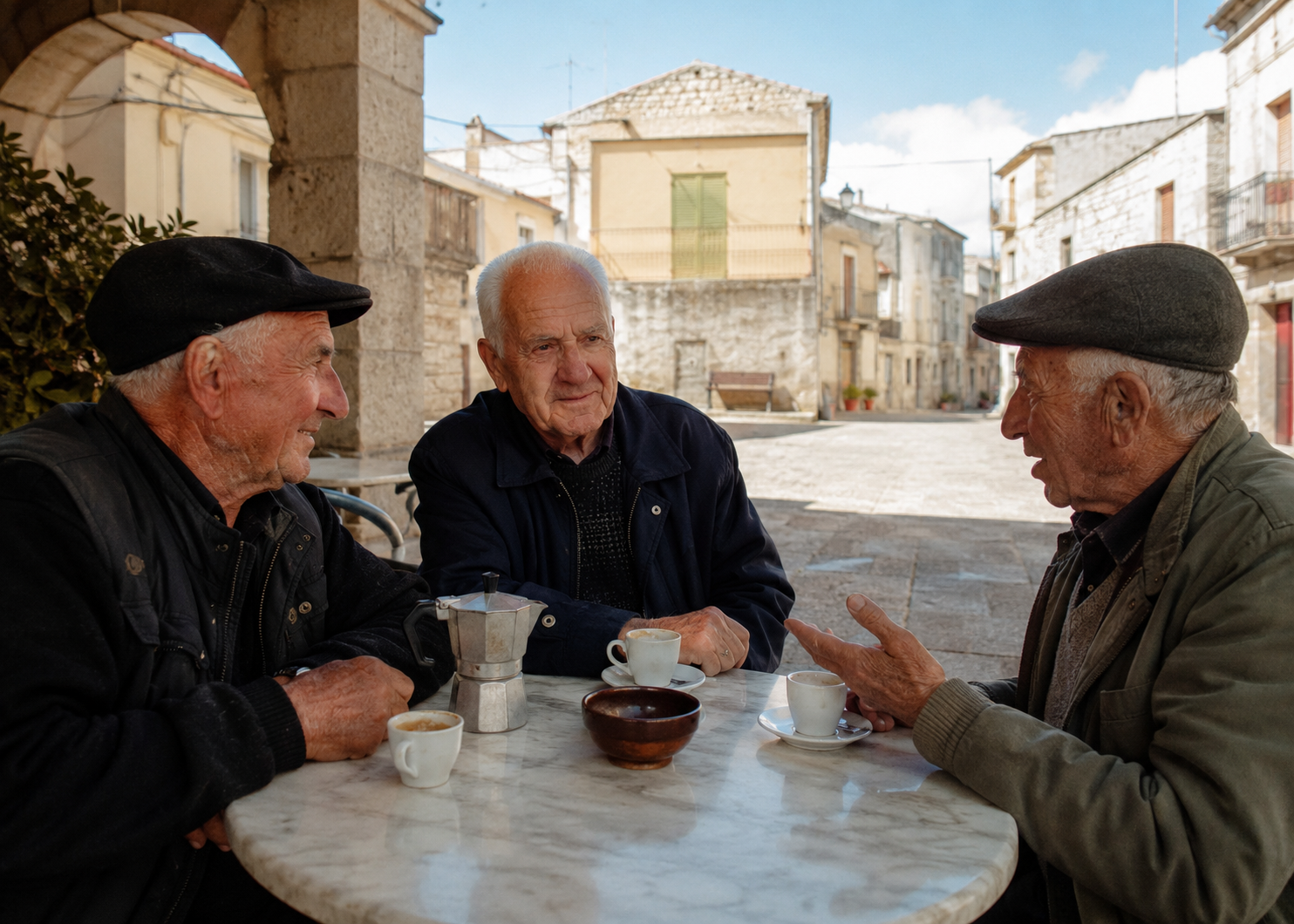
Among the elements of the traditional Sardinian life, one stands out as both central and most clearly abandoned by modern Americans, the constant natural movement of a physically active life.
The traditional life of the Sardinian highlands, particularly for the men, was built around constant low-intensity physical activity, above all walking, the pastoral shepherding economy meaning the men walked the steep hills daily, for miles, across rough mountainous terrain, year after year, decade after decade, a life of perpetual gentle physical exertion woven into the ordinary business of living. This is the daily habit at the center of the Sardinian longevity story, not exercise as a separate activity but movement as the fabric of daily life, the walking and physical work of a pastoral mountain existence keeping the body active all day every day, the constant natural movement that researchers consistently identify as one of the key shared features of the Blue Zones. It is not the gym workout but the all-day low-level activity, the walking especially, built into how life is lived, that appears to matter.
This is precisely the habit that modern Americans have most thoroughly abandoned, since American life has engineered movement out of daily existence, the car for every journey, the desk for work, the screen for leisure, the elevator and the drive-through and the delivery, a life in which it is entirely possible to move almost not at all, the constant natural activity of earlier ways of life replaced by near-total sedentariness. Where the Sardinian shepherd walked the hills all day, the modern American sits, in the car, at the desk, on the couch, and this contrast, between a life of constant natural movement and a life engineered for stillness, is the starkest difference between the Blue Zone way and the modern American one. The daily habit Americans have abandoned is simply moving, the all-day natural physical activity that was once the unavoidable texture of life and is now, for many, almost entirely absent.
Why Constant Movement May Matter So Much
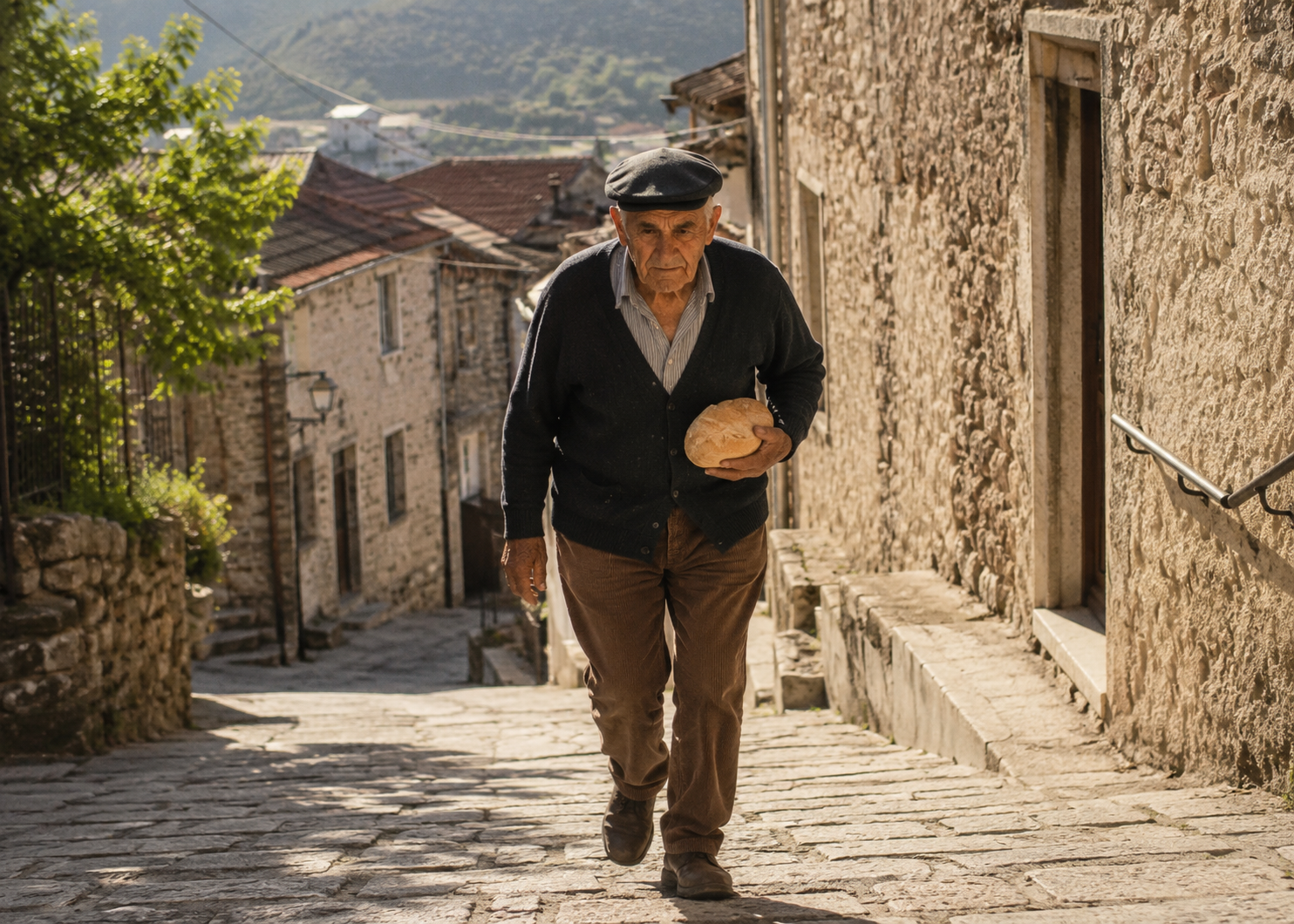
The reason this particular habit draws attention is that the evidence for the health value of constant low-level movement is strong and growing, quite apart from the Blue Zone debate.
The health value of regular physical activity is one of the most robust findings in all of medicine, and the particular value of constant low-level movement, as opposed to or in addition to bursts of intense exercise, has become increasingly clear, with the dangers of prolonged sitting and the benefits of frequent gentle activity throughout the day well documented in mainstream research. The Sardinian pattern, all-day low-intensity movement, walking, physical work, rarely sitting for long, aligns with what this research suggests is genuinely valuable, the constant gentle activity keeping the cardiovascular system, the muscles, the metabolism, and more in better condition than either sedentariness or occasional intense exercise alone. So the lesson from Sardinia here does not even depend on the Blue Zone claims being precisely right, since the underlying point, that constant natural movement is good for you, is independently well-supported by ordinary medical science.
This is why the movement habit is the most defensible and transferable lesson from the Sardinian case, because it rests not only on the contested Blue Zone longevity data but on the broad and solid evidence that physical activity, especially the constant low-level kind, is profoundly good for health and longevity. Whether or not the Sardinian highlanders live quite as long as claimed, the activity-rich way they live is exactly the kind of life that mainstream health science would predict to be healthy, so the lesson stands on its own, the constant movement being good for you regardless of how the Blue Zone debate resolves. The Sardinian shepherds simply lived, by the nature of their work and place, the physically active life that modern science independently recommends, and that alignment is what makes their movement habit worth taking seriously as a lesson rather than a curiosity.
The Honest Caveats About Blue Zones
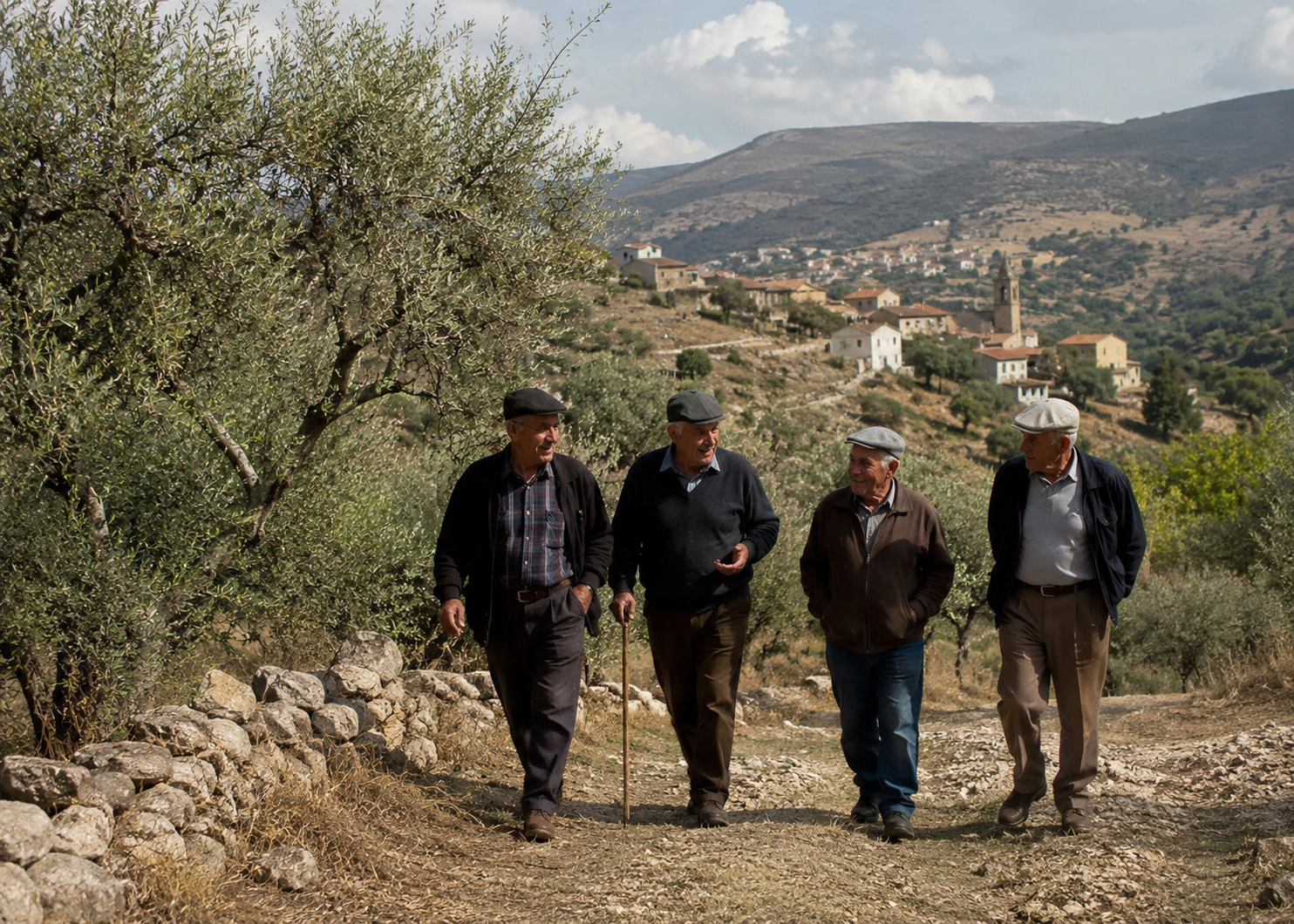
Integrity requires engaging seriously with the real scientific debate about Blue Zones, since it bears on how much weight to put on the whole story.
In recent years, some researchers, notably work questioning the data quality, have argued that the Blue Zone longevity claims may be overstated or even artifacts of poor record-keeping, suggesting that errors in birth records, pension fraud, or simple administrative mistakes could inflate the apparent number of centenarians in these regions, and that the longevity may be less exceptional than claimed. This critique is serious and has prompted real reassessment, with some independent analyses supporting concerns about exaggerated longevity claims in certain Blue Zones, and it would be dishonest to present the Sardinian story as settled fact when it is, at the level of the precise longevity claims, genuinely contested. The careful position is to hold the Blue Zone longevity claims with appropriate caution, neither dismissing them nor treating them as proven, while recognizing that the debate about the data does not necessarily undermine the value of the lifestyle observations.
This is the crucial distinction, that even the critics of the Blue Zone longevity data generally do not dispute that the lifestyle patterns observed, the constant movement, the plant-rich diet, the strong social bonds, the sense of purpose, are genuinely healthy, since these align with the broad findings of health science independent of the longevity claims. So one can take the lifestyle lessons seriously, the value of movement and connection and good diet, while remaining appropriately skeptical about the more dramatic specific longevity statistics, the two being separable, the healthy-living lessons standing on independent evidence even if the precise centenarian counts are questioned. The honest reader holds both, the real value of the lifestyle observations and the real uncertainty about the longevity data, and takes from Sardinia a reasonable inspiration about how to live rather than a guaranteed formula for reaching a hundred.
What An American Can Actually Take From This
Setting aside the contested numbers, the practical lesson for an American is clear, achievable, and well worth taking, and it centers on reclaiming movement.
The transferable lesson is to rebuild constant natural movement into daily life, not by becoming a Sardinian shepherd but by reversing, in whatever ways are available, the engineering of movement out of modern existence, walking more, sitting less, taking the active option, building gentle activity back into the ordinary fabric of the day. This means the practical things, walking instead of driving where possible, taking the stairs, standing and moving through the workday rather than sitting for hours, building walks into the routine, choosing the more active version of daily tasks, all of it aimed at restoring the constant low-level movement that modern life has stripped away and that the Sardinian life had in abundance. It is not about intense exercise, though that has its place, but about the all-day gentle activity, the walking above all, that was once unavoidable and now must be deliberately reclaimed.
The beauty of this lesson is that it is entirely achievable, requiring no move to a Mediterranean island, no special equipment, no dramatic life change, just the gradual rebuilding of movement into ordinary life, a thing within reach of almost anyone willing to walk more and sit less. And it pays off regardless of the Blue Zone debate, since the value of this movement is independently well-established, so the American who takes from Sardinia the simple lesson of moving more throughout the day is acting on solid ground whatever the precise truth of the centenarian counts. Walk more, sit less, rebuild the constant gentle movement that modern life removed, and you have taken the most defensible and valuable lesson the Sardinian highlands offer, the daily habit reclaimed, the benefits real and well-supported, the inspiration honest even amid the uncertainty about the more dramatic claims.
The Other Habits Worth Borrowing
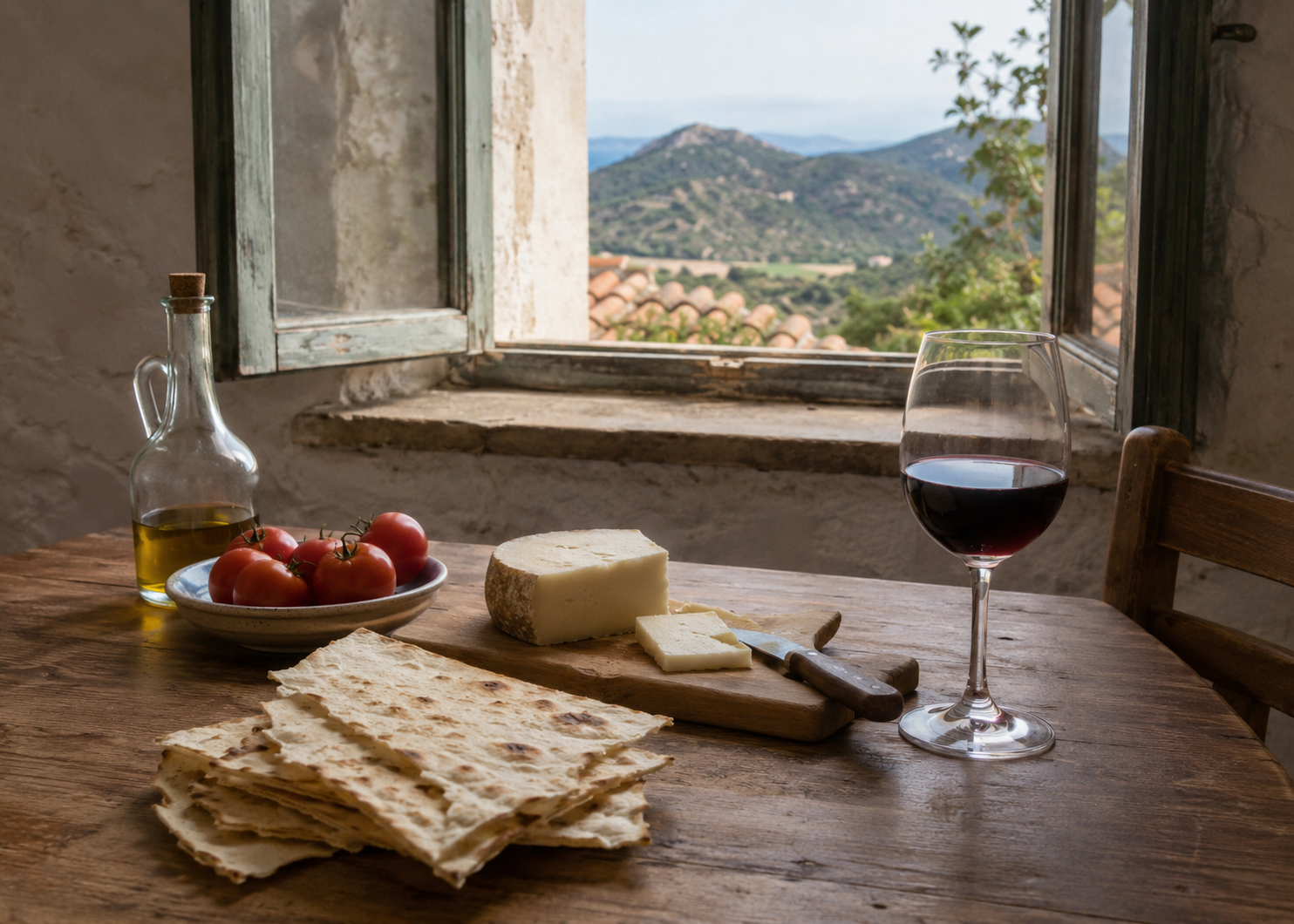
Movement is the central habit, but the Sardinian way and the Blue Zones generally share other features worth noting, since they form a coherent and healthy whole.
Alongside the constant movement, the Sardinian and broader Blue Zone lifestyle is marked by a plant-heavy traditional diet of vegetables, legumes, whole grains, and modest amounts of meat, with moderate wine, the kind of simple whole-food eating that aligns with everything health science recommends, another transferable habit worth borrowing. Equally notable are the strong social and family bonds of these traditional communities, the deep integration of the old into family and community life, the sense of belonging and being valued into great age, since social connection is increasingly recognized as genuinely important to health and longevity, and its abundance in the Blue Zones contrasts with the isolation that afflicts many older people in modern societies. And there is the sense of purpose, the continued role and meaning that older people retain in these communities, another factor associated with healthy aging.
These habits form a coherent whole, a way of life that is active, connected, purposeful, and nourished by simple good food, and while the movement is the most clearly abandoned by Americans and the most independently supported, the others are worth borrowing too, the whole pattern being healthier than any single piece. The honest lesson from Sardinia, then, is not a magic formula but a sensible and well-supported picture of a healthy way of living, constant movement, good simple food, strong connection, continued purpose, that aligns with the broad findings of health science and that an American can adopt in pieces regardless of the debates about the precise longevity data. Take the movement first and most, add the diet and the connection and the purpose as you can, and you are living, as far as anyone can honestly say, in the way most likely to support a long and healthy life, which is the real and defensible gift of the Sardinian example.

About the Author: Ruben, co-founder of Gamintraveler.com since 2014, is a seasoned traveler from Spain who has explored over 100 countries since 2009. Known for his extensive travel adventures across South America, Europe, the US, Australia, New Zealand, Asia, and Africa, Ruben combines his passion for adventurous yet sustainable living with his love for cycling, highlighted by his remarkable 5-month bicycle journey from Spain to Norway. He currently resides in Spain, where he continues sharing his travel experiences with his partner, Rachel, and their son, Han.