
There is a moment in high summer when the tomatoes are finally at their peak, heavy and fragrant and sweet, the basil is overflowing, and the last thing anyone wants is to stand over a hot stove for an hour. This is exactly the moment caprese pasta was made for, a dish that takes the three ingredients of the classic caprese salad, ripe tomatoes, fresh mozzarella, and basil, and turns them into a warm, barely-cooked pasta that tastes of summer itself. It is one of the easiest good dinners in existence, and like so much of Italian cooking, its quality depends entirely on the few ingredients being genuinely good rather than on any technique.
From a kitchen in Spain, where the summer tomatoes are as glorious as anywhere and the appetite for fuss-free hot-weather eating is just as strong, caprese pasta is a recurring summer pleasure, and it is worth doing properly because the difference between a good version and a mediocre one is entirely in the ingredients and the restraint. The dish is essentially a caprese salad served warm over pasta, and the whole art of it is letting the heat of the just-drained pasta soften the tomatoes and melt the mozzarella into something silky without ever really cooking anything. Here is how it comes together, and the few small things that make it sing.
The Tomatoes Are Everything
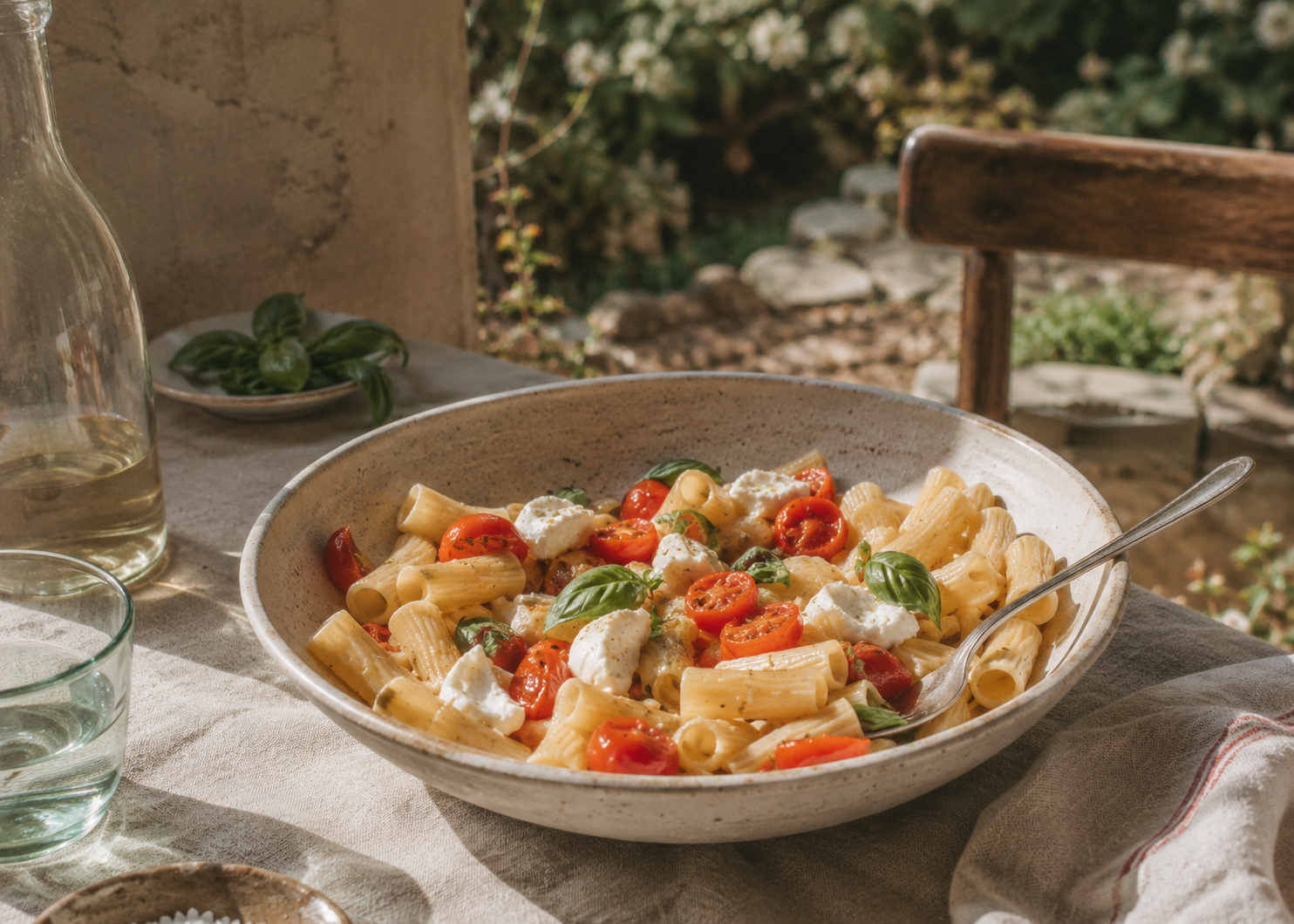
As with the caprese salad it descends from, the entire dish lives or dies on the tomatoes, so this is where the attention goes.
Caprese pasta is a celebration of ripe summer tomatoes, and it should only be made when tomatoes are at their genuine peak, deep red, heavy with juice, fragrant, the kind that taste of sunshine, because the dish has nowhere to hide a poor tomato. A pale, firm, out-of-season supermarket tomato will produce a watery, flavorless dish, since the tomato is not a supporting player here but the main event, providing the sauce, the acidity, the sweetness, and the soul of the whole thing. This is summer food in the truest sense, a dish to make in the height of tomato season and to skip entirely the rest of the year, when the tomatoes cannot carry it.
The best tomatoes for it are ripe flavorful ones of almost any kind, a good vine tomato, a ripe heirloom, sweet cherry or datterini tomatoes which are especially good because they are reliably sweet and burst beautifully, or a mix. The key is ripeness and flavor rather than the specific variety, so the move is to use whatever tomato is at its genuine summer best wherever you are, chosen by smell and feel and color rather than by name. A handful of ripe cherry tomatoes halved, or a couple of large ripe tomatoes chopped, or a generous mix of both, all work, provided every one of them is a tomato you would be happy to eat raw on its own, because in effect you are about to do exactly that, just warmed and tossed with pasta.
The Mozzarella, And How To Handle It
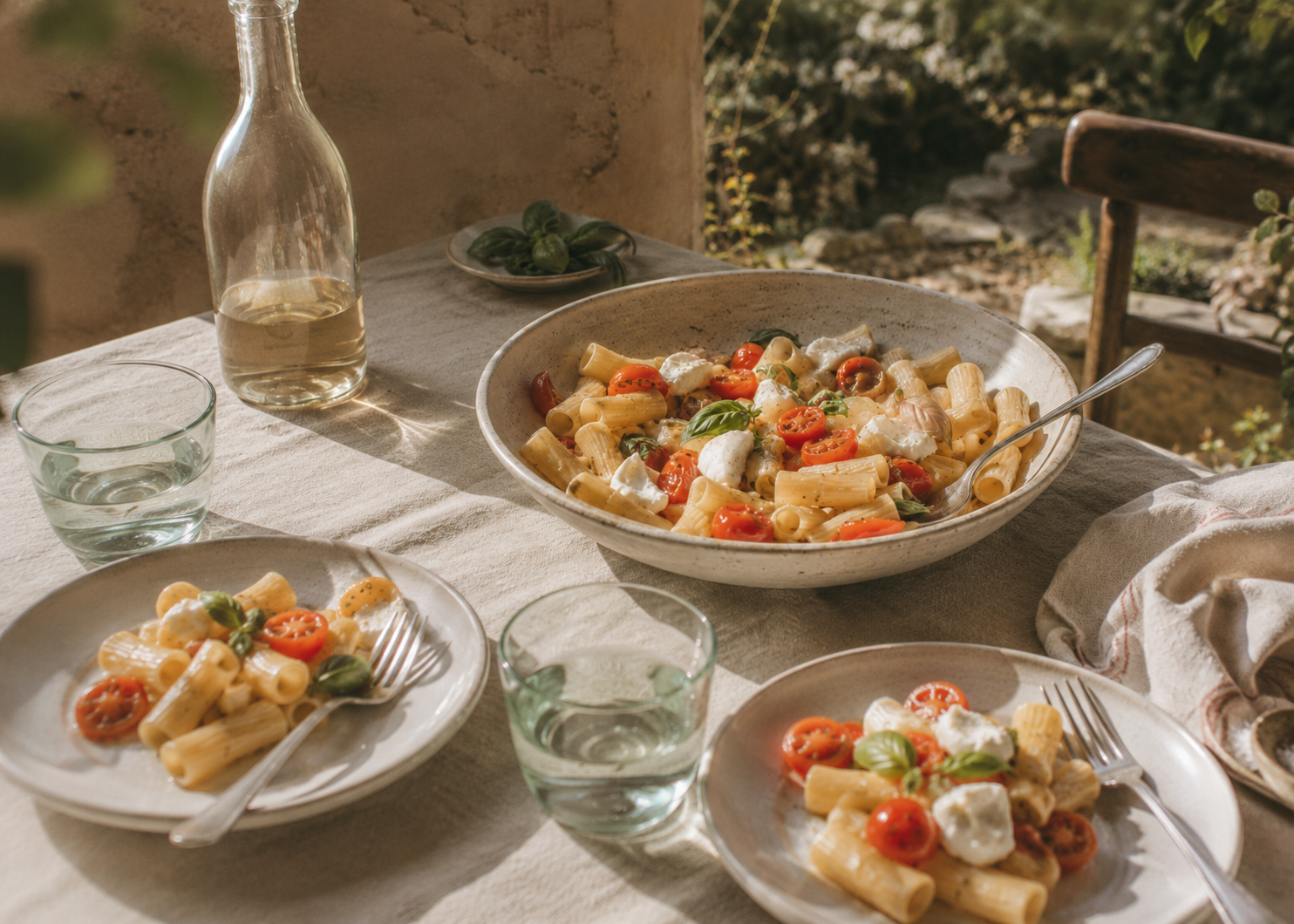
The second pillar is the mozzarella, and there is a little technique to getting it right, since fresh mozzarella behaves in a particular way when it meets hot pasta.
The dish wants fresh mozzarella, the soft, milky, water-packed kind sold in balls, the same mozzarella you would use in a caprese salad, torn or cut into pieces, rather than the firm low-moisture mozzarella meant for melting on pizza. Fresh mozzarella brings the soft, creamy, milky quality that defines the dish, and when it meets the warm pasta and tomatoes it softens and turns silky and stringy in the loveliest way, partly melting into a creamy coating without fully dissolving into a cooked cheese. Buffalo mozzarella, if you can get it, is even more luxurious, richer and creamier, but a good cow’s-milk fresh mozzarella is excellent and entirely traditional, so either works beautifully.
The one thing to know about handling it is to manage the moisture and the timing. Fresh mozzarella holds a lot of water, so it helps to tear it into pieces and let it drain a little before using, and crucially to add it at the right moment, when the pasta is hot enough to soften and partly melt it but not so violently hot or stirred so long that it seizes into a rubbery clump. The aim is for the mozzarella to go soft and silky and a little stringy, partly melting to coat the pasta creamily while keeping some of its fresh tender texture, which happens when it is tossed with the just-drained hot pasta off the heat and served promptly. Tearing it by hand rather than cutting it neatly is the traditional and the better way, since the rough torn pieces melt more pleasingly and look more rustic and generous.
Putting It Together, The Warm-Toss Method
The method is barely a method at all, which is the joy of it, but understanding the warm-toss principle is what separates a silky result from a clumsy one.
The whole technique is to prepare the tomato mixture raw, cook the pasta, and then toss the hot drained pasta with the raw tomatoes and the mozzarella so that the residual heat does all the work, warming and slightly breaking down the tomatoes into a light fresh sauce and softening the mozzarella into silk, without ever actually cooking anything in a pan. This is what keeps the dish fresh and summery rather than turning it into a cooked tomato sauce, since the tomatoes stay bright and the basil stays fragrant and the mozzarella stays tender, all of it warmed through by the pasta rather than simmered. It is closer to dressing a warm pasta salad than to making a sauce, and that freshness is the entire point.
The small refinements that make it better are simple. Macerating the chopped tomatoes for a little while beforehand with salt, good olive oil, and the garlic draws out their juices and creates the beginnings of a light sauce before the pasta even arrives, so the tomatoes are already glistening and flavorful when they meet the pasta. Reserving a little of the starchy pasta cooking water to add as you toss helps everything come together into a silky coating rather than sitting dry. And dressing it generously with good extra virgin olive oil, since the oil is a main flavor and not a token, gives the dish its richness and gloss. None of this is difficult, but each small step lifts the result from merely fine to genuinely lovely.
Here is how it all comes together. This makes a generous summer dinner for four.
Ingredients
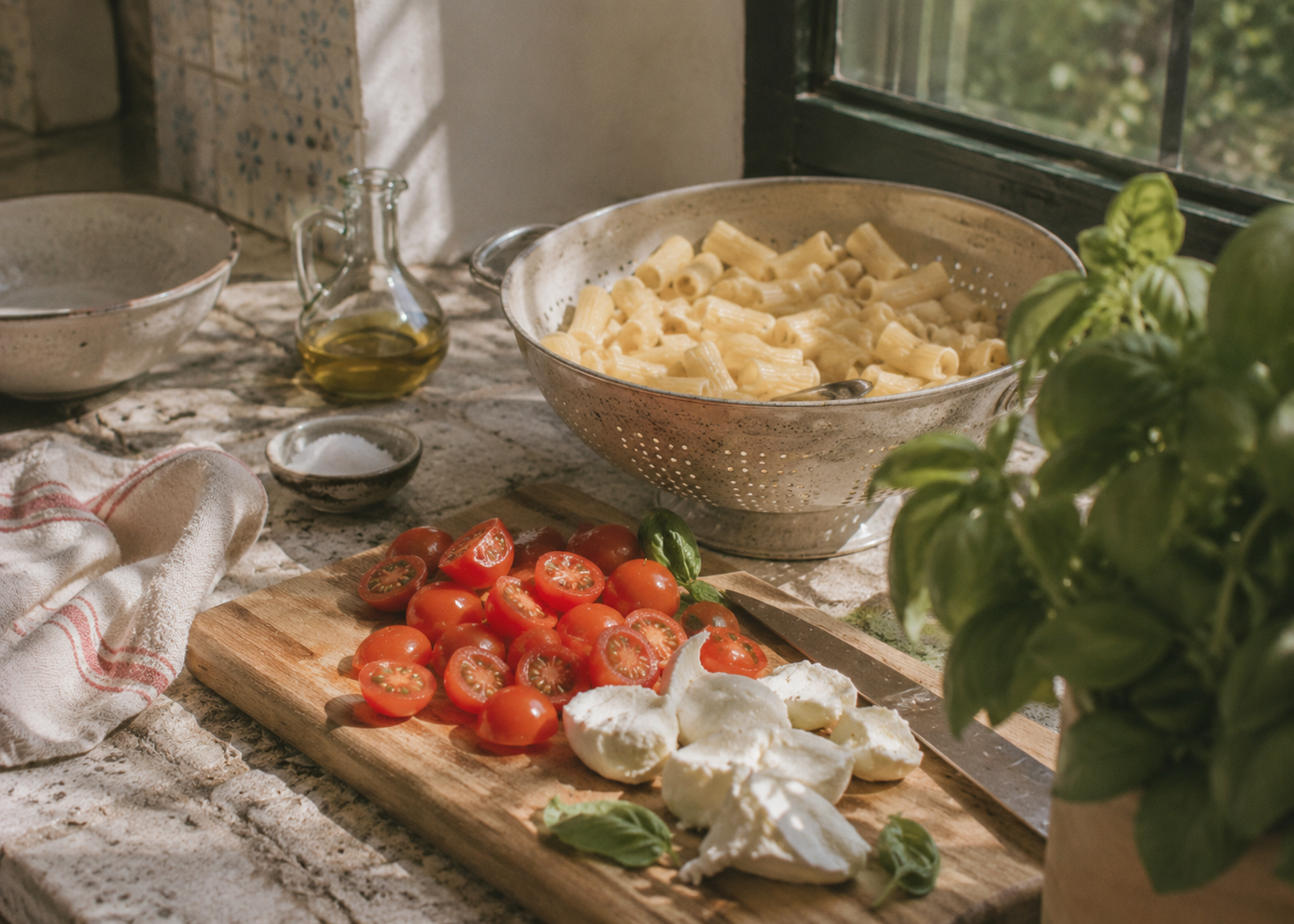
- 400 g short pasta, penne, fusilli, or rigatoni
- 500 g ripe summer tomatoes, cherry or datterini halved, or large tomatoes chopped
- 250 g fresh mozzarella, drained and torn
- 1 large handful fresh basil leaves
- 1 clove garlic, finely minced or grated
- 4 tbsp extra virgin olive oil, plus more to finish
- salt, to taste
- black pepper, to taste
- parmesan or pecorino, to serve, optional
Method
- Macerate the tomatoes. Put the halved or chopped ripe tomatoes in a large bowl, big enough to hold the finished pasta later. Add the minced garlic, the olive oil, a good pinch of salt, and a few torn basil leaves. Stir gently and leave to sit while you cook the pasta, at least fifteen minutes, so the tomatoes release their juices into a light fresh sauce.
- Prepare the mozzarella. Tear the drained fresh mozzarella into rough bite-sized pieces and set aside, letting any excess water drain off. Tearing by hand gives a better texture than cutting.
- Cook the pasta. Bring a large pot of well-salted water to a boil and cook the pasta until al dente, with a little bite remaining. Before draining, reserve a small cup of the starchy cooking water.
- Toss while hot. Drain the pasta and immediately add it, hot, to the bowl of macerated tomatoes. Add the torn mozzarella and toss everything together gently. The heat of the pasta will warm the tomatoes into a light sauce and soften the mozzarella into something silky and stringy. Add a splash of the reserved pasta water if needed to loosen it into a glossy coating.
- Finish and serve. Toss through most of the remaining basil, torn. Taste and adjust the salt, add a grind of black pepper, and drizzle with more good olive oil. Serve at once, warm, scattering each bowl with extra torn basil and, if you like, a grating of parmesan or pecorino.
A note on timing and ingredients. Have the tomatoes macerated and the mozzarella torn and waiting before the pasta finishes, since the dish depends on tossing the cheese with the pasta while it is at its hottest. And make this only with genuinely ripe summer tomatoes and fresh basil, since the dish has nowhere to hide lesser ingredients.
The Basil And The Finishing Touches
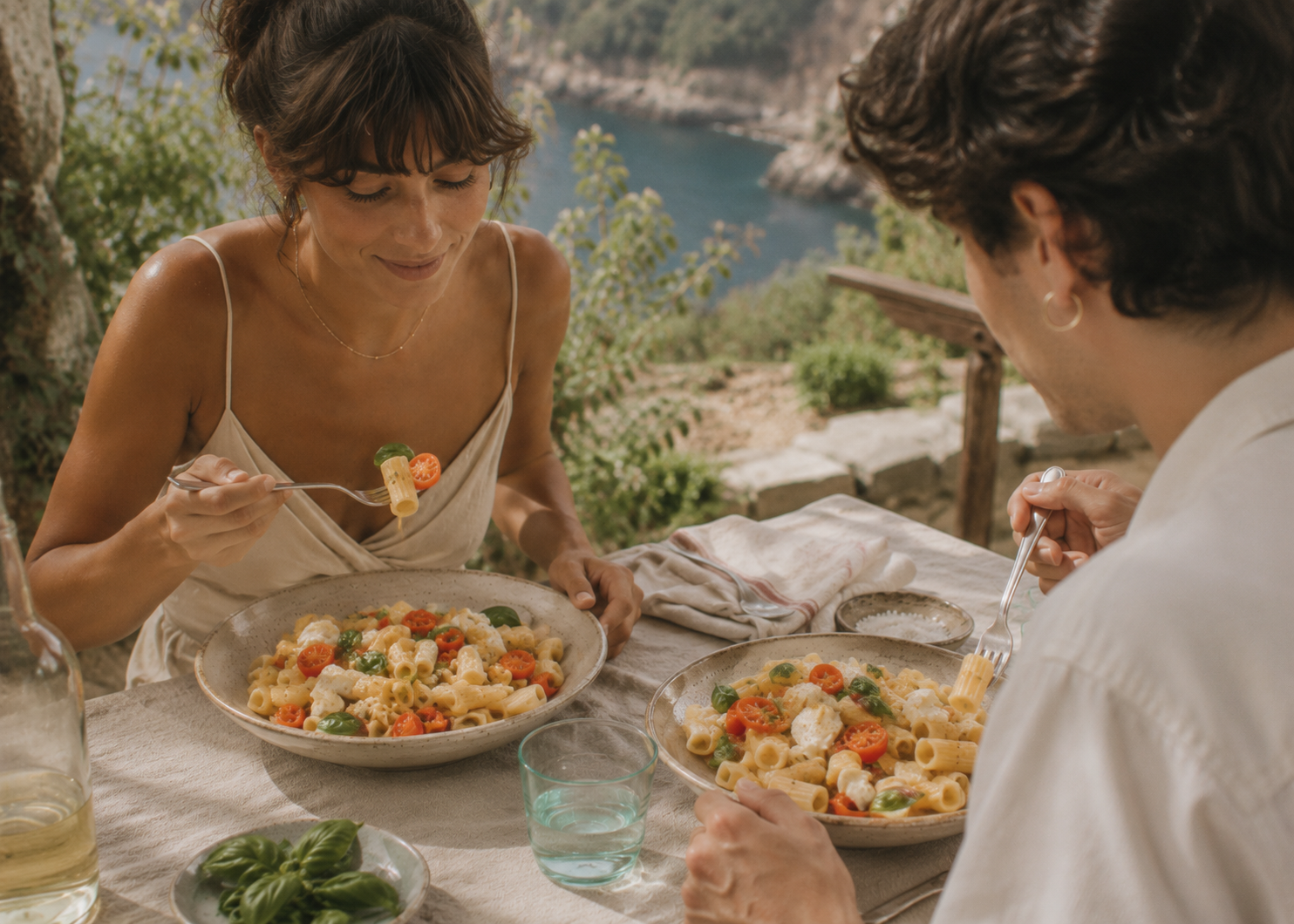
The third pillar is the basil, and a word on it and the other finishing touches completes the picture, because the small final flourishes matter in so simple a dish.
The basil should be fresh, abundant, and added largely at the end, torn rather than chopped, so its fragrance stays bright and its leaves do not blacken and wilt from too much heat or handling. Basil is delicate, and its perfume is one of the defining notes of the dish, so it goes in mostly at the last moment, tossed through the warm pasta and scattered over the top, where the gentle heat releases its aroma without cooking it away. A generous hand with the basil is right, since it is not a garnish but one of the three essential flavors, and the dish should taste distinctly of it.
Beyond the basil, the finishing touches are a matter of taste and tradition. A good grating of parmesan or pecorino adds a salty savory depth, though some purists keep the dish to just the fresh mozzarella, so it is optional but lovely. A final drizzle of your best olive oil over each bowl, a few extra torn basil leaves, a grind of black pepper, and perhaps a pinch of flaky salt all lift the finished dish. Some cooks add a little chili for warmth, or a splash of good balsamic for sweetness and acidity in the caprese spirit, both fine variations. The point is that the dish is essentially complete with just the tomatoes, mozzarella, basil, oil, and pasta, and the finishing touches are small enhancements rather than necessities, to be added or left off according to taste.
Choosing The Pasta
A brief word on the pasta itself, since the shape and the cooking of it matter more than people assume in so simple a dish.
The best pasta shapes for caprese pasta are short ones that catch the chunky tomato and the bits of mozzarella, things like penne, fusilli, rigatoni, or orecchiette, whose ridges and curves hold the light sauce and trap the pieces of tomato and cheese, though spaghetti or linguine work too if you prefer long pasta and toss it well. The short shapes are slightly easier to eat with the chunky fresh ingredients and tend to distribute the tomato and mozzarella more evenly through each forkful, which is why they are the common choice, but this is a matter of preference rather than a rule. Whatever the shape, good-quality dried pasta is perfect here, and there is no need for fresh pasta.
The one thing that matters is to cook the pasta properly al dente and to time it so it is hot when it meets the tomatoes and mozzarella, since the residual heat of the just-drained pasta is what does all the gentle cooking in this dish. Drain it while it still has a little bite, reserve that splash of cooking water, and move quickly to toss it with the waiting tomatoes and the torn mozzarella while it is at its hottest, so the cheese softens and the tomatoes warm and everything melds. Pasta that has been allowed to cool before tossing will not soften the mozzarella properly, so the timing, having the tomatoes macerated and ready and the mozzarella torn and waiting when the pasta finishes, is the one bit of coordination the dish asks for.
Why This Dish Belongs To Summer

It is worth saying plainly why this is so emphatically a summer dish, because understanding that is the key to making it well and knowing when not to.
Caprese pasta is summer food in the most literal sense, a dish that exists to make the most of peak-season tomatoes, fresh basil, and the desire for something light and barely-cooked in the heat, and it simply does not work outside that season because its central ingredient, the ripe summer tomato, is not available at the required quality the rest of the year. This is a feature rather than a limitation, since the dish belongs to a tradition of seasonal eating in which certain dishes are made only when their ingredients are at their peak and are all the more special for it, anticipated through the year and savored in their brief season. To make caprese pasta in winter with pale hard tomatoes is to make a sad imitation, while to make it in August with sun-ripened ones is to capture summer on a plate.
The dish also suits summer in its method and its eating, since it requires almost no cooking beyond boiling the pasta, keeps the kitchen cool, comes together in minutes, and is served warm or even at room temperature, all of which is exactly what hot-weather cooking wants. It is the kind of dish to make for an easy summer dinner on a terrace, for a quick lunch on a hot day, for feeding friends without effort when it is too warm to cook properly, the freshness and lightness and ease all perfectly matched to the season. This marriage of peak ingredients, minimal cooking, and warm-weather eating is what makes caprese pasta one of the quintessential dishes of an Italian summer, and one of the most rewarding for how little it asks of the cook.

About the Author: Ruben, co-founder of Gamintraveler.com since 2014, is a seasoned traveler from Spain who has explored over 100 countries since 2009. Known for his extensive travel adventures across South America, Europe, the US, Australia, New Zealand, Asia, and Africa, Ruben combines his passion for adventurous yet sustainable living with his love for cycling, highlighted by his remarkable 5-month bicycle journey from Spain to Norway. He currently resides in Spain, where he continues sharing his travel experiences with his partner, Rachel, and their son, Han.