
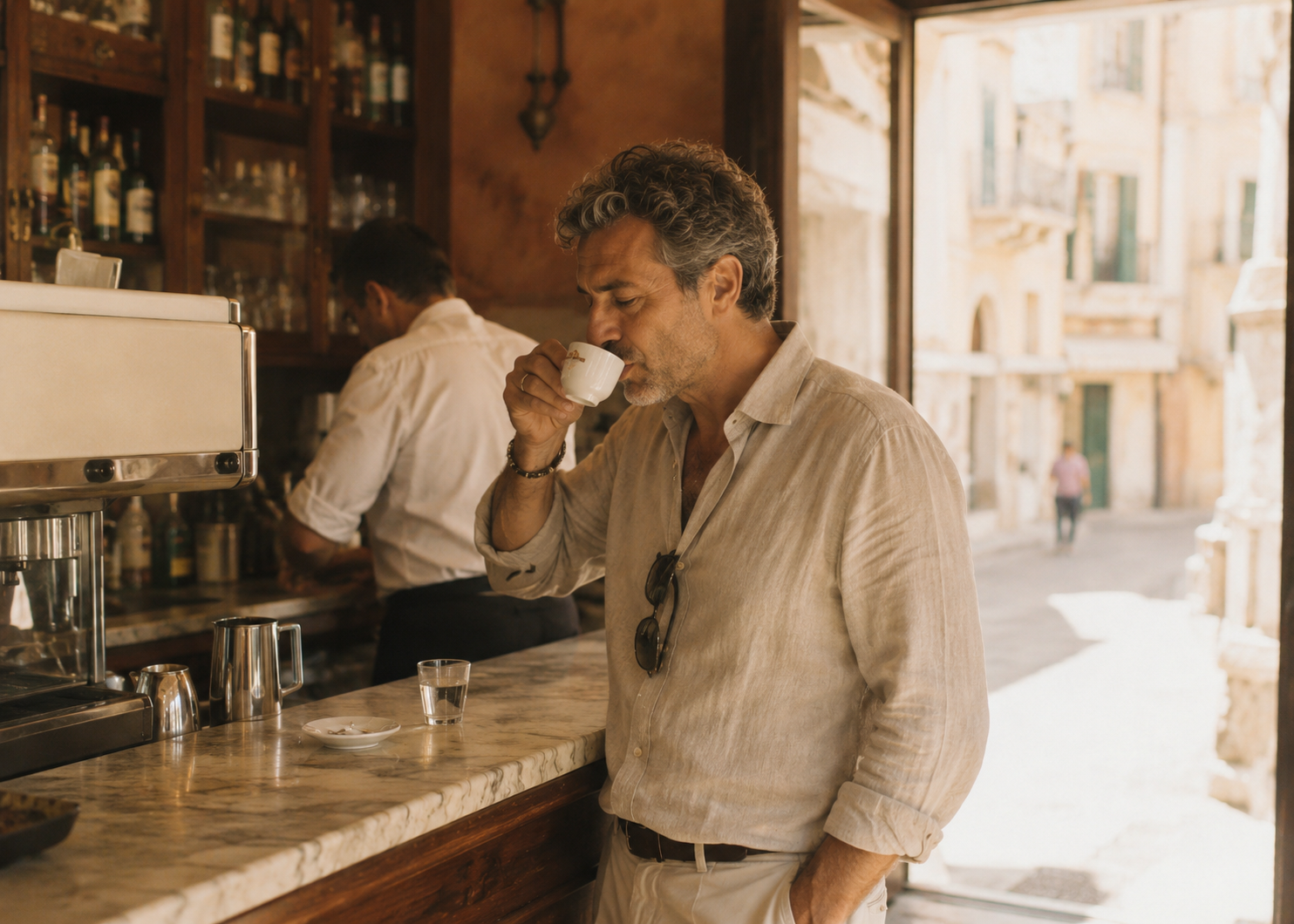
An American walks into an Italian bar on a blazing July afternoon, the kind of day when the air shimmers over the cobblestones, and orders an iced coffee. The barista’s response is a small hesitation, a flicker of something between confusion and pity, and then the American gets something, because Italian baristas are gracious, but it is not the towering cup of ice and cold coffee they were picturing, and the encounter leaves both parties slightly puzzled by the other. The American cannot understand why a hot country resists cold coffee. The Italian cannot understand why anyone would drown good coffee in ice.
From Spain, where the coffee culture sits somewhere between the two, the gap is one of the more revealing small differences between American and Italian life. It looks trivial, a matter of beverage preference, but underneath it lies a genuine difference in how the two cultures think about coffee, about heat, and about the small rituals of the day. The Italian refusal of iced coffee and the American dependence on it are not arbitrary habits. Each makes complete sense inside its own logic, and understanding why illuminates something larger than a drink.
What Italians Actually Drink In The Heat
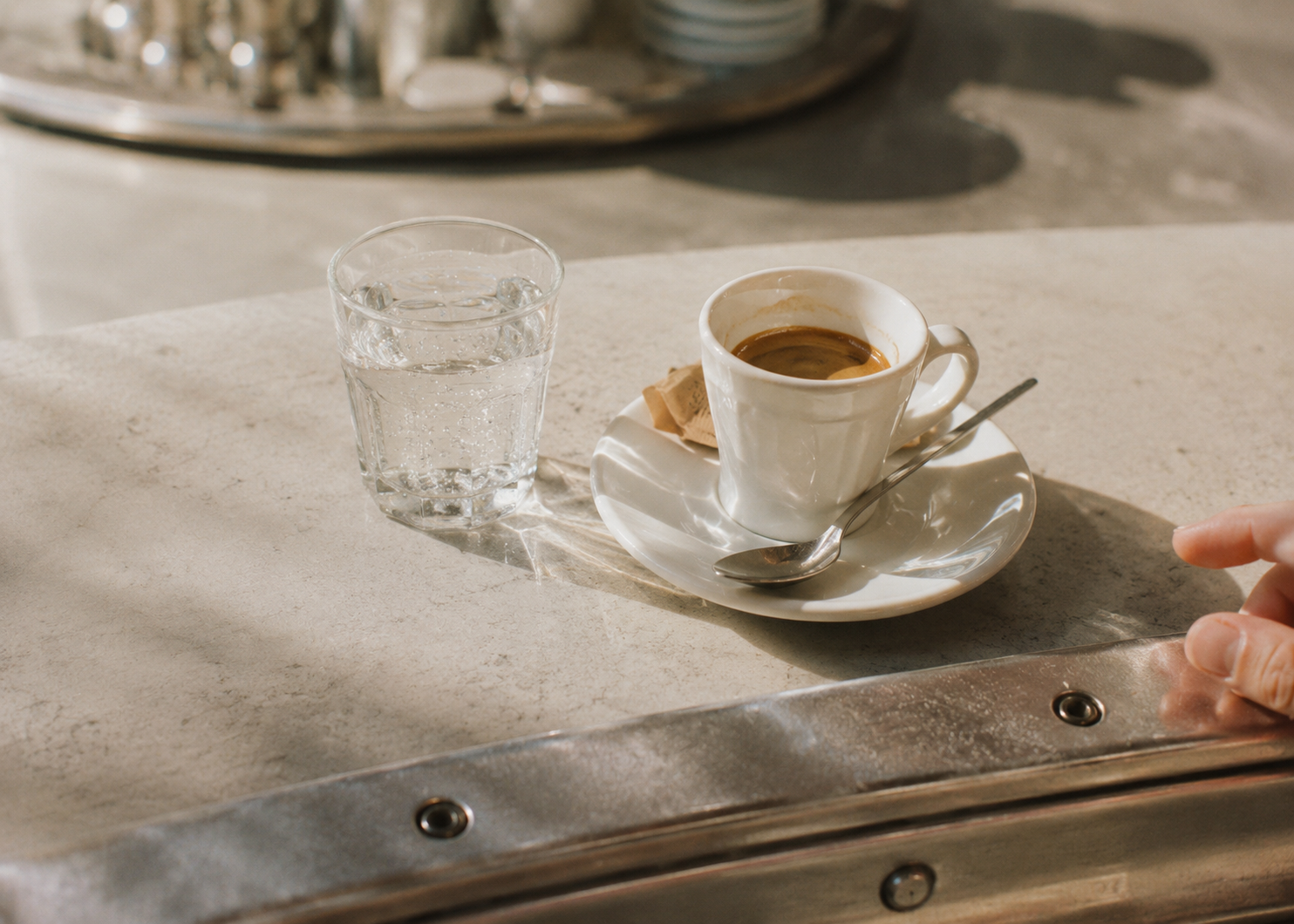
Start with the fact itself, because Americans often assume Italians simply have not discovered iced coffee, which could not be further from the truth.
Italians have coffee culture in their bones, arguably the most refined and ritualized in the world, and they drink coffee constantly, including through the hottest summers. They simply do not, for the most part, drink it over ice the way Americans do. The espresso remains the center of Italian coffee life regardless of the weather, a small intense shot drunk quickly standing at the bar, and a forty-degree afternoon does not change that. What Italians do have for the heat is their own cold coffee traditions, distinct from the American iced coffee, and far from the giant cup of cold milky coffee that an American means by the term.
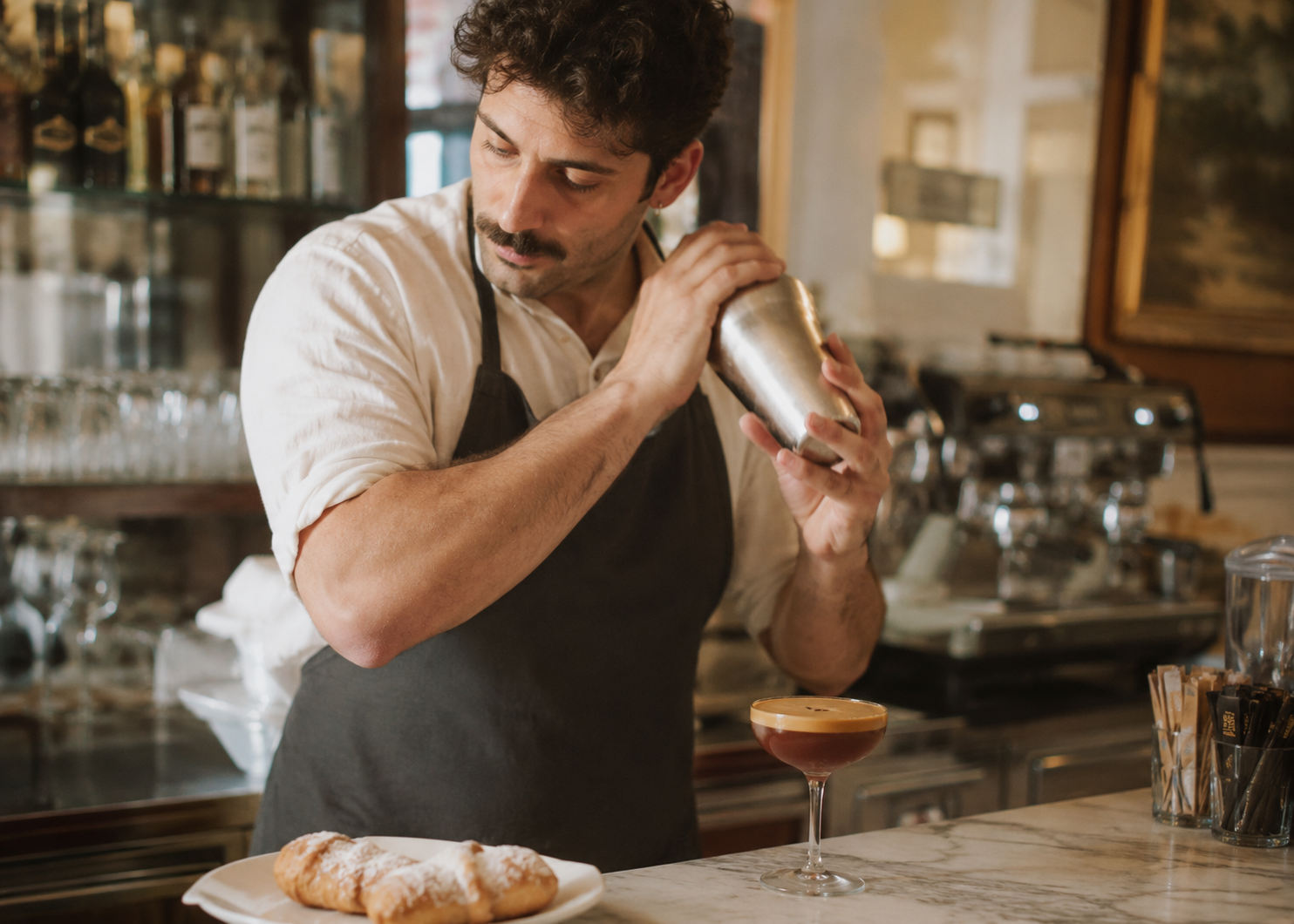
The Italian summer coffee is something like the caffè shakerato, espresso shaken hard with ice and a little sugar until frothy and cold, then strained into a glass so the ice is left behind, a small, elegant, intensely coffee-flavored cold drink. Or it is the caffè freddo, a pre-made chilled sweetened espresso served cold. In the south, particularly Sicily, there is the granita, a semi-frozen coffee ice often eaten with a brioche for breakfast. These are real and beloved cold coffee traditions, but notice what they share, they are small, they are intensely coffee-forward, and they treat the cold as a way of presenting espresso rather than a way of diluting it. The Italian does not refuse cold coffee. They refuse the American version of it.
Why The American Iced Coffee Offends

To understand the Italian resistance, you have to understand what the American iced coffee looks like from the Italian point of view, because it violates several Italian principles at once.
The American iced coffee is typically large, made from a big volume of brewed coffee or multiple espresso shots poured over a tall cup of ice, often heavily milked and sweetened and flavored, a substantial cold drink consumed slowly over a long stretch of time. To an Italian, this is wrong on nearly every axis. It is too big, when Italian coffee is small and concentrated. It is too diluted, the ice watering down the coffee as it melts, when Italians prize the undiluted intensity of espresso. It is too slow, sipped over an hour, when Italian coffee is drunk quickly. And it is too much of a meal-like indulgence, a milky sweet thing closer to a milkshake, when Italian coffee is a pure, quick, almost austere ritual.
The deepest offense is the dilution. For an Italian, the whole point of coffee is the concentrated intensity of a properly pulled espresso, and pouring it over ice that melts and waters it down is a kind of vandalism, destroying the very quality that makes the coffee worth drinking. The American sees ice as a way to make coffee refreshing in the heat. The Italian sees ice as a way to ruin coffee, turning an intense pleasure into a weak, watery, oversized drink. This is why the shakerato exists, as the Italian solution to cold coffee that preserves the intensity, shaking the espresso cold and straining away the ice rather than letting it dilute the drink. The Italian objection is not to cold. It is to weak.
Why Americans Cannot Function Without It

The American side of the divide makes just as much sense once you see the different logic behind it, and it is not simply a failure to appreciate good coffee.
American coffee culture grew up around a completely different idea of what coffee is, not a small intense ritual but a large, comforting, all-day beverage, the big mug of drip coffee nursed through a morning, the cup that is as much about the warmth and the volume and the ritual of holding it as about the coffee itself. In that culture, coffee is a companion drink, something you have a lot of, slowly, alongside other activities, and when the weather turns hot, the natural move is to keep that same large companionable drink but make it cold. The iced coffee is simply the American big-mug coffee adapted for summer, and it makes perfect sense as an evolution of the American relationship with coffee.
The American iced coffee also serves functions the Italian espresso does not. It is hydrating in a way a tiny espresso is not, a large cold drink for a hot day. It is portable, carried in a cup with a lid through a car-centered, on-the-move American life, where coffee is consumed while commuting and working rather than standing at a bar. And it is endlessly customizable into the milky, sweet, flavored variations that American coffee culture loves, closer to a treat than a ritual. For an American, the iced coffee is refreshment, hydration, portability, and pleasure in a single cup, perfectly suited to American summers and American life, and the idea of giving it up for a thimble of hot espresso in July seems as baffling as the reverse seems to the Italian.
The Deeper Difference
Underneath the drink lies a genuine philosophical difference about what coffee is for, and naming it makes the whole divide click into place.
For the Italian, coffee is a ritual, a small, precise, intense punctuation mark in the day, taken quickly and for its own sake, valued for quality and concentration over quantity and comfort. The espresso is not a beverage you consume so much as a moment you observe, standing at the bar, exchanging a word with the barista, drinking the small perfect shot, and moving on. The whole culture is built around intensity and ritual, the small and the excellent, and everything about Italian coffee, including the resistance to diluting it with ice, follows from that. Coffee is a pleasure to be respected, not a drink to be consumed in volume.
For the American, coffee is a companion, a large, comforting, customizable, all-day drink valued for warmth or coolness, volume, and the comfort of having it constantly to hand. It is consumed in quantity, on the move, throughout the day, as a steady background presence rather than a discrete ritual moment, and it is endlessly adaptable to taste and weather and mood. Neither understanding is wrong, they are simply different relationships with the same substance, and the iced coffee divide is just the most visible point where they collide. The Italian preserves the intensity. The American maximizes the comfort. And on a hot day, those two values point in opposite directions, one toward a small shaken espresso and the other toward a tall cup of ice.
What Each Could Learn From The Other
The interesting turn, for a traveler caught between the two cultures, is that each tradition has something the other could use, and the open-minded coffee drinker can take the best of both.
From the Italian, the American could learn that cold coffee need not mean weak coffee, that the shakerato and its cousins offer a way to have a cold coffee drink in the heat that preserves rather than destroys the intensity, and that a smaller, stronger, less diluted cold coffee can be more satisfying than a giant watery one. An American who discovers the caffè shakerato on a hot day in Italy often finds it a revelation, all the refreshment of an iced coffee with none of the wateriness, and brings the idea home. The Italian approach to cold coffee is genuinely better on its own terms, and worth adopting regardless of nationality.
From the American, the Italian could learn, though most would resist the suggestion, that there is a place for the large, slow, comforting coffee experience alongside the quick intense ritual, that coffee can be a companion as well as a ceremony, and that the American big-cup culture, for all its dilution, captures a kind of cozy pleasure the espresso ritual does not aim for. The truth is that both cultures are right within their own logic, and the well-traveled coffee drinker need not choose, taking the Italian espresso and shakerato for intensity and ritual and the American iced coffee for comfort and refreshment, depending on the day and the mood. The divide is real, but it is not a contest, and the person who understands both drinks better for understanding why each culture loves what it loves.
How To Order Coffee In Italy Without The Pitying Look

For the practical traveler, a short guide to navigating Italian coffee culture saves both the pitying look and a disappointing drink.
If you want cold coffee in Italy in summer, do not ask for an American-style iced coffee, which will either confuse the barista or produce something you did not want. Instead, learn the local options and order those. Ask for a caffè shakerato for the elegant shaken-espresso version, a caffè freddo for the pre-made cold sweetened espresso, or, in the south, a coffee granita, ideally with brioche, for the full Sicilian experience. Order these and you will get something genuinely delicious and be treated as someone who understands rather than someone to be gently pitied, and you will likely discover you prefer them to the iced coffee you thought you wanted.
The broader lesson for travel is to meet a coffee culture on its own terms rather than imposing your own, which is both more rewarding and more graceful. The Italian coffee world is one of the great pleasures of travel in Italy, deep and precise and built over generations, and the traveler who learns its small rules, the espresso at the bar, the cappuccino only in the morning, the shakerato in the heat, gains access to something wonderful, while the one who insists on a venti iced caramel something gets a confused barista and a worse drink. The coffee is a small thing, but it is a perfect small window onto the larger truth of travel, that the rewards go to the person willing to learn how a place does things rather than demanding it do things their way.
The Cappuccino Rule And The Wider Etiquette
The iced coffee divide is the most visible of the Italian coffee rules, but it sits within a whole etiquette that surprises Americans, and knowing the rest of it deepens the picture.
The most famous of the other rules is the cappuccino one. Italians drink cappuccino and other milky coffees only in the morning, with breakfast, and consider it faintly strange to order one after a meal or in the afternoon, when the milk is thought to sit heavily on a full stomach and interfere with digestion. The after-lunch coffee is an espresso, small and black, never a cappuccino, and the American habit of drinking large milky coffees at all hours strikes the Italian as odd in the same way the iced coffee does, a misunderstanding of when and how coffee belongs in the day. This is not snobbery so much as a deeply held sense of rhythm, the conviction that different coffees suit different moments and that getting the timing wrong is a small failure of taste.
There is also the matter of where and how coffee is drunk. The classic Italian coffee is taken standing at the bar, ordered, drunk quickly, and paid for, often costing very little precisely because it is a quick standing ritual rather than a seated experience, and a visitor who sits at a table is often charged more for the service. The coffee is fast, an interruption in the day rather than a destination, the opposite of the American coffee shop where people linger for hours over a large drink with a laptop. Understanding this rhythm, the quick standing espresso, the morning-only cappuccino, the small intense pour, explains why the giant slow iced coffee feels so alien in Italy, since it violates not just the temperature norm but the whole tempo of how Italians relate to coffee. The iced coffee is slow where Italian coffee is fast, large where it is small, diluted where it is intense, and a daytime indulgence where the Italian milky coffee is a morning-only affair, which is why it offends on so many levels at once.
The deepest point is that these rules, which can seem fussy or arbitrary to an outsider, are really the grammar of a coffee culture that has been refined over generations into something coherent and complete. Each rule connects to the others, the smallness to the intensity, the speed to the standing, the timing to the digestion, the resistance to ice to the prizing of concentration, all of it forming a single consistent philosophy of what coffee is and how it fits a life. The American who learns the grammar does not just avoid embarrassment but gains entry to one of the world’s great everyday pleasures, taken on its own terms, and usually comes to appreciate why Italians guard their coffee rituals as carefully as they do.

About the Author: Ruben, co-founder of Gamintraveler.com since 2014, is a seasoned traveler from Spain who has explored over 100 countries since 2009. Known for his extensive travel adventures across South America, Europe, the US, Australia, New Zealand, Asia, and Africa, Ruben combines his passion for adventurous yet sustainable living with his love for cycling, highlighted by his remarkable 5-month bicycle journey from Spain to Norway. He currently resides in Spain, where he continues sharing his travel experiences with his partner, Rachel, and their son, Han.