
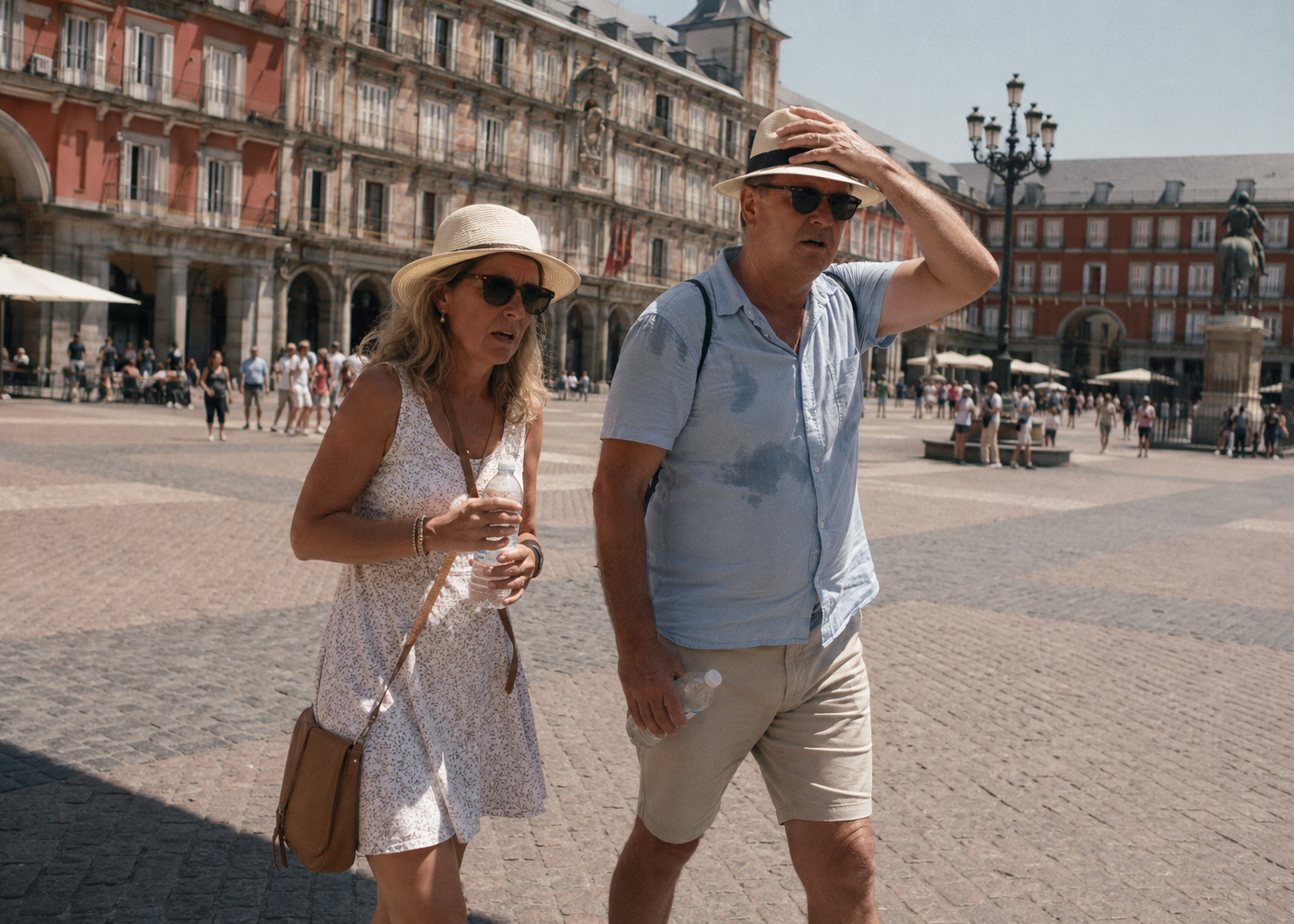
The emails started before the heat did. By the third week of May, with the forecast maps turning the deep purple that means trouble, the messages were arriving from American readers and friends with trips booked, all asking some version of the same question. Is it still worth coming. I have spent the days since the heat dome settled over us thinking about how to answer honestly, because the true answer is more complicated than yes or no, and an honest one is worth more than a reassuring one.
What I have been telling them begins with the same thing I would tell anyone who lives here long enough to stop being surprised by the heat. Yes, come. The trip is still worth taking. But come understanding what you are coming into, because the Europe of the postcard, the gentle golden summer of the imagination, is not quite the Europe that exists anymore, and the gap between the two is where trips go wrong.
What It Actually Felt Like
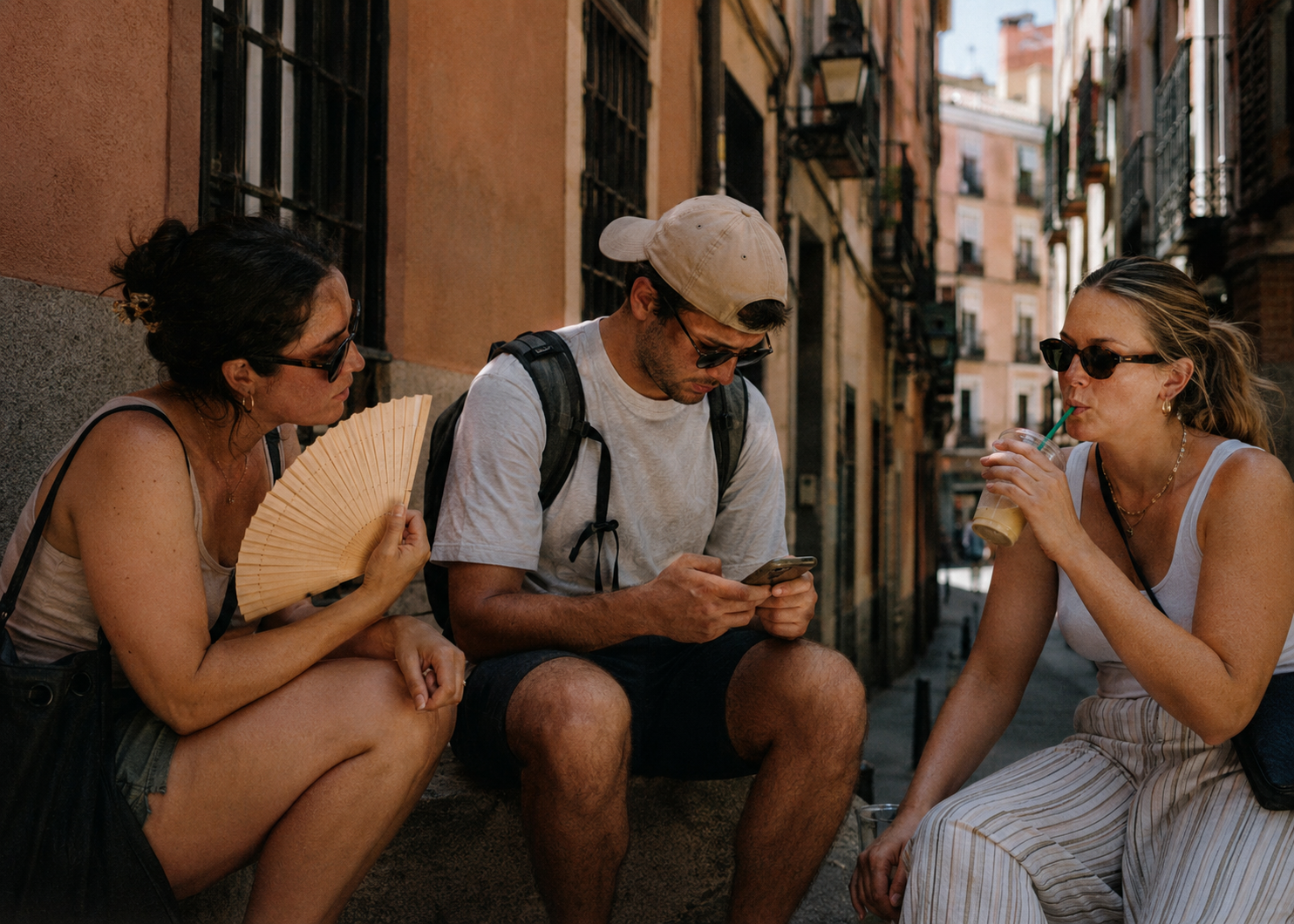
Let me describe the thing itself, because the numbers in the news do not convey what a record May heat dome feels like from inside a city.
It felt like the summer arrived without warning and without the usual ramp. One week the evenings were still cool enough for a jacket on the terrace, and the next the air had the thick, still, oven quality that normally belongs to late July, weeks ahead of schedule. The city changed its behavior overnight. The shutters came down across every window by mid-morning, the streets emptied in the early afternoon, and the whole rhythm of the place shifted into its hot-weather mode, the mode Madrid knows well but does not usually need in May. Walking across a sun-struck plaza at two in the afternoon, you felt the heat as a physical weight, the kind that makes you understand why this city built its whole daily schedule around avoiding exactly that hour.
The nights were the part that surprised even longtime residents. The heat did not break after dark the way it usually does, the buildings holding their warmth so that the apartments stayed stifling well past midnight, and sleep became something you negotiated for rather than simply had. This is what people mean when they talk about the danger of these events, not the dramatic midday peak but the relentlessness, the way a body never gets the cool night it needs to recover. For the young and healthy it is merely miserable. For the old and the vulnerable it is genuinely dangerous, and that distinction is one I find myself making a lot lately.
Why I Still Say Come
And yet my answer remains yes, and I want to explain why, because it is not mere reassurance.
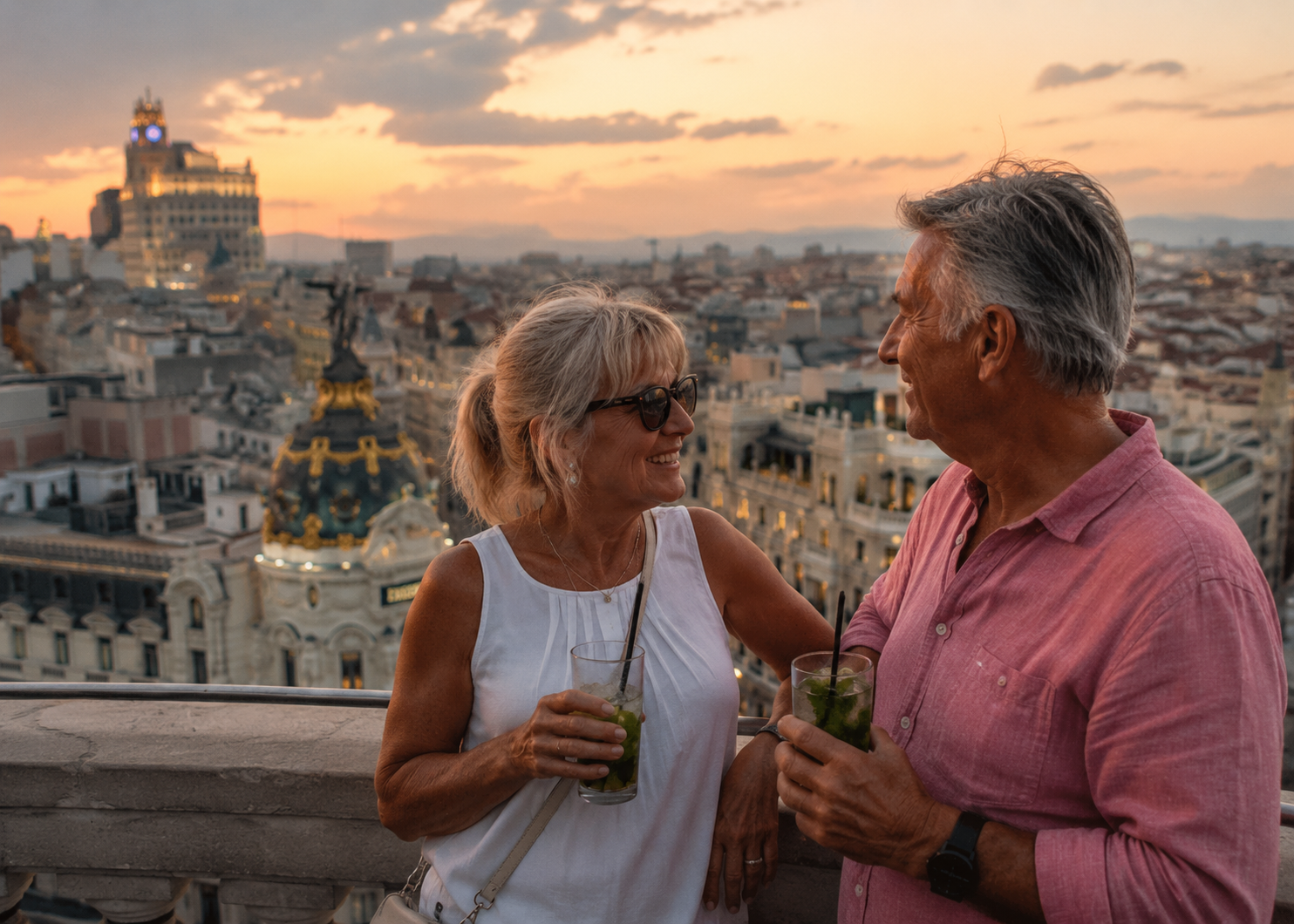
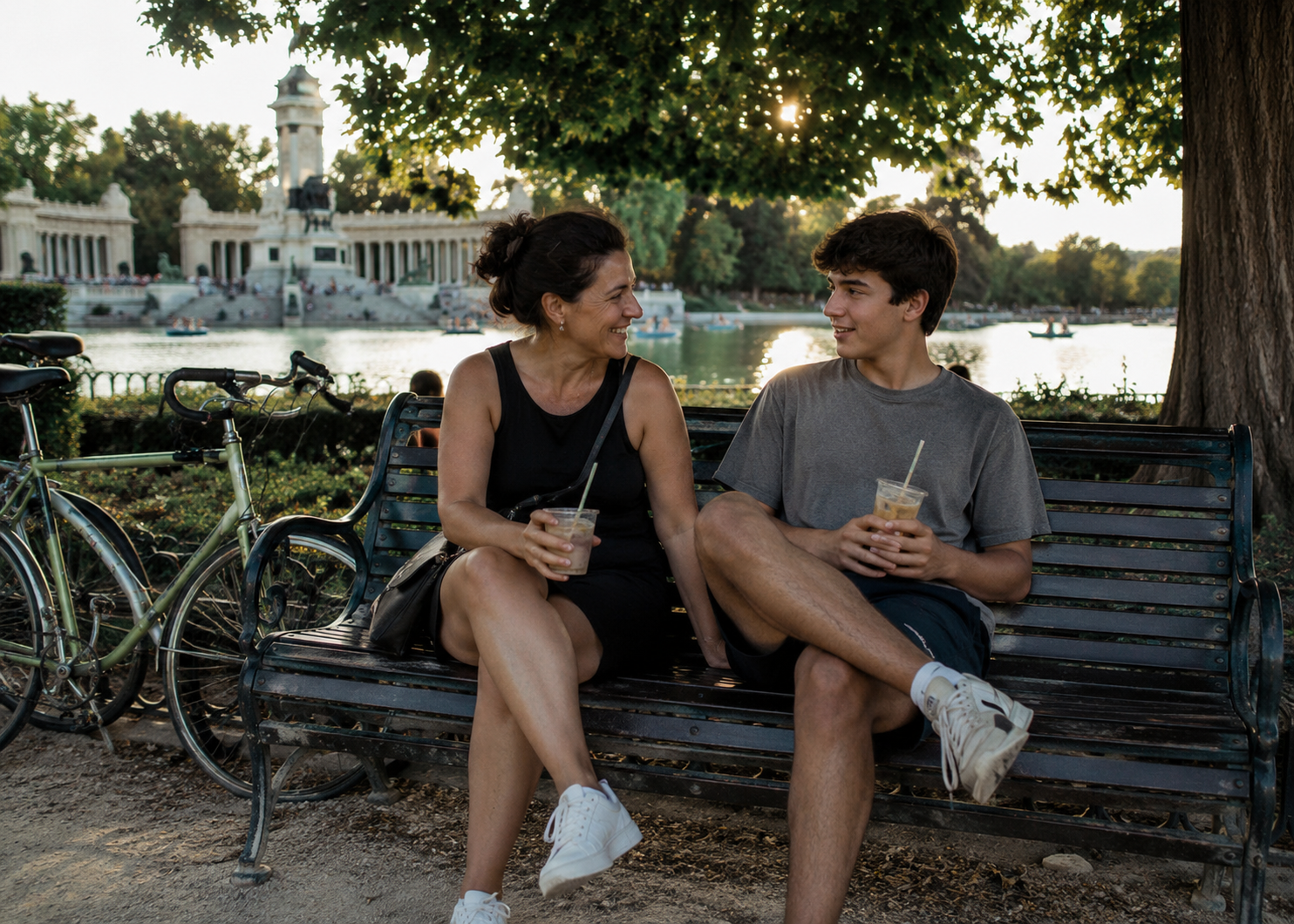
The heat, for all its intensity, is survivable and navigable if you treat it with respect, and the city does not actually shut down. It adapts, the way it always has, and a visitor who adapts with it finds that the great pleasures are all still there, simply relocated to the cooler hours. The morning, before the heat builds, is glorious, the light soft and the streets alive with people doing their shopping and their errands before the sun takes over. The evening, after the worst has passed, is when the city truly comes back to life, the terraces filling, the plazas crowded with families and old couples and children playing past what an American would consider a reasonable bedtime. The summer city lives at its edges, in the morning and the night, and those edges are wonderful.
What you give up is the middle of the day, and honestly, you should give it up anyway. The American instinct to fill every daylight hour with sightseeing, to march from monument to monument through the worst of the afternoon heat, was always the wrong way to experience a southern European summer, and the heat simply makes the lesson unavoidable. Surrender the early afternoon to a long lunch, a rest, a cool museum, a shaded café, and you are not losing the trip, you are finally doing it correctly. The locals are not being lazy when they disappear at three. They are being wise, and the visitor who joins them has a better time.
What I Tell Them To Change
So when the emails ask what to do, my advice is concrete, and it is mostly about adjusting expectations rather than abandoning plans.
I tell them to flip their days. Be a morning person for this trip, even if you are not one at home, because the hours from seven to noon are the gift and the hours from two to six are the tax. I tell them to confirm, in writing, that their accommodation actually has air conditioning, because the charming old apartment in the photos very likely does not, and a sleepless week in a hot room sours everything. I tell them to build slack into the itinerary, so that a brutal afternoon can become a museum or a siesta rather than a forced march, and so that a red-alert day can be spent somewhere cool without the whole plan collapsing.
And I tell them to consider where, not just when. If the heat genuinely frightens them, the cooler corners of Europe are right there, the green north of Spain, the Atlantic coasts, the mountains, places that stay mild even when the south bakes. A trip is a set of choices about geography as much as calendar, and the traveler who is flexible about where can almost always find a comfortable version of the European summer they wanted. Nobody has to stand in a furnace to see Europe. They only have to be willing to adjust the map.
The Thing I Am Careful To Say
There is one part of my answer I deliver more carefully than the rest, because it is the part that matters most and is easiest to get wrong.
This heat killed people. Across the continent during the late-May event, there were deaths, including young people who drowned seeking relief in open water and vulnerable people for whom the heat was simply too much. I do not say this to frighten anyone out of a trip, because an ordinary healthy traveler taking sensible precautions is at very little risk. I say it because the heat deserves to be taken seriously rather than treated as a colorful inconvenience, and because the readers I worry about are the older ones, the retirees for whom this blog largely exists, who are precisely the group for whom extreme heat carries real danger.
So to them I add the extra word. Watch yourself in the heat, know the signs of heat exhaustion, do not push through the hot hours out of stubbornness or a sense that you have paid for this trip and must extract every minute. Drink more water than feels necessary. Rest when your body asks. Travel with someone who will notice if you are flagging. None of this should stop a fit and careful person from a wonderful trip, but all of it is the difference between traveling wisely and traveling recklessly in a Europe that is hotter than it used to be.
What This Heat Is Telling Us
Underneath the practical advice, the emails are really asking a deeper question, and I have started answering that one too.
They are asking, without quite saying it, whether the European summer they dreamed of still exists, and the honest answer is that it exists but it is changing. This was the hottest May France has ever recorded, an event scientists called extraordinary, and it sits in a clear line of summers that have been getting hotter, earlier, and longer. The continent is warming faster than the global average, and the gentle Mediterranean summer of the imagination is slowly giving way to something fiercer. To pretend otherwise would be dishonest, and the readers planning their retirements around the idea of a temperate European life deserve the truth rather than the brochure.
But the truth is not despair, and I am careful to say that too. People have lived well in hot places for all of human history, and southern Europe in particular has thousands of years of practice at the art of living gracefully with heat, the architecture, the schedule, the food, the whole civilization built around staying cool and unhurried through a hot afternoon. The heat is rising, and that is real and worth taking seriously. But the knowledge of how to live with it is right here, embedded in the culture, available to anyone willing to learn it. That is, in the end, what I am telling the Americans who write to me. Come, but come ready to live the way this place has always lived in summer, and you will be fine, and you will probably love it.
What I Have Learned Watching The City
The last thing I tell them comes from simply watching how the people around me handle a heat that frightens visitors and barely ruffles the locals.
The Spanish do not fight the heat, and that is the whole secret. They do not insist on their plans in the face of it, do not march through it, do not treat it as an obstacle to be overcome through willpower. They yield to it, organizing the day around it, working with its rhythm rather than against it, and in doing so they take most of its power away. The shutters down at noon, the long lunch, the rest, the late evening emergence into a cooler world, this is not defeat. It is a kind of wisdom that the heat-fighting northern visitor lacks, and watching it up close has changed how I think about a lot more than weather.
That is the deepest thing I have to offer the people asking if their trip is still worth it. It is worth it, and it will be better than they expect, if they can let go of the idea that a vacation means filling every hour and learn instead the old southern art of doing less in the heat and more in the cool. The Europe that is coming will demand that adaptation of everyone, residents and visitors alike. The ones who learn it now, on a summer trip, are getting an early lesson in how to live well on a warming continent, and that lesson is worth at least as much as the monuments they came to see.
The Questions Behind The Questions
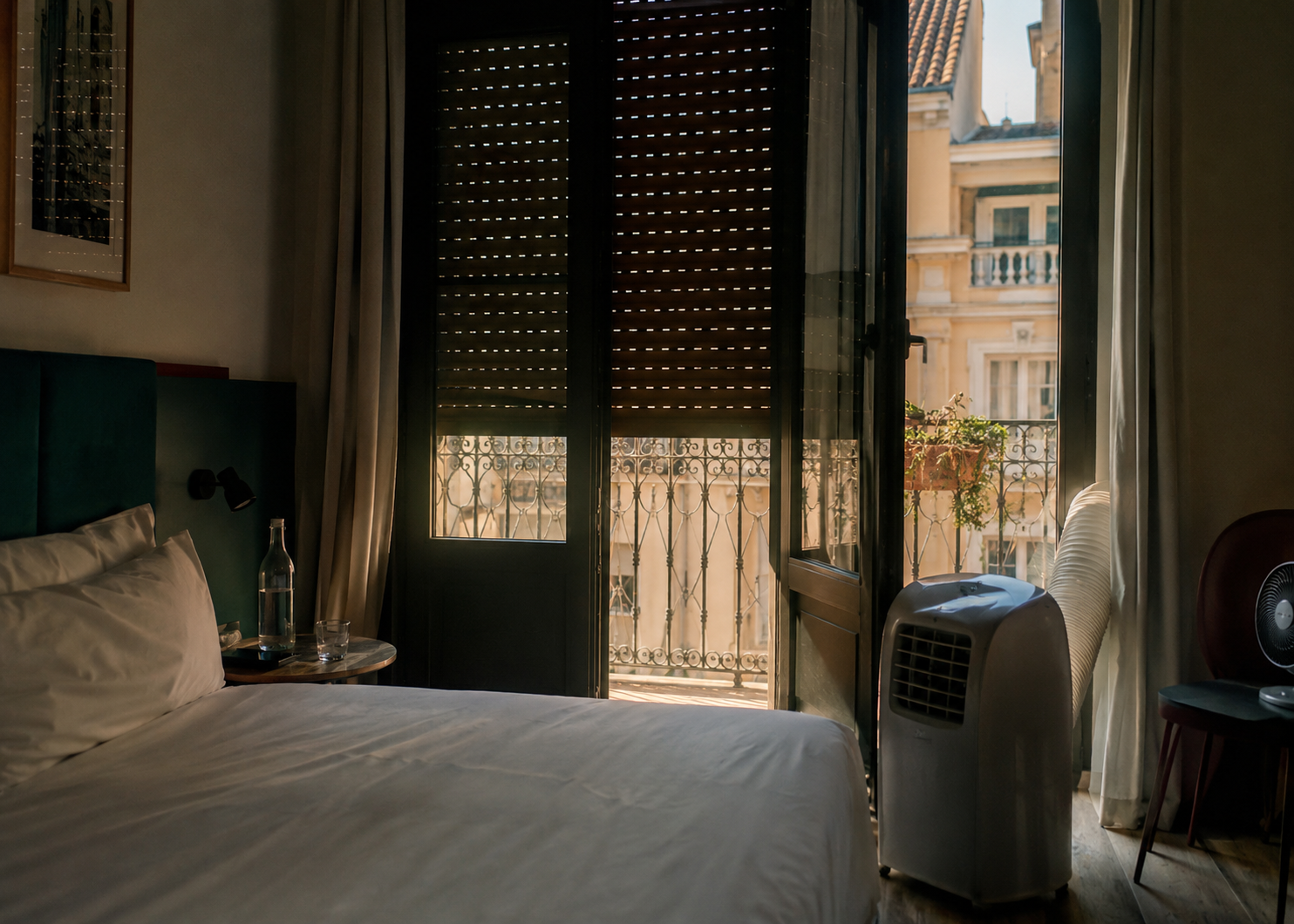
The longer the emails came, the more I realized that the surface question, is my trip still worth it, was usually standing in for something larger that the writer had not quite articulated.
Some of them were really asking whether their whole dream was still viable. These were the readers some years into planning a European retirement, people who had spent a decade imagining a gentle life in a Spanish village or a Portuguese town, and the news of a record-shattering heat dome had shaken the image. For them the heat wave was not a travel-logistics question at all but an existential one, a crack in the picture they had built their future around. To those readers I find myself giving a longer, gentler answer, because the stakes are higher than a ruined afternoon and the honesty matters more.
What I tell them is that the dream is not dead, but it needs updating. The version where you buy the inland farmhouse with no air conditioning and spend July afternoons in the garden needs rethinking, because that particular fantasy is colliding with the new climate. But the broader dream, a slower life, a kinder pace, a community, good food, real healthcare at a fraction of the American cost, all of that remains entirely intact, and much of it actually gets easier to appreciate when you adopt the local way of living with heat. The adjustment is real but it is an adjustment, not a cancellation, and the people who go in clear-eyed about the climate are better prepared than the ones chasing a postcard that was always slightly out of date.
How A Trip Becomes A Test Run
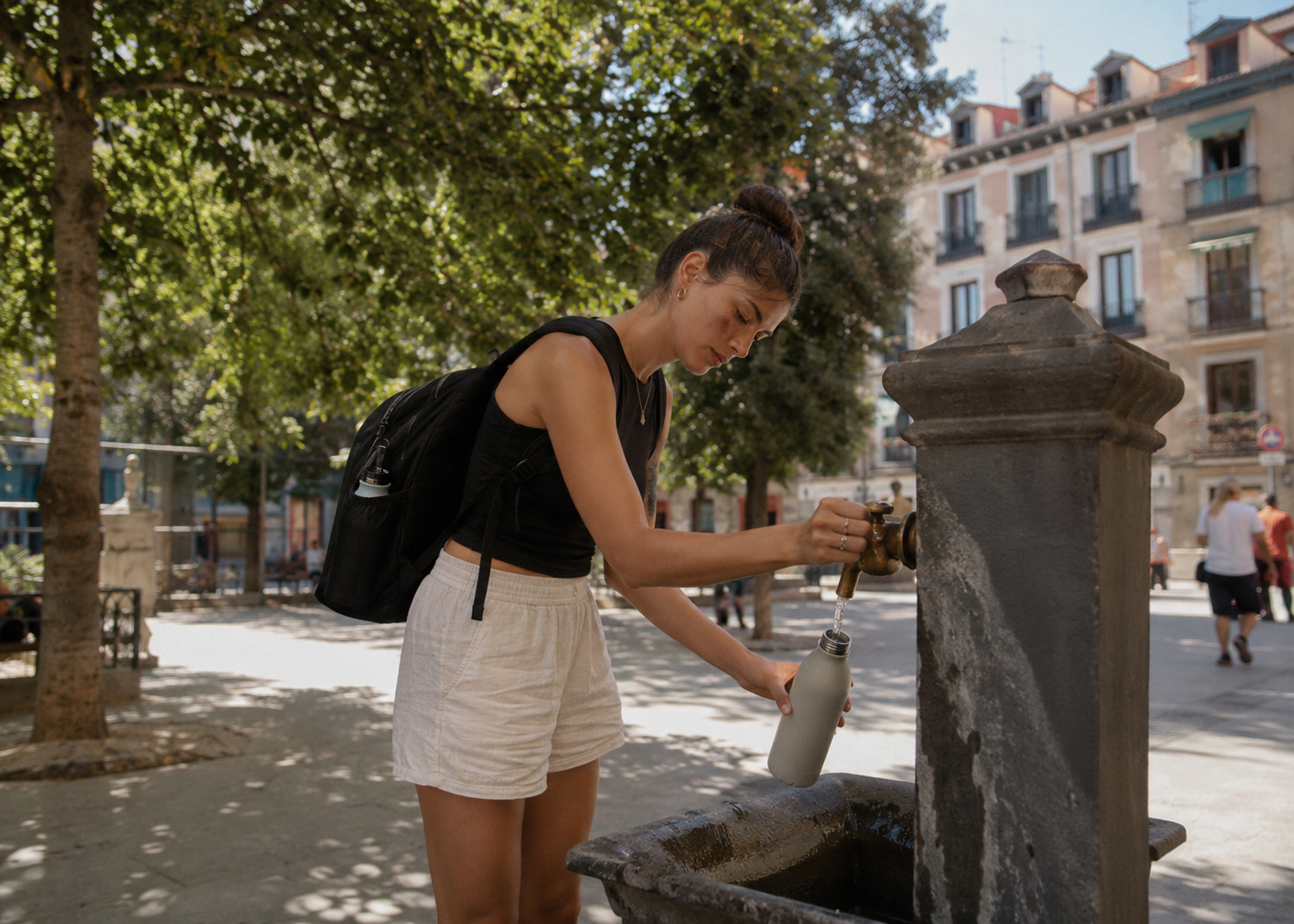
For the readers weighing a move rather than just a holiday, I have started suggesting they treat the summer trip as exactly the test it can be, which reframes the heat from a threat into useful information.
A summer visit during a hot spell is the most honest possible preview of what living here would actually be like, far more honest than a pleasant week in October that shows only the easy face of the place. If you come in the heat, live through a hot week, learn whether you can adapt to the rhythm, discover how you personally cope with a stifling night and a furnace afternoon, you learn something about the move that no amount of research delivers. The trip becomes a trial, and the heat becomes the most useful part of it rather than the worst.
I tell them to pay attention to their own reactions during that hot week, honestly and without forcing it. Did the adapted rhythm feel like a pleasant discovery or a grinding imposition. Did the long slow afternoon feel like a gift or a frustration. Could you imagine not just tolerating but enjoying a life organized this way, year after year. These are the questions a hot summer trip can answer, and a person considering a major move is far better served by an honest hot-weather test than by a flattering mild-weather one. The heat, in other words, is doing them a favor by showing up, even if it does not feel that way at two in the afternoon.
That is the final turn in what I have been telling everyone who writes. The heat is not the enemy of the European dream. It is the part of the dream that asks the most of you, and meeting it well, on a trip or in a move, is how you find out whether the life you are imagining is one you can actually live. Come in the heat. Learn what it asks. And then decide, with clear eyes, whether this warming, beautiful, ancient, unhurried corner of the world is where you want to be. For most of the people who write to me, once they understand what they are really choosing, the answer is still yes.

About the Author: Ruben, co-founder of Gamintraveler.com since 2014, is a seasoned traveler from Spain who has explored over 100 countries since 2009. Known for his extensive travel adventures across South America, Europe, the US, Australia, New Zealand, Asia, and Africa, Ruben combines his passion for adventurous yet sustainable living with his love for cycling, highlighted by his remarkable 5-month bicycle journey from Spain to Norway. He currently resides in Spain, where he continues sharing his travel experiences with his partner, Rachel, and their son, Han.