
An American spending a first night in a Spanish bedroom usually notices three things before sleep. The shutters seal the room into genuine darkness, the bed is dressed in a way that does not match what they are used to, and the air is cooler and fresher than the rest of the apartment. None of this is luxury. It is just how a Spanish bedroom is set up, and it tends to produce better sleep than the American version.
From inside a Spanish household, these arrangements are so ordinary that nobody thinks of them as standards at all. They are simply how a bedroom works. But set against the typical American bedroom, with its light-leaking blinds, its year-round bedding, and its sealed windows, the Spanish defaults start to look like a quiet masterclass in how to actually sleep. Here are nine of them, and what the American bedroom tends to get wrong by comparison.
Real Darkness From Persianas
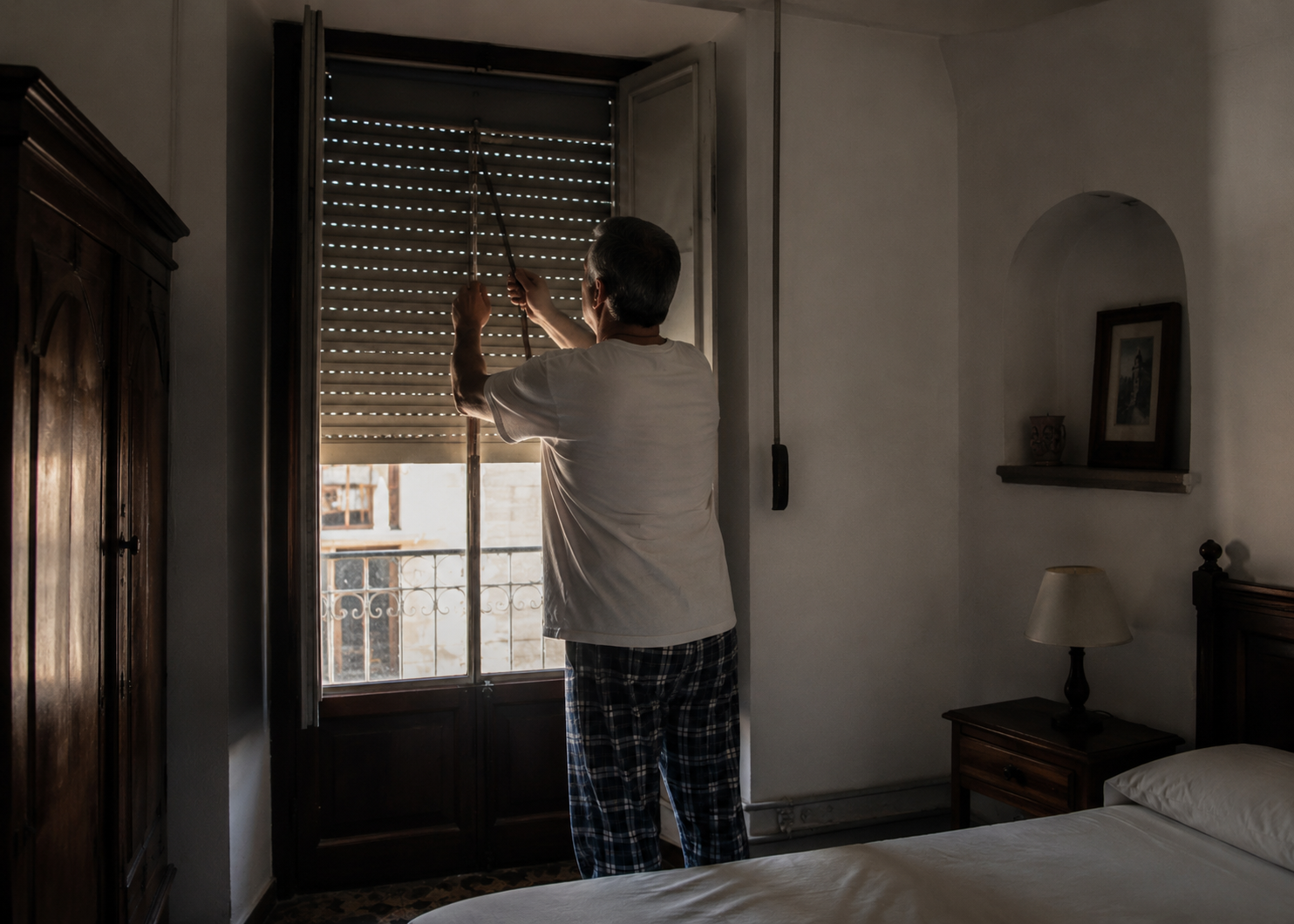
Start with the shutters, because they are the single biggest difference and the one Americans miss most when they go home.
Spanish bedrooms almost universally have persianas, external rolling shutters that pull down over the window from outside the glass, and when they are closed the room goes genuinely dark. Not the dim grey of a bedroom with curtains, but actual blackness, the kind that lets you sleep past dawn in summer and signals to the body that it is properly night. The shutters block light, heat, and a good deal of noise, and they are operated from inside with a strap or a crank, so sealing the room for sleep takes two seconds.
The American bedroom, by contrast, relies on curtains or interior blinds that leave light leaking around every edge, and the result is a room that never gets truly dark, with streetlight and early sun bleeding in all night and morning. Americans buy blackout curtains as a special purchase to solve a problem the persiana solved structurally generations ago. Once someone has slept in a room with real shutters, the light-leaking American bedroom feels permanently half-lit, and the blackout-curtain industry starts to look like an expensive workaround for a missing fixture.
Two Single Duvets On One Bed
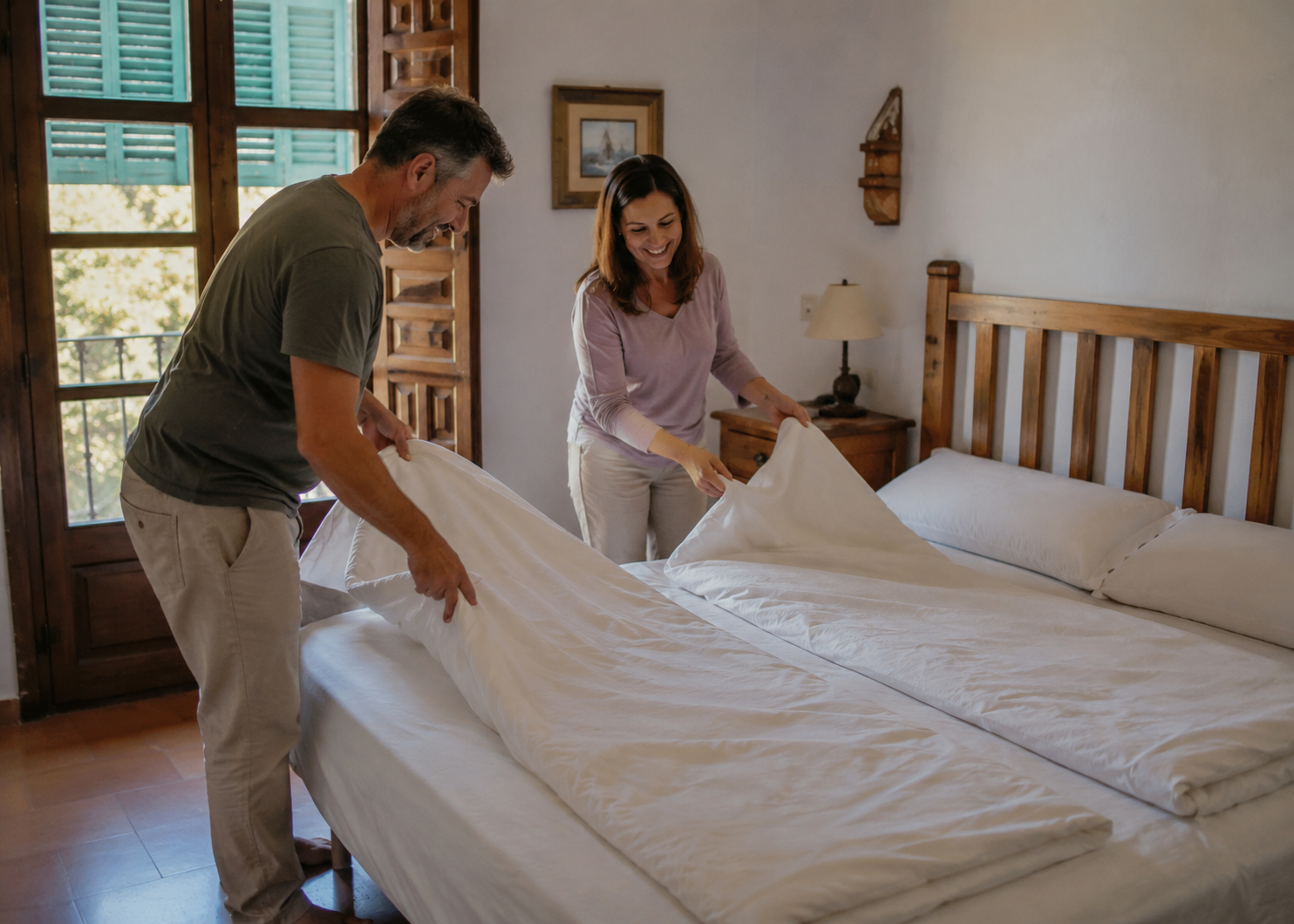
The second standard concerns the bedding, and it quietly solves one of the most common sources of nighttime conflict.
On a Spanish double bed, couples very often use two separate single duvets rather than one large shared one, the arrangement common across much of continental Europe. Each person gets their own cover, which means no nighttime tug of war, no one stealing the blankets, and each partner able to have the warmth they prefer without negotiating with the other. One person can pile on a heavier duvet while the other sleeps light, and neither disturbs the other turning over.
The American standard, the single large comforter shared across the bed, guarantees the familiar struggle, one partner cold because the other has rolled up in the covers, both compromising on a single weight that suits neither perfectly. The two-duvet system, which Americans tend to discover with surprise and then adopt with relief, treats a shared bed as two sleepers with two sets of needs rather than one unit forced under one cover. It is a small change that removes a recurring source of friction from a couple’s sleep entirely.
Bedding That Changes With The Season
The third standard is about adapting the bed to the weather rather than fighting it.
Spanish households keep different bedding for different seasons and actually swap it, the heavier nórdico duvet for winter, lighter covers for spring and autumn, and in the heat of summer often just a sheet or a thin colcha. The bed is dressed for the temperature it will actually face, which means the sleeper is neither sweating under too much nor shivering under too little. Changing the bedding with the season is a small ritual that marks the turn of the year and keeps the bed comfortable through very different climates.
The American tendency is to keep the same bedding year-round and adjust the thermostat instead, running the air conditioning harder in summer and the heat harder in winter to make a fixed set of covers work in every season. This costs energy and money and still tends to produce a bed that is wrong for half the year. The Spanish approach, change the bed rather than blast the climate control, is cheaper, more comfortable, and better suited to a body that sleeps best at different cover weights in January and July.
The Bedroom Is For Sleeping
The fourth standard is about what the room is for, and it is more cultural than physical.
The Spanish bedroom tends to be kept as a room for sleeping, not a second living room, without the television, the desk, the exercise equipment, and the general accumulation of daytime life that fills many American bedrooms. It is a calmer, more singular space, and that singularity of purpose helps signal to the body that this is the place for rest. A room that does one thing is a room the mind associates with that one thing.
The American bedroom has increasingly become a multipurpose room, a place to watch television, work on a laptop, scroll a phone, and occasionally sleep, and the blurring of functions blurs the room’s signal. A space used for stimulating waking activity all evening does not easily become a cue for sleep at night. The Spanish instinct to keep the bedroom for sleeping is, in effect, the sleep-hygiene advice that American doctors now hand out, except practiced as ordinary habit rather than prescribed as a remedy.
Air And Freshness Every Morning
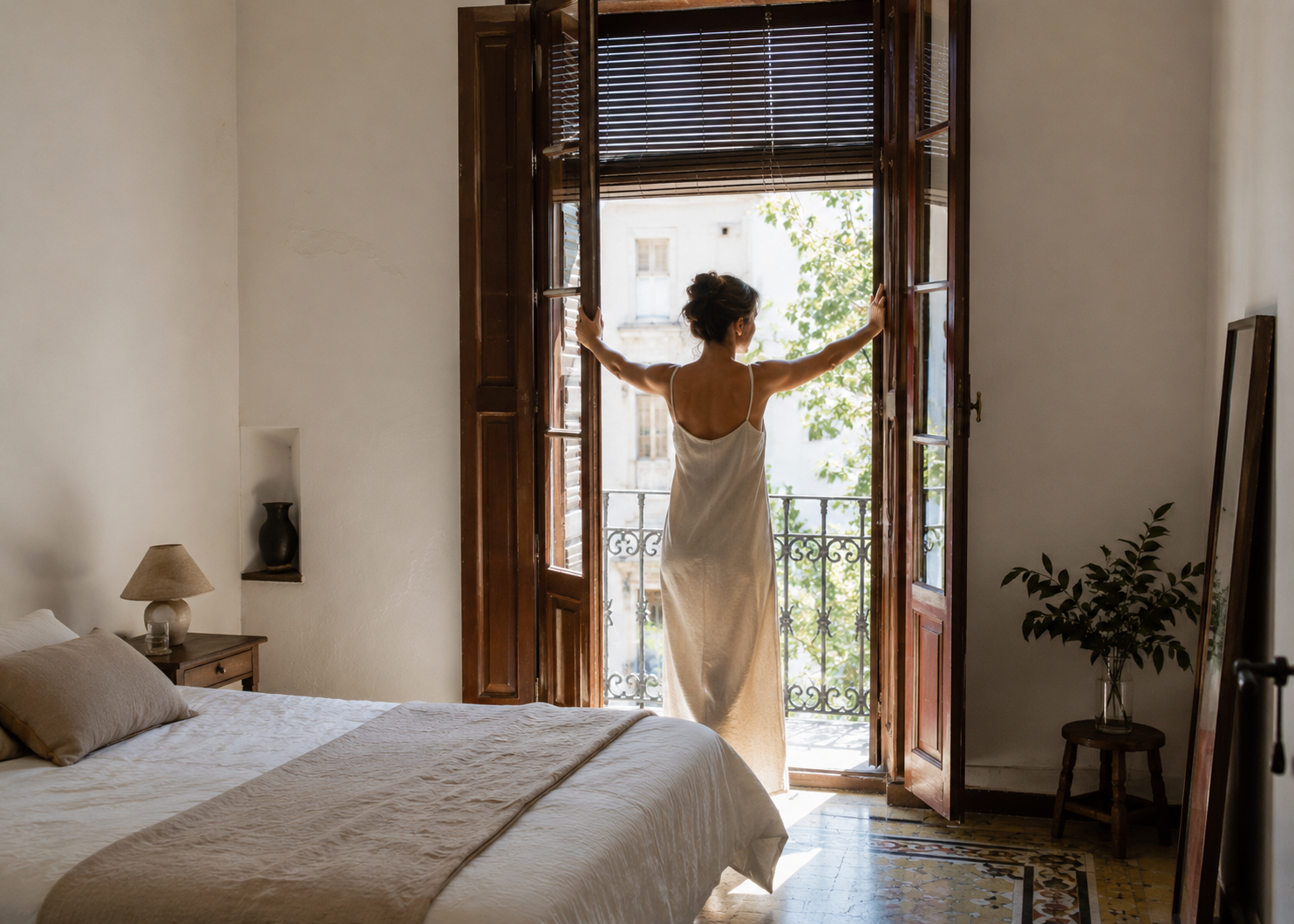
The fifth standard is a daily habit that keeps the room healthy.
Spaniards air out the bedroom every morning, throwing open the windows and often the shutters to let fresh air move through and clear the staleness and humidity that a night of sleeping breath and body heat leaves behind. Ventilar is a near-universal Spanish household habit, performed daily regardless of season, and it keeps the room fresh, discourages the damp and mustiness that a sealed room accumulates, and means the bed is aired before it is made.
The American bedroom is often kept sealed, windows shut year-round with the climate control doing the work, and the air inside grows stale and slightly humid over time in a way the occupants stop noticing because they are always in it. The daily Spanish airing, a few minutes of open windows each morning, costs nothing and keeps the room and the bedding fresh in a way no amount of air freshener replicates. It is one of those habits that seems trivial until you sleep in a room that has had it and a room that has not.
Cooler Sleeping Temperatures
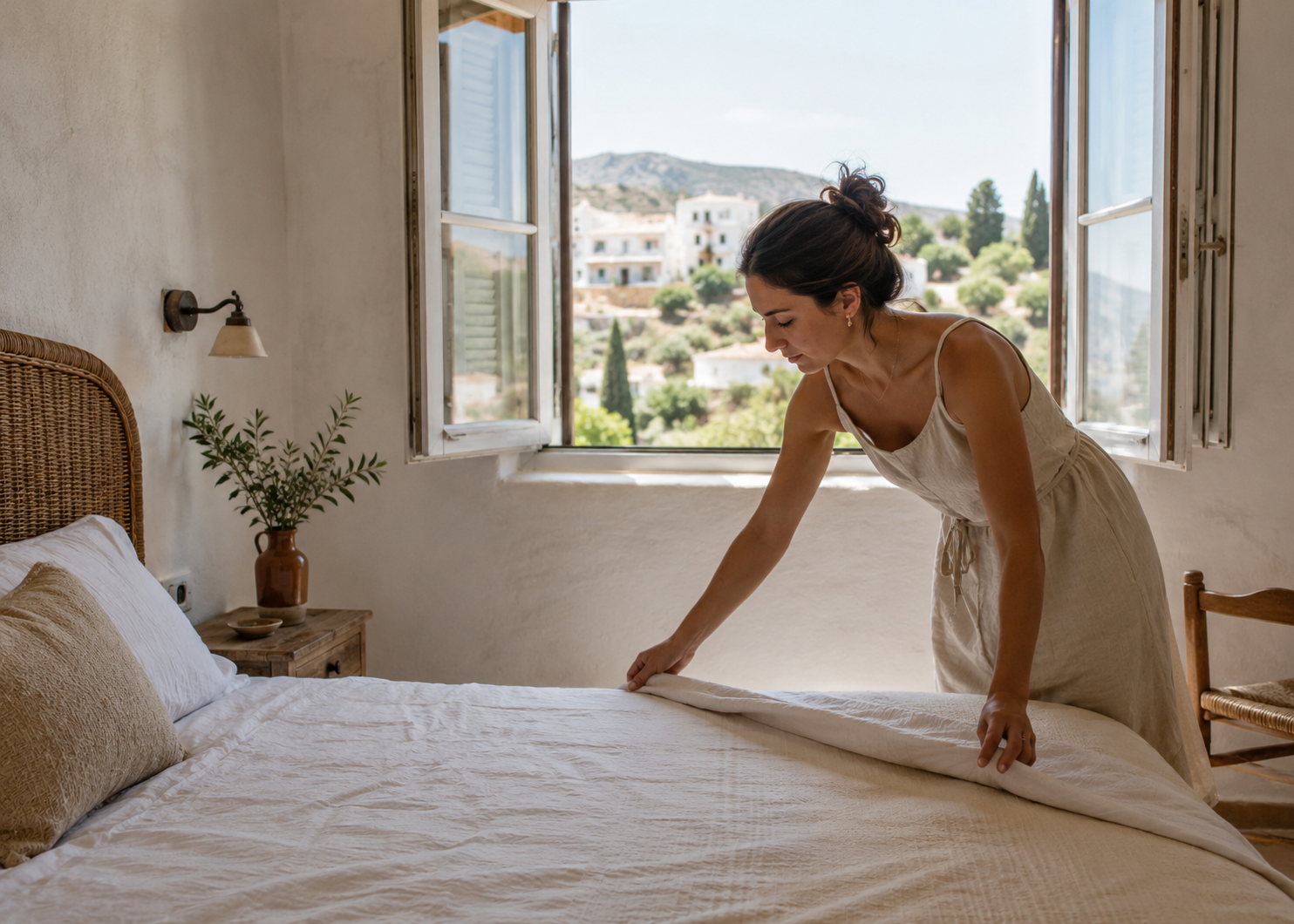
The sixth standard is about temperature, and it aligns with what the body actually wants for sleep.
Spanish bedrooms tend to be cooler than American ones, partly by design and partly by the structural choices, the shutters that block summer heat, the tile floors, the thick masonry walls of older buildings that hold a stable cooler temperature. A cooler room is what the body needs to fall and stay asleep, since core temperature drops during sleep and an overwarm room works against that, and the Spanish bedroom tends to land closer to the cool that good sleep requires.
The American bedroom is often kept warmer, heated through the winter to a daytime comfort temperature that is too warm for sleep, with the result that people sleep hot and restless and blame the bed. The Spanish combination of shutters, masonry, and a tolerance for a cooler sleeping room produces conditions better matched to human sleep physiology, more or less by accident of how the buildings and habits evolved. Cooler and darker is what the sleeping body wants, and the Spanish bedroom delivers both.
Quality Over Disposability
The seventh standard is about the materials, and it reflects the same buy-it-once instinct that runs through Mediterranean homes generally.
Spanish households tend toward good-quality bedding and linens, cotton and natural fibers chosen to last and to breathe, often the same well-made sheets used and laundered for many years, rather than the cheap synthetic-blend bedding replaced on a whim. Natural fibers breathe and regulate temperature in a way synthetics do not, and quality linen or cotton improves with washing rather than pilling and degrading, so the bed gets better over time rather than worse.
The American market, with its vast range of inexpensive bedding and its faster cycle of replacement, often defaults to the cheap synthetic option that feels fine new and sleeps hot and clammy thereafter. The Spanish preference for fewer, better, natural-fiber pieces is part of the wider habit of investing in the things used every day, and a bed dressed in good cotton or linen simply sleeps better, cooler and more comfortable, than one dressed in cheap polyester blends.
The Siesta-Ready Room
The eighth standard reflects a relationship with daytime rest that Americans largely lack.
The Spanish bedroom is set up to be usable for rest at any time of day, the shutters making it possible to darken the room at three in the afternoon as easily as at midnight, which supports the cultural acceptance of a midday rest. Whether or not a given household actually takes a daily siesta, the room is equipped for it, capable of becoming dark and cool and restful in the middle of a bright afternoon at the pull of a strap.
The American bedroom, light-leaking and often warm, cannot easily become a dark restful space in daytime, which both reflects and reinforces a culture that treats daytime rest as laziness rather than restoration. The Spanish room, darkenable on demand, makes rest available whenever the body needs it, and the flexibility is part of a healthier overall relationship with sleep and rest than the American all-or-nothing, sleep-only-at-night model allows.
The Made Bed And The Ordered Room
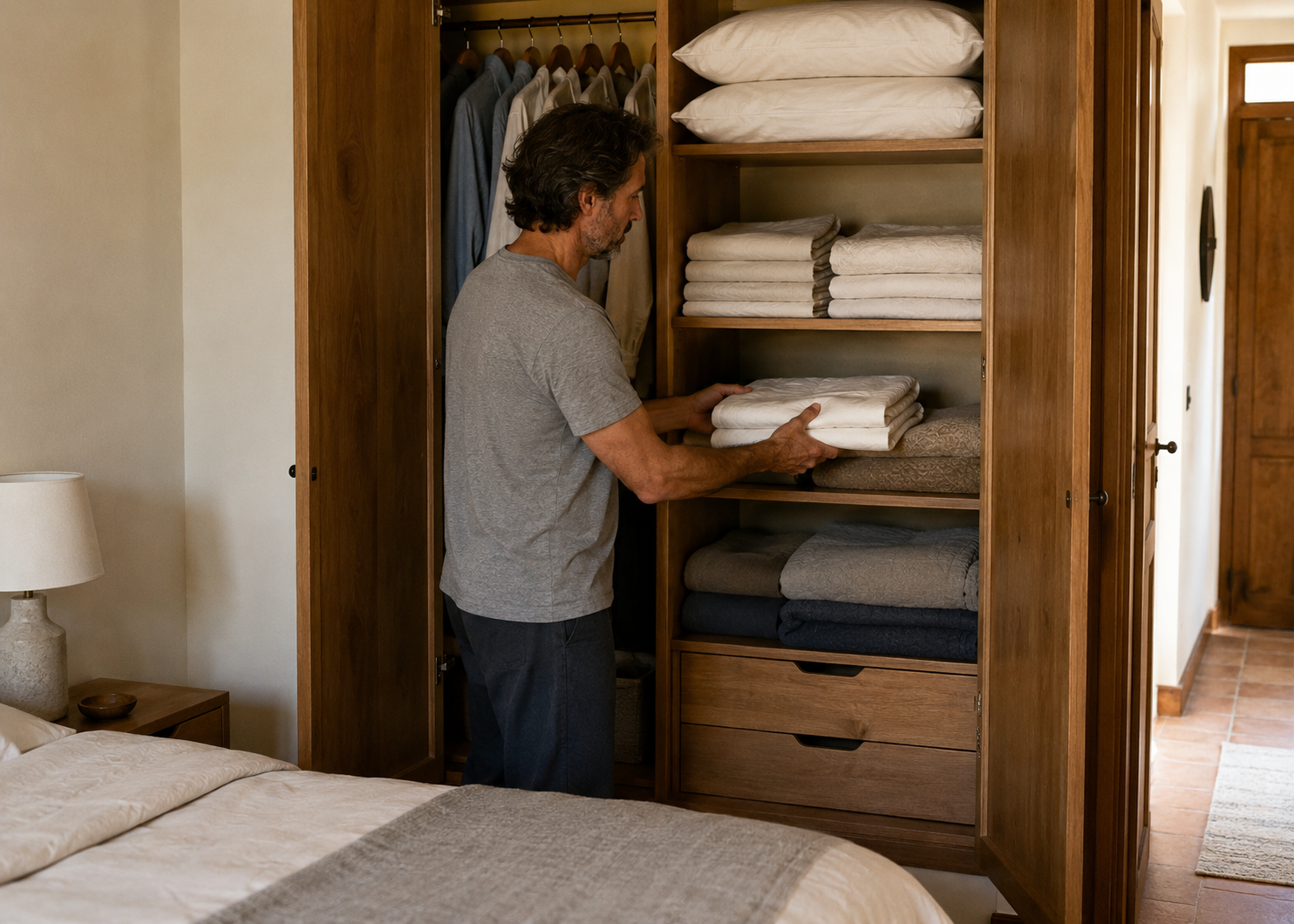
The ninth standard is about order, and it closes the loop on what a bedroom is for.
Spanish households tend to keep the bedroom tidy and the bed made, the room ordered rather than the chaotic drop-zone of clothes and clutter that many American bedrooms become. After the morning airing, the bed is made and the room set right, which means the space a person returns to at night is calm and ordered rather than a visual reminder of undone tasks. A tidy bedroom is a more restful bedroom, and the order is maintained as routine rather than achieved occasionally.
The American bedroom, often the least public and therefore least maintained room in the house, frequently becomes the place where clutter accumulates, the unmade bed and the pile of clothes greeting the occupant each night. The Spanish habit of the made bed and the ordered room is partly aesthetic and partly practical, a recognition that the state of the room shapes the state of mind at bedtime. Returning to calm and order helps the descent into sleep in a way that returning to chaos does not.
What The Spanish Bedroom Understands
The thread running through all nine standards is a single understanding, and it is worth stating plainly because it is what Americans are really reaching for when they copy these features.
The Spanish bedroom is built and maintained as an instrument for sleep, dark, cool, fresh, ordered, dressed for the season, and reserved for rest, and every one of the nine standards serves that single purpose. The features are not luxuries or quaint customs. They are, taken together, exactly the conditions that sleep science says produce good sleep, arrived at not through research but through generations of practical living in a particular climate with a particular set of values about the home.
The American bedroom, by contrast, has drifted into being a warm, light-leaking, multipurpose, year-round-bedded room that fights the sleeping body at several points at once, and Americans then buy blackout curtains, cooling mattresses, white-noise machines, and sleep supplements to solve problems the Spanish bedroom never created. The lesson is not that Spain has discovered some secret. It is that a bedroom set up the simple Spanish way, sealed dark with shutters, kept cool and fresh, dressed for the season in good natural fibers, and reserved for sleep, tends to deliver the rest that the heavily equipped, climate-controlled American bedroom keeps promising and missing. The fix is mostly subtraction and a few old habits, not another purchase.
For Anyone Trying To Copy It At Home
The good news for an American who has slept in a Spanish bedroom and wants the same at home is that most of these standards are habits or cheap fixes rather than expensive renovations, and they can be adopted one at a time.
The darkness is the highest-value change and, short of installing actual external shutters, is reachable with proper blackout blinds fitted close to the frame rather than loose curtains that leak around the edges. The two-duvet system costs nothing but the willingness to abandon the shared comforter, and couples who try it rarely go back. Seasonal bedding is a matter of owning two sets and swapping them, and the daily airing of the room costs nothing at all beyond remembering to open the window each morning. These four alone, darkness, separate duvets, seasonal covers, and a daily airing, deliver most of the Spanish bedroom experience without a contractor.
The rest is mindset more than money. Keeping the room cooler at night, reserving it for sleep rather than screens, choosing natural-fiber bedding when the old sheets wear out, and keeping the space tidy and the bed made are all decisions rather than purchases. An American does not need to gut a bedroom or move to Spain to sleep the way a Spanish household does. They need a dark room, the right covers, fresh air, a cool and ordered space, and the simple decision to treat the bedroom as the instrument for sleep that the Spanish have always quietly understood it to be.

About the Author: Ruben, co-founder of Gamintraveler.com since 2014, is a seasoned traveler from Spain who has explored over 100 countries since 2009. Known for his extensive travel adventures across South America, Europe, the US, Australia, New Zealand, Asia, and Africa, Ruben combines his passion for adventurous yet sustainable living with his love for cycling, highlighted by his remarkable 5-month bicycle journey from Spain to Norway. He currently resides in Spain, where he continues sharing his travel experiences with his partner, Rachel, and their son, Han.