
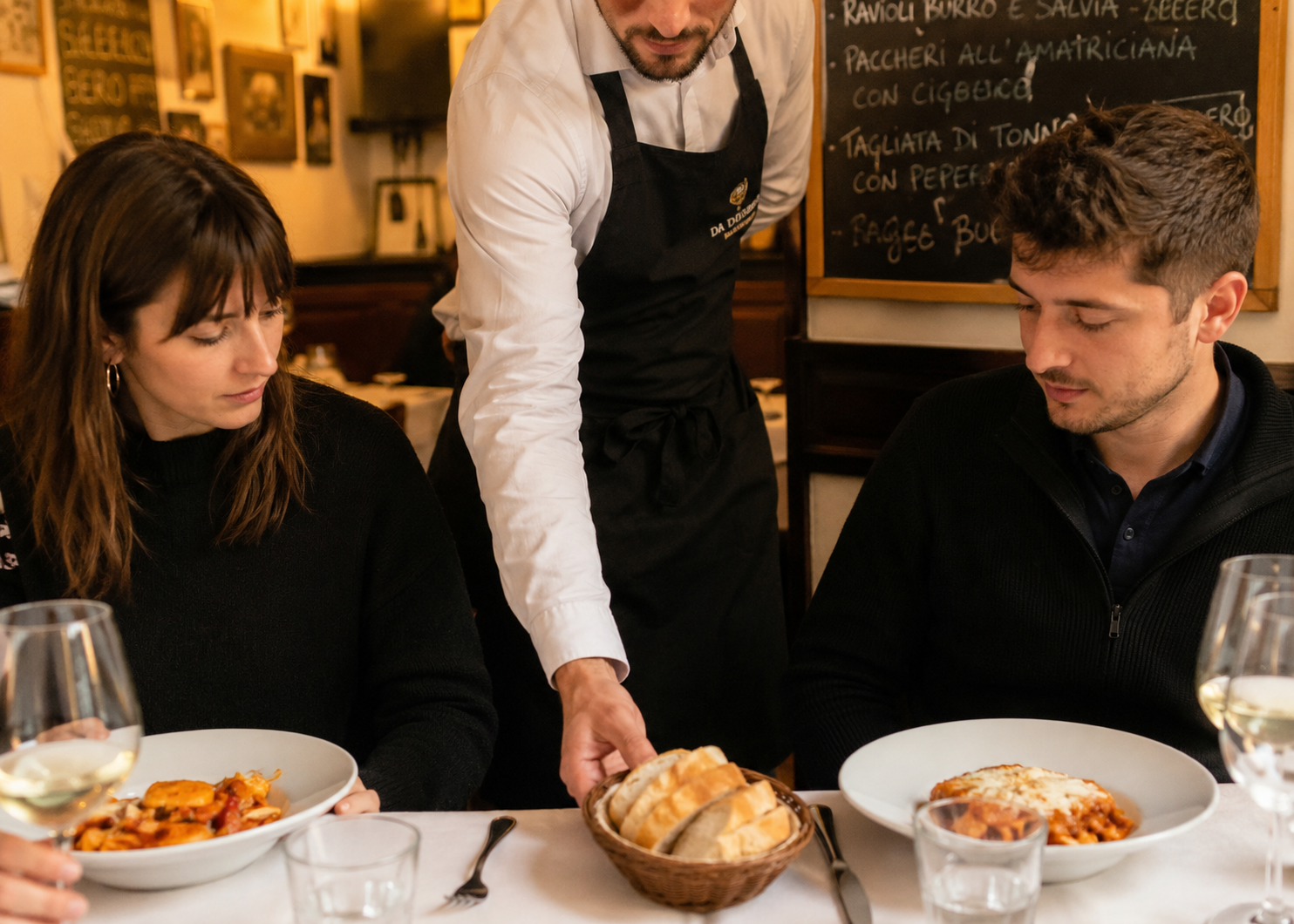
The American couple sits down at a trattoria in Florence at 7:45pm. They are early by Italian standards but the restaurant accommodates them. They look at the menu, order wine, and wait. The bread does not arrive. They wait another five minutes. The bread does not arrive. They look around at neighboring tables. The Italian couple two tables over has bread. The German tourists across the room have bread. The American couple does not have bread.
They ask the waiter. The waiter explains, in his careful English, that bread comes with food. They have not yet ordered food. The bread will arrive when their first course arrives.
The American couple is annoyed. They had assumed bread was complimentary, automatic, a starter that arrives before the meal begins. They have spent five minutes wondering whether the waiter forgot them or whether they did something wrong. Both possibilities are wrong. The third possibility, which they have not yet considered, is that Italian restaurants operate on a different logic than American restaurants, and bread in Italy is not what bread in America is.
This piece walks through what the Italian bread logic actually is, why the American assumption about restaurant bread service produces consistent confusion in Italy, what other Italian restaurant customs follow from the same underlying logic, and what Americans visiting Italy can understand to avoid similar small frictions across other restaurant encounters.
What Italian Bread Service Actually Is
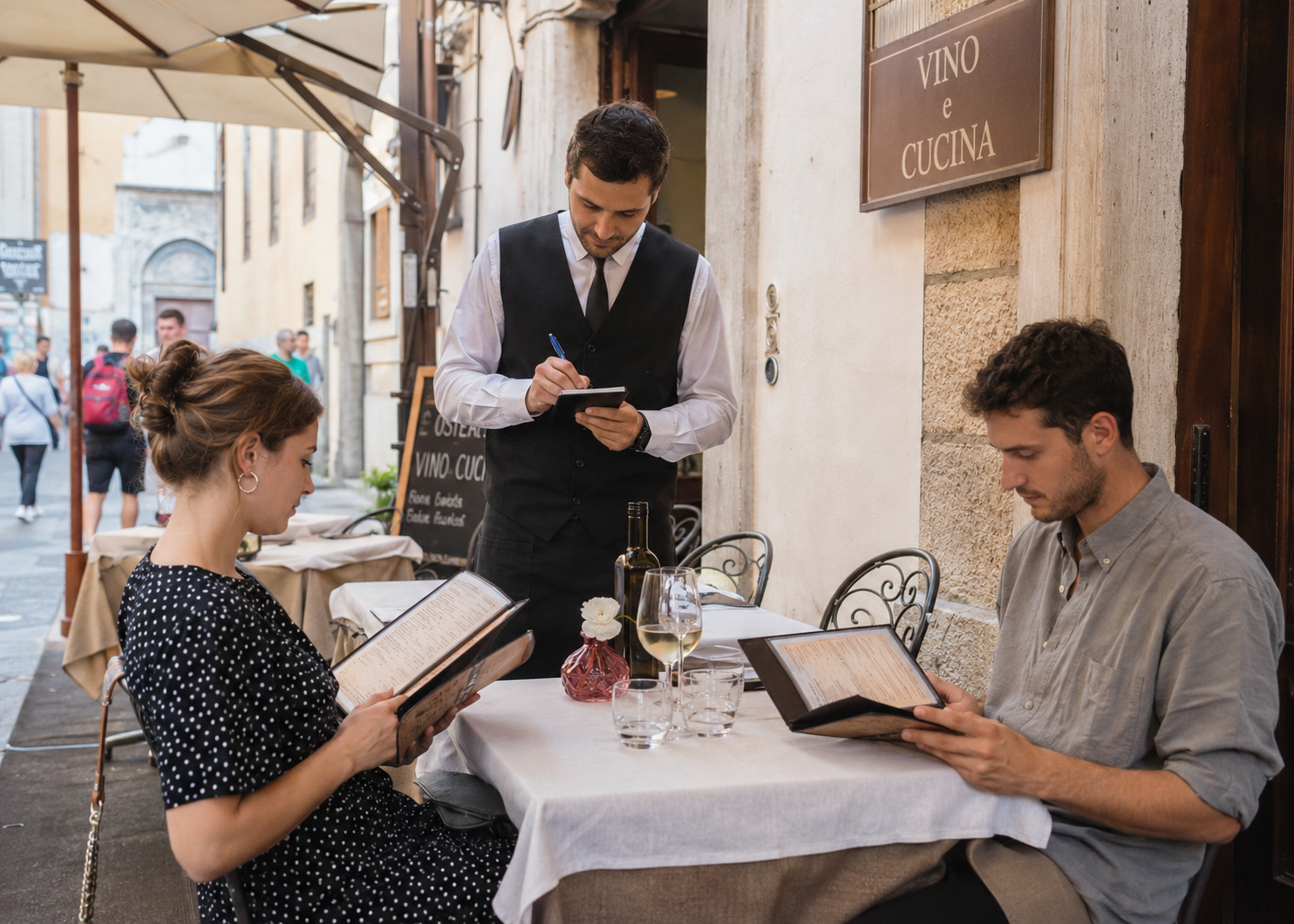
The Italian relationship with bread at restaurants has specific features that differ from American restaurant culture.
Bread accompanies food. It does not precede food. In the Italian framework, bread is one of the components of a meal, not a separate item served as a courtesy to keep the customer occupied while waiting for the meal. Bread without food has no function in the Italian framework. The customer who has ordered wine but not yet ordered food is not yet eating a meal, so there is no occasion for bread.
When the antipasto or primo arrives, the bread arrives with it. The bread is part of the food being eaten, not an accompaniment to the wait. The Italian customer expects this and is not surprised. The American customer expects something different and is confused.
The bread is also not free in the way Americans assume. Italian restaurants typically charge a coperto (cover charge) of €1.50 to €4 per person, which covers the bread, the table setting, and the basic service. The bread is included in this charge. The Italian customer understands that the coperto is paying for the bread among other things. The American customer often does not notice the coperto on the bill or assumes the bread was a courtesy and the coperto is something else.
Different breads accompany different courses. A pasta course gets a specific type of bread suited to the sauce. A meat course gets a different bread. A regional dish gets the regional bread that traditionally accompanies it. The matching is part of the meal, not an interchangeable starch placeholder. The Italian waiter who brings specific bread with a specific course is delivering the meal as intended. The American who would prefer one type of bread to enjoy across the entire meal is asking for a different framework than the one Italian restaurants operate within.
The bread is meant to support the meal rather than to be the meal. Italians use bread to gather sauce from the plate (the scarpetta tradition, scooping the remaining sauce with bread at the end of a pasta course). They use bread as a base for cured meats and cheese during an antipasto. They eat bread with cheese at the end of a meal. The bread is functional rather than central. The American pattern of eating substantial bread before food arrives, sometimes filling up on bread before the meal proper begins, has no Italian equivalent.
The combined effect is that Italian bread service follows a logic that the American customer needs to understand to participate in correctly. The understanding takes about one dinner of observation. The misunderstanding produces consistent small frictions across the American tourism experience in Italy.
Why The American Bread Basket Logic Developed Differently
The American restaurant bread basket is a different cultural artifact from the Italian bread service. Understanding why helps clarify what the Italian logic actually means.
American restaurant culture emerged in a different food economy. Bread was inexpensive. Restaurants competed for customers partly through perceived generosity. The bread basket with butter at the beginning of the meal signaled abundance and hospitality. The bread was free because making it free was good marketing, not because the bread had no cost.
American dinner timing produces longer waits. Americans typically arrive at restaurants hungry. The meal that follows requires preparation time. The bread basket fills the gap between sitting down and food arriving. The function is to manage hunger during the wait. Italian dinner timing operates differently because Italians arrive less hungry (the larger lunch has already done the day’s heavy eating) and Italian meals develop more gradually through multiple courses, removing the need for a starter to manage hunger.
American portion expectations include unlimited bread. Italian portion expectations include specifically calibrated bread amounts. The American customer accustomed to refill bread baskets expects continuing supply. The Italian customer expects the bread that comes with the course, not endless refill.
American restaurant economics include bread as a margin product. Bread is cheap. Including it free or at low cost in the meal allows higher pricing on the main components. Italian restaurant economics include the coperto as transparent cost recovery rather than embedded subsidy. The accounting is different even though the customer ends up paying similar total amounts.
American restaurant service includes proactive offering. Waiters bring bread without being asked. They offer refills without being asked. The service model is anticipating customer needs. Italian restaurant service includes responding to specific requests rather than anticipating. The bread comes when the food comes because that is when the bread is needed.
Neither system is wrong in some absolute sense. They reflect different food cultures, different economic structures, and different customer expectations. The Italian system makes sense within the Italian framework. The American system makes sense within the American framework. The confusion happens when a customer from one framework operates within the other without understanding the difference.
What Other Italian Restaurant Customs Follow The Same Logic
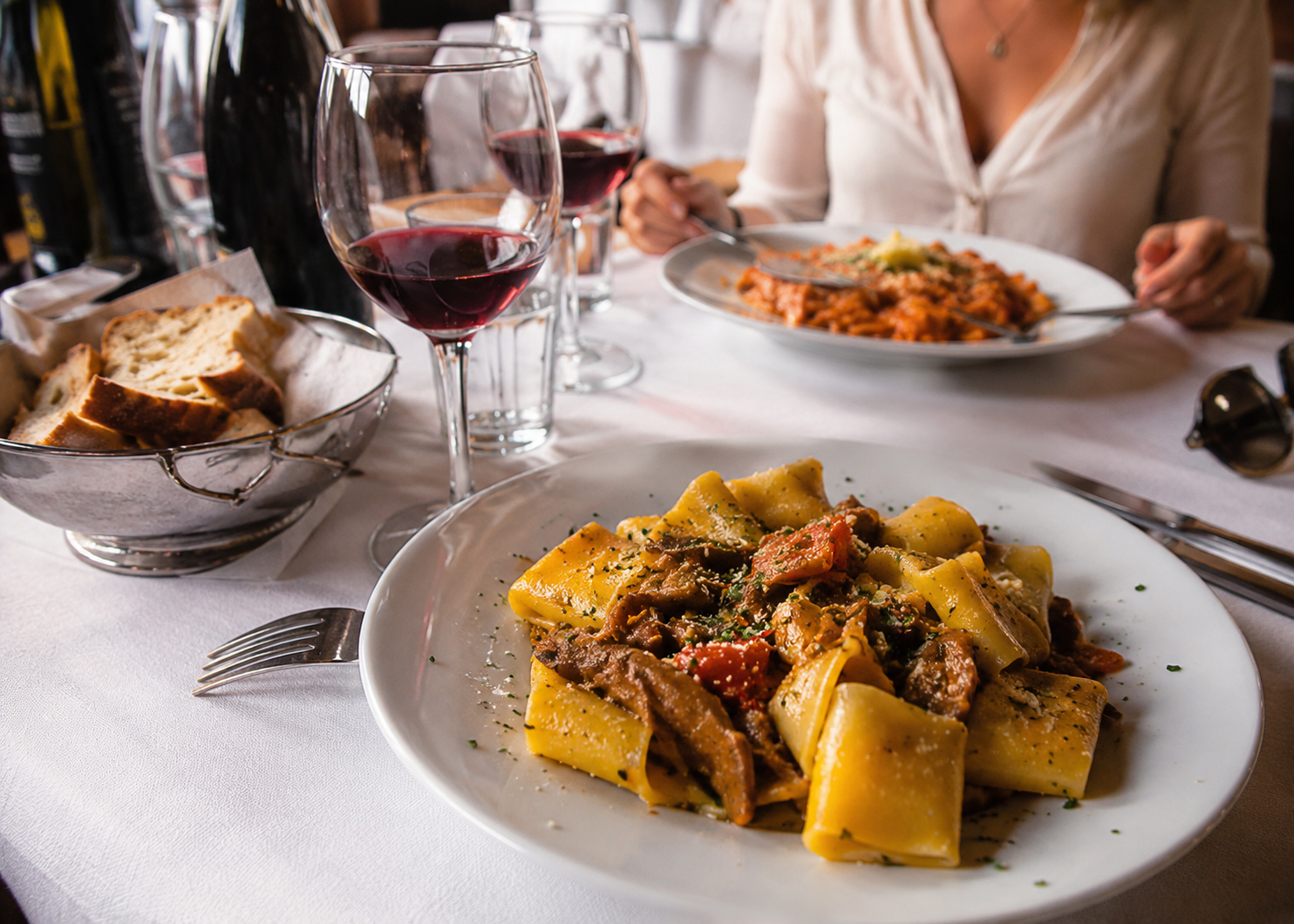
The bread service question is one example of a broader pattern in Italian restaurant culture. Several other customs follow the same underlying logic.
Water service. Italian restaurants do not bring water automatically. They ask whether you want still or sparkling, and they bring the bottle you ordered. Water is a beverage you order, not a complimentary service. American customers often expect water to arrive without ordering, and the failure to receive it produces a familiar small confusion.
Coffee timing. Italian coffee comes at the end of the meal, after dessert. It does not come with dessert. It does not come during the meal. The cappuccino specifically does not come after dinner. Cappuccino is a morning drink. Asking for cappuccino after 11am identifies the customer as a tourist. The proper after-dinner coffee is espresso, sometimes followed by digestivo (amaro or grappa).
Course pacing. Italian meals develop across multiple courses with deliberate pacing between them. Antipasto, primo, secondo with contorno, dolce, caffè. Each course is allowed to settle before the next arrives. The American expectation of rapid service that produces the next course immediately after finishing the current one is not the Italian framework.
Substitutions. Italian menus assume that the dishes have been composed deliberately and that the customer is choosing among composed dishes rather than building custom meals from components. Substitutions and modifications are uncommon. The American pattern of asking for pasta without the sauce that comes with it, or for a different cooking method than the menu specifies, often produces uncomfortable interactions with Italian waiters.
Splitting plates. Italian portions are typically smaller than American portions because Italian meals include multiple courses rather than a single large plate. Splitting a primo between two diners is acceptable in Italy and often done. Asking for a single secondo to be split is more unusual because each diner is expected to have their own secondo. The American pattern of ordering one main dish for two to share confuses the framework.
The bill. Italian bills do not arrive automatically when the meal appears to be ending. The customer asks for the bill (il conto) when they are ready to leave. The Italian framework treats the table as the customer’s until the customer indicates they are finished. The American expectation that the bill arrives automatically when the dessert is finished signals to the customer that they should leave. The Italian framework allows the customer to linger as long as they want, which produces a more relaxed end-of-meal experience but requires the customer to ask for the bill when ready.
Tipping. Italian restaurants include service in the menu prices and the coperto. Additional tipping is appreciated but not expected. A 5 to 10 percent tip on the food cost for good service is generous in Italian terms. The American pattern of 18 to 22 percent tipping produces both confusion and overpayment in Italian restaurants.
Each of these customs follows the same underlying logic that produced the bread service question. The Italian framework treats restaurants as participating in a defined cultural practice with specific conventions that operate consistently. The American framework treats restaurants as service providers responsive to customer expectations. Different frameworks produce different customs that the customer crossing between them needs to learn.
What Americans Visiting Italy Can Understand To Reduce The Friction
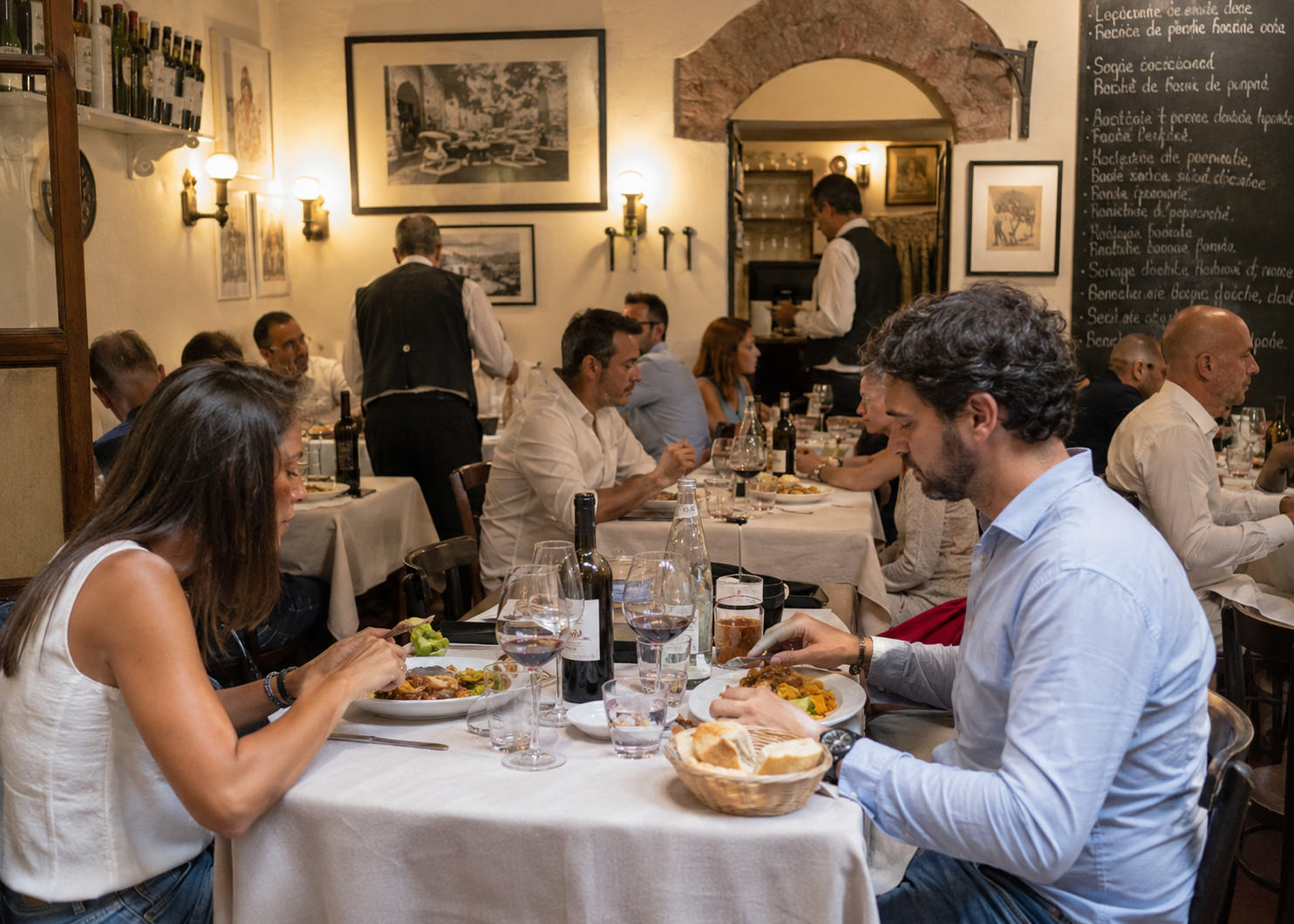
The bread service question is small. The pattern it represents is larger. Americans who understand the pattern can navigate Italian restaurants more comfortably across the full range of customs.
Treat the Italian meal as a developing event rather than as a transaction completed quickly. The pacing is deliberate. The courses come when they come. The bread arrives with the food. The coffee arrives at the end. The bill arrives when you ask. Each element happens when the cultural framework expects it to happen, not when the American framework expects it to happen.
Order in the Italian sequence. Antipasto first if desired, then primo, then secondo with contorno, then dolce, then caffè. The sequence is not mandatory but produces meals that flow as the Italian framework expects them to flow. The customer who orders only a secondo is having a different meal than the customer who orders the full sequence, and the restaurant adjusts service expectations accordingly.
Recognize the coperto on the bill. It is not a hidden charge. It covers the bread, the table, and basic service. Italian customers see the coperto and understand what it is paying for. American customers who do not see it on the bill are missing one of the structural features of the meal they just had.
Ask for what you want directly. Water, more bread (with a course), specific preferences. The Italian framework responds to direct requests but does not anticipate them. Direct asking is normal, not impolite.
Allow the meal to take time. Italian meals frequently run 90 minutes to 2 hours. The slow pace is the meal, not a delay in service. American customers expecting 45-minute meals will experience the Italian pace as inefficiency rather than as feature.
Use the bread to its proper purpose. The bread that arrives with the antipasto is for the antipasto. The bread that arrives with the primo is for the primo. The scarpetta at the end of the pasta is the proper use of bread to gather remaining sauce. Eating bread without food is not part of the framework.
Tip modestly. 5 to 10 percent on the food cost for good service. Less or none if the service was unremarkable. The American 20 percent default is not the Italian expectation and can create awkwardness rather than gratitude.
Order cappuccino in the morning only. Coffee with milk after lunch or dinner identifies the drinker as a tourist. The Italians treat morning coffee and after-meal coffee as different drinks. Espresso after dinner is correct. Cappuccino after dinner is not.
These adjustments are small individually and meaningful cumulatively. The American who understands the framework experiences Italian restaurants as the culturally rich events they are designed to be. The American who does not understand the framework experiences Italian restaurants as a series of small frustrations that the framework was never designed to produce.
What The Bread Question Reveals More Broadly
The bread basket question is one small example of how cultural frameworks shape daily experience in ways that travelers often do not recognize until they encounter the friction.
The American framework assumes restaurant service follows certain conventions. The conventions are not universal. They reflect American food culture, American hospitality norms, American economic structures. Other countries’ restaurant cultures operate on different conventions that make equivalent sense within their own frameworks.
The Italian framework treats meals as defined cultural events with specific structures. The structures are not arbitrary. They reflect Italian food culture, Italian social patterns, Italian economic structures. The bread service that confuses Americans is the bread service that makes sense to Italians who have grown up with it.
For Americans visiting Italy, the practical implication is that learning the framework produces meaningfully better experiences than expecting Italian restaurants to operate on American conventions. The learning is small. Reading one piece like this one provides most of what is needed to navigate Italian restaurants comfortably. The framework adjustments take one or two meals to internalize.
For Americans considering longer Italian stays or eventual residency, the framework understanding is the entry point to broader cultural integration. The restaurant customs reflect broader cultural patterns that extend across all of Italian daily life. The Americans who understand these patterns integrate more easily. The Americans who continue to operate on American conventions experience persistent small frictions that limit their integration.
The bread basket that does not arrive at 7:45pm in Florence is not a failure of service. It is the Italian framework operating as designed. The framework will produce bread when the food arrives, served with the course it accompanies, in the amount the meal expects. The American who understands this gets a better meal. The American who does not understand this gets a frustrating experience that the framework was not designed to produce.
For travelers, the choice between learning the framework and complaining about the framework is consequential. Italy will not adjust its restaurant culture to American expectations. The adjustment that is available is the visitor’s adjustment to the culture they have entered. The adjustment costs nothing beyond a few minutes of attention to how the framework works. The benefit is meaningful improvement in every meal across the visit.
The Italian restaurant logic is one of the more accessible cultural systems for visitors to learn. The bread question is its most visible feature. The visitors who learn the bread question typically pick up the rest of the framework across the first few meals of their visit. The visitors who do not learn it sometimes spend an entire trip frustrated by a framework that was never designed to frustrate them.

About the Author: Ruben, co-founder of Gamintraveler.com since 2014, is a seasoned traveler from Spain who has explored over 100 countries since 2009. Known for his extensive travel adventures across South America, Europe, the US, Australia, New Zealand, Asia, and Africa, Ruben combines his passion for adventurous yet sustainable living with his love for cycling, highlighted by his remarkable 5-month bicycle journey from Spain to Norway. He currently resides in Spain, where he continues sharing his travel experiences with his partner, Rachel, and their son, Han.