
Carnitas are not pulled pork with better marketing. They are pork cooked slowly in its own fat until tender, then finished hot enough to crisp at the edges without drying the meat into shreds.
A slow cooker can make good pork.
It cannot make real carnitas by itself.
The missing step is not a spice blend, a bottle of beer, or a heroic squeeze of lime. It is the lard confit, the slow cooking of pork in fat until the meat turns tender, juicy, and rich enough to crisp properly at the end.
That is the part many American recipes replace with convenience.
It is also the part that makes carnitas taste like carnitas.
Carnitas Begin With Pork, Lard, Salt, And Time
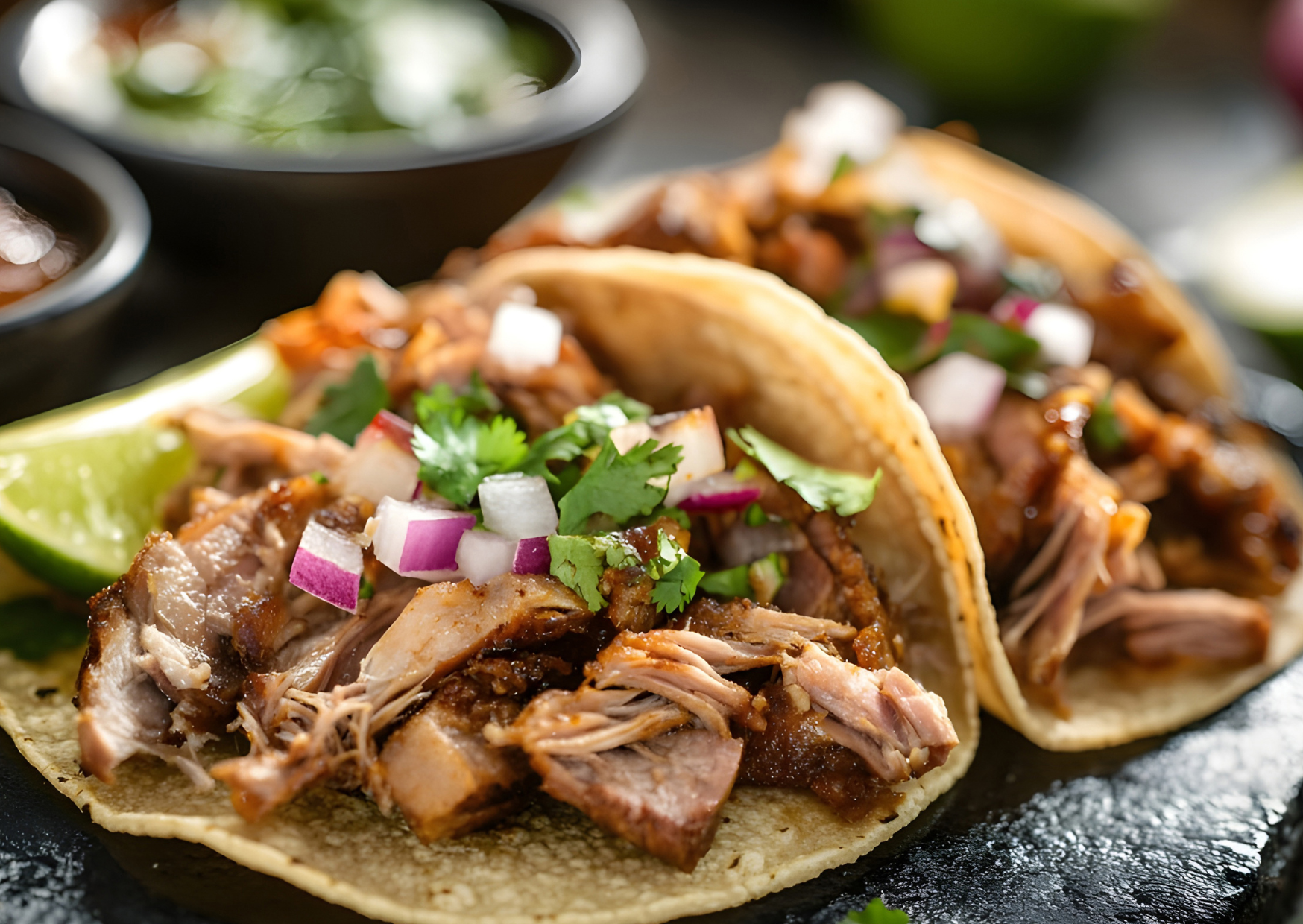
Carnitas are associated most famously with Michoacán, where pork is cooked in large copper cazos, often in lard, until the pieces become tender inside and golden outside.
The home version does not need a copper pot. It does not need a backyard setup. It does not need 20 pounds of pork or an uncle with strong opinions standing nearby.
It does need enough fat to cook the pork gently.
That is where American shortcuts usually go wrong. They put pork shoulder in a slow cooker with broth, orange juice, cumin, oregano, and maybe a little oil. Eight hours later, the meat is tender. Then it gets shredded and broiled.
That can be delicious.
It is not the same dish.
Carnitas are not supposed to taste like braised pork that got crisped afterward. The meat should cook in a fat-rich environment, almost like confit, so the pork stays juicy while the exterior develops that deep, browned, slightly sticky edge.
The seasoning is usually simpler than American recipes expect.
Salt does most of the work. Citrus, garlic, bay, herbs, milk, evaporated milk, cola, orange, or spices can appear depending on household, region, and cook. But the backbone remains the same: pork plus lard plus controlled heat.
If the technique is right, the ingredient list can be short.
If the technique is wrong, no amount of cumin will rescue it.
Real Mexican Carnitas With Lard Confit
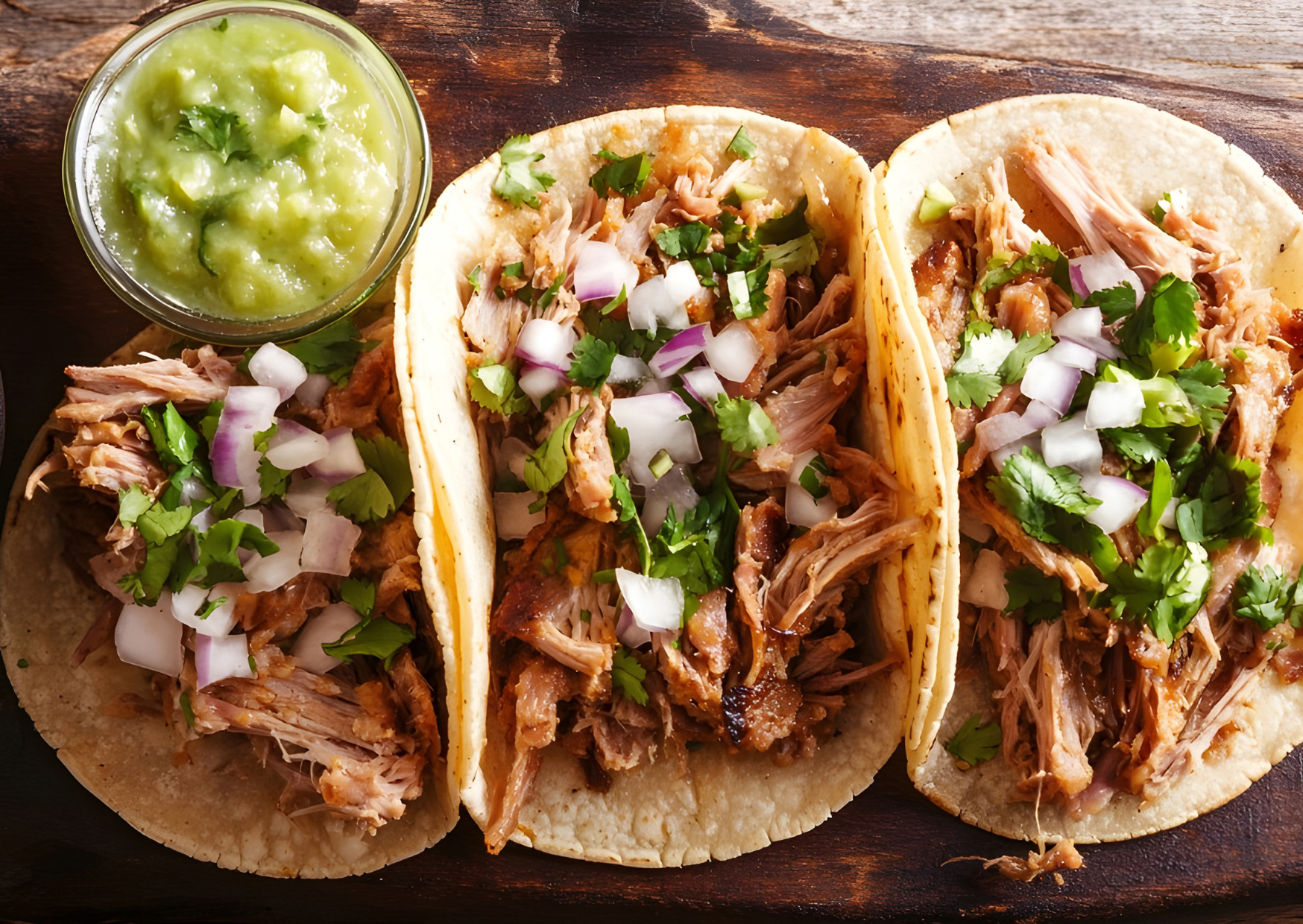
This version is designed for a home kitchen. It uses pork shoulder, a little pork belly or rib meat if you want more richness, enough lard to cook properly, and a two-stage method: gentle fat cooking first, then higher heat to brown.
It makes carnitas that can be chopped for tacos, piled into tortas, eaten with salsa and tortillas, or served with beans, onions, cilantro, lime, and pickled vegetables.
Yield
Serves 6 to 8 people.
Ingredients
- 1.8 kg pork shoulder, cut into large 7 to 8 cm chunks
- Optional: 300 g pork belly or country-style pork ribs, cut into large pieces
- 700 g to 900 g pork lard, enough to come halfway to two-thirds up the pork in the pot
- 2 tablespoons fine sea salt, divided
- 1 medium orange, halved
- 1 small white onion, halved
- 5 garlic cloves, lightly crushed
- 2 bay leaves
- Optional: 1 teaspoon dried Mexican oregano
- Optional: 120 ml whole milk or evaporated milk
- Optional: 120 ml water, only if needed to help the pork cook gently at the start
To Serve
- Warm corn tortillas
- Chopped white onion
- Cilantro
- Lime wedges
- Salsa verde or salsa roja
- Pickled jalapeños or escabeche
- Refried beans or whole beans
Equipment
- Heavy Dutch oven or wide heavy pot
- Tongs
- Slotted spoon
- Rimmed tray
- Instant-read thermometer, helpful but not mandatory
- Fine-mesh strainer
- Heatproof jar or container for the lard
Step 1. Salt The Pork Early
Put the pork chunks in a large bowl.
Season with 1 1/2 tablespoons salt and toss well. Let the pork sit for at least 30 minutes, or refrigerate uncovered for 4 to 12 hours if you have time.
This early salting matters. The pork should be seasoned inside, not just dusted at the end.
Step 2. Melt The Lard
Put the lard in a heavy pot over low heat.
Let it melt slowly. Do not rush this. Once melted, the fat should be hot but not smoking.
Add the pork pieces in a single crowded layer. They do not need to be fully submerged, but they should sit deeply in the fat. Add the optional pork belly or ribs if using.
Step 3. Add The Aromatics
Add the orange halves, onion halves, garlic, bay leaves, and oregano if using.
If the pork is very lean or the pot seems dry at the bottom, add 120 ml water. The water will help moderate the heat early and cook off later.
Keep the heat low.
The fat should bubble gently around the pork, not violently fry it.
Step 4. Cook Low And Slow In The Lard
Cook uncovered or partly covered over low heat for 1 hour 45 minutes to 2 hours 30 minutes, turning the pork occasionally.
The pork is ready for the next stage when a fork slides in easily and the meat is tender but not falling into strings. The internal temperature will often be around 90°C to 96°C, but texture matters more than the number.
This is the lard confit step.
The pork is not boiling in broth. It is not steaming in a slow cooker. It is gently cooking in fat until the connective tissue softens and the meat becomes rich all the way through.
Step 5. Remove The Aromatics
Remove the orange, onion, bay leaves, and any loose garlic pieces that are darkening too much.
If using milk or evaporated milk, stir it in carefully now. It may bubble and foam. Keep the heat moderate and watch the pot.
The milk sugars help browning, but they can also scorch if ignored. This ingredient is optional. Good carnitas do not require milk, but many cooks like the color and flavor it brings.
Step 6. Raise The Heat To Brown
Increase the heat to medium or medium-high.
Cook for 20 to 35 minutes, turning the pork gently, until the liquid has cooked off, the fat clears, and the pork begins to brown in the lard.
Do not stir aggressively. The pieces are tender now and can break.
You want golden edges and soft centers.
The carnitas should not become uniformly crunchy. The best pieces have contrast: crisp corners, browned surfaces, juicy inner meat, and some softer fatty parts that make the tacos taste complete.
Step 7. Drain And Rest
Use a slotted spoon or tongs to move the pork to a tray.
Let it rest for 10 minutes.
Taste and sprinkle with the remaining salt if needed.
Chop the pork into rough pieces. Do not shred it into dry strands. Carnitas should have chunks, edges, and texture.
Step 8. Serve Immediately
Serve with warm corn tortillas, onion, cilantro, lime, salsa, and beans.
Carnitas are best when the meat is hot, the tortillas are warm, and the salsa has enough acidity to cut through the richness.
Save the lard. Strain it, cool it, refrigerate it, and use it again for beans, potatoes, eggs, or another batch of carnitas.
The Slow Cooker Makes Tender Pork, Not Carnitas
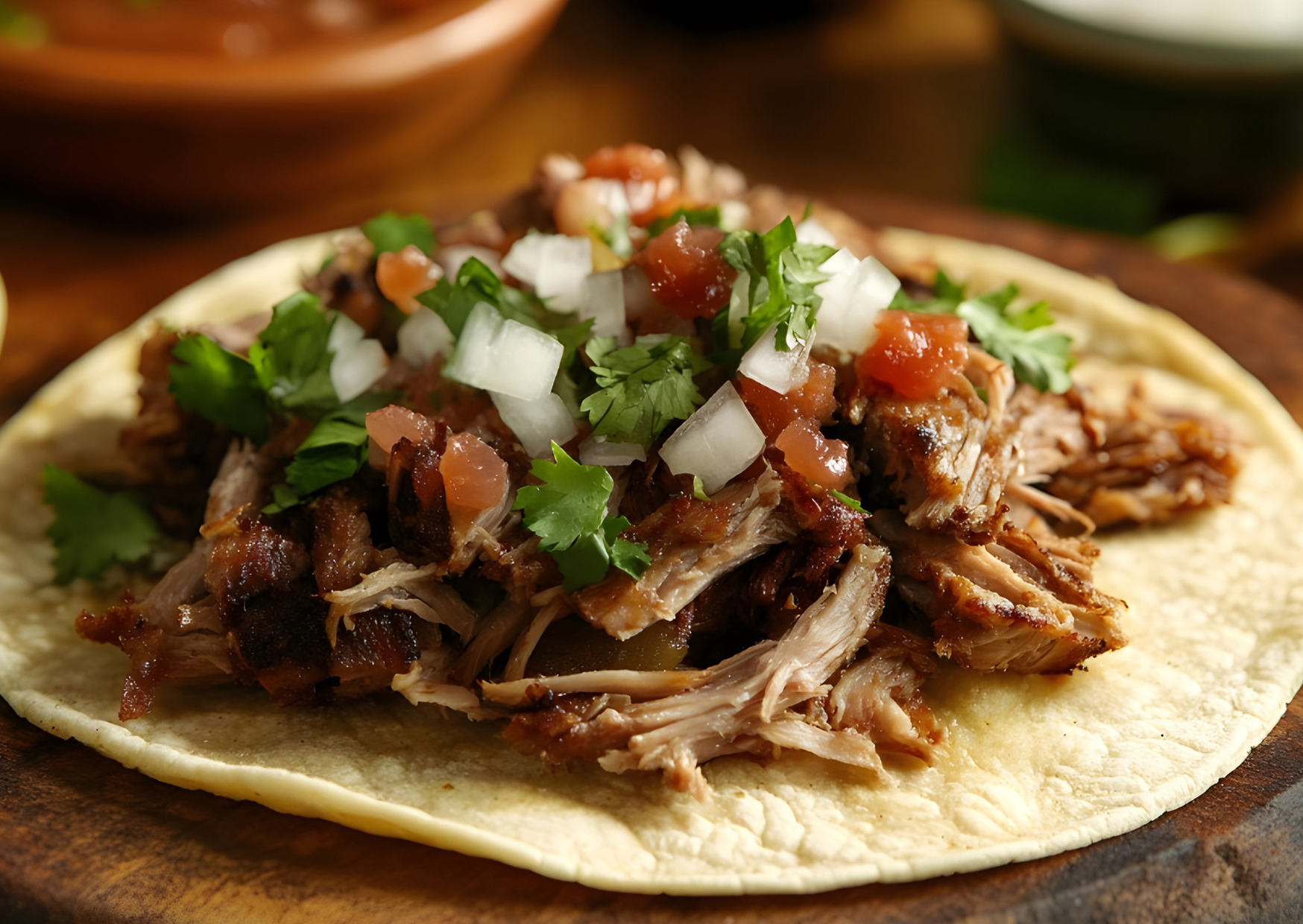
The slow cooker became the American shortcut because it solves one problem very well.
It makes tough meat soft.
That is useful. Pork shoulder has connective tissue and needs time. A slow cooker gives it time without asking anyone to watch a pot. For busy households, that has value.
But carnitas need more than tenderness.
They need fat cooking and final browning. The slow cooker traps moisture and steams or braises the meat. That produces pulled pork texture. It does not produce the dense, rich, lightly crisp carnitas texture that comes from cooking in lard.
The usual slow-cooker fix is to shred the pork and spread it under a broiler.
That creates crispy shreds on top and wet meat underneath. Again, it can taste good. But the texture is different. Real carnitas are not supposed to be a pile of shredded pork floss with crispy tips.
They should be chopped from larger pieces.
A bite should have meat, fat, browned edge, and tenderness in the same mouthful.
If someone insists on using a slow cooker, the better compromise is to cook the pork in larger chunks with enough fat, then transfer the pieces to a skillet with lard and brown them whole before chopping.
That still is not the same as the lard confit method.
But it is much closer than shredding wet pork and hoping the broiler can fix the missing technique.
Convenience has a cost.
With carnitas, the cost is texture.
Why Lard Matters More Than A Spice Blend
American carnitas recipes often over-season because they are trying to compensate for missing fat technique.
Cumin, chili powder, smoked paprika, oregano, onion powder, garlic powder, black pepper, orange juice, lime juice, broth, beer, and bay leaves all enter the pot until the pork tastes vaguely Mexican in the way a seasoning aisle imagines Mexico.
Traditional carnitas do not need that much help.
The pork should taste like pork.
Lard reinforces that flavor. It surrounds the meat with pork fat, keeps the texture moist, and allows browning without drying the interior. That is why the final bite tastes deeper than braised meat.
The lard does not make the dish greasy when handled correctly.
It makes it succulent.
That word gets overused, but here it is accurate. Pork shoulder cooked in broth can become tender but watery. Pork shoulder cooked in fat becomes tender and rich. The difference is obvious when the meat is chopped and served in a tortilla.
Use good lard if possible.
Fresh rendered pork lard from a butcher or Latin market is ideal. Shelf-stable hydrogenated lard can work in a pinch, but it may carry a flatter flavor. Some cooks render their own from pork fat, which is excellent if you have the time and ventilation.
Do not replace lard with olive oil.
Do not replace lard with chicken broth and a tablespoon of oil.
Do not replace lard with the hope that pork shoulder contains enough fat to behave the same way. It does not, especially in a home pot.
The dish is built around lard.
That is not a flaw. That is the recipe.
The Orange Is Optional. The Salt Is Not.
Orange appears in many carnitas recipes, and it can be good.
But it should not make the pork taste like orange chicken. The citrus should sit in the background, lending aroma and a little sweetness. The rind can add bitterness if cooked too hard or too long, so remove it before the final browning if it begins to darken.
Some cooks use only orange peel.
Some use whole orange halves.
Some add a splash of cola, beer, or milk.
Some use very little beyond pork, lard, and salt.
That variation is normal.
The non-negotiable ingredient is salt.
Under-salted carnitas taste heavy and dull. Because the pork pieces are large, seasoning at the end is not enough. Salt early, then adjust after cooking.
A good starting point is about 1 tablespoon salt per kilo of pork, then final seasoning after draining.
The salsa and tortillas also matter.
Carnitas are rich. They need acid, heat, freshness, and corn flavor around them. Onion, cilantro, lime, salsa verde, pickled jalapeños, and good tortillas make the meat feel balanced.
Without those, carnitas can feel too heavy.
That is why a plate of carnitas is not just pork. It is pork plus the things that wake it up.
The meat carries the dish.
The condiments keep it from becoming blunt.
The Pot Should Bubble, Not Rage
Heat control is the difference between beautiful carnitas and hard little pork blocks.
During the first stage, the fat should bubble gently. If it is roaring, the pork will fry too hard before it becomes tender. If it is barely moving, the meat may take forever and cook unevenly.
The goal is low, steady heat.
A heavy Dutch oven helps because it holds heat gently. A wide pot helps because the pork pieces have room to cook and brown. A very narrow pot can work, but the pieces may stack too much and cook unevenly.
Do not cover the pot tightly the whole time.
A partly covered pot can help early if your stove runs hot or the pork needs more gentle cooking, but the moisture eventually needs to leave. Carnitas should not finish in a watery braise. By the browning stage, the fat should be clear enough to fry the surfaces.
Listen to the pot.
Early on, the sound is soft bubbling. Later, as water cooks away, the sound becomes sharper and more frying-like. That shift tells you the browning stage has arrived.
This is also when burning becomes possible.
Milk solids, garlic, onion, and orange sugars can darken fast. Remove aromatics before they become bitter. Turn pork gently. Adjust the heat before the bottom scorches.
Carnitas are simple, but they are not passive.
A slow cooker lets you leave.
A pot of lard asks you to come back and pay attention at the end.
That attention is the recipe.
How To Serve Carnitas Like A Meal, Not A Meat Pile
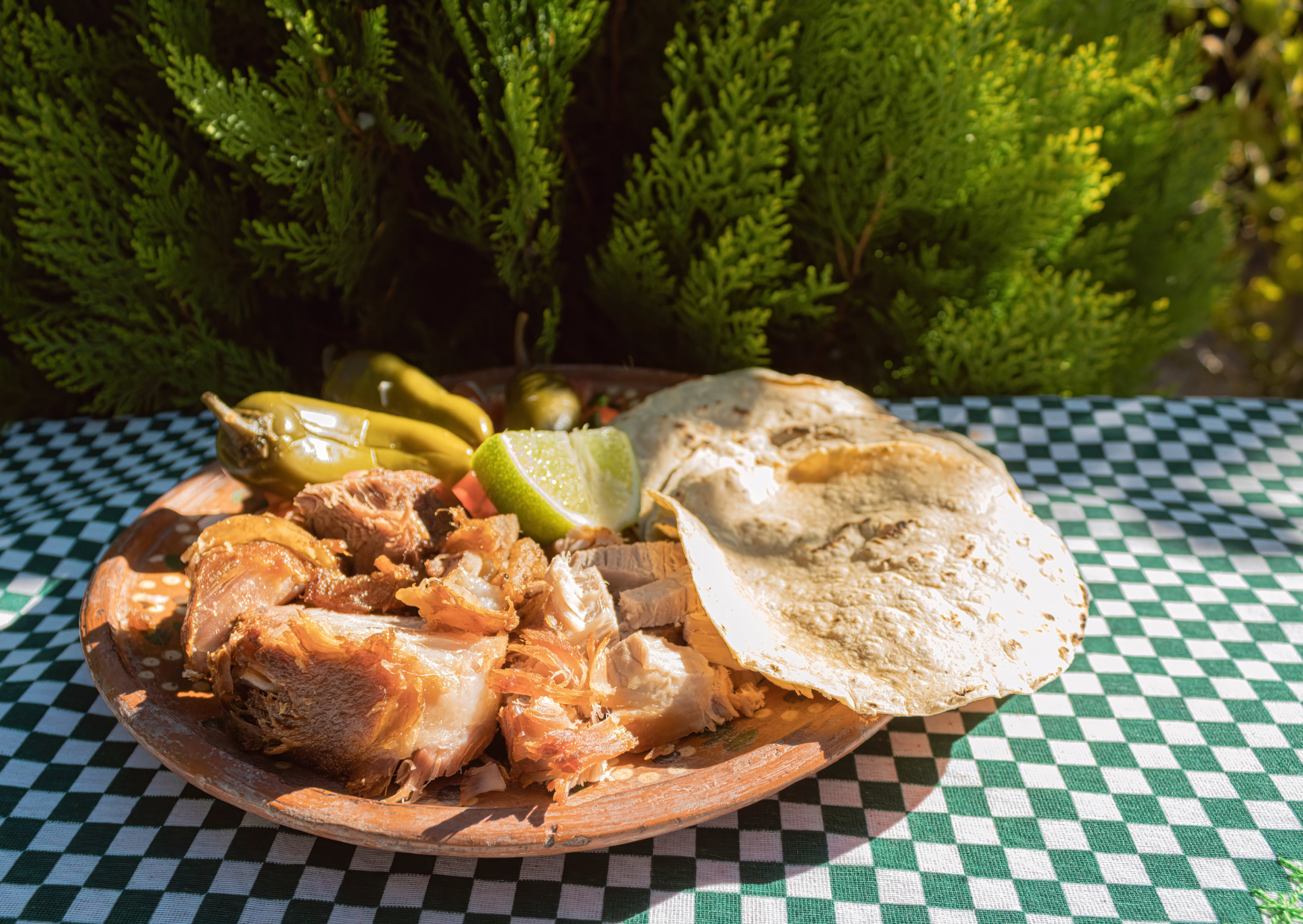
Carnitas are rich, so the table needs balance.
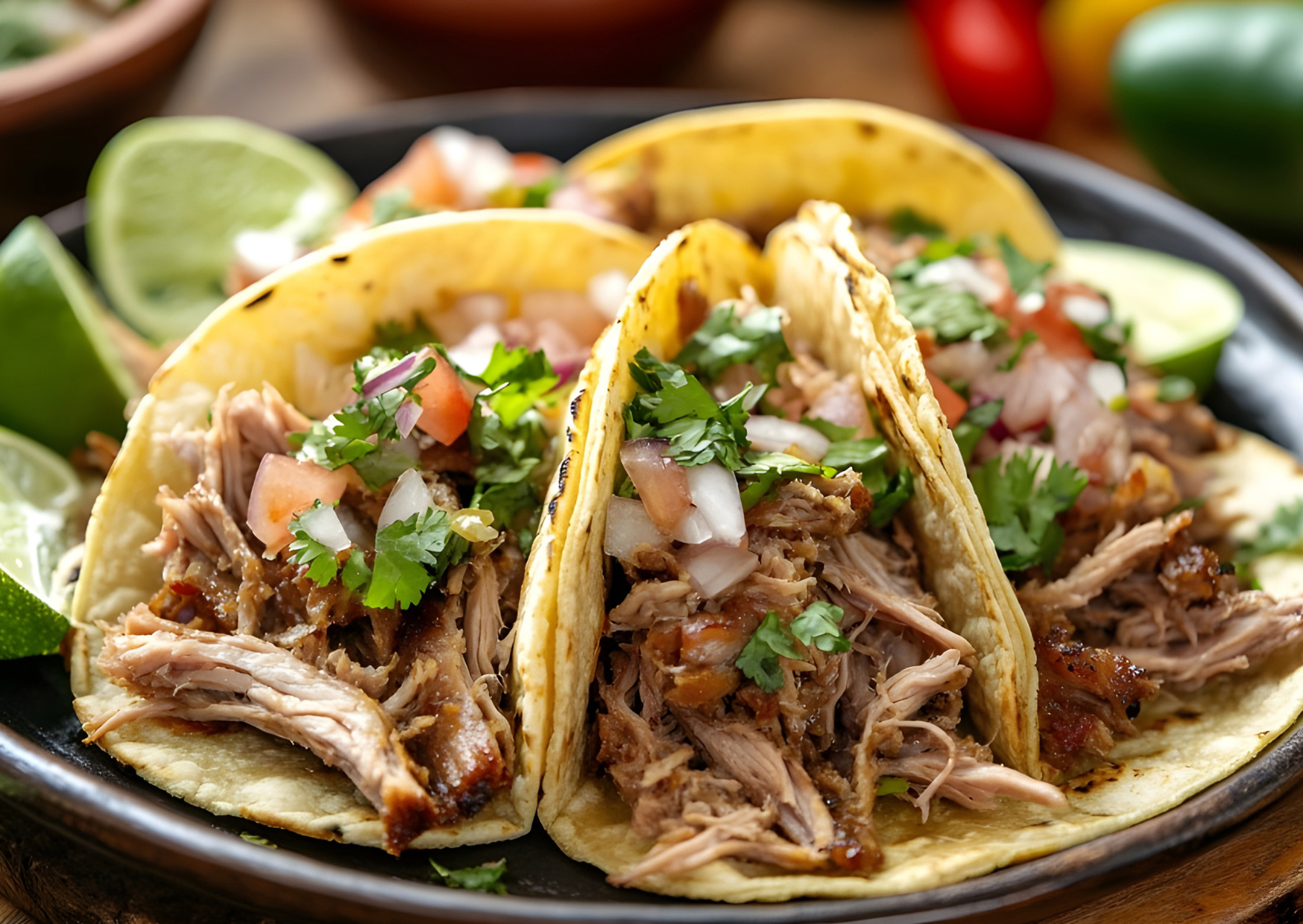
The classic taco is hard to beat: warm corn tortilla, chopped carnitas, white onion, cilantro, salsa, and lime. Maybe pickled jalapeños. Maybe a little salt. Nothing else is required.
A good salsa verde works beautifully because the acidity cuts the fat. Salsa roja adds warmth and depth. Pico de gallo is fine if the tomatoes are good. Pickled red onion is not always traditional for carnitas, but it tastes good and solves the same problem: richness needs brightness.
Beans belong nearby.
Refried beans, whole pinto beans, black beans, or beans cooked with a little of the saved carnitas lard can turn the meal into something complete. Add radishes, avocado, grilled onions, or a simple cabbage salad if you want freshness.
Do not drown carnitas in sour cream and shredded cheese.
That is not because the food police will come. It is because the pork already has fat and richness. Adding dairy on top often mutes the best parts.
The better taco has contrast instead of weight.
Soft tortilla.
Juicy pork.
Crisp browned edge.
Sharp salsa.
Fresh onion.
Cilantro.
Lime.
That is enough.
For leftovers, carnitas can go into tacos, tortas, rice bowls, beans, quesadillas, chilaquiles, or eggs. Reheat in a skillet with a spoonful of saved lard or a little water and fat together. The skillet brings back the edges better than a microwave.
The microwave is fast.
The skillet is kinder.
Storing The Meat And Saving The Lard
Carnitas are generous leftovers if stored properly.
Cool the meat quickly, then refrigerate in a covered container for up to 4 days. For longer storage, freeze in portions. Add a little saved lard to each portion if possible. It protects the meat and makes reheating better.
The lard is valuable.
Strain it through a fine-mesh sieve while warm, then cool and refrigerate. It will carry pork, onion, orange, and garlic flavor, so use it where that makes sense.
Use it for refried beans.
Use it for potatoes.
Use it to fry eggs.
Use it to start another pot of carnitas.
Do not pour it down the sink unless you enjoy plumbing problems and regret.
If the lard has dark burnt bits or smells bitter, do not save it. That means the pot got too hot or the aromatics burned. Good saved lard should smell savory, not scorched.
The meat can also be crisped in batches.
This is useful for parties. Cook the carnitas fully, chill them, then crisp portions in a skillet before serving. That way the meat stays juicy and the edges come back fresh.
Carnitas should not sit uncovered for hours drying into chew toys.
If serving a crowd, keep the meat warm gently and crisp small batches as needed.
The best carnitas taste abundant, not exhausted.
The Mistakes That Turn Carnitas Into Pulled Pork
The first mistake is using too little fat.
If the pork is mostly braising in its own liquid with a spoonful of oil, you are making braised pork. It may be good, but it will not have carnitas texture.
The second mistake is cutting the meat too small.
Small cubes dry out and overcook. Use large chunks. They can be chopped after cooking.
The third mistake is shredding.
Carnitas should be chopped or pulled into rough pieces, not reduced to uniform strings. Shredding makes the meat dry faster and loses the contrast between tender interior and browned edges.
The fourth mistake is too many spices.
The flavor should come from pork, lard, salt, browning, and salsa. A little oregano or bay is fine. A spice cabinet parade is usually a sign that the technique is missing.
The fifth mistake is rushing the first stage.
If the meat is not tender before browning, the final carnitas will be tough. Browning does not fix undercooked connective tissue.
The sixth mistake is skipping the final browning.
Tender pork without browned edges is not finished. Raise the heat and let the surface develop.
The seventh mistake is burning the sugars.
If using orange, milk, or cola, watch the pot. Sweet ingredients help color, but they scorch quickly.
The eighth mistake is serving with cold tortillas.
A cold tortilla makes even good carnitas taste lazy. Warm the tortillas properly. A dry skillet, comal, or clean pan is enough.
The ninth mistake is forgetting acid.
Rich pork needs salsa, lime, pickles, or something sharp. Without that, the meal becomes heavy.
Carnitas are not complicated.
They are just unforgiving of the wrong shortcut.
The Real Shortcut Is Making A Big Batch Correctly
The reason to make carnitas properly is not purity.
It is efficiency.
A large pot of carnitas gives several meals: tacos one night, tortas the next day, beans with carnitas, breakfast eggs, rice bowls, or freezer portions for later. If the lard is saved, the next batch starts with better flavor. If the meat is cooked in large chunks, it reheats well.
That is the practical Mexican kitchen logic American recipes sometimes miss.
The pot is not only dinner.
It is future meals already paid for.
A slow cooker sells convenience at the beginning. Real carnitas give convenience after the work is done. The first day asks for attention. The next three meals become easy.
This is also why the dish belongs at gatherings. Carnitas feed people well. The pot looks generous. The tacos assemble quickly. The condiments are simple. Nobody needs a composed plate.
The best part is that the recipe is forgiving once the main technique is respected.
Use shoulder. Use lard. Salt early. Cook gently. Brown at the end. Serve with warm tortillas and sharp salsa.
That is the heart of it.
Everything else is family argument, regional variation, and personal preference.
The Lard Step Is The Dish
American slow-cooker carnitas are popular because they answer a real need.
People are busy. Pork shoulder is affordable. Tender meat is useful. Dinner has to happen.
But if the goal is real carnitas, the slow cooker cannot be the whole method because it removes the cooking environment that defines the dish.
Carnitas need fat.
They need time.
They need a shift from gentle cooking to browning.
They need chunks, not shreds.
They need salsa and tortillas that balance the pork instead of burying it.
The lard confit step is not an old-fashioned inconvenience. It is the reason the meat tastes deep, juicy, and finished before it even reaches the taco.
That is the part American recipes keep trying to replace.
And that is the part worth keeping.
Make carnitas once with enough lard and proper heat control, then taste the browned edge against the soft interior. After that, the slow-cooker version will still have a place.
It just will not get to call itself the same thing.

About the Author: Ruben, co-founder of Gamintraveler.com since 2014, is a seasoned traveler from Spain who has explored over 100 countries since 2009. Known for his extensive travel adventures across South America, Europe, the US, Australia, New Zealand, Asia, and Africa, Ruben combines his passion for adventurous yet sustainable living with his love for cycling, highlighted by his remarkable 5-month bicycle journey from Spain to Norway. He currently resides in Spain, where he continues sharing his travel experiences with his partner, Rachel, and their son, Han.