
Real Moroccan harira begins with fresh tomatoes that are blanched, peeled, seeded, pureed, and reduced for 20 to 30 minutes before any other major ingredient enters the pot.
Most American recipes for harira skip this step. They open a can of crushed tomatoes and dump it into the simmering broth alongside the chickpeas, lentils, and meat. The result is harira-shaped soup that does not taste like harira.
The tomato reduction step is what produces the deep, concentrated, slightly sweet, slightly tangy base that defines real Moroccan harira. Moroccan grandmothers do this step automatically. They do not think of it as a technique. They think of it as how you start the soup. Skipping it is what American recipes do when they want to publish a 45-minute version of a dish that traditionally takes 2.5 hours.
This piece is the recipe for the cook who wants the version Moroccan families actually eat at iftar during Ramadan. The tomato reduction is the first technique. The tadouira is the second. The spice blend is the third. The cultural context follows.
The Recipe
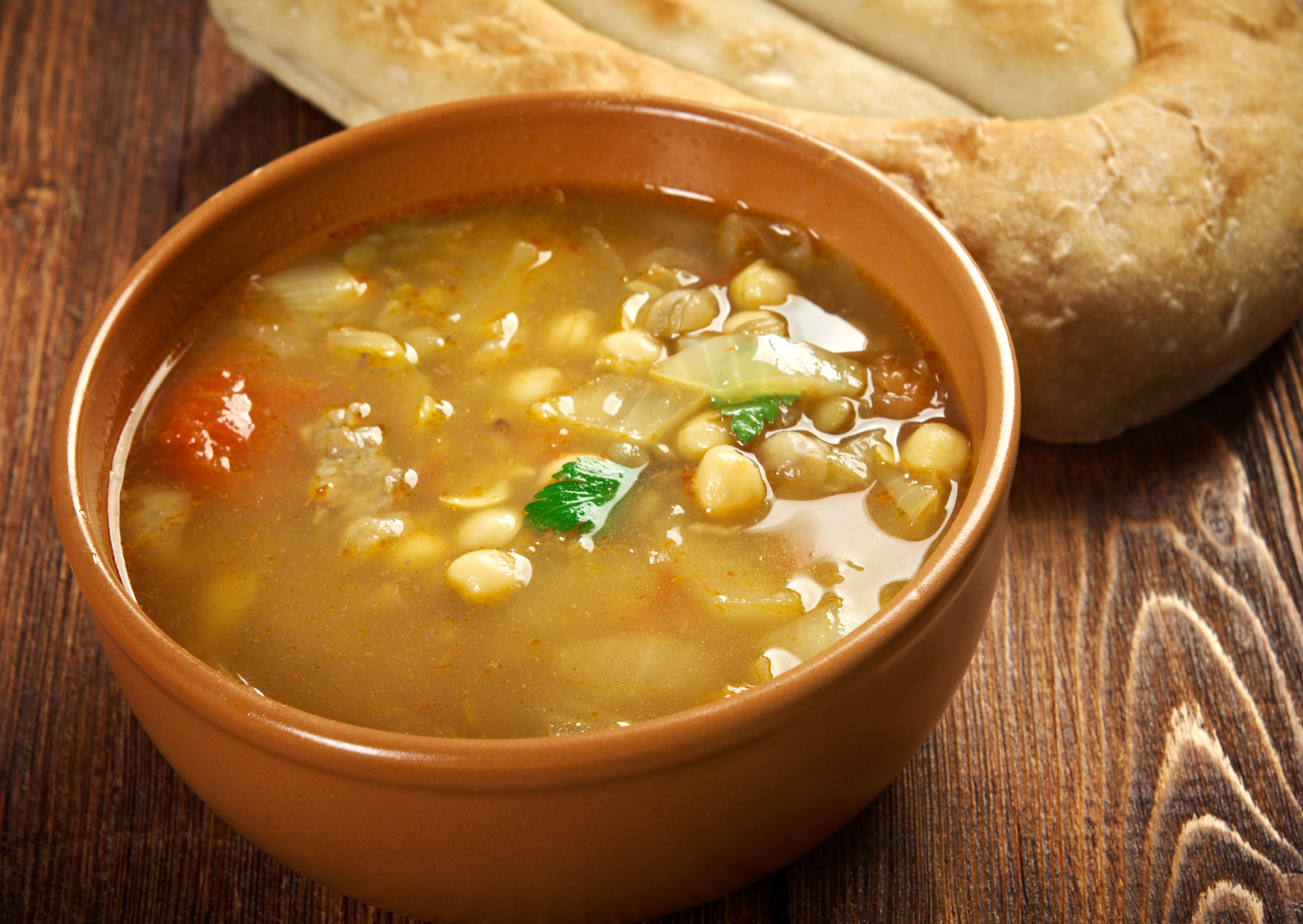
Yield: 6 to 8 servings
Active time: 50 minutes Total time: 2.5 hours (or 1.5 hours with a pressure cooker)
Ingredients for the tomato reduction:
- 1.5 kg fresh ripe tomatoes (or 800 grams crushed canned tomatoes if fresh are out of season)
- 3 tablespoons olive oil
- 2 tablespoons tomato paste
Ingredients for the soup base:
- 250 grams lamb or beef shoulder, cut into 2 cm cubes
- 1 large yellow onion, finely chopped
- 3 celery stalks (including leaves), finely chopped
- 1 large bunch fresh flat-leaf parsley (about 50 grams)
- 1 large bunch fresh cilantro (about 50 grams)
- 1 teaspoon ground turmeric
- 1 teaspoon ground ginger
- 1 teaspoon black pepper
- 1/2 teaspoon ground cinnamon
- 1/4 teaspoon ground cayenne (optional)
- 1 tablespoon smen (Moroccan aged butter) or unsalted butter
- 200 grams dried chickpeas, soaked overnight (or one 400 gram can, drained)
- 150 grams green or brown lentils, rinsed
- 1.5 teaspoons fine sea salt
- 2 liters water or unsalted stock
Ingredients for the tadouira (thickening):
- 75 grams all-purpose flour
- 250 ml cold water
- 1 tablespoon additional tomato paste
To finish:
- 100 grams thin vermicelli, broken into 3 cm pieces (or 80 grams rice)
- Juice of 1 lemon
- Additional fresh cilantro, chopped, for serving
- Lemon wedges
- Dates (optional, served alongside)
- Chebakia or other honey pastries (optional)
Method:
- Begin the tomato reduction. Bring a pot of water to a boil. Score an X on the bottom of each fresh tomato. Drop the tomatoes into the boiling water for 30 to 45 seconds, until the skins begin to peel back. Transfer to ice water. Peel the tomatoes completely. Halve them, squeeze out the seeds, and chop the flesh. If using canned crushed tomatoes, skip this step and proceed.
- In a heavy-bottomed pot (a Dutch oven works well), heat 3 tablespoons olive oil over medium heat. Add the chopped tomato flesh and 2 tablespoons tomato paste. Stir to combine.
- Reduce the tomatoes. Cook over medium heat, stirring occasionally, for 20 to 30 minutes until the tomatoes have broken down completely and the mixture has thickened significantly. The reduction should look almost like a thick tomato jam by the end. The volume should reduce by approximately 50 percent. The color should deepen to a darker red. This is the critical step. Do not rush it.
- While the tomatoes reduce, prepare the herbs. Wash the parsley and cilantro thoroughly. Remove the leaves from the thick stems. Chop the leaves and tender stems finely. You should have roughly equal amounts of chopped parsley and cilantro, about 1 cup each.
- When the tomato reduction is nearly complete, add the cubed meat to the pot. Stir the meat into the reduced tomatoes and cook for 5 to 8 minutes, allowing the meat to brown lightly and the flavors to merge.
- Add the chopped onion and celery (including the leaves). Cook for 5 minutes until the onion begins to soften.
- Add the turmeric, ginger, black pepper, cinnamon, cayenne if using, and salt. Stir the spices into the mixture and cook for 60 to 90 seconds, allowing the spices to bloom in the fat and become fragrant.
- Add the smen or butter. Stir until melted and combined.
- Add the chopped parsley and most of the cilantro (reserve about 2 tablespoons of cilantro for garnish). Stir into the mixture and cook for 2 minutes.
- Add the soaked chickpeas (if using dried) and the lentils. Stir to coat.
- Pour in the 2 liters of water or stock. Bring to a boil, then reduce heat to maintain a gentle simmer. Cover partially.
- Simmer for 45 to 60 minutes if using a regular pot, or 25 to 30 minutes if using a pressure cooker. The meat should be very tender and the chickpeas should be soft but still hold their shape. If using canned chickpeas, add them in the last 15 minutes of simmering to prevent them from breaking apart.
- Prepare the tadouira while the soup simmers. Whisk the 75 grams of flour with 250 ml of cold water until completely smooth and free of lumps. Pass through a fine sieve if any lumps remain. Stir in the additional tablespoon of tomato paste. Let the tadouira sit for at least 30 minutes before use. Some traditional cooks let it sit several hours to develop a slight fermentation.
- When the meat and legumes are tender, add the broken vermicelli to the pot. Cook for 5 to 7 minutes until the pasta is tender.
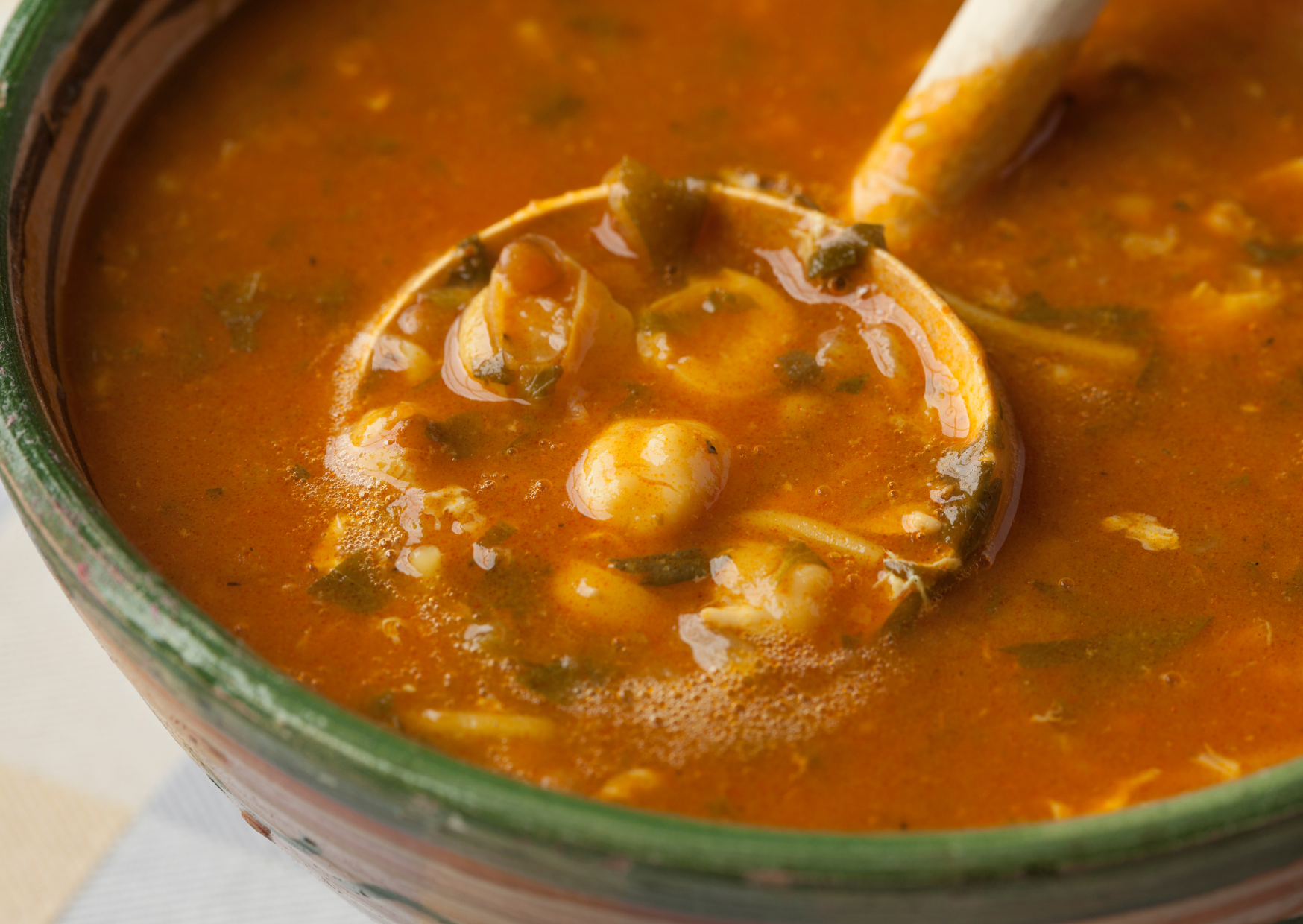
- Add the tadouira. This is the critical thickening step. Slowly pour the tadouira into the simmering soup while stirring constantly with a wooden spoon. The Arabic word “tadouira” means “to turn” and refers to the circular motion required during this step. Continue stirring for 3 to 5 minutes after all the tadouira has been added.
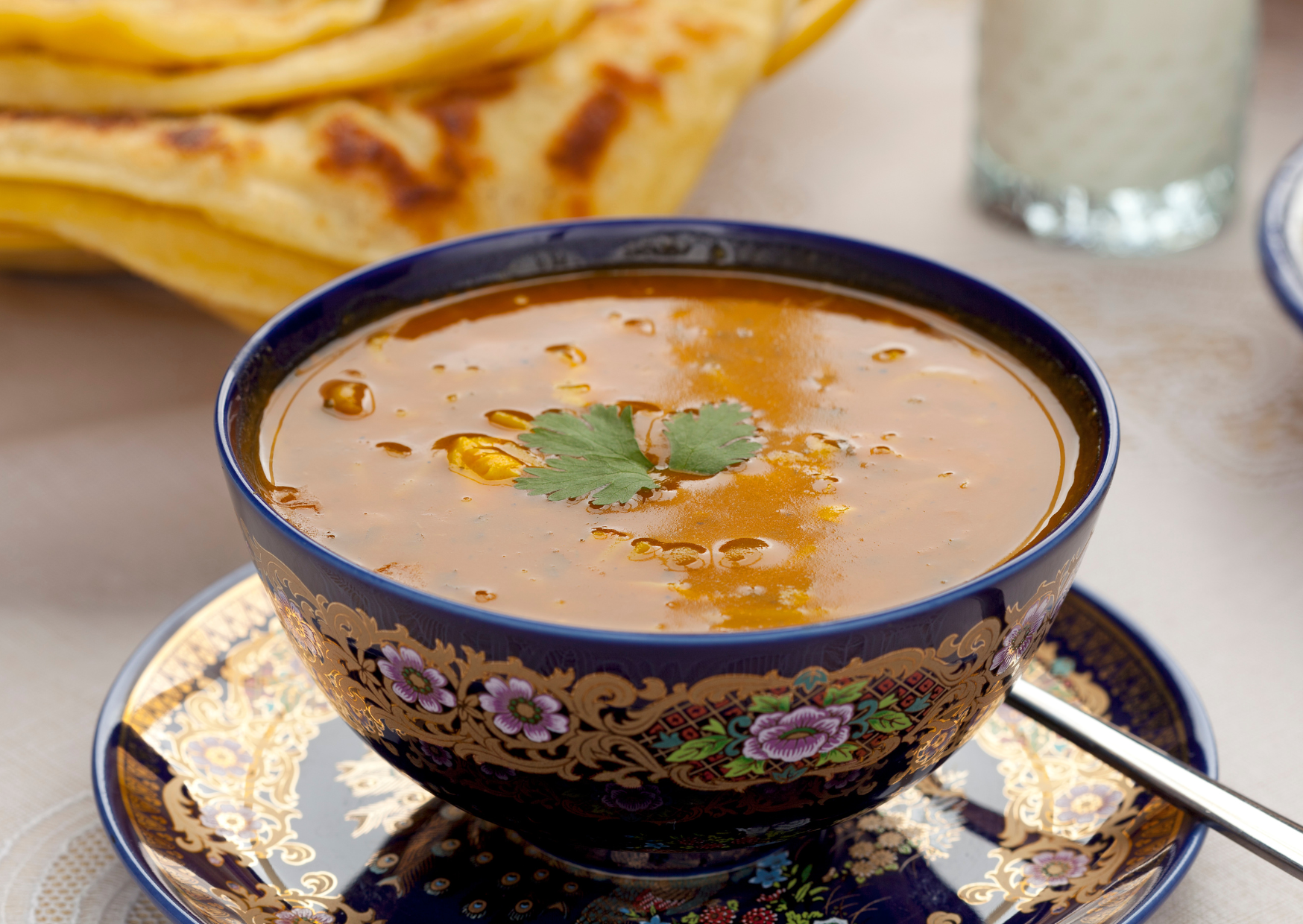
- Bring the soup back to a gentle simmer and cook for an additional 5 to 8 minutes, stirring frequently. The soup should thicken to a velvety consistency. It should coat the back of a spoon but still be pourable.
- Off the heat, stir in the lemon juice and the reserved chopped cilantro.
- Let the harira rest for 5 to 10 minutes before serving. This allows the flavors to integrate further.
- Serve hot in deep bowls. Garnish with additional cilantro. Provide lemon wedges, dates, and chebakia or other sweet pastries alongside if available.
Why The Tomato Reduction Matters
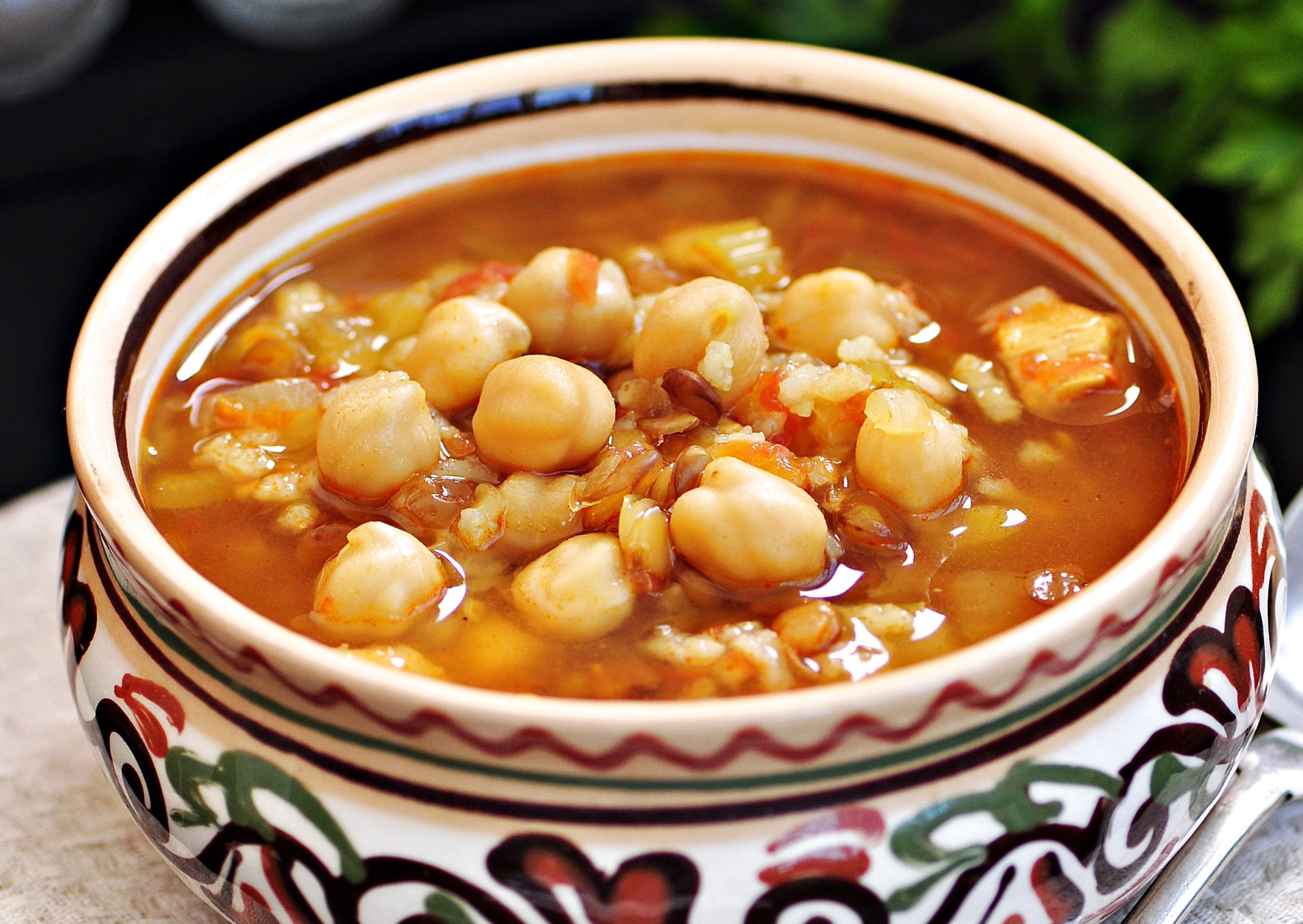
The 20 to 30 minute tomato reduction is the part American recipes consistently skip, and it changes the dish fundamentally.
The reduction concentrates the tomato flavor. Fresh tomatoes contain 90 to 94 percent water. Reducing this water by half produces a base that is twice as flavorful per spoonful. The harira’s foundational tomato character depends on this concentration. Without it, the tomato flavor is diluted across the full 2 liters of broth and becomes a background note rather than a foundation.
The reduction transforms the tomato chemistry. Long, slow cooking of tomatoes triggers Maillard reactions and caramelization that fresh tomatoes simply do not have. The bright acid of raw tomatoes becomes a deeper, slightly sweet, slightly umami flavor. This is the same reason Italian sugo takes hours rather than minutes. Real tomato flavor in cooked dishes requires real cooking time.
The reduction creates the right texture base. Reduced tomatoes have a thickness that holds the rest of the soup ingredients in suspension. Watery raw tomato added late produces watery soup. Reduced tomato added early produces soup with body.
The reduction allows the spices to bloom properly. When turmeric, ginger, cinnamon, and pepper hit the reduced tomato base in the hot fat, they bloom and release their oils into a medium that can carry the flavor through the rest of the soup. Adding spices to a watery broth dilutes their effect. Adding them to concentrated tomato amplifies it.
The reduction extracts maximum flavor from the meat. When the cubed lamb or beef goes into the reduced tomato base, it sits in a flavor-rich medium that infuses it as it cooks. The meat that goes directly into a thin water-based broth picks up much less flavor from its surroundings.
The American shortcut of dumping canned tomatoes into the simmering broth and calling it harira produces a dish with tomato content but not tomato character. Real harira tastes deeply of tomato. Shortcut harira tastes vaguely of tomato. The difference is the reduction step.
On The Tadouira
The tadouira is the second technique that distinguishes Moroccan harira from generic Mediterranean soups.
Tadouira is a flour-and-water slurry added at the end of cooking to give the soup its characteristic velvety, silk-like texture. The Arabic word “harira” itself derives from the word for silk, referring to this texture.
The slurry must be smooth. Lumps in the tadouira become lumps in the soup. Whisk thoroughly. Strain through a fine sieve. Many cooks prepare the tadouira hours in advance, sometimes the day before, to allow a slight natural fermentation that adds depth.
The pouring technique matters. Pour slowly while stirring constantly. A circular motion. The Arabic word “tadouira” means “to turn.” This refers specifically to this stirring motion. Pouring quickly or stirring inadequately produces clumps that ruin the texture.
The thickness is adjustable. Use less tadouira for a thinner harira. Use more for a thicker version. Traditional Moroccan harira sits between heavy cream and thin pudding in consistency. The spoon stands up briefly when stuck into it.
Some Moroccan cooks use a sourdough starter instead of plain flour for the tadouira. The slight fermentation produces a more digestible soup and adds subtle complexity. This is the grandmother version that requires planning ahead.
On The Spice Blend
The harira spice profile is specific and not interchangeable with other Moroccan dishes.
Turmeric, ginger, black pepper, and cinnamon are non-negotiable. These four spices form the backbone of authentic harira. Skipping any of them produces a different soup.
Cayenne is optional but traditional in some regions. Moroccan harira ranges from mild to moderately spicy. The cayenne level is family-specific. Some families use none. Some use a teaspoon. The default in this recipe is light.
Ras el hanout is not traditional in harira. Many American recipes add ras el hanout (the complex Moroccan spice blend with 20-plus components) to make harira “more Moroccan.” Authentic harira recipes do not include ras el hanout. The soup’s spice signature is simpler and cleaner than the complex blend. Adding ras el hanout produces a different soup that overwhelms the tomato base.
The spice timing matters. Spices bloom in fat. Adding them to the reduced tomato base while the fat is hot allows them to release their oils properly. Adding them to water-based broth produces muted, less integrated flavor.
On The Smen
Smen is the optional ingredient that produces the deepest authenticity in harira.
Smen is Moroccan aged butter, fermented in salt for weeks or months. It has a strong, slightly funky flavor that adds umami depth to harira and other Moroccan dishes. Some Moroccan families consider harira without smen to be incomplete.
Real smen can be found in Moroccan grocery stores in Europe and North America, or made at home with patience. Cost runs €8 to €15 for a small jar. A little goes a long way. One tablespoon per pot of harira is the standard amount.
If smen is unavailable, unsalted butter works as a substitute. The flavor will be cleaner but missing the slight funk that smen provides. The soup is still good without it. It is just different.
For cooks who want to make smen at home: combine soft unsalted butter with sea salt (about 5 percent by weight), pack into a clean jar, store at room temperature for 2 to 4 weeks. The butter will ferment and develop the characteristic flavor. Refrigerate after fermentation.
On The Herbs
Harira uses substantial quantities of fresh parsley and cilantro. The amounts in the recipe are not excessive. They are the authentic proportions.
Flat-leaf parsley specifically. Curly parsley produces a meaningfully different flavor and texture. The flat-leaf variety is what Moroccan cooks use.
The chopping matters. Fine chop releases more flavor than rough chop. The herbs are not a garnish. They are a major flavoring component of the soup.
Cilantro can be polarizing. Some people perceive cilantro as soapy due to a genetic variation. For these individuals, doubling the parsley and omitting the cilantro produces a non-traditional but workable harira. Moroccan grandmothers would consider this a small heresy but would understand.
The reserved cilantro at the end (added off-heat) provides bright flavor that the cooked cilantro has lost. This two-stage cilantro addition is part of the technique. Adding all the cilantro at the beginning produces a muddier flavor.
On The Vermicelli vs Rice Question
Traditional Moroccan harira uses thin vermicelli broken into short pieces. The vermicelli adds substance and silkiness.
Some regions and families use rice instead. Rice produces a slightly different harira with more substantial body and a different texture. Both are traditional in their respective family contexts.
A small minority of Moroccan cooks use both vermicelli and rice. This is regional and not common.
Avoid adding pasta or rice too early. Both will overcook and turn to mush. Add in the last 10 to 15 minutes of cooking, after the meat and chickpeas are tender.
For storing leftover harira, leave out the vermicelli or rice from the portion you plan to freeze. Add fresh pasta or rice when reheating, since previously cooked starches become mushy in stored soup.
On The Cost Breakdown
For 6 to 8 servings:
- Lamb or beef shoulder: 5 to 8 euros for 250 grams of good quality.
- Fresh tomatoes (in season): 3 to 5 euros for 1.5 kg.
- Canned crushed tomatoes (out of season): 2 to 3 euros for 800 grams.
- Onion, celery, garlic: 1.50 to 2 euros.
- Fresh parsley and cilantro: 2 to 3 euros for the bunches.
- Dried chickpeas: 1 to 2 euros for 200 grams.
- Green or brown lentils: 1 to 1.50 euros.
- Spices: 1 euro for the amounts used (jars last for many recipes).
- Smen: 1 to 2 euros for the amount used.
- Vermicelli or rice: 0.50 to 1 euro.
- Lemon: 0.30 to 0.50 euros.
Total cost for 6 to 8 servings: 16 to 28 euros, or 2.50 to 4 euros per person.
For comparison, harira at a Moroccan restaurant in Madrid, Paris, or Lisbon typically runs 6 to 10 euros per bowl as a starter, or 12 to 18 euros as a main course with bread.
A Few Things To Know
Harira improves dramatically overnight. The flavors integrate further in the refrigerator. Day-two harira is often better than day-one harira. This is why Moroccan families often make large batches.
The vermicelli or rice gets soft if it sits in the soup. For best results storing leftovers, separate the pasta or rice from the broth when refrigerating, or accept that the texture will soften.
The soup freezes well before the tadouira step. Freeze the soup at the point where the meat and legumes are tender. Add fresh vermicelli, tadouira, and final cilantro and lemon when reheating. Frozen harira keeps for 3 months.
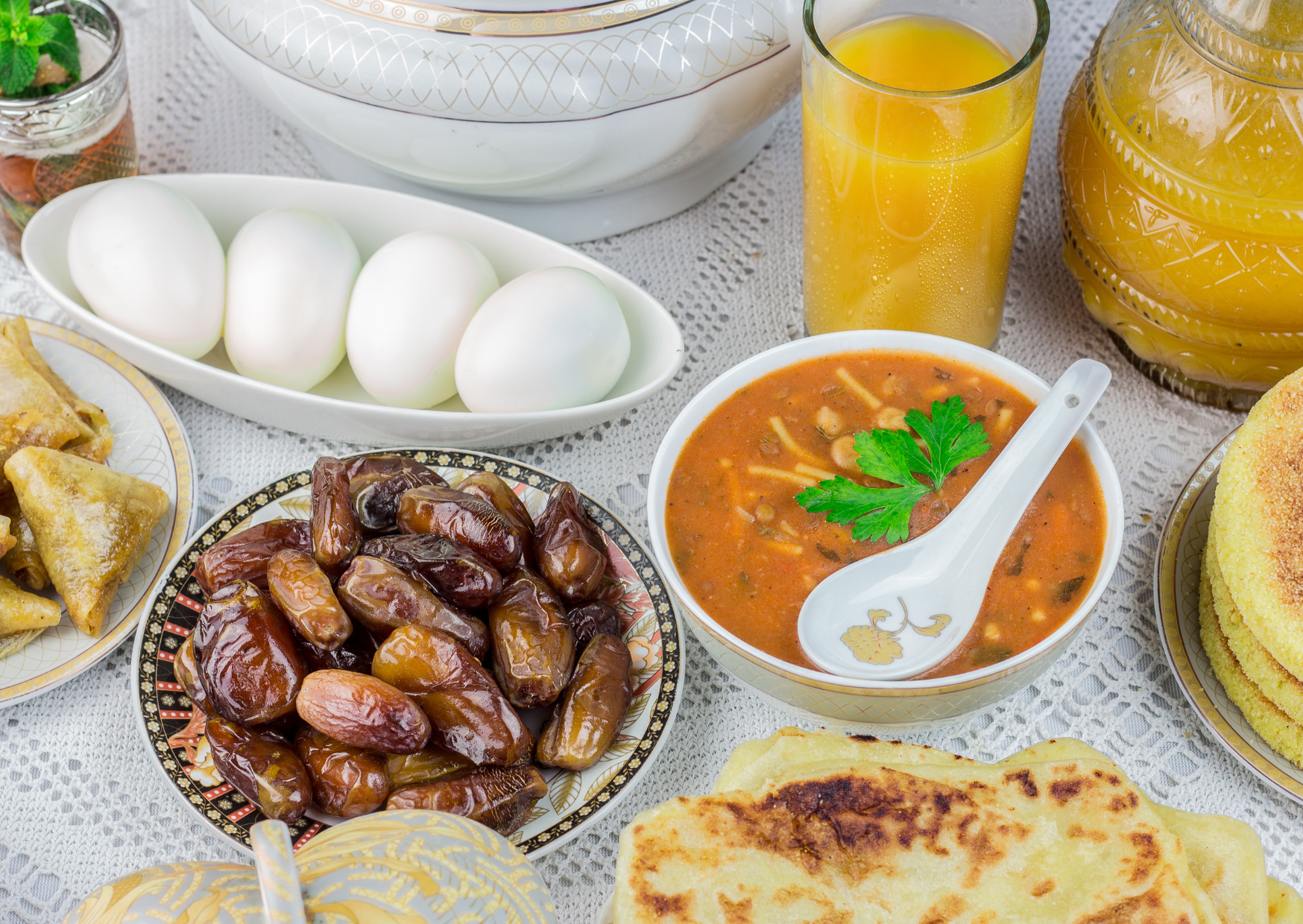
During Ramadan, Moroccan families serve harira every evening at iftar (breaking the fast). The dates that accompany the soup are not optional. The combination of dates and harira provides rapid blood sugar restoration and substantial nourishment after a day of fasting. Chebakia (honey-sesame pastries) often round out the iftar table.
For weeknight cooking, the harira works well when started Saturday or Sunday for the week ahead. The 2.5 hours of cooking happens once. The reheated portions across the week take 5 minutes each.
The lemon at the end is critical. Without lemon, harira tastes flat. With lemon, the entire dish brightens and the flavors integrate. Most Moroccan diners add additional lemon at the table.
What The Reduction Step Recognizes
The 20 to 30 minute tomato reduction at the beginning of real harira is what separates the Moroccan version from American shortcut versions.
The shortcut harira is fine. It produces a tomato-and-legume soup with Moroccan spices that is genuinely tasty and quick to make. It is not harira.
Real harira requires the reduction step, the tadouira technique, the specific spice blend, the proper herbs in proper quantities, and approximately 2.5 hours of cooking time. The result is a dish that Moroccan grandmothers have been making the same way for hundreds of years, with regional variations that share the core architecture.
The American shortcut version saves 90 minutes and produces a recognizable approximation. The real version requires the time investment and produces a soup with depth, complexity, and silky texture that the shortcut version cannot match.
For cooks who want to make real Moroccan harira at home, the practical implication is to plan ahead. The Sunday afternoon harira project produces a pot of soup that feeds the family for several days and tastes better than any restaurant version at a fraction of the cost. The reduction step is the part where most home cooks save time and lose flavor. Investing the 20 to 30 minutes produces results that justify the investment.
Moroccan grandmothers know this. Moroccan restaurants know this. American recipe writers in a hurry sometimes pretend the time does not matter. The time matters. The 90-minute shortcut produces a different soup than the 2.5-hour version, and the difference is the reduction, the tadouira, and the patience.
The pot of real harira on a Moroccan family’s iftar table during Ramadan is the result of generations of cooks who understood that some dishes cannot be rushed. The dish that emerges from the proper process is one of the great soups of any cuisine. It is worth making properly. The reduction step is where the proper making begins.

About the Author: Ruben, co-founder of Gamintraveler.com since 2014, is a seasoned traveler from Spain who has explored over 100 countries since 2009. Known for his extensive travel adventures across South America, Europe, the US, Australia, New Zealand, Asia, and Africa, Ruben combines his passion for adventurous yet sustainable living with his love for cycling, highlighted by his remarkable 5-month bicycle journey from Spain to Norway. He currently resides in Spain, where he continues sharing his travel experiences with his partner, Rachel, and their son, Han.