
Last updated on July 28th, 2026 at 06:50 am
A woman in Lyon finishes dinner at 8:45pm. A small plate of chicken with green beans, a green salad with vinaigrette, two pieces of bread, half a glass of red wine, and a piece of cheese. She is in bed by 11pm.
The next morning she has a small black coffee and a slice of buttered baguette at 7:30am.
Between her last bite of cheese and her first sip of coffee, eleven hours have passed. She has just done what American wellness influencers call intermittent fasting. She did not call it anything. She just ate dinner and then went to sleep and then had breakfast.
This is not new. The French have been eating like this since roughly the 1820s, when the modern three-meal pattern stabilized into something close to what it is today. The American wellness industry rediscovered it around 2015 and gave it a name. The French still don’t call it anything.
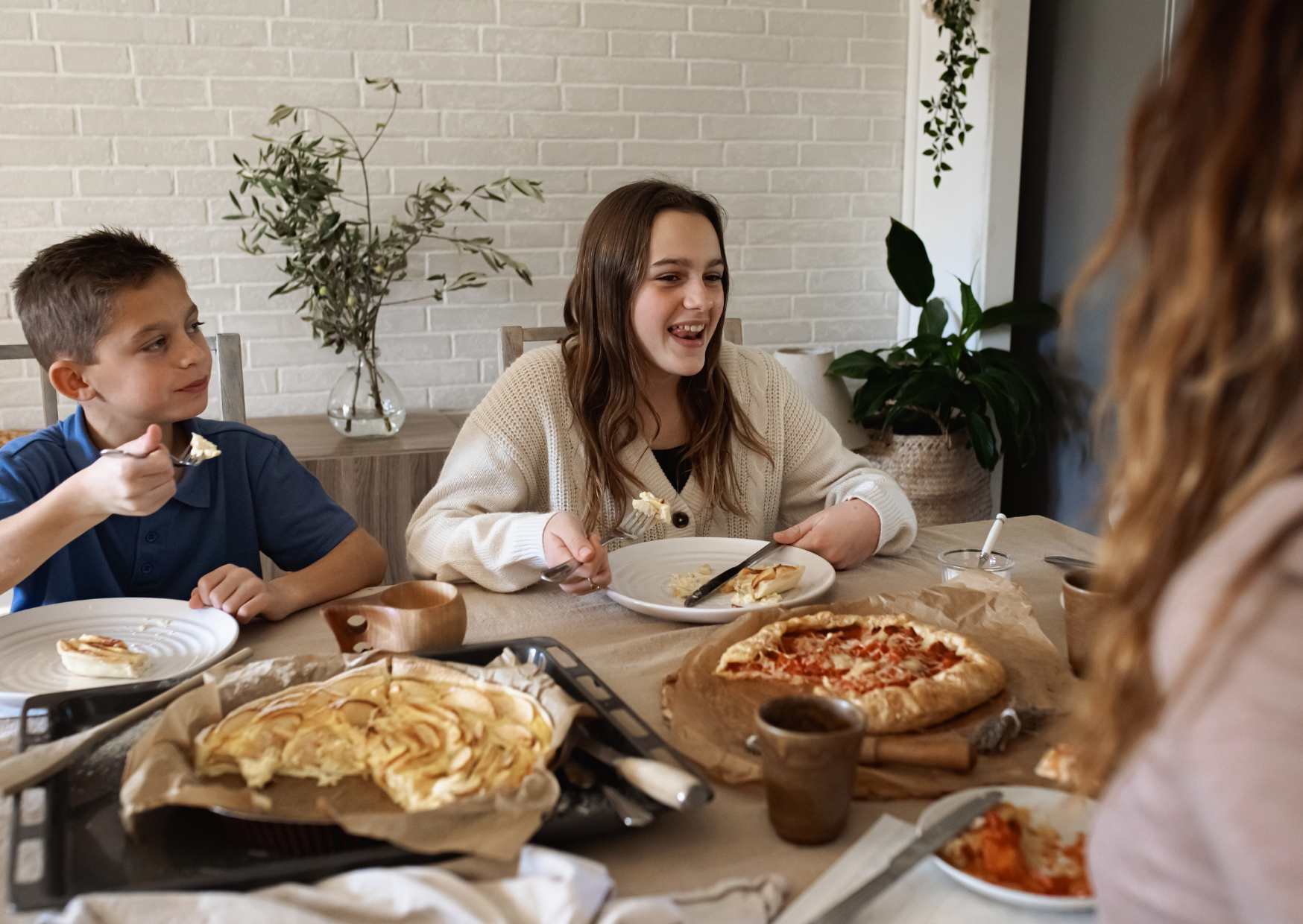
What The French Pattern Actually Looks Like
The French eating day has three meals and no snacks. The structure is as old as the French restaurant.
Petit-déjeuner (“small breakfast”) between 7am and 9am. Coffee or hot chocolate, bread with butter and sometimes jam, occasionally a piece of fruit. Roughly 200 to 350 calories. The meal is functional. It is not the centerpiece of the morning.
Déjeuner around 12:30pm to 2pm. A substantial midday meal, often the largest of the day. Two or three courses. A starter, a main, sometimes cheese or fruit at the end. Coffee. Around 700 to 1,000 calories. Eaten sitting down, ideally with other people. The French lunch break is legally protected at one hour minimum, more in practice.
Dîner between 7:30pm and 9pm. Smaller than American dinner expectations. A soup or salad, a modest main, cheese or fruit, sometimes a small dessert. Often a glass of wine. Around 500 to 800 calories. Family meal, slower, ending around 9pm or 9:30pm.
Nothing between meals. This is the part Americans miss when they try to copy the French. No mid-morning bar, no afternoon trail mix, no pre-dinner cheese plate at home, no late-evening snacking. Snacking is culturally suspect in France in a way Americans rarely understand. Parents enforce this on children. Adults enforce it on themselves.
The overnight gap is the part that does the work. Dinner ends around 9pm. The next morning starts around 7:30am. Eleven hours of fasting happen by default, with no one labeling it as such.
If breakfast slips to 9am on a weekend, the gap stretches to 13 hours. If dinner runs late or breakfast runs early, the window compresses. The pattern is loose enough to absorb life and rigid enough to produce the underlying fasting period without anyone planning for it.
Where The 200-Year Frame Comes From

The modern French meal pattern crystallized between 1800 and 1850. Before that, French eating had been shifting later for centuries.
Louis XIV ate his main meal at noon and supper at 10pm. By 1770, the French court under Marie Antoinette ate the main meal at 2pm and supper at 10pm. Across the 18th century, the times kept drifting later for the aristocracy and bourgeoisie, partly because of work patterns, partly because of the spread of artificial lighting.
By around 1820, the Parisian bourgeoisie had standardized on the pattern that survives today. Anne Martin-Fugier’s research on 19th-century Parisian eating habits documents the bourgeoisie using déjeuner to mean the midday meal, petit-déjeuner for the morning, and dîner for the evening. The structure was set.
By 1870 this naming convention had spread across France. Outside Paris, large rural breakfasts hung on into the early 20th century, especially in farming regions. But the basic three-meals-no-snacking pattern with a long overnight gap has been the French default for at least the past 150 years and probably closer to 200.
What the American wellness world rebranded as 16:8 fasting in 2014 and 2015 was already the lived eating pattern of the average French office worker in 1898.
The Underlying Math
The intermittent fasting framework calls a 12-hour eating window with a 12-hour fast a “12:12” pattern. A 10-hour window with a 14-hour fast becomes “14:10”. Strict practitioners aim for “16:8” (16 hours of fasting, 8-hour eating window).
The French pattern produces 13:11 or 14:10 by default. Dinner ending at 9pm, breakfast at 8am, lunch at 1pm: that’s roughly an 11-hour eating window and a 13-hour overnight fast. Most French adults do this without thinking about it.
Push breakfast to 9am or skip the morning bread entirely (which a meaningful share of French adults do, especially in cities): the fast extends to 14 or even 15 hours. That’s the upper end of what intermittent fasting research recommends.
The American intermittent fasting pattern works through deliberate restriction. The French pattern works through structure. The biology is the same. The cultural experience is completely different.
The French person on a 13-hour overnight fast does not think they are fasting. They think they are sleeping. The American doing the same hours through a 16:8 protocol is white-knuckling through 4pm hunger because lunch was at noon and dinner is at 8pm.
Why The French Pattern Holds Up Better

Several structural features make the French eating day easier to sustain than the American intermittent fasting protocol.
The biggest meal happens at the metabolic peak. Most research on chrononutrition (the study of when you eat, not just what) consistently shows the body handles calories better in the middle of the day than late at night. A 900-calorie French lunch at 1pm produces less postprandial blood sugar spike than the same 900 calories at 8pm.
Dinner is structurally smaller. The French dinner is not the American dinner. A soup-and-salad-and-piece-of-fish dinner of 600 calories sits differently than a meat-and-starch-and-vegetable 1,200-calorie American dinner. The smaller evening intake shortens the digestive load before sleep.
The afternoon snack barrier is enforced socially. Children get a single structured snack at 4pm called le goûter — typically a piece of bread with chocolate or butter, or a small piece of fruit. Adults don’t snack at all in most workplaces. There is no afternoon vending machine culture in France. The cultural enforcement of the no-snacking rule does most of the heavy lifting that intermittent fasting protocols have to do through individual willpower.
Meals are eaten sitting down, with other people, slowly. A French lunch in a workplace cafeteria runs 45 minutes minimum. A French dinner at home runs 60 to 90 minutes. The slow eating pace produces better satiety signaling than the standing-at-the-counter or eating-at-the-desk American norm. The same calories produce more fullness.
The lunch protein and fat content kills the afternoon energy crash. A substantial midday meal with real protein and real fat carries the eater to dinner without the 3pm hunger crash that drives most American snacking. The hunger crash only exists because American lunch is often a salad or a sandwich at 12:15pm, calorically light, eaten in 15 minutes.
What The French Don’t Do

The pattern works because of what is absent as much as what is present.
The French don’t do morning protein bars. Petit-déjeuner is mostly carbohydrate. Bread, butter, sometimes a little fruit, coffee. The American obsession with high-protein breakfast doesn’t exist in the French model.
The French don’t do gym-and-protein-shake mornings. There is no cultural expectation that you start the day with exercise plus 30 grams of whey protein. Some French people exercise in the morning; most don’t.
The French don’t do “fasted morning cardio.” The early-morning empty-stomach workout is an American import that hasn’t taken root in France. The French model assumes you will move during the day at moderate intensity (walking to the metro, walking at lunch, walking after dinner) rather than performing concentrated bursts of exercise.
The French don’t celebrate willpower around food. Eating restraint is not a public virtue the way it is in American wellness culture. The French eat butter, cheese, bread, wine, and dessert. They just eat them at specific times in specific quantities and they don’t eat between meals.
The French don’t track macros. The cultural pattern produces moderate, balanced intake without anyone running it through MyFitnessPal. The structure is the discipline. Tracking is unnecessary because the pattern enforces itself.
What Americans Get Wrong When They Try To Copy It
The American who tries to adopt the French pattern usually fails at predictable points.
They keep the American dinner size. Moving dinner to 8pm with the same 1,200-calorie load produces sleep disruption and weight gain that the French version doesn’t. The French dinner is smaller. Without that adjustment, the timing alone doesn’t work.
They snack anyway. The cultural enforcement of no-snacking is invisible to Americans, who assume any reasonable diet allows “healthy snacks.” The French pattern depends on the absence of snacks. If you keep eating between meals, you are not doing the French pattern; you are doing the American pattern with French timing.
They try to do it solo. The French eat with other people. Workplace lunches, family dinners, weekend lunches with friends. The social structure carries the eating structure. Americans trying to do it alone at their desk lose the slowing-down effect that makes the pattern sustainable.
They overdo morning protein. The French breakfast is mostly carbohydrate, low-calorie, and quick. The American attempt at French eating usually piles eggs, bacon, and Greek yogurt into the morning meal, which makes the body want lunch earlier and breaks the longer-fasting effect.
They keep American work schedules. A 30-minute desk lunch at 12:15pm doesn’t produce what a 90-minute sit-down lunch at 1pm produces. The body responds differently. Office cultures that don’t permit a real lunch break can’t really run the French pattern.
What This Tells Americans Looking At Their Own Eating

The popular American framing treats intermittent fasting as a hack. The French version treats it as a meal structure. The hack framing requires willpower. The structure framing requires habits.
Americans looking at the French pattern for clues to their own eating can take a few specific things.
The biggest meal at the metabolic peak. Even Americans who can’t shift their dinner can shift their lunch. Make lunch the largest meal of the day. Eat dinner smaller. The body responds.
Eliminate snacking, not whole meals. The 16-hour fast version of intermittent fasting often skips breakfast. The French version keeps breakfast small but eats it. Most Americans do better keeping all three meals and cutting the snacks than they do skipping breakfast and snacking through the afternoon.
Eat sitting down. Eat slowly. Eat with people when possible. The pace of eating affects satiety. Standing at the counter or eating at a desk doesn’t produce the same fullness as a real meal. The slow eating habit is one of the cheapest interventions available and one that most Americans never make.
Keep dinner at least 11 hours before breakfast. This is the floor. If dinner ends at 8pm, breakfast should not start before 7am. Most American eating disorders this rule already. Closing the window is a low-effort improvement.
Drop the breakfast protein obsession. A small carb-and-fat breakfast (toast and butter, oatmeal with a little honey, a piece of fruit and a coffee) keeps the morning fast effect more than a 30-gram protein bomb does. Protein at breakfast triggers metabolism more aggressively, which can be useful for some goals but breaks the longer overnight fast.
Walk after meals. The French don’t go to the gym after lunch. They walk back to work. The 15-to-30-minute post-meal walk improves glucose handling significantly. This is the cheapest cardiovascular intervention available.
A Practical Week If You Want To Try It

For Americans who want to actually run the French pattern for a week to see what it does.
Days 1 and 2. Move breakfast small and late. Coffee plus one slice of buttered toast. Keep lunch substantial: a real meal sitting down for at least 30 minutes. Cut all snacking between meals. Dinner at 7:30pm, smaller than usual, ending by 8:30pm. Notice the difference in afternoon energy.
Days 3 and 4. Lengthen the lunch break. Aim for 45 minutes sitting down, ideally with another person or at minimum away from a screen. Add a 15-minute walk after lunch. Notice how the afternoon snack craving changes.
Days 5 and 6. Hold the dinner around 7:30pm. Make it smaller than your usual American dinner. Soup plus salad plus a piece of fish or chicken plus a small piece of cheese or fruit. Glass of wine if you drink. Notice the sleep difference.
Day 7. Keep breakfast small and slightly later, around 8:30am. This stretches the overnight fast to 14 hours. Notice how the morning feels without the protein-heavy start.
Through the week. Do not weigh yourself daily. The pattern produces effects over weeks and months, not days. The first week is for noticing energy patterns, hunger patterns, and sleep quality. The numbers come later.
Anyone with diabetes, blood sugar management issues, eating disorder history, or current medications affecting metabolism should talk to a doctor before changing meal timing. The French pattern is mild compared to strict intermittent fasting but any meal timing shift can interact with medication and underlying conditions.
What This Says About How Americans Talk About Food

The French pattern works because it is a culture, not a program. Americans treat food restriction as a project that requires constant monitoring, optimization, and social broadcasting. The French treat food structure as a thing that already exists and that everyone just does.
This is the part that travels least well. Americans can copy the meal timing. They can copy the lunch size. They can copy the no-snacking rule. They cannot easily copy the absence of food obsession that makes the pattern sustainable.
A French adult doesn’t think about whether they are fasting. They are not fasting. They are between meals. The frame is what makes the pattern hold for a lifetime instead of for the 90 days that most American protocols survive.
The Americans who do best with this kind of eating change are usually the ones who stop tracking, stop optimizing, and just commit to the structure. Three meals a day, eaten sitting down, the biggest one in the middle, nothing in between, last bite at least 11 hours before the first bite tomorrow. That’s the whole pattern. There is nothing else to do.
It has worked for the French for two centuries. It works for the French now. The Americans who adopt it without rebranding it as a wellness protocol generally find it works for them too.
The woman in Lyon who finished her cheese at 8:45pm did not invent anything. She is doing what her grandmother did and what her grandmother’s grandmother did, in the same city, on roughly the same schedule, with roughly the same ingredients. She just hasn’t given it a name because it doesn’t need one.
The Americans who notice this and stop looking for the protocol that will fix everything sometimes find that the pattern that was always there is the one they needed.

About the Author: Ruben, co-founder of Gamintraveler.com since 2014, is a seasoned traveler from Spain who has explored over 100 countries since 2009. Known for his extensive travel adventures across South America, Europe, the US, Australia, New Zealand, Asia, and Africa, Ruben combines his passion for adventurous yet sustainable living with his love for cycling, highlighted by his remarkable 5-month bicycle journey from Spain to Norway. He currently resides in Spain, where he continues sharing his travel experiences with his partner, Rachel, and their son, Han.