
A spoonful of Thai green curry paste straight from the jar tastes raw. Sharp chili heat, undeveloped lemongrass, harsh galangal. The flavors are present but unintegrated, the way ingredients taste before cooking has done its work. This is what the paste is supposed to taste like at this stage. It is not a finished flavor.
A spoonful of Thai green curry paste after it has been fried in coconut cream tastes completely different. The chili heat has rounded into warmth. The lemongrass and galangal have softened and integrated. The kaffir lime peel and shrimp paste have bloomed into the deeply aromatic foundation that defines real Thai curry. The transformation takes 4 to 6 minutes of careful frying and is the single most important step in real Thai curry cooking.
This step is missing from most American Thai curry recipes. The standard American method calls for adding curry paste to a pot, pouring in coconut milk, and simmering. This produces curry-flavored coconut milk soup, not curry. The paste never gets the heat treatment that develops its flavors. The result is a dish that tastes like the raw ingredients, not like Thai curry.
This piece is the recipe written for the cook who wants the Thai version rather than the cookbook version. The paste frying technique, the ingredient logic, and the cooking sequence come first. The cultural and history context follows.
The Recipe
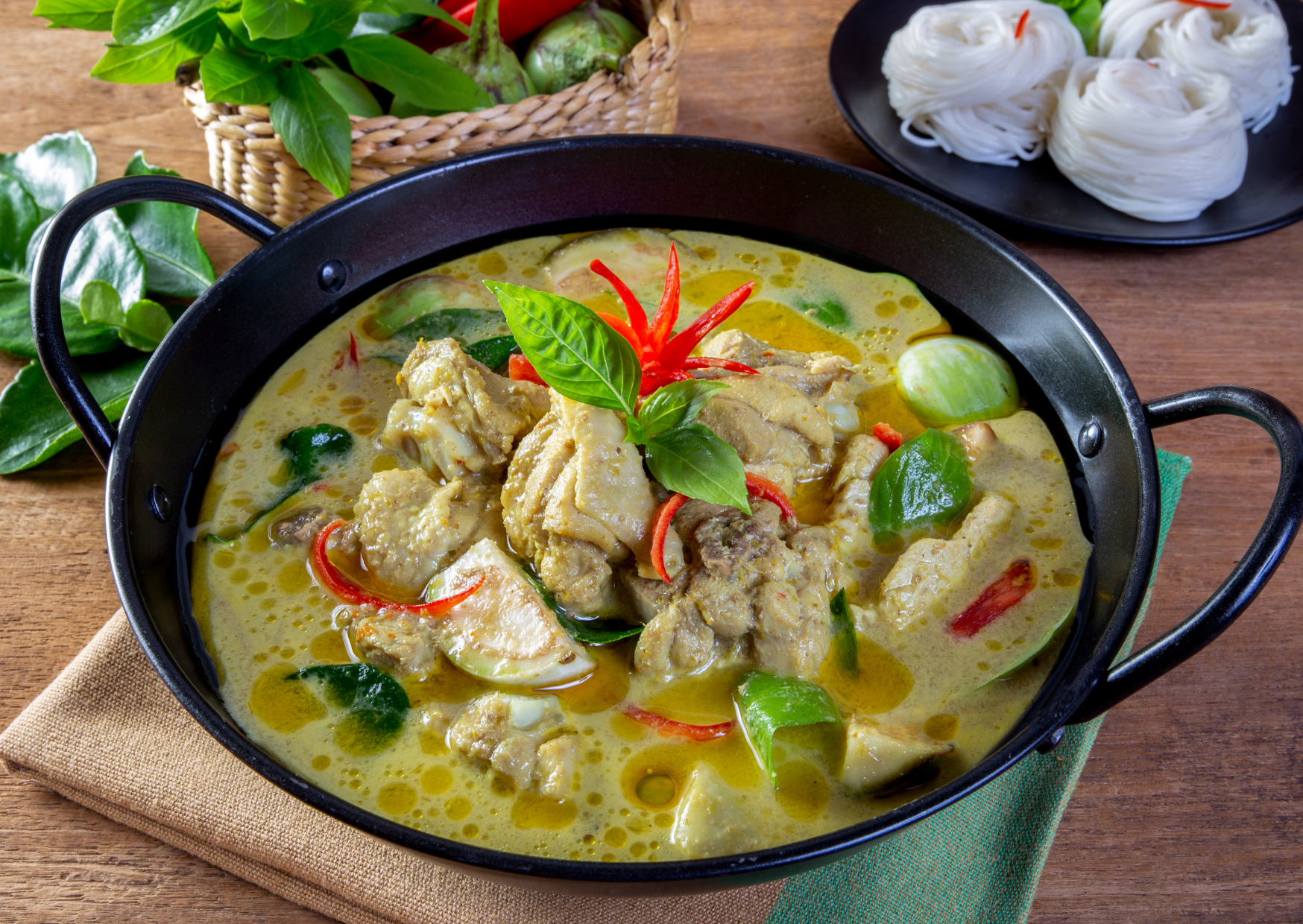
Yield: 4 servings
Active time: 25 minutes Total time: 35 minutes
Ingredients for the paste base:
- 80 to 100 grams Thai green curry paste (Maesri or Mae Ploy brand)
- 2 tablespoons coconut cream (the thick fat layer from the top of a can of coconut milk that has not been shaken)
Ingredients for the curry:
- 600 grams boneless, skinless chicken thigh, cut into 3 cm pieces (or shrimp, beef, or firm tofu)
- 1 can (400 ml) full-fat coconut milk, refrigerated overnight if possible
- 250 ml chicken stock or water
- 2 tablespoons fish sauce
- 1 tablespoon palm sugar (or brown sugar)
- 4 to 6 makrut lime leaves (sometimes labeled “kaffir lime leaves”), torn
- 1 small Thai eggplant or 1/2 medium globe eggplant, cut into 2 cm pieces
- 100 grams green beans or long beans, cut into 4 cm pieces
- 1 small handful Thai basil leaves
- 2 fresh red Thai chilies, sliced (optional, for heat and color)
To serve:
- Steamed jasmine rice
- Lime wedges
- Additional Thai basil
Method:
- Open the can of coconut milk without shaking it. Carefully spoon off 4 tablespoons of the thick coconut cream from the top. Set the rest of the coconut milk aside.
- Heat a wok or large heavy skillet over medium heat. Add 2 tablespoons of the coconut cream. Let it heat for 1 to 2 minutes until it begins to simmer and the oil starts to separate from the cream solids. The coconut cream should be visibly bubbling and slightly oily. This is the cooking medium for the paste.
- Add the curry paste to the simmering coconut cream. Stir continuously with a wooden spoon or spatula. The paste will resist incorporating at first, then gradually integrate with the cream as it heats.
- Continue frying for 4 to 6 minutes, stirring constantly. The mixture will go through visible stages. First, the paste loosens and incorporates into the cream. Second, the mixture begins to release a strong, layered aroma (you should smell distinct lemongrass, galangal, and chili rather than a generic curry smell). Third, the mixture begins to thicken slightly and the oil starts to separate at the edges. Fourth, the color deepens from bright green to a darker, more developed green-brown.
- The paste is done when oil has separated visibly from the solids, when the aroma is fully developed, and when the texture has thickened slightly. This usually takes 4 to 6 minutes total. Do not rush this step. Insufficient frying produces curry that tastes raw.
- Add the chicken pieces. Stir to coat with the fried paste. Cook for 2 to 3 minutes, stirring frequently, until the chicken is just sealed on the surface.
- Add the remaining coconut milk and the chicken stock. Stir to combine. Bring to a gentle simmer.
- Add the makrut lime leaves, eggplant, fish sauce, and palm sugar. Stir to combine. Reduce heat to medium-low and simmer gently for 8 to 10 minutes until the chicken is cooked through and the eggplant is tender but still holds its shape.
- Add the green beans and simmer for another 3 to 4 minutes until just tender.
- Taste the curry. Adjust seasoning. Add more fish sauce for salt and umami, more palm sugar for sweetness, more lime juice for acidity if needed.
- Stir in the Thai basil leaves and sliced fresh chilies if using. Remove from heat immediately. The basil should wilt slightly but retain its color.
- Serve immediately over steamed jasmine rice with lime wedges on the side.
Why The Paste Frying Specifically
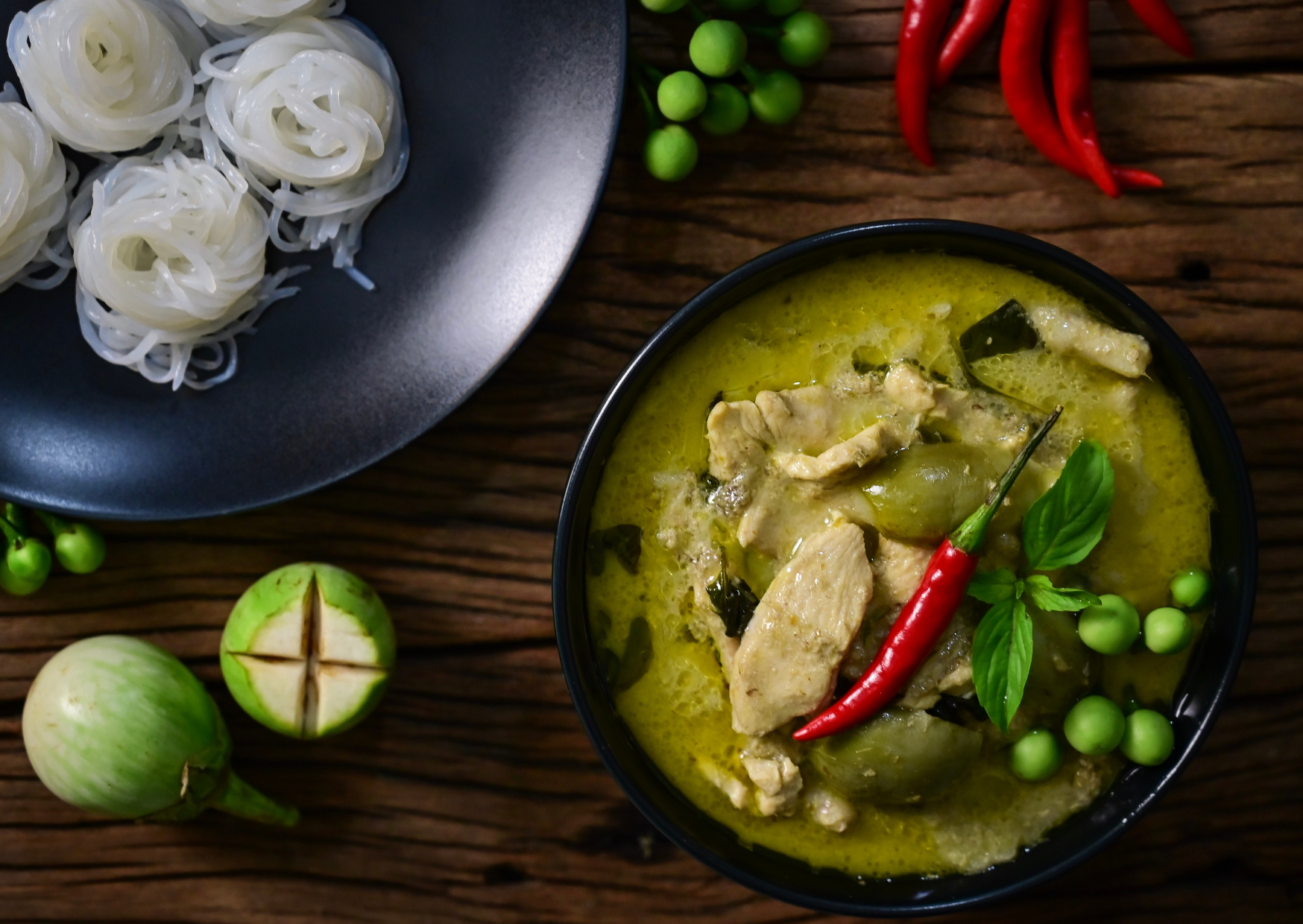
The paste frying step is the technical foundation of real Thai curry, and it is the step that American recipes most commonly omit or rush.
Thai curry paste is a complex mixture of ingredients that have been pounded together but not cooked. The components include lemongrass, galangal, makrut lime peel, shallots, garlic, fresh and dried chilies, coriander root, white peppercorns, cumin, coriander seed, shrimp paste, and salt. Each of these components has flavor compounds that are bound up in cellular structures or in raw chemical states that need heat to release.
The frying step uses heat and fat to extract and develop these flavors. The coconut cream provides the fat. The medium heat provides the temperature. The 4 to 6 minutes of cooking provides the time. The combination produces the chemical transformations that turn raw paste into developed curry flavor.
Several specific transformations happen during the frying. The Maillard reaction begins on the protein components (shrimp paste especially), producing brown, savory, deep flavors. Volatile compounds in lemongrass and galangal vaporize partially, integrating with the fat and producing aromatic complexity. Chili compounds bloom into the fat, producing rounder heat distribution rather than sharp surface heat. Lime peel oils release into the cream. Shallot and garlic flavors mellow and integrate.
Without this step, none of these transformations happen. The paste enters the dish raw and stays raw. The coconut milk and other liquids can dilute and cook the paste somewhat, but they cannot produce the same flavor development that frying produces.
This is why Thai curry made the American way tastes flat compared to restaurant Thai curry, even when using identical paste, identical coconut milk, and identical other ingredients. The technique is doing the work, not just the ingredients.
On The Curry Paste
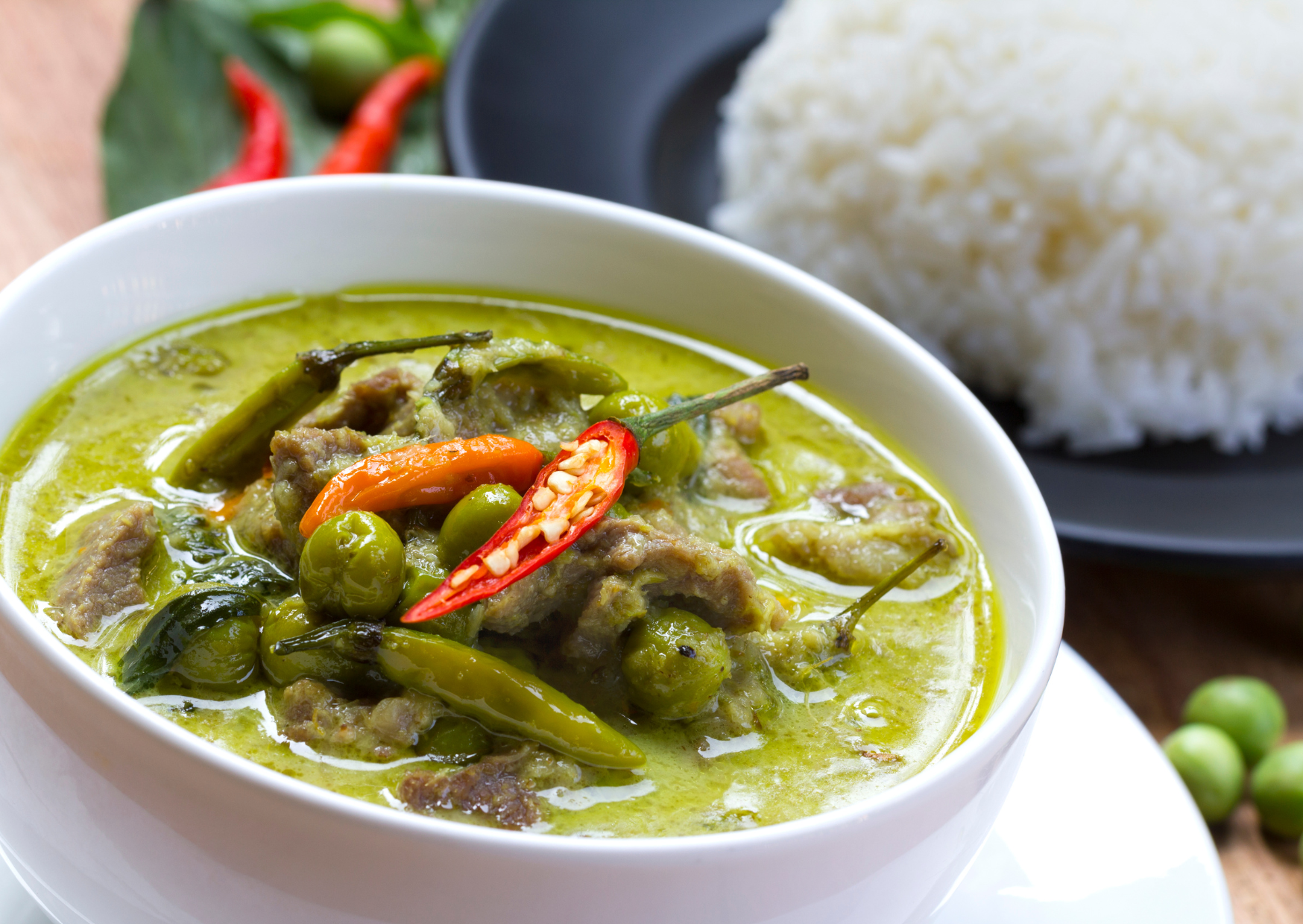
The curry paste choice is the second most important factor after the frying technique.
Use a quality Thai-imported paste. Maesri (in small cans) and Mae Ploy (in larger plastic tubs) are the two most reliable brands widely available outside Thailand. Both are made in Thailand using traditional ingredient ratios. Other Thai brands (Aroy-D, Lobo) are also acceptable. American-made or American-marketed Thai curry pastes (Thai Kitchen, A Taste of Thai) are generally weaker in flavor, less concentrated, and produce noticeably inferior results.
The freshness matters. Curry paste loses potency over time. A jar that has been open for more than 6 months has lost flavor. Buy smaller quantities and use within 6 weeks of opening for best results.
Make your own curry paste only if you understand what you are committing to. Real homemade Thai green curry paste requires fresh galangal, lemongrass, makrut lime peel, fresh chilies, coriander root (not stems), shrimp paste, and proper pounding in a granite mortar for 30 to 45 minutes to produce the right texture. The ingredients are difficult to source in much of the US and Europe. The pounding cannot be substituted with food processor work without losing flavor. Most home cooks should use store-bought paste, even those committed to authenticity, because the ingredient sourcing alone defeats most attempts.
The paste quantity in the recipe (80 to 100 grams) is the right amount for a curry serving 4 with strong but not overwhelming heat. Adjust upward for stronger curry, downward for milder. Real Thai curry uses substantial paste; the American tendency to use 2 tablespoons of paste produces meaningfully weaker flavor.
On The Coconut Milk
The coconut milk is the third critical factor.
Use full-fat coconut milk in cans. Aroy-D, Chaokoh, and Mae Ploy are reliable brands. Tetra-pak coconut milk is generally lower quality and more diluted. Light coconut milk is wrong for Thai curry; the dish requires the fat content of the full-fat version.
Refrigerating the can overnight before opening helps the cream solidify at the top, making it easier to spoon off the cream layer. If you have not refrigerated the can, the cream layer is still usually visible at the top after letting the can sit upright for at least an hour.
The 4 tablespoons of coconut cream used to fry the paste is a specific quantity for a reason. Too little cream and the paste burns or sticks. Too much cream and the paste does not get hot enough to develop flavors. The right amount is enough to provide a layer of fat that conducts heat to the paste while leaving the paste in contact with the pan surface.
The remaining coconut milk goes in after the paste is fully fried. Adding it earlier interrupts the frying process. The order of operations is: cream, fry paste, add protein, add remaining coconut milk and stock, simmer.
For richer curry, use only coconut milk and skip the chicken stock. For lighter curry, increase the stock-to-coconut-milk ratio. The recipe’s 1.5 ratio of coconut milk to stock produces a balanced result.
On The Aromatics And Vegetables
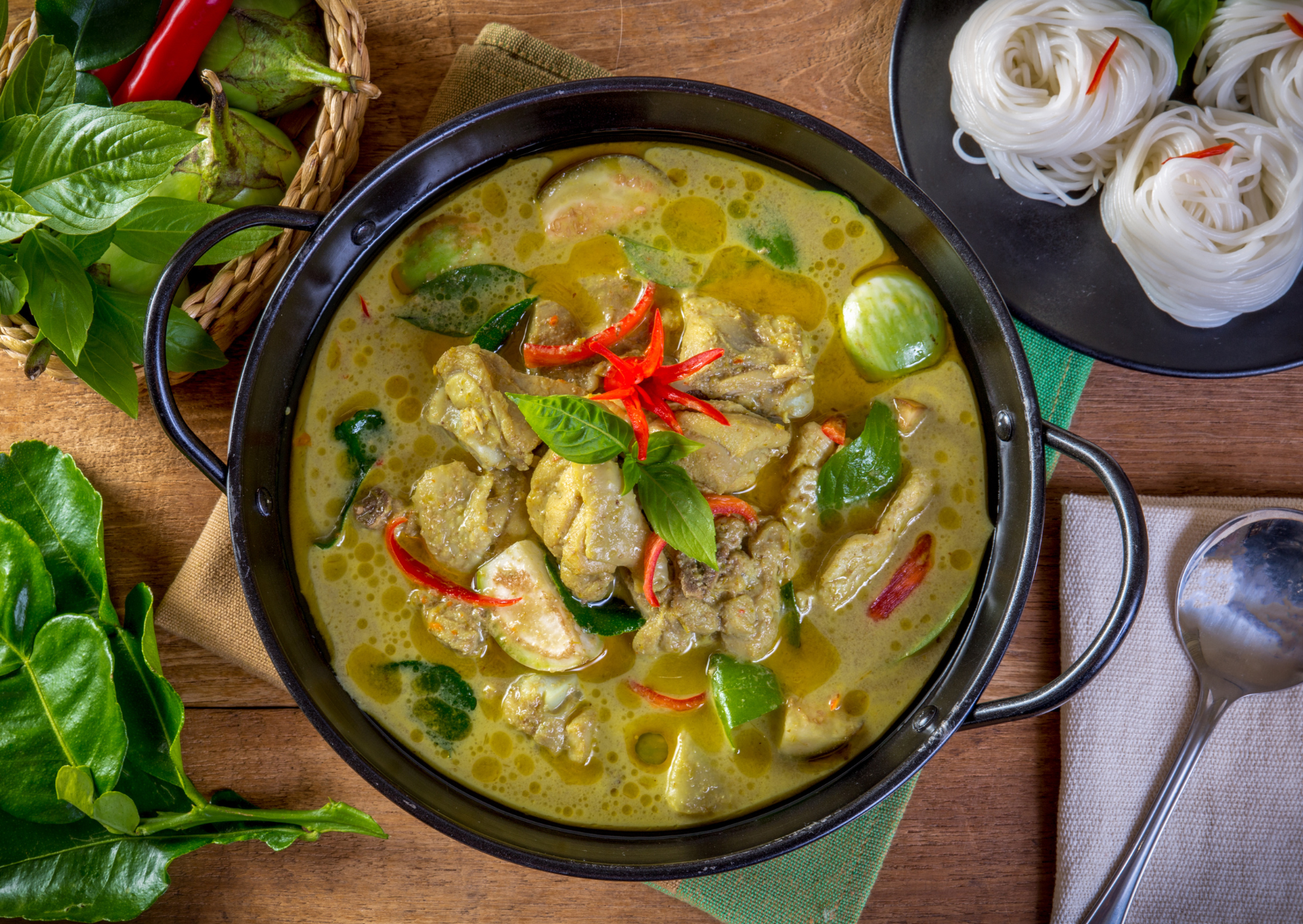
Makrut lime leaves (sometimes labeled “kaffir lime leaves” in older sources) are the third critical aromatic. They provide the distinctive citrus-floral note that defines Thai cooking. Fresh leaves are best; frozen leaves are acceptable; dried leaves are weak but workable. They are increasingly available at Asian markets and well-stocked supermarkets. The leaves should be torn (not chopped) to release their oils. The leaves are not eaten; they impart flavor to the curry and are typically left in or removed before serving.
Thai basil (sometimes called “horapha” or labeled “Thai sweet basil”) is different from regular Italian basil. It has a more anise-like, slightly licorice flavor. Italian basil is a poor substitute. Thai basil is increasingly available at Asian markets and well-stocked supermarkets. Add at the very end to preserve the flavor and color.
Thai eggplant (small, round, white-and-green or yellow varieties) is the traditional choice but is rarely available outside Asian markets. Globe eggplant or Japanese eggplant work as substitutes. The eggplant should be cut to similar size as the chicken pieces to cook evenly.
Long beans or green beans provide texture and color. Long beans (sometimes called yard-long beans, available at Asian markets) are traditional. Standard green beans are an acceptable substitute.
Fresh Thai chilies (small, hot, red) provide additional heat and visual color. They are optional. The dish gets most of its heat from the curry paste itself; fresh chilies add additional heat and a different flavor character.
On The Protein
Chicken thigh is the standard protein for Thai green curry, providing flavor and tenderness. Thigh holds up better than breast in the simmering. Cut into 3 cm pieces.
Shrimp (16/20 size, peeled and deveined) is excellent in green curry. Add the shrimp later in the cooking (with the green beans) since shrimp cooks quickly. About 4 to 5 minutes of cooking is sufficient.
Beef (sirloin, sliced thin) works well. Cook briefly initially to seal, then return to the curry for a few minutes at the end to prevent overcooking.
Firm tofu is the standard vegetarian option. Cube and add early to absorb the curry flavor.
Fish (firm white fish like tilapia, snapper, or bass) works well for a lighter curry. Add late to prevent overcooking.
The cooking time depends on the protein. Chicken thigh: 8 to 10 minutes simmering after adding to the curry. Shrimp: 4 to 5 minutes. Beef: 5 to 6 minutes if pre-seared. Tofu: 8 to 10 minutes. Fish: 4 to 5 minutes.
On The Seasoning
The Thai curry seasoning balance is salt, sweet, sour, spicy in specific proportions.
Fish sauce provides the salt and umami. Real Thai fish sauce (Squid Brand, Megachef, Tiparos) has a complex, savory profile that is essential to Thai curry. Vietnamese fish sauce (Three Crabs) is acceptable. American “fish sauce” sold in some supermarkets is generally inferior.
Palm sugar provides the sweet. Palm sugar is sold in solid disc form at Asian markets. Brown sugar is an acceptable substitute. White sugar lacks the molasses depth and produces a flatter sweetness.
Lime juice provides the sour. Add at the end, off heat, to preserve the brightness. Some recipes add lime juice during cooking, which produces less vibrant acidity.
The curry paste and fresh chilies provide the spicy. The paste alone in the quantity specified produces moderate heat. Add fresh chilies for additional heat.
The balance should be: clearly salty (from fish sauce), gently sweet (from palm sugar), brightly sour (from lime), and warmly spicy (from paste and chilies). All four flavors should be present and balanced. If one dominates, adjust. This is the feedback loop the Thai cook uses to develop the dish; the American cook often skips this loop.
The Cooking Sequence
The order of operations is specific and important.
The paste fries first. This is the technique foundation. Skipping or rushing this step produces curry-flavored coconut milk rather than curry.
The protein goes in next. It seals briefly in the fried paste before liquid is added. This adds another layer of flavor development.
The remaining coconut milk and stock go in after. This is when the actual curry cooking begins. The paste is already developed; the simmering now cooks the protein and integrates the flavors.
The aromatics and vegetables go in third. Lime leaves, eggplant, fish sauce, and palm sugar at this stage. They simmer with the curry to release their flavors.
The fast-cooking vegetables go in fourth. Green beans, additional vegetables that should retain texture.
The basil and lime go in last. Just before serving. The basil wilts slightly but retains color and flavor. The lime juice (if using) goes in off heat to preserve brightness.
The dish should be served immediately. Thai curry is meant to be eaten while hot, when the flavors are at peak integration. Letting it sit on the stove for extended time before serving produces over-reduced sauce and overcooked vegetables.
The Cost Breakdown
For a single batch, four servings:
Chicken thighs: 8 to 12 euros for 600 grams of good quality. Curry paste: 1 to 2 euros for the 80 to 100 grams used (a 4 oz can or small tub). Coconut milk: 2 to 3 euros for one full-fat can. Stock or water: negligible. Fish sauce, palm sugar: 1 to 2 euros for the small amounts used (bottles last months). Aromatics (lime leaves, basil, fresh chilies): 2 to 4 euros total. Vegetables (eggplant, green beans): 2 to 4 euros total. Jasmine rice: 1 to 2 euros for the cooked rice serving four.
Total cost for four servings: roughly 17 to 29 euros, or 4.25 to 7.25 euros per person.
For comparison, Thai green curry at a Thai restaurant in Madrid, Lisbon, or Barcelona typically costs 14 to 22 euros per person for the equivalent serving with rice. Making it at home is significantly cheaper, particularly when the specialty ingredients are amortized across multiple batches.
Storage And Leftovers
Thai green curry stores well in the refrigerator for 3 to 4 days. The flavor often improves overnight as the spices continue to integrate. Reheat gently on the stovetop, adding a splash of water if the sauce has thickened too much.
Leftover curry can be frozen for up to 1 month. The chicken and sauce freeze well; the basil and Thai eggplant can become slightly soft after freezing. For better frozen results, freeze without the basil and add fresh basil when reheating.
The leftover curry has multiple uses beyond the original. Mixed with rice for a curry rice bowl. Spooned over noodles for a quick curry noodle dish. Used as a base for additional vegetables or proteins for variations.
A Repeatable Cooking Pattern
To integrate this dish into regular cooking:
Make Thai curry every 2 to 3 weeks. The active prep time is 15 to 20 minutes including chopping. The cooking is 20 to 25 minutes. The total time fits a weeknight dinner.
Stock the Thai pantry. Curry paste, fish sauce, palm sugar, makrut lime leaves (frozen), and Thai basil (when available) cover most Thai cooking. Coconut milk is a reliable staple. The total pantry investment is moderate and enables a wide range of dishes beyond just green curry.
Vary the curry style. Red curry uses red curry paste with similar techniques. Massaman curry uses massaman paste with a different aromatic profile. Yellow curry is milder and uses turmeric-forward paste. The base technique (fry paste, add protein, add coconut milk, simmer) stays the same.
Try variations within green curry. Different proteins. Different vegetables (zucchini, bell pepper, bamboo shoots, water spinach). Different intensities of paste. The base recipe stays the same; variations build on it.
The Framework The Cookbook Misses
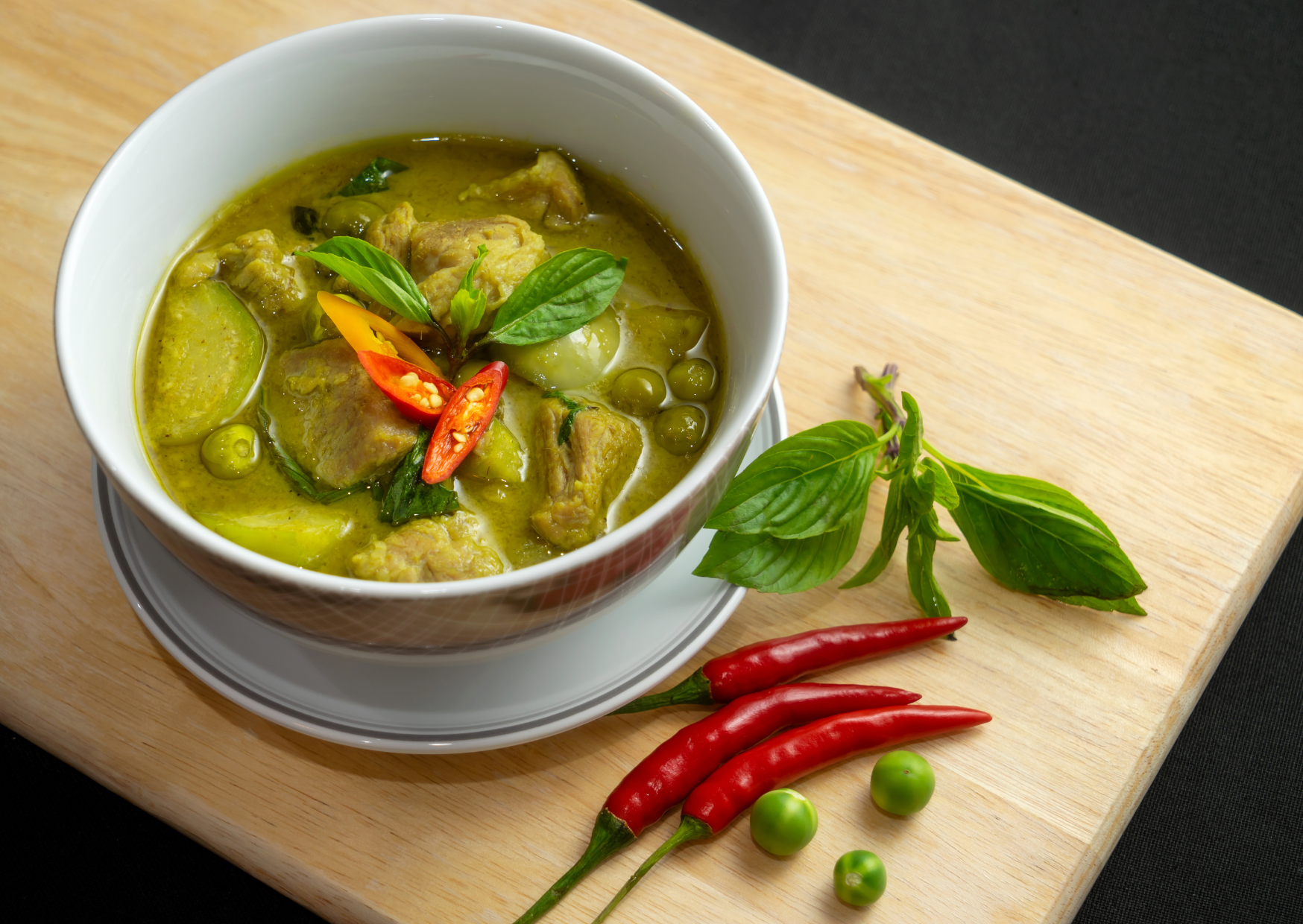
The recipe above is one specific dish. The framework it teaches transfers to most Thai curry cooking and to broader Southeast Asian curry traditions.
The paste-frying technique applies to all Thai curries (red, green, massaman, yellow, panang). Each curry uses different paste but the frying step is universal. Skipping it produces inferior results across the category.
The coconut cream technique (separating the cream from the milk) is a Thai cooking standard that applies to many preparations beyond curry. The cream is used for frying aromatics; the milk is used for the body of dishes.
The seasoning framework (salt-sweet-sour-spicy balance, with specific Thai ingredients providing each) applies to most Thai cooking. Pad thai, tom yum, larb, and many other dishes operate within this framework.
These techniques are obvious to Thai home cooks who learned from family. They are largely absent from American Thai cookbooks because the cookbook writers often work with American kitchen norms (shorter cooking times, simplified techniques, generic ingredients) without explaining what they have changed.
The American who makes this curry three or four times stops needing the recipe. The cook starts adjusting the paste quantity by feel, the seasoning balance by taste, the vegetables by what is available. The dish becomes a regular dinner option rather than a special-occasion attempt at Thai restaurant cuisine.
The paste-frying step is not a secret. It is just a step American recipes have systematically omitted, treating the paste as if it were a finished sauce rather than as raw material that needs heat treatment. Once you understand what frying the paste actually does, the omission becomes unacceptable. You cannot make real Thai green curry without frying the paste. You can only make curry-flavored coconut milk soup, which is a different dish.
The cookbook version of Thai green curry is no longer the curry you make. The Thai version, with the proper paste-frying technique and traditional ingredients, is. The difference between the two is substantial enough that anyone who has tasted real Thai curry once cannot return to the cookbook version satisfied.

About the Author: Ruben, co-founder of Gamintraveler.com since 2014, is a seasoned traveler from Spain who has explored over 100 countries since 2009. Known for his extensive travel adventures across South America, Europe, the US, Australia, New Zealand, Asia, and Africa, Ruben combines his passion for adventurous yet sustainable living with his love for cycling, highlighted by his remarkable 5-month bicycle journey from Spain to Norway. He currently resides in Spain, where he continues sharing his travel experiences with his partner, Rachel, and their son, Han.