
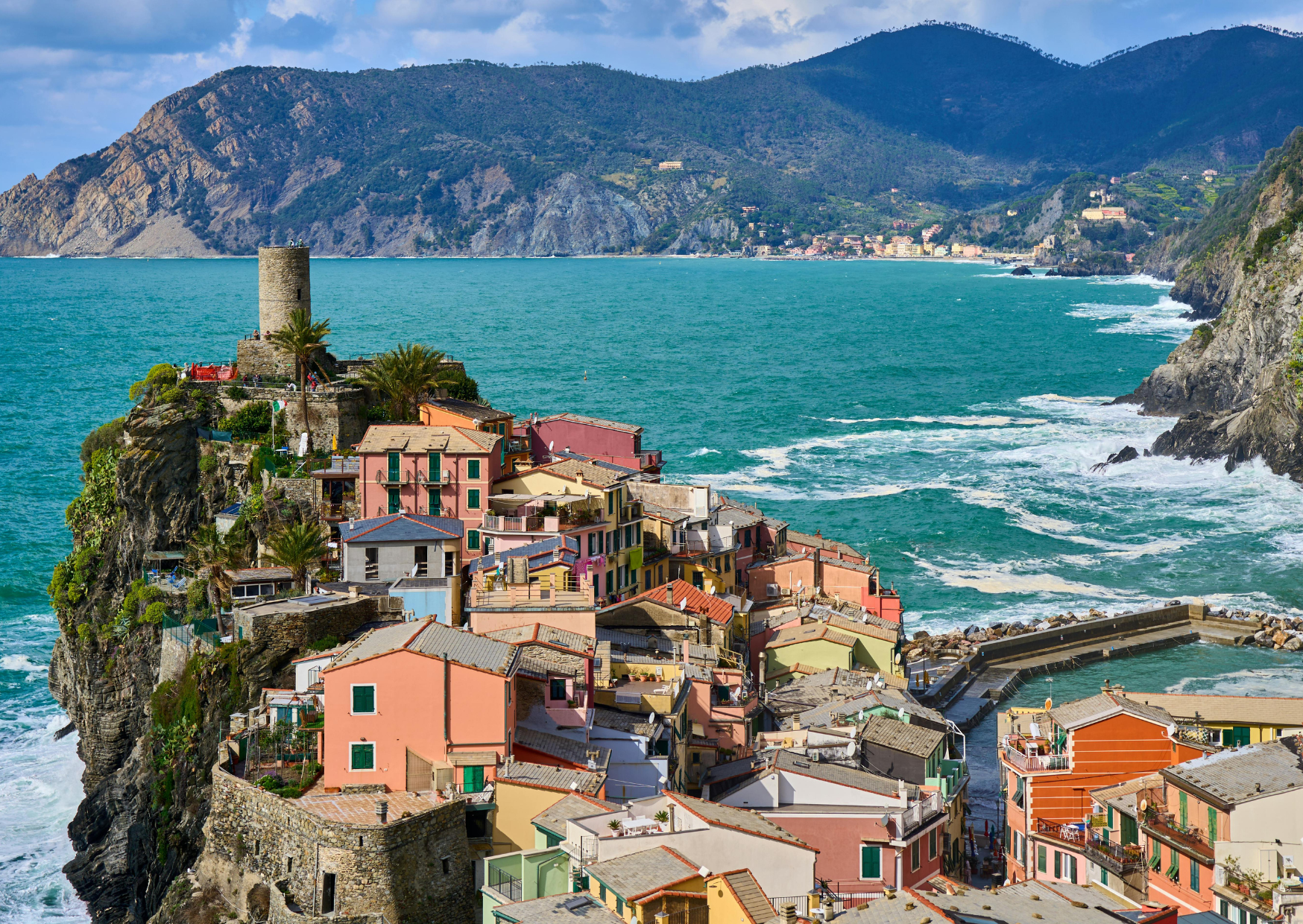
In August, the Cinque Terre often feels like a conveyor belt with sea views.
In May, it still feels like a place where people live.
That does not mean May is empty. It is not. Trains are running hard, the villages are awake, the park is fully in season, and some spring weekends already need one-way crowd controls on the Monterosso to Vernazza stretch. But the balance is different. You can still walk into a village and notice the stone, the laundry, the terraces, the silence between train arrivals, the smell of pesto and saltwater, and the fact that this coastline was a working landscape long before it became a global queue.
That is why May changes the whole experience.
The trail is the same.
The villages are the same.
The cliffs are the same.
The country you feel like you are in is not.
The Early Money Win Is That May Lets You Walk More and Buy Less
The first practical win in May is not a cheaper postcard.
It is less paid movement.
From 14 March to 1 November 2026, the Cinque Terre Express system runs with single-ticket prices of €5, €8, or €10 depending on the A-B-C calendar day. That is not ruinous, but in August people often end up riding trains repeatedly because the villages are hotter, the platforms are busier, and the whole place pushes visitors into station-to-station hopping instead of walking village to village. In May, the weather is kinder and the hiking logic makes more sense, so you can often spend less time buying another ticket because your body is still willing to do the coast on foot.
That matters more than people think.
Cinque Terre gets expensive through repetition. Another train. Another boat. Another cold drink because the platform is crowded and you are waiting again. Another rushed snack because lunch slipped while you were wedged between day-trippers. In May, the region gives you back some of that money simply by making walking feel like the obvious choice rather than a heroic one.
This is also where Americans misread the destination.
They budget for a pretty base and forget the internal churn. Cinque Terre is not one scenic overlook. It is a chain of villages, stairs, transfers, trail entries, and transport decisions. In August, the friction of moving through it rises. In May, that friction drops enough that the place starts acting like a landscape again instead of a funnel.
In May the Trail Still Feels Like a Trail
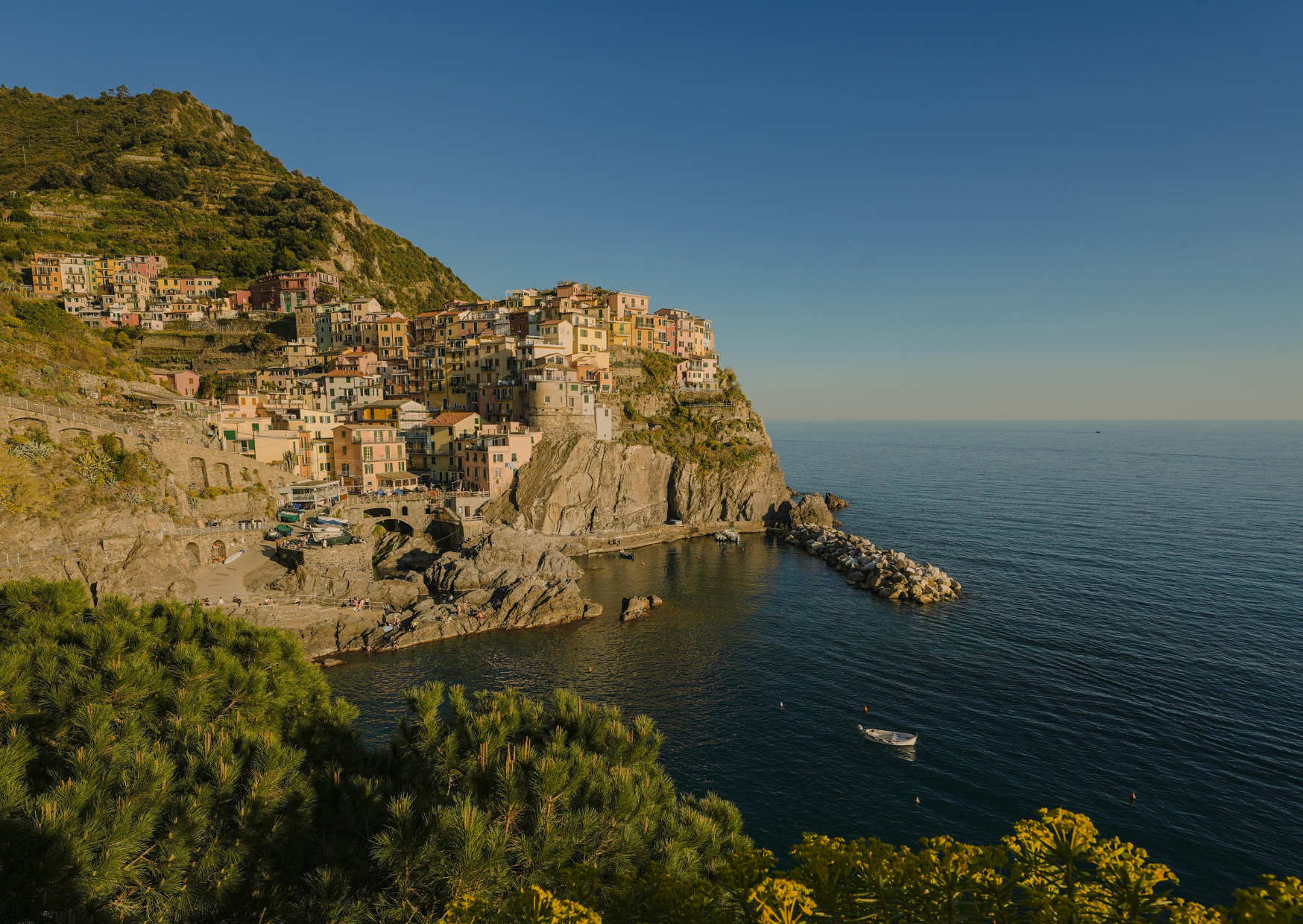
This is the biggest difference.
The Cinque Terre National Park is blunt about what these paths are. The network runs for more than 120 kilometres, and the park repeatedly reminds visitors that the trails should be approached in good weather, with suitable footwear, and with real hiking sense. It also says the Monterosso to Vernazza segment is EE for expert hikers with about 217 metres of elevation gain, not a decorative seafront promenade. Open or smooth-soled footwear is forbidden. That is the park telling you, very politely, that this is still a mountain path above the sea.
In May, that truth is easier to feel.
Your legs are doing the place instead of your train ticket doing it for you. The climb out of Vernazza still hurts. The descent toward Monterosso still needs your attention. The stone is still stone, not a cinematic prop. But the season lets the path stay physical and legible in a way August often does not. In high summer, the heat and crowding push many visitors into a strange compromise where they still want the trail story but not the trail conditions. That is how the villages turn into boxes to be checked.
May is not empty serenity, and pretending otherwise would be bad travel advice. The park has already announced one-way management on the Monterosso to Vernazza stretch for several spring peak dates in 2026, including 1-2 May, 14 May, and 30-31 May plus 1 June. That tells you two things at once. First, spring is popular. Second, even spring pressure is still a different kind of pressure from August saturation. The park is managing bursts. It is not trying to survive the whole season.
That distinction is what your body notices.
In May, you still have moments when the coast opens up and the path goes quiet.
In August, those moments are much harder to come by.
The Villages Stop Feeling Like Stations Between Photo Stops
The August version of Cinque Terre often encourages the worst possible village behavior.
Get off train. Follow crowd. Photograph harbor. Buy something cold. Move on.
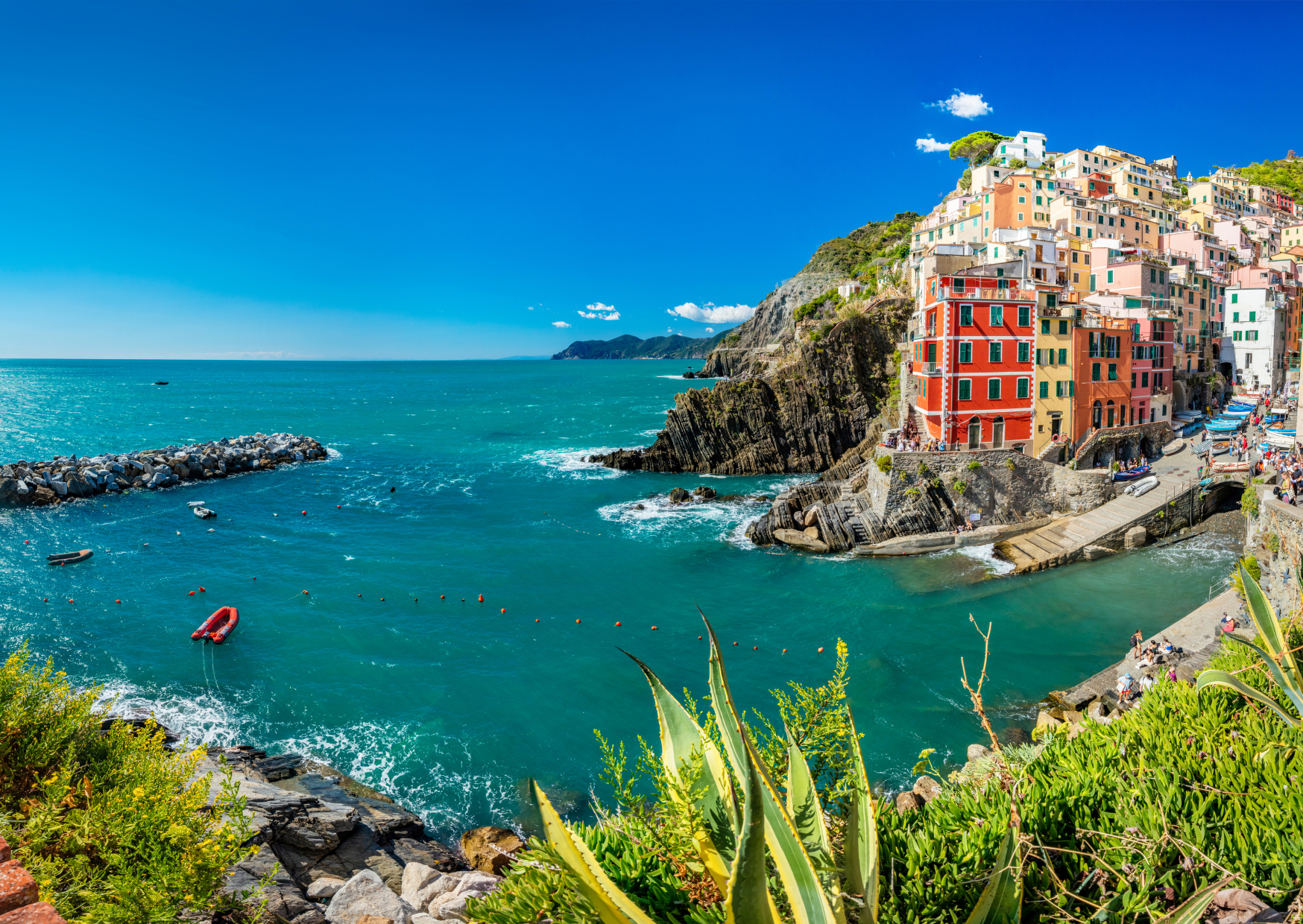
The May version still has movement, but the villages recover some of their own internal pace. Monterosso can still feel like a beach town instead of a disembarkation point. Vernazza can still breathe between arrivals. Manarola can still look like a place someone might come home to, not just a cliffside stage set. Riomaggiore can still feel rough-edged and vertical rather than simply crowded. Corniglia, which already sits slightly apart because it is not directly on the water in the same way as the others, feels even more useful in May because the season gives you back the patience to deal with its stairs and distance from the boat logic.
This is where the phrase same trail, different country becomes real.
You are not in a different nation, obviously. You are in a different social environment. The space between one train arrival and the next is wider. Lunch can happen without tactical panic. A village lane can still look ordinary for a minute. You can hear shutters, plates, and footsteps instead of only hearing luggage and the performance of being somewhere famous.
May also restores one of the most important pleasures in the region: lingering without defending it.
In August, if you sit too long, you feel the crowd building around you. In May, you can still stay for an extra glass, an extra bench view, an extra hour by the harbor, and it feels like part of the visit rather than a tactical error.
August Makes You Travel by Queue. May Lets You Travel by Sequence
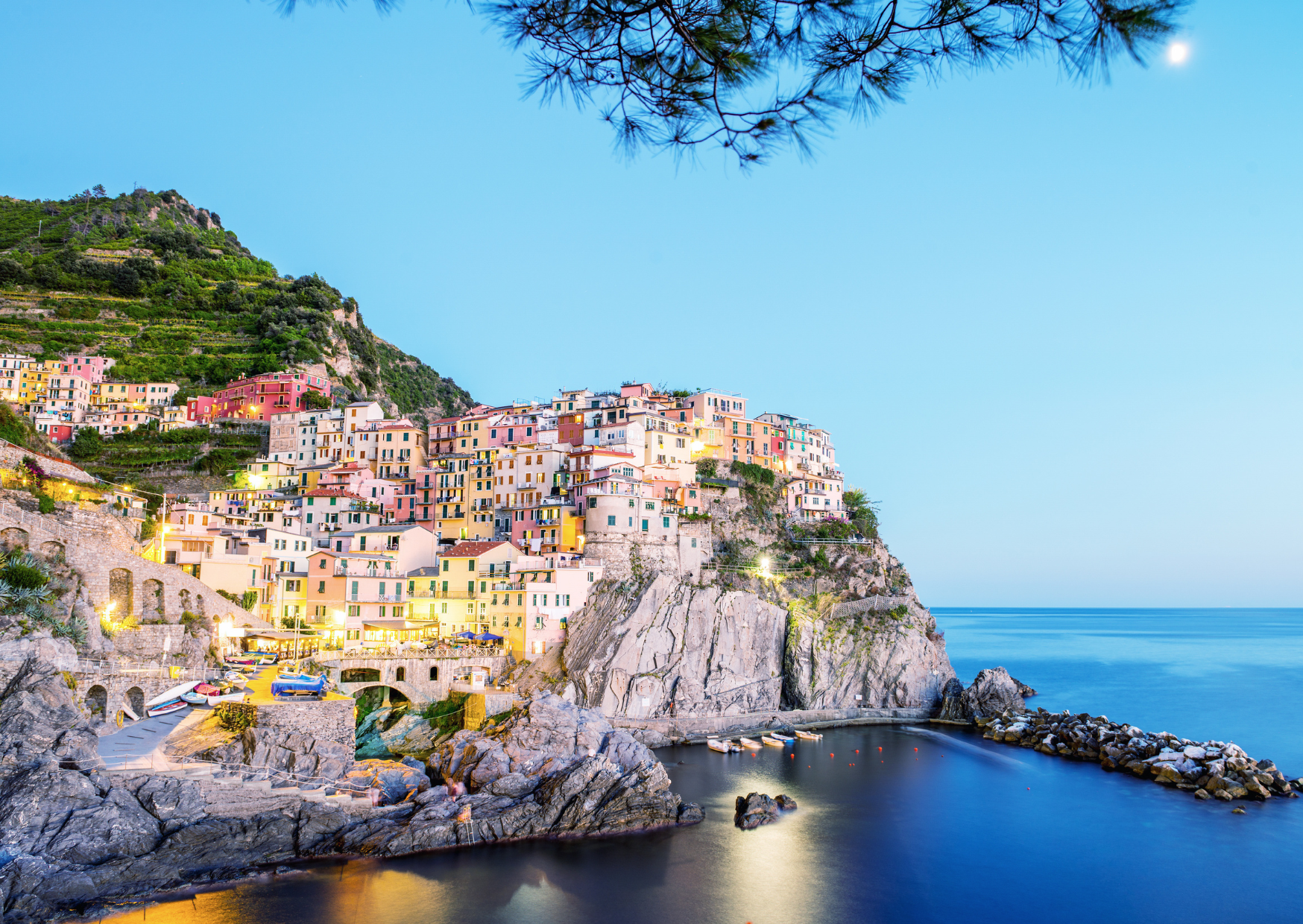
This is a small shift with a huge effect.
In August, the Cinque Terre often gets consumed in fragments. Platform. tunnel. crowd. stairs. platform again. The order of the villages starts to feel arbitrary because the day is ruled by bottlenecks. People talk about “doing” all five in one day because the transport machinery makes that possible, and then spend the day experiencing the places as a series of compressed arrivals.
In May, the route becomes easier to understand as a sequence rather than a checklist.
Maybe you train into Monterosso, walk to Vernazza, then continue by train once your legs have made their point. Maybe you base in Levanto or La Spezia and give yourself one long walking day and one slower village day. Maybe you use the park’s trail network properly instead of obsessing over whether you touched every station. The destination starts rewarding rhythm over completion.
That change is not sentimental.
It is practical. The National Park itself says the train is the best way to reach the area and one of the best ways to move inside it, but it also describes the whole territory as a rich system of integrated mobility with trails, rail, and village buses. In May, that integrated logic actually works for a visitor with normal energy. In August, many people end up defaulting to the train because the weather and volume make everything else feel less attractive.
And once the train becomes your dominant mode, the place starts shrinking.
You are no longer moving through a coastal landscape.
You are moving through station intervals.
Via dell’Amore Is a Good Example of the Difference
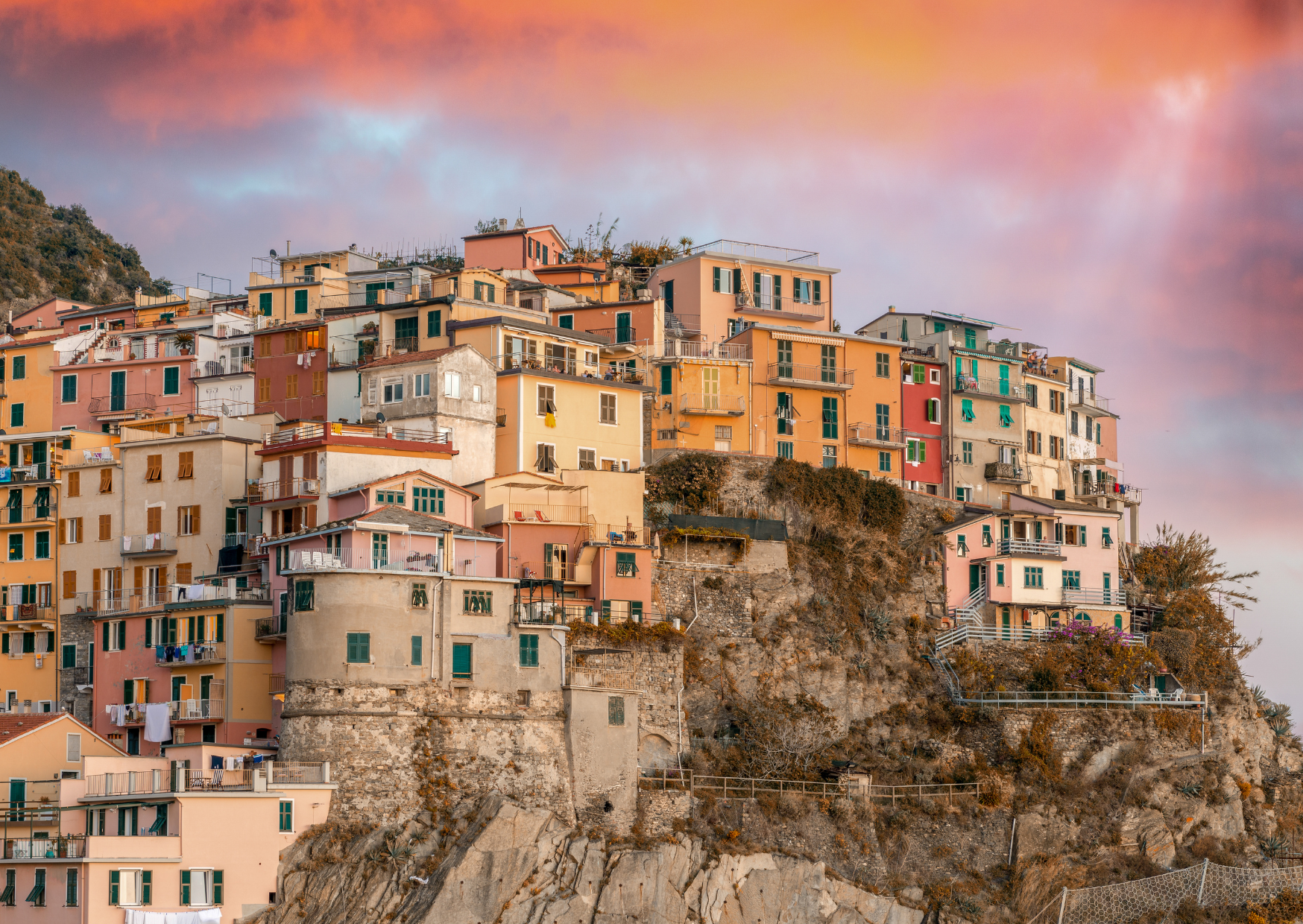
Via dell’Amore is the shortest possible illustration of what happens when a landscape becomes too famous for its own good.
The path reopened to all tourists in August 2024, but access is controlled. In high season, entry is from Riomaggiore, the route is one-way toward Manarola, and tourists must book a specific time slot. The park caps entry at 100 people every 15 minutes, allows a maximum journey time of 30 minutes, and requires either the dedicated card or a €10 supplement on top of another Cinque Terre card already purchased. High-season visiting hours run from 1 April to 31 October.
That is not a criticism.
It is just the reality of a path that became too famous to leave unmanaged.
In May, those controls are still there, but the whole area around them usually feels less overheated. You can absorb the booking logic and move on. In August, the same slot system can feel like another layer of crowd choreography in a trip already full of it. That is the basic pattern of Cinque Terre in summer: the infrastructure is not broken, but your day starts to feel more administered. In May, the administration recedes just enough that you can still see the coast behind it.
And this is why Americans who think May and August are roughly interchangeable because “the villages are all still there” end up surprised.
What changes is not the existence of the route.
What changes is the proportion of your day spent inside systems designed to control demand.
That proportion is lower in May.
Boats Are Beautiful in May Because They Still Feel Optional
The ferries are one of the great Cinque Terre temptations.
They should be. Approaching the villages from the sea is spectacular, and the Tigullio maritime service runs 2026 lines from places like Rapallo, Santa Margherita Ligure, Chiavari, Lavagna, and Sestri Levante toward Cinque Terre, with panoramic coastal views and time in Monterosso and Riomaggiore. But the operator also says departures and stops can be modified or cancelled in adverse marine weather conditions. That is the crucial sentence. Boats are glorious when they work and useless when the sea decides otherwise.
In May, that makes ferries ideal as a beautiful extra.
In August, many visitors start treating them like a rescue route out of the train system, which changes the mood immediately. Once the boat is no longer a scenic indulgence but a crowd-avoidance tactic, it becomes one more logistics puzzle. You start timing departures, worrying about returns, and building the day around transport scarcity again.
May lets you keep ferries in their best role: optional, scenic, and slightly indulgent.
That is a better use of the coast.
It also helps with the money side. Boats are often worth paying for once, not as the hidden structural cost of every day. In May, the weather and walking conditions make that easier to keep under control.
May Is Not Empty and It Is Not a Secret
This is the part people get wrong in the opposite direction.
Spring is not some private loophole for clever travelers.
The trains are already on the 14 March to 1 November 2026 high-service cycle. The park is already in active management mode. Via dell’Amore is already running on high-season hours from 1 April. The Monterosso to Vernazza stretch is important enough in spring that the park is already imposing one-way flow on selected dates. May is good because it is better than August, not because it is undiscovered.
That means you still need to behave intelligently.
Book accommodation before the last minute.
Buy the right card online instead of treating the station line as part of the romance.
Wear actual hiking shoes because the park is explicit that open or smooth-soled footwear is forbidden and the coastal trail sections are not casual promenade territory. Start earlier than your lazy breakfast instinct wants you to. Use afternoon for villages and evening for dinner instead of trying to perform all your movement under the best light at the same hour as everybody else.
The reward for doing that is not emptiness.
It is proportion.
The queues do not disappear. They stop dominating the trip.
The Better Way to Use Cinque Terre in May
The smartest May trip is not “how do I see all five villages as fast as possible.”
It is how do I let the place behave like a place.
That usually means one trail-focused day and one village-focused day, not a single heroic sweep. It means accepting that Corniglia may not be your postcard village but can still be your breathing space. It means staying long enough to see a harbor after the day-trippers have thinned. It means not treating every train station as a reset button. It means respecting that some of the official “best way to move” advice is train-based, while some of the best memories will come from the hours when you are not moving at all.
If you are only there for a short visit, keep it simple.
Base in Levanto or La Spezia if the village prices are irritating you.
Use the train to enter the park.
Walk one serious section.
Take one boat if the weather behaves.
Let one village have your evening.
That is already enough to make May feel like a different country from August.
Because the real difference is not scenic.
It is civic.
In August, the Cinque Terre often feels like infrastructure under pressure. In May, it still feels like a chain of hard, beautiful villages attached to terraces and sea, which is what it was before it became a global summer obligation.

About the Author: Ruben, co-founder of Gamintraveler.com since 2014, is a seasoned traveler from Spain who has explored over 100 countries since 2009. Known for his extensive travel adventures across South America, Europe, the US, Australia, New Zealand, Asia, and Africa, Ruben combines his passion for adventurous yet sustainable living with his love for cycling, highlighted by his remarkable 5-month bicycle journey from Spain to Norway. He currently resides in Spain, where he continues sharing his travel experiences with his partner, Rachel, and their son, Han.