

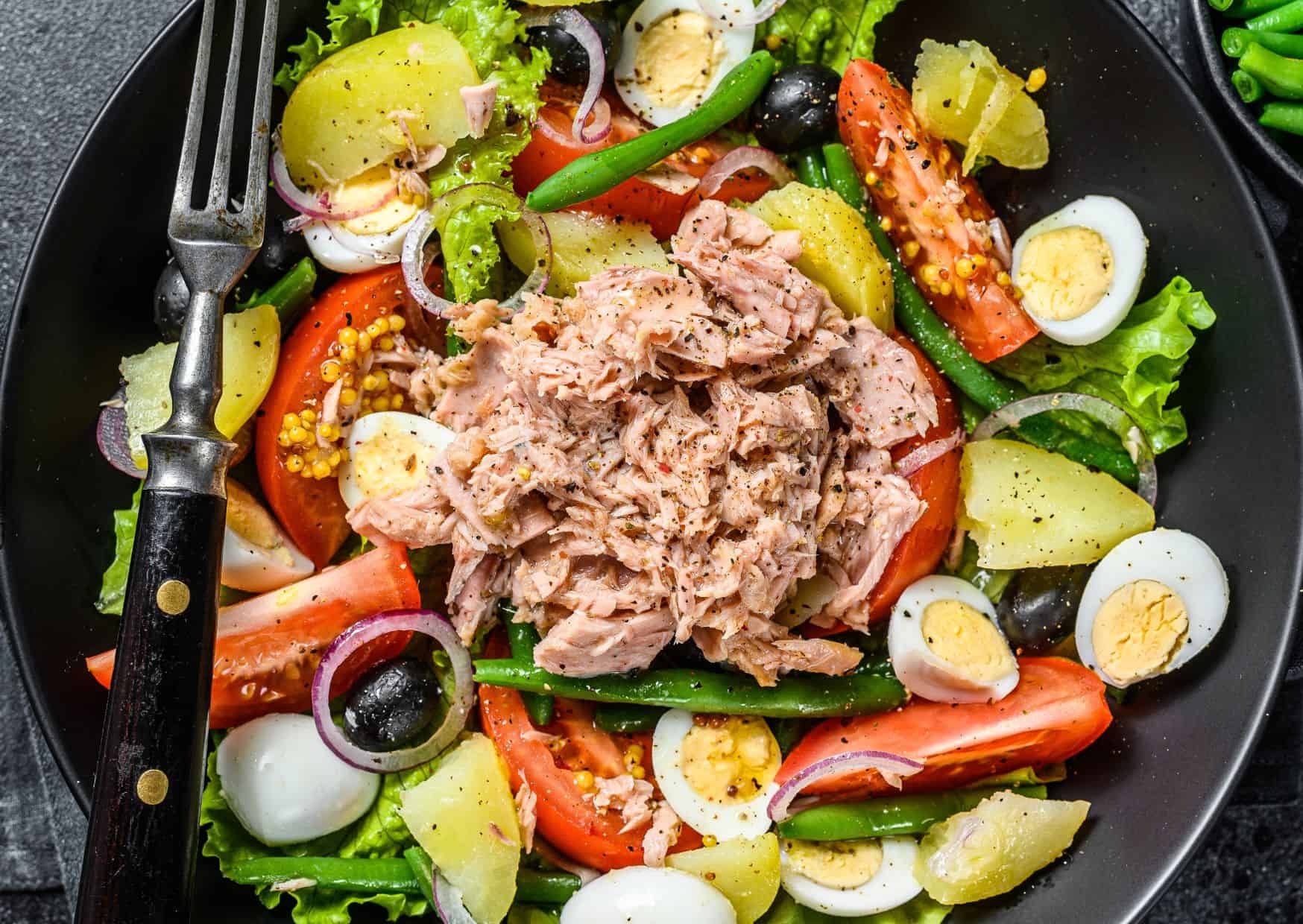
Nicoise salad is a classic dish originating from the sunny region of Nice, France. Known for its vibrant colours and fresh Mediterranean flavours, this salad combines ingredients such as tuna, green beans, hard-boiled eggs, olives, and tomatoes to create a dish that is both filling and refreshing. In this recipe guide, you will learn how to make an authentic Nicoise salad at home, bringing a taste of the French Riviera to your table.
What makes Nicoise salad so beloved is its simplicity and emphasis on fresh, high-quality ingredients. Traditionally served with seared tuna or canned tuna in olive oil, this salad is lightly dressed with olive oil and lemon juice, allowing each ingredient’s natural flavour to shine. It’s the perfect example of how simple preparation can result in a dish that feels both elegant and nourishing.
Whether you’re looking for a healthy lunch, a light dinner, or an impressive starter for guests, Nicoise salad is a versatile choice that fits every occasion. With minimal cooking and quick assembly, this recipe is ideal for busy days when you want something delicious and nutritious without spending hours in the kitchen.
BOOK YOUR TRAVEL INSURANCE
Two of our favorite travel insurance: Heymondo Vs Safetwing cheapest travel Insurance. You can get for $135 USD your Heymondo Travel Insurance with Heymondo discount code valid for 90 days. Read our full comparison of Genki vs Safetywing Travel Insurance Review and the comparison Heymondo vs Genki
How to Eat Nicoise Salad
Nicoise salad is meant to be enjoyed slowly, as each component offers a unique flavor and texture. Traditionally, you eat it with a fork and knife, savoring the mix of crisp vegetables, tender tuna, briny olives, and perfectly cooked eggs. The key is to combine different elements in each bite, appreciating the contrast between freshness and richness. This salad isn’t meant to be tossed together; instead, it’s plated beautifully to showcase its vibrant Mediterranean ingredients.
How to Partner Nicoise Salad
A glass of dry rosé or light white wine complements the flavors of Nicoise salad perfectly, enhancing the bright acidity of the vinaigrette and the savory elements of the dish. For sides, a crusty French baguette or a simple soup like French onion or tomato bisque works beautifully. Keep accompaniments minimal to let the salad remain the star, as its wide range of flavors and textures needs little support to feel like a complete meal.
Nicoise salad is one of the most debated dishes in French cuisine. Purists insist that the salad must contain only raw vegetables, hard-boiled eggs, anchovies, and olives, with no cooked potatoes or green beans allowed. However, modern interpretations often include seared tuna, blanched vegetables, and even canned tuna, sparking arguments about whether evolution enhances or destroys authenticity.
This controversy is rooted in regional pride. In Nice, where the dish originated, the salad is seen as a symbol of local culture and tradition. For many, changing its ingredients feels like erasing history. Yet chefs worldwide argue that adapting recipes for new tastes and ingredients is what keeps culinary traditions alive, leading to an ongoing tension between preservation and innovation.
Another heated debate centers on presentation. The Nicoise salad is traditionally arranged beautifully on a platter rather than mixed in a bowl, showcasing each ingredient individually. Some modern chefs opt to toss everything together for convenience, but this often angers purists who see the plating as part of the artistry of French cuisine. These disagreements have turned a simple salad into a cultural battlefield.
How to Make Nicoise Salad
Nicoise Salad Ingredients

For the Salad:
1 head of Bibb lettuce or mixed greens
2 cans (5-6 ounces each) tuna in olive oil, drained (or 2 fresh tuna steaks, seared and sliced)
4 hard-boiled eggs, peeled and halved
1/2 pound small new potatoes, boiled and halved
1/2 pound green beans, blanched
1 cup cherry tomatoes, halved
1/2 cup Kalamata olives, pitted
1 small red onion, thinly sliced
4-6 anchovy fillets (optional)
1/4 cup capers (optional)
For the Vinaigrette:
1/4 cup extra-virgin olive oil
2 tablespoons red wine vinegar
1 teaspoon Dijon mustard
1 clove garlic, minced
Salt and freshly ground black pepper to taste
1 teaspoon fresh thyme leaves (optional)
Step By Step How to Make Nicoise Salad
Prepare the Ingredients
Boil the new potatoes in salted water until tender, about 15-20 minutes. Drain and let cool slightly, then halve them.
Blanch the green beans in boiling water for 2-3 minutes, until tender-crisp. Immediately transfer them to an ice bath to stop the cooking process, then drain.
Boil the eggs for about 10 minutes, then transfer them to an ice bath. Peel and halve the eggs once cooled.

Make the Vinaigrette
In a small bowl, whisk together the olive oil, red wine vinegar, Dijon mustard, minced garlic, salt, pepper, and thyme leaves until well combined.
Assemble the Salad
Arrange the lettuce or mixed greens on a large serving platter or individual plates.
Artfully arrange the potatoes, green beans, cherry tomatoes, olives, red onion, and capers (if using) on top of the greens. Add the tuna (or sliced seared tuna steaks) and anchovy fillets (if using).
Place the halved eggs around the salad.

Dress the Salad
Drizzle the vinaigrette over the salad just before serving. Toss gently to combine, or serve the dressing on the side for guests to add as they prefer.
Tips To Make Nicoise Salad
Use the freshest ingredients possible, especially when it comes to vegetables and tuna. While canned tuna in olive oil is traditional, you can elevate the salad by using fresh, seared tuna steaks. Blanching green beans helps to preserve their bright color and crisp texture.
Adjust the vinaigrette to your taste by adding more mustard or vinegar as needed. Nicoise salad is best served fresh. If you need to prepare it in advance, keep the ingredients separate and combine just before serving.

How Many Calories Have Nicoise Salad
Tuna: ~200 calories per serving
Hard-Boiled Eggs: ~70 calories per serving
Potatoes: ~70 calories per serving
Green Beans: ~20 calories per serving
Cherry Tomatoes: ~15 calories per serving
Olives: ~40 calories per serving
Red Onion: ~10 calories per serving
Anchovy Fillets: ~20 calories per serving (if using)
Capers: ~5 calories per serving (if using)
Lettuce/Greens: ~10 calories per serving
Vinaigrette: ~100 calories per serving
Total: Approximately 560-600 calories per serving.
Origin and History
Niçoise salad comes from Nice, on the French Riviera, and its identity is tied very closely to the city itself. French tourism sources describe it as a specialty born in Nice in the 19th century, known locally as la salada nissarda. That origin matters because this is not just a generic composed salad with tuna thrown on top. It is a dish with a regional point of view, shaped by Mediterranean ingredients and southern French food culture.
Its history also explains why people care so much about what belongs in it. Older definitions and classic French references keep returning to a narrow core of ingredients tied to Nice: tomatoes, olives, anchovies, olive oil, and other raw vegetables from the region. Larousse still defines salade niçoise in a very restrained way, which helps explain why so many French cooks react strongly when the salad is turned into a catch-all plate of potatoes, beans, lettuce, and whatever protein happens to be available.
Over time, the salad traveled far beyond Nice and became one of the most internationally recognized French dishes. That global popularity made it easier to adapt, reinterpret, and, depending on who you ask, distort. As it moved into hotel dining rooms, bistros, and home kitchens around the world, it picked up ingredients that many locals in Nice would never have treated as essential. That spread is part of why the dish is now both famous and constantly disputed.
Today, Niçoise salad sits in a fascinating place between tradition and reinvention. It is both a symbol of the Riviera and a worldwide idea of what a French summer lunch should feel like. Freshness, olive oil, sunlight, and simplicity are still the heart of it. But its history also shows that once a regional dish becomes internationally admired, people stop treating it as fixed and start using it as a canvas.
Very few salads create as much argument as Niçoise. The biggest controversy is simple: what actually counts as a real Niçoise salad? French and Niçois traditionalists often insist that the dish should revolve around raw Mediterranean vegetables, anchovies or tuna, olives, olive oil, and a few classic additions like egg, while rejecting the idea that cooked vegetables should dominate the plate. That tension has been public for years, and even mainstream French food writing acknowledges that chefs strongly disagree over the proper ingredient list.
Potatoes and green beans are the most famous fault line. In many restaurant versions outside Nice, they are treated as standard. But among purists, those ingredients are often seen as later additions that pull the salad away from its original spirit. The dispute is not only about taste. It is also about whether a dish rooted in raw, sun-driven Riviera produce should be bulked out with cooked vegetables that change both the texture and the message of the plate.
Then there is the tuna question. Some versions rely heavily on canned tuna, others emphasize anchovies, and still others try to modernize the salad with seared fresh tuna. Taste France presents a classic version using anchovies or tuna, which shows that even accepted French references allow some flexibility. But flexibility is not the same thing as endless variation, and that is where arguments usually begin. Once people start adding nontraditional seafood, heavy dressings, or oversized lettuce bases, many cooks feel the dish has drifted too far.
This is why Niçoise salad keeps fascinating people. It looks simple, yet it carries questions about authenticity, regional pride, and culinary ownership. Some see it as a living dish that should evolve with the kitchen. Others see it as a protected expression of Nice that loses its meaning when it becomes just another assembled salad. The controversy is part of the appeal, because every version ends up making a statement about what tradition should mean.
How Long You Take to Prepare
Niçoise salad is not difficult in the way a braise or pastry is difficult, but it does ask for some thoughtful preparation. The total time depends on which version you make. A stripped-back, more traditional plate built mostly from raw vegetables, eggs, olives, anchovies, and olive oil can come together fairly quickly. A more expansive home-cook version with potatoes and green beans naturally takes longer because you are adding boiling, cooling, and assembly time.
The real work is less about cooking and more about coordination. You are washing vegetables, slicing tomatoes, preparing eggs, draining tuna or anchovies, possibly blanching beans, and making sure everything is ready at the same moment. This is one of those dishes where the ingredients must feel clean, fresh, and intentional. If you rush the prep, the final plate can feel careless even if the flavors are good.
Because so much of the salad is exposed, ingredient quality matters more than speed. A good Niçoise salad does not hide behind sauce or heat. The tomatoes need flavor, the olive oil has to taste alive, and the vegetables should still feel crisp and bright. That means preparation time is also shopping time. The success of the salad often begins before you ever touch a cutting board.
For most home cooks, this makes Niçoise a moderate-effort dish rather than a long one. It is very achievable for lunch or a light dinner, especially if you boil the eggs ahead of time and prep your vegetables in advance. In practical terms, it is a salad that rewards organization much more than labor. You do not need complicated technique. You just need enough care to let each ingredient earn its place.
Serving Suggestions
Niçoise salad is best served as a composed plate rather than a chaotic toss. One of its pleasures is visual order. The tomatoes, eggs, fish, olives, and vegetables should feel like distinct parts of one Mediterranean picture rather than a heap. When served that way, the salad looks elegant, abundant, and deliberate. It also gives diners the feeling that every bite can be customized instead of forced into one blended texture.
This dish works beautifully as a warm-weather lunch, a light supper, or a first course for a longer Riviera-style meal. Because it carries protein, vegetables, and richness from olive oil, it can easily stand on its own. If you want something alongside it, keep it restrained. Crusty bread and a crisp glass of rosé or chilled white wine make far more sense than anything heavy. The salad should still feel breezy and coastal when it reaches the table.
Portion size changes the personality of the dish. A smaller serving feels refined and restaurant-like. A larger plate, especially one with eggs, tuna, anchovies, and extra vegetables, becomes a very satisfying meal. If you are discussing calories in your post, the smartest way to frame it is that Niçoise salad can vary widely depending on the ingredients and quantity of olive oil, tuna, eggs, and optional potatoes. A lighter version can feel very fresh and balanced, while a fuller version becomes closer to a complete entrée than a side salad.
For presentation, do not overdress it. Niçoise salad should glisten, not swim. Olive oil, a little acidity, and proper seasoning are usually enough. The ingredients themselves should stay visible and recognizable. That is part of the whole point. This salad is at its best when it looks like the Mediterranean arranged itself neatly on a plate.
Final Thoughts
Niçoise salad endures because it proves that a salad can be serious without becoming heavy. It has freshness, salt, color, richness, and structure, all without losing its sense of restraint. That balance is what makes it memorable. It is not trying to impress you with volume. It wins through clarity.
It also reminds us that simple dishes are often the most debated because there is nowhere to hide. Every ingredient is exposed. Every choice shows. Use weak tomatoes, too much dressing, or the wrong proportions, and the whole plate feels off. But when it is made carefully, Niçoise salad feels almost perfect in its logic.
The argument over authenticity is not a flaw in the dish. It is part of what gives the salad its personality. A real Niçoise conversation is rarely just about beans or potatoes. It is about what happens when a local specialty becomes famous, then travels, then changes. That tension keeps the dish alive instead of museum-like.
In the end, Niçoise salad is more than a recipe guide. It is a lesson in ingredients, balance, and regional identity. Whether you keep it strict and traditional or make a slightly broader home version, the best approach is to respect its core character: Mediterranean, clean, bright, and never overloaded. That is what makes it feel timeless.

About the Author: Ruben, co-founder of Gamintraveler.com since 2014, is a seasoned traveler from Spain who has explored over 100 countries since 2009. Known for his extensive travel adventures across South America, Europe, the US, Australia, New Zealand, Asia, and Africa, Ruben combines his passion for adventurous yet sustainable living with his love for cycling, highlighted by his remarkable 5-month bicycle journey from Spain to Norway. He currently resides in Spain, where he continues sharing his travel experiences with his partner, Rachel, and their son, Han.