
And what it reveals about posture, food rhythm, and the cultural link between confidence and natural movement
Spend a few days in Italy strolling through piazzas, sitting in cafés, or observing daily life on the beach and you may find yourself quietly wondering the same thing that baffles many American visitors.
Why do so many Italian women have flat stomachs without seeming to try?
They’re not living on protein shakes. They’re not in athleisure. You won’t see them in gyms at 6 a.m. or downing powders between meals. They’re eating pasta. They’re drinking wine. They take gelato walks at 10 p.m.
And yet the waistband sits smoothly. The belly is relaxed, not sucked in. The midsection is slim, steady, and effortlessly integrated into daily life.
American fitness culture makes flat stomachs feel like an uphill battle. Trainers offer transformation programs. Influencers push ab-sculpting workouts and “clean” eating plans. Bloating is considered an emergency. Movement becomes strategy.
In Italy, flat stomachs are often the byproduct of habits, not a goal in themselves. And those habits are deeply cultural embedded in how Italian women eat, move, sit, breathe, and carry themselves through life.
Here are the real, lived-in secrets behind the flat stomach many Italian women maintain without ever stepping foot into the American obsession with “core training.”
Want More Deep Dives into Everyday European Culture?
– Why Europeans Walk Everywhere (And Americans Should Too)
– How Europeans Actually Afford Living in Cities Without Six-Figure Salaries
– 9 ‘Luxury’ Items in America That Europeans Consider Basic Necessities
Quick Easy Tips
Prioritize daily movement: Walking regularly can be more impactful than short, extreme workouts.
Eat mindfully: Savor meals slowly and avoid multitasking while eating.
Portion over restriction: Italians rarely “diet” in the traditional sense they simply eat in moderation.
Stick to real foods: Fresh, simple ingredients often lead to better digestion and energy levels.
Consistency over intensity: Small, daily habits build long-term results.
In the U.S., a flat stomach is often marketed as the reward for intense workouts, expensive programs, and strict dieting routines. From core-focused bootcamps to waist-trimming meal plans, American fitness culture has built an entire industry on the idea that abs are earned through suffering. Meanwhile, many Italian women seem to achieve this effortlessly without counting macros, fasting windows, or grueling gym schedules. Their secret? It’s less about exercise, and more about how they live, eat, and move daily.
The truth is, Italian women often practice what American trainers rarely promote: intuitive eating, natural movement, and moderation. Daily walks (or passeggiate), leisurely home-cooked meals, and a cultural rejection of processed “diet” foods all contribute to their naturally lean figures. It’s not about restriction it’s about rhythm. Eating fresh pasta with olive oil and vegetables doesn’t contradict staying fit it supports it. In contrast, Americans often fall into cycles of binge-restrict behaviors driven by shame-based marketing and short-term results.
Perhaps most controversially, Italian women don’t obsess over abs they focus on pleasure, quality, and lifestyle. Their confidence doesn’t come from six-packs or transformation photos, but from a deeply embedded cultural understanding that beauty is a side effect of living well, not punishing your body. Meanwhile, in America, the fitness industry thrives on selling insecurity. It’s not that Italians don’t work for their health it’s that they’ve never been taught to suffer for it.
1. They Move All Day — But Never “Work Out”

Italian women walk. They stroll. They run errands on foot. They climb stairs. They carry bags from the market. They sweep, mop, garden, lean, reach, turn.
There’s rarely a formal exercise regimen — but their bodies are in constant low-intensity movement.
Unlike the American model of concentrated, high-effort workouts, the Italian rhythm is incidental. It doesn’t raise cortisol. It doesn’t require Lycra.
Instead of burning calories in bursts, they stabilize their metabolism all day long — keeping digestion, posture, and core engagement naturally active.
2. They Sit Upright — Always

Posture is not a bonus in Italy. It’s a baseline.
Watch an Italian woman at a café. She sits tall — spine long, stomach relaxed, shoulders back. There’s no slumping over a phone, no hunching into a hoodie.
Whether it’s a cultural echo of elegance or just habit, the result is clear: the abdominal wall is gently engaged all day long.
No crunches. No planks. Just awareness. Just presence. Just not melting into furniture.
Americans, in contrast, often treat posture as optional — correcting it only in workouts or when reminded.
In Italy, it’s integrated — and that keeps the stomach naturally toned without tension.
3. They Eat Sitting Down — Slowly
Americans often eat quickly, distracted, standing up, or on the go. Meals are skipped or rushed. Digestion suffers.
Italian women sit to eat. Even snacks. Even espresso. The body enters a different rhythm — one that allows for deep, relaxed digestion.
Food is chewed thoroughly. Courses are paced. The stomach isn’t overwhelmed with volume, speed, or inconsistency.
This means less bloating. Fewer digestive spasms. Less air intake. And over time, a flatter, more functional midsection — not from restriction, but from calm.
4. They Don’t Snack Aimlessly

In the U.S., snacking is constant — protein bars, bites between meetings, “healthy treats” justified by macros.
In Italy, snacking is minimal. Maybe a pastry midmorning. Maybe a gelato in the evening. But it’s never mindless, never mechanical, never justified as fuel for a punishing lifestyle.
That rhythm allows the digestive system to fully reset between meals, reducing bloat, promoting natural appetite cues, and avoiding the constant insulin spikes that can lead to belly fat retention.
Flat stomachs aren’t built by hacking hunger. They’re supported by respecting it.
5. They Don’t Fear Pasta — But They Respect Portions
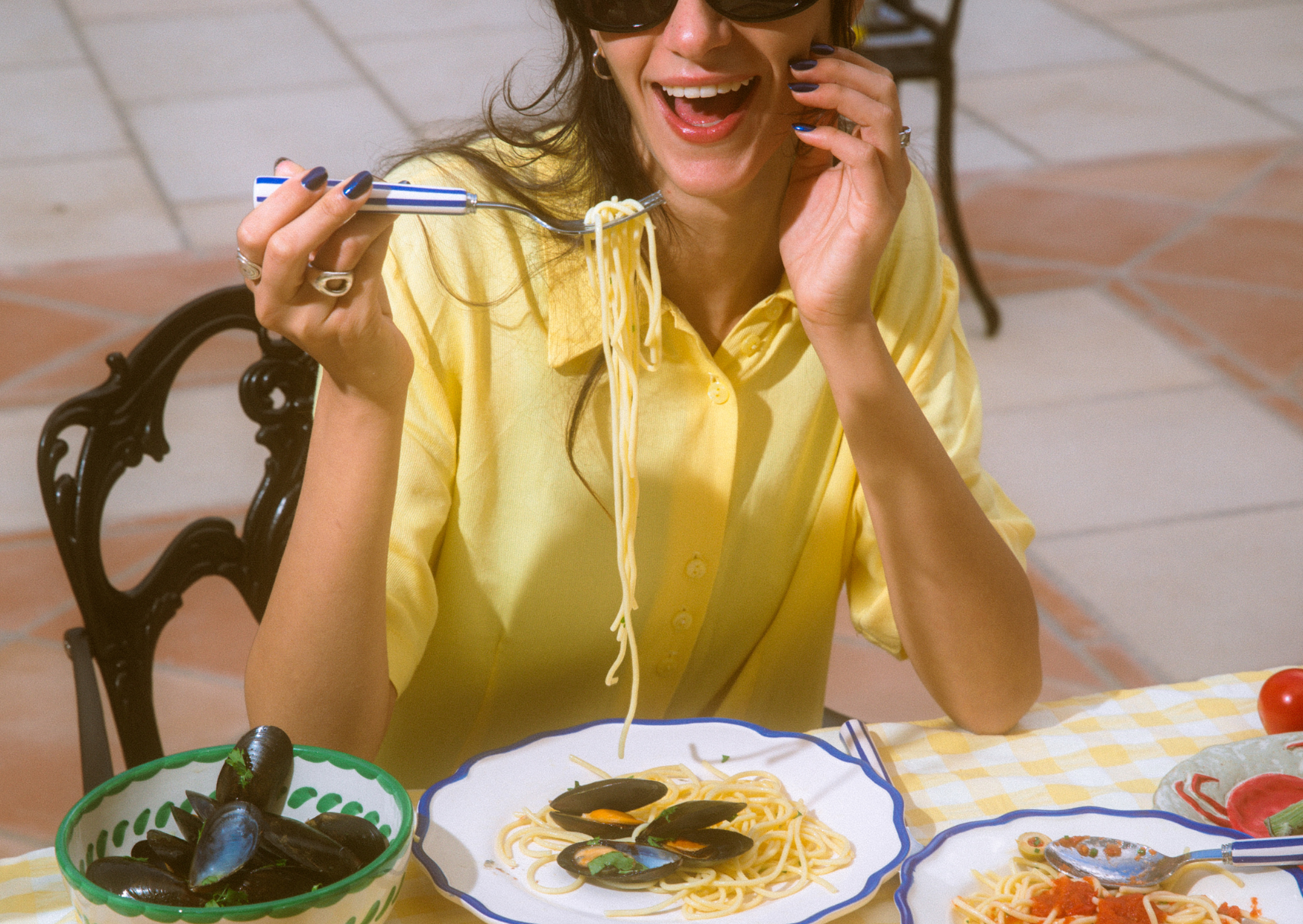
Italian women eat pasta. Regularly. Without apology.
But watch them serve it, and you’ll notice the difference: portions are modest, especially compared to the U.S. standard. A plate of pasta is not a trough. It’s balanced with vegetables, oil, herbs, and pacing.
The result? Satisfaction without overload. Energy without strain. No crash, no cravings.
By refusing to fear pasta — and also refusing to abuse it — Italian women maintain healthy digestion, calm glucose responses, and abdomens that aren’t puffed up by stress or overeating.
6. They Eat Real Fat — and Little That’s Artificial

American diets often swing between low-fat products and ultra-processed ingredients with long shelf lives. The gut is confused. The belly responds with bloating, water retention, and gas.
Italian women cook with olive oil. They eat anchovies, sardines, Parmigiano, pine nuts. Real foods. Full fat. Balanced with herbs and bitter greens that support the liver and digestion.
Artificial sweeteners, sugar alcohols, and chemical thickeners — common culprits of bloating in American wellness products — are nearly absent from the Italian kitchen.
The gut is calm. The stomach stays light.
7. They Don’t Suck In — They Breathe Deep
In American fitness culture, women are often taught to “engage the core” constantly — shoulders back, stomach in, ribcage lifted.
Italian women breathe with their full torso. The stomach moves. It inflates. It deflates. It participates.
The result? A well-circulated digestive system, lower cortisol, less pelvic tension, and a core that is supported, not constricted.
Flatness isn’t achieved by holding in. It’s achieved by letting the body function fully — and that includes the rise and fall of the belly.
8. They Walk After Eating — Not to Burn Calories, But to Digest

An evening stroll — the passeggiata — is part of Italian life. Families, friends, couples all take a walk after dinner. It’s not a power walk. No one is counting steps. But the body moves.
This gentle movement promotes gastric emptying, blood sugar regulation, and circulation.
In the U.S., post-meal behavior often involves lying down, screen time, or driving home from a restaurant.
The Italian walk isn’t exercise. It’s just what you do. And over time, it makes a difference in how the stomach behaves — and appears.
9. Confidence Isn’t Dependent on Flatness — So the Body Doesn’t Rebel

American women are often taught to control their bodies through restriction, punishment, and surveillance. The stomach becomes a battleground — constantly watched, squeezed, judged.
Italian women grow up in a culture that values expression, posture, fashion, and rhythm — not punishment.
They wear high-waisted pants and crop tops, even if their stomach isn’t flat that day. They let their bodies fluctuate. And in doing so, they avoid the inflammation, stress, and hormonal chaos that comes from obsession.
The paradox? Their stomachs respond by staying flatter.
Not because they micromanage but because they don’t.
Why you should pay attention to this Italian routine
One reason this kind of everyday Italian routine attracts so much interest is that it suggests consistency may matter more than intensity. Many people spend large amounts of money chasing short-term transformations, complicated meal systems, or highly branded wellness programs. A simple daily rhythm built into ordinary life can feel far more realistic and sustainable than expensive, all-or-nothing solutions.
There is also strong appeal in the idea that healthy habits do not need to look dramatic to be effective. In many traditional Italian settings, routines around portion control, walking, slower meals, and regular eating patterns are not treated as punishment. They are simply part of daily culture. That makes them easier to repeat over time, which is often what produces visible results.
Another reason to take this seriously is that lifestyle habits tend to work together. A flatter stomach is rarely the result of one miracle trick. It is more often linked to a mix of factors such as eating more slowly, moving more often, stopping before overeating, and avoiding constant snacking. A routine that naturally supports these behaviors may be more powerful than it first appears.
This topic also resonates because it challenges the idea that health must always be purchased. Americans are often sold programs, products, subscriptions, and expert systems as if basic wellbeing is impossible without them. A simple Italian daily habit suggests that sometimes the most effective changes are built into routine rather than bought as a service.
Most importantly, people are drawn to habits that feel livable. If a routine can be repeated without stress, obsession, or huge expense, it becomes much more valuable in the long run. That is why everyday cultural habits often hold more practical power than expensive lessons people struggle to maintain.
Why you shouldn’t oversimplify the claim
At the same time, it is important not to treat a single Italian routine as a magic answer to body shape or digestive comfort. A flat stomach is influenced by many factors, including genetics, total diet, sleep, stress, hormones, age, and physical activity. No one daily habit can fully explain a visible result on its own.
There is also a risk of romanticizing Italian life while ignoring the broader picture. What looks like one simple routine may actually be supported by an entire culture of different meal timing, different social habits, more walking, smaller portions, and less dependence on highly processed foods. Pulling out one piece without the rest can make the lesson seem more powerful than it really is.
Another reason for caution is that body-focused headlines often overpromise. “Flat stomach” language can make everyday habits sound like guaranteed body hacks when in reality results vary widely. What helps one person feel lighter, less bloated, or more balanced may do very little for someone else with different needs or medical issues.
It is also worth remembering that Americans are not foolish for paying for guidance. Many people seek structure, accountability, or expert help because they are overwhelmed by conflicting information. The issue is not that all paid help is worthless, but that simple habits are often overlooked because they are too ordinary to market aggressively.
Ultimately, the smartest way to approach a topic like this is with curiosity rather than blind belief. Everyday routines can absolutely matter, and some are more effective than people expect. But the real lesson is not that Italians have one secret Americans missed. It is that simple, repeatable habits often work best when they are part of a broader, balanced lifestyle.
One Stomach, Two Cultures
To American trainers, the flat stomach is a selling point.
To Italian women, it’s a side effect of living well.
To American clients, bloating is a flaw.
To Italian women, it’s just something that passes if you listen to your body.
In the U.S., the body is an enemy to conquer.
In Italy, the body is a companion to care for, feed well, and carry beautifully.
So the next time you find yourself wondering how that woman in Naples or Florence is wearing white linen without a visible lump or line, remember:
She didn’t earn it with a program.
She simply never declared war on her own stomach.
Health and fitness trends often get wrapped in hype, but in Italy, many women achieve lean, strong cores without expensive gym memberships or strict workout programs. Their “secret” isn’t a miracle exercise or costly diet plan it’s a way of living that’s built into their daily routines. A balanced approach to food, consistent low-impact movement, and a deep cultural relationship with mealtime all play a role.
Instead of chasing intense programs, many Italian women focus on sustainable habits. Walking instead of driving, portion control without restriction, and enjoying meals slowly help maintain balance naturally. These practices aren’t marketed as fitness solutions in Italy they’re simply part of everyday life.
For Americans used to structured fitness routines and commercial wellness plans, this approach can feel surprising. Yet it highlights a powerful truth: consistency and lifestyle often outperform high-cost quick fixes.

About the Author: Ruben, co-founder of Gamintraveler.com since 2014, is a seasoned traveler from Spain who has explored over 100 countries since 2009. Known for his extensive travel adventures across South America, Europe, the US, Australia, New Zealand, Asia, and Africa, Ruben combines his passion for adventurous yet sustainable living with his love for cycling, highlighted by his remarkable 5-month bicycle journey from Spain to Norway. He currently resides in Spain, where he continues sharing his travel experiences with his partner, Rachel, and their son, Han.