
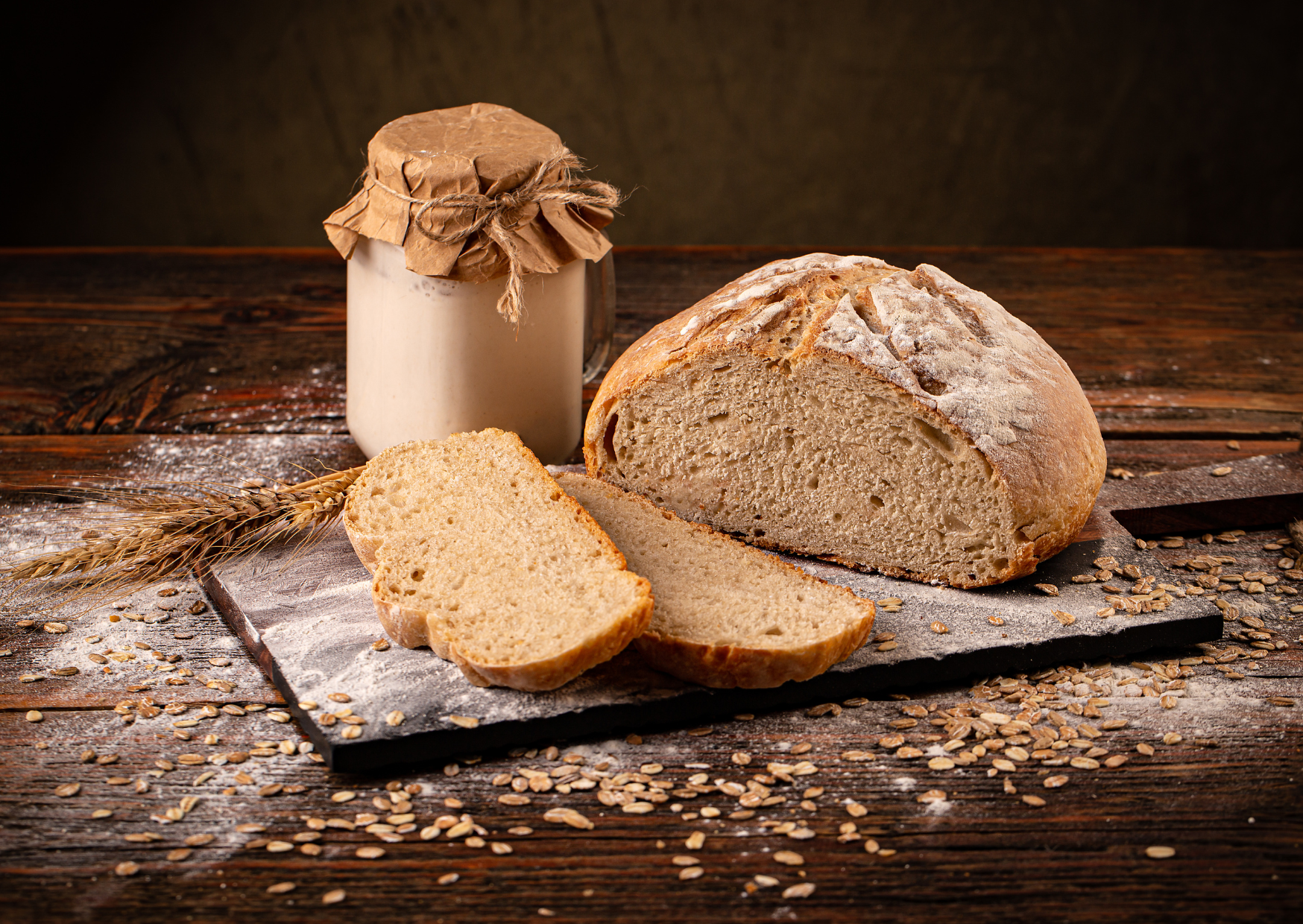
The strange part is not that American supermarkets sell “sourdough.” The strange part is how often that word gets attached to a soft, sliced sandwich loaf full of insurance policies. The European version is usually much less dramatic: flour, water, salt, and enough time for fermentation to do the real work.
A lot of Americans think sourdough means flavor.
Tangy slice. Good toast. Slightly chewier sandwich bread. Maybe a crusty bakery loaf if the store is having a good day.
That is only half the story.
Real sourdough is not just a flavor profile. It is a fermentation method. The loaf gets its rise and its acidity from a live starter, not from a fast industrial dough padded with extra ingredients to stay soft, slice neatly, and survive a long supermarket life. That difference is why two loaves can both say “sourdough” and still behave like completely different foods.
The American supermarket version can get crowded very quickly. Rudi’s Organic Rocky Mountain Sourdough currently lists 12 ingredients, including wheat flour, water, dehydrated rye sourdough, whole wheat flour, sea salt, yeast, vinegar, barley malt syrup, sunflower oil, wheat gluten, cultured wheat starch, and enzymes. Great Value’s sliced sourdough goes even further, with sugar, soybean oil, wheat gluten, calcium sulfate, acetic acid, vinegar, xanthan gum, soy lecithin, and calcium propionate all joining the party. That is not evil. It is just a different product from the one most people imagine when they hear the word sourdough.
Europe is not pure, and it is not uniform. Plenty of supermarket loaves in Europe also use yeast, malt, additives, or dried sourdough powder. Carrefour’s own batard in Spain, for example, includes yeast, gluten, and malted flour in addition to flour, water, sourdough, and salt. So the honest comparison is not “America fake, Europe pure.” The better comparison is industrial sourdough-style bread versus real naturally leavened sourdough, which is still easier to find and more culturally legible across Europe.
That is where the three-ingredient claim starts to make sense.
Real Sourdough Is Flour, Water, Salt, Plus Time
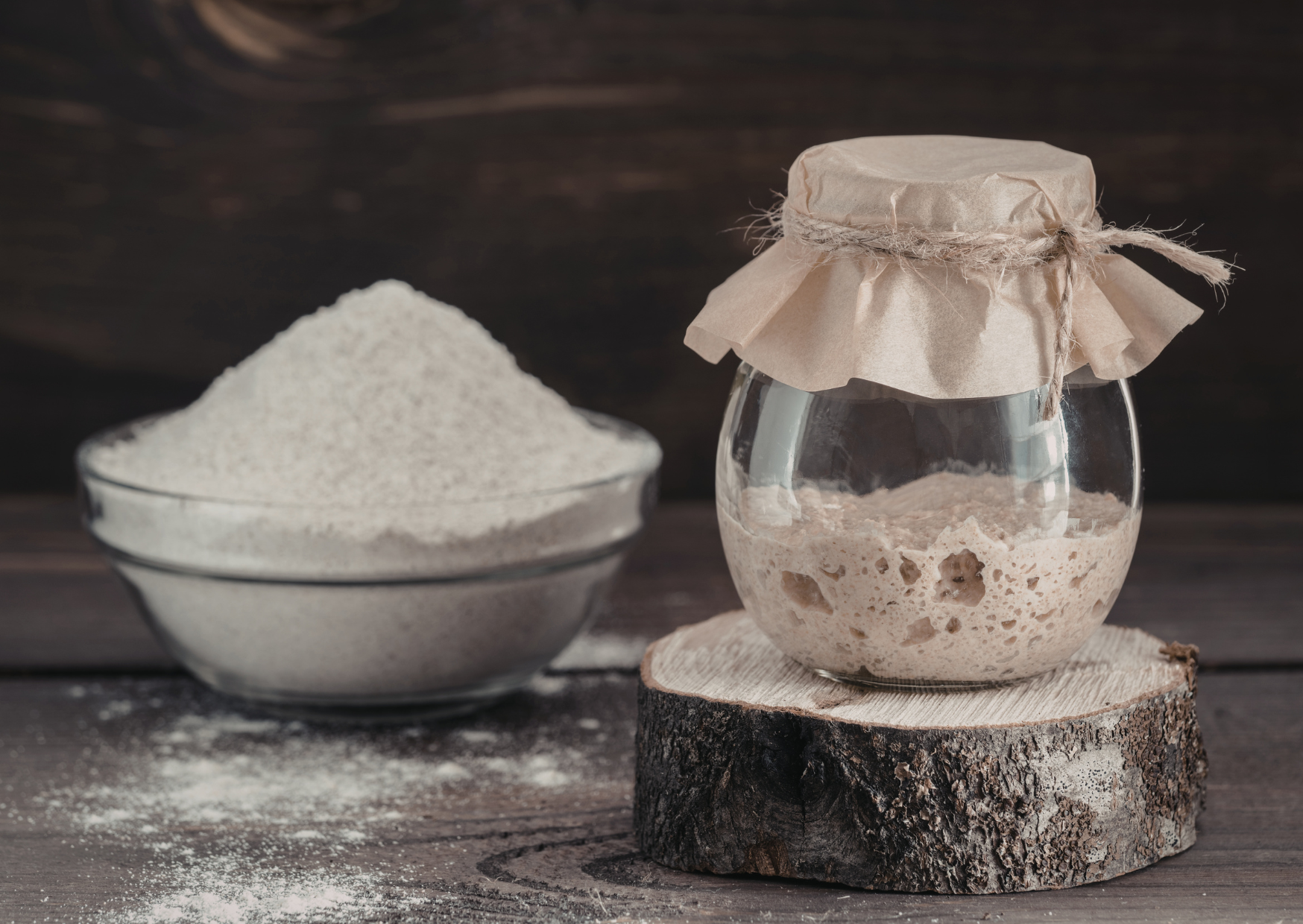
When bakers say real sourdough has three ingredients, they are talking about the dough itself: flour, water, salt.
When bakeries say it has four, they are usually listing the natural leaven or starter separately. Poilâne in Paris describes its classic loaf that way: flour, water, salt, and natural leaven. King Arthur’s starter guide makes clear what that leaven actually is, a fermented mix built from flour and water. So the kitchen reality is simpler than the label language makes it sound. The starter is not a mysterious fourth grocery item. It is fermented flour and water.
That distinction matters because it exposes what the supermarket loaf is doing.
A real sourdough baker relies on fermentation to create acidity, aroma, crumb structure, and shelf life. A sliced commercial loaf often uses yeast for speed, then vinegar or cultured flour for sour notes, then oils, gums, gluten, conditioners, or preservatives to make the finished product behave the way a packaged sandwich loaf needs to behave. Again, that is not a moral failure. It is a product-design choice. It just means the result is closer to sourdough-flavored pan de molde than to the kind of loaf a French boulangerie or Spanish panadería would treat as the real thing.
You can see the minimalist pattern in current European retail bread too. Waitrose’s Celtic Bakers Organic White Sourdough says the loaf begins with three simple ingredients, flour, water, and salt. Poilâne lists four only because it names the leaven separately. That is the honest middle ground. The dough is simple. The fermentation is the work.
That is also why real sourdough rarely tastes anonymous.
It smells slightly acidic, toasted, nutty, sometimes a little fruity.
It stales differently.
It toasts differently.
And it does not need a long ingredient parade to explain itself.
The Recipe Europeans Still Use
The good news is that the real version is not complicated.
It is slower than sandwich bread, but it is not complicated.
Here is the clean everyday loaf that sits closest to the European sourdough logic. It assumes a 100% hydration starter, which means your starter is fed equal weights of flour and water. If you already keep a starter, this is an easy weekly loaf. If you do not, build one first with flour and water and give it a few days to become active.
Everyday European-Style Sourdough Loaf
Ingredients
- 100g active sourdough starter
- 450g bread flour or strong white flour
- 300g water
- 10g fine salt
That is it.
No sugar.
No oil.
No vinegar.
No dough conditioner.
No powdered theater.
If you want the strict three-ingredient framing, count the starter as what it is, flour and water already fermented.
Method
In a bowl, mix the starter and water first.
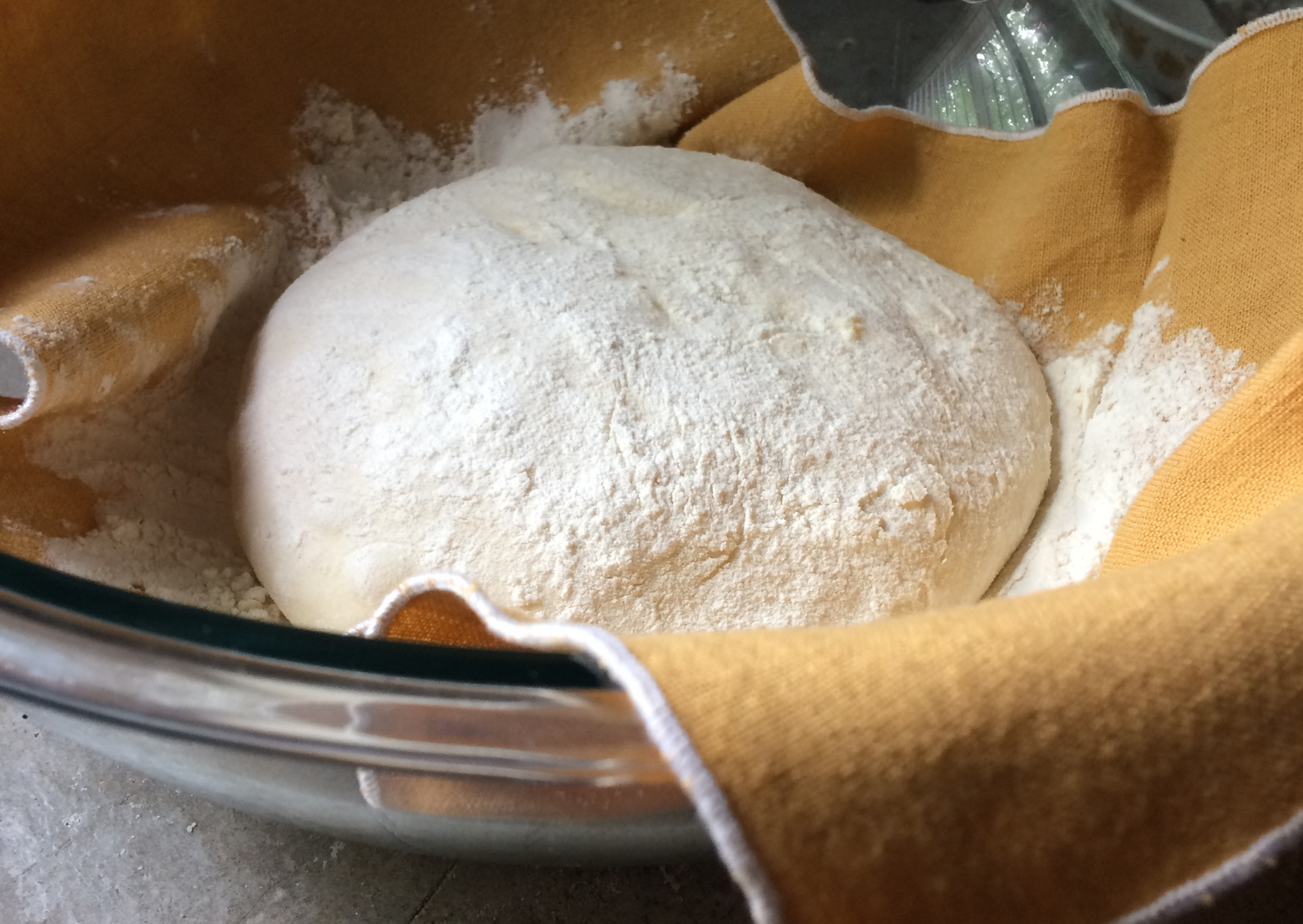
Add the flour and stir until no dry patches remain. Let the shaggy dough sit for 20 to 30 minutes. This short rest helps the flour hydrate before the salt goes in, which makes the dough easier to handle and usually improves structure.
Add the salt and work it through with wet hands.
Cover and leave at room temperature for about 4 to 5 hours, doing three or four stretch-and-fold sets during the first 2 hours. The dough should become smoother, stronger, and slightly puffy, not dramatically doubled like fast yeast dough.
Shape it into a round or oval loaf, place it seam-side up in a floured bowl or banneton, and refrigerate it overnight, usually 8 to 14 hours.
Bake the next day in a preheated Dutch oven or covered pot at 240°C for 20 minutes with the lid on, then reduce to about 220°C and bake another 20 to 25 minutes uncovered until deep brown.
Cool it completely before slicing.
That last part is not aesthetic fussiness. A hot loaf keeps setting as it cools, and cutting too early gives you a gummy crumb and unnecessary disappointment.
Europe And U.S. Ingredient Swaps
In Spain, use harina de fuerza if you want a stronger, loftier loaf, or a normal wheat flour if you want a slightly softer, more everyday result. In France, the closest equivalents are often T65 or T80 depending on the texture you want. In the U.S., unbleached bread flour is the easiest match, though strong all-purpose flour can work if your starter is lively.
For salt, fine sea salt is easiest in Europe. In the U.S., sea salt or kosher salt both work, though gram measurements matter because different kosher salts pack differently by volume.
If your kitchen is cold, fermentation will move more slowly. If it is very warm, shorten the bulk rise and watch the dough, not the clock. The dough should look a little swollen and alive, not collapsed and soupy.
What The Recipe Costs
Using current Carrefour Spain pricing, a loaf made with 450g of standard wheat flour at €0.72 per kilo costs about €0.32 in flour, and the 10g of salt adds almost nothing, around €0.004 at €0.40 per kilo. Even if you upgrade to stronger flour at €1.93 per kilo, the flour portion is still only about €0.87. Water is effectively negligible. So the ingredient cost of one loaf is roughly €0.33 to €0.88, depending on the flour.
In the U.S., the same loaf using King Arthur bread flour at $5.93 for 5 pounds comes in at about $1.18 for the flour, plus roughly $0.03 worth of kosher salt at current Walmart pricing. So the ingredients land around $1.21 before energy costs. That is still very good value for a real loaf, but it also explains why cheap industrial sliced sourdough keeps winning supermarket shelf space.
This is not the cheapest bread possible.
It is the cheapest real sourdough possible.
Why The Three-Ingredient Loaf Tastes Better
The better flavor is not nostalgia.
It is chemistry.
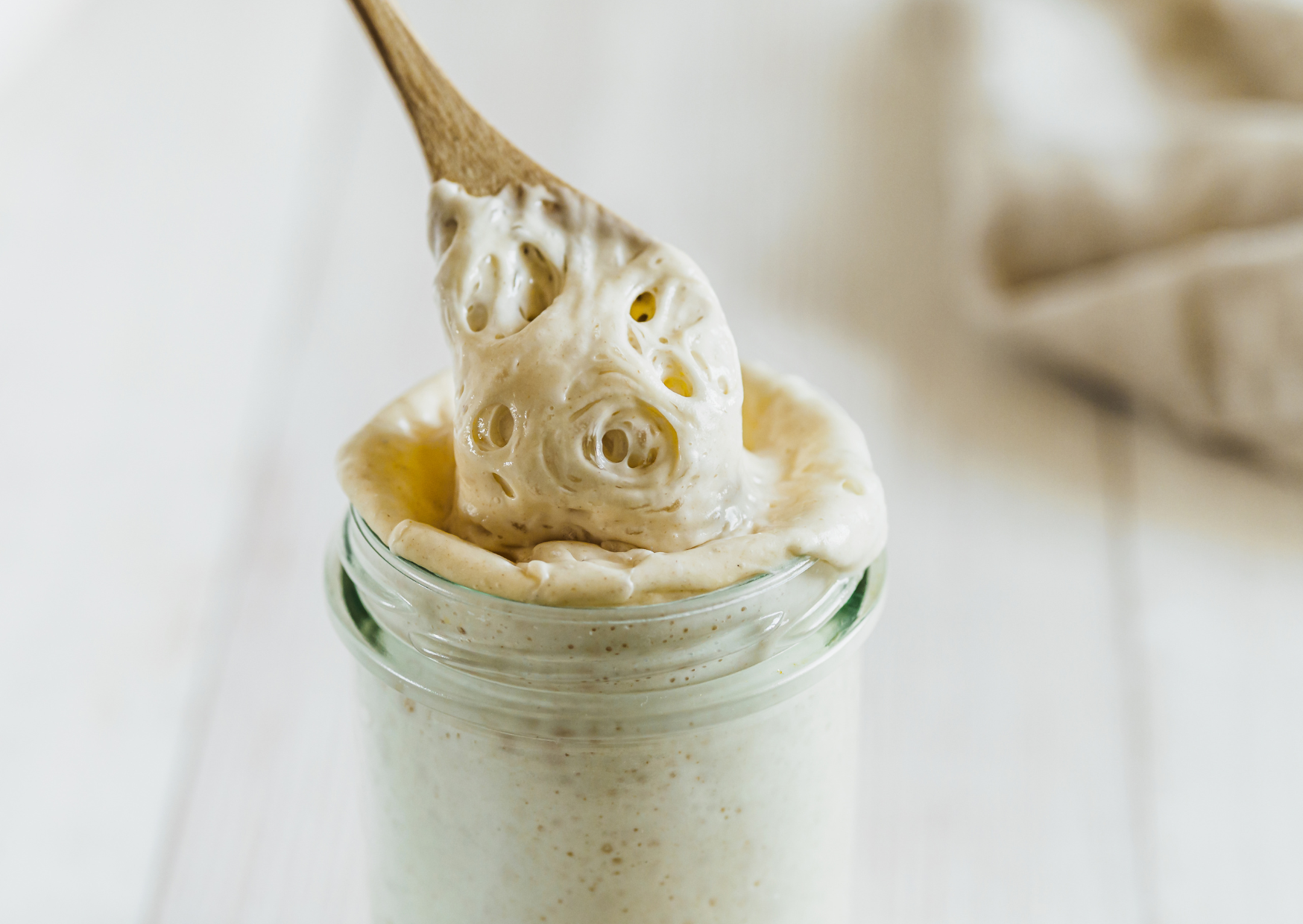
Long fermentation lets yeast and lactic acid bacteria change the dough in ways fast bread simply does not have time to match. Reviews of sourdough research consistently describe the build-up of organic acids, shifts in starch digestibility, and changes in protein breakdown during fermentation. That is why real sourdough usually tastes deeper, less flat, and more aromatic than a quick commercial loaf carrying sour notes from vinegar or cultured flour.
This is also where a lot of internet nonsense starts, so it helps to stay strict.
Real sourdough is not a magic bread.
It does not cure bloating.
It does not make gluten irrelevant.
It does not automatically become low glycemic because somebody photographed it on a wooden board.
The evidence is more restrained than that. Reviews suggest sourdough fermentation may lower the rapidly digestible starch fraction, may improve protein digestibility, and may reduce post-meal glycemic response in some contexts, but the clinical evidence is mixed and depends heavily on flour type, fermentation conditions, and the actual bread being tested.
That nuance matters because the title is about ingredients, not health miracles.
Still, ingredient simplicity does matter in a practical way. A real loaf asks less from the label reader. It also forces the baker to rely on fermentation, time, and good flour instead of engineering softness with oils, conditioners, and gums. That usually tastes more grown-up, because it is.
If a reader consistently feels better eating naturally fermented bread than packaged sourdough sandwich bread, that is plausible.
It is not guaranteed.
And it is usually the fermentation story, not some mystical European passport stamp, doing the work.
How To Spot Fake Sourdough In A Store
The fastest test is not the front label.
It is the ingredient list.
If a loaf says sourdough on the front and then lists yeast, sugar, oil, vinegar, gluten, gums, preservatives, or dough conditioners, you are not looking at the minimalist version. You are looking at a commercial bread designed for softness, consistency, and shelf life first, with sourdough notes layered into that structure. That can still taste good. It is just not the same category of bread.
A more honest label usually looks short.
Flour.
Water.
Salt.
Maybe natural leaven or starter.
Maybe a small amount of rye flour or wholemeal flour if the bakery uses those in the culture or dough.
Poilâne’s classic loaf lists four ingredients. Waitrose’s Celtic Bakers loaf markets the three-ingredient formula directly. That is the pattern to look for.
Texture helps too.
Packaged American sourdough is often uniformly soft, very sliceable, and willing to live in plastic for days without much complaint. Real sourdough usually has more chew, a firmer crust, and a crumb that feels like bread rather than mattress foam. Not every artisan loaf is great, and not every packaged loaf is bad. But the texture often tells the truth faster than the branding does.
One more honest correction belongs here.
Europe also sells plenty of shortcut loaves.
Spain has them.
France has them.
Britain has them.
The point is not continental purity. The point is that Europe still gives the shopper more cultural permission to expect a loaf built around fermentation rather than around shelf behavior. That is a useful difference, especially once you start reading labels properly.
What To Do With The Loaf After Day One
A real sourdough loaf changes over a few days.
That is not a flaw.
That is bread.
Day one is for thick slices, salted butter, olive oil, tomato, cheese, soup, or very simple sandwiches.
Day two is often the sweet spot for toast.
Day three is where the loaf becomes excellent for pan con tomate, French toast, croutons, grilled cheese, ribollita-style soups, gazpacho-thickening, or breadcrumbs. A good sourdough does not really “go bad” first. It usually goes stale, which is much easier to work with.
Storage matters.
Do not refrigerate the loaf unless your kitchen is brutally hot and humid and you have no other option. Refrigeration speeds staling. Keep it cut-side down on a board for the first day if you will finish it quickly, or wrapped in a clean cloth or paper bag for better crust. If you will not finish it within three days, slice and freeze part of it. That gives you toast-ready bread without turning the whole loaf into a moisture negotiation.
This is also where homemade sourdough quietly beats the supermarket loaf in real-life use.
It gets better in secondary forms.
Industrial sliced sourdough is built to stay sandwich-soft.
Real sourdough is built to keep offering new uses as it ages.
That makes the loaf more forgiving than nervous first-time bakers expect.
A Week Of Real Bread Looks Different
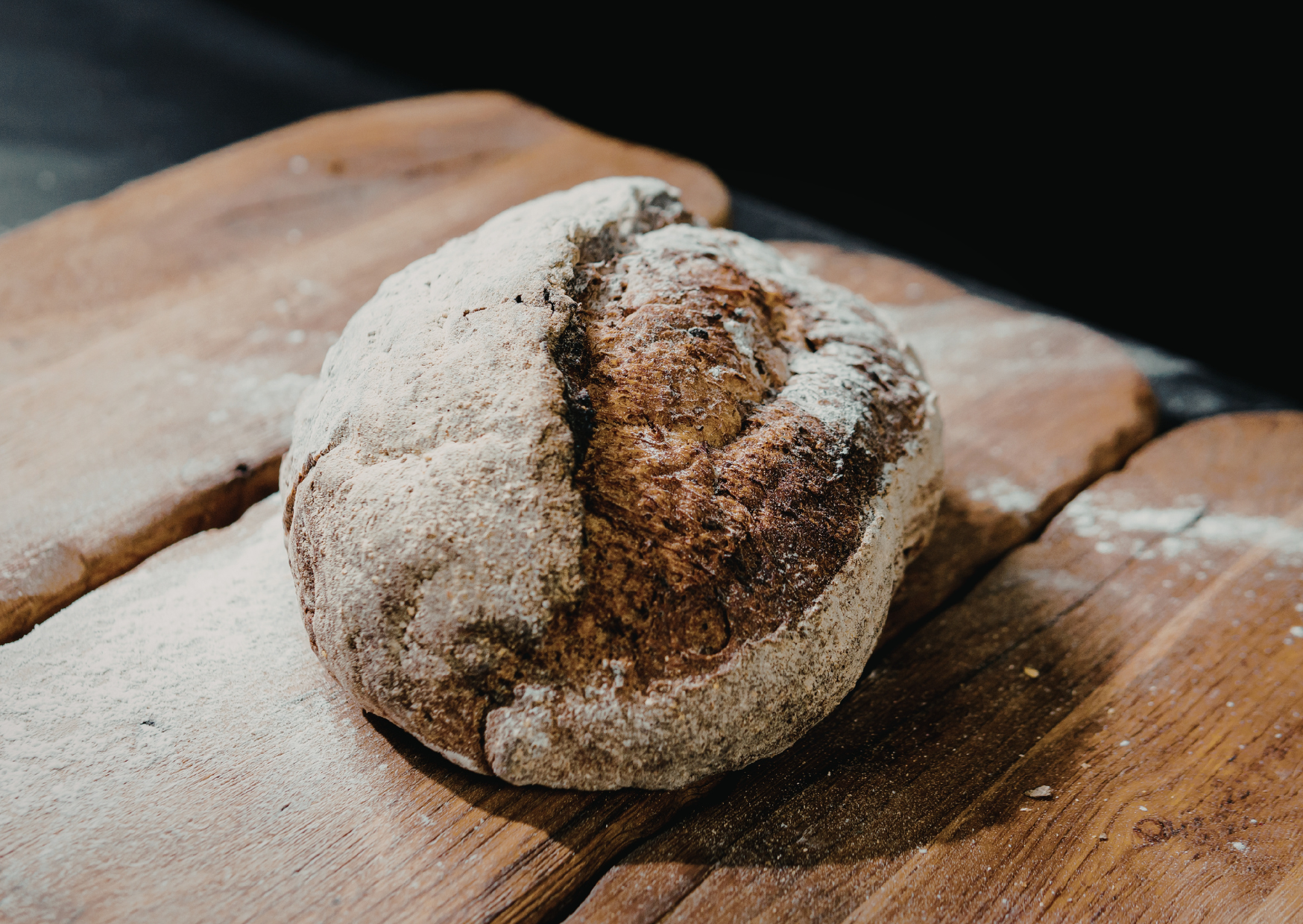
The easiest way to keep sourdough in a normal household is not baking every day.
It is baking once, then using the loaf intelligently.
A workable weekly rhythm looks like this:
Bake on Saturday or Sunday.
Eat the first slices fresh with butter, cheese, eggs, or soup.
Use the next day’s slices for toast and sandwiches.
Turn the older end pieces into croutons, breadcrumbs, or a cooked bread dish.
Feed the starter once or twice during the week, then keep it cold until the next bake.
That is how sourdough becomes an ordinary kitchen habit instead of a performance hobby.
If you want a lighter routine, bake every other week and freeze half the loaf sliced. If you want a slightly more Spanish household rhythm, use one loaf for toast at breakfast, tomato-rubbed bread at lunch, and soup or tortilla on the side at dinner. If you want a more French pattern, keep the loaf for tartines, cheese, butter, jam, and soup support rather than trying to force it into fluffy supermarket-sandwich jobs it was never designed to enjoy.
That is the bigger adjustment Americans usually need.
Real sourdough is not a replacement for a soft packaged loaf in every single use.
It is a different bread with a different rhythm.
Once you let it be that bread, it becomes much easier to love.
The Loaf Should Taste Fermented, Not Managed
The real recipe Europeans still use is boring in the best way.
Flour.
Water.
Salt.
Starter, if you want to list the fermented flour and water separately.
Then time.
That is the whole trick. No vinegar trying to impersonate fermentation. No oil trying to keep the crumb plush for an extra week. No gums trying to make the slice behave like industrial sandwich bread. Just a dough that develops flavor because it was allowed to become itself slowly.
American supermarkets absolutely sell sourdough.
Some of it is decent.
Some of it is just a softer, longer ingredient list wearing a rustic haircut.
Once you read the label, the difference gets obvious very quickly. One loaf asks fermentation to do the work. The other asks additives and process aids to imitate the result.
That is why the three-ingredient version still matters.
Not because Europe is morally cleaner.
Because bread tastes better when the dough, not the label, does the heavy lifting.

About the Author: Ruben, co-founder of Gamintraveler.com since 2014, is a seasoned traveler from Spain who has explored over 100 countries since 2009. Known for his extensive travel adventures across South America, Europe, the US, Australia, New Zealand, Asia, and Africa, Ruben combines his passion for adventurous yet sustainable living with his love for cycling, highlighted by his remarkable 5-month bicycle journey from Spain to Norway. He currently resides in Spain, where he continues sharing his travel experiences with his partner, Rachel, and their son, Han.