
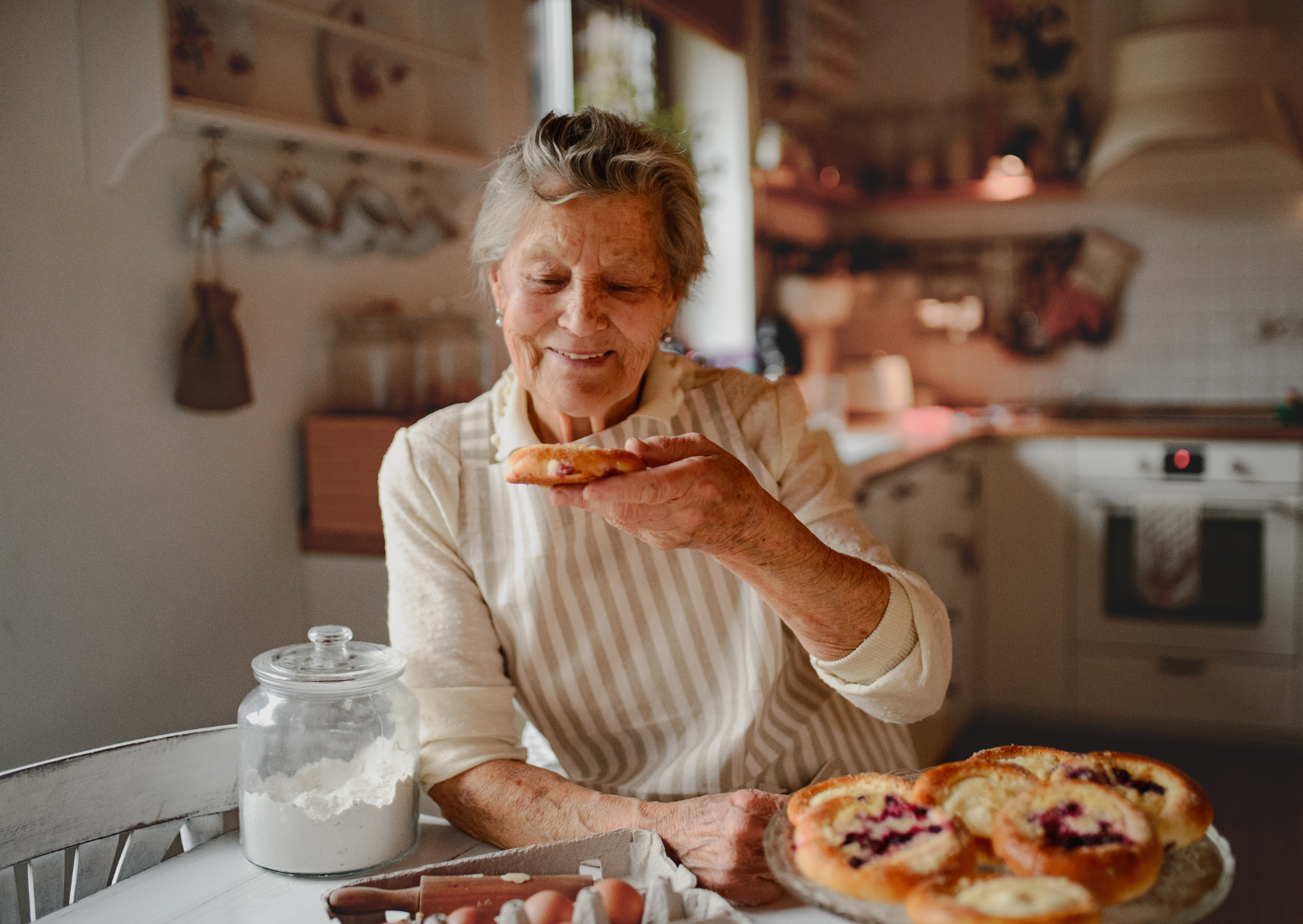
French grandmothers do not eat butter like a dare.
They eat it like it’s food.
A small knob on green beans. A thin smear on bread. A little in a pan for eggs. Butter shows up constantly, but it doesn’t show up as a lifestyle. It’s not a keto badge. It’s not a “treat day.” It’s just part of the kitchen.
So Americans see that and ask the obvious question: how are they not dropping from heart attacks.
Then someone adds the spicier claim: their cholesterol is lower than ours.
The honest version is more interesting and less tidy.
France has had lower heart disease mortality than the U.S. in many comparisons over time, even though French diets include plenty of saturated fat and butter. That mismatch is the famous “French paradox.”
But when you look at cholesterol itself, it’s not consistently “lower” in France in a clean way. In multiple datasets and analyses, French average total cholesterol has been similar to, and sometimes slightly higher than, what Americans assume.
So what’s really going on.
This is the actual mechanism story that matters for a 45–65 American audience: butter is not the villain by itself, cholesterol is not one number, and the environment around the butter is doing more work than the butter ever will.
The Butter Habit Americans Imagine Is Not The Butter Habit French Grandmothers Actually Live

Americans picture butter in one of two extremes.
Either:
- butter is evil and every bite is a clogged artery
Or:
- butter is a “secret” and if you eat it, you’ll magically stay lean like a French woman in a movie
French grandmothers are doing neither.
They are usually doing “small amounts, often” inside a meal pattern that looks like:
- real meals with a start and an end
- fewer calories eaten while driving
- fewer snack cycles
- more walking baked into daily life
- and less ultra-processed food as the background noise
Butter is part of the pattern, not the whole pattern.
If you take an American diet that is already heavy on ultra-processed food and add more butter, you did not become French. You just added calories.
If you take a French-style meal rhythm and swap the default fats, the whole pattern changes.
That’s why the butter conversation goes off the rails. People isolate one ingredient and treat it like destiny.
Cholesterol Is Not One Thing And Americans Keep Asking The Wrong Question
Most Americans use “cholesterol” as one scary word.
Clinically, cholesterol is a set of markers:
- LDL cholesterol
- HDL cholesterol
- triglycerides
- non-HDL cholesterol
- and the ratios that help interpret risk
And then there’s the blunt truth that makes people uncomfortable:
A big chunk of midlife and older adult cholesterol levels are driven by more than food. Genetics, weight, metabolic health, menopause timing, thyroid function, activity levels, alcohol, sleep, and whether someone is taking statins can all matter.
This is why the “French grandmothers eat butter and their cholesterol is lower” claim is shaky. In long-running epidemiology discussions of the French paradox, France’s cholesterol levels have not always been dramatically lower than the U.S.
So instead of arguing about whether butter raises cholesterol, the more useful question is:
Why does a butter-using culture sometimes have lower heart disease outcomes than you’d predict from saturated fat intake alone.
That’s the real puzzle, and it points to things Americans can actually copy.
The French Paradox Was Always About Heart Disease Outcomes More Than Cholesterol Numbers
The French paradox became famous because of the mismatch: comparatively low coronary heart disease mortality despite a diet that includes saturated fat and dietary cholesterol.
There are multiple hypotheses that have been discussed for decades:
- diet pattern and meal structure
- portion size and energy balance
- types of fat and food sources
- fruit and vegetable intake
- wine and alcohol patterns
- differences in smoking history and timing
- physical activity and daily movement
- healthcare systems and prevention practices
- time-lag effects, meaning today’s heart disease reflects older exposures rather than this week’s menu
One key point that often gets lost: the paradox does not require that French cholesterol be dramatically lower. It requires that the disease outcomes are lower than you’d expect given certain risk factors.
That’s why smart public health conversations about the French paradox don’t reduce it to “butter is fine.” They use it to show that risk is multi-factor, and food behaves differently inside different systems.
French Butter Is Not Usually Eaten With American Bread And American Snacks

This is where Americans lose the plot.
Butter is not eaten in isolation. It rides along with whatever your food environment is already doing.
In the U.S., butter often sits next to:
- sweetened bread and “whole grain” bread that behaves like cake
- processed deli meat sandwiches
- chips and crackers as snacks
- desserts as routine
- giant restaurant portions
- constant grazing
- sweet drinks and coffee drinks
- and a background layer of highly processed fats already present in packaged foods
In France, butter more often sits next to:
- bread that is less sweet and often eaten fresh
- simpler breakfasts
- smaller meal portions
- fewer calories from snacking
- vegetables and home cooking more frequently
- and a social structure where meals have a start and end
So when a French grandmother eats butter on bread, the bread is often different. The total meal is different. The daily total is different. The weekly pattern is different.
Americans keep trying to copy the butter while keeping the American food environment. That’s like putting a seatbelt on and then driving into a wall at 70 because you “did the safety thing.”
The butter isn’t the entire mechanism.
The Portion Size And Meal Rhythm Difference Is Bigger Than Americans Want To Admit
This is the part Americans love to ignore because it’s not a fun hack.
French eating culture, broadly, tends to be more structured:
- meals are meals
- snacks are less constant
- the day has fewer “eat something because I’m bored” moments
That structure does two important things:
- it reduces daily calorie drift
- it stabilizes appetite and blood sugar patterns for many people
When calorie drift is lower, weight tends to be easier to manage.
And weight matters. Weight is not just about vanity. It is one of the strongest mechanical drivers of metabolic risk: insulin resistance, inflammation load, blood pressure, triglycerides, and even how lipids look on a lab panel.
If you want to understand why some French older adults can eat butter and still look metabolically okay, you cannot ignore the boring reality that many are not consuming American-level calories and snacking.
Also, they move more. Not CrossFit. Movement as transport and daily errands.
If you want a simple sentence that explains a lot of this:
Butter in a structured, lower-snack, higher-walk lifestyle behaves differently than butter in a high-snack, car-based, ultra-processed lifestyle.
The “Butter Daily” Part Is True The “Cholesterol Lower” Part Is Not Consistently True
Here’s the grounded version.
France is among the higher butter-consuming countries per person in many rankings.
But when you look at cholesterol, multiple analyses of French paradox discussions have stated that average serum total cholesterol in France has been similar to the U.S. in some comparisons.
More recent dataset-style sources also show France’s mean total cholesterol around 2018 at roughly about 5 mmol/L on some estimates, not dramatically low in the way Americans imagine.
So if the claim is “French grandmothers eat butter daily and have lower cholesterol than Americans,” the responsible version is:
French grandmothers often do eat butter regularly, but France does not automatically have dramatically lower cholesterol levels. The more interesting difference has been heart disease outcomes and the broader lifestyle pattern around food and movement.
This is how you can keep the premise of the story without lying to the reader.
What French Grandmothers Do With Butter That Americans Don’t
This is the practical part. This is where the life pattern shows.
They use butter as seasoning, not as a base calorie source
A thin smear. A small knob. Enough to make food taste good. Not enough to turn the meal into a butter delivery system.
They pair butter with real food, not with constant packaged food
Butter is not usually piled onto ultra-processed snacks. It shows up with meals.
They repeat simple meals
The power is repetition. Not novelty. The more predictable your meals are, the less your appetite gets whiplash.
They treat walking as transportation
This matters more than people want to admit. A body that walks daily and climbs stairs stays metabolically and mechanically more resilient.
They don’t treat eating as constant entertainment
Food is important. Pleasure matters. But there’s often less “all day eating” culture.
You can copy all of this in the U.S. without being French.
And if you copy the pattern, you can often keep butter in the picture without it becoming your main risk factor.
The American Problem Is Not Butter It’s The Total Saturated Fat Plus Ultra-Processed Load
Americans love a single villain. Butter is convenient.
But in real risk terms, the more modern issue is often:
- the total saturated fat intake across the whole day
- plus the ultra-processed food environment
- plus low fiber intake
- plus weight drift and insulin resistance
- plus low daily movement
- plus sleep and stress patterns
Butter can be part of that. It is rarely the only driver.
This is also why two people can eat butter daily and have wildly different lab results:
- one is walking daily and eating mostly real meals
- the other is sedentary and eating a processed baseline
- one has genetics that handle LDL differently
- the other does not
- one is on statins
- the other isn’t
So if you’re an American reader, the right takeaway is not “butter is safe.”
The takeaway is: stop using butter as a proxy for your entire diet. Butter is one lever. The pattern is the machine.
What To Copy If You Want The “French Grandma” Effect Without Fantasy
This is not a fully actionable paperwork post, so I’m not going to bolt on a 7-day plan. Here’s the higher-value copy list that doesn’t feel like a template.
- Eat three real meals more often, and reduce random snacking.
- Make vegetables and legumes show up a few times a week, not once a month.
- Walk daily in a boring way. Groceries, errands, short loops.
- Use butter in small amounts where it improves satisfaction, so you don’t chase desserts later.
- Keep butter on bread as an occasional pleasure, not a daily “I deserve this” coping loop with sweet bread.
- If you’re worried about cholesterol, don’t guess. Get labs and look at the full panel, not one scary number.
That’s the mature version.
You don’t need to fear butter. You also don’t need to romanticize it. You need to stop eating like an American who is trying to be French and start eating like an adult who wants a stable body.
The Part Nobody Wants To Hear
The simplest explanation for why many older Europeans look healthier than many Americans is not one ingredient.
It’s the environment:
- daily movement built into life
- meals that end
- less constant processed food exposure
- and fewer calories consumed without noticing
France has its own health issues. Europe is not a wellness resort. But the default systems often make it easier to keep a functional lifestyle into older age.
If you’re an American reader, you can build a similar system at home, but you have to be deliberate because the environment will not do it for you.
Butter isn’t the main point.
The system is.

About the Author: Ruben, co-founder of Gamintraveler.com since 2014, is a seasoned traveler from Spain who has explored over 100 countries since 2009. Known for his extensive travel adventures across South America, Europe, the US, Australia, New Zealand, Asia, and Africa, Ruben combines his passion for adventurous yet sustainable living with his love for cycling, highlighted by his remarkable 5-month bicycle journey from Spain to Norway. He currently resides in Spain, where he continues sharing his travel experiences with his partner, Rachel, and their son, Han.