
Peruvian food has had a slow, strange entry into American awareness.
Ceviche made it. Lomo saltado is getting there. A few high-end restaurants in New York and Los Angeles serve causa and anticuchos. But the deeper catalog of Peruvian home cooking remains almost completely invisible to Americans, which is a genuine loss.
Because buried in that catalog is ají de gallina.
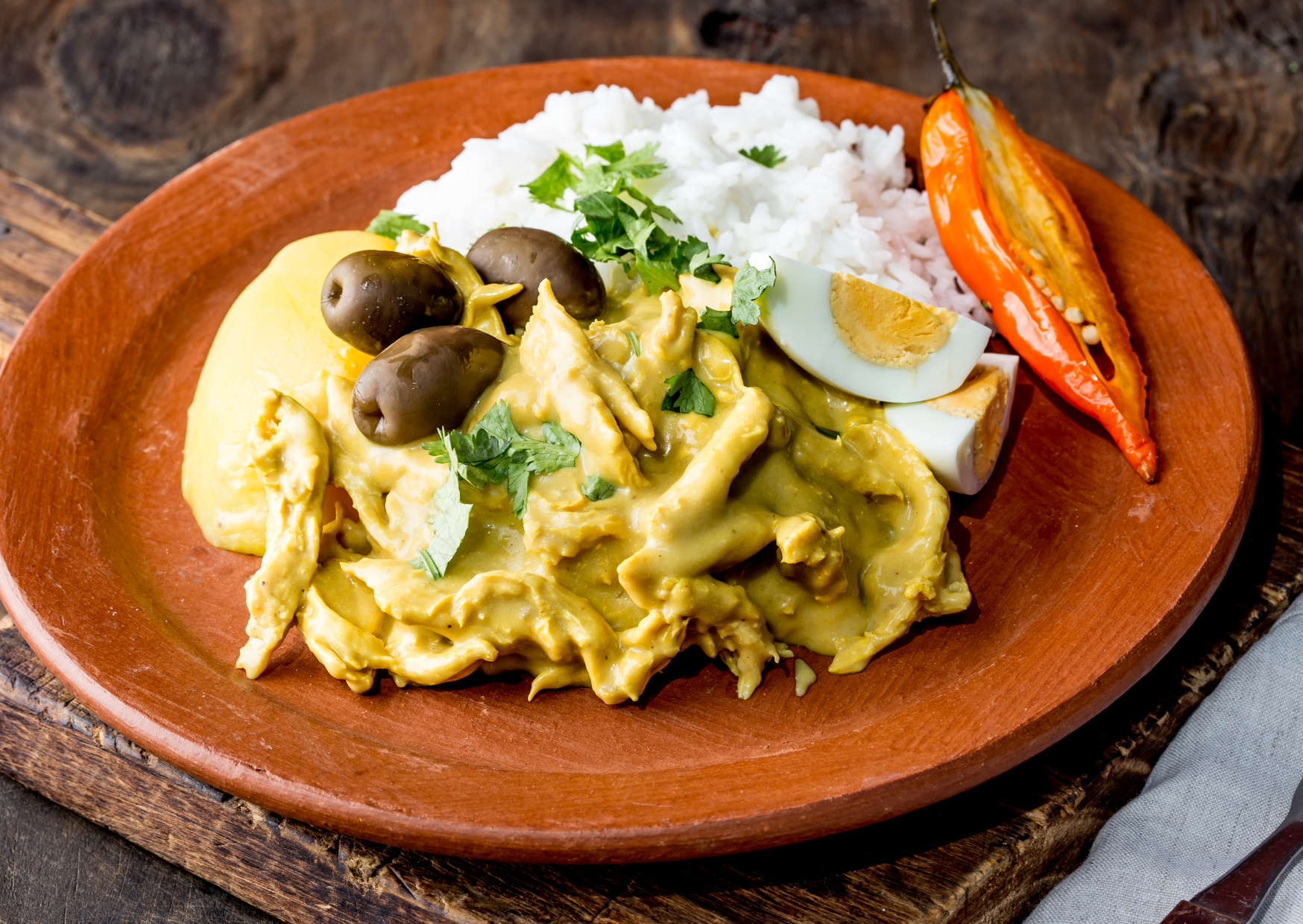
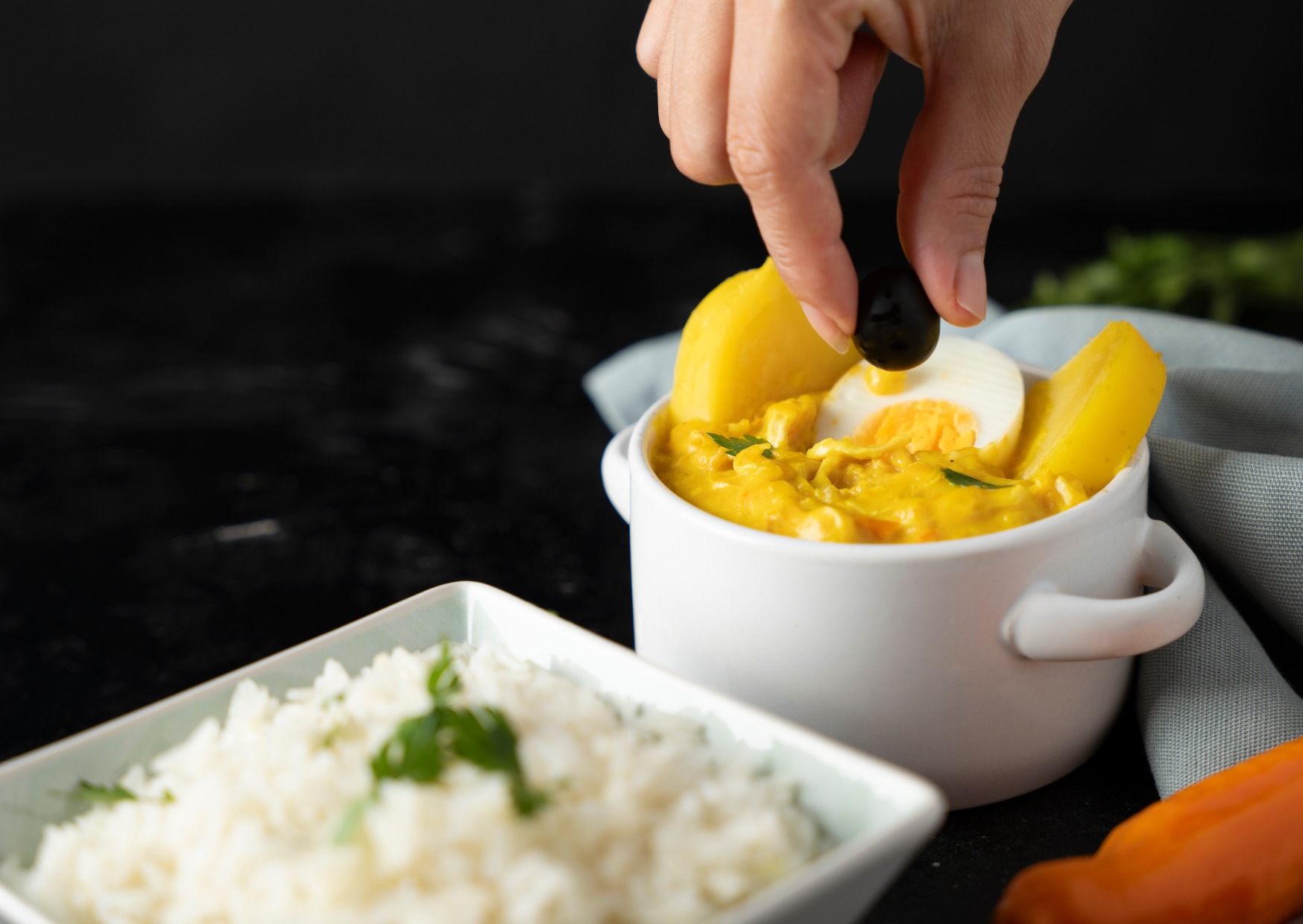
A shredded chicken stew in a thick, golden sauce made from ají amarillo peppers, bread, walnuts, Parmesan, and evaporated milk. Served over rice with boiled potatoes, a black olive, and a hard-boiled egg.
It sounds strange on paper. It tastes like something that should have gone global decades ago.
Ají de gallina is comfort food in the deepest sense. Warm, rich, savory, slightly spicy, with a texture somewhere between a curry and a pot pie filling. It is the dish Peruvian grandmothers make when someone needs feeding. It is cheap. It is forgiving. It feeds a crowd. And it uses a sauce-building technique that has no real equivalent in American or European cooking.
The fact that most Americans have never heard of it is not a reflection of the dish. It is a reflection of how narrow the global food conversation still is.
The Recipe
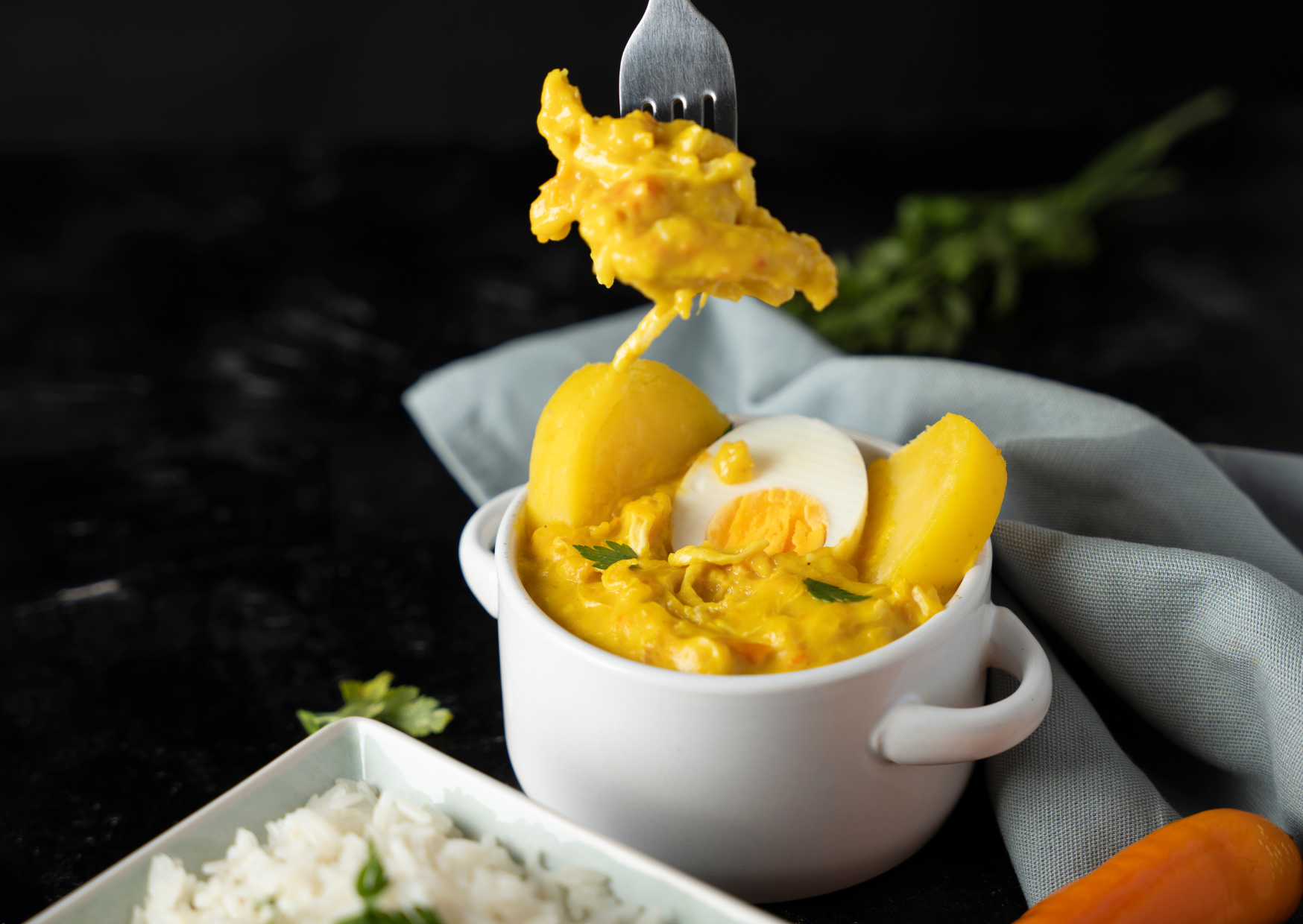
This is a home version. Not restaurant-fussy. Not simplified to the point of losing what makes it work. This is how it actually gets made in Lima kitchens, adjusted for ingredients available in both Europe and the U.S.
Serves 4. Total time: about 50 minutes.
For the chicken:
- 4 bone-in, skin-on chicken thighs (roughly 800g)
- 1 bay leaf
- Salt
For the sauce:
- 4 tablespoons ají amarillo paste
- 1 medium onion, finely diced
- 4 cloves garlic, minced
- 3 slices white bread, crusts removed, soaked in 200ml evaporated milk
- 60g walnuts (or pecans as substitute)
- 40g grated Parmesan
- 2 tablespoons vegetable oil
- Salt and pepper to taste
To serve:
- White rice
- 4 small boiled potatoes (yellow-fleshed if available)
- 4 black olives
- 2 hard-boiled eggs, halved
Step 1: Poach the chicken.
Put the chicken thighs in a pot with the bay leaf, a generous pinch of salt, and enough water to cover. Bring to a boil, then reduce to a low simmer. Cook for 25 minutes. Remove the chicken and let it cool enough to handle. Reserve about 250ml of the poaching liquid. Shred the chicken, discarding skin and bones.
Step 2: Build the sauce base.
While the chicken poaches, heat the oil in a large pan over medium heat. Cook the onion until soft and translucent, about 5 minutes. Add the garlic and cook another minute. Add the ají amarillo paste and cook for 2 to 3 minutes, stirring constantly. The kitchen will smell extraordinary at this point.
Step 3: Blend the thickener.
Take the bread soaked in evaporated milk, add the walnuts, and blend until smooth. This is the soul of the sauce. The bread gives body. The walnuts give richness. The milk gives creaminess without heavy cream.
Step 4: Combine everything.
Add the blended bread-walnut mixture to the pan with the onion and ají amarillo. Stir well. Add about 150ml of the reserved poaching liquid to loosen the sauce to a thick, pourable consistency. Add the Parmesan. Stir until melted and incorporated. Add the shredded chicken. Fold it through the sauce until everything is coated. Taste for salt and pepper.
Step 5: Plate.
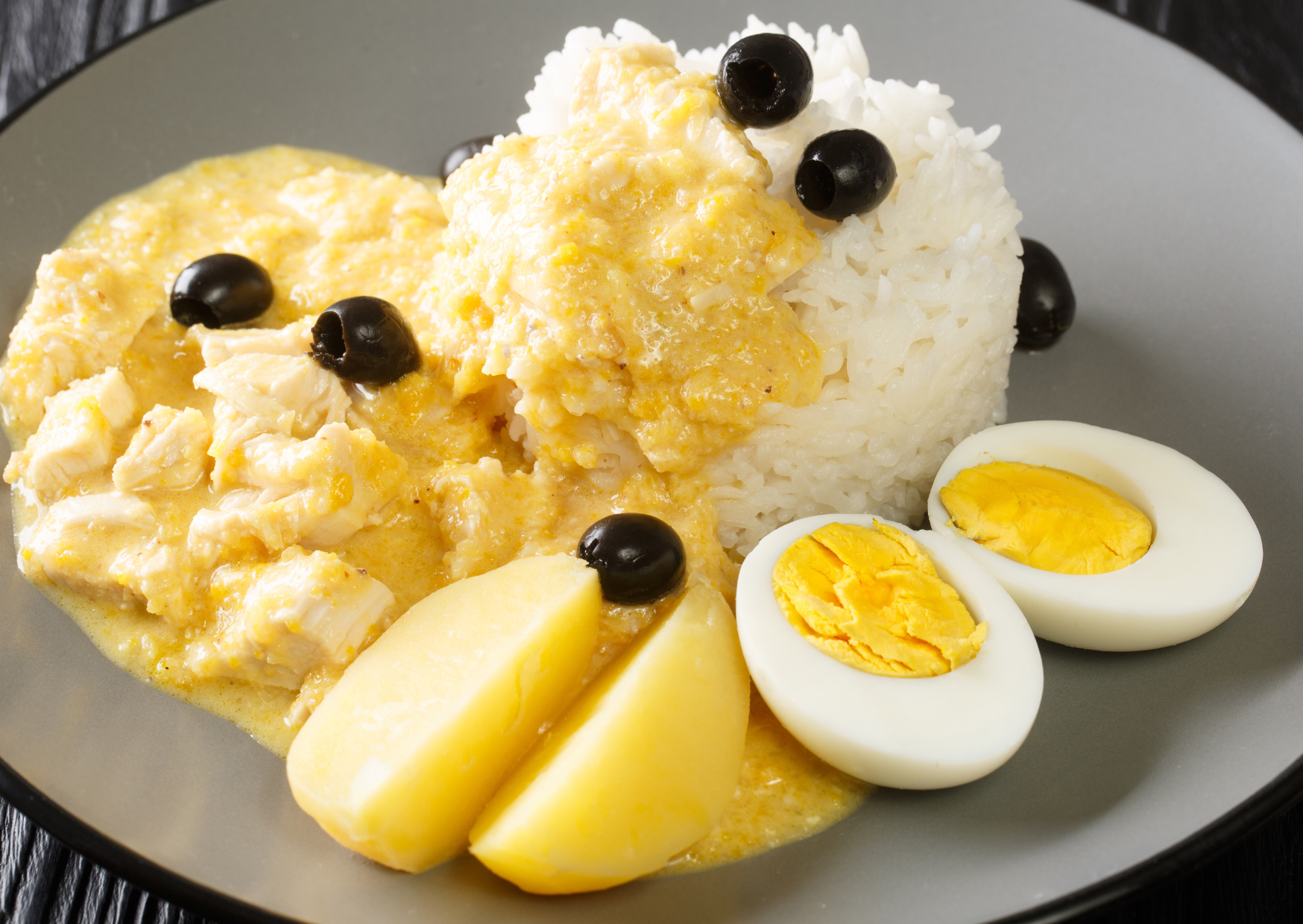
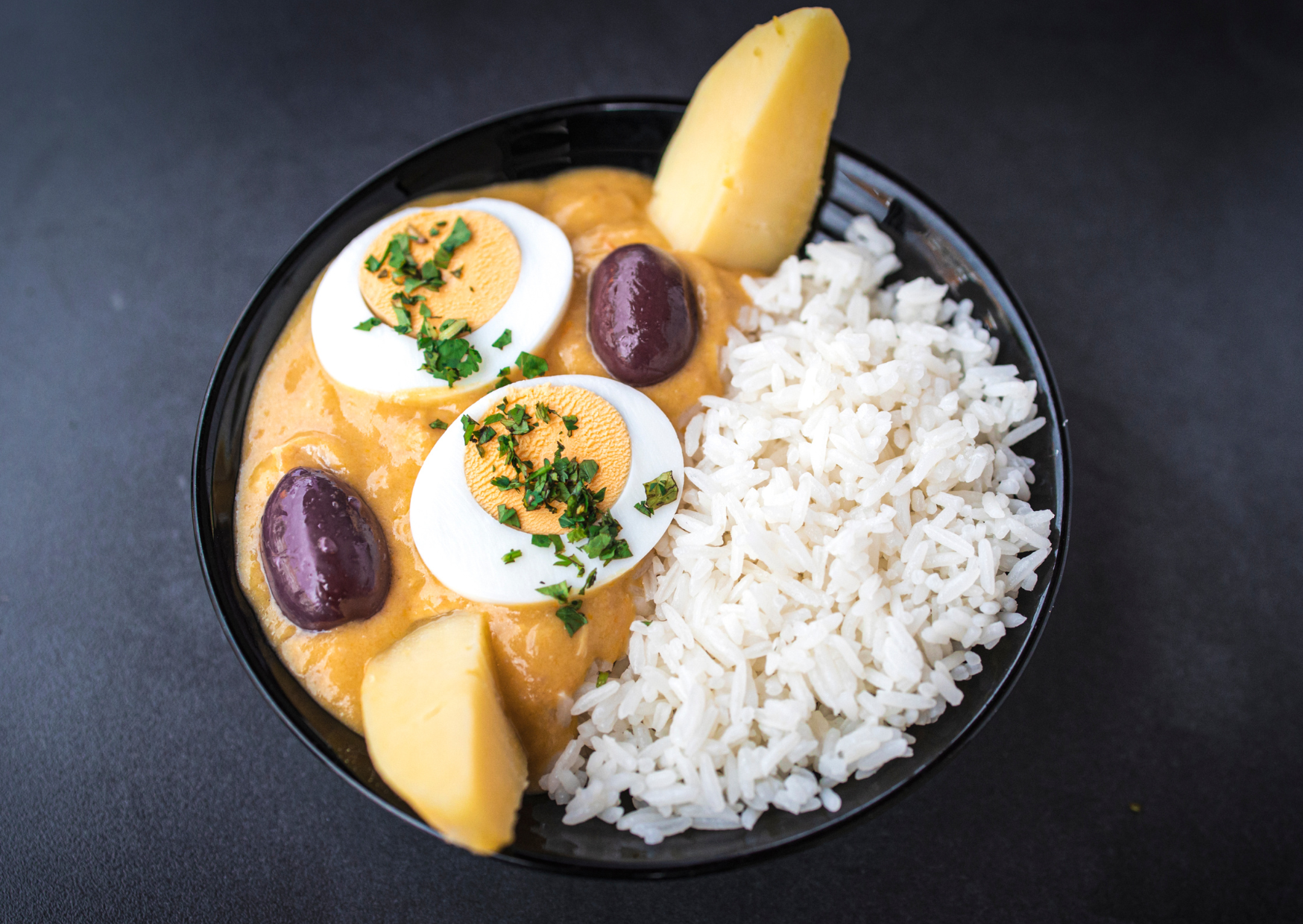
Rice on the plate. Sauce and chicken over the rice. A boiled potato alongside. Half a hard-boiled egg on top. One black olive. That is the classic presentation. No garnish tricks needed.
Why This Dish Works
Ají de gallina is a study in how to build richness without expensive ingredients.
The sauce technique is the key. Bread soaked in milk and blended with nuts is a thickening method that dates back centuries in Peruvian cooking. It creates a texture that is creamy without cream, thick without flour-based roux, and rich without butter. The result is a sauce that coats the chicken completely and clings to the rice in a way that most Western sauces do not.
The ají amarillo is doing most of the flavor work. It is a Peruvian yellow pepper with moderate heat, a fruity sweetness, and a flavor that is completely distinct from anything in the Mexican, Thai, or Indian chili pantheons. There is no real substitute for it. Other chili pastes will make a different dish, not a bad one, but not ají de gallina.
The Parmesan adds umami depth without making the dish taste Italian. The evaporated milk adds sweetness and body without the fat content of heavy cream. The walnuts add a subtle nuttiness that rounds out the sauce without making it taste like a nut dish.
Every component is doing a specific job. Nothing is decorative.
The Simple Food Science
The bread-milk-nut thickening method is worth understanding because it explains why the sauce feels different from anything in French or American cooking.
A French roux thickens with starch from flour cooked in fat. That produces a smooth, slightly heavy result. A cornstarch slurry thickens by swelling starch granules in liquid. That produces a glossy, sometimes gloopy texture.
The Peruvian bread method thickens by dispersing already-hydrated starch (from the bread) into a fat-and-liquid base. The bread is essentially pre-gelatinized starch. Blending it with the milk and nuts creates an emulsion that is simultaneously starchy, fatty, and protein-rich. The result is a sauce that feels creamy and thick without any single thickening agent dominating.
The walnuts contribute oil and protein that stabilize the emulsion. The Parmesan adds casein protein that further binds the sauce. The evaporated milk provides lactose sugars that subtly caramelize during cooking.
This is why ají de gallina sauce has that particular quality of richness. It is not one-dimensional. It is three or four thickening and enriching mechanisms working simultaneously.
Understanding this also explains why the dish reheats so well. The sauce does not break because it was never a delicate emulsion to begin with. It is structurally robust.
Cost Breakdown
In Europe (Spain/France, supermarket prices):
- Chicken thighs (800g): €3.50 to €4.50
- Ají amarillo paste (one jar lasts multiple batches): €5 to €8 per jar, roughly €1.50 per use
- White bread (3 slices): €0.30
- Evaporated milk (one can): €1.20
- Walnuts (60g): €1.00 to €1.50
- Parmesan (40g): €0.80 to €1.20
- Onion, garlic, oil: €0.50
- Rice, potatoes, eggs, olives: €1.50
Total for 4 servings: roughly €10 to €12. That is €2.50 to €3.00 per person.
In the U.S. (grocery store prices):
- Chicken thighs: $4 to $6
- Ají amarillo paste: $6 to $10 per jar, roughly $2 per use
- Other ingredients: roughly $4 to $5
Total for 4 servings: roughly $10 to $13. About $2.50 to $3.25 per person.
This is a dish that feeds four people generously for about the price of one fast-food meal per person. That ratio of flavor to cost is almost unbeatable.
Ingredient Substitutions
Ají amarillo paste: This is the one ingredient you should not substitute if you can avoid it. In Europe, Latin American grocery shops in major cities (Madrid, Barcelona, Paris, London) carry it. Online ordering is reliable. In the U.S., most well-stocked supermarkets carry it in the international aisle, and Amazon has multiple brands.
If you absolutely cannot find it:
- A mix of yellow bell pepper puree with a small amount of habanero and a pinch of turmeric gets you in the neighborhood. Not the same. But functional.
- Do not use sriracha, gochujang, or harissa. They will make a completely different dish.
Walnuts: Pecans work well. Almonds work but make the sauce slightly grainier. Cashews work and make it creamier. Peanuts are not traditional for ají de gallina (though they appear in other Peruvian dishes) but will technically function.
Evaporated milk: Full-fat regular milk works in a pinch. The sauce will be slightly thinner. You can compensate by adding an extra half slice of bread. Do not use condensed milk (sweetened). That is a different product entirely.
Parmesan: Any hard, aged, salty cheese works. Pecorino, Grana Padano, aged Manchego. The function is umami and salt, not specifically Parmesan flavor.
Bread: Plain white bread is traditional. Brioche or milk bread makes the sauce richer. Sourdough adds a tang that does not belong here. Use something soft and neutral.
Chicken thighs: Bone-in thighs give the best flavor and the best poaching liquid. Boneless thighs work but reduce poaching time to 15 minutes. Chicken breast works technically but produces drier, less flavorful results. Some Peruvian cooks use a whole chicken, broken down. That is the most traditional approach but adds time and complexity.
Storage And Leftovers
Ají de gallina stores exceptionally well, which is part of why it is such a practical dish.
Fridge: The sauced chicken keeps for 3 to 4 days in an airtight container. The sauce actually improves overnight as the flavors merge. Store rice separately. Store boiled potatoes separately. Reheat the chicken and sauce gently on the stove with a splash of water or broth if it has thickened too much.
Freezer: The sauced chicken freezes well for up to 2 months. Thaw in the fridge overnight. Reheat on the stove. The sauce may separate slightly on thawing but comes back together with stirring over low heat.
Do not freeze the boiled potatoes or eggs. Both become unpleasant in texture after freezing. Cook fresh when reheating.
Leftover transformations:
- The sauced chicken works as a filling for empanadas
- It works over pasta in place of a cream sauce
- It works inside a toasted sandwich with extra cheese
- It works stuffed into bell peppers and baked
This is a batch-cooking dish. Making double and freezing half is one of the smartest things you can do with it.
The Repeatable Week Plan
Ají de gallina is easy enough to build into a regular rotation. Here is how it fits into a practical weekly meal structure.
Sunday: Make a full batch. Takes about 50 minutes. Eat dinner from it. Store the rest.
Monday: Reheat leftovers for lunch. The sauce tastes better today than it did yesterday. Fresh rice takes 15 minutes.
Tuesday: Use remaining leftover sauce as a filling for quick empanadas or stuffed peppers. Different meal, same base.
Wednesday through Friday: Other meals. The point is not to eat ají de gallina every day. The point is that one cooking session on Sunday produces two to three meals with minimal additional effort.
The following Sunday: Make it again if you want, or rotate to a different batch dish. The rhythm works because the dish is cheap, fast for what it delivers, stores well, and does not require exotic technique or hard-to-find daily ingredients once you have the ají amarillo paste on hand.
One jar of ají amarillo paste lasts roughly 4 to 5 batches. At one batch per week, that is a month of cooking from one jar.
Why This Dish Has Not Gone Global (Yet)
The answer is almost entirely about the ají amarillo.
Peruvian cuisine is built around a set of chili peppers that do not grow widely outside Peru. Ají amarillo, ají panca, rocoto. These are the backbone of Peruvian flavor, and they do not have easy substitutes.
Thai food went global partly because lemongrass, fish sauce, and Thai chilies became available worldwide. Indian food went global partly because the spice blends could be replicated anywhere. Mexican food went global because jalapeños, limes, and cilantro grow everywhere.
Peruvian food has been slower because its core ingredients are more geographically specific. Ají amarillo paste is increasingly available internationally, but it is still not a pantry staple outside of Latin American communities.
The other factor is narrative. Peruvian food does not have the single-dish ambassador that other cuisines had. Italy had pizza and pasta. Japan had sushi. Thailand had pad thai. Peru has ceviche, but ceviche is raw fish, which limits its appeal as an everyday home dish.
Ají de gallina could be that ambassador dish. It is warm. It is cooked. It is cheap. It feeds a family. It uses a technique Americans and Europeans have never seen. And it tastes like something that should already be in every comfort-food rotation on the planet.
It just needs more people to make it once.
What Actually Matters Here
Ají de gallina is not health food. It is not a diet dish. It is not a superfood story dressed up in Peruvian packaging.
It is a genuinely great dish that costs almost nothing to make, uses a sauce technique that will change how you think about thickening, and produces a flavor that nothing in American or European home cooking quite replicates.
The first time you make it, you will understand why Peruvians talk about it the way Italians talk about ragù. It is a dish that carries weight. Not because it is fancy. Because it is exactly right.
Make it once. That is all the convincing it takes.

About the Author: Ruben, co-founder of Gamintraveler.com since 2014, is a seasoned traveler from Spain who has explored over 100 countries since 2009. Known for his extensive travel adventures across South America, Europe, the US, Australia, New Zealand, Asia, and Africa, Ruben combines his passion for adventurous yet sustainable living with his love for cycling, highlighted by his remarkable 5-month bicycle journey from Spain to Norway. He currently resides in Spain, where he continues sharing his travel experiences with his partner, Rachel, and their son, Han.