
Ten years ago, this decision would have sounded strange.
The Algarve was the obvious answer. Better known. Easier to market. More established as a retirement fantasy for English-speaking foreigners. It had the postcards, the golf courses, the expat machine, and the comforting feeling that thousands of other people had already made the same move.
Now, more Americans are looking at the Canary Islands and saying something that would have sounded borderline heretical in old expat circles:
The Algarve is too obvious, too crowded, and not as good a deal as it used to be.
That does not mean the Algarve is bad. It means the equation changed.
As of early 2026, the Algarve is still attractive, but current Portugal retirement coverage openly warns that high-demand coastal hotspots now carry materially higher costs than quieter alternatives, and Idealista’s 2026 retirement coverage says there is a “clear gap” between expensive hotspots and better-value locations. It also specifically notes rising costs in prime parts of the Algarve. (turn0search3, turn0search6)
Meanwhile, the Canary Islands still offer a version of Atlantic retirement that feels:
- sunnier than much of mainland Spain
- less saturated by Anglo-retiree branding
- often cheaper in the most painful category, housing
- and psychologically more like “a place to live” than “a place people already sold to you”
That is why the shift is happening.
The Algarve still sells the dream. The Canaries feel like the correction.

The Algarve remains one of the strongest retirement brands in Europe.
That is part of the problem.
A strong retirement brand attracts:
- foreign demand
- lifestyle marketing
- property inflation
- service economies built around outsiders
- and an expat expectation layer that can make the place feel less like a discovery and more like a product
Idealista’s 2026 Portugal retirement coverage explicitly says there is now a clear cost gap between high-demand coastal hotspots and quieter places, and it specifically names the Algarve’s prime zones as an area of rising costs. (turn0search3, turn0search6)
The Canaries, by contrast, still feel to many Americans like the place you pick after you get tired of the brochure version.
That matters more than people admit.
The Algarve charms you with familiarity.
The Canaries attract you with the feeling that you are not buying the same retirement package everyone else already bought.
The housing math is one of the biggest reasons

This is where romance usually becomes real.
Americans choosing between the Algarve and the Canaries are not just comparing scenery. They are comparing:
- rent pressure
- buying pressure
- what their monthly life will feel like after the move stops being exciting
The Algarve has become much less forgiving in the very places foreigners want most. Idealista’s 2024 property-effort analysis found that Lagos, Loulé, Albufeira, and Silves were among the hardest places in Portugal for local households to buy, with effort rates that made clear how stretched the market had become. (turn0search11)
That tells you something important even if you are renting:
foreign demand has already done its work there.
The Canaries are not cheap in every pocket either. But for many Americans, especially outside the most polished resort zones, they still present a less inflated-feeling entry point than the Algarve’s premium coastal map.
So a lot of this shift is not ideological.
It is just housing fatigue.
Americans are increasingly allergic to expat theme parks

This is the social version of the housing issue.
The Algarve can be lovely. It can also feel, in parts, like a fully operational expat ecosystem:
- English-first service expectations
- retirement communities built around foreign comfort
- social circles that can become international bubbles
- a lifestyle economy shaped heavily around outsiders
That setup is great if what you want is ease.
It is less appealing if what you want is:
- stronger local texture
- less obvious foreign saturation
- a place that still feels like you moved somewhere, not into a polished retirement corridor
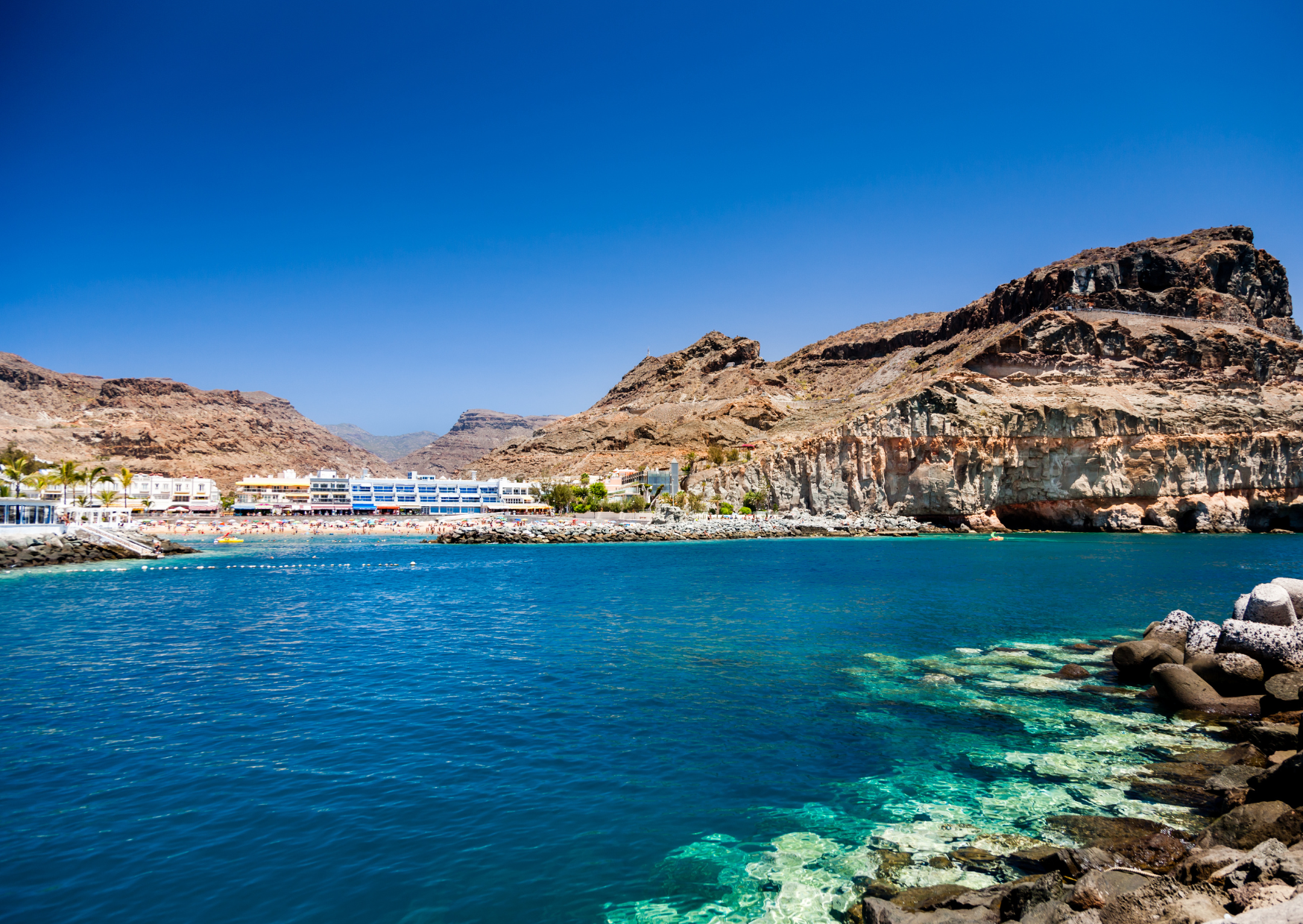
The Canary Islands, especially in resident-oriented parts of Gran Canaria and Tenerife, can still give retirees that second feeling.
That is increasingly attractive to Americans who say they want Europe, but not if it feels like a retirement franchise.
The Canaries often feel more livable year-round

This is not just about weather. It is about rhythm.
Both the Algarve and the Canaries offer sun, but the Canary Islands often feel more stable as a year-round everyday environment, not just a seasonal retirement fantasy.
Part of that is climate psychology:
- less winter collapse
- less “off-season” emotional drop
- less need to compensate for weather with spending
Part of it is urban form. Places like Las Palmas offer something the Algarve often does not in the same way:
a genuinely functioning city life with beach access, services, walkability, and local routine all in one place.
That combination is powerful for retirees who want:
- a calmer life
- but not a sleepy one
- lower daily drag
- without feeling marooned in a resort economy
The Algarve has places that can do some of this. But the Canaries often package it more convincingly for people who want an actual life, not just a pretty retirement backdrop.
The Algarve’s popularity is now one of its biggest downsides

This is the part Americans increasingly see before they move.
The more popular a retirement destination becomes, the more it creates the problems retirees were trying to escape:
- housing pressure
- foreign buyer inflation
- overbuilt lifestyle zones
- service workers stretched by tourism and foreign demand
- a subtle feeling that the place is being consumed rather than inhabited
And the Algarve is now deep into that phase.
Idealista’s 2025 property reporting said foreign buyers remain a major driver in Faro and the Algarve, and that American interest is also growing as the region continues to function as a retirement and holiday-home hotspot. (turn0search9)
That sounds flattering in a brochure.
It is less flattering when you are trying to find a stable rental or a normal long-term daily rhythm.
This is one of the big reasons some Americans are moving one step sideways and choosing the Canaries instead.
They are not rejecting the sun.
They are rejecting the feeling of arriving late to a heavily monetized version of the sun.
The Canary Islands can feel cheaper in the right categories

This is where Americans often decide the trade is worth it.
Compared with expensive mainland Spain and with premium Portuguese coastal markets, the Canaries can still deliver:
- lower rent than a lot of the mainland expat fantasy map
- lower day-to-day transport costs in practical urban areas
- less “I need to escape winter” spending
- a simpler routine that makes modest living easier
The Canaries are not universally cheap. But they can be cheaper in the categories that hurt most, especially if you build a resident routine instead of a vacation one.
That matters more than marginal grocery wins.
Retirees do not usually break because coffee costs 40 cents more.
They break because:
- rent drifted
- transport costs stacked
- they kept buying the polished version of local life
- they never built a routine that matched the budget
The Canaries can help with that more than the Algarve in some current scenarios.
The tradeoff is that the Canaries are still islands

This is where the Algarve keeps a real advantage.
The Algarve is coastal mainland Portugal. That means:
- easier domestic movement
- simpler access to the rest of Iberia
- less island psychology
- easier road-based mobility
- less “every trip needs a flight or ferry” fatigue
The Canaries are islands.
And that changes things.
If you choose them, you are also choosing:
- extra travel planning
- more expensive family access in some cases
- a more contained life
- occasional import friction
- a stronger feeling of geographic separation
Some Americans love that.
Others love it for six months and then realize they miss the freedom of a mainland base.
That is the core trade:
the Canaries often feel more affordable and less overcooked, but the geography asks more of you.
Americans also like that Spain still feels less “sold” than Portugal in some circles
Portugal has had a huge run in American retirement imagination.
That popularity did two things:
- it made Americans aware of places like the Algarve
- it also made some Americans tired of hearing about the Algarve
There is a real psychological appeal in choosing the Canary Islands because they feel less like the obvious answer.
It gives people:
- more discovery energy
- less copy-paste expat branding
- less sense of following the same script
That matters because many Americans are not just moving for weather and cost.
They are moving for the feeling that they are building a different life.
The Algarve increasingly feels like a known product.
The Canaries still feel, for now, like a place you picked yourself.
Pitfalls most people miss when making this choice

They compare the best version of the Canaries to the tiredest version of the Algarve.
That is not honest. Both regions have good and bad micro-markets.
They assume the Canaries are a pure bargain.
They are not. Island logistics and bad housing choices can erase the advantage quickly.
They treat “less expat-saturated” as “easier to integrate.”
Those are not the same thing. A place that feels less expat-heavy can also demand more effort from you.
They think the Algarve is “over” because it is more expensive.
It is still a strong option for many retirees. It is just no longer the easy value play people imagine.
They underestimate how much island life changes behavior.
Sometimes for the better. Sometimes in ways they do not anticipate.
The first 7 days to see which one actually fits you
Day 1: price housing in the exact town you would really choose
Not “the Algarve” or “the Canaries.” The actual town.
Day 2: test whether you want a mainland rhythm or an island rhythm
That is a personality issue as much as a financial one.
Day 3: separate cost savings from identity appeal
Are you choosing the Canaries because they are cheaper, or because they feel less obvious?
Be honest.
Day 4: test a normal week, not a holiday day
Groceries, transport, pharmacy, lunch, errands, a boring evening.
Day 5: calculate family-access friction
How often will people visit, and how often will you go back?
That changes the math.
Day 6: ask whether you want an easier expat path or a more original-feeling one
Those are often different routes.
Day 7: choose based on your likely Tuesday, not your best Instagram day
This is the only question that matters long-term.
The honest takeaway

Americans are choosing the Canary Islands over the Algarve for one blunt reason:
The Canary Islands increasingly feel like the smarter, less overcooked version of Atlantic retirement.
Not because the Algarve stopped being attractive.
Because the Algarve became:
- more expensive
- more saturated
- more obviously “the” foreign retirement corridor in parts of the region
Meanwhile, the Canaries still offer many of the same emotional draws:
- sun
- ocean
- walkable life
- slower rhythm
but with a better chance, in the right setup, of feeling like a place to live rather than a place already packaged for you.
The tradeoff is real:
the Canaries can be the better-value, less over-marketed choice,
but only if you can actually live with islands.

About the Author: Ruben, co-founder of Gamintraveler.com since 2014, is a seasoned traveler from Spain who has explored over 100 countries since 2009. Known for his extensive travel adventures across South America, Europe, the US, Australia, New Zealand, Asia, and Africa, Ruben combines his passion for adventurous yet sustainable living with his love for cycling, highlighted by his remarkable 5-month bicycle journey from Spain to Norway. He currently resides in Spain, where he continues sharing his travel experiences with his partner, Rachel, and their son, Han.