
And what it reveals about rhythm, routine, and the cultural confidence to live by the sun instead of the clock
Ask almost any American what they picture when they think of Spanish daily life, and sooner or later you’ll hear it: “They sleep until noon, eat dinner at midnight, and somehow still have energy for dancing.”
It’s said with a mix of envy, judgment, and disbelief. After all, in the United States, productivity is king. Schedules are tightly packed. Sleep is something you squeeze in around work, family, and phone screens.
So how is it that in Spain — where meals start late, stores close for hours in the middle of the day, and nightlife begins when many Americans are getting ready for bed — people not only seem to thrive, but consistently report better work-life balance, stronger social ties, and longer life expectancy?
Here’s the truth behind the myth of Spaniards “sleeping until noon” — and why their approach to daily rhythm might actually be healthier than America’s obsession with early rising and constant availability.
Want More Deep Dives into Everyday European Culture?
– Why Europeans Walk Everywhere (And Americans Should Too)
– How Europeans Actually Afford Living in Cities Without Six-Figure Salaries
– 9 ‘Luxury’ Items in America That Europeans Consider Basic Necessities
1. No, Spaniards Aren’t Sleeping Until Noon — They Just Wake Later, On Purpose

Despite the stereotype, most Spaniards are not sleeping in until midday. They are simply starting their days later — and ending them later too.
In cities like Madrid, Seville, or Valencia, the average person wakes around 7:30 or 8:00 a.m. — not 5:00 a.m. like many American workers or gym-goers, but certainly not “afternoon.”
The reason it feels like a late schedule is because everything is shifted:
- Work starts later (often around 9:30 or 10:00)
- Lunch happens around 2:00 p.m.
- Dinner is never before 9:00
- Socializing, errands, and TV often continue well past midnight
This rhythm reflects a different relationship with time — one based on balance, rather than optimization.
2. “Late to Rise” Doesn’t Mean Lazy — It Means Well-Rested

In American culture, waking early is often moralized. “Early bird gets the worm.” Productivity gurus promote 5:00 a.m. routines as the path to success.
In Spain, there’s no shame in waking up at 8:00 — especially if you went to bed at 1:00 after spending real time with your family, neighbors, or friends.
Spaniards prize quality sleep and social time over early alarms. And that sleep is often deeper and less interrupted, thanks to:
- Longer meals that encourage digestion
- Fewer screens in bed
- Fewer caffeine-fueled evening routines
Late rising isn’t laziness — it’s recovery.
3. The Midday Break Isn’t a Nap — It’s a System Reset

The famous Spanish siesta has become more symbolic than widespread, especially in urban areas. But the midday break — from roughly 2:00 to 5:00 — is very real.
Shops close. Restaurants pause. Offices go quiet. And while not everyone naps, everyone rests.
You might:
- Have a proper lunch at home
- Run errands without rush
- Sit quietly with coffee and no phone
- Close your eyes for 20 minutes
This break isn’t lazy. It’s built into the workday to match the heat, the light, and the need for mental reset.
Contrast that with the American model of working through lunch at your desk with a salad and four tabs open. Which sounds healthier?
4. Spaniards Stay Up Late — But They’re Still Getting Enough Sleep

One of the biggest myths is that Spaniards stay up until 2:00 a.m. every night and somehow function without sleep.
The truth? They just shift the hours.
A typical Spanish adult:
- Eats dinner at 9:30
- Watches a show, chats with family, or reads until midnight
- Goes to bed around 12:30 or 1:00
- Wakes up between 7:30 and 8:30
That’s 6.5 to 8 hours of sleep — exactly what health professionals recommend.
The difference is, no one is losing sleep to get ahead. They’re staying up because evenings are part of life, not a countdown to morning.
5. Kids Stay Up Later — But Their Lives Are Socially Rich

One of the most jarring culture shocks for American families visiting Spain is seeing children out at 11:00 p.m., especially in summer.
In the U.S., bedtime routines start early. Anything past 9:00 is a sign of poor parenting. But in Spain, families are more integrated.
Children:
- Eat with adults
- Join the stroll through the plaza
- Fall asleep on a grandparent’s lap at the café
- Wake later and nap if needed
Their schedules are flexible, but their social and emotional environments are highly structured and supportive.
And studies show Spanish children have lower anxiety and higher well-being scores than many of their American peers.
6. The Schedule Matches the Climate — And That Matters
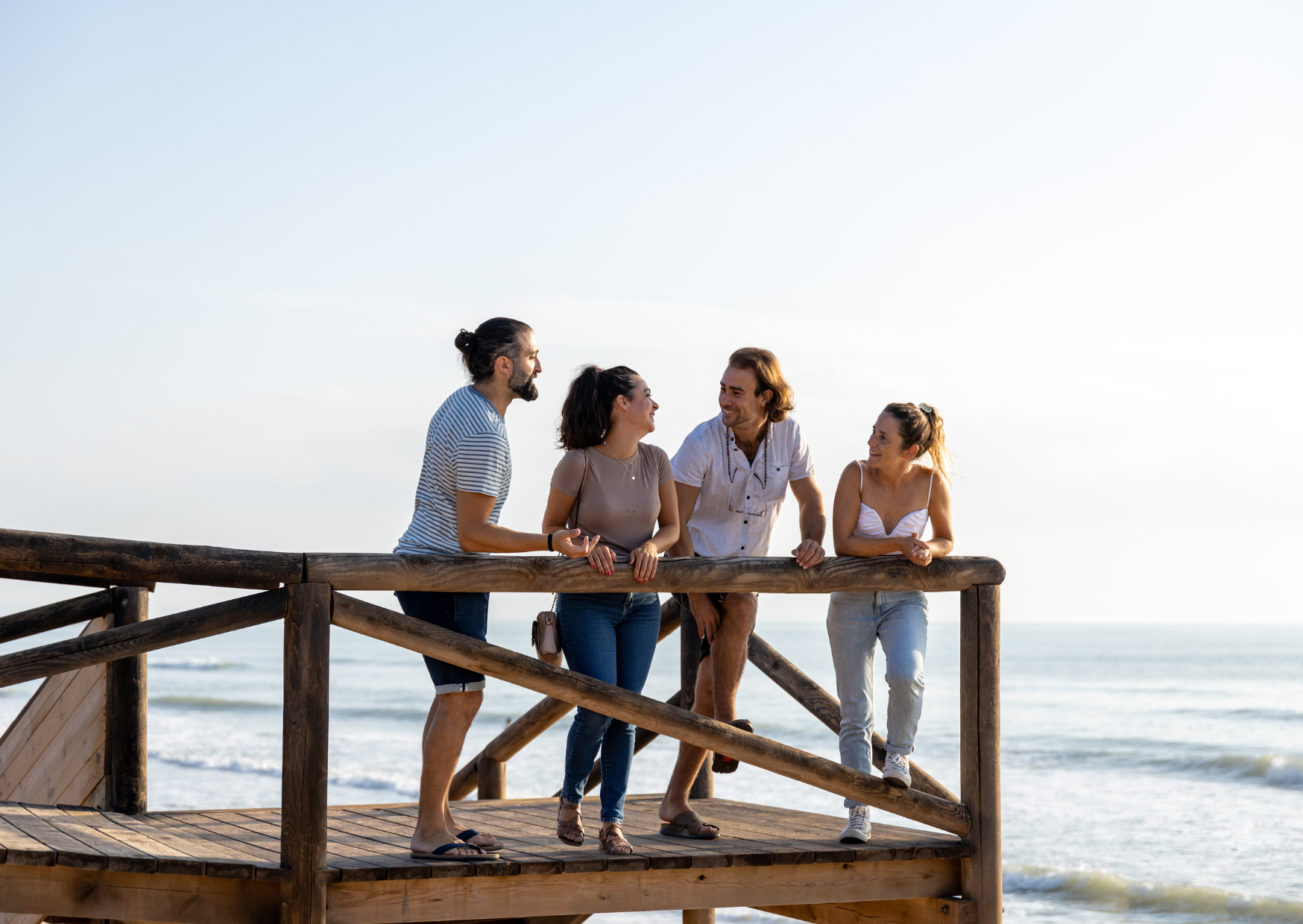
Spanish daily rhythm evolved for a reason: it works with the weather, not against it.
In southern Spain, temperatures can soar above 100°F by early afternoon. Trying to work, exercise, or eat heavily in that heat would be dangerous.
Instead, Spaniards:
- Rise before the peak
- Pause during the heat
- Re-engage after sunset
Americans often treat heat as an inconvenience to be conquered with HVAC and caffeine. Spaniards treat it as a signal to slow down and adjust.
This cultural respect for climate rhythm may be a key reason why Spain reports some of the lowest burnout rates in Europe.
7. Sleep Isn’t Guilt-Loaded — It’s Health-Linked
In the U.S., sleep is often seen as optional. The narrative around “hustling” or “making the most of your day” often comes at the cost of rest.
In Spain, sleep is not framed as indulgent. It’s seen as necessary maintenance. A night of good sleep is talked about with the same importance as a good meal or a good walk.
You don’t apologize for going to bed late or sleeping in after a party. You don’t hide your nap. You don’t feel weak for needing rest.
It’s a respectful relationship with your body, and it begins early in life.
8. Flexibility in Time Keeps the Schedule Human
In the U.S., time is rigid. Meetings are scheduled to the minute. Meals are thirty-minute slots. A single delay throws off the whole day.
In Spain, time is fluid.
Lunch starts “around 2:00.” Dinner is whenever everyone is ready. If you’re late, no one panics. If you cancel, you’re forgiven. If the day feels off, you adjust.
This doesn’t mean people are lazy. It means people aren’t ruled by the clock. They use it — but it doesn’t use them.
This flexible time culture supports better sleep, because people don’t feel forced into unnatural rhythms.
9. Social Life Doesn’t Rob Sleep — It Supports It

In the U.S., late nights are often tied to overstimulation — screens, work emails, Netflix, caffeine. Even socializing tends to be loud, rushed, and packed into weekends.
In Spain, late-night social life is often low-stimulus and emotionally restorative.
Long dinners. Conversations without background noise. Strolls after meals. No pressure to rush home and “get ready for tomorrow.” Tomorrow will wait.
This kind of social rest feeds into deeper sleep, even if it starts later. And it makes evening time feel like something to savor — not recover from.
One Clock, Two Cultures
To Americans, the Spanish schedule looks lazy, chaotic, and unsustainable.
To Spaniards, the American schedule looks exhausting, inhuman, and joyless.
In America, time is something to optimize.
In Spain, time is something to experience.
In America, sleep is sacrificed to win.
In Spain, sleep is protected so life stays livable.
So no — Spanish people are not sleeping until noon.
They’re just building a life around rhythm, rest, and what the day actually feels like, not what the clock demands.
And they may be healthier for it.

About the Author: Ruben, co-founder of Gamintraveler.com since 2014, is a seasoned traveler from Spain who has explored over 100 countries since 2009. Known for his extensive travel adventures across South America, Europe, the US, Australia, New Zealand, Asia, and Africa, Ruben combines his passion for adventurous yet sustainable living with his love for cycling, highlighted by his remarkable 5-month bicycle journey from Spain to Norway. He currently resides in Spain, where he continues sharing his travel experiences with his partner, Rachel, and their son, Han.