
When winter settles over Greece and a family wants something warming, comforting, and nourishing, a Greek grandmother reaches for giouvarlakia, a soup of tender meatballs simmered in broth and finished with the silky, lemony egg sauce called avgolemono. What makes it distinctive, and what surprises a newcomer, is the meatballs themselves: the rice is mixed right into the meat, so as the meatballs cook the rice swells and pokes out of them like little spikes, giving the dish its character and its name. It is the ultimate Greek winter comfort food, light yet satisfying, warming yet fresh, a hug in a bowl.
For an American used to meatballs as a dense thing in tomato sauce, the Greek version simmered in a lemony broth with the rice cooked inside is a lovely surprise, and the avgolemono that finishes it is one of the great sauces of Greek cooking. This piece looks at what giouvarlakia is, the rice inside the meatball rule that defines it, the avgolemono egg lemon sauce that makes it sing, its place as Greek winter comfort food, and how to make it, before giving you the recipe. Because everyone needs a warming soup for the dark months, and this is one of the best.
What Giouvarlakia Is
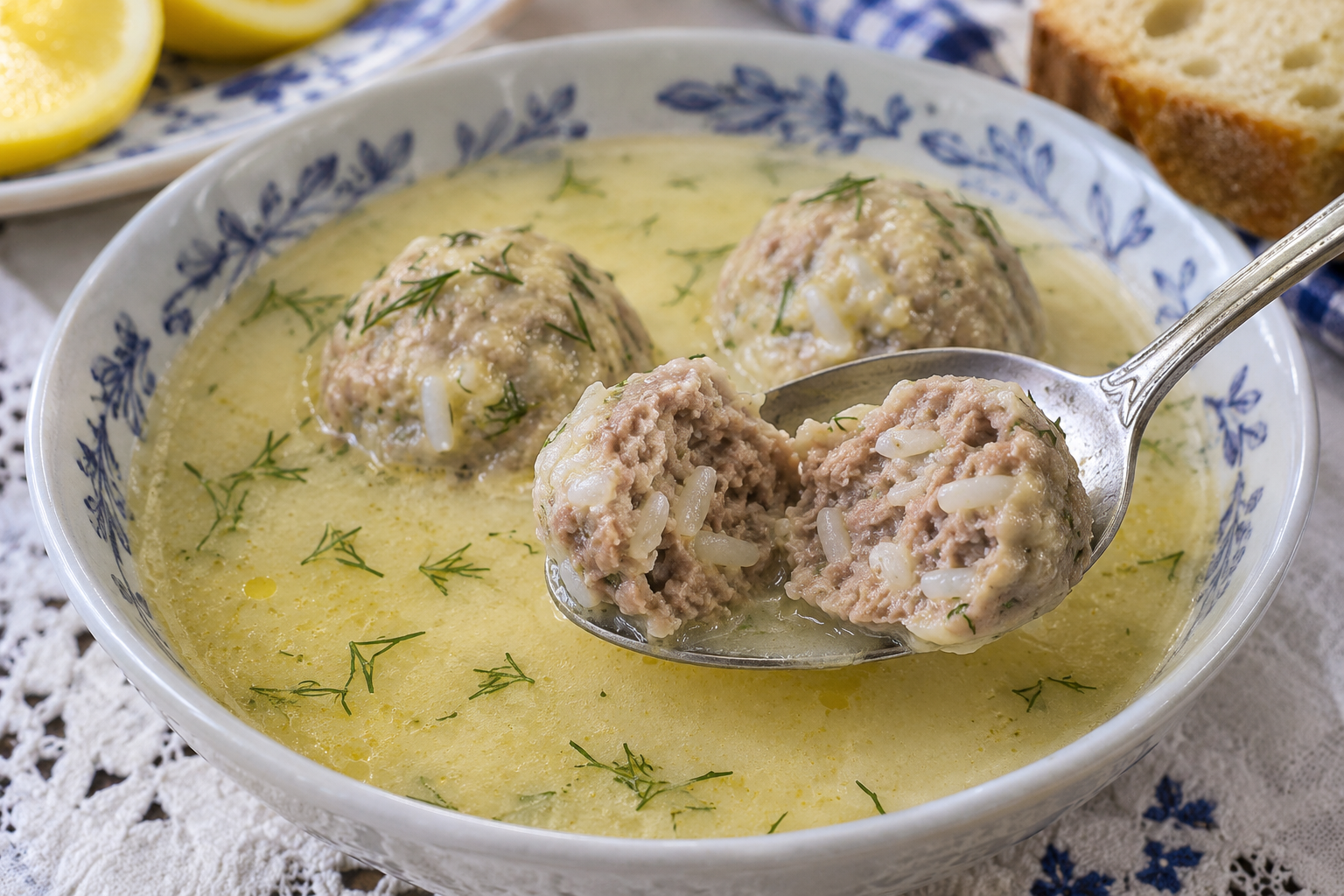
Giouvarlakia, also spelled youvarlakia, is a Greek soup of meatballs simmered in broth and traditionally finished with avgolemono, the egg and lemon sauce, producing a warming, comforting, lightly tangy soup that is a staple of Greek home cooking, especially in winter. The meatballs are made of minced meat, usually beef or a beef and pork mix, combined with rice, onion, and herbs, and they are poached gently in a simple broth rather than fried, so they stay tender and light, and the broth they cook in becomes the soup. It is a one pot dish of meatballs and their broth, bound and brightened by the egg lemon finish.
The dish sits in the category of Greek comfort soups, light but nourishing, the sort of thing made to warm and restore, and it is humble, economical home cooking rather than restaurant fare. The meatballs are the heart of it, made distinctive by the rice worked into the meat, and the broth is simple, letting the meatballs and the avgolemono do the work. The result is a bowl of tender meatballs in a silky, pale, lemon scented broth, warming and satisfying without being heavy, which is exactly what makes it such good cold weather food.
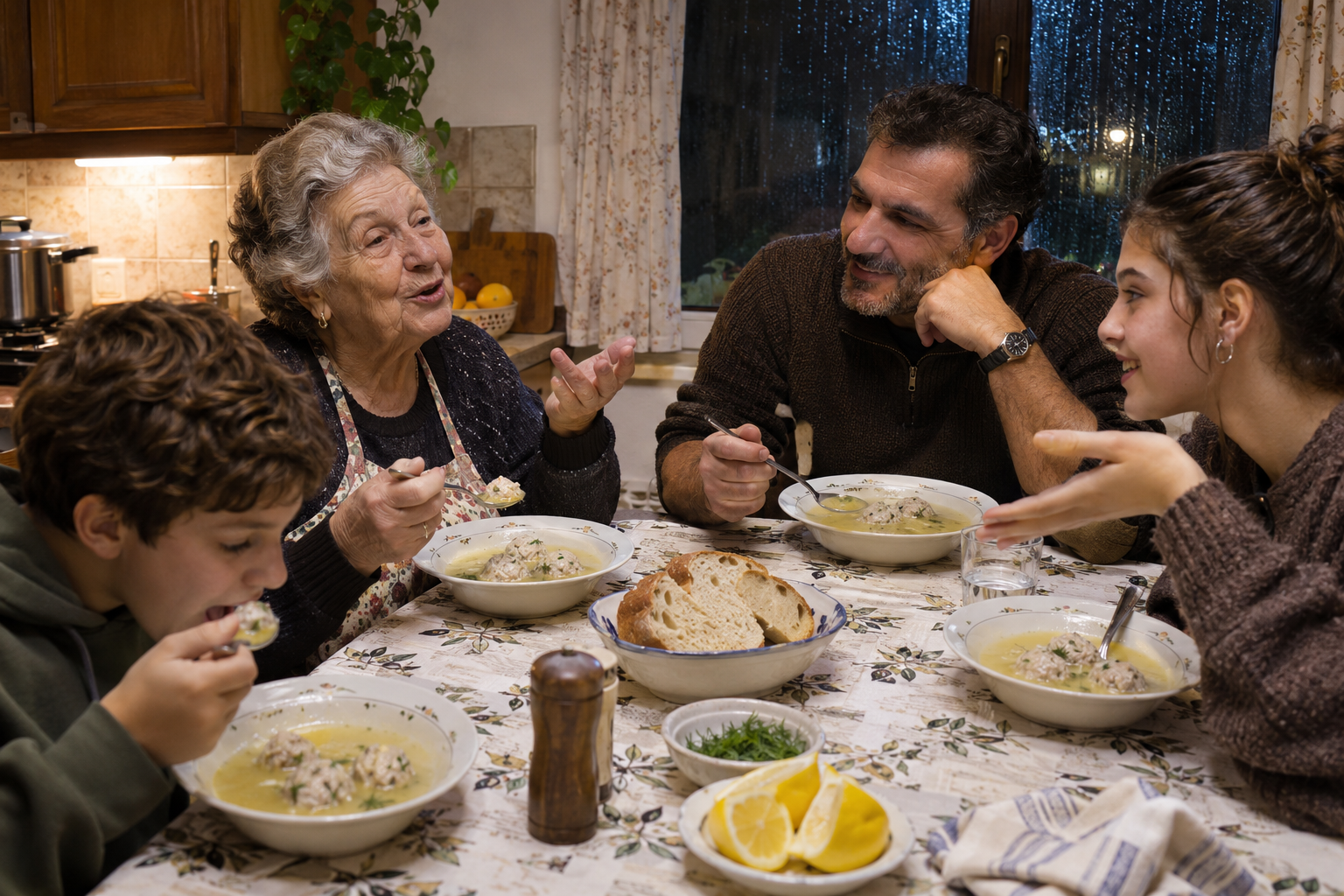
The name giouvarlakia comes from a word for the little round shapes of the meatballs, and the dish is beloved across Greece as a classic of the family table, the kind of thing a grandmother makes when the weather turns and everyone needs feeding and comforting. It is not fancy, not festive, not restaurant food, but everyday home cooking at its most loving, a warming soup that tastes of care and winter and the Greek kitchen. Giouvarlakia is Greek comfort in a bowl, and its gentle, lemony warmth is the taste of a Greek winter.
The Rice Inside the Meatball Rule
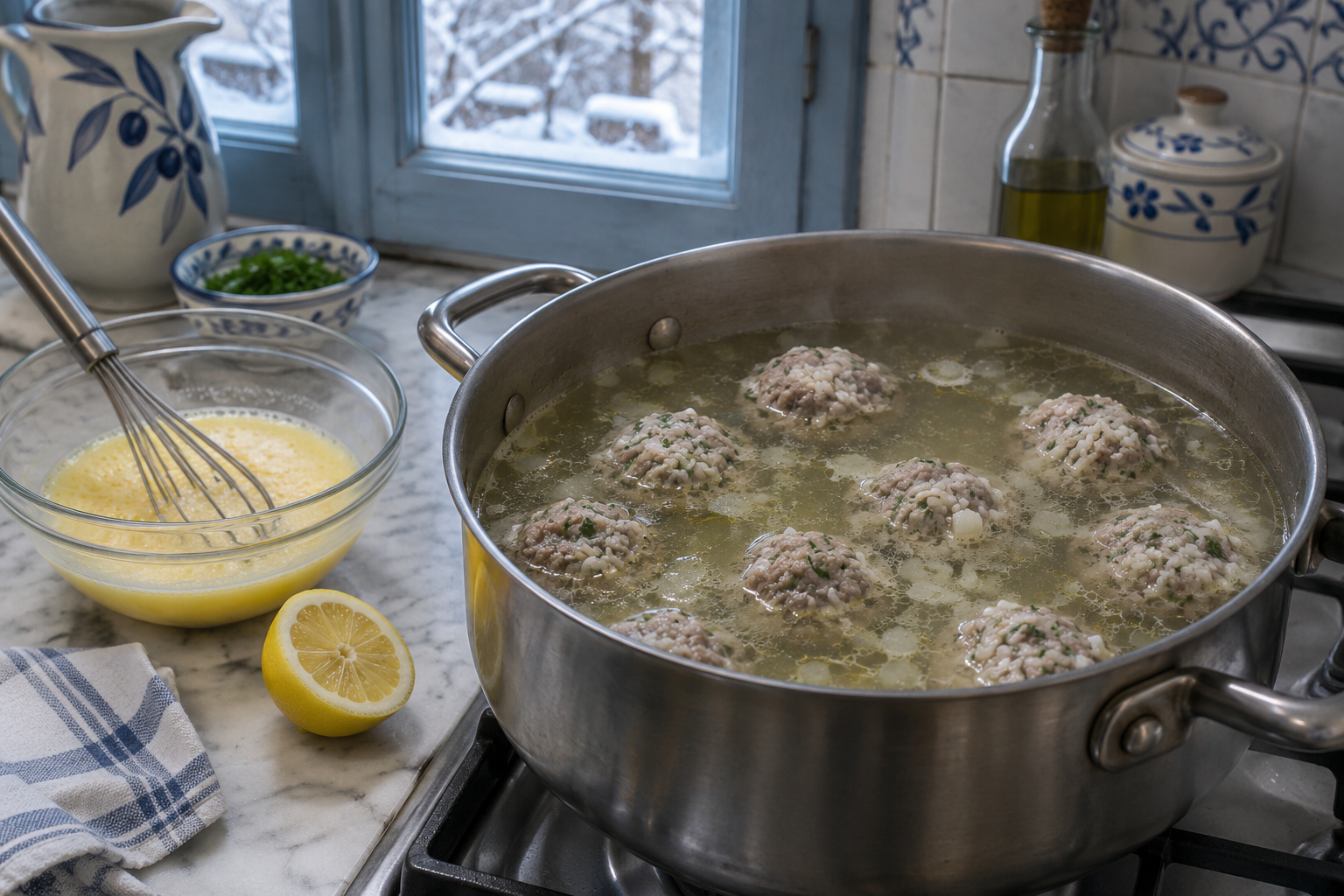
The defining feature of giouvarlakia, the thing that sets it apart from every other meatball, is that the rice goes inside the meatball, mixed into the meat rather than cooked separately, and this rice inside the meatball rule is the signature of the dish. The raw rice is combined directly into the minced meat along with the onion and herbs, so each meatball contains rice throughout, and as the meatballs poach in the broth, the rice cooks and swells inside them, giving the meatballs a soft, tender, slightly loose texture and often causing grains of rice to poke out of the surface like little spikes.
This technique does several things that define the dish. It makes the meatballs lighter and more tender than dense all meat ones, because the rice loosens the texture and absorbs moisture as it cooks; it thickens and flavors the broth slightly as some starch releases; and it gives the characteristic look, the meatballs studded with swollen rice grains, that is unmistakably giouvarlakia. The rice is not a side or a filler added separately but an integral part of the meatball itself, cooked within it, which is the whole point and the source of the dish’s particular character.
For a cook, the rice inside the meatball rule means mixing raw rice into the meat mixture and poaching the meatballs gently so the rice has time to cook through inside them without the meatballs falling apart. The rice must be raw going in, so it cooks in the broth within the meatball, and the poaching must be gentle so the rice loaded meatballs hold together as they swell and soften. Get this right and you have the tender, rice studded meatballs that define the dish; try to cook the rice separately or fry the meatballs and you have something else entirely. The rice inside the meatball is the rule that makes giouvarlakia itself.
The Avgolemono That Makes It Sing
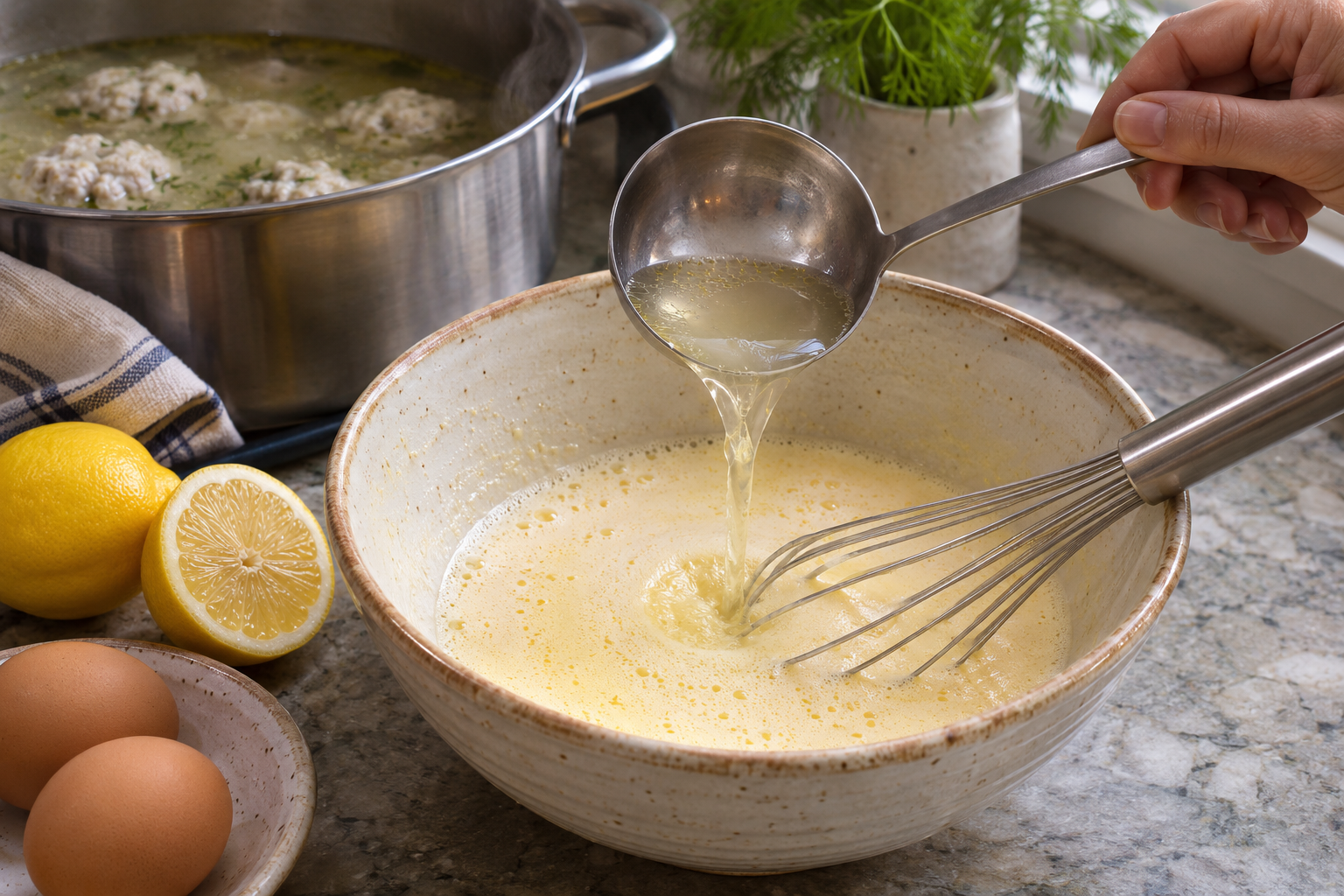
The second essential element, and the one that lifts giouvarlakia from a simple meatball soup to something special, is the avgolemono, the Greek egg and lemon sauce that traditionally finishes the dish. Avgolemono is made by whisking eggs with lemon juice and then slowly tempering in some of the hot broth before stirring the mixture back into the soup, which thickens the broth into a silky, pale, creamy sauce and infuses it with a bright, tangy lemon flavor, all without any dairy. It is one of the defining techniques of Greek cooking, used across many dishes, and in giouvarlakia it is transformative.
The avgolemono does for giouvarlakia what a finishing flourish does for any great dish, turning the plain broth into a luxurious, velvety, lemon brightened sauce that coats the meatballs and lifts the whole bowl. The eggs give it silkiness and body, the lemon gives it a fresh tang that cuts the richness of the meat and keeps the comfort food from being heavy, and together they make the soup both more comforting and more lively, warming yet fresh. It is the avgolemono that makes giouvarlakia sing, and a version without it, while still good, lacks the signature silky lemon character.
The technique requires a little care, because the eggs can curdle if added too fast to hot broth, so the key is tempering: whisk the eggs and lemon, then slowly whisk in ladlefuls of the hot broth to warm the eggs gradually before stirring the warmed mixture back into the pot off or on very low heat. Done gently, this produces the smooth, thickened, lemony finish; rushed, it scrambles. The avgolemono is the one slightly technical step in an otherwise simple dish, and it is worth getting right, because it is what makes the soup special. Master the tempering, and the egg lemon sauce crowns the dish beautifully.
Greek Winter Comfort Food
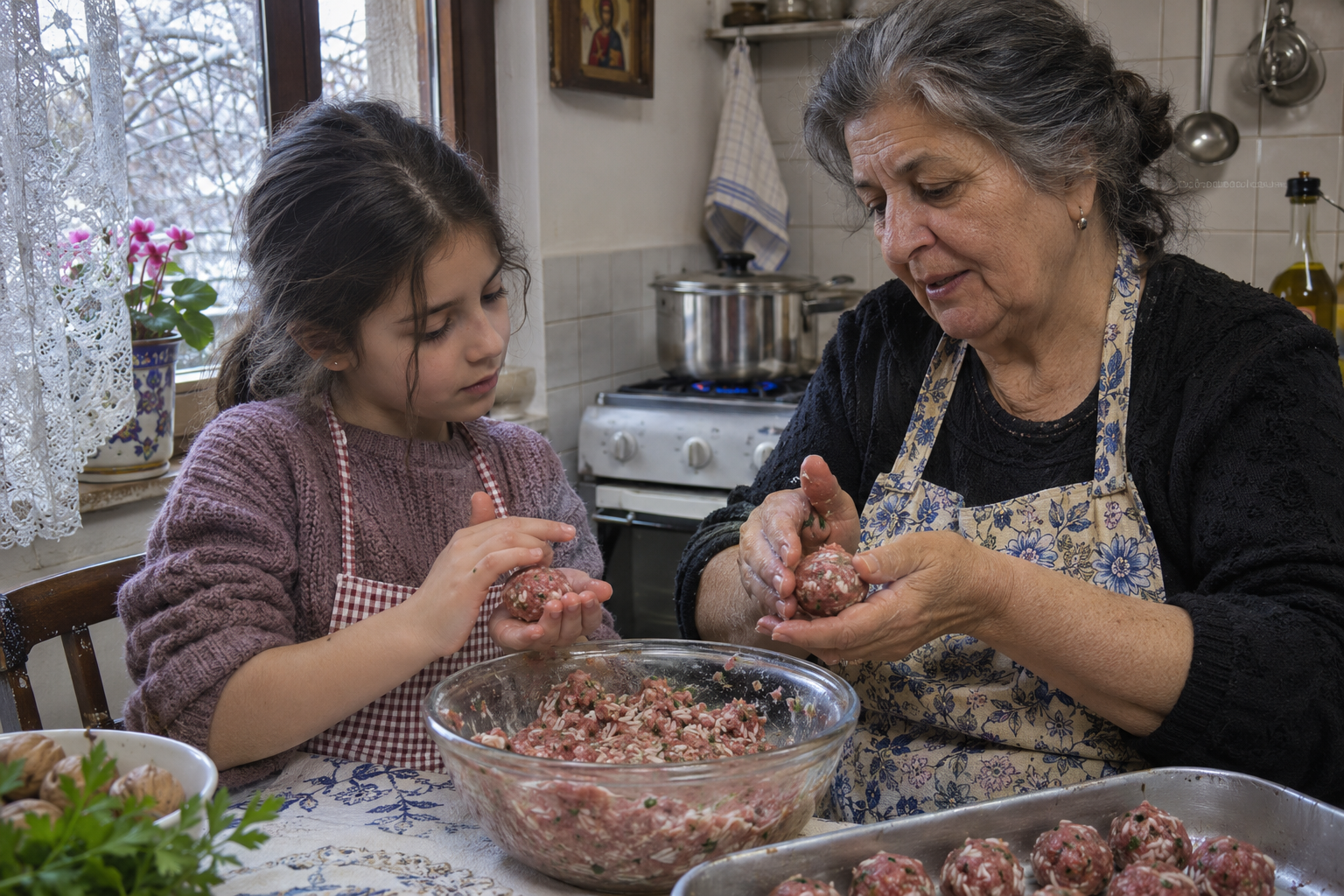
Giouvarlakia holds a cherished place as Greek winter comfort food, and understanding that role is part of appreciating it. It is cold weather cooking, made when the weather turns and the body wants something warming and restorative, the hot lemony broth and tender meatballs exactly suited to a Greek winter day, and it belongs to the repertoire of nourishing home soups that Greek families turn to in the colder months. It is the sort of thing made to comfort and warm, not to impress.
It is also classic grandmother cooking, humble, economical, and loving, made from simple cheap ingredients, minced meat stretched with rice, a basic broth, eggs and a lemon, into a dish that feeds a family warmly and well for little money. This frugal, homely character is central to what it is, the food of the family kitchen rather than the restaurant, made with care and eaten with pleasure on a cold evening. It carries the warmth of home cooking in every sense, the physical warmth of the hot soup and the emotional warmth of a dish made by someone who loves you.
For an expat or a curious American, giouvarlakia is a wonderful dish to adopt for winter, an easy, economical, deeply comforting soup that brings a taste of the Greek home kitchen to the cold months, and making it is a way into the heart of everyday Greek cooking. It is the kind of thing that, once in your repertoire, becomes a reliable winter standby, warming, nourishing, and a little special thanks to the avgolemono. Giouvarlakia is Greek winter comfort at its finest, grandmother food that anyone can learn to make, and it is exactly what you want in a bowl when the nights draw in.
It is also, worth noting, a dish often made when someone is unwell or run down, the Greek equivalent of the restorative chicken soup, because the warm lemony broth and the gentle, easily eaten meatballs are considered nourishing and soothing to a tired body or an uncertain stomach. A Greek grandmother might make giouvarlakia for a grandchild with a cold as readily as for a cold evening, and that association with care and recovery is part of its emotional warmth. It is food that mends as well as fills, which is perhaps the highest thing that can be said of any comfort dish.
Make It: Giouvarlakia Avgolemono
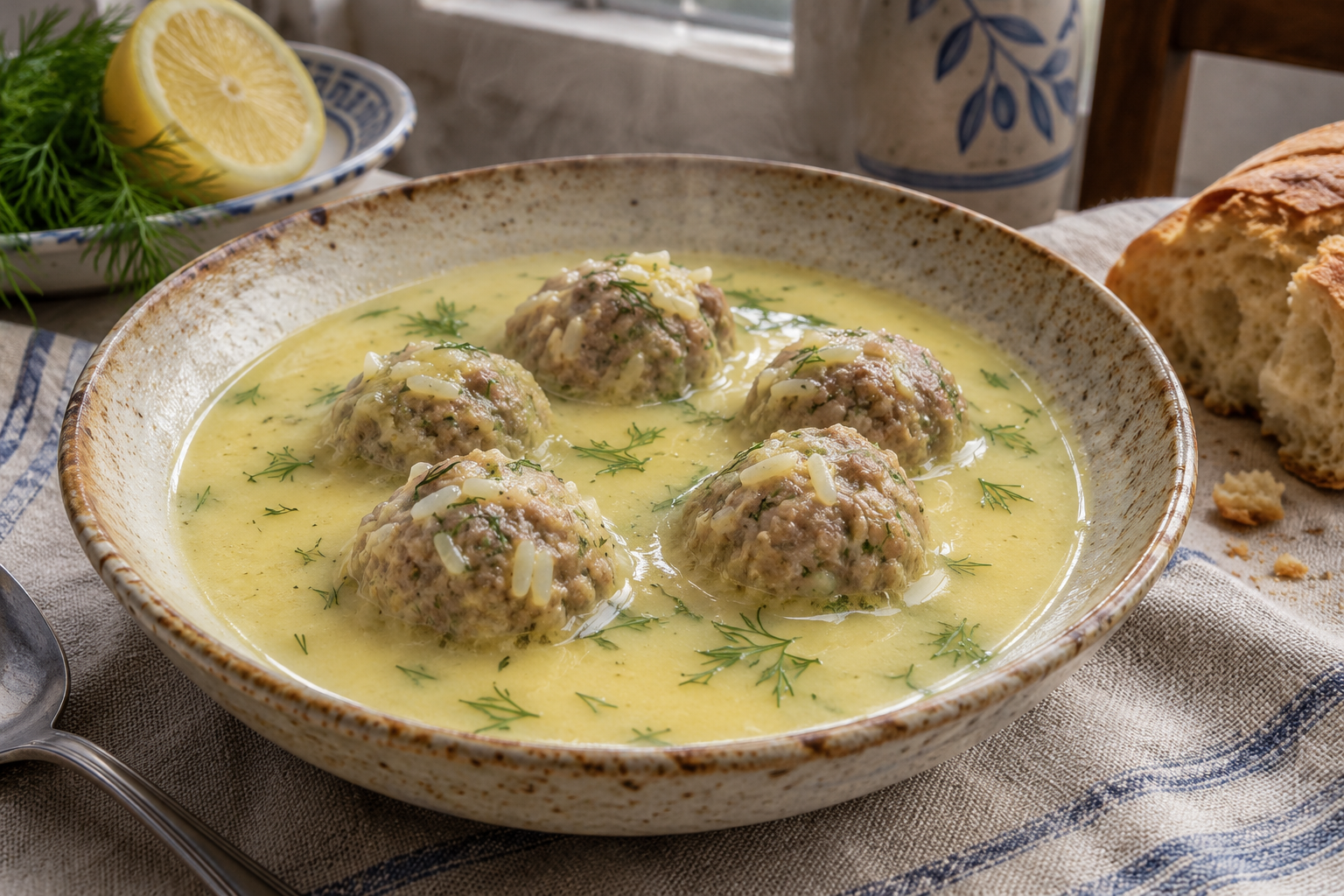
This makes a pot of giouvarlakia for a family, tender rice studded meatballs poached in broth and finished with silky egg lemon avgolemono. The two keys are the rice inside the meatball rule and gentle tempering of the avgolemono.
Ingredients: For the meatballs:
- 500 g minced beef (or a beef and pork mix)
- 100 g short or medium grain rice, raw
- 1 onion, finely grated or very finely chopped
- 1 egg
- A good handful of chopped parsley and mint or dill
- Salt and pepper
- A little flour for shaping For the soup:
- About 1.5 liters light stock or water
- 2 tablespoons olive oil
- 1 onion, finely chopped For the avgolemono:
- 2 eggs
- Juice of 1 to 2 lemons
Method:
- Make the meatballs: combine the minced meat, raw rice, grated onion, egg, herbs, salt, and pepper, and mix well. Following the rice inside the meatball rule, the rice goes in raw and mixed throughout. Shape into small meatballs, about walnut sized, dusting with a little flour.
- In a large pot, soften the chopped onion in the olive oil, then add the stock or water and bring to a gentle simmer. Season.
- Gently lower the meatballs into the simmering broth. Cover and simmer gently for about 40 to 45 minutes, until the meatballs are cooked through and the rice inside them is tender and swollen. Keep the simmer gentle so they hold together.
- Make the avgolemono: whisk the eggs well in a bowl, then whisk in the lemon juice. Slowly whisk in a ladleful of the hot broth, then another, tempering the eggs so they warm gradually without scrambling.
- Take the pot off the heat (or keep it on the very lowest heat), and slowly stir the tempered egg lemon mixture back into the soup, stirring gently until the broth turns silky and slightly thickened. Do not boil after adding the avgolemono, or it will curdle.
- Taste, adjust salt and lemon, and serve hot in bowls, with crusty bread.
A note: the gentle simmer for the meatballs and the careful tempering of the avgolemono are the two things to get right; both reward patience and punish haste, so keep the heat low at both stages.

About the Author: Ruben, co-founder of Gamintraveler.com since 2014, is a seasoned traveler from Spain who has explored over 100 countries since 2009. Known for his extensive travel adventures across South America, Europe, the US, Australia, New Zealand, Asia, and Africa, Ruben combines his passion for adventurous yet sustainable living with his love for cycling, highlighted by his remarkable 5-month bicycle journey from Spain to Norway. He currently resides in Spain, where he continues sharing his travel experiences with his partner, Rachel, and their son, Han.