
There is a dessert in Italy so simple it barely counts as a recipe, just two ingredients, and yet Americans manage to get it wrong more often than not. It is affogato, which means drowned, and it is nothing more than a scoop of cold vanilla gelato with a shot of hot espresso poured over it at the table, the espresso drowning the gelato in a rush of hot coffee and melting cream. That is the entire thing, two ingredients, thirty seconds, and it is one of the most perfect desserts in the world, the hot and the cold, the bitter and the sweet, the coffee and the cream, all in one small glass.
The trouble is that outside Italy, and especially in America, affogato gets dressed up, diluted, confused with a coffee drink, and generally fussed into something it should not be, when the whole genius of it is its two ingredient simplicity and the ritual of the hot espresso hitting the cold gelato. This piece looks at what affogato really is, the espresso rule that is the heart of it, the ways Americans get it wrong, where it sits in Italian life, and how to make it properly, before giving you the method. Because the simplest dessert is the easiest to ruin and the easiest to perfect.
What Affogato Really Is
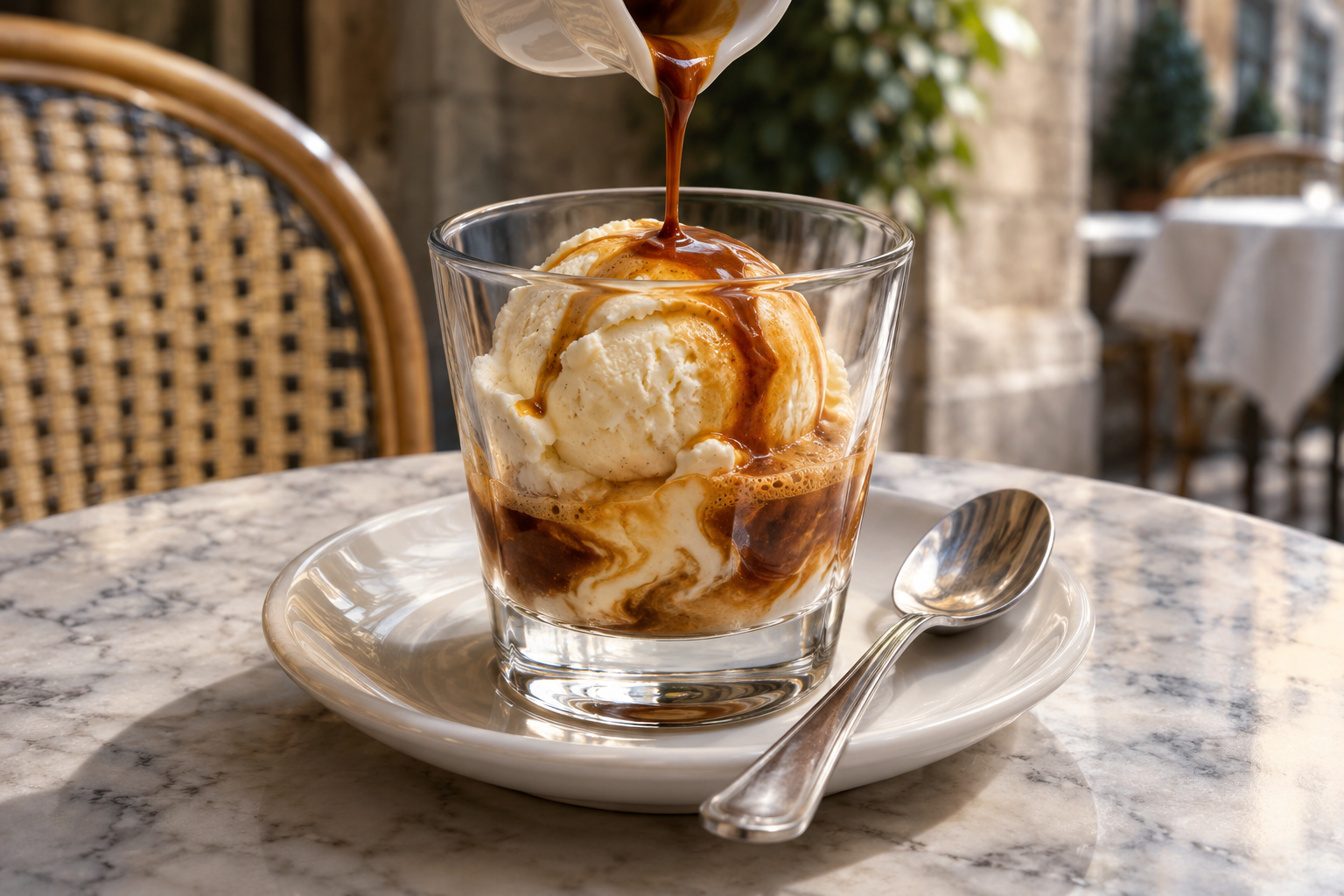
Affogato, in full affogato al caffe, meaning drowned in coffee, is an Italian dessert consisting of a scoop of vanilla gelato or ice cream with a shot of hot espresso poured over it. That is the whole dessert: cold gelato in a small glass or cup, a freshly pulled shot of hot espresso poured over the top at the moment of serving, and nothing else required. The name says it all, the gelato is drowned, affogato, in the espresso, and the eating of it is the pleasure of the hot coffee melting into the cold cream.
The magic is in the contrast and the transformation. The hot espresso hits the cold gelato and begins to melt it, so that as you eat, the dessert goes from distinct layers of hot bitter coffee and cold sweet cream to a swirled, half melted, warm and cold, bitter and sweet mixture, and finally to a glass of coffee enriched with melted gelato to drink at the end. It is a dessert that changes in the glass, evolving as you eat it, and that dynamic quality, from the first hot and cold spoonful to the last creamy sip, is central to its appeal. Two ingredients, endlessly satisfying.
It is also, crucially, a dessert, not a coffee, which is a distinction that matters for understanding it. Affogato is eaten after a meal as a sweet, served in a small glass with a spoon, the gelato the main event and the espresso the dramatic topping, and it sits in the dessert category even though it contains coffee. It is Italy’s answer to wanting both a coffee and a dessert at the end of a meal, combining them into one perfect small thing, and it is beloved precisely for that elegant two in one simplicity. Affogato is the dessert that is also your coffee, and it is sublime.
The Espresso Rule
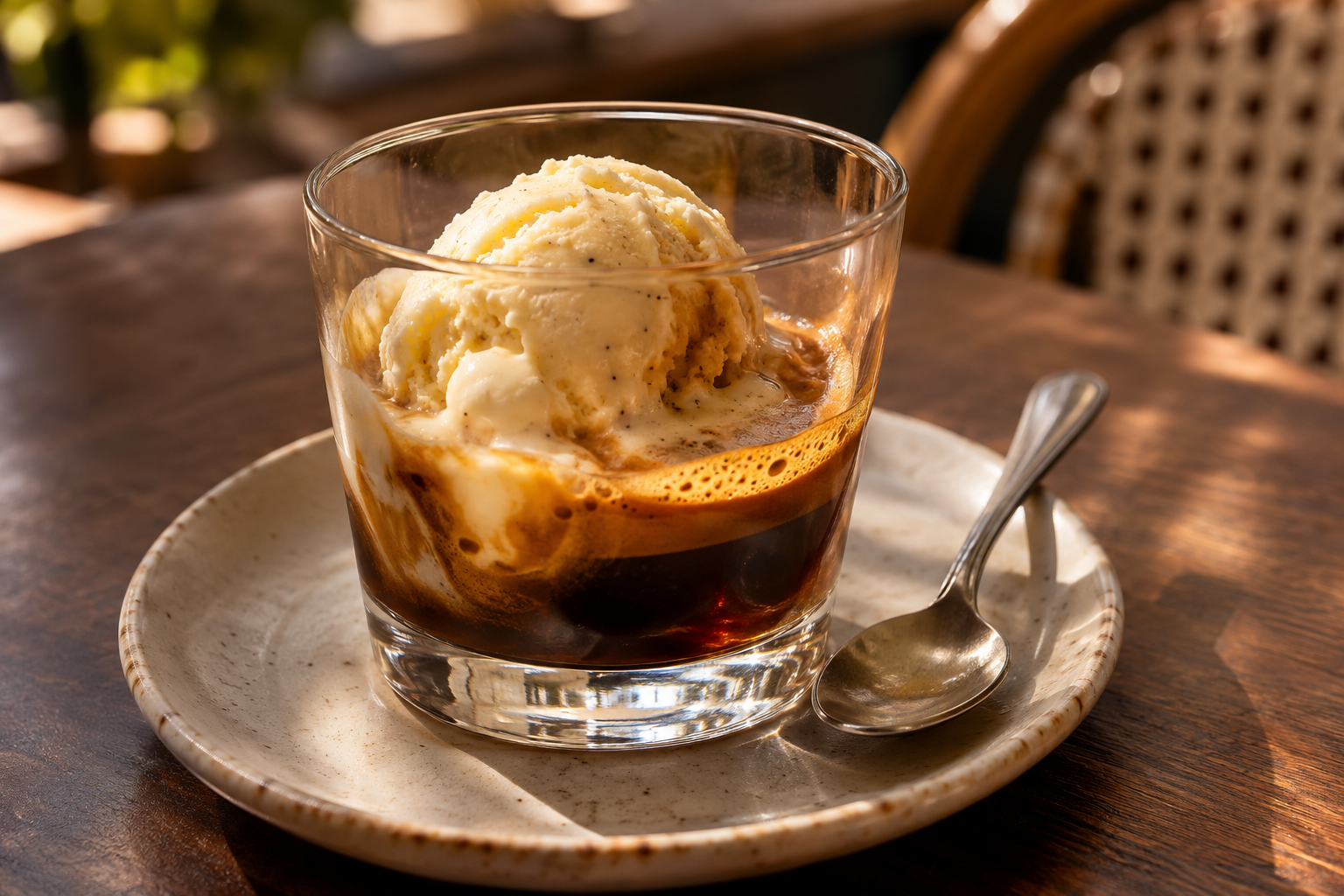
The heart of a proper affogato, and the thing most often gotten wrong, is the espresso, and the espresso rule is simple but non negotiable: it must be a real, hot shot of proper espresso, poured over the cold gelato at the moment of serving and eaten at once. Everything about the dessert depends on this, the heat of the espresso to melt the gelato, the intensity of real espresso to balance the sweet cream, and the immediacy of pouring and eating so the hot and cold contrast is at its height. Get the espresso right, and the affogato is perfect; get it wrong, and the whole thing collapses.
Each element of the rule matters. The coffee must be espresso, a short, strong, concentrated shot, not drip coffee or a weak brew, because only espresso has the intensity to stand up to the gelato and the small volume not to drown it into mere coffee soup. It must be hot, freshly pulled, because the heat is what melts the gelato and creates the contrast; espresso gone cold makes a sad, flat affogato. And it must be poured over at the table and eaten immediately, because the dessert is at its best in the first moments when hot and cold meet, and waiting lets it melt into uniform lukewarm sludge.
So the espresso rule is really about respecting the simplicity and the timing: real espresso, hot, poured over at the last second, eaten straight away. This is why affogato is best made and served fresh, not assembled in advance, and why the pouring is often done at the table as a small ritual, the hot coffee cascading over the pale gelato to appreciative eyes. The two ingredients give you nowhere to hide, so the quality of the espresso and the timing of the pour are everything. Honor the espresso rule and two ingredients become a perfect dessert; break it and you have a melted mess or a weak coffee.
How Americans Get It Wrong
Given its simplicity, it is almost impressive how many ways affogato gets mangled outside Italy, and American versions in particular tend to go astray in predictable directions. The most common error is treating it as a coffee drink rather than a dessert, serving it in a large cup with a lot of coffee and a little ice cream, so it becomes essentially an iced latte rather than the dessert of gelato crowned with a single shot. The balance tips the wrong way, coffee dominating cream, when affogato should be gelato first, espresso second.
Another frequent error is the coffee itself, using drip coffee, a large weak brew, or even cold coffee in place of a hot espresso shot, which destroys the intensity and the hot cold contrast that define the dessert. A pool of weak American drip coffee over ice cream is not an affogato; it is ice cream drowned in dishwater, lacking the concentrated punch of real espresso that makes the dessert sing. The espresso is not optional or substitutable, and using anything less is the surest way to get it wrong.
Then there is the fussing: the additions of whipped cream, syrups, sprinkles, liqueurs, biscuits, and assorted toppings that pile onto American versions, burying the elegant two ingredient simplicity under embellishment. While a few traditional touches exist in Italy, a small biscuit on the side, sometimes a splash of liqueur for an adult version, the essence is two ingredients, and the American instinct to dress it up works directly against what makes it good. The dessert is perfect because it is simple, so the way to get it wrong is to complicate it, which is exactly what tends to happen. The fix for all these errors is the same: respect the two ingredients and the espresso rule.
Where It Sits in Italian Life
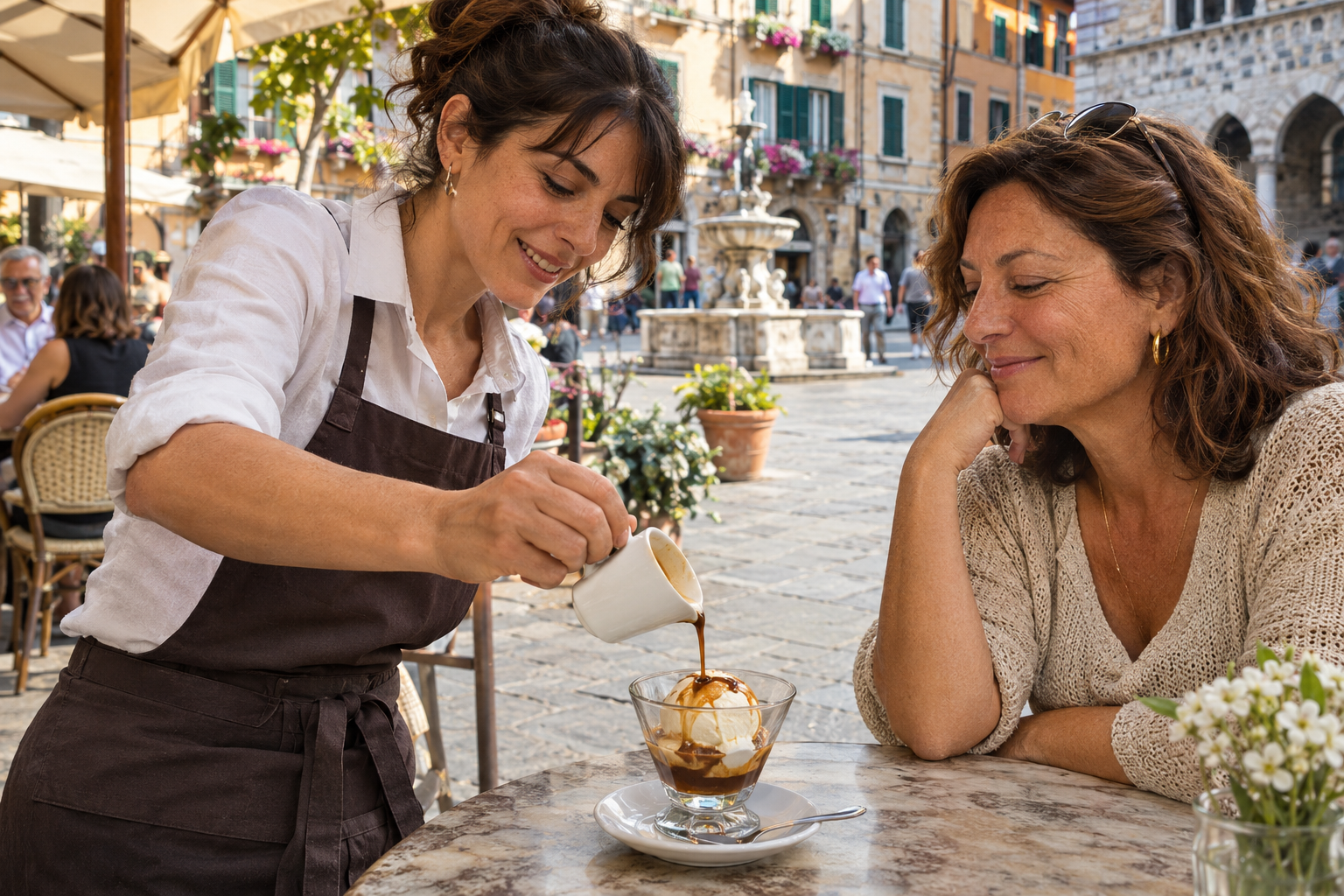
Affogato occupies a lovely niche in Italian eating, and understanding where it fits helps you appreciate and serve it properly. It is above all an end of meal pleasure, served after lunch or dinner as a dessert that doubles as the coffee, so that instead of a dessert and then a coffee, you have the two combined in one small elegant glass. For Italians who want to round off a meal with something sweet and also want their coffee, affogato is the perfect answer, efficient and delicious at once.
It is also a creature of cafes and gelaterias, ordered as a treat on a warm afternoon or after a meal out, where the gelateria’s good gelato meets the cafe’s good espresso in a dessert that showcases both. Its simplicity makes it a showcase for quality, since with only two ingredients the gelato and the espresso must each be good, so a well made affogato is a small celebration of Italian gelato and Italian coffee together. It is the kind of thing Italians order without ceremony but make properly, an everyday perfection.
Its simplicity also makes it a staple of the home, the easiest possible dessert to offer guests, requiring only good gelato in the freezer and an espresso machine or moka pot, assembled in seconds at the table. This effortlessness, a genuinely impressive dessert that takes thirty seconds and two ingredients, is part of why it is so beloved and so useful, the perfect answer to wanting to end a meal well without any work. Affogato sits in Italian life as the simplest of pleasures, the dessert coffee that anyone can make and everyone enjoys, and that is exactly the spirit in which to serve it. It asks nothing and gives everything.
It is worth adding that affogato is, quietly, one of the most adaptable desserts in the Italian repertoire, even within its strict simplicity. The gelato is traditionally vanilla, but other flavors work beautifully under the espresso, from hazelnut to chocolate to coffee itself, and the dessert takes equally to a summer afternoon and a winter dinner, warm and cold at once in any season. That versatility, within the discipline of two ingredients, is part of why it never grows old, and why an Italian can eat it a hundred times and still be glad to see it arrive. The simplest dessert turns out to be the most endlessly welcome.
Make It: Affogato
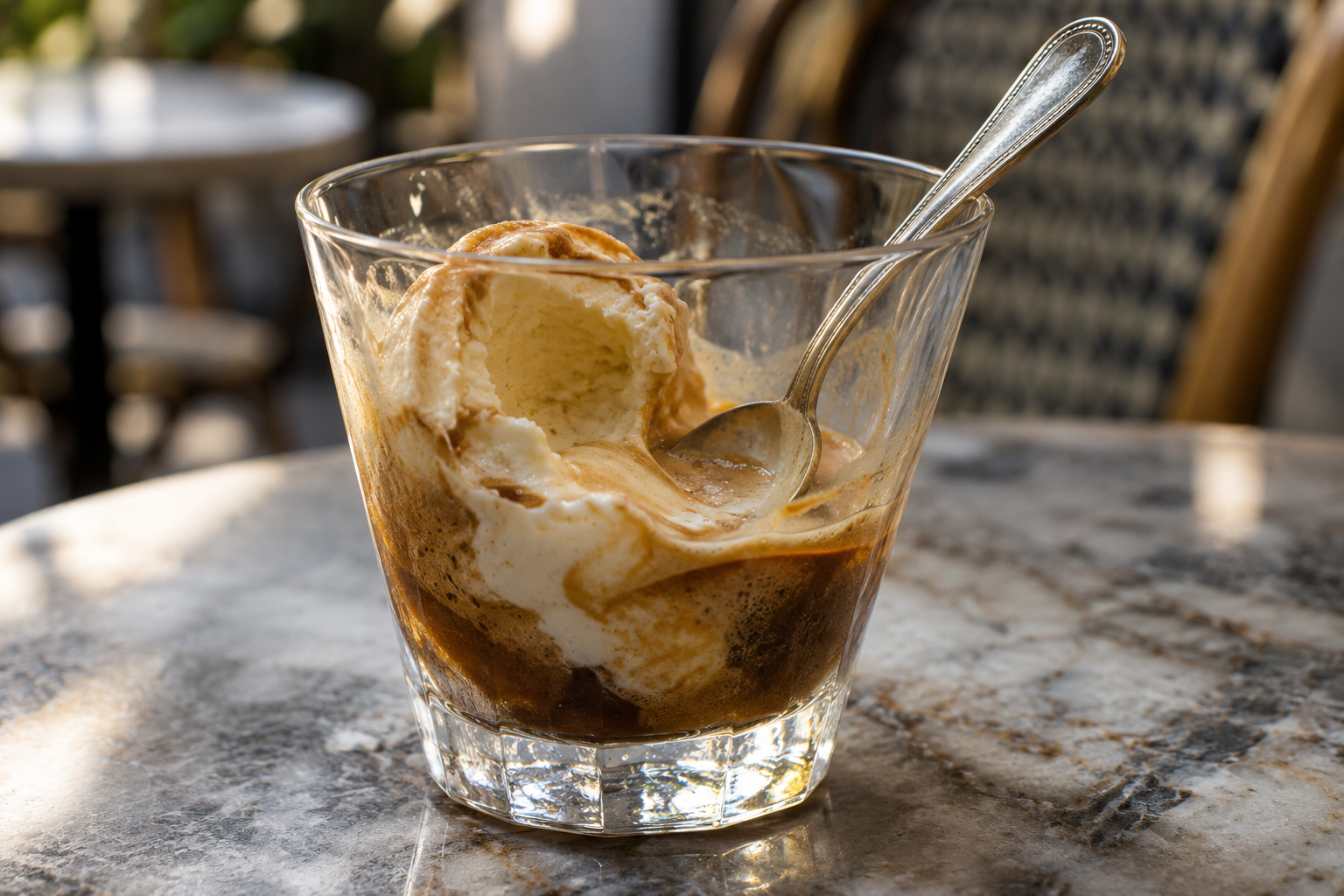
This is barely a recipe, which is the point: two ingredients, thirty seconds, one perfect dessert. The whole art is in the quality and the timing, per the espresso rule.
Ingredients, per serving:
- 1 generous scoop of good vanilla gelato (or quality vanilla ice cream)
- 1 shot of hot espresso (about 30 ml), freshly made
Optional, traditional touches only:
- A small plain biscuit (such as a cantuccini or amaretti) on the side
- For an adult version, a small splash of liqueur (such as amaretto, Frangelico, or coffee liqueur) over the gelato before the espresso
Method:
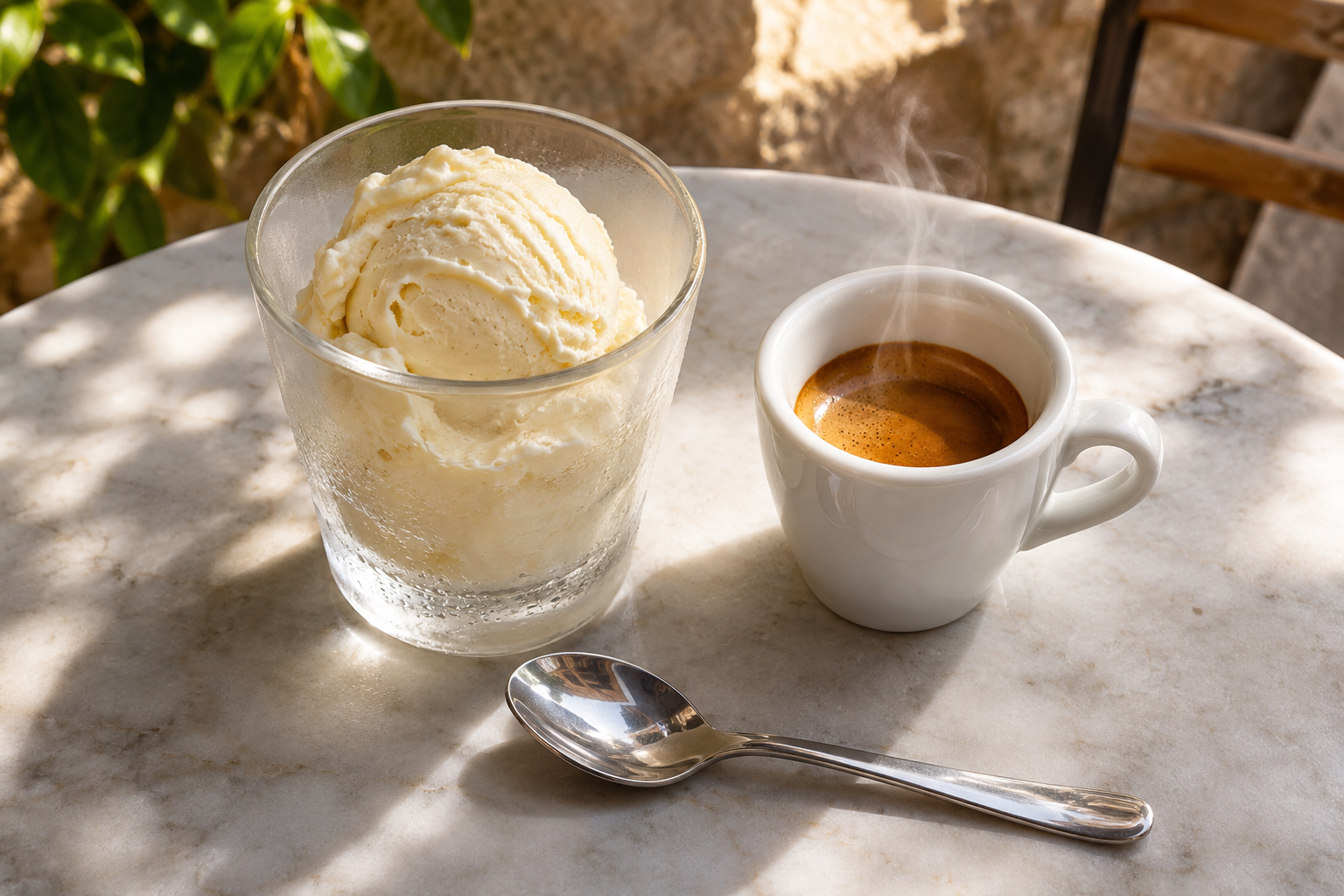
- Chill a small glass or cup if you can, and have the gelato ready in the freezer and the espresso ready to make.
- Place one generous scoop of cold gelato in the glass.
- Make a fresh, hot shot of espresso, using an espresso machine or a stovetop moka pot (if using a moka, use the strong concentrated first pour).
- Immediately pour the hot espresso over the gelato at the table, drowning it, and serve at once with a spoon.
- Eat straight away, enjoying the hot and cold contrast first, then the melting swirl, and finally sipping the coffee and melted cream at the bottom.
That is all. Do not add whipped cream, syrups, or a flood of weak coffee; respect the two ingredients and the espresso rule, and the affogato will be perfect. If serving several, make the espressos fresh and pour at the table one by one, because affogato waits for no one.

About the Author: Ruben, co-founder of Gamintraveler.com since 2014, is a seasoned traveler from Spain who has explored over 100 countries since 2009. Known for his extensive travel adventures across South America, Europe, the US, Australia, New Zealand, Asia, and Africa, Ruben combines his passion for adventurous yet sustainable living with his love for cycling, highlighted by his remarkable 5-month bicycle journey from Spain to Norway. He currently resides in Spain, where he continues sharing his travel experiences with his partner, Rachel, and their son, Han.