
If becoming a Spanish citizen is somewhere on your horizon, one proposal in this Sunday’s election deserves your attention more than most. The Partido Popular, which has led the final polls, has proposed raising the Spanish language level required for nationality from A2, the basic level required today, to B2, which is upper-intermediate. For a native English speaker who moved to Spain in their forties or fifties, that is a meaningful jump. For someone who arrived at 60 and is starting Spanish more or less from scratch, it can be the difference between a reachable goal and a daunting one.
This piece explains what the current rule actually is, what the difference between A2 and B2 really means in plain terms, why that gap is so much larger for an older learner than the single letter suggests, and where the proposal stands in the election. It also covers how the exams work and roughly when they run in 2027, so you can plan around them. This is general information, not legal or immigration advice, and the B2 idea is a campaign proposal, not a law, so nothing here is settled.
The Rule As It Stands Today
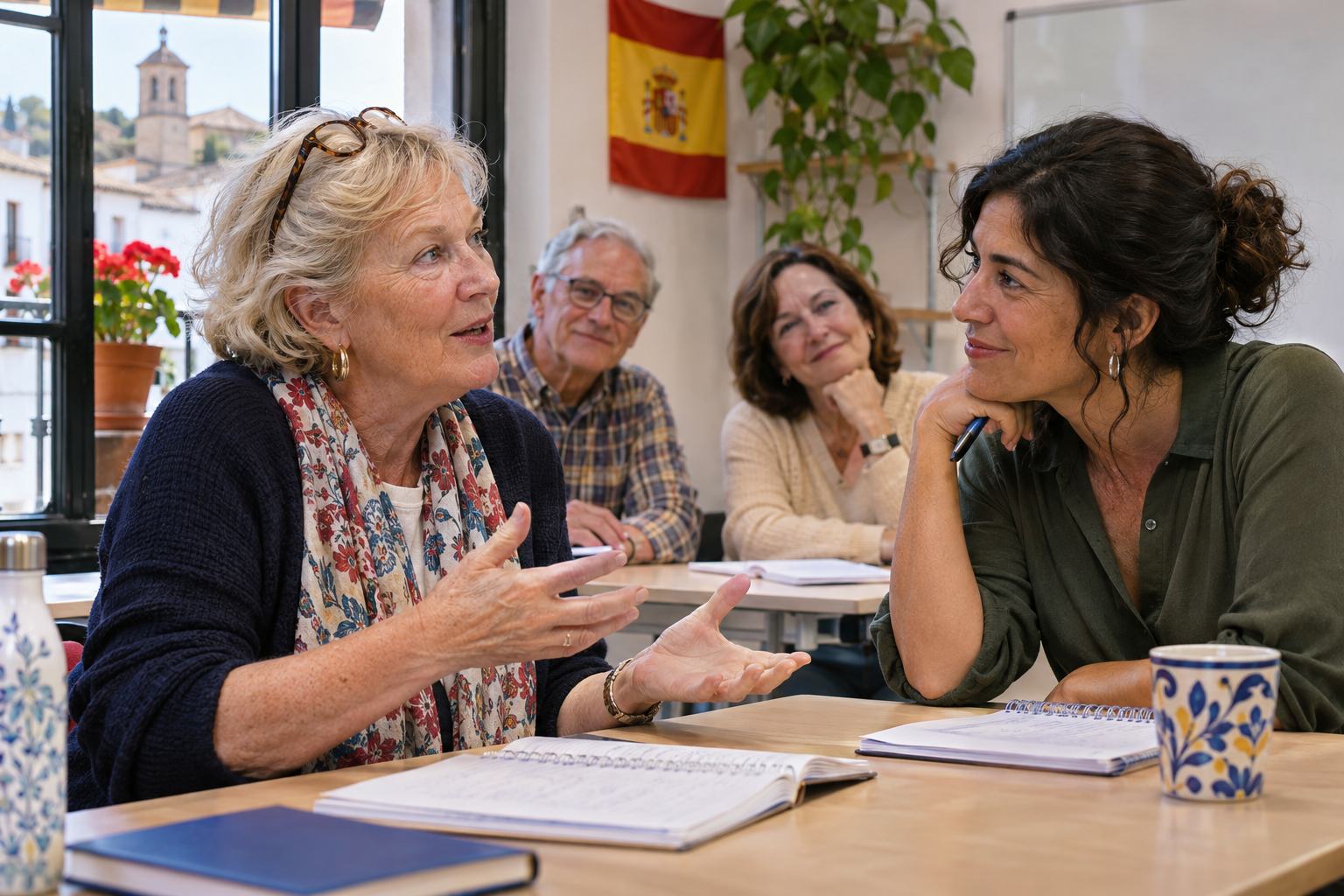
To become a Spanish citizen by residence, you currently have to clear several hurdles, and two of them are exams administered by the Instituto Cervantes. The first is the DELE at A2 level, a diploma in Spanish as a foreign language, and the second is the CCSE, a short multiple-choice test on the Spanish constitution and on the country’s culture and society. Pass both, meet the residence requirement, and the language-and-knowledge part of your application is satisfied.
The residence requirement itself is the bigger gate for most Americans, because nationality by residence generally asks for ten years of legal residence in Spain before you can even apply. There are shorter paths for certain groups, such as two years for citizens of Ibero-American countries, but for a US passport holder the ten-year clock is the usual reality. That matters for how you should read the B2 proposal, because it means the test is a milestone you reach years into your Spanish life, not a barrier at the door.
It is also worth knowing that Spain generally requires applicants to renounce their previous nationality when they naturalize, with exceptions for Ibero-American and a few other countries. In practice this is a declaration made before a Spanish official, and the United States does not treat it as automatically ending US citizenship, but it is a real step that catches Americans by surprise. None of that changes with the election, but it belongs in the picture when you weigh whether Spanish citizenship is a goal worth the study.
What A2 Actually Is
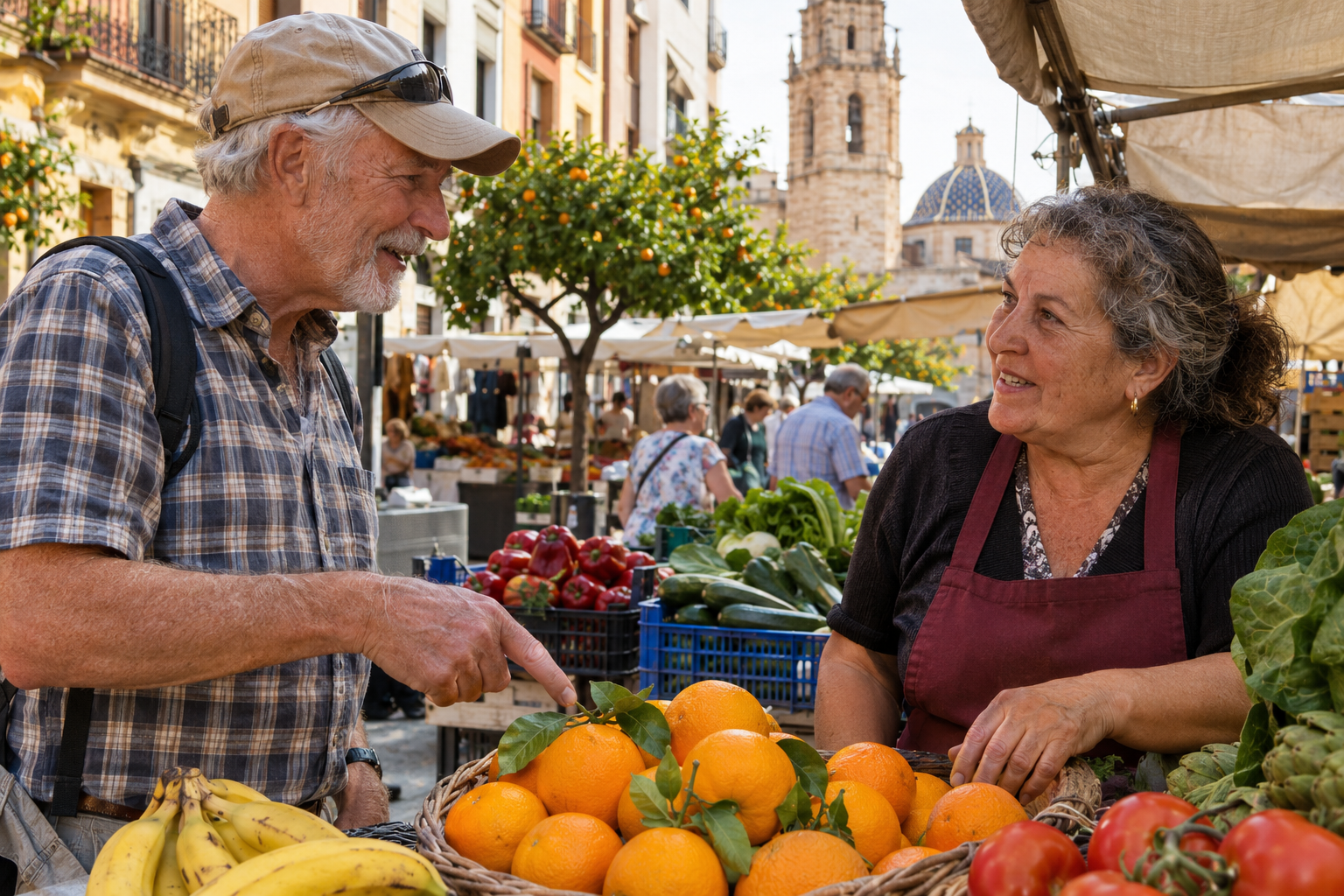
A2 sits near the bottom of the Common European Framework, the six-level scale that runs A1, A2, B1, B2, C1, C2. At A2 you can understand and use everyday expressions, introduce yourself, handle simple transactions in shops and offices, and describe in basic terms your background and immediate needs. It is the Spanish of getting by: ordering, asking directions, filling in a form, a short exchange with a neighbor.
For the nationality exam, A2 is a deliberately modest bar, and that is the point of it. The idea behind the current requirement is that a new citizen should be able to function in Spanish in daily life, not that they should be able to debate politics or read a novel. Many retirees reach A2 with a year or two of classes and consistent practice, and plenty of people who are far from fluent pass it comfortably with focused preparation for the specific exam.
That accessibility is exactly why A2 has been the standard, and why the proposal to change it is significant. A2 is within reach of an ordinary adult learner putting in steady, unhurried effort, which fits a country that has made naturalization a realistic goal for long-term residents. Whether that should be the bar is precisely the question the parties disagree on.
What B2 Actually Is
B2 is three rungs up the ladder from A2, and the gap is far wider than the two letters suggest. At B2 you can understand the main ideas of complex text, follow a lively conversation between native speakers, read a newspaper article and grasp the argument, express yourself fluently enough to hold your own, and write clear, detailed text on a range of subjects. It is the level at which you stop merely surviving in a language and start genuinely living in it.
To put it concretely, B2 is roughly the level many universities ask of foreign students to study in a language, and it is commonly estimated to take several hundred hours of cumulative study to reach, a great deal more than A2. The B2 version of the DELE includes demanding reading and listening sections, a written paper, and a spoken exam in which you have to sustain and defend a point of view. For a confident younger learner immersed in Spanish life it is achievable with work, but it is a serious undertaking, not a formality.
The PP has framed the higher bar as ensuring that new citizens are genuinely integrated, able to participate fully in Spanish civic and cultural life, and paired it with a strengthened knowledge test. Supporters argue that citizenship should reflect a real command of the language. Critics counter that B2 would put nationality out of reach for many long-settled residents, including older people and those without the time or schooling to reach an academic level of Spanish, and that integration does not require the ability to parse a leading article. Both arguments are part of the debate, and the election will decide which view prevails.
Why the Jump Is So Big for a Retiree Who Arrived at 60
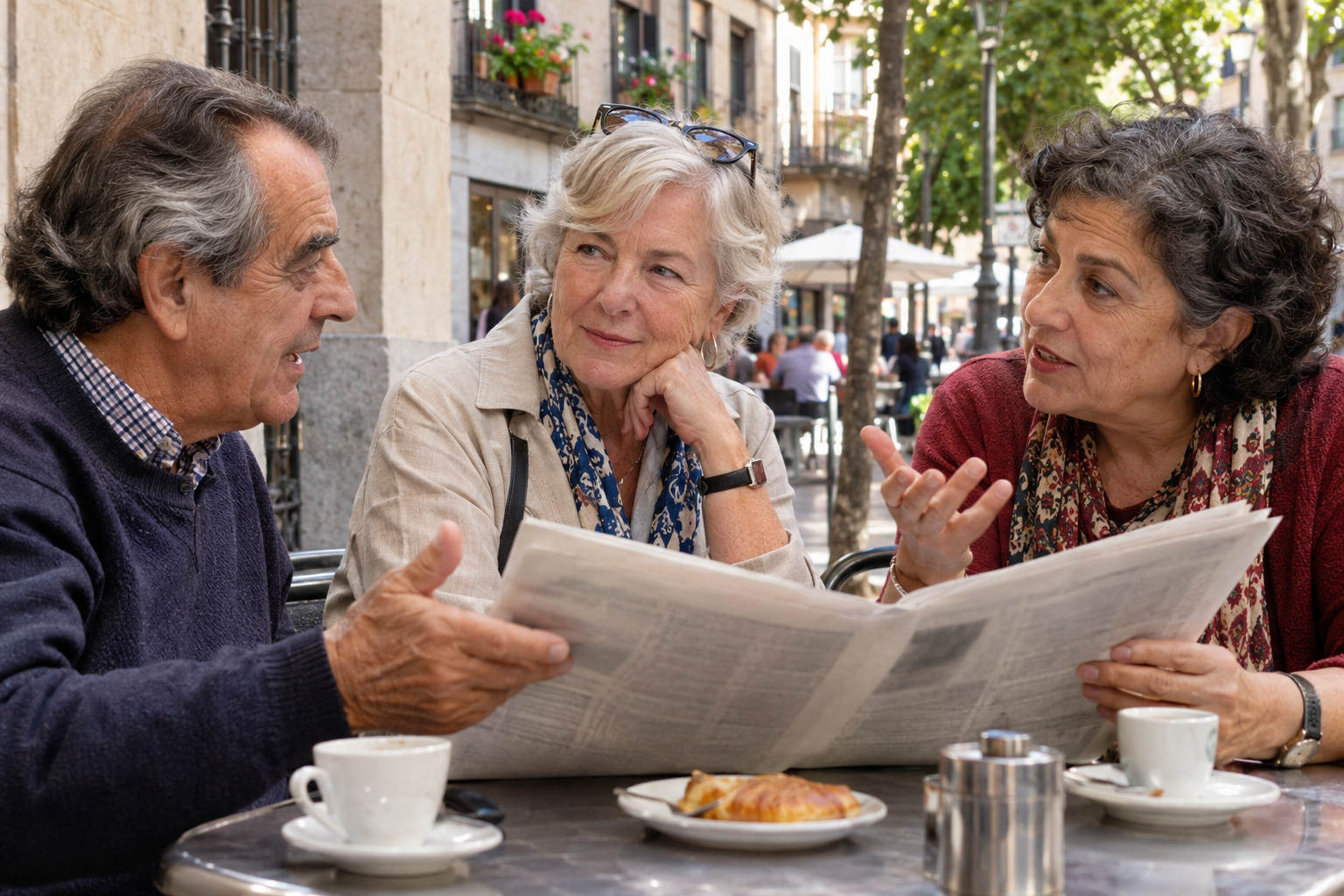
The single most important thing to understand about the A2-to-B2 proposal is that the difficulty does not rise in a straight line, and it rises most steeply for exactly the person this headline is about: someone who took up Spanish later in life. Adults who begin a new language in their sixties can absolutely learn it, and many do well, but the research and the lived experience both suggest it tends to take longer, especially for the fast listening and spontaneous speaking that B2 demands. A2 rewards diligence; B2 rewards diligence plus time plus a degree of immersion that not every retiree has.
Consider the realistic arithmetic. A retiree who arrived at 60 and wants citizenship by residence is looking at that ten-year clock, so they might sit the exam around 70. Reaching A2 by then is a reasonable goal for most people who put in the work.
Reaching B2 by then, starting from little or no Spanish, is a far heavier lift, one that could mean years of structured classes rather than a casual course, and for some it would move citizenship from achievable to effectively out of reach. That is the human stakes behind the letters.
This is not a reason to be discouraged if citizenship matters to you, but it is a reason to be clear-eyed. If the bar does rise, the people most affected are precisely later-life arrivals, and the sensible response is to start early and build steadily rather than to assume you can cram the gap at the end. Language at this level is a marathon, and the proposal, if it passes, would lengthen the course considerably for older learners.
Where the Proposal Stands, and Whether It Will Happen
It is essential to keep this in proportion: raising the citizenship language level is a Partido Popular campaign proposal, not current law and not a done deal. For it to take effect, a PP-led government would first have to form after Sunday, and then the change would have to be enacted, which for something embedded in the nationality framework means a legislative or regulatory process, not a stroke of the pen. The left bloc has not proposed raising the level and would keep the current A2 standard.
Even if the proposal advances, a few things are worth holding onto. Changes of this kind are not generally retroactive, so an application already submitted, or a process already underway, would ordinarily be judged under the rules in force at the time, though the details of any transition would depend on how the law was written. And because the residence requirement is ten years for most Americans, the test is a distant milestone for recent arrivals, which buys time to prepare whatever the level turns out to be.
So the honest status is: a real proposal, from the party that led the polls, that would materially raise the bar, but one that still has to clear an election and a legislative process before it touches anyone. Watch what the new government actually drafts rather than what the campaign promised, and do not let a proposal that may not pass derail a plan that, at A2, remains entirely realistic today.
The Exams and Their 2027 Dates

Whatever the level ends up being, it helps to know how the exams run, because they are scheduled affairs you have to plan around. The CCSE knowledge test is held frequently through the year, with the Instituto Cervantes scheduling on the order of ten sessions in 2027, running from January through November, with no sittings in August or December. Registration for the 2027 sessions opened in late November 2026, so the calendar is already live, and you book a specific session in advance.
The DELE language exam runs on its own separate calendar, with a handful of dates spread across the year rather than monthly sittings, and it requires booking well ahead because places and preparation both take time. The two exams are independent, with their own registration and their own rules, so being exempt from or having passed one does not cover the other. For the exact 2027 dates, the authoritative source is the Instituto Cervantes, and you should check its calendar directly rather than rely on a date seen secondhand, since sittings and appointment windows vary by exam center.
One useful exemption to know: applicants who are nationals of countries where Spanish is an official language are generally exempt from the DELE language exam, since they are already native speakers, though they still take the CCSE. For an American, that exemption does not apply, so the language exam, at whatever level the law sets, is the part to plan your study around. Book early, prepare for the specific format, and treat the exam calendar as a fixed point you build your timeline toward.
What a Retiree Should Do Now
The practical advice does not really change with the election, which is reassuring. If Spanish citizenship is a goal, start learning Spanish now, steadily and seriously, because time is the one resource that helps at every level and the one you cannot buy back later. Reaching A2 is the current requirement and remains a sound first target; building beyond it toward B1 and B2 is valuable in its own right for your life in Spain, and it hedges against the bar rising.
Treat the exams as projects with lead time. Look at the Instituto Cervantes calendar, pick a realistic sitting, and prepare for the exact format of the CCSE and the DELE, both of which reward specific practice as much as general fluency. If citizenship is a firm plan rather than a vague hope, it is worth a conversation with an immigration lawyer or gestor who handles nationality files, both to confirm your residence timeline and to track how any change to the language requirement is actually drafted.
There is also a quiet upside to aiming high regardless of the law. The real reward of reaching B2 is not the certificate but the life it unlocks: the ability to argue with your doctor, follow a town meeting, read the paper, and make Spanish friends on equal terms rather than through English. For a retiree who arrived at 60, that fluency is worth far more than a passport line, and pursuing it means that whatever the exam eventually demands, your Spanish will have outgrown it. The citizenship test is a reason to study, but the better life in Spanish is the real one, and it pays off at every level long before any exam.
Above all, keep perspective. Today the bar is A2, it is reachable, and the test sits years down most people’s residence clock. A higher bar is a possibility the election could bring, not a reality it has delivered, and the best preparation for either outcome is the same: learn the language now, in earnest, and let your Spanish outgrow whatever the exam eventually asks.
The Bottom Line
The citizenship language test is one of the clearest things this Sunday’s election could change for foreigners, with the Partido Popular proposing to raise it from today’s A2 to B2, a jump of three CEFR levels that is far larger in practice than it looks on paper. A2 is basic, get-by Spanish that most diligent learners can reach; B2 is upper-intermediate, the level at which you argue, read the paper, and converse at speed, and it typically takes far more time to reach.
That extra time is exactly what weighs heaviest on a retiree who arrived at 60, for whom B2 by the time the ten-year residence clock runs out could move citizenship from achievable to out of reach. But the higher bar is a campaign proposal, not law, it would require a new government and a legislative process, and it would not generally undo an application already in train.
So learn Spanish now, aim past A2 for your own sake as much as the exam’s, book the CCSE and DELE early off the Instituto Cervantes calendar, and get tailored advice if citizenship is a firm plan. The level may change; the wisdom of starting early does not, and every hour of Spanish you bank now counts whether the bar ends up at A2 or B2. The one thing no election can take away is the Spanish you have already learned, so the surest hedge against any rule change is simply to keep studying.

About the Author: Ruben, co-founder of Gamintraveler.com since 2014, is a seasoned traveler from Spain who has explored over 100 countries since 2009. Known for his extensive travel adventures across South America, Europe, the US, Australia, New Zealand, Asia, and Africa, Ruben combines his passion for adventurous yet sustainable living with his love for cycling, highlighted by his remarkable 5-month bicycle journey from Spain to Norway. He currently resides in Spain, where he continues sharing his travel experiences with his partner, Rachel, and their son, Han.