
Americans think of beef stew as an all-day affair, a heavy pot that goes into a low oven after breakfast and comes out at dinnertime, the big chunks of chuck needing hours of slow heat to finally surrender into tenderness. Italians make a beef stew too, and it is every bit as rich and comforting, but they do not spend the whole day on it, because their version, spezzatino, is typically done in about an hour. The secret is not a shortcut or a cheat, it is right there in the name, because spezzatino means little pieces, and the small size of the beef is exactly why it cooks so much faster than the American pot.
This makes spezzatino one of the great weeknight comfort dishes, a proper, soulful beef stew that fits inside an ordinary evening rather than requiring a free Sunday, and once you understand why it works you will wonder why American stew takes so long. It delivers all the things a beef stew should, tender meat in a deep savory sauce you want to mop with bread, from humble ingredients and a single pot, in a fraction of the time. Here is what spezzatino actually is, why the small pieces are the whole trick, the Italian flavors that set it apart, and how to make a pot of it yourself in an hour.
Little Pieces, Which Is the Whole Point
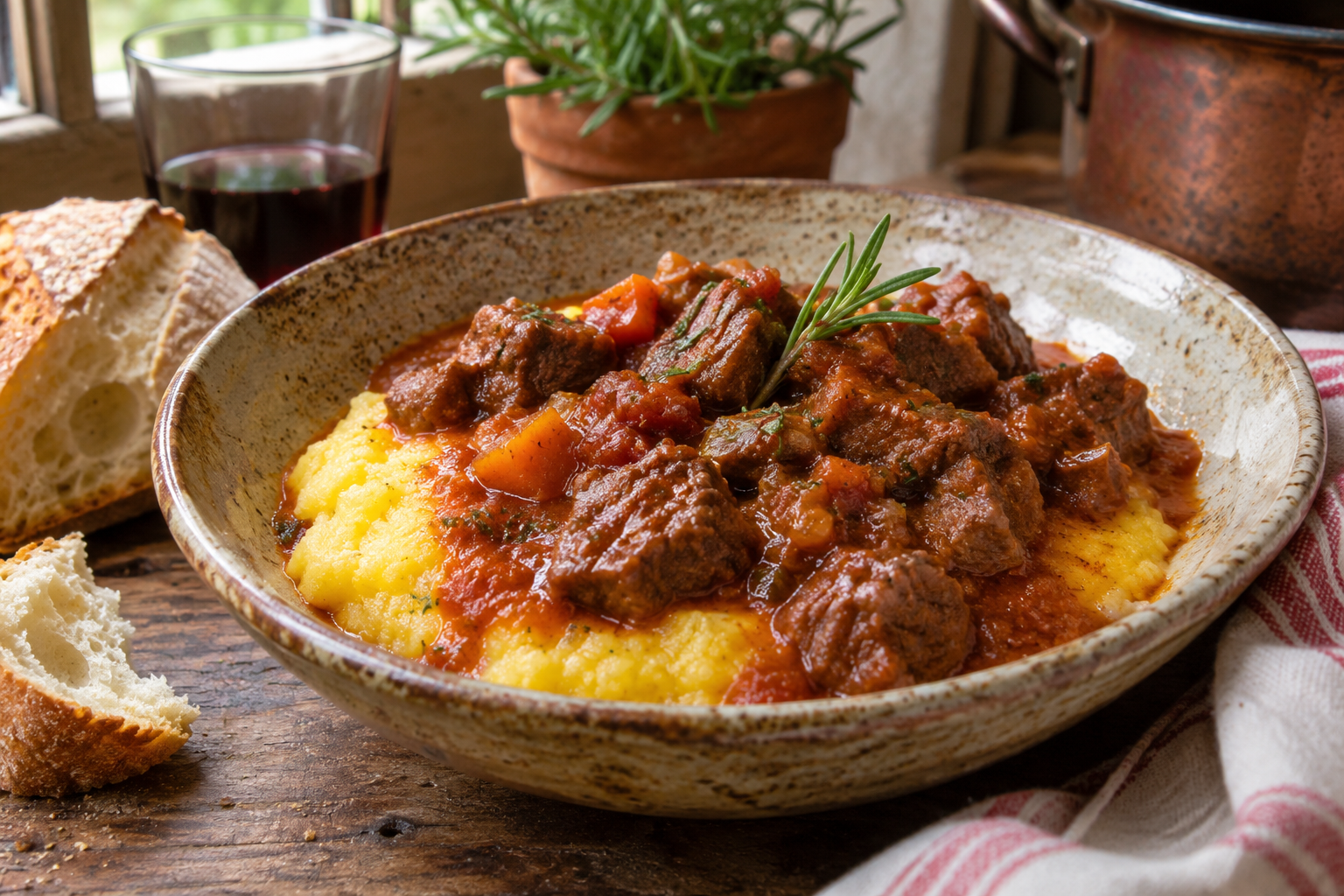
The word spezzatino comes from the Italian spezzare, to break into pieces, and it tells you the single most important thing about the dish: the beef is cut into small chunks, bite-sized, considerably smaller than the big hunks of meat an American stew uses. This is not an incidental detail or a stylistic choice, it is the engineering that makes the whole dish quick, and it is the thing to understand before anything else about spezzatino.
The reason small pieces matter so much is simple physics of cooking. A large chunk of stewing beef takes a long time to become tender because the heat and moisture have to work their way all the way to its center and break down the tough connective tissue throughout, which is why American stew simmers for hours. Smaller pieces have far more surface area and far less distance to the center, so they tenderize much faster, reaching that melting, fork-soft state in about an hour rather than three. By cutting the beef small, the Italian cook has done the thing that lets the stew be a weeknight dish instead of an all-day project.
It is worth being honest that tougher cuts and larger pieces do reward longer cooking with even greater tenderness, and a spezzatino left to simmer gently beyond the hour will only get more meltingly soft, so the hour is a floor rather than a rule. But the point stands that a properly made spezzatino, with the beef cut to the right small size, is genuinely tender and ready in about an hour, which is far faster than the American beef stew most people know. The small pieces are the difference between a stew you can make after work and one you can only make on a free day, and they are the heart of why spezzatino is so useful.
The Italian Flavors That Set It Apart

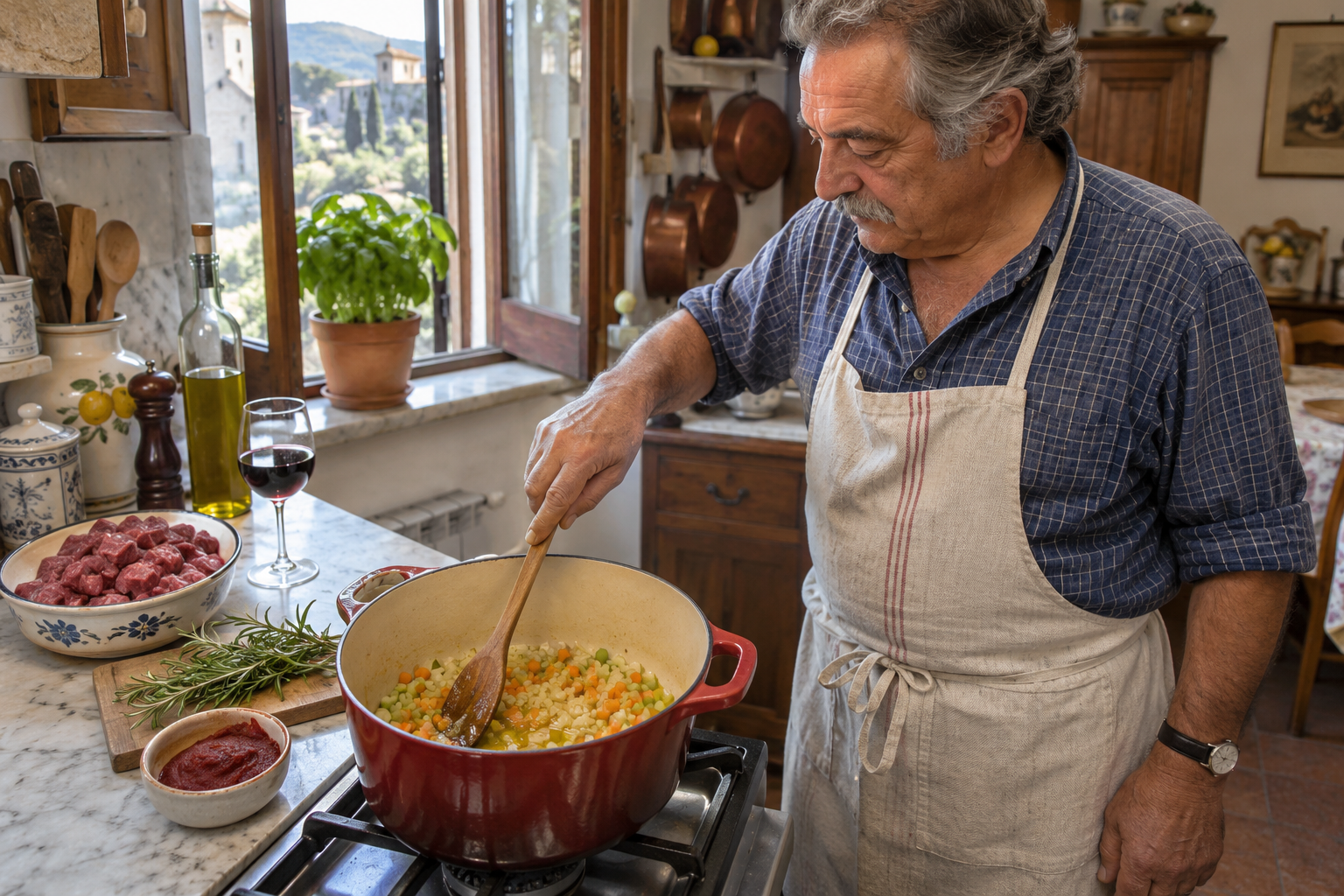
Beyond the speed, spezzatino tastes distinctly Italian, built on the aromatic foundations and ingredients of Italian cooking rather than the heavier, plainer profile of a classic American or British stew. It very often begins with a soffritto, the Italian base of finely chopped onion, carrot, and celery cooked gently in olive oil, the same foundation that underlies so much of Italian cooking, which builds a sweet savory depth before the meat and liquid ever go in. That soffritto is a big part of why the stew tastes the way it does.
From there the flavors are Mediterranean. There is usually tomato, as paste or chopped tomatoes, giving the sauce its color and a gentle acidity, and very often red wine, which the browned beef is simmered in along with broth, lending richness and complexity. The herbs are Italian too, rosemary, bay, sage, and sometimes garlic, infusing the sauce with the fragrance of an Italian kitchen rather than the thyme-and-bay profile of other stews. The result is a beef stew that is recognizably a cousin of the American one but unmistakably from a different country, brighter with tomato and wine and herb than its heavier relatives.
The serving is Italian as well, and part of the pleasure. Spezzatino is traditionally eaten with something to soak up its generous sauce, which might be polenta, the soft cornmeal that is a classic northern Italian partner for stews, or good crusty bread for mopping, or mashed potato, or even as a sauce for pasta in some homes. The dish is often made with potatoes cooked right in it, spezzatino con patate, which turns it into a complete one-pot meal, and peas or peppers are common additions too. However it is served, it is hearty, warming, comforting food, the Italian expression of the universal human desire for a bowl of tender beef in rich sauce on a cold evening.
A Weeknight Stew, Not a Weekend Project
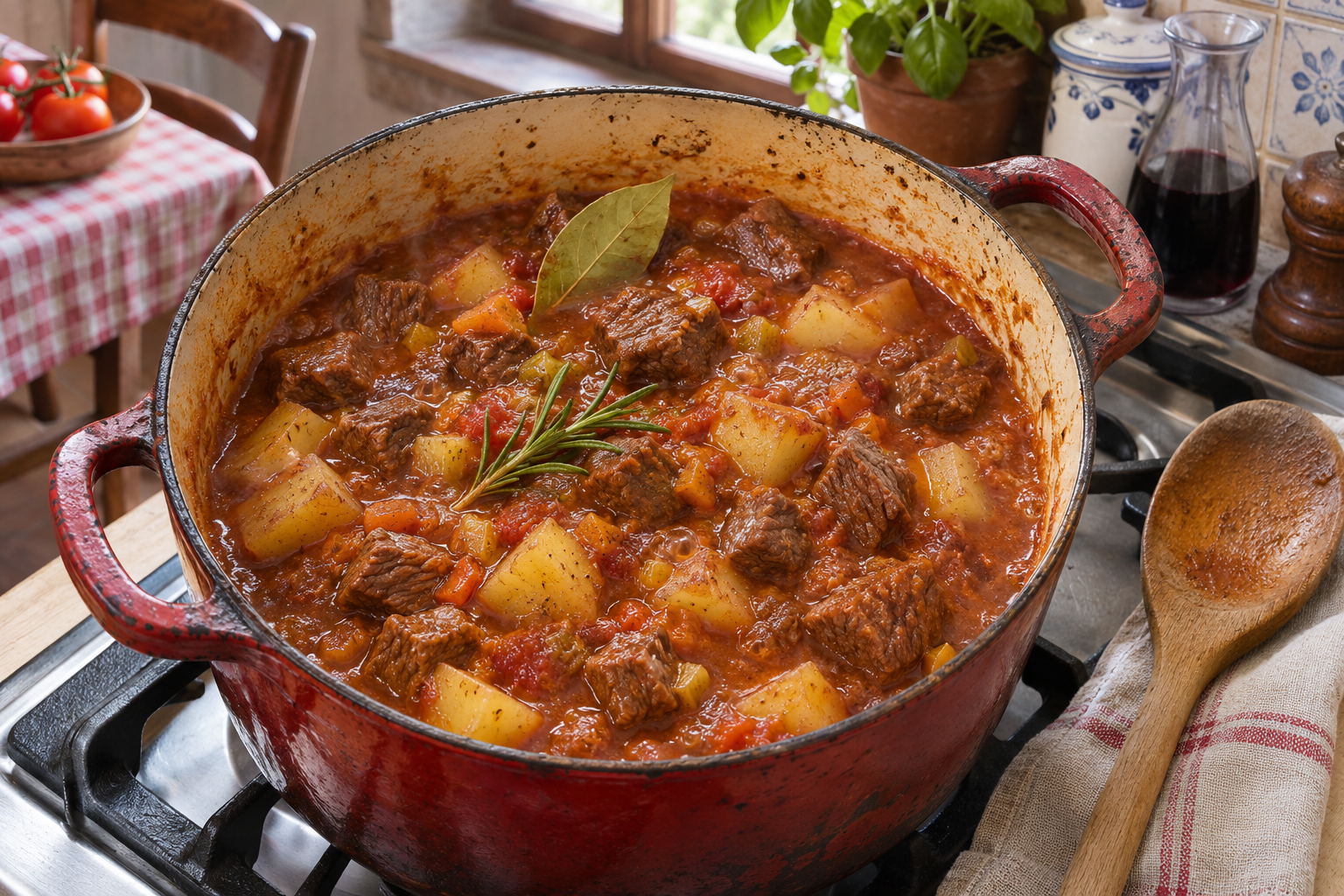
What all this adds up to is a reframing of what a beef stew can be, from a special occasion that demands a free day to an ordinary dinner that fits a weeknight, and that is genuinely useful to an American cook trained to think of stew as an all-day commitment. The spezzatino asks for the same basic moves as any stew, brown the meat, build a flavorful base, add liquid, and simmer, but because the beef is small it rewards you in about an hour, which changes entirely when you can make it.
This is the quiet lesson spezzatino offers beyond the specific recipe, that the length of a braise depends heavily on the size of what you are braising, and that cutting the meat small is a legitimate and traditional way to get stew tenderness on a weeknight timeline. It is not cutting corners or compromising, since Italians have made it this way for generations and consider it a proper dish, it is simply a different and faster approach to the same goal. An American who learns it gains a whole category of quick braised dinners, because the principle transfers to other meats and stews too.
So think of spezzatino as permission to have a real beef stew on a Tuesday, a deep, tender, satisfying pot of it, made from inexpensive stewing beef and pantry aromatics, ready inside an hour and better the next day if any survives. It carries all the comfort of the long American stew with none of the all-day demand, which is exactly the kind of practical, delicious, economical cooking that makes Italian home food so worth borrowing. The little pieces do the work, and the hour does the rest.
Which Cut of Beef
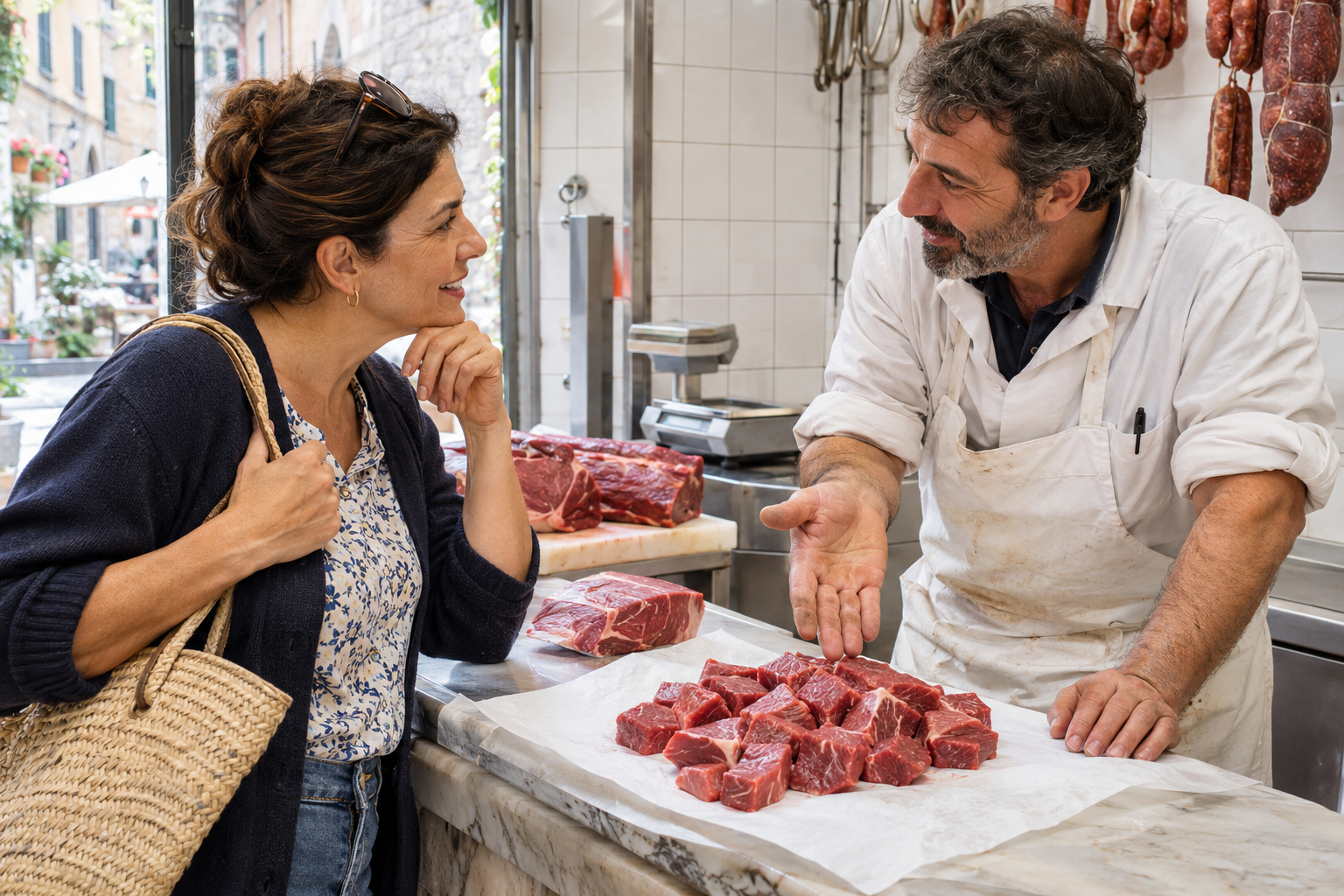
The cut matters, and the good news is that spezzatino is built on inexpensive stewing beef, the cheaper, tougher, more flavorful cuts rather than the expensive tender ones. Chuck, shoulder, and similar braising cuts are ideal, because they carry the connective tissue and fat that break down during cooking into richness and body, giving the stew its depth and the meat its eventual melting softness. A pricey tender steak would be wasted here and would not give the same result.
This is part of what makes spezzatino such economical food, since it turns the cheap cuts into something wonderful, which is exactly what good peasant cooking does. The combination of a humble cut and small pieces is the whole trick: the cheap beef provides the flavor and the connective tissue that becomes silkiness, and the small size lets it all happen in an hour instead of an afternoon. Ask the butcher for stewing beef or braising beef and cut it small yourself, and you have the right foundation for the dish at the right price. The least expensive beef in the shop is precisely the beef this dish wants.
Regional and Family Versions
Like every great Italian home dish, spezzatino is not one fixed recipe but a family of them, varying by region, by household, and by what is on hand. The most common variation is spezzatino con patate, with potatoes cooked right in the sauce until soft, which turns it into a complete one-pot meal and is probably the version most Italian families make most often. Peas are another frequent addition, stirred in near the end for color and sweetness, and peppers appear in some southern versions.
The liquid and the accompaniment shift by region too. In the north, spezzatino is classically served over soft polenta and often made with a generous amount of red wine, while other versions lean more on tomato or keep the sauce paler and simpler. Some families add mushrooms, some a little pancetta at the soffritto stage for extra depth, some keep it austere with just beef, tomato, and herb.
There is no single correct spezzatino, only the one your household makes, which is the mark of a true peasant classic. Treat the recipe here as a reliable starting point and then make it your own, the way every Italian family has, adjusting the vegetables, the wine, and the herbs to your own taste.
Make It: Spezzatino di Manzo
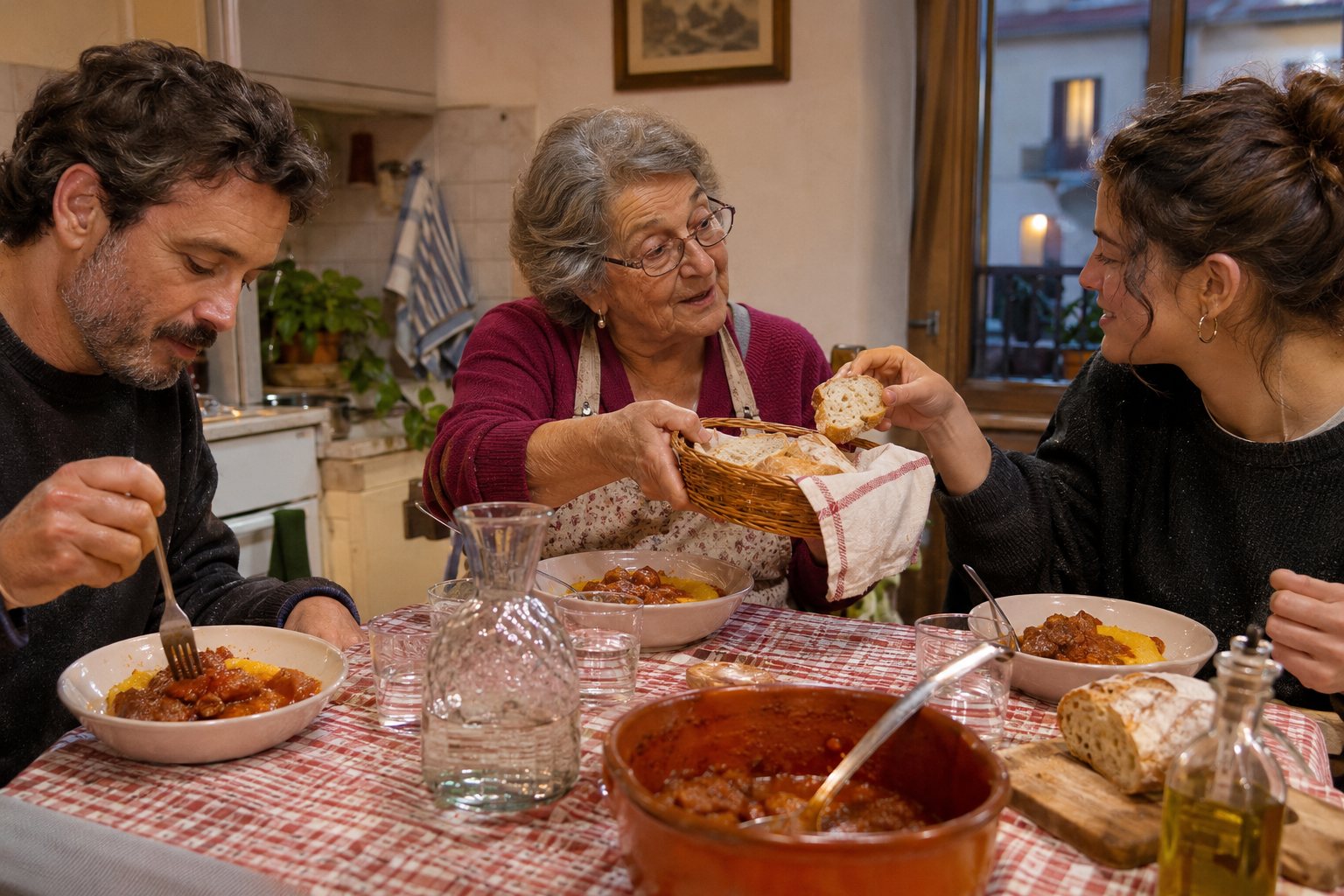
This serves four and is genuinely an hour or so of mostly hands-off simmering after the initial browning. Cut the beef small, into pieces around two to three centimeters, which is the key to the timing. Serve with polenta, mashed potato, or crusty bread, or cook potatoes right in it for a one-pot meal.
Ingredients
- 700g stewing beef (chuck or similar), cut into small 2 to 3cm pieces
- 2 tablespoons olive oil
- 1 onion, finely chopped
- 1 carrot, finely chopped
- 1 celery stalk, finely chopped
- 2 cloves garlic, chopped
- 1 tablespoon tomato paste
- 400g chopped tomatoes
- 150ml red wine
- 400ml beef broth, plus more as needed
- 1 sprig rosemary
- 1 bay leaf
- a few sage leaves (optional)
- salt and pepper
- flour, for dusting the beef (optional)
- 2 potatoes, peeled and cubed (optional, for a one-pot meal)
Instructions
Pat the beef pieces dry and season them with salt and pepper, dusting them lightly with flour if you like a thicker sauce. Heat the olive oil in a heavy pot over medium-high heat and brown the beef well on all sides, working in batches so the pieces sear rather than steam, then lift them out and set aside. The browning builds the deep flavor, so give it time and do not crowd the pot.
Lower the heat and add the chopped onion, carrot, and celery to the same pot, the soffritto, cooking gently until softened and fragrant, around five to eight minutes, then add the garlic for a final minute. Stir in the tomato paste and let it cook briefly.
Pour in the red wine, scraping up the browned bits from the bottom of the pot, and let it bubble and reduce for a couple of minutes. Return the beef to the pot, add the chopped tomatoes, the broth, the rosemary, bay, and sage, and season. The liquid should come up around the meat; add a little more broth if needed.
Bring to a gentle simmer, then cover and cook over low heat for about an hour, stirring occasionally, until the beef is tender. If you are adding potatoes, stir them in about halfway through so they cook in the sauce and turn it into a one-pot meal. Keep it at a gentle simmer, not a hard boil, and add a splash more broth if it gets too thick.
When the beef is fork-tender and the sauce is rich and thickened, taste and adjust the seasoning, and remove the rosemary stem and bay leaf. Let it rest a few minutes, then serve hot with polenta, mashed potato, or crusty bread to mop up the sauce. Like most stews it is even better the next day, once the flavors have settled overnight.

About the Author: Ruben, co-founder of Gamintraveler.com since 2014, is a seasoned traveler from Spain who has explored over 100 countries since 2009. Known for his extensive travel adventures across South America, Europe, the US, Australia, New Zealand, Asia, and Africa, Ruben combines his passion for adventurous yet sustainable living with his love for cycling, highlighted by his remarkable 5-month bicycle journey from Spain to Norway. He currently resides in Spain, where he continues sharing his travel experiences with his partner, Rachel, and their son, Han.