
Two women walk into a nice shop in Paris or Milan, a boutique, a good department store, a smart little jeweler. One is a European woman in her fifties with a structured leather handbag over her arm. The other is an American woman with a backpack on her shoulders. They are shown into the same shop, and yet, in small and subtle ways, they are not treated the same, and a surprising amount of the difference comes down to the bag.
It sounds absurd that a bag could shape how a shop receives you, but in Europe it genuinely can, because the bag you carry is read, instantly and unconsciously, as a signal of who you are. The handbag says one thing and the backpack says another, and in the settings where this matters most, the nicer shops, the smarter establishments, those signals quietly influence the welcome you get.
Here is the bag divide between European and American women, what each bag signals, how it can actually change your treatment in a shop, why the handbag reads the way it does, the honest case for the backpack, and how to decide which to carry when. It is one of those small details that turns out to carry more weight than you would ever expect, and one of the easiest to adjust once you know it is there.
The Bag Divide
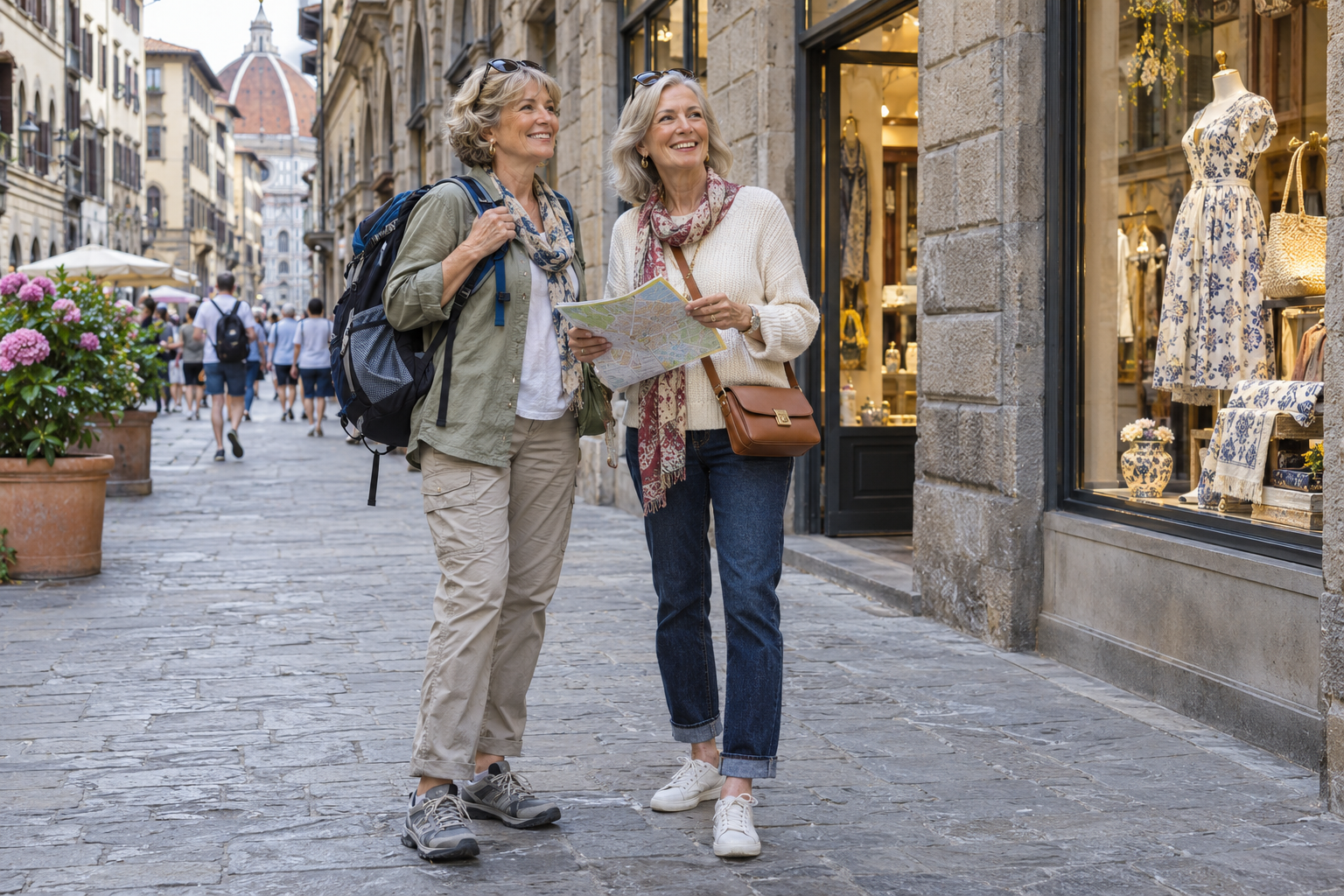
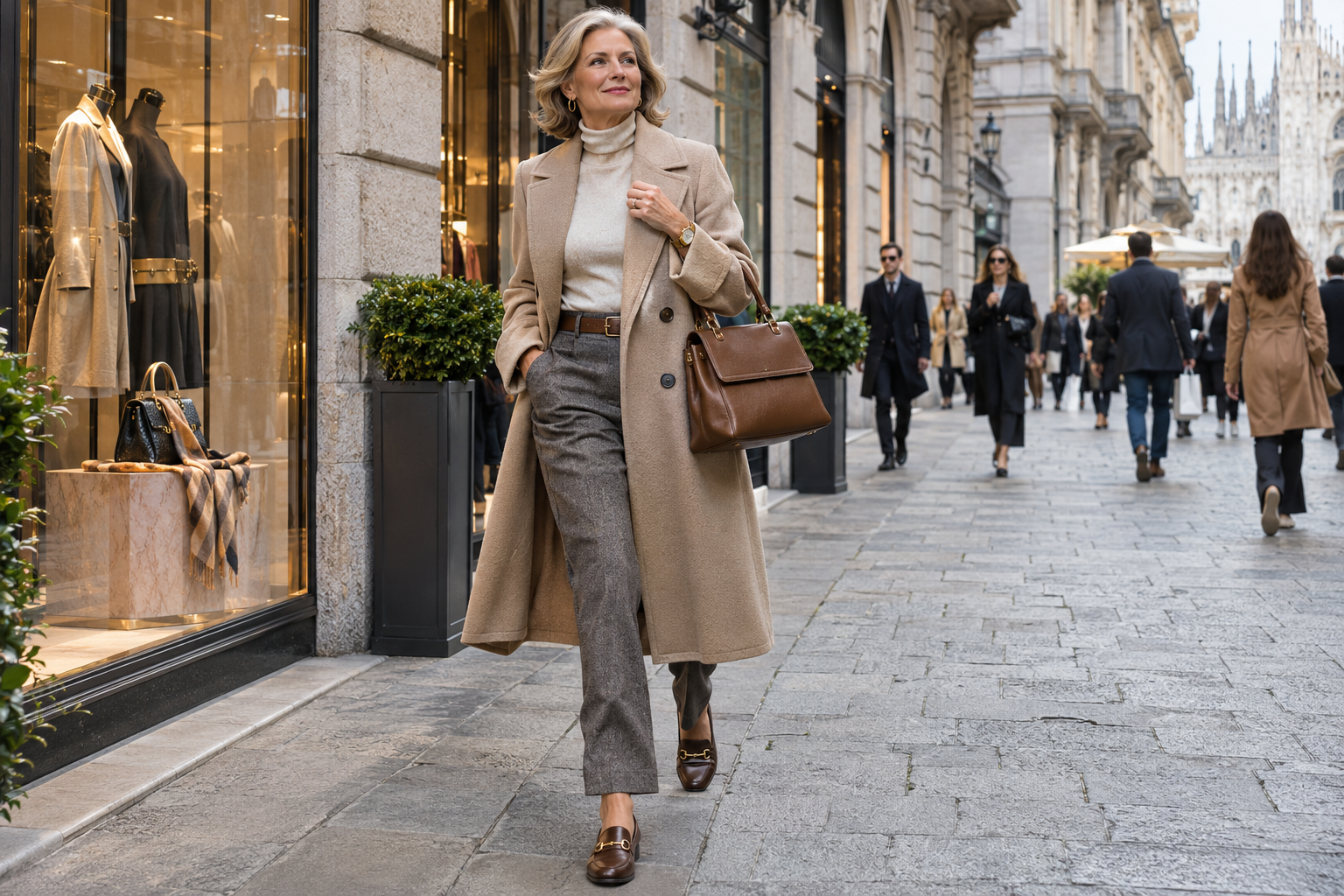
The difference is easy to spot once you start looking. European women, and women over fifty in particular, tend to carry a proper handbag: a structured bag, usually leather, carried on the arm or shoulder, chosen with care and treated as part of the outfit. It is a considered object, often a good one, and it finishes the look the way a scarf or a pair of earrings does.
American women, and tourists generally, lean the other way, toward the backpack. Practical, hands-free, roomy, and comfortable, the backpack is the default American bag for a day out, especially a day of walking and sightseeing, and it is worn across both shoulders with everything you might need stuffed inside. It is a tool for carrying things efficiently rather than an accessory chosen to complete an outfit, and that difference in purpose shows in the object itself.
Set the two side by side and they send very different messages before their owners have said a word. The structured handbag reads as put-together, grown-up, deliberate, and local; the backpack reads as casual, practical, and, in a European setting, unmistakably touristy.
Neither impression is a judgment of the woman carrying the bag, but both are impressions that get formed instantly, and in certain situations those impressions have consequences. We would all like to be met as individuals rather than read off our accessories, but shops, like everyone, go on the signals in front of them. The bag, it turns out, is doing some quiet talking on your behalf.
The Backpack Says Tourist
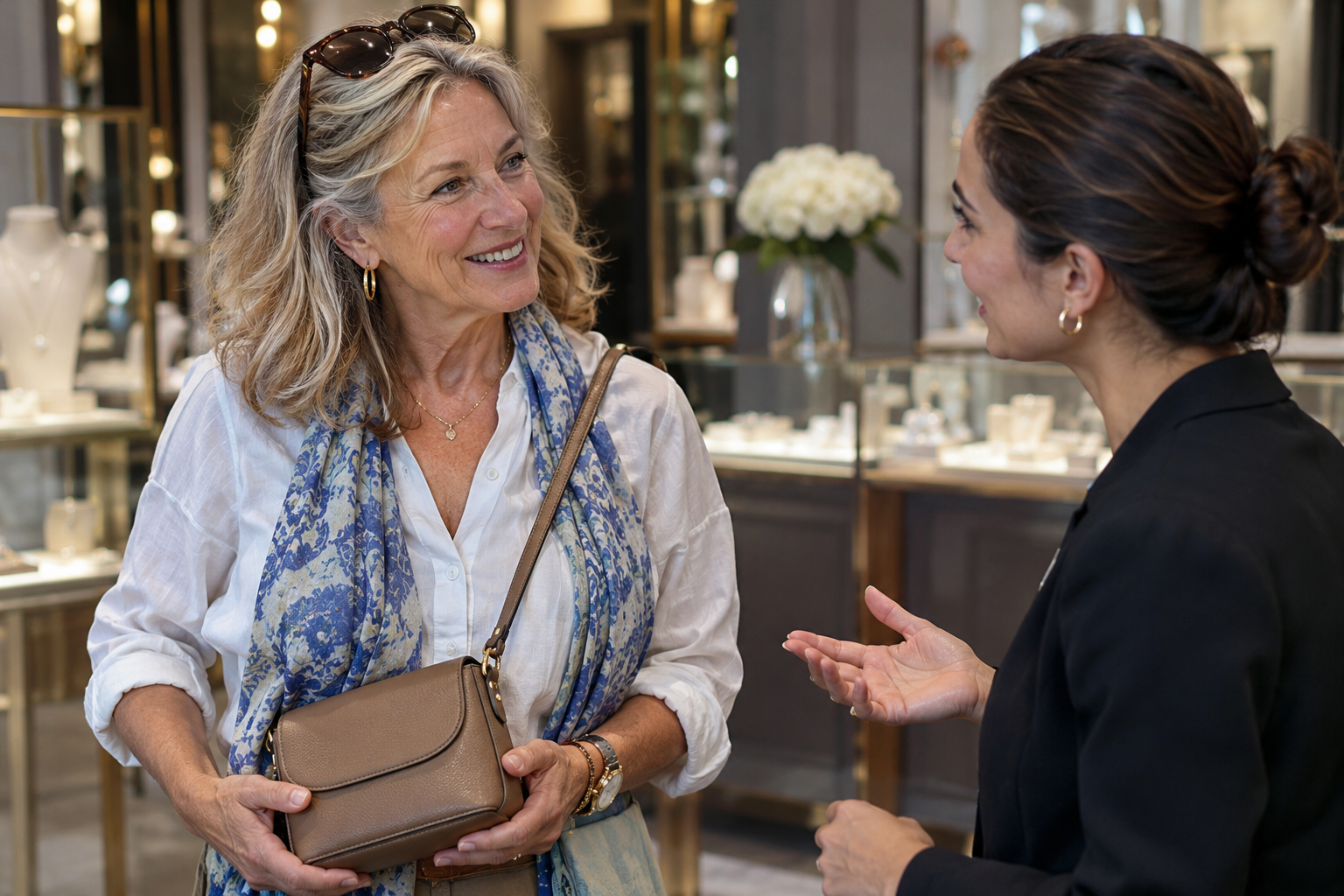
Of all the things a backpack signals in Europe, the loudest is simply this: tourist. However practical and sensible it is, the backpack is one of the single most reliable tells of a visitor, and it marks you as such the moment you put it on.
The reason is straightforward. European adults, in their ordinary daily lives, do not generally carry backpacks; those are for schoolchildren, students, and hikers, not for a grown woman going about her day in the city. So when a backpack appears on an adult in a European city center, it reads immediately as someone who is not a local going about normal life but a visitor out sightseeing, loaded up for a long day of tourism. The backpack is practically a uniform of the traveler, and everyone around you registers it as such, whether or not you intend it.
In most situations this matters not at all; being recognizably a tourist is no crime, and much of the time nobody cares in the slightest. But in a few specific settings it does matter, because being read as a tourist can change how you are treated, and the nicer kind of shop is exactly where that effect shows up. There, the backpack that served you so well on the cobblestones all morning can quietly work against you at the boutique door, not because anyone is unkind, but because of what it signals about who has just walked in.
How It Changes the Shop
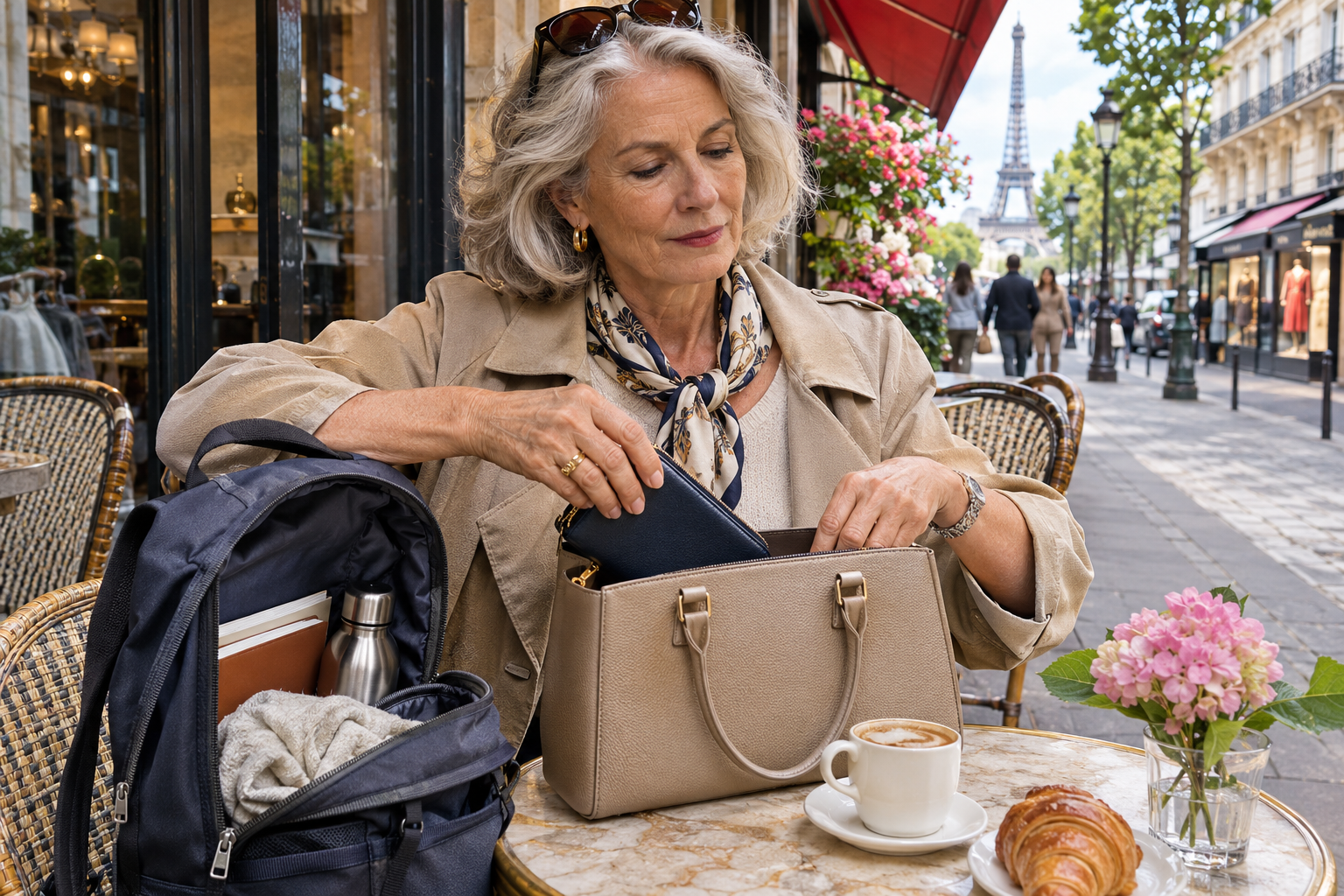
Here is the heart of it, the way the bag can actually alter your experience in a shop, which is subtler than outright rudeness but real all the same. In a nicer shop, a boutique, a fine store, a jeweler, the staff size up each customer who enters, consciously or not, and the whole of your presentation, the bag very much included, shapes how attentively and how respectfully they treat you.
The two bags tend to produce two different receptions. A woman who walks in looking put-together, with a good structured handbag, tends to be read as a serious, local, grown-up customer, someone who belongs there and may well buy, and she is more likely to be met with prompt, attentive, respectful service. A woman who walks in with a backpack and a casual, sightseeing look is more easily read as a tourist browsing, less likely to buy, and sometimes, in shops with small valuable stock, as someone to keep a slightly warier eye on, since backpacks and theft are an old shopkeeper’s worry.
The difference is rarely dramatic and almost never openly rude, but it shows in the warmth of the greeting, the speed of the attention, and the general sense of being treated as a valued customer rather than a passing browser.
None of this is fair, exactly, and it is worth being clear-eyed that it is a form of snap judgment based on appearances. But it is real, and it is especially pronounced in the more exclusive end of European retail, where presentation is taken seriously and read closely. The practical consequence is simple: if you want to be received as a proper customer rather than a wandering tourist in the shops where that distinction matters, the bag on your shoulder is one of the first things working for or against you before you have even reached the counter.
Why the Handbag Reads as It Does
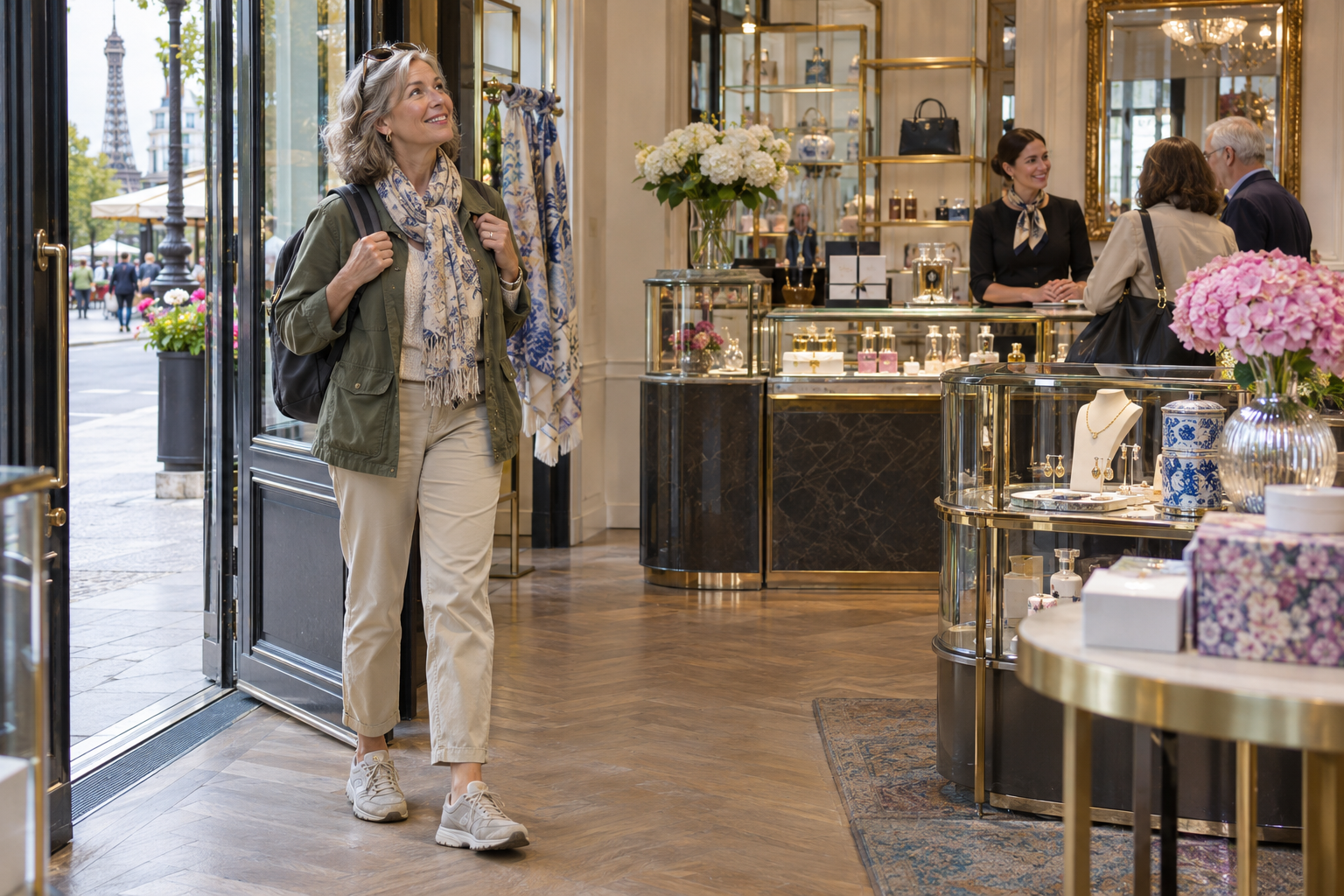
To understand why the handbag carries such positive weight, you have to connect it to the broader European relationship with dressing and presentation, because the bag is part of the same whole. In a culture where looking put-together in public is quietly valued, a considered handbag is a natural and expected finishing piece, the accessory that completes a pulled-together look.
A structured handbag signals several things at once, all of them flattering. It suggests investment and care, a woman who chose a good bag and treats it as part of her outfit rather than a sack for her stuff.
It reads as grown-up and deliberate, the accessory of an adult with her life in order, not a student or a tourist, and it marks the carrier as a local going about her real life rather than a visitor passing through, which in a shop translates directly into being treated as a genuine customer. The handbag belongs to the same family as the good coat, the quality scarf, and the everyday gold, all the small, considered pieces through which European women signal that they are put-together, and it does the same quiet work of earning a certain respect.
This is why the handbag is not merely a prettier alternative to the backpack but a functionally different object in the social code. It is not just carrying your things; it is carrying a message about who you are, and the message it carries happens to be one that opens doors, warms greetings, and earns attentive service in exactly the settings where those things are rationed. The bag is an accessory, yes, but in Europe it is also a small passport, and the handbag is stamped for entry in a way the backpack is not. Fair or not, that is how the code reads, and knowing it is simply knowing how the place works.
The Practical Case for the Backpack
Before this turns into a wholesale condemnation of the backpack, it deserves a fair and genuine defense, because the American preference for it is not foolish; it is practical, and the practicality is real. The backpack earns its place for solid reasons that the handbag cannot match.
The advantages are obvious once you name them. A backpack is hands-free, leaving both your arms available, which matters on a long day of walking, photographing, map-reading, and navigating.
It is comfortable, distributing weight across both shoulders and your back rather than dragging on one arm, which is genuinely better for your body over hours of carrying, especially as you get older. And it holds far more than a handbag, swallowing the water bottle, the layers, the snacks, the guidebook, and everything else a day of sightseeing requires. For a long, active, self-reliant day on your feet, the backpack is simply the sensible choice, and the American instinct to prioritize comfort and function is entirely defensible.
So the backpack is not wrong; it is right for what it is for. The whole point of a day of serious sightseeing is to be out for hours, mobile and self-sufficient, and the backpack serves that beautifully in a way no elegant little handbag ever could. To insist on a dainty handbag through a twelve-hour walking tour of a city would be to choose style over sense in a way that helps no one and ruins your shoulders. The honest position is not that the handbag is good and the backpack is bad, but that each is suited to a different kind of day, which is exactly the insight that lets you use both wisely.
When to Carry Which
The resolution, then, is not to abandon the backpack but to match your bag to your setting, carrying the right one for the day you are actually having. This is the practical heart of the whole thing, and it is easy once you see it.
The division is intuitive. For the long sightseeing day, the hours of walking, the hauling of water and layers and camera, carry the backpack without apology, because that is what it is for and comfort should win. But for the day, or the part of the day, when you are heading into the nicer shops, out to a good restaurant, or anywhere you would like to be received as a put-together local rather than a laden tourist, switch to a handbag, or at least to a smaller, more structured bag. Many travelers find the ideal middle ground in a crossbody bag, a compact, structured shoulder bag worn across the body, which keeps your hands free and your things secure while reading as far more pulled-together and local.
It is secure against pickpockets, easy on the shoulders, and smart enough for a boutique, which is a rare combination to find in a single bag, and a genuine best-of-both option for the European city.
The wise traveler, in other words, carries different bags for different purposes rather than defaulting to the backpack for everything. Keep the backpack for the marathon days and the active hours, bring a handbag or crossbody for the shopping and the dining and the moments when presentation matters, and you get the comfort when you need it and the good impression when it counts. It is not about which bag is better; it is about reading the situation and carrying the one that serves you in it, which is a small skill that pays off surprisingly often.
Carrying Yourself, and Your Bag
In the end, the bag rule is a small, concrete instance of a much larger truth about Europe, one that catches many Americans off guard: presentation is read closely here, and how you present shapes how you are treated, more than you might expect and in more places than you would think. The bag is simply one of the clearest and easiest-to-adjust signals in that system.
Understanding this is not about becoming anxious or snobbish about appearances, but about knowing the code so you can use it when it helps you. If you would like to be received warmly and respectfully in the nicer shops and settings of a European city, dressing and carrying yourself as a put-together local does genuinely open doors, and a structured handbag in place of a backpack is one of the single easiest swaps you can make to that end. It costs you nothing but a moment’s thought about which bag to grab, and it can change the temperature of a whole interaction.
But hold it as a useful tool rather than an iron rule, and carry what suits your actual day. There is no shame in a backpack, no obligation to tote an elegant handbag through a city you have come to explore on foot, and no version of you that is wrong for choosing comfort over code when comfort is what the day demands.
The point is simply awareness: know that the bag speaks, know roughly what it says, and choose it on purpose rather than by default, so that in the moments when the signal matters, it is sending the one you intend. Carry yourself well, carry the right bag for the day, and let the small passport on your shoulder work for you.

About the Author: Ruben, co-founder of Gamintraveler.com since 2014, is a seasoned traveler from Spain who has explored over 100 countries since 2009. Known for his extensive travel adventures across South America, Europe, the US, Australia, New Zealand, Asia, and Africa, Ruben combines his passion for adventurous yet sustainable living with his love for cycling, highlighted by his remarkable 5-month bicycle journey from Spain to Norway. He currently resides in Spain, where he continues sharing his travel experiences with his partner, Rachel, and their son, Han.