
Go down to the water at first light almost anywhere on a European coast, from the cold grey Atlantic of Galicia to the bright Mediterranean of Crete, and you may see them. Women in their seventies and eighties, wading into the sea in the dead of winter, as unbothered by the cold as if it were August. They have done this every morning for decades, and if you ask them why, many will give you the same answer: it is their medicine.
It is one of the most striking rituals in European life, and one of the most tempting to romanticize. These are not athletes or thrill-seekers but ordinary older women for whom a daily dip in the sea, in every season, is as natural and necessary as a cup of coffee.
But this is a ritual that deserves honesty as much as admiration, because unlike most of the gentle European habits worth borrowing, this one comes with real risks alongside its real rewards. Here is what the dawn swimmers are actually doing, what the science genuinely says about it, who it suits, and the serious cautions anyone tempted to try it needs to take to heart first.
The Dawn Ritual
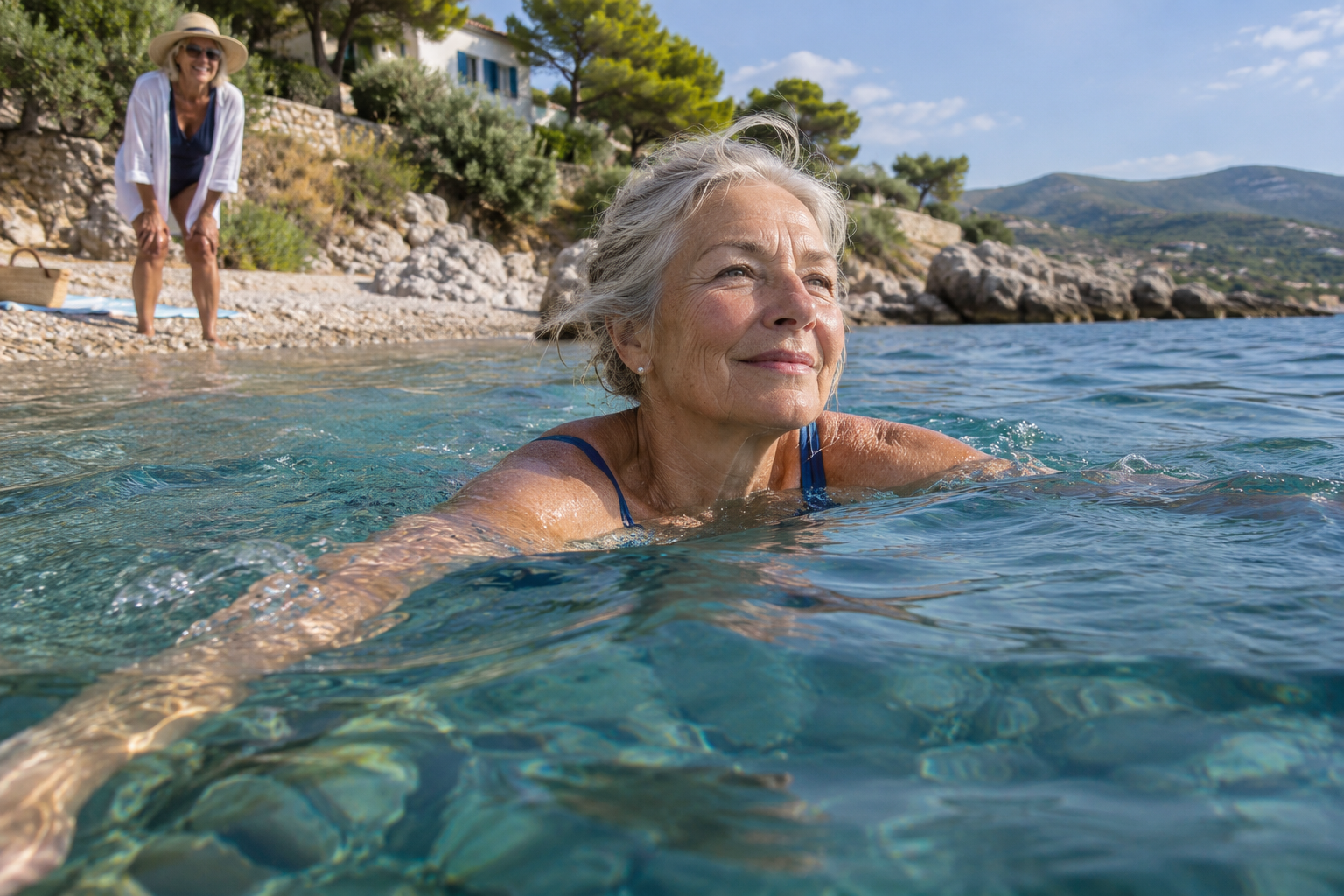
The ritual itself is simple and ancient. All along Europe’s coastlines, people, and older women especially, gather at the water’s edge in the early morning to swim or simply immerse themselves in the sea, and they do it year-round, through autumn chill and winter cold, not just in the warm months.
In the cold northern waters of Galicia, the Atlantic coast, and the Nordic countries, this means genuinely frigid water and a bracing plunge. Along the Mediterranean, in places like Crete, the winter sea is cooler and gentler but still far from warm, and the ritual is just as devoted. From coast to coast, the pattern is the same: the same faces, the same hour, the same stretch of shore, day after day, season after season.
It is both a solitary pleasure and a social one. Many of these swimmers have been coming to the same spot for decades, and over the years they have become a loose community, greeting each other at dawn, swimming or floating together, and sharing the small daily ceremony of the cold water and the rising sun. For many older women, this gathering is as much a part of the ritual as the swim itself, a standing appointment with the sea and with each other that structures the whole day. Widowhood and the shrinking of social circles come for many in later life, and a daily reason to be at the water with familiar faces is no small thing.
What They Mean by Medicine
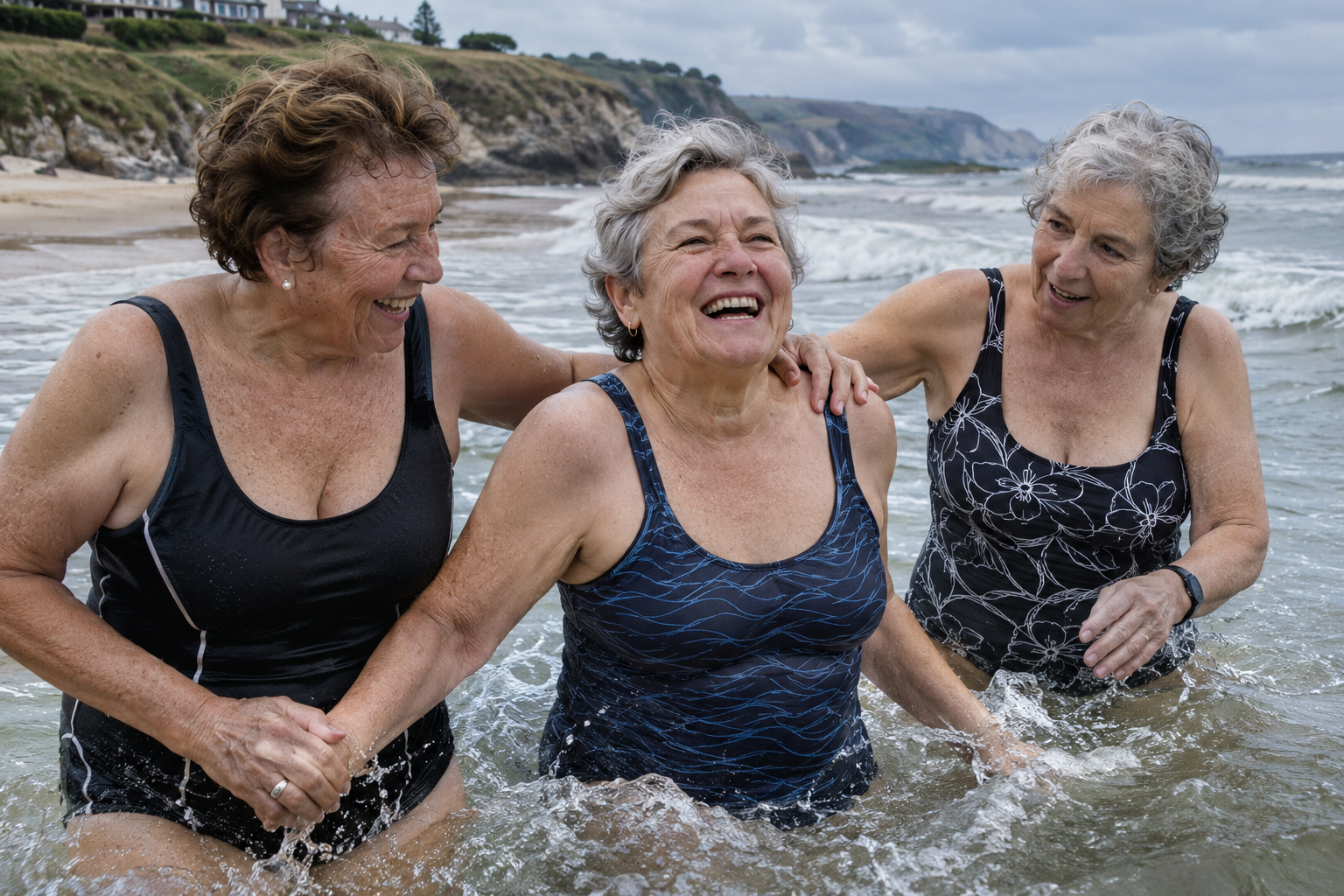
Ask these lifelong swimmers why they do it, and the language they reach for is telling. They do not describe it as exercise or recreation so much as something closer to treatment, a thing that keeps them well. It is my medicine, they say, or it keeps me young, or I would not feel right without it.
What they are describing is partly a feeling, and a powerful one. The cold water delivers an almost immediate lift, a rush of alertness and euphoria that swimmers call the post-swim high, leaving them tingling, clear-headed, and calm for hours afterward. Many describe a sense of being reset, cleansed, and invigorated, of shedding their aches and their worries in the water, and they credit the daily dip with their energy, their mood, and their sense of vitality well into old age.
Beyond the daily feeling, these women tend to attribute their general good health and resilience to the ritual itself. The ones who have swum every winter for forty or fifty years will tell you it is why they rarely get sick, why they have stayed strong and mobile, why they feel younger than their years. Whether or not the sea deserves all the credit, the conviction is genuine and widespread, and it is worth taking seriously as a lived experience even before we ask what the science makes of it.
What the Science Actually Says
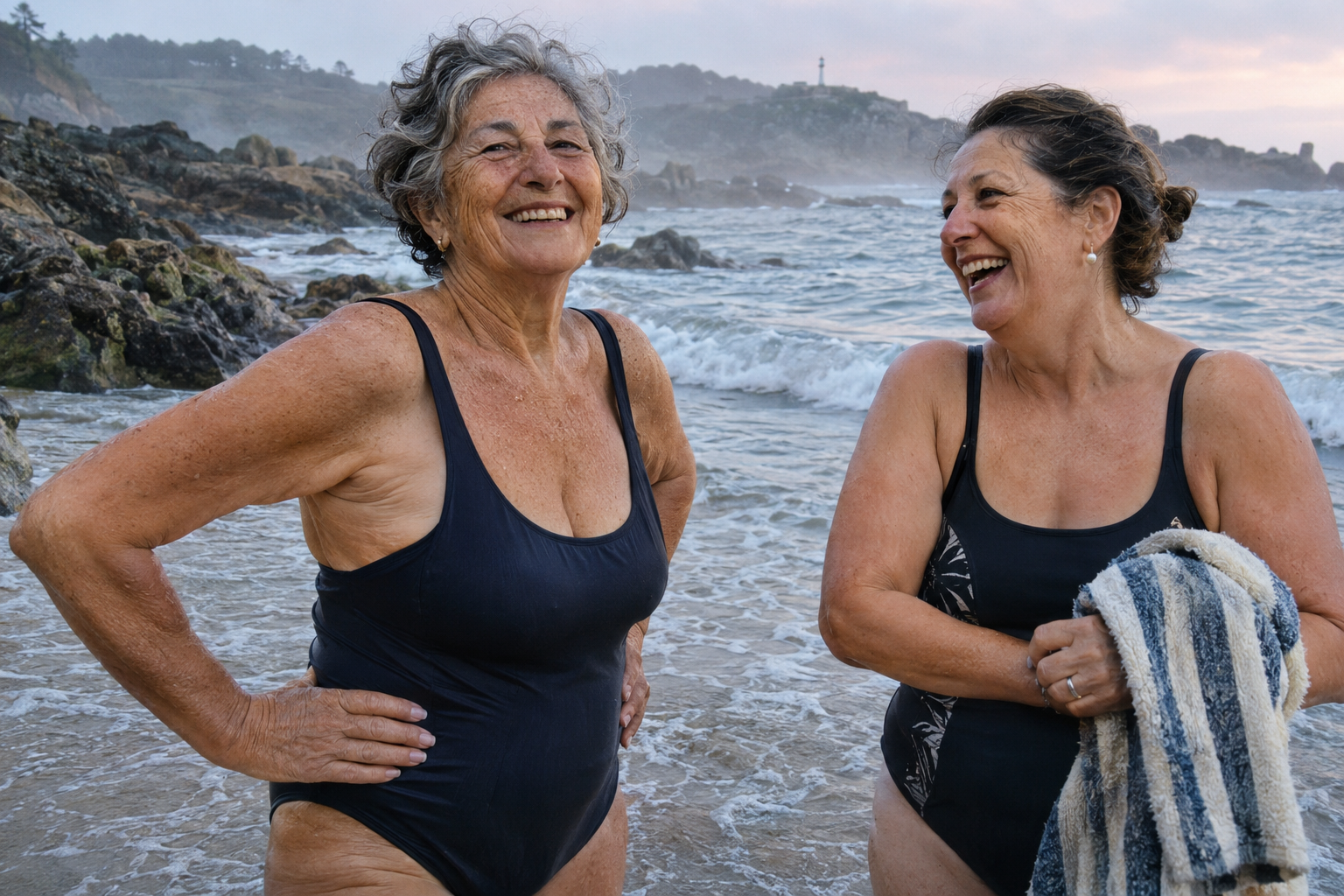
So what does the research actually show? The honest answer is encouraging in one area and far more tentative in the others, and it is worth being clear about the difference rather than swallowing the medicine claim whole.
The strongest and best-supported benefit is to mood and mental well-being. Studies have consistently found that cold-water immersion lifts mood, with one often-cited study measuring a dramatic spike in dopamine, and a British trial finding that people who took up cold-sea swimming improved in mood and well-being more than those who merely watched from the shore. The effect on anxiety, low mood, and general mental state appears to be real, which fits exactly what the swimmers describe.
The other claims, about the immune system, cardiovascular health, and metabolism, are more uncertain. There is some evidence pointing in a positive direction, with studies suggesting benefits to immune markers and cardiovascular risk factors, but it is far from conclusive, and much of it is complicated by the fact that these swimmers are also getting exercise, fresh air, sunlight, and social connection, any of which could account for the benefits on its own. As one balanced review put it, cold-water swimming is neither a miracle nor a fad; the mood effects are well-supported, while the physical-health claims are plausible but hard to pin specifically on the cold. In short, the medicine is real for the mind, and promising but unproven for the body.
Especially for Women
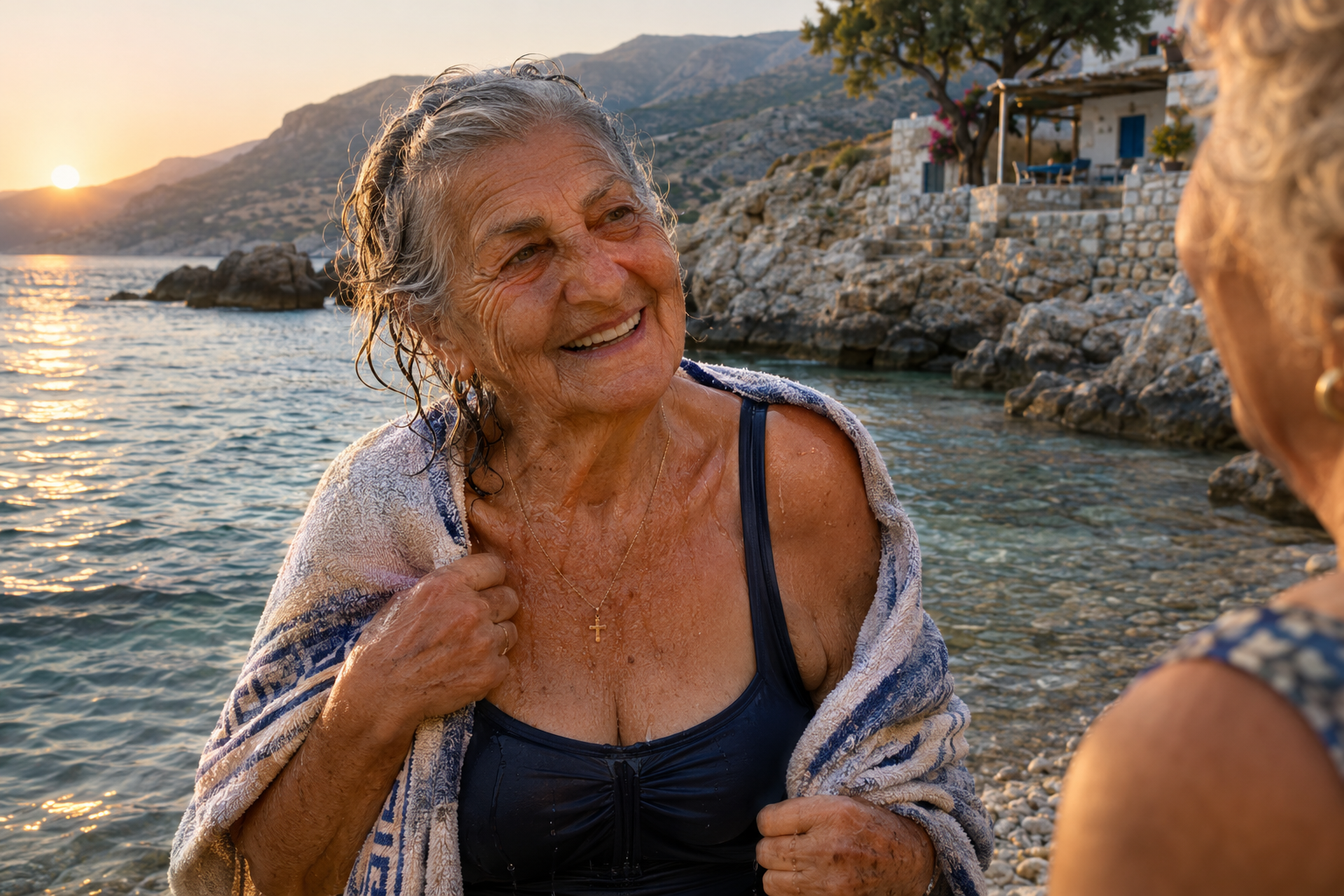
There is one strand of research that speaks directly to the women who make up so much of the dawn-swimming world, and it is worth highlighting. Cold-water swimming appears to help with some of the symptoms of menopause, which may be part of why it draws so many women in midlife and beyond.
A study looking at women who swam in cold water found that many reported real improvements in menopause-related symptoms, with notable shares describing reductions in anxiety, mood swings, low mood, and hot flushes that they attributed to the swimming. For women navigating that transition, often with few appealing options, the idea of a free, natural ritual that lifts the mood and eases the symptoms is understandably powerful, and it matches the mood-boosting evidence that is the best-established benefit of all.
There is also the community itself, which should not be underestimated as part of the benefit. The groups of women who swim together form real bonds, a sisterhood of the cold water, and the social connection and sense of belonging that come with a daily shared ritual are themselves strongly linked to well-being in later life. Part of what makes the sea such good medicine for these women may simply be that they are doing it together, which is its own kind of healing quite apart from the water.
The Part That Comes With Real Risks
Now the essential part, the part that any honest account of this ritual has to put front and center: cold-water swimming is not harmless, and for some people it is genuinely dangerous. This is where the romance has to give way to plain caution.
The first danger is cold-water shock. When the body hits cold water suddenly, it reacts with an involuntary gasp and a surge in heart rate and blood pressure, and that sudden stress on the heart can, in vulnerable people, trigger dangerous heart-rhythm problems or worse. This is not a theoretical risk; experts are explicit that the shock of cold water can spell real trouble for anyone with a heart condition, and the sudden rise in blood pressure it causes can be fatal for someone with a pre-existing heart problem. There is also the risk of hypothermia as the body loses heat in the water, and, in the worst cases, of drowning if cold shock or exhaustion overwhelms a swimmer.
These risks fall hardest on exactly the population most drawn to the ritual. Older people, and anyone with heart disease, high blood pressure, or other cardiovascular conditions, are the most vulnerable to the cardiac dangers of cold immersion, and they are also the people reading an article like this one and feeling the pull of the dawn swimmers. So this has to be said plainly: if you have any heart or blood-pressure condition, or any significant health concern, you should not take up cold-water swimming without talking to your doctor first. This is not a ritual to drift into casually on the strength of its charm.
How the Lifelong Swimmers Do It Safely
It is worth understanding how the women who have done this safely for decades actually manage the risk, because their example is instructive, and it is the opposite of reckless. They did not start by plunging into icy winter water; they built up to it slowly, over years.
The key is gradual acclimatization. The lifelong swimmers almost always began in the warmer months and eased into the colder ones over seasons, letting their bodies adapt little by little, which is precisely what the safety research recommends.
They enter the water slowly rather than diving or jumping in, giving the body time to manage the shock. They keep their time in the coldest water short, getting out well before they are chilled through, and they almost never swim alone, relying on the group not just for company but for safety. They know their own patch of sea, its currents and conditions, intimately.
The other crucial variable is the water itself. There is a world of difference between the icy Atlantic of a Galician winter and the merely cool Mediterranean of Crete, and the cold-shock danger is far greater in the former.
Anyone drawn to this ritual would be far wiser to begin somewhere gentle and warm, in the summer, and in shallow, calm, familiar water, than to emulate the hardiest winter swimmers straight away. And to repeat the point that matters most: the sensible first step is not the water at all but a conversation with your doctor, especially if you are older or have any heart concern. The lifelong swimmers make it look effortless because they spent years earning that ease.
Borrowing the Ritual, Carefully
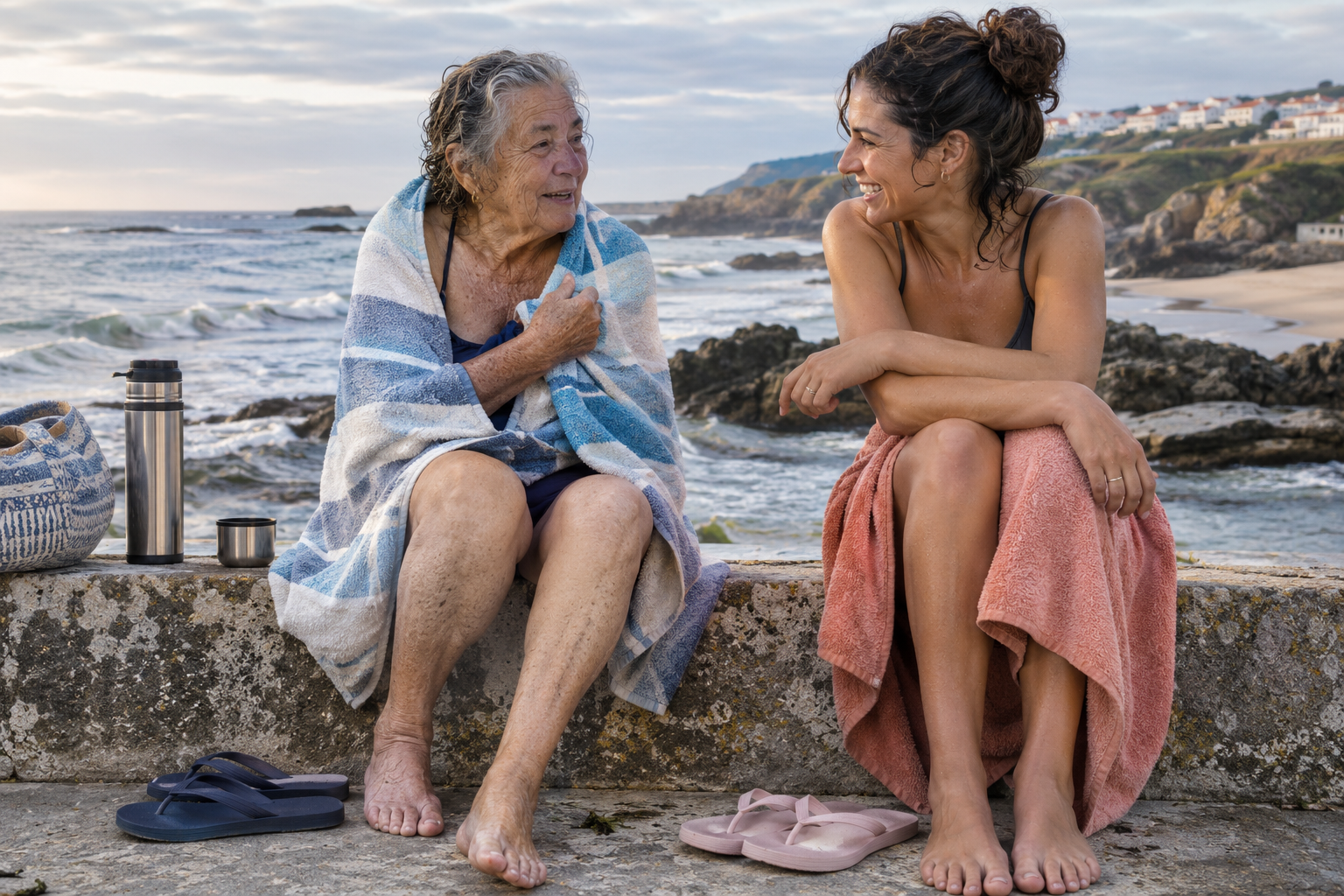
So what should you take from the dawn swimmers of Europe’s coasts? Not, probably, an impulse to fling yourself into freezing January water, but something gentler and more sustainable: the spirit of the ritual, adapted to your own body and done the careful way.
The genuinely valuable, best-supported part, the lift to mood and the power of a regular, outdoor, social ritual, is available without taking on the worst of the risk. A regular gentle swim or dip in cool rather than frigid water, built up gradually, in the warmer months to start, with others rather than alone, and in conditions and at a pace that suit you, can offer much of the mood and community benefit that makes these women glow, without the acute cardiac danger of a winter plunge into icy sea. Start small, go slow, and let your body, and your doctor, set the limits.
There is something genuinely beautiful in these women and their lifelong devotion to the sea, and something real in the good it does them, especially for the spirit. But the honest lesson is not that cold water is magic; it is that a gentle, regular, joyful ritual in nature, with other people, done safely and within your limits, is good for you, which the sea swimmers have simply known in their bones for decades. Borrow that, carefully and on your own terms, and leave the icy heroics to the ones who spent a lifetime earning them.

About the Author: Ruben, co-founder of Gamintraveler.com since 2014, is a seasoned traveler from Spain who has explored over 100 countries since 2009. Known for his extensive travel adventures across South America, Europe, the US, Australia, New Zealand, Asia, and Africa, Ruben combines his passion for adventurous yet sustainable living with his love for cycling, highlighted by his remarkable 5-month bicycle journey from Spain to Norway. He currently resides in Spain, where he continues sharing his travel experiences with his partner, Rachel, and their son, Han.