
Capri is the kind of place that exists to be quiet and beautiful. A small, glamorous island off the coast of Naples, all cliffside villas and lemon groves and narrow stone lanes, it has spent decades cultivating an air of elegant, hushed exclusivity. And it protects that hush with a rule that stops most visitors in their tracks when they first hear it.
On Capri, your shoes can get you fined. Not your behavior, not your clothing, your footwear. The island has a decree, on the books for generations, that bans noisy shoes: wooden clogs, clattering sandals, anything that makes a racket on the pavement.
It sounds like a joke, or a piece of travel-trivia nonsense, but it is a genuine rule with a genuine history, and it tells you almost everything you need to know about what kind of place Capri wants to be. Here is what the footwear rule actually is, where it came from, why a whole island would police the sound of your shoes, the crowds now pressing in on it, and what it all reveals about the strange, precious, and rather wonderful world of Capri. It is one of those rules that seems ridiculous until you stand on the island and suddenly understand it completely.
The Rule About Your Shoes

The rule, at its core, forbids noisy footwear on the island. It was written specifically with wooden clogs in mind, the hard-soled shoes known in Italian as zoccoli, which clack loudly with every step on a stone street, but in practice it is understood to extend to any shoes that make excessive noise.
That means clattering wooden sandals, hard-soled mules, and even squeaky flip-flops can, in principle, fall foul of it. The island is not fussy about fashion; it is fussy about volume. The logic is not about the style of the shoe but about the sound it makes, so the test is simply whether your footwear disturbs the peace as you walk.
And this is not a toothless, forgotten rule. Tourists who break Capri’s various etiquette regulations have been fined in the past, so the sensible visitor takes it seriously and simply opts for quiet shoes while exploring the island. It sits alongside other old Capri rules, including one against walking shirtless through the town center, all part of a code of conduct the island has long imposed on its guests. The message is clear: Capri has standards, and your shoes are expected to meet them.
There is a practical wisdom buried in the oddness, too. Capri’s famous streets are paved in hard stone and tile, surfaces that amplify every footstep, and sound carries a long way in the island’s quiet lanes and up its cliffside walls. A shoe that would pass unnoticed in a bustling city becomes, on Capri, a genuine intrusion on a soundscape that people have paid handsomely to enjoy.
Born in the Age of the Clog
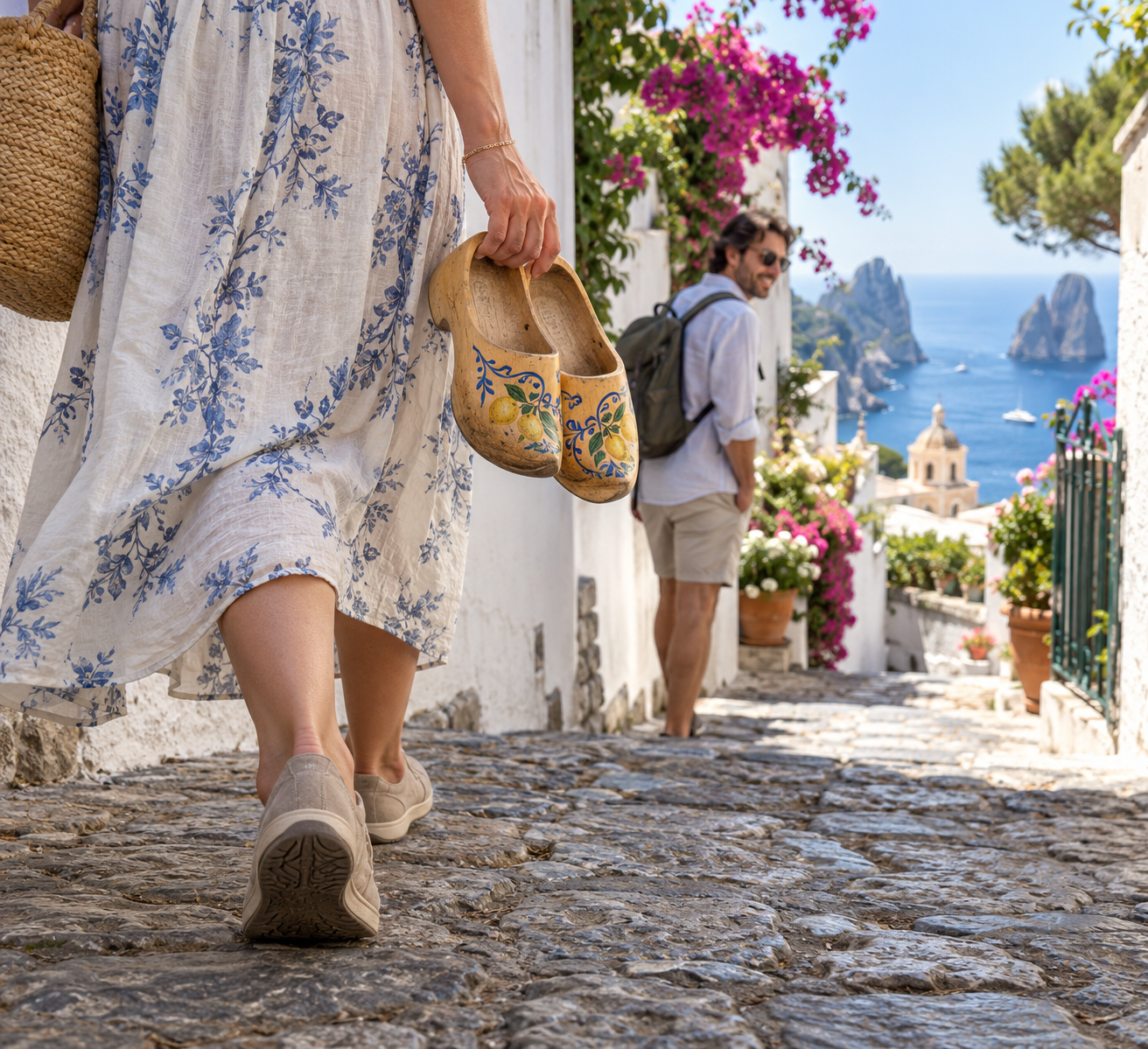
To understand why such a rule exists at all, you have to picture the moment it was born. The footwear decree dates back to the middle of the twentieth century, to the 1950s and 1960s, a time when wooden clogs were genuinely fashionable and everywhere.
Imagine the island then, its narrow stone alleys ringing all day with the hard clack of wooden soles as fashionable visitors strolled about. On a place that prized its tranquility, the constant clatter must have been maddening, a fashionable noise pollution rising off every lane. So the authorities did something about it, and banned the offending shoes outright.
It is worth remembering how much more deliberate travel was in that era. Capri in the mid-twentieth century was a glamorous haunt of film stars, writers, and the wealthy, a byword for a certain kind of effortless Mediterranean chic, and its rules were part of maintaining that image. Keeping the streets quiet and the visitors well-mannered was of a piece with being the elegant island the world imagined it to be.
It was not the only etiquette rule of that era, either. As far back as the 1950s, Capri was already forbidding things like playing radios loudly in public, part of the same instinct to keep the island calm and genteel. The footwear ban, in other words, was one piece of a whole mid-century effort to protect Capri from the noise of its own growing fame. It has simply outlasted the fashion that prompted it, remaining on the books long after the clogs went out of style.
That endurance is part of its charm. Laws usually die when the problem they addressed disappears, but Capri kept this one, perhaps because the underlying principle never went away. The specific shoe changed, but the island’s determination to defend its quiet did not, and so a rule born of a 1960s fashion craze still quietly shapes how visitors are expected to behave today.
Why Silence Is Sacred Here
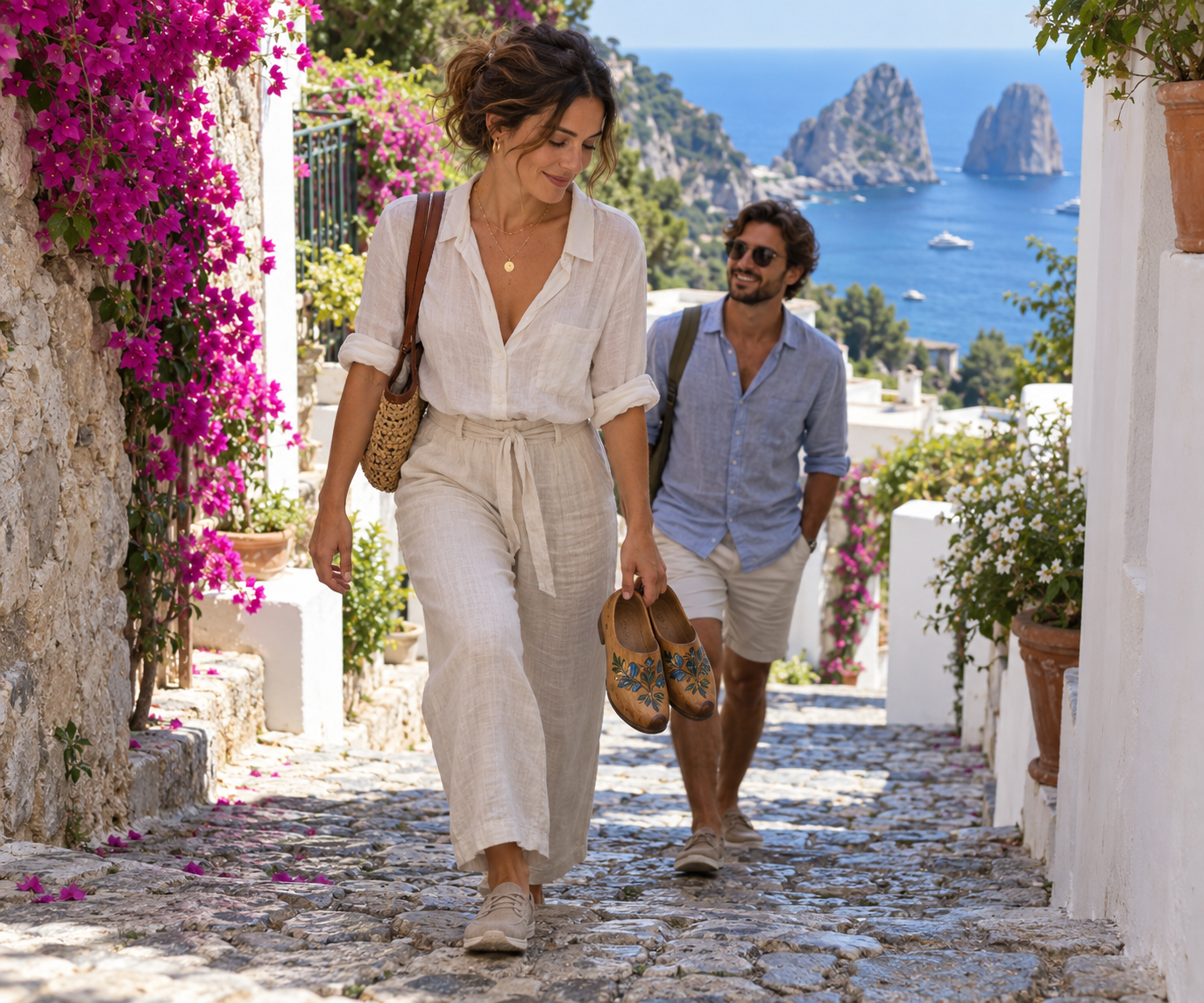
The deeper reason the rule endures is that quiet is not incidental to Capri; it is the entire point of the place. People do not come to Capri for nightlife or thrills. They come for a particular atmosphere of serene, sun-drenched, elegant calm, and that atmosphere is fragile.
Walk the island’s narrow lanes in the early evening, with the hum of cicadas in the lemon groves and the sea breeze moving through the pines, and you understand at once what the rule is protecting. It is an atmosphere you feel in your whole body, a softness and a stillness, and it is astonishingly easy to break. Silence, here, is sacred, and the gentle natural soundscape is a large part of what makes the island feel like the refined escape it has always sold itself as. A sudden clatter of wooden soles shatters that spell completely.
So policing footwear, which sounds absurd in the abstract, makes perfect sense as an expression of Capri’s identity. The quiet is the product. It is what the villas and the hotels and the whole mystique are built on, and the island treats threats to it, even something as small as a noisy shoe, as worth legislating against. In protecting the sound of its streets, Capri is protecting the very thing people travel there to experience.
It is a lesson other beautiful places might envy. Plenty of destinations let the very qualities that made them special get trampled by the crowds those qualities attracted, until the magic is gone and only the crowds remain. Capri, for all its airs, grasped early that its atmosphere was an asset worth guarding, and it has been willing to make unfashionable, faintly ridiculous rules to guard it.
A Tiny Island, Enormous Crowds

That protectiveness has only grown sharper, because the pressure on Capri’s calm has become immense. The island is tiny, home to something like thirteen to fifteen thousand year-round residents, a small community living on a few square kilometers of rock.
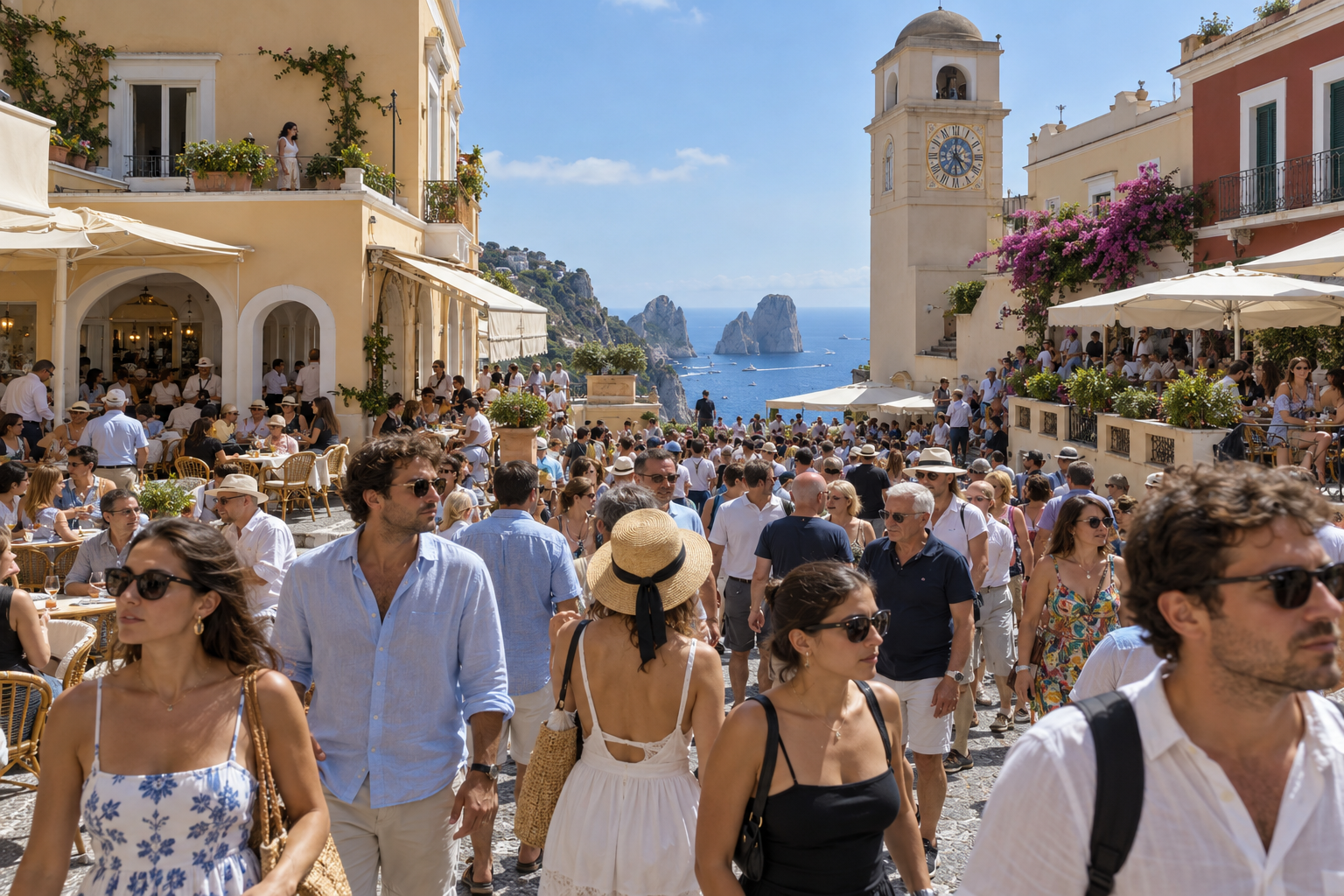
In peak season, though, that small island can receive up to fifty thousand visitors in a single day. The arithmetic is brutal: on a busy summer day, there can be several times more tourists on Capri than residents, all funneled through the same narrow lanes and scenic viewpoints and the same little port. The crush can be overwhelming, turning the serene island of the brochures into something closer to a crowded theme park.
The famous little central square, the Piazzetta that is the social heart of Capri, can become so packed on an August afternoon that moving through it is a slow shuffle rather than a stroll. It is precisely the opposite of the calm the island sells, and exactly the fate its many rules are trying to hold off.
For a place whose entire appeal rests on tranquility and a sense of exclusive calm, this is an existential problem. The quiet that Capri prizes, and that its footwear rule was written to protect, is under constant assault from the sheer number of feet on its streets. And so the island has kept reaching for rules, old and new, to defend the atmosphere that makes it Capri rather than just another crowded Mediterranean stop.
The tension is real and probably permanent. Capri needs its visitors, who sustain its economy, and yet those same visitors threaten the very thing that draws them. Every rule the island writes is an attempt to walk that impossible line, to stay open and profitable while remaining, somehow, the serene and exclusive escape of legend. The footwear decree was an early, small move in a very long game.
The Latest Crackdown
The footwear ban now has thoroughly modern descendants. In recent years, Capri has announced a fresh wave of rules aimed squarely at the crowds, and particularly at the large, unwieldy tour groups that the island blames for much of the congestion and noise.
Under the newest measures, tour groups are being limited in size, capped so that only smaller groups can move through the island together, and group guides have been told to drop the conspicuous paraphernalia of mass tourism. The umbrellas and flags that leaders hold aloft to herd their flocks, those little beacons of the package tour, have been targeted for a ban, part of an effort to make the island feel less like a processing line and more like the elegant retreat it wants to be.
The authorities have also looked at controlling the boat traffic at Marina Grande, the port where the daily tide of visitors arrives and gathers before heading up to the towns. Taken together, these new rules are the twenty-first-century version of the old footwear decree: the same island, making the same choice, to impose limits in the name of preserving its particular calm and exclusivity. The clogs have become tour groups, but the instinct is identical.
Not everyone approves, of course. Critics argue that an island capping groups and banning umbrellas is pulling up the drawbridge, making itself a preserve for the wealthy and the independent traveler while shutting out the ordinary package tourist who cannot visit any other way. Capri’s defenders counter that without limits the island will simply be loved to death, its charm trampled into nothing. It is the same argument now playing out across Europe’s most crowded gems, and Capri, as so often, got there first.
What It Says About Capri
In the end, the shoe rule is a tiny window into Capri’s whole philosophy, and it is worth seeing clearly, because it cuts both ways. On one hand, there is something genuinely admirable in a place that knows exactly what it is and fights to protect it, that decides its peace and beauty are worth defending even against something as trivial as a noisy sandal.
On the other hand, there is no denying the whiff of preciousness, even snobbery, about an island legislating the sound of visitors’ footwear and shooing away the tour groups of ordinary travelers. Capri has always been a playground of the glamorous and the wealthy, and its rules carry a faint sense of an exclusive club setting the terms of entry. Both things are true at once, and which one you notice probably says as much about you as about Capri. An island that legislates the quiet of its streets is both a little absurd and quietly wise, and Capri has never seemed troubled by being both.
What is not in doubt is that the rule is real, and that behaving accordingly is the wise and courteous thing to do. Wear quiet, soft-soled shoes, keep your voice down, and move through the island gently, and you will both stay on the right side of its rules and, more importantly, get to experience the hushed beauty that the whole strange code exists to protect.
There is a nicer way to frame the whole thing, too. The footwear rule is really just an unusually formal version of good manners, a request to tread lightly, literally and otherwise, in a place that other people are trying to enjoy.
Seen that way, it is not an imposition at all but an invitation to slow down, quiet down, and meet Capri on its own gentle terms. The visitors who lean into that, rather than resenting it, tend to have the loveliest time of all. Capri asks a lot of its visitors, but in exchange it offers one of the most serene and lovely places in the Mediterranean, and the price of admission is simply a little quiet.

About the Author: Ruben, co-founder of Gamintraveler.com since 2014, is a seasoned traveler from Spain who has explored over 100 countries since 2009. Known for his extensive travel adventures across South America, Europe, the US, Australia, New Zealand, Asia, and Africa, Ruben combines his passion for adventurous yet sustainable living with his love for cycling, highlighted by his remarkable 5-month bicycle journey from Spain to Norway. He currently resides in Spain, where he continues sharing his travel experiences with his partner, Rachel, and their son, Han.