
In the Netherlands, the bicycle is not a toy or a workout; it is how the country moves. Everyone rides, everywhere, in every kind of weather, and the whole place is built around it, with more cycle paths than anywhere else on earth. So a visitor naturally rents a bike, pulls out a phone to check the map, and starts pedaling.
And that is exactly how a lot of Americans earn their first Dutch fine, often within hours of arriving. Holding a phone while you cycle in the Netherlands is illegal, and it will cost you around a hundred and seventy euros.
Not texting, not making a call, just holding the thing in your hand while the wheels are turning is enough. It is one of the most common fines tourists walk straight into, because the behavior feels so harmless and so automatic. Here is what the rule actually is, what counts and what does not, why the Dutch decided to enforce it, how the fine keeps rising, and how to avoid handing over the better part of two hundred euros on your first day. It is the single most avoidable mistake a visitor can make on a Dutch bike.
The Fine Tourists Walk Into
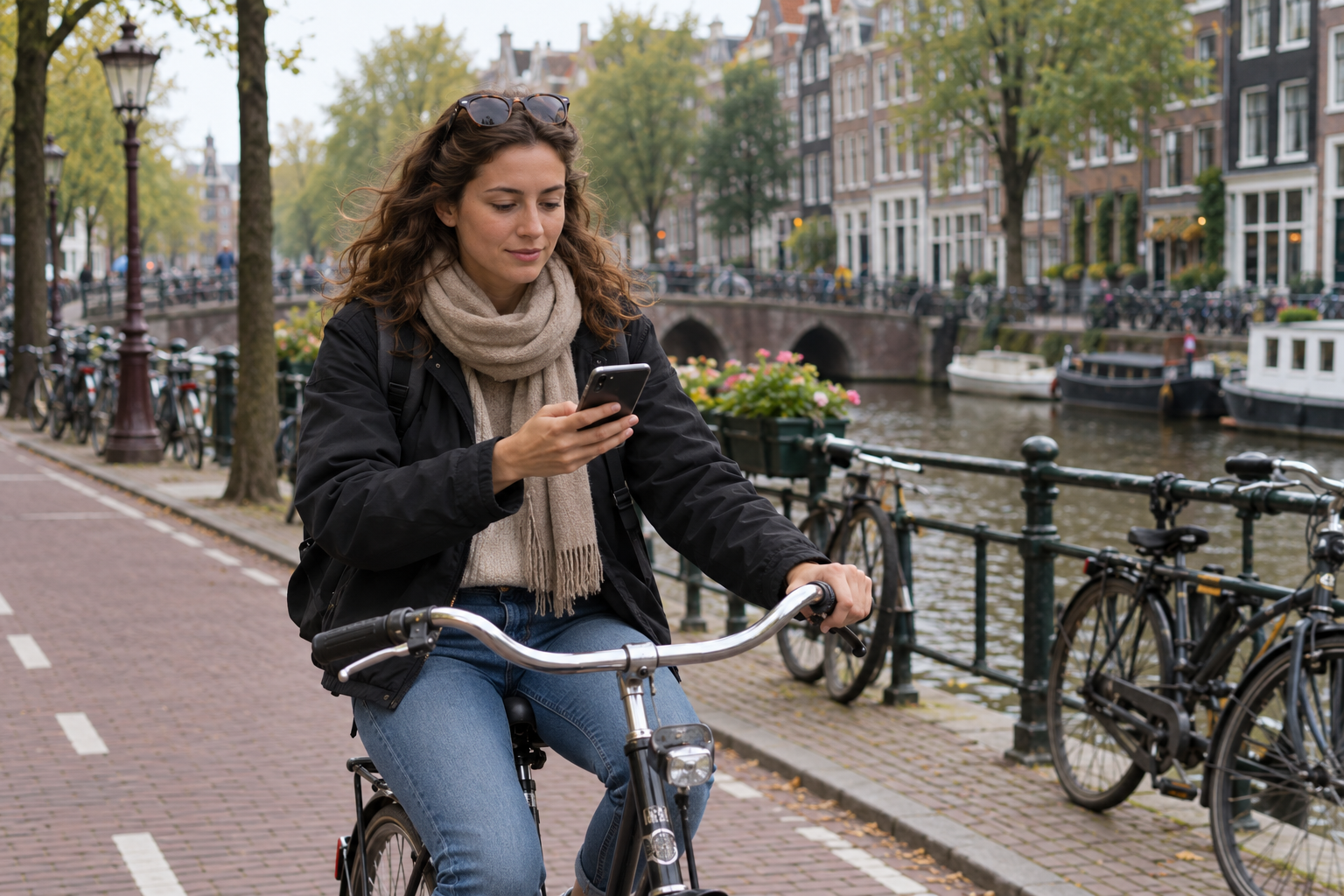
The rule is simple and strict: you are not allowed to hold a mobile phone while riding a bicycle in the Netherlands. If a police officer sees a phone in your hand as you cycle, you can be fined on the spot, and the amount is substantial.
For tourists, it is almost a rite of passage, because the setup is so natural. You rent a bike, you are in an unfamiliar city, and you rely on your phone to find your way, so you hold it up to glance at the map as you ride. In most of the world that is just how you navigate on a bike. In the Netherlands, it is a finable offense, and the Dutch police are perfectly willing to enforce it against visitors who plead ignorance.
What makes it sting is the size of the penalty relative to the crime. Handing over something close to a hundred and seventy euros for the crime of looking at a map feels disproportionate to anyone who has just done it. But to the Dutch, cycling is serious transport, a phone in the hand is a serious distraction, and the fine is set high precisely to make people stop doing it.
The enforcement is easy, too, which is part of why it works. A cyclist holding a phone is obvious from a distance, far easier to spot than a texting driver hidden behind glass, so a passing officer can see the offense in a second and wave you over. There is no ambiguity to argue about, which leaves little room for the usual tourist plea of not knowing.
Just Holding It Counts
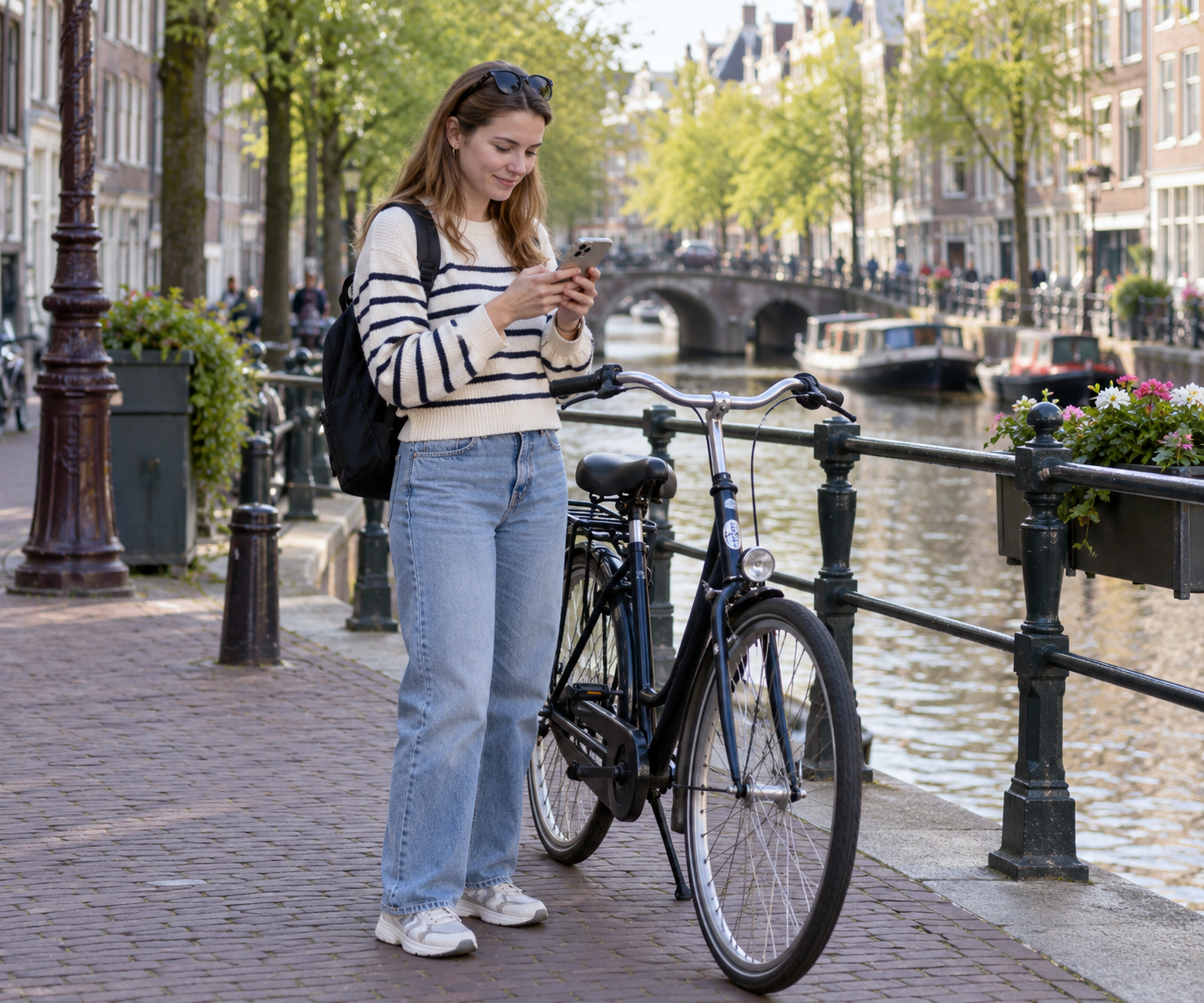
Here is the detail that catches people out, and it is worth being very clear about: the ban is on holding the phone, not on using it. You do not have to be typing a message or taking a call to break the rule. Simply having the device in your hand while you ride is enough.
That is a stricter line than many countries draw, where the offense is about active use. In the Netherlands, the law assumes that a phone in your hand is a distraction no matter what you are doing with it, so the quick glance at the map, the one-second check of a notification, the holding it ready to snap a photo of a pretty canal, all of these can earn you the fine. The hand is the problem, not the screen.
In its strictest reading, the rule even extends beyond phones to most handheld electronic devices. The point the Dutch are making is about your hands and your attention, not about the specific gadget. If you are holding something electronic while cycling, you are, in the eyes of the law, not fully in control of your bike.
That principle is the whole key to understanding the rule, and it is actually quite sensible once you accept it. A bike needs balance and both hands far more than a car does, and a cyclist with one hand clutching a phone is wobbling through traffic half-committed to staying upright. The law is not really about the phone; it is about demanding that you ride with your hands and your attention on the bike.
What You Can Still Do
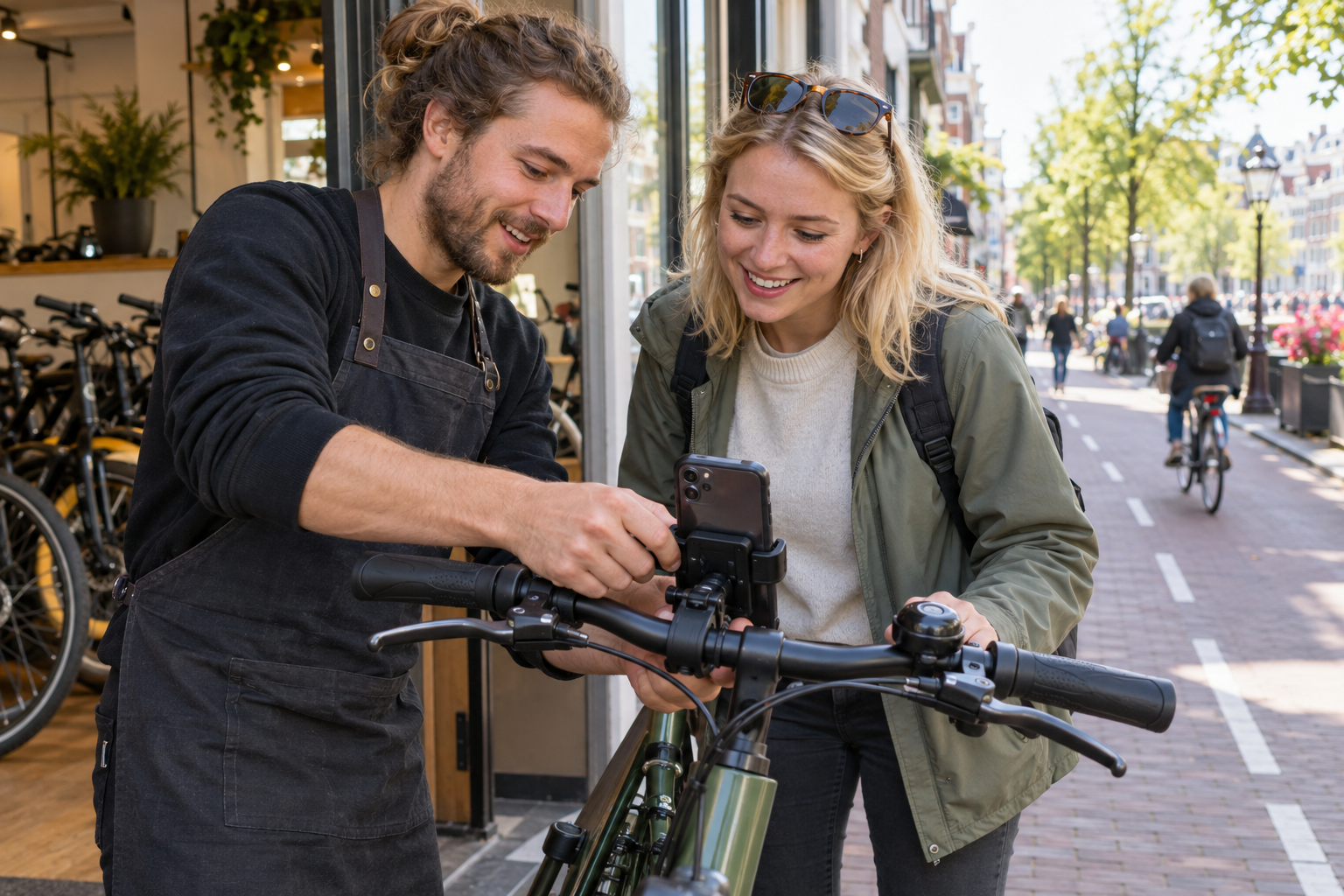
The good news is that the rule leaves you plenty of legal ways to use your phone, because it is genuinely about the holding, not the phone itself. The simplest and most important workaround is a handlebar mount. Clip your phone into a holder on the bike, and you can look at it, follow its navigation, and ride all day without breaking the law, because your hands are on the handlebars where they belong.
You can also go hands-free in the audio sense. Using earbuds or a headset to hear voice navigation is permitted, so you can be guided turn by turn without ever touching the phone. And of course, the moment you stop, the rule no longer applies; pull over safely, put a foot down, and you can check your map, send a message, or do whatever you like before setting off again.
So the Dutch rule is not the draconian phone ban it first sounds like. It does not ask you to navigate a strange city blind. It simply insists that your phone be mounted, or in your ear, or used while stopped, rather than clutched in your hand as you weave through traffic. Once you have a cheap handlebar holder, the whole issue essentially disappears.
This is the part tourists most need to hear, because so many assume the rule means they cannot navigate. They can, easily and legally, with any of these methods. A ten-euro clip on the handlebars turns a hundred-and-seventy-euro risk into a non-event, which is about the best return on a small purchase you will find anywhere in travel.
Why the Dutch Banned It
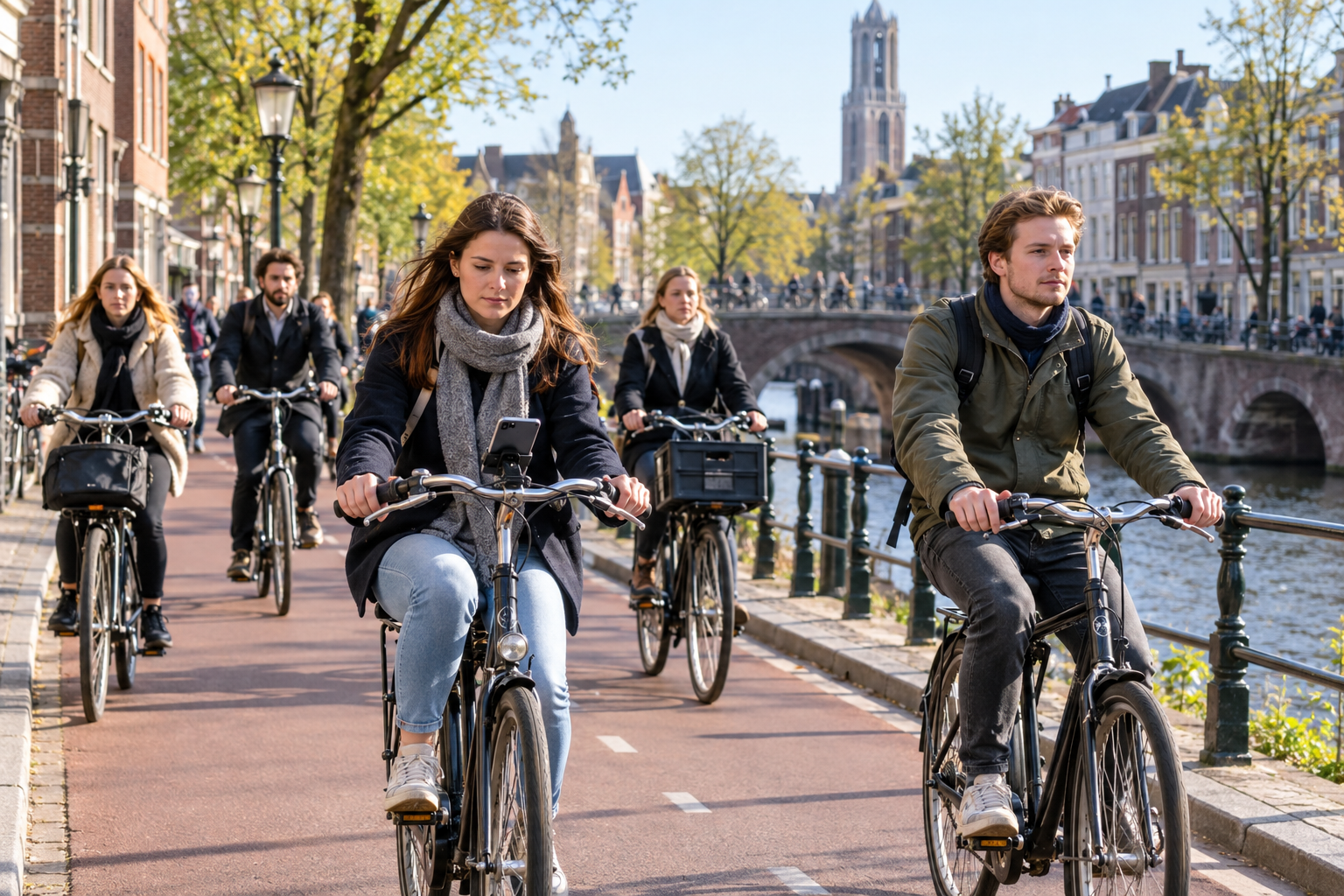
To understand why the Netherlands bothered with this at all, you have to appreciate just how central cycling is there, and just how much phone use had crept into it. This is a country with tens of thousands of kilometers of dedicated cycle paths, where a huge share of all trips in the cities are made by bike, and where people of every age ride constantly as a matter of course.
Before the ban came in, phone use on bikes had become genuinely widespread. Surveys found that around half of Dutch cyclists admitted to using their phones while riding, and among young people the figure was far higher, closer to three-quarters. A nation of cyclists had quietly become a nation of distracted cyclists, thumbing through messages and social media as they pedaled through busy traffic.
The authorities had already banned handheld phone use for drivers of cars and lorries years earlier, and the evidence on distraction had only grown more alarming since. Research suggested that people distracted by a phone in traffic could be more dangerous than people who had been drinking, and modern phones, with their endless notifications and addictive apps, were far more absorbing than the simple mobiles of the past. So in the summer of 2019, the Netherlands extended the phone ban to cyclists, closing the gap and treating a bike, for this purpose, like any other vehicle.
There is a certain logic to the Dutch, of all people, being the ones to do this first. In a country where cycling is the backbone of daily transport, a distracted cyclist is not a rare oddity but a genuine, everyday traffic hazard, bumping into pedestrians, drifting into other riders, wobbling into the path of trams and cars. The stakes of getting it right are simply higher where everyone is on a bike.
The Price Keeps Rising
One thing worth knowing is that the fine has been climbing, which tells you how seriously the Dutch take it. When the ban first came into force, the penalty was ninety-five euros, already a hefty sum for the offense.
It did not stay there. Over the following years the fine was raised, first to around a hundred and forty euros, and more recently to roughly a hundred and seventy euros, with a small administrative charge added on top. The steady upward march of the figure is a deliberate signal: the authorities want the cost to be high enough that people genuinely think twice, and they are willing to keep pushing it up if the behavior persists.
For a visitor, the practical consequence is simple. The exact amount may well have risen again by the time you read this, so the only safe assumption is that holding your phone on a bike here is expensive and getting more so. Whatever the precise figure, it is far more than a handlebar mount costs, which makes the economics of obeying the rule very easy to understand.
It is also worth noting that a fine here is not a quiet slap on the wrist that goes away. Dutch traffic fines are administered seriously, and an unpaid one can follow you, so this is not a penalty most visitors can simply shrug off and ignore. Far better never to earn it in the first place.
A Nation of Rules on Wheels
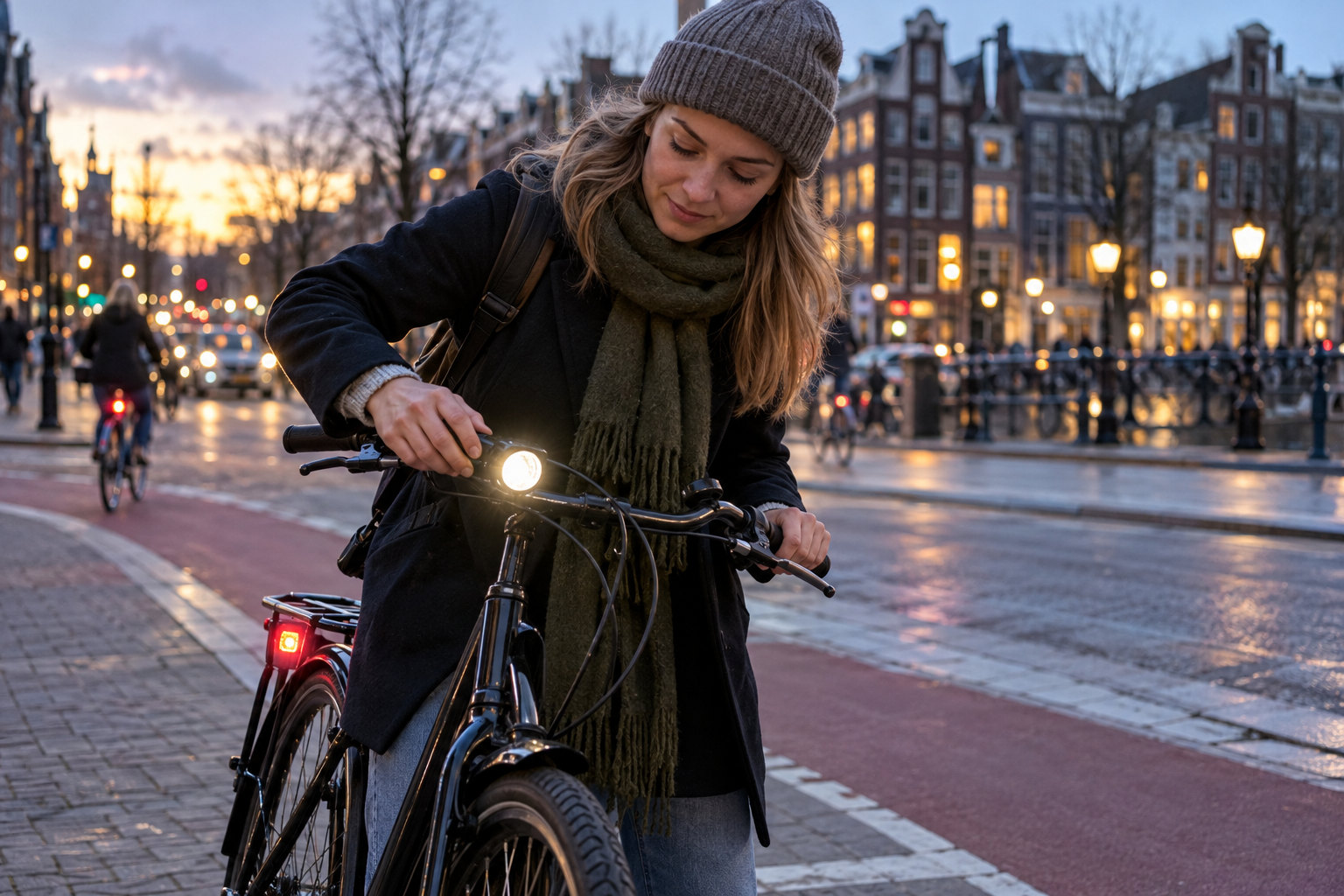
The phone fine is only one entry in a surprisingly long list of Dutch cycling rules, and tourists consistently underestimate how real they are. In the Netherlands, a bicycle is legally a vehicle, cycling is a form of driving, and the road rules that come with that are enforced.
So you can be fined for riding without working lights after dark, for running a red light, for not having a bell on your bike, for cycling on the sidewalk instead of the bike lane, and for riding while over the alcohol limit, among other things. None of these are enormous sums individually, but they add up, and they reflect a culture that treats cycling as a serious, regulated part of the traffic system rather than a carefree bit of fun.
For Americans, where cycling is often a recreational activity governed by little more than common sense, this can be a jolt. In the Netherlands you are expected to signal your turns, stay in your lane, obey the lights, and generally behave like the operator of a vehicle, because that is what you are. The phone rule is simply the most famous and most frequently triggered example of a whole system that visitors did not know they had entered.
How to Cycle Like a Local
Staying on the right side of all this is genuinely easy once you know the lay of the land, and it mostly comes down to one purchase and a little awareness. Before you set off on a rented bike, get a handlebar phone mount, or make sure your rental has one, so you can navigate legally and keep your hands where they should be.
Beyond that, keep your phone in your pocket or bag whenever it is not mounted, use the bike lanes wherever they exist, make sure your lights work at night, and ride as though you are driving a vehicle, because in Dutch eyes you are. Follow the flow of the other cyclists, who know exactly what they are doing, and you will absorb the local rhythm quickly.
The real shift is one of mindset. To cycle like a local in the Netherlands is to stop thinking of the bike as a casual plaything and start thinking of it as your car, with the attention and the responsibility that implies. Do that, and the phone fine and all its cousins become non-issues, and you get to enjoy one of the great pleasures of travel, gliding through a Dutch city on two wheels, without a hundred-and-seventy-euro surprise waiting at the next intersection.

About the Author: Ruben, co-founder of Gamintraveler.com since 2014, is a seasoned traveler from Spain who has explored over 100 countries since 2009. Known for his extensive travel adventures across South America, Europe, the US, Australia, New Zealand, Asia, and Africa, Ruben combines his passion for adventurous yet sustainable living with his love for cycling, highlighted by his remarkable 5-month bicycle journey from Spain to Norway. He currently resides in Spain, where he continues sharing his travel experiences with his partner, Rachel, and their son, Han.