
At any Filipino gathering, there is a quiet, unspoken competition happening at the buffet table, and lumpia is always at the center of it. These crispy, golden, finger-sized spring rolls, hot from the fryer and piled on a platter, vanish faster than anything else in the room, so fast that the smart move is to grab a few the moment they appear, because by the time you come back for seconds, they will be gone. Every Filipino host knows this truth and plans around it: you make far more lumpia than seems reasonable, and you will still run out.
The specific kind we are talking about is lumpiang shanghai, lumpiang shanghai, the thin, crunchy, pork-filled rolls, the undisputed star of Filipino party food. Here is what lumpia is, why it disappears first, why the making of it is a family affair, what goes inside, and the family method, passed down kitchen to kitchen, that makes a batch come out perfect and crisp every single time. Get the method right, and you will be the reason the platter empties fastest.
What follows is the roll that always runs out, what goes in the filling, the rolling method that never fails, how to fry them right, and the recipe to make your own.
The Roll That Always Runs Out First
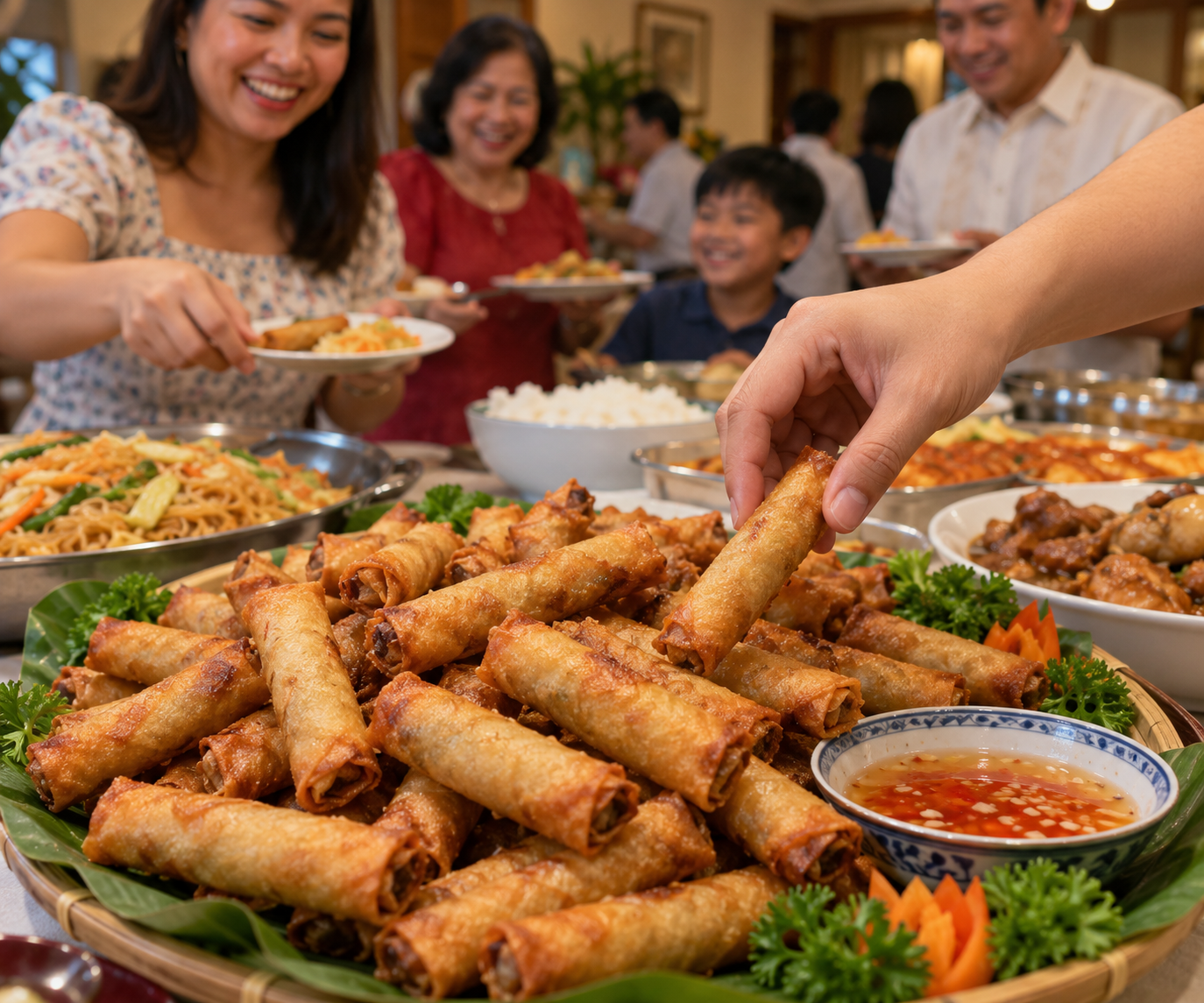
Lumpia holds a special, almost sacred place in Filipino celebration food, the dish without which no fiesta, birthday, or family reunion feels complete. There are a few kinds of lumpia in Filipino cooking, including the fresh, unfried lumpiang sariwa wrapped in a soft crepe, but the one that causes the stampede is lumpiang shanghai, the small, slender rolls packed with a savory meat filling and deep-fried until shatteringly crisp.
They are the perfect party food almost as if designed for it: bite-sized and neat, easy to eat standing up with your fingers while you hold a drink in the other hand, utterly addictive in their hot, shattering crunch, and beloved without exception by absolutely everyone, from the smallest children to the oldest grandparents. Nobody in the history of Filipino parties has ever turned down a lumpia.
The reason they run out first is simple: they are irresistible, and everyone knows it, so they go for them immediately and keep going back.
A good lumpiang shanghai has a gorgeous golden, crackling, almost glassy shell that shatters at the first bite and gives way to a hot, juicy, well-seasoned pork filling, and dunked in a sweet or tangy sauce it is about as close to perfect finger food as anything ever gets. There is a specific, happy crunch to a fresh one that explains the whole frenzy in a single bite. Because they are small and crisp and go down so easily, people eat them by the handful without quite noticing how many they have had, which is exactly why an enormous platter that took hours to fill can empty in a matter of minutes.
There is no such thing as too much lumpia at a Filipino party, a lesson every host learns the hard way exactly once. Experienced Filipino cooks account for this by making them in genuinely huge batches, rolling dozens upon dozens, often freezing trays of them in advance, because the one thing worse than the effort of rolling a hundred lumpia is the disappointment on the faces of guests who arrived too late to get any. At a Filipino party, lumpia is not just a dish; it is the dish, and running out of it is a minor tragedy everyone works hard to avoid.
Why It Is Really a Family Affair
Before the filling and the frying, there is something worth saying about how lumpia actually gets made, because for Filipino families the rolling is not a chore done alone but a shared event, and that is a real part of what the dish means. When a big batch is needed for a party, the family gathers around the table, and the work becomes an assembly line of hands: someone mixing the filling, several people rolling, everyone talking and laughing and gossiping their way through the dozens and dozens of rolls. The sheer volume that a Filipino party demands turns lumpia-making into a communal ritual, and some of the warmest kitchen memories Filipinos carry are of exactly these sessions, rolling lumpia with their mother, their aunties, and their cousins.
This is also, quietly, how the method gets passed down. A child drawn into the rolling learns by watching and copying, picking up the right amount of filling, the tight tuck, the sealing dab of egg, not from a written recipe but from the hands of the people beside them. The technique travels from one generation to the next around that table, which is why so many Filipinos can roll a perfect lumpia without ever having been formally taught, the knowledge simply absorbed in childhood. So when the platter of golden rolls finally comes out and vanishes in minutes, it carries more than pork and vegetables; it carries an afternoon of family time folded into every tight little cigar. That, as much as the crunch, is why lumpia sits so close to the heart of Filipino celebration, and why making it, for all the effort, is something families genuinely look forward to rather than dread.
What Goes Inside
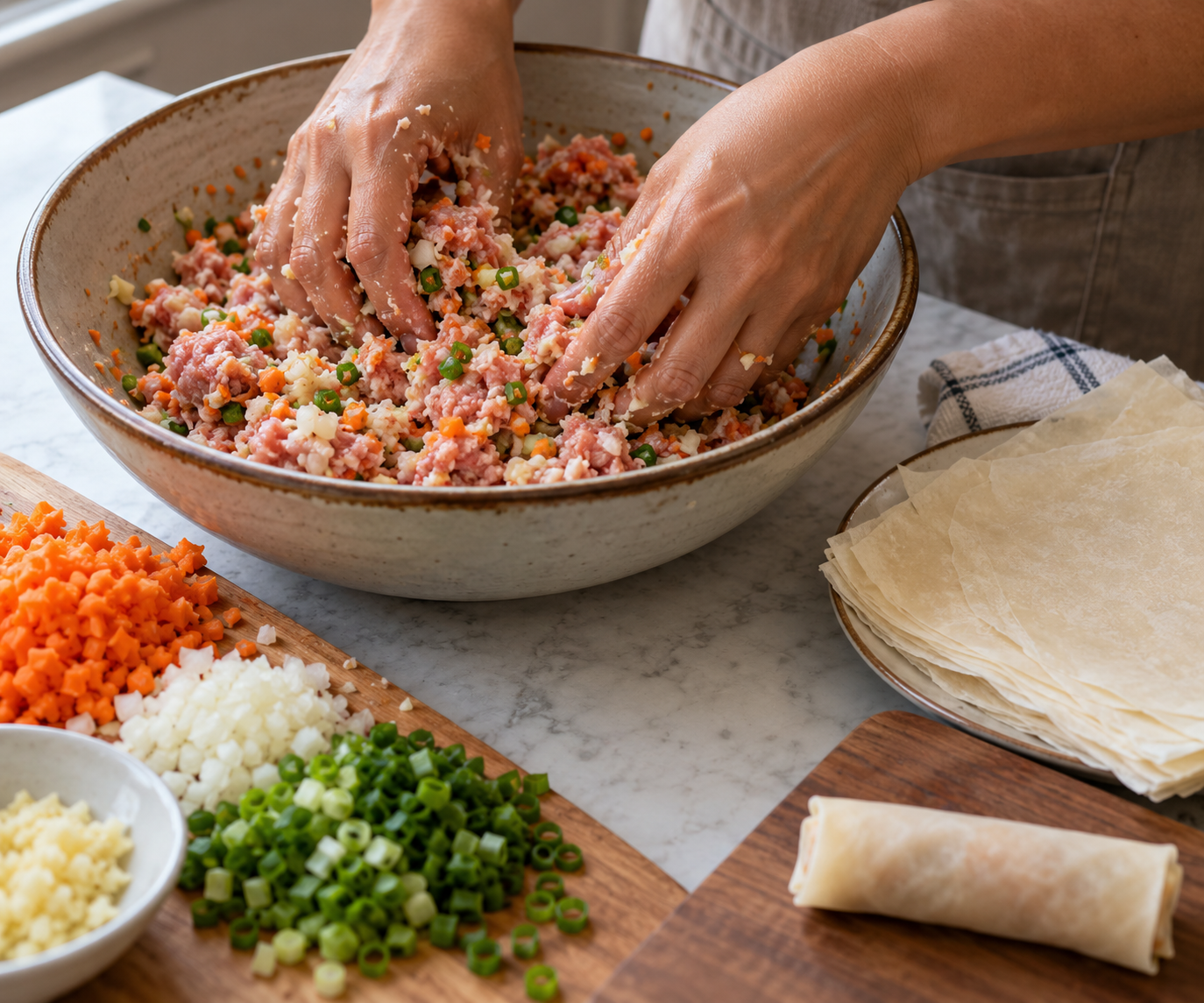
The heart of lumpiang shanghai is its filling, and while every family has its own slightly different version, the foundation is remarkably consistent and simple. The base is ground pork, which provides the rich, savory, juicy character of the roll, sometimes mixed with a little ground beef. Into that goes finely minced vegetables, above all carrots and onion, which add sweetness, texture, and color, along with plenty of minced garlic. Many families add finely chopped green onions, and some include minced water chestnuts or singkamas, the crisp jicama, for a little extra crunch inside.
Binding and seasoning turn those raw ingredients into a proper filling. A beaten egg is mixed in to hold everything together so the filling stays cohesive inside the wrapper, and the whole mixture is seasoned simply but surely with salt, black pepper, soy sauce, and often a splash of patis, the Filipino fish sauce, which deepens the savory flavor. The beauty of the filling is that it is both humble and endlessly adaptable, built from inexpensive, everyday ingredients, and every family tweaks the proportions and seasonings to their own taste, which is why one family’s lumpia tastes subtly, lovably different from another’s. The one rule that matters is to season it well and mix it thoroughly, because a bland or unevenly mixed filling is the only way to make a lumpia that disappoints, and lumpia is not meant to disappoint.
The Family Method That Never Fails
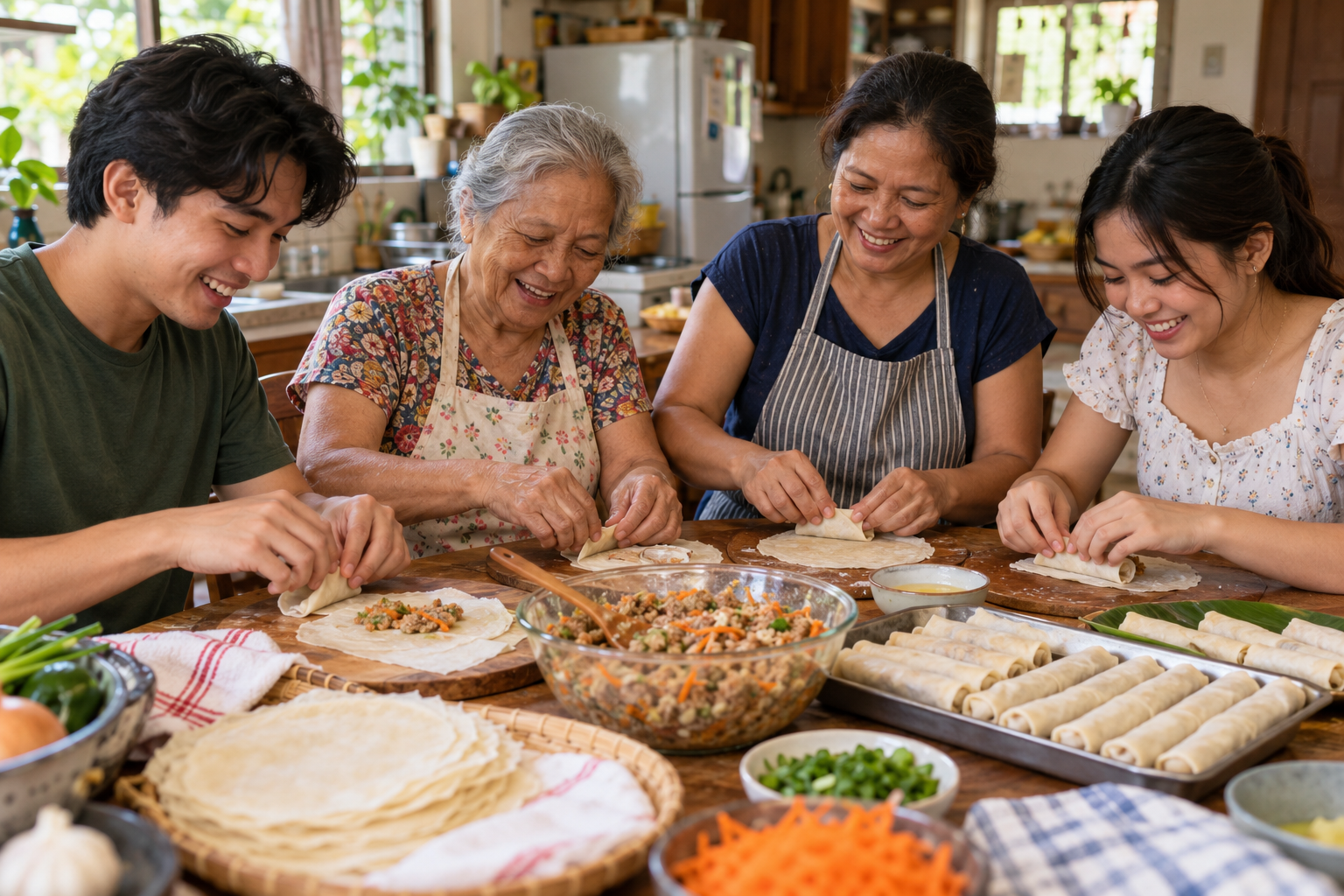
Here is where the real know-how lives, because a great lumpia is as much about the rolling as the filling, and the technique is the thing passed down from one generation of Filipino cooks to the next. The first rule is the wrapper: use the thin spring roll wrappers, not the thicker egg-roll kind, because the thin ones are what fry up into that signature light, glass-like crunch. Keep them covered with a damp cloth as you work so they do not dry out and crack.
The golden rule of rolling, the one every Filipino grandmother insists on, is to use only a small amount of filling per wrapper. The temptation, every single time, is to pack them generously full, but resist it, because a thin, tightly rolled lumpia with only a modest line of filling is what fries up light and crisp and cooks through evenly, while an overstuffed one stays greasy and raw in the middle and bursts open messily in the hot oil. Less filling, more rolls, better results: it is the counterintuitive secret at the very center of the whole method.
So you lay a wrapper in a diamond shape, place a thin line of filling, about a tablespoon, across the lower third, fold the bottom corner up over the filling, fold in the two sides snugly, and then roll it up tightly into a slim cigar, sealing the final edge with a dab of beaten egg or water. Tight and thin is the mantra, with no air pockets and no loose ends. It takes a handful of clumsy ones to find the rhythm, your first few coming out fat or loose or split, and then quite suddenly your hands learn it and the rolling becomes almost meditative, a steady little motion you could do half-asleep, which is exactly why lumpia-rolling is so often a communal activity, several pairs of hands around a table turning out dozens on easy autopilot while the conversation flows. The work disappears into the talk. And here is the method’s great gift: you can roll them ahead and freeze them raw, then fry straight from frozen whenever you need them, which is how Filipino families always have a batch ready for an impromptu gathering.
How to Fry Them Right
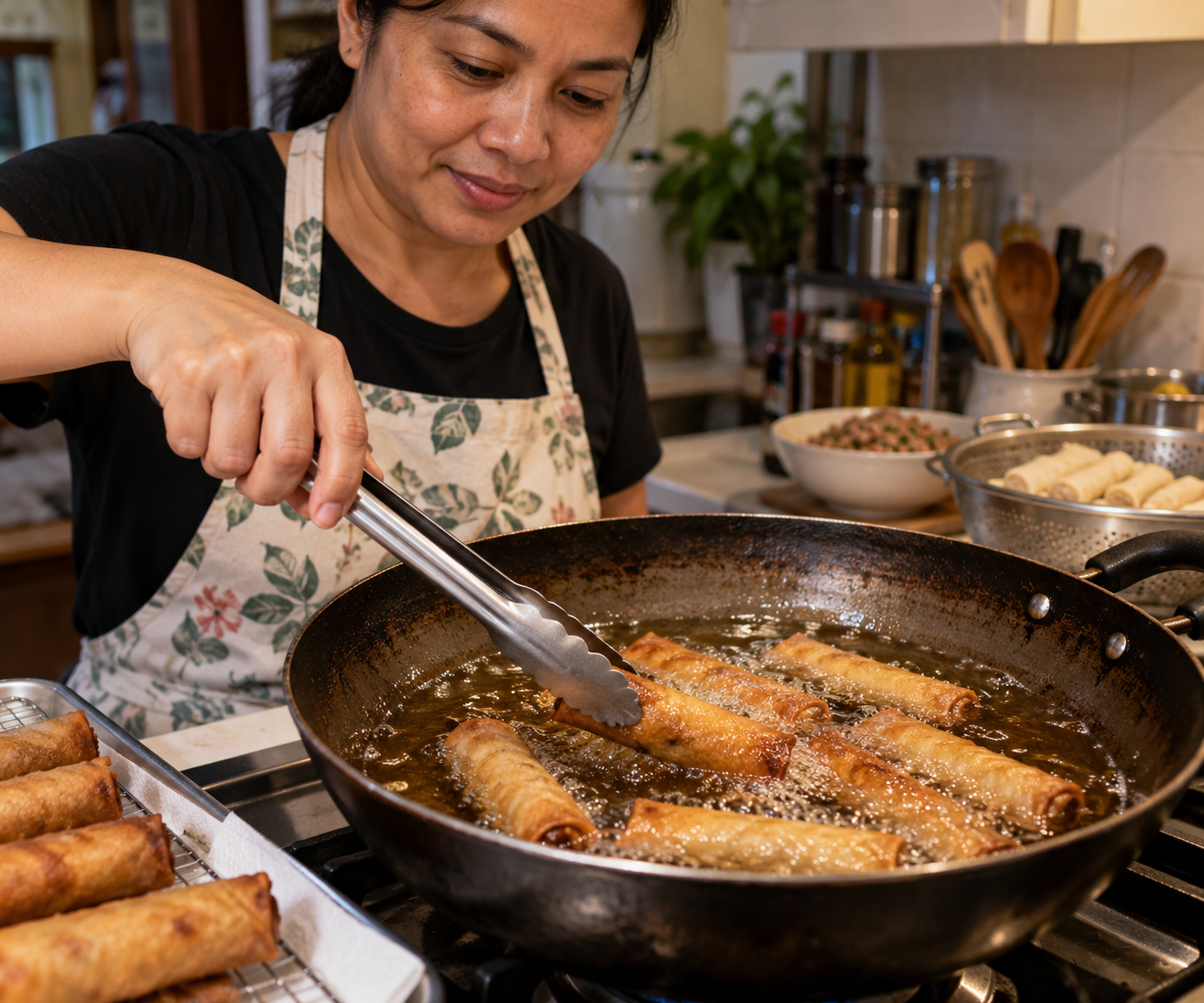
The final step separates a good lumpia from a greasy, disappointing one, and it comes down to the temperature of the oil. The oil needs to be hot enough, around a steady medium-high heat, so that the lumpia sizzles immediately and crisps quickly without absorbing a lot of grease, but not so blazing hot that the outside burns before the pork filling inside has cooked through. Finding that sweet spot is the whole game.
Too cool and they turn out pale and oily; too hot and you get a scorched shell around raw meat. A moderate, steady, carefully held heat, frying in modest batches so you never crowd the pan and send the temperature plunging, gives you evenly golden, crackling, shatteringly crisp rolls cooked right through to the juicy center. Patience at the fryer, resisting the urge to pile too many in at once, is the last small discipline that separates a great lumpia from a greasy one.
Fry them until they are deep golden brown and crisp all over, turning them so they color evenly, then lift them out and drain them well on a rack or paper towels so they stay crunchy rather than steaming soggy in their own heat. Then comes the sauce, because lumpia is made for dipping. The classic partners are sweet chili sauce and the uniquely Filipino banana ketchup, that sweet, slightly tangy, improbably red condiment that plays beautifully against the savory pork, while plenty of people prefer a sharp vinegar dipping sauce, a sawsawan, with garlic and a little chili and black pepper to cut cleanly through the richness.
Every Filipino has a strong preference, and a good host simply puts out all of them. Serve them hot and crisp, with the sauces alongside and a very large platter, because you already know what is going to happen: no matter how many you made, they are going to run out first.
Make It: Lumpiang Shanghai
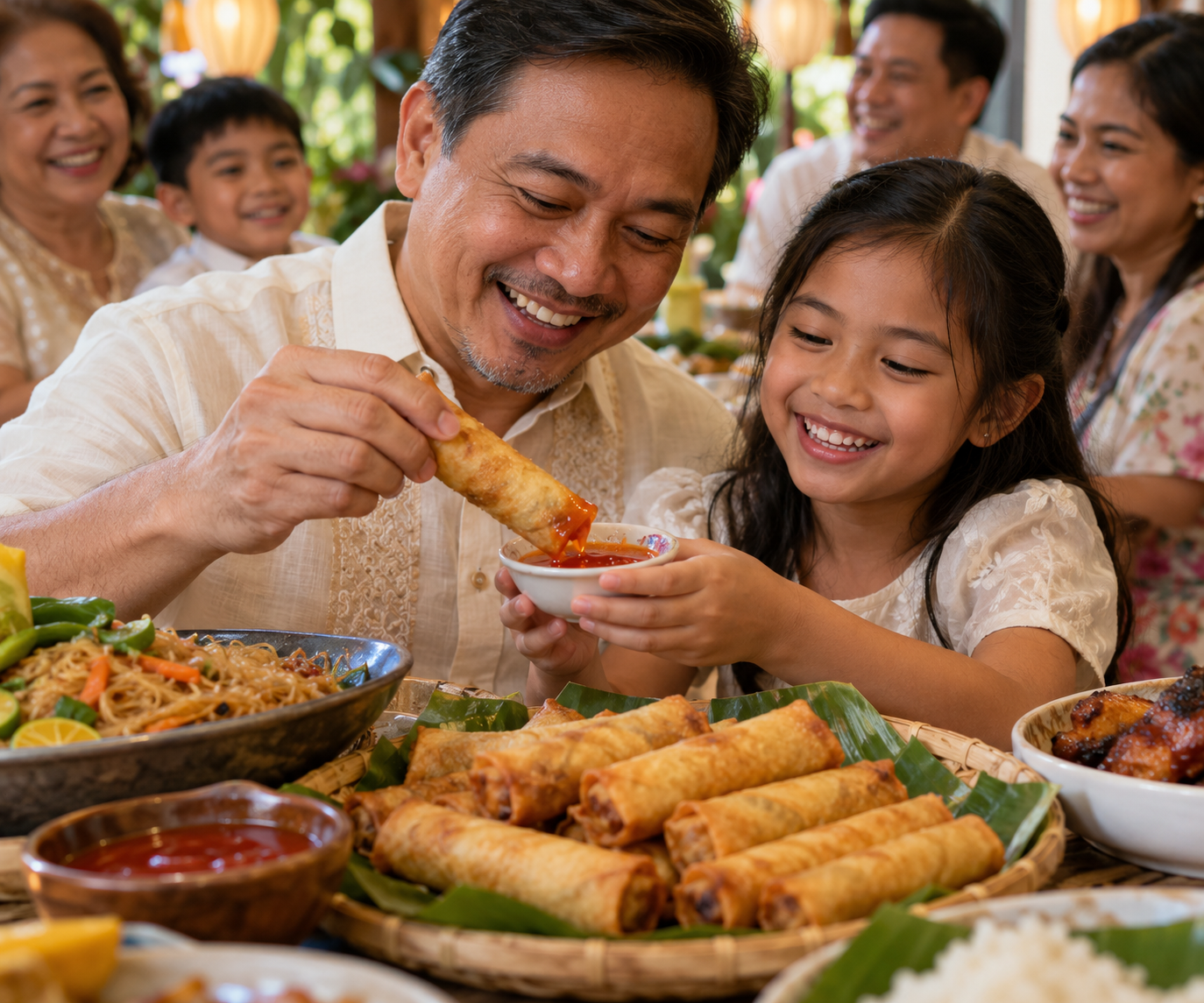
Here is a reliable family-style version. This makes a large batch, which is the only sensible quantity, roughly forty to fifty rolls, and they freeze beautifully.
Ingredients
For the filling:
- 1 lb ground pork
- 1 cup finely minced carrots
- 1/2 cup finely chopped onion
- 4 cloves garlic, minced
- a few stalks green onion, finely chopped
- 1 egg, beaten
- 2 tablespoons soy sauce
- 1 tablespoon patis (fish sauce)
- 1 teaspoon salt
- 1/2 teaspoon black pepper
- 1/4 cup minced water chestnuts or jicama, optional, for crunch
For rolling and frying:
- 1 package thin spring roll (lumpia) wrappers
- 1 egg, beaten, for sealing
- oil, for deep frying
Instructions
- Make the filling: combine the ground pork, carrots, onion, garlic, green onion, beaten egg, soy sauce, patis, salt, pepper, and water chestnuts in a bowl, and mix thoroughly with your hands until everything is evenly distributed.
- Fry or microwave a tiny pinch of the raw mixture to taste it before you roll a single one, and adjust the seasoning until it is genuinely savory and well balanced. Once rolled and frozen, the seasoning is set.
- Peel off one wrapper and lay it on your surface in a diamond shape, keeping the rest covered with a damp cloth. Place about a tablespoon of filling in a thin line across the lower third.
- Fold the bottom corner up over the filling, fold in the left and right corners snugly, and roll upward tightly into a thin cigar, sealing the final point with a dab of beaten egg. Repeat, keeping them thin and tight. (You can freeze them raw at this point and cook from frozen.)
- Heat about 2 inches of oil in a deep pan to a steady medium-high heat. Fry the lumpia in batches, not crowding the pan, turning them, until deep golden brown and crisp all over and cooked through, a few minutes each.
- Drain on a rack or paper towels and serve immediately while hot and crackling, with sweet chili sauce, banana ketchup, or a garlic-vinegar sawsawan for dipping.

About the Author: Ruben, co-founder of Gamintraveler.com since 2014, is a seasoned traveler from Spain who has explored over 100 countries since 2009. Known for his extensive travel adventures across South America, Europe, the US, Australia, New Zealand, Asia, and Africa, Ruben combines his passion for adventurous yet sustainable living with his love for cycling, highlighted by his remarkable 5-month bicycle journey from Spain to Norway. He currently resides in Spain, where he continues sharing his travel experiences with his partner, Rachel, and their son, Han.