
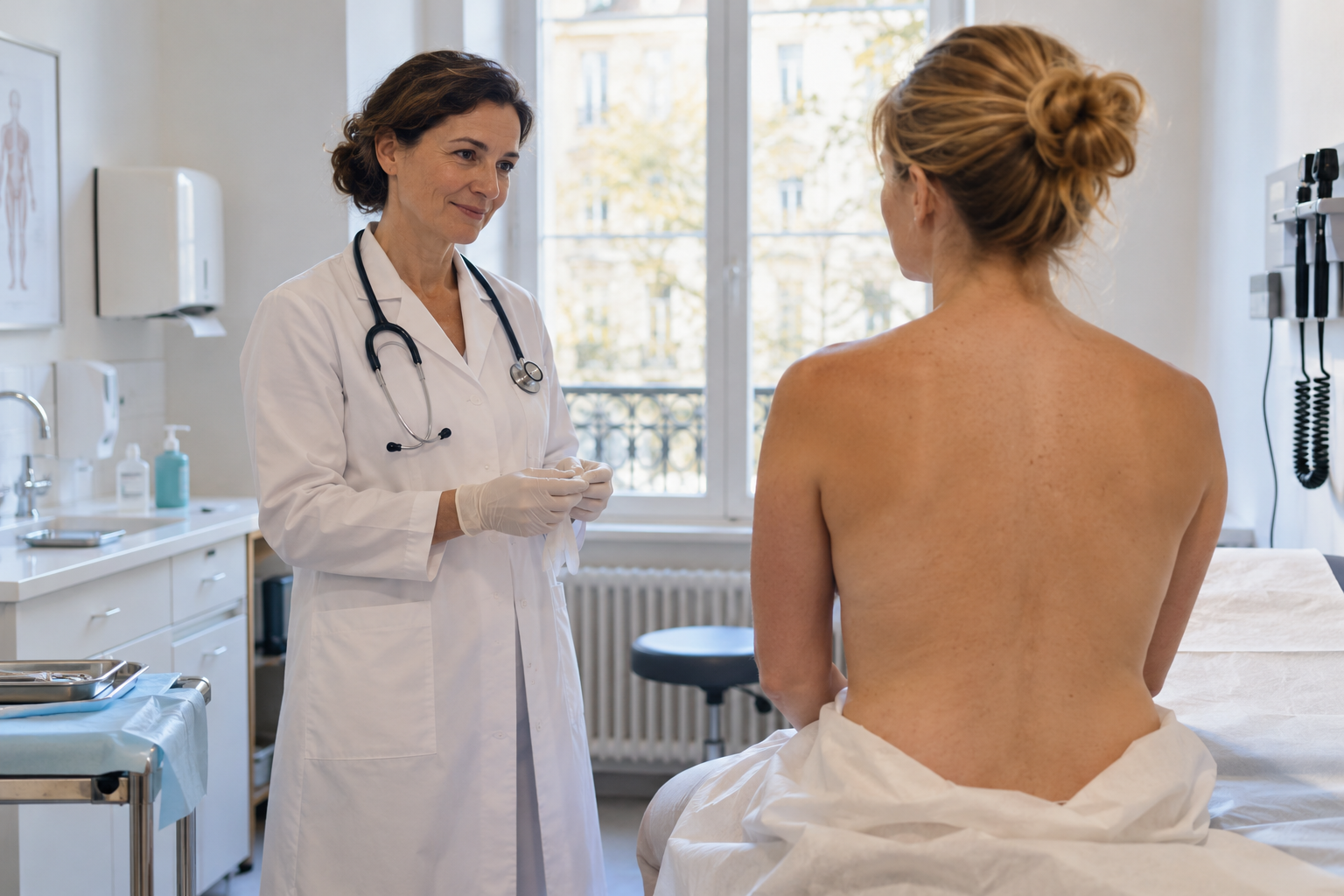
An American walks into a doctor’s office in Paris or Berlin, and somewhere in the appointment comes a moment that stops them cold. The doctor asks them to undress, and then simply waits. There is no paper gown handed over, no cloth drape to arrange over themselves, no nurse appearing as a second set of eyes, and no suggestion that the doctor will step out while they take their clothes off.
The patient is expected to undress, right there, and be examined, and to the doctor there is absolutely nothing remarkable about it. For an American raised on gowns, privacy curtains, a few private seconds to change, and a chaperone standing by, it is a genuine jolt, the kind that can make an ordinary checkup feel suddenly strange. And because it arrives without warning, it tends to land harder than it needs to. Here is what actually differs about a medical exam in parts of Europe, why doctors there do it this way, where it varies from country to country, how to prepare, and the thing every nervous patient should know above all: that you still get a say in your own exam.
What follows is the gown that is not there, the doctor who does not leave the room, the missing chaperone, why Europe does it this way, and how much it varies, plus what you can always ask for.
The Gown That Is Not There
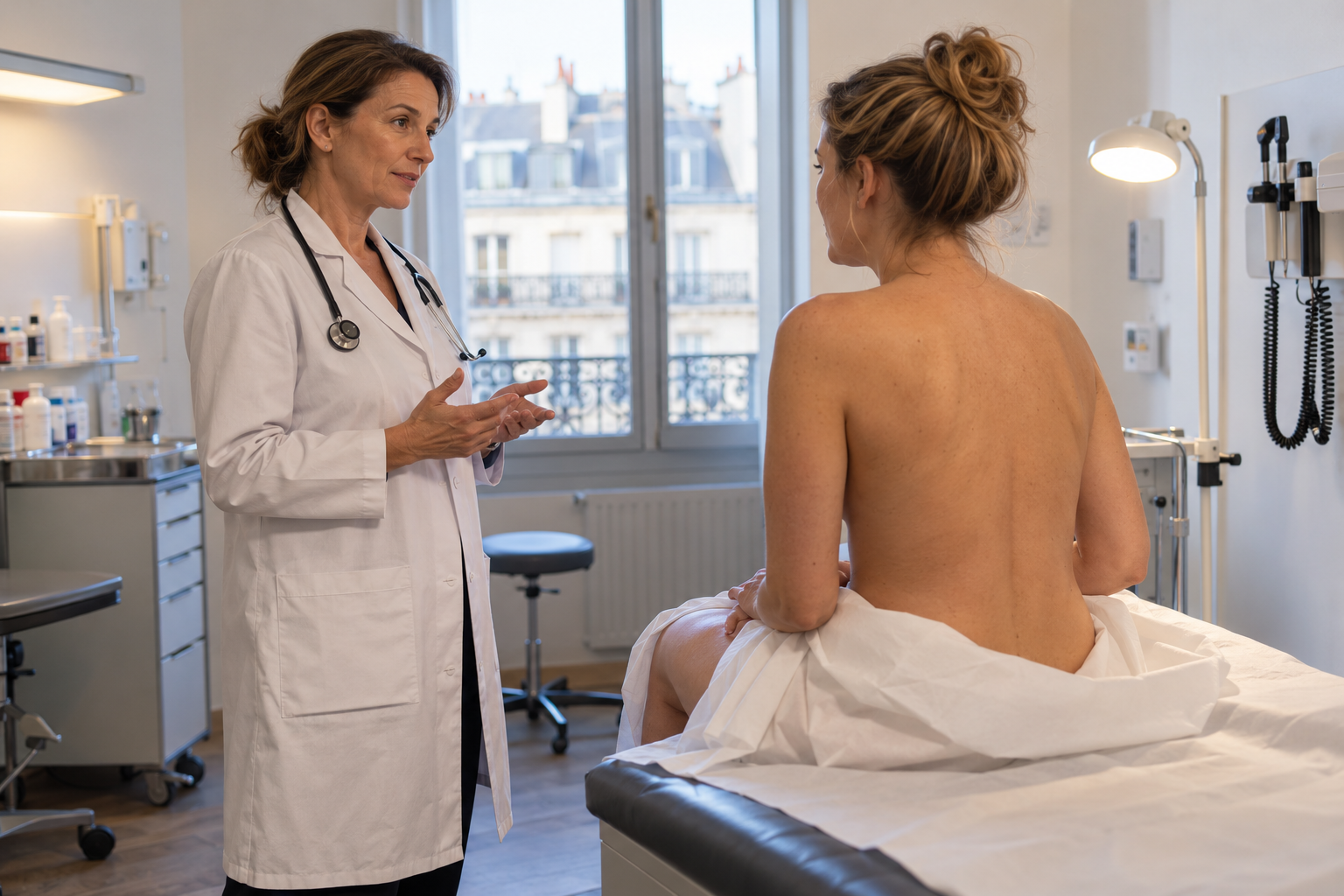
The first and most startling difference is the thing that is simply absent: the gown. In American medicine, undressing for an exam almost always means being handed a paper or cloth gown to change into, something to cover yourself with so that you are never fully exposed all at once, with the doctor uncovering only the part being examined. It is such a fixed, unquestioned part of the American experience that patients assume it is simply how medicine works everywhere. In much of Europe, and France and Germany are the clearest examples, it is not, and the realization arrives at the least convenient possible moment, mid-appointment, with your clothes already coming off. You are often asked to undress and then examined directly, with no gown and no drape in between.
To an American, lying on an exam table with nothing covering them while the doctor proceeds feels like an oversight, as though someone forgot to bring the gown. It is not an oversight. It is simply how the exam is done, and the doctor thinks no more about it than they would about asking you to roll up a sleeve. The logic, from the European side, is practical and unsentimental: the body being examined needs to be seen, a gown mostly has to be moved out of the way anyway, and the extra ritual of covering and uncovering is, to them, a bit of fuss that does not actually improve the medicine. Why hand someone a paper garment, they reason, only to ask them to move it aside a moment later.
The missing gown is the single thing American patients mention most, and it is the clearest signal that you have walked into a different set of assumptions about bodies, doctors, and what an examination even is. It is not that European doctors are indifferent to your comfort; it is that the gown was never part of how comfort gets provided in their system.
The Doctor Who Does Not Leave the Room
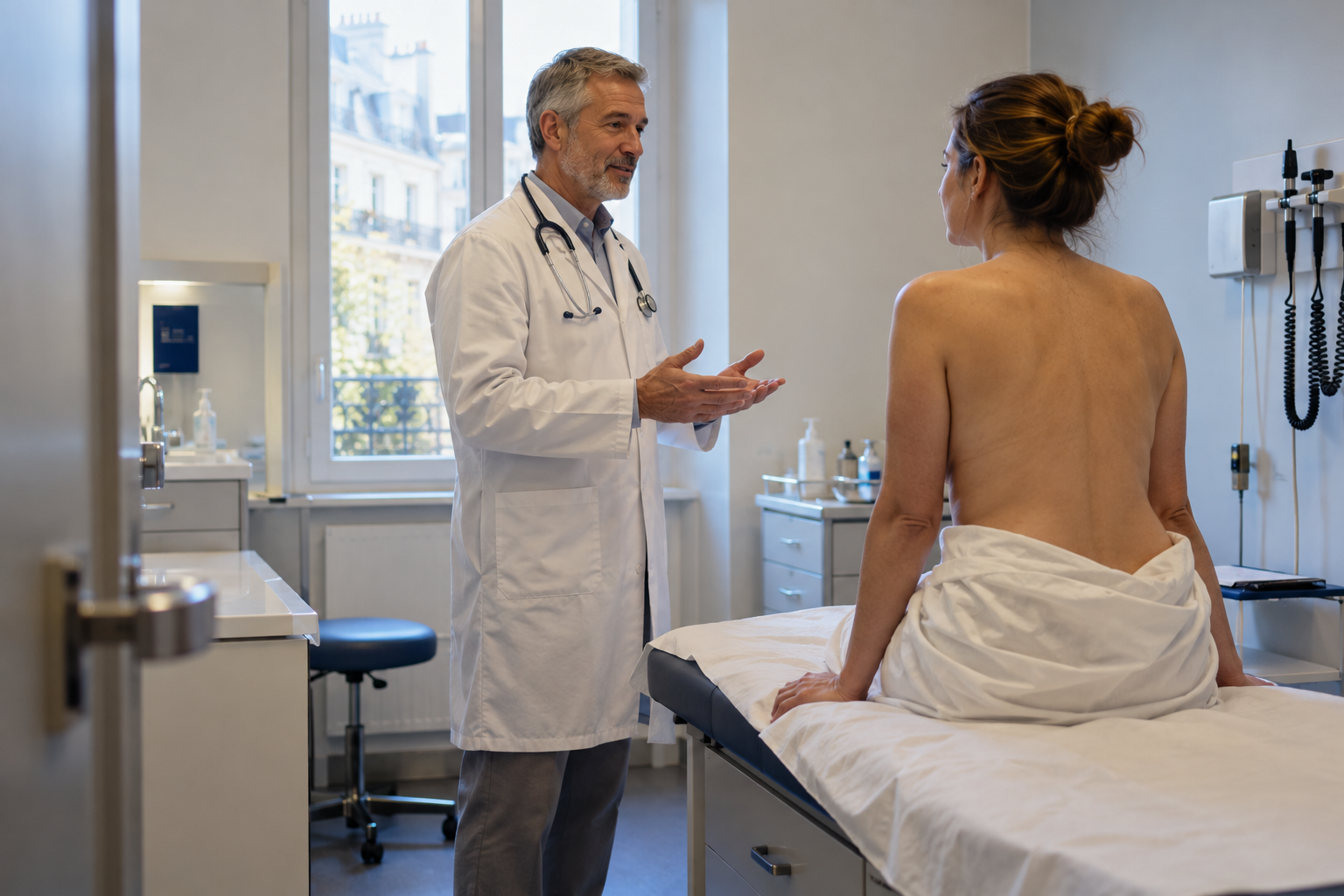
Close behind the missing gown is the missing privacy to undress. In the American version, there is a small, choreographed moment of discretion: the doctor or nurse hands you the gown, tells you to change, and leaves the room, knocking before coming back in once you are covered. You get your few private seconds to take your clothes off and arrange the gown before anyone sees you. In France and some other European countries, that interlude frequently does not happen. The doctor stays in the room, and you undress while they are there, perhaps behind a small partition if there is one, perhaps not.
For a patient used to the private changing moment, this is often the most uncomfortable part, more than the exam itself, because it removes the buffer that let them compose themselves before being seen. There is no transition, no gown to hide behind, no private thirty seconds to steel yourself, just getting undressed in the presence of the person about to examine you. For many people that unbuffered moment is the whole of the discomfort, and the exam that follows feels almost easy by comparison.
Again, to the doctor this is unremarkable and efficient. They are not standing there studying you; they are getting on with the appointment, and in their frame the few minutes an American spends changing alone behind a closed door is simply time the appointment does not need to take. Knowing in advance that the doctor may not step out is half the battle, because the shock is mostly in being surprised by it, not in the thing itself. A patient who expects it can simply undress matter-of-factly and move on; a patient who expected the familiar private moment feels the floor drop away.
The Missing Chaperone
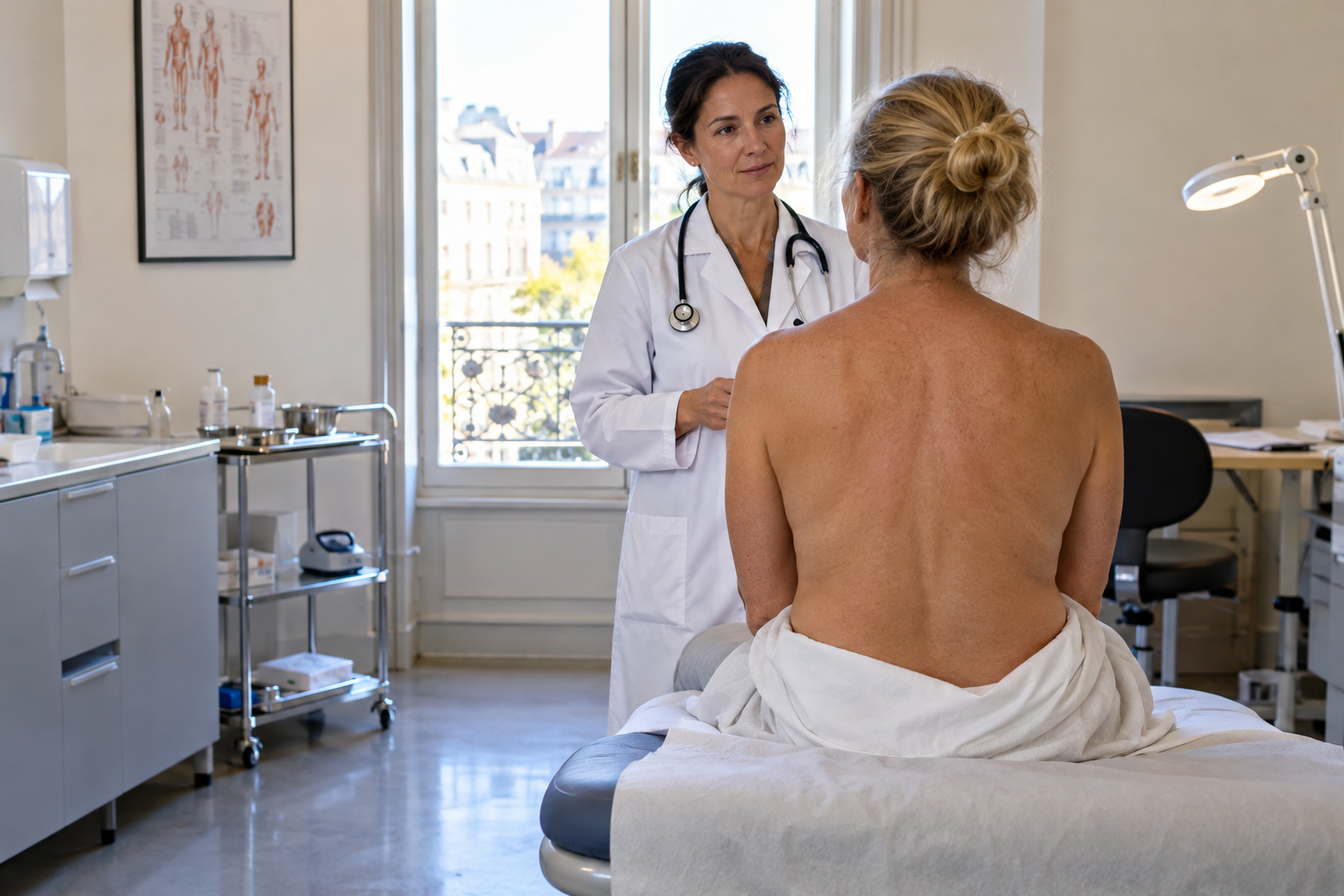
The third difference is quieter but, for many patients, the most significant: often, it is just you and the doctor in the room. In the United States, a sensitive examination, a gynecological exam above all, almost always includes a chaperone, a nurse or assistant present as a third person for the comfort and protection of both patient and doctor. It is close to standard in the United States, written into the policies of many practices, and a great many American patients have genuinely never had such an exam without a second person quietly present in the room. So its absence is not a small adjustment; it is the removal of something they assumed was simply part of how these exams are always done. In parts of Europe, particularly France and Germany, there frequently is no chaperone at all. The doctor examines you alone, with no one else in the room.
This is the difference most worth flagging honestly, because a third party in the room is, for a lot of patients, a real source of reassurance, and its absence can feel exposing in a way the missing gown does not. It is also where the variation between countries matters most, and it is worth knowing that the picture is not uniform across Europe. In Spain, for instance, some patients report that a second person often is present, closer to the American setup, even where the gown culture is more relaxed. So this is not a single European rule but a cluster of different national habits, and the chaperone is the piece most likely to differ depending on exactly where you are. If having someone else in the room matters to you, whether for comfort, for protection, or simply because it is what you are used to, it is something you can and should raise, which we will come to. There is nothing demanding or rude about asking; it is a normal request that reasonable doctors expect to field.
Why Europe Does It This Way
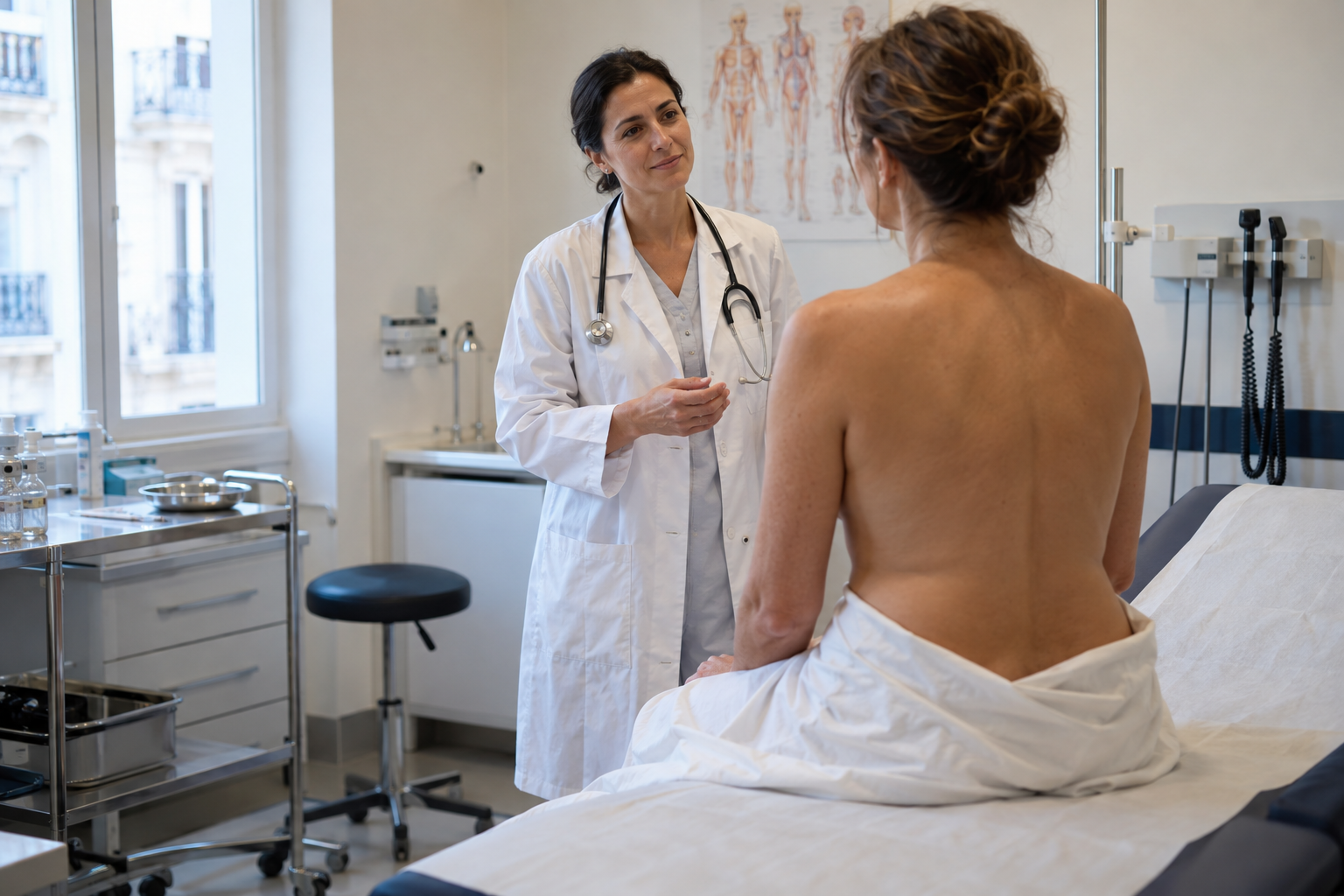
It is tempting for an American to read all this as European medicine being careless about dignity, but that misreads it, and understanding the actual reasons makes the whole thing far less alarming. Part of it is the same body-matter-of-factness that runs through European life more broadly, the same cultural current that makes a mixed nude sauna unremarkable in Germany. In a culture where the unclothed body is treated as ordinary rather than charged, a doctor seeing you undressed is simply a doctor doing their job, and the elaborate American apparatus of gowns, drapes, private changing, and chaperones can look, from that side, like a great deal of ceremony built up around what is, medically, a complete non-event. The two cultures are not disagreeing about dignity so much as about where the body sits on the scale of ordinary to sensitive.
The other part is about a different medical and legal culture. A great deal of the American machinery of gowns, drapes, and mandatory chaperones grew up in a highly litigious environment, shaped by concerns about liability and accusations of impropriety, where the chaperone protects the doctor as much as the patient. European systems, generally operating in a less litigious climate, never built the same elaborate defenses, and so the exam stayed simpler and more direct.
There is also a straightforward efficiency logic: in busy public health systems, the minutes saved by skipping the change-and-cover ritual add up. None of this means the European approach is better or worse than the American one. It means the two systems made different trade-offs between privacy ceremony on one side and directness on the other, and a traveler is simply crossing from one set of trade-offs into another, neither of which is wrong. Once you see it as a difference in trade-offs rather than a lapse in standards, the alarm drains out of it.
What to Do Before You Go
If you are traveling or moving to Europe and the prospect of all this makes you tense, the good news is that a little preparation removes almost all of the sting, because the shock lives in being caught off guard, not in the exam itself. The single most useful thing you can do is simply expect it. A patient who walks into a French or German exam room already knowing that there may be no gown, that the doctor may not leave, and that there may be no nurse is a patient who can take it in stride, because none of it will be a surprise. Half of the distress American patients describe comes purely from the ambush of it, the assumption that the American ritual is universal colliding with a room that runs on different rules.
Beyond expecting it, a few concrete moves help. If you have a choice of doctor, you can look for an English-speaking or international practice, which often blends the two cultures and may offer more of the privacy you are used to. You can call the clinic ahead and simply ask what to expect, whether a gown is provided and whether a chaperone can be present, which is a completely normal question that no receptionist anywhere will find strange, and which lets you walk in already knowing the shape of the appointment. A two-minute phone call can erase the entire surprise.
You can bring your partner or a friend to the appointment and ask that they stay in the room. And you can learn the one or two phrases you might need in the local language, or have them written down, so that asking for a cover or for privacy does not depend on your nerve and your vocabulary failing you at the worst moment. A doctor who knows you would like a gown before the exam begins can hand you one before anything awkward happens. Preparation turns the whole thing from an ordeal you endure into an appointment you manage, which is exactly where you want to be, especially somewhere you do not fully speak the language. Walk in informed and a little bit ready, and the famous European culture shock mostly evaporates.
It Varies, and You Still Have a Say
Two things are worth holding onto as you absorb all this, and the second is the most important sentence in this piece. The first is that this is not a single, uniform European rule, and you should not expect every doctor on the continent to behave the same way. The no-gown, doctor-stays, no-chaperone pattern is most pronounced in France and Germany, softer or different in other countries, and variable even from one doctor to the next, with younger doctors and private practices sometimes closer to the American style. Cities differ from villages, specialists from general practitioners, teaching hospitals from small private offices. Treat it as a possibility to be prepared for, not a grim certainty to brace against, because plenty of European medical encounters look reassuringly familiar, and the ones that do not are navigable once you know they are coming.
The second and far more important thing is this: you are not a passive passenger in your own medical exam, and you can ask for what you need.
If being fully undressed without a gown is distressing, you can ask for a gown, a sheet, a towel, anything to cover with, and most doctors will accommodate it without blinking.
If you want to undress in private, you can ask the doctor to step out or to turn away. And if you want a chaperone, a nurse, your partner, someone in the room, you are entitled to request one, and a good doctor anywhere will respect that. The European norm is a default, not a demand, and the honest truth underneath the whole culture shock is that your dignity and comfort remain yours to protect, in any country, simply by speaking up for yourself before or during the exam. No one is going to take offense, and the good doctors expect it. Knowing the norm exists means you can decide in advance how you want to handle it, rather than being ambushed by it on the table.

About the Author: Ruben, co-founder of Gamintraveler.com since 2014, is a seasoned traveler from Spain who has explored over 100 countries since 2009. Known for his extensive travel adventures across South America, Europe, the US, Australia, New Zealand, Asia, and Africa, Ruben combines his passion for adventurous yet sustainable living with his love for cycling, highlighted by his remarkable 5-month bicycle journey from Spain to Norway. He currently resides in Spain, where he continues sharing his travel experiences with his partner, Rachel, and their son, Han.