
It may be the poorest soup in Spain, and it is also one of the most loved. Picture the ingredients: garlic, stale bread, paprika, olive oil, water, and an egg. That is very nearly the whole list, pennies in a bowl, and out of it comes something so warming, so savory, so deeply comforting on a cold evening that generations of Spanish grandmothers have reached for it the moment the first real chill of winter arrives, and gone on making it long after they could have afforded far grander things. It is called sopa de ajo, garlic soup, and it is the kind of dish that teaches you food was never really about expensive ingredients. Here is the story of this humble soup, what makes it so much more than the sum of its parts, when Spain reaches for it, and exactly how to make it in your own kitchen on the first cold night of the year. It costs almost nothing and gives almost everything, which is the whole point of it.
What follows is where the soup comes from, the handful of ingredients and the one rule that matters, when Spaniards actually eat it, why it tastes of so much more than it should, and how to make it yourself.
A Soup Born of Having Nothing
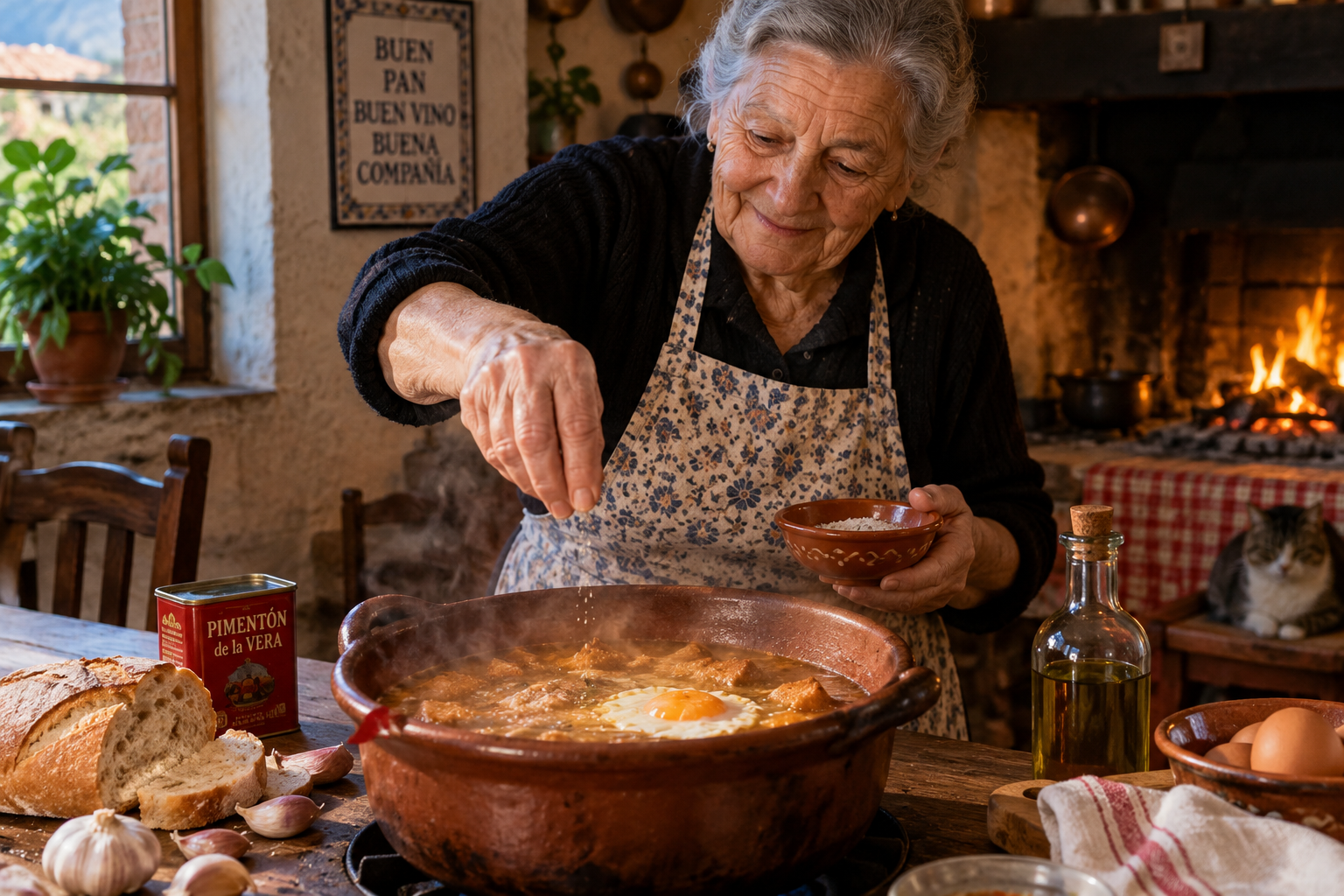
Sopa de ajo is, at its heart, poverty food, and that is not an insult but the whole point of it. It comes from the high, cold plains of Castile in central Spain, a hard land of long winters, where shepherds and laborers and poor families needed to make a hot, filling meal from whatever was left in the kitchen, which was often very little. Stale bread that would otherwise be wasted, a head of garlic, the paprika that hangs in every Spanish pantry, the oil that Spain has always had, and water. From those scraps, necessity conjured a soup that could warm a body and fill a stomach for almost nothing.
That origin is written into every bowl. This is a dish built on the old peasant genius for turning nothing into something, the same instinct that produced the great humble soups all across Europe, and it carries the quiet dignity of food made by people who could not afford to waste a single crust of bread. There is nothing apologetic about it; it is proud of being made from almost nothing, because being made from almost nothing is exactly what it was for.
It was, for centuries, exactly the kind of thing a grandmother made because it was what there was, and because it worked, and because her mother had made it the same way. The fact that it is now eaten by choice rather than by necessity, cooked in comfortable kitchens by people who could make anything they liked, is the highest compliment a poor man’s dish can ever receive. Plenty of foods born of hardship were abandoned the moment people could afford better; this one was kept, lovingly, because better never tasted quite as much like home. It survived not because anyone had to eat it anymore, but because it was simply too good to let go, and too comforting, to let go.
The Humble Ingredients, and the One Rule
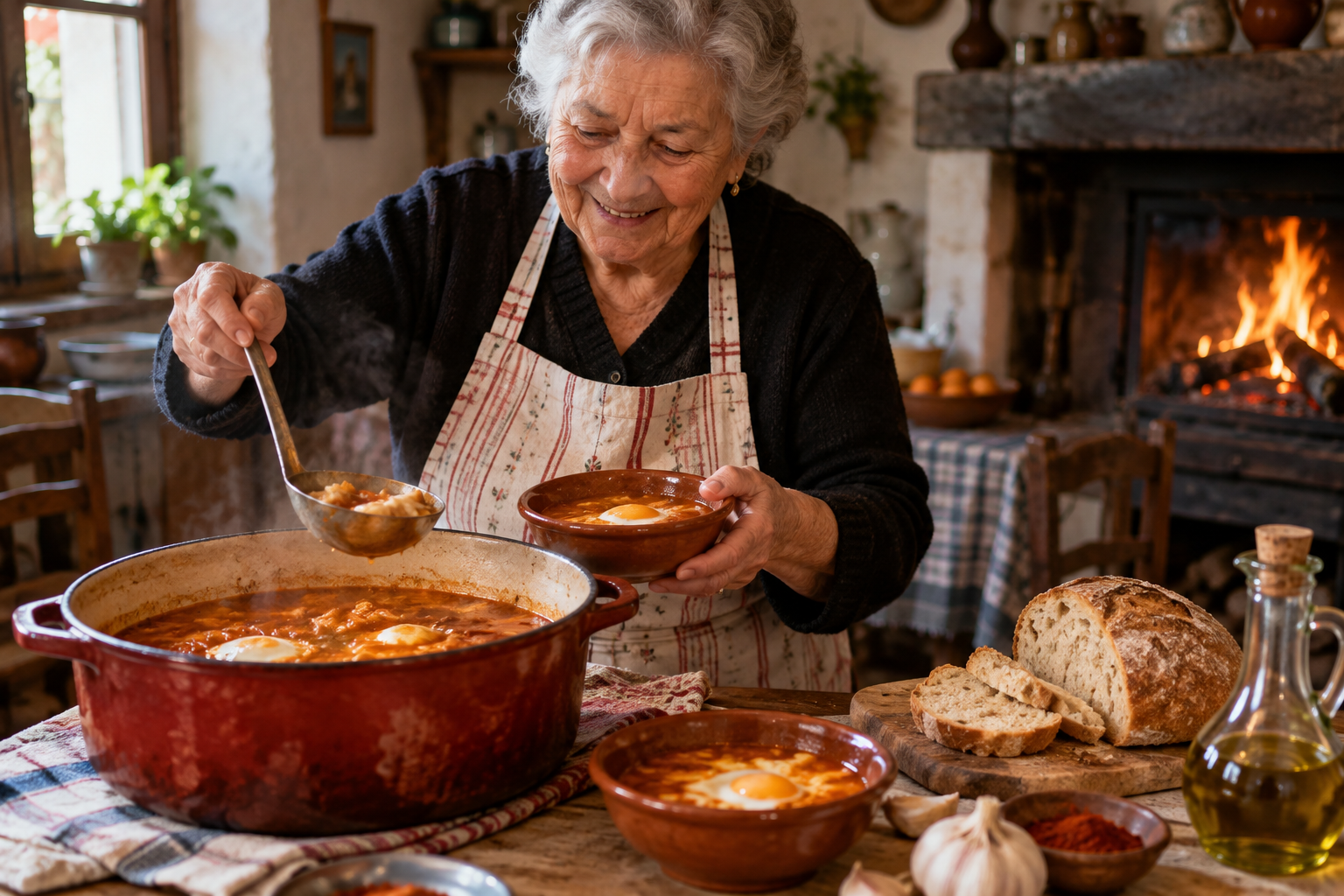
The ingredient list is almost comically short, and understanding each part is most of the recipe. The garlic is the soul of it, sliced and gently fried in good olive oil until golden and fragrant but never burnt. The bread, ideally a day or two old and slightly dry, is the body, soaking up the liquid and giving the soup its substance; fresh bread turns to mush, which is one reason stale bread is not a compromise here but the correct choice. The pimenton, Spanish paprika, sweet or smoky, is the color and the backbone of the flavor, staining the whole soup a deep rust red. And water or a light broth is the liquid that pulls it all together, with an egg cracked in at the end to enrich it and turn a thin soup into a small meal. That egg is the one touch of luxury in an otherwise austere bowl, and in the lean years it was the difference between a snack and supper.
There is really only one rule you must not break, and it is the one every Spanish cook learns early: do not burn the paprika. Paprika scorches in an instant in hot oil and turns bitter, ruining the whole pot, so the trick is to add it off the heat, or with the pan pulled back, stirring it quickly into the warm garlicky oil so it blooms and releases its color and sweetness without catching. Get that one moment right, the paprika bloomed in warm oil and not scorched in hot, and the rest of the soup is nearly impossible to mess up. It is the single hinge the whole dish turns on, and once you have done it once, you will never think about it again. Everything else is forgiving; this single step is the one that separates a glorious bowl from a bitter one, and it is exactly the kind of small, crucial wisdom a grandmother passes on without ever writing it down.
When Spain Reaches for It
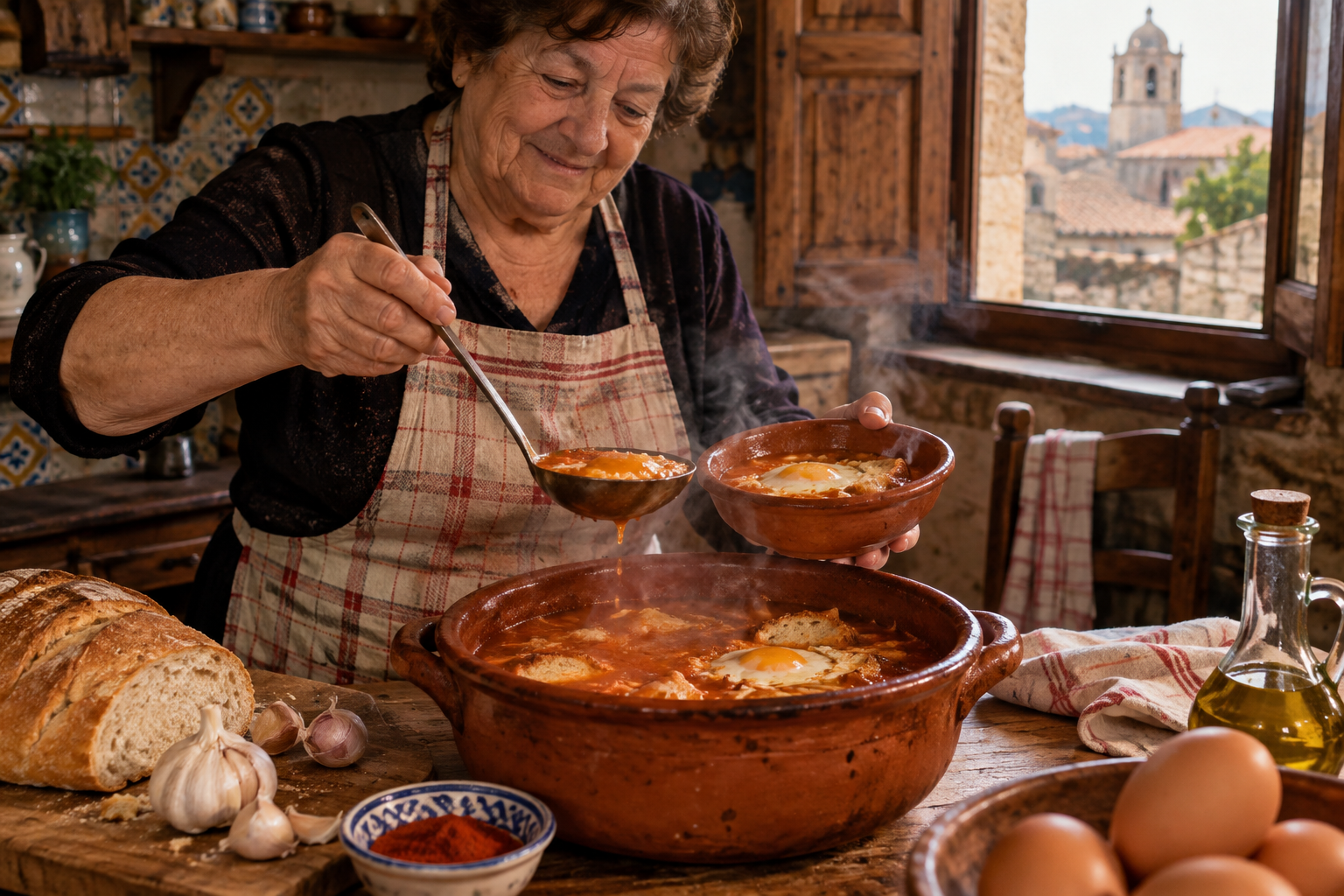
Sopa de ajo has its seasons and its moments, and knowing them tells you something about the Spanish table. Above all it is cold-weather food, the soup that appears when winter arrives and the cheap, warming, restorative nature of it is most welcome, a bowl to thaw you from the inside after a freezing day. It is deeply associated with the center and north of Spain, with Castile and its bitter, wind-scoured winters, and it belongs to the long and proud tradition of Spanish comfort food that leans, over and over, on the holy trinity of good bread, good garlic, and good olive oil. Give a Spaniard those three things and a little paprika, and they will feed you well.
It has other roles too. It is traditional Holy Week food in parts of Spain, a meatless dish that fit the old fasting rules, which is part of why it spread and endured.
And it has earned a modern reputation as a restorative, the kind of hot, garlicky, egg-enriched bowl that a Spaniard might reach for the morning after a long night, a folk remedy and a genuine comfort at once. But its truest home is simply the winter kitchen, the pot a grandmother puts on when the weather turns, filling the house with the smell of frying garlic and paprika, a smell that to many Spaniards is the very scent of being cared for on a cold day, bound up with childhood and home in a way no restaurant could ever reproduce. You can smell it from the doorway and know, before you have taken off your coat, that someone was thinking of you. It is not a dish for a dinner party or a special occasion, and it would look almost comically plain next to a paella. It is a dish for a cold, ordinary Tuesday in January, made quietly for the people you love, and that ordinariness is exactly what makes it precious rather than less so.
Why It Tastes of So Much More
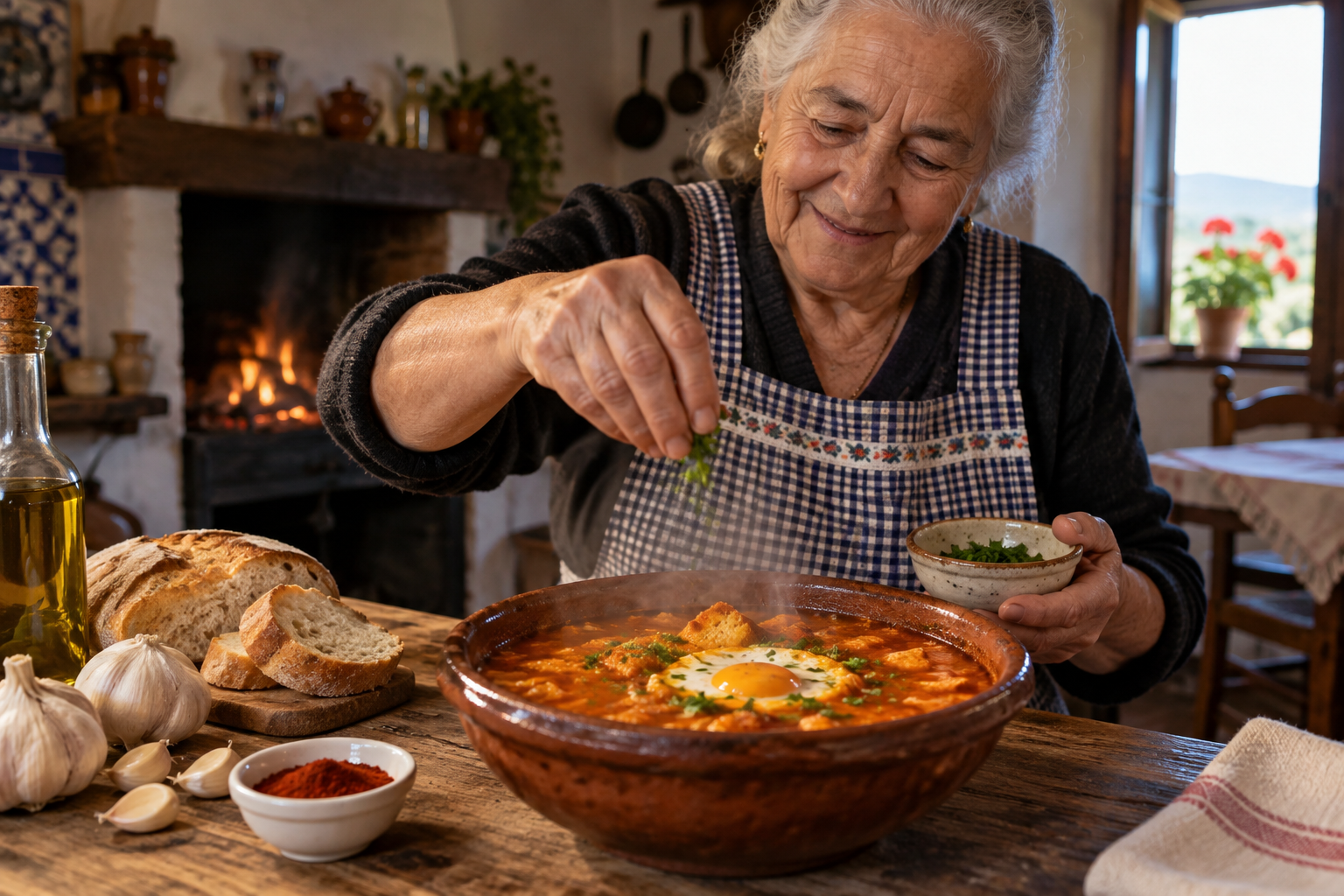
Here is the small miracle at the center of sopa de ajo, the thing that surprises everyone who makes it for the first time: it tastes far richer than four cheap ingredients have any right to. You sit down expecting thin garlic water, braced for disappointment, and you get something savory and rounded and deeply comforting instead, a soup with real depth and a warmth that seems to spread outward from the first spoonful. The question of how is worth answering, because it reveals how this entire kind of cooking works, where flavor comes not from the shopping list but from what you do with it. The secret is transformation through technique, not expense. Gently frying the garlic in oil until golden draws out a sweet, nutty depth entirely different from raw garlic’s harshness. Blooming the paprika in that warm oil releases flavors and a richness that paprika stirred into liquid never gives.
The bread does more than bulk out the bowl; as it breaks down into the broth it thickens the soup and lends it body, turning thin liquid into something with substance and a silky texture. And the egg, poached gently in the hot soup or stirred through at the end, adds richness and protein and that final touch of luxury, its soft yolk mingling into the broth. Each humble step contributes something the raw ingredient could not, and together they build a flavor that feels expensive and generous out of parts that cost almost nothing. That is the deep lesson of grandmother cooking everywhere, and sopa de ajo is one of its purest examples: that real comfort food is not bought but made, coaxed out of cheap things by patience, heat, and a little inherited wisdom. Learn to make this one soup well, and you understand something true not just about Spain but about the whole tradition of humble cooking: that the cheapest ingredients, handled with a little care and inherited know-how, can produce more comfort than almost anything money can buy.
It Has Cousins All Over Europe
If sopa de ajo feels like it taps into something older and wider than Spain, that is because it does. The idea at its core, stale bread softened in a hot, savory liquid and enriched with an egg or a little fat, is one of the most ancient and widespread in European cooking, and nearly every country that knew hard winters and valued its bread came up with a version. Italy has pancotto and the Tuscan bread soups, bread cooked down into broth until thick and comforting. France has the panade, a humble bread soup, and the garlic soups of the south. Portugal has acorda, bread and garlic and fresh coriander bound together with an egg, which may be the closest cousin of all, near enough to be a sibling.
Across the continent, the same frugal logic produced the same kind of dish again and again: never waste the bread, build warmth and flavor from garlic and fat and whatever you have, and finish with an egg if you are lucky enough to have one. Sopa de ajo is Spain’s entry in that great family of peasant bread soups, shaped by Castilian winters and Spanish paprika into something distinctly its own, but part of a tradition that stretches right across Europe. Knowing that gives the little bowl a kind of depth beyond its ingredients, the sense that when you make it, you are cooking the way a whole continent of grandmothers once cooked, for the same reasons, against the same cold.
Make It: Sopa de Ajo
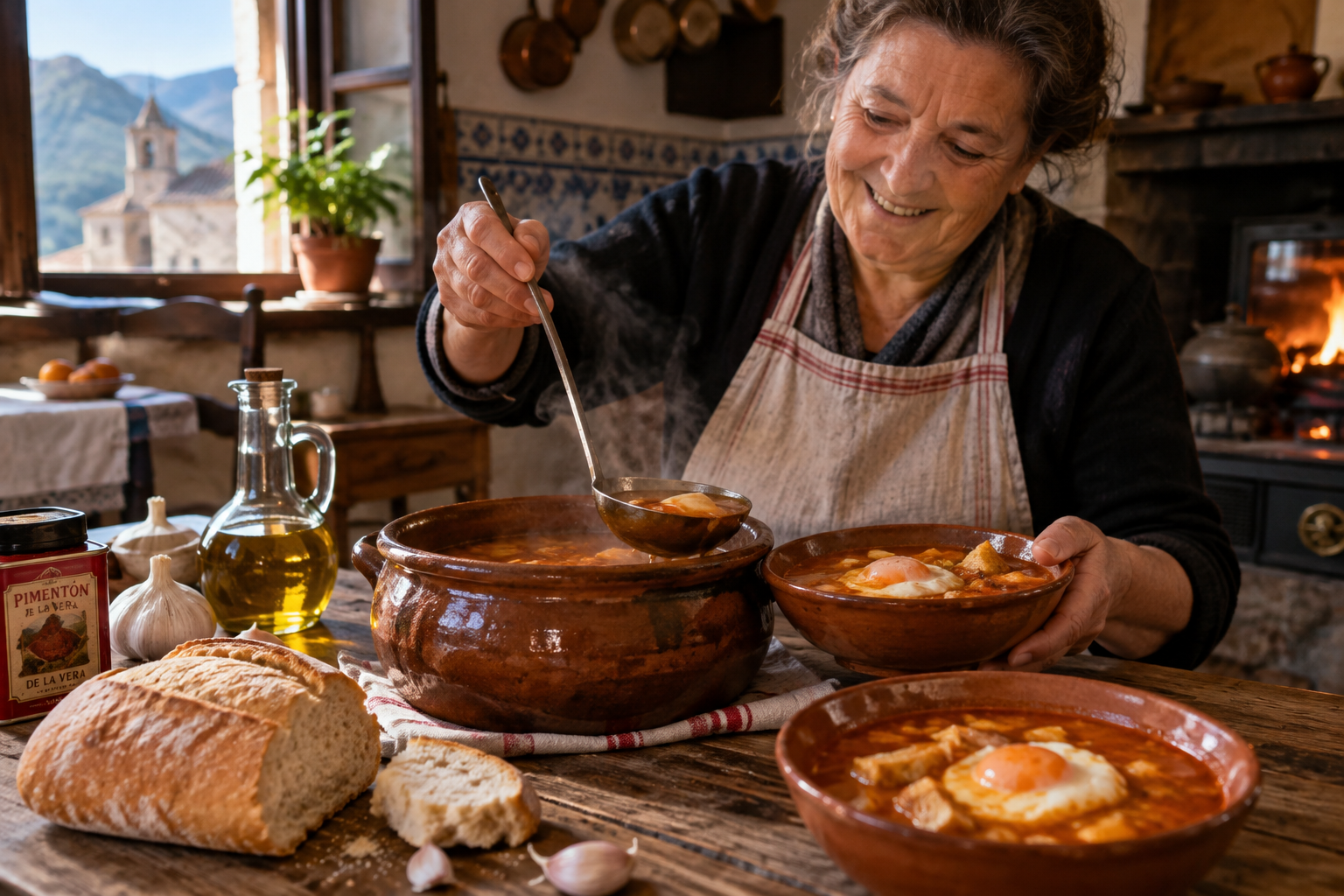
This is forgiving, cheap, and genuinely quick, the perfect thing for a cold evening when you want something warm and nourishing with almost nothing in the house. Remember the one rule, do not burn the paprika, and you cannot go far wrong.
Serves 4. About 10 minutes of prep and 25 minutes of cooking.
Ingredients:
- 6 to 8 cloves of garlic, thinly sliced
- 4 tablespoons olive oil
- About 150 g (a few thick slices) of day-old crusty bread, torn or sliced
- 1 tablespoon sweet or smoked Spanish paprika (pimenton)
- 1.2 liters (about 5 cups) water or light chicken or vegetable broth
- Salt to taste
- 4 eggs
- Optional: a little chopped jamon or chorizo, added with the garlic
Instructions
- Heat the olive oil in a pot over medium heat. Add the sliced garlic and fry gently, stirring, until it turns golden and fragrant, a few minutes. Do not let it brown too hard or burn. If using jamon or chorizo, add it here to crisp a little.
- Add the torn bread to the pot and stir it around in the oil for a minute or two so it soaks up the flavor and toasts slightly.
- Now the crucial moment: pull the pot off the heat, or lower it right down, and stir in the paprika quickly, coating everything, letting it bloom in the warm oil for just a few seconds without burning. It should turn deep red and smell wonderful, not acrid.
- Immediately pour in the water or broth to stop the paprika cooking further, return to the heat, add a good pinch of salt, and bring to a gentle simmer. Let it cook for about 15 to 20 minutes, until the bread has largely broken down and the soup has thickened and taken on a rich red color. Taste and adjust the salt.
- To finish, crack the eggs gently into the simmering soup and let them poach for a few minutes until the whites are set but the yolks still soft, or, for a more rustic version, beat the eggs and stir them through the hot soup so they form soft ribbons. Serve at once, very hot, giving each bowl an egg.
A note on the bread and the broth: stale, sturdy, crusty bread is genuinely better here than fresh, so this is a wonderful way to use up a loaf past its best. Water makes an authentic, austere version, while a light broth makes it a touch richer, so use whichever suits you. The soup is meant to be humble; resist the urge to fancy it up, because its whole charm is how much it gives for how little.

About the Author: Ruben, co-founder of Gamintraveler.com since 2014, is a seasoned traveler from Spain who has explored over 100 countries since 2009. Known for his extensive travel adventures across South America, Europe, the US, Australia, New Zealand, Asia, and Africa, Ruben combines his passion for adventurous yet sustainable living with his love for cycling, highlighted by his remarkable 5-month bicycle journey from Spain to Norway. He currently resides in Spain, where he continues sharing his travel experiences with his partner, Rachel, and their son, Han.