
Ask an American home cook what it takes to make a proper French beef stew, and you will hear a familiar liturgy of rules, most of them absorbed, directly or secondhand, from a certain famous French cookbook and the TV chef who wrote it. You must brown the meat in small batches so the pan never crowds. You must sear each side until it is deeply, darkly crusted. You must cook the bacon, mushrooms, and pearl onions separately, then reunite them at the end. You must build the sauce in careful layers and braise the whole thing low and slow for the better part of an afternoon. It is a glorious dish, and it is also a project, the kind of thing you attempt on a free Sunday and not a Tuesday night.
But here is the secret French home cooks have always known, the one the elaborate version buried: you can ignore nearly every one of those rules, throw it all in a single pot, and still have a deeply satisfying French stew on the table on an ordinary weeknight. Here is the weeknight French stew that breaks all the rules, why breaking them works, and how to make it on an ordinary Tuesday with a cheap cut and a single pot. It is one of the most useful things a home cook can learn, because it turns a special-occasion dish into a regular one.
What follows is the rulebook the fancy version taught you, the humbler French tradition that cheerfully ignores it, why the shortcuts work, what you actually gain, and how to make a one-pot French stew any night of the week.
The Rules You Were Taught
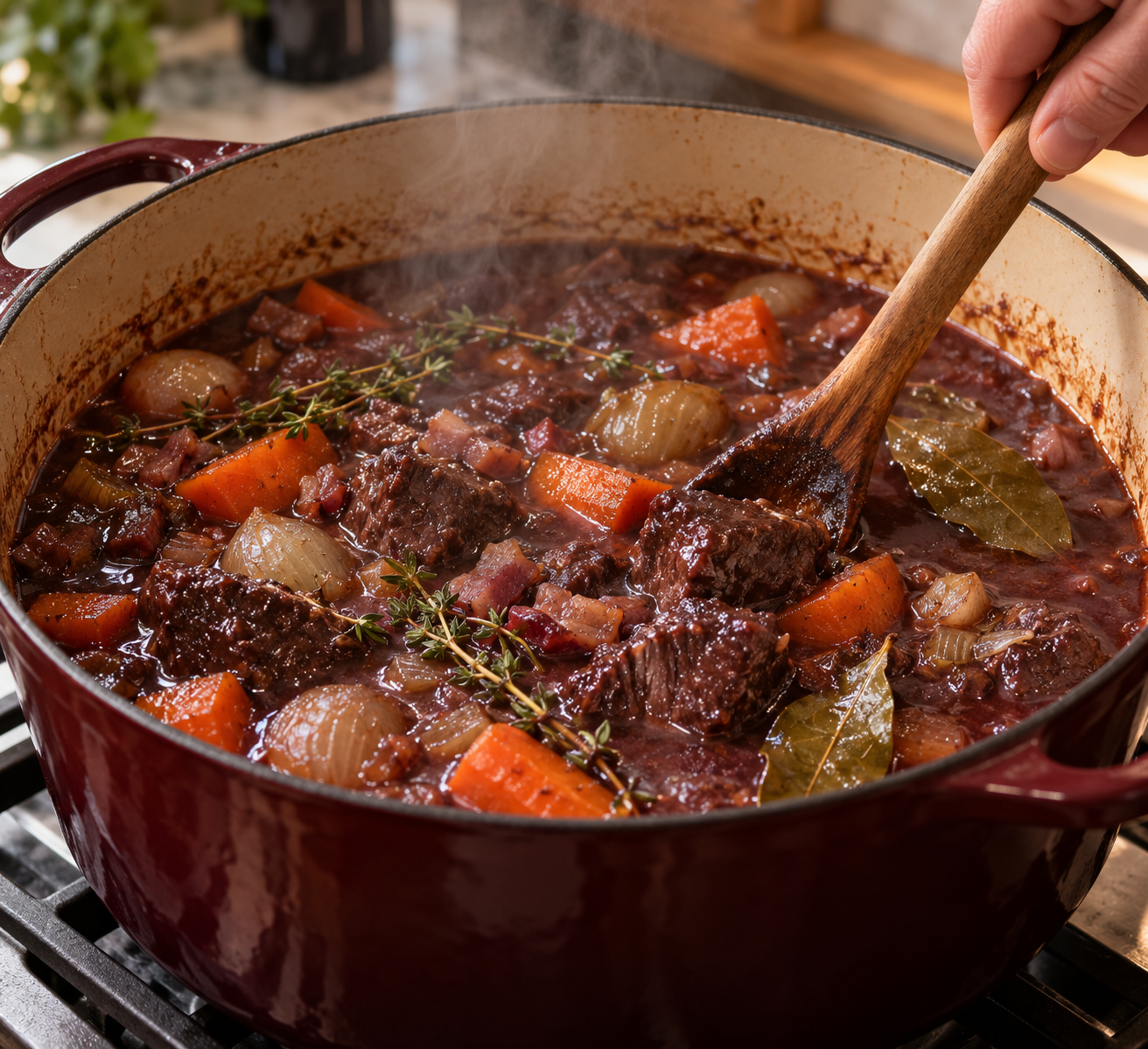
The rules American cooks absorbed about French beef stew nearly all come from the grand, restaurant-style version of boeuf bourguignon, the one that crossed the Atlantic and became the gold standard. And that version really does demand them.
Brown the beef in batches, every recipe insists, because crowding the pan steams the meat instead of searing it and you lose the deep browned flavor that is the base of the dish. Do not skip the sear, they warn, it is where the flavor lives. Cook the garnish, the bacon lardons, the mushrooms, the little pearl onions, in separate pans so each is perfectly golden, then fold them in at the very end for the ideal texture. Deglaze, layer, reduce. And then braise, gently, for two to three hours, because that is what turns tough beef tender and melds the flavors.
None of this is wrong. Followed faithfully, it produces a magnificent stew, and if you have an afternoon and the patience, it is genuinely worth doing once in a while.
But look at that list honestly and you will see why the classic bourguignon is a weekend dish and not a weeknight one. It is not one pot; it is three or four pans and a colander. It is not quick; it is hours. It is not simple; it is a sequence of fussy, carefully timed steps that demand your attention from start to finish.
For a Tuesday, with work behind you and dinner needed soon, it is simply too much, which is exactly why so many people file French stew under special-occasion cooking and never make it at all. The rules are real, and they do make the dish better, but so is the cost of following them, counted in pans, hours, and the sheer activation energy of starting such a project after a long day. That cost is why most people admire the recipe and never actually cook it.
The Humbler French Tradition
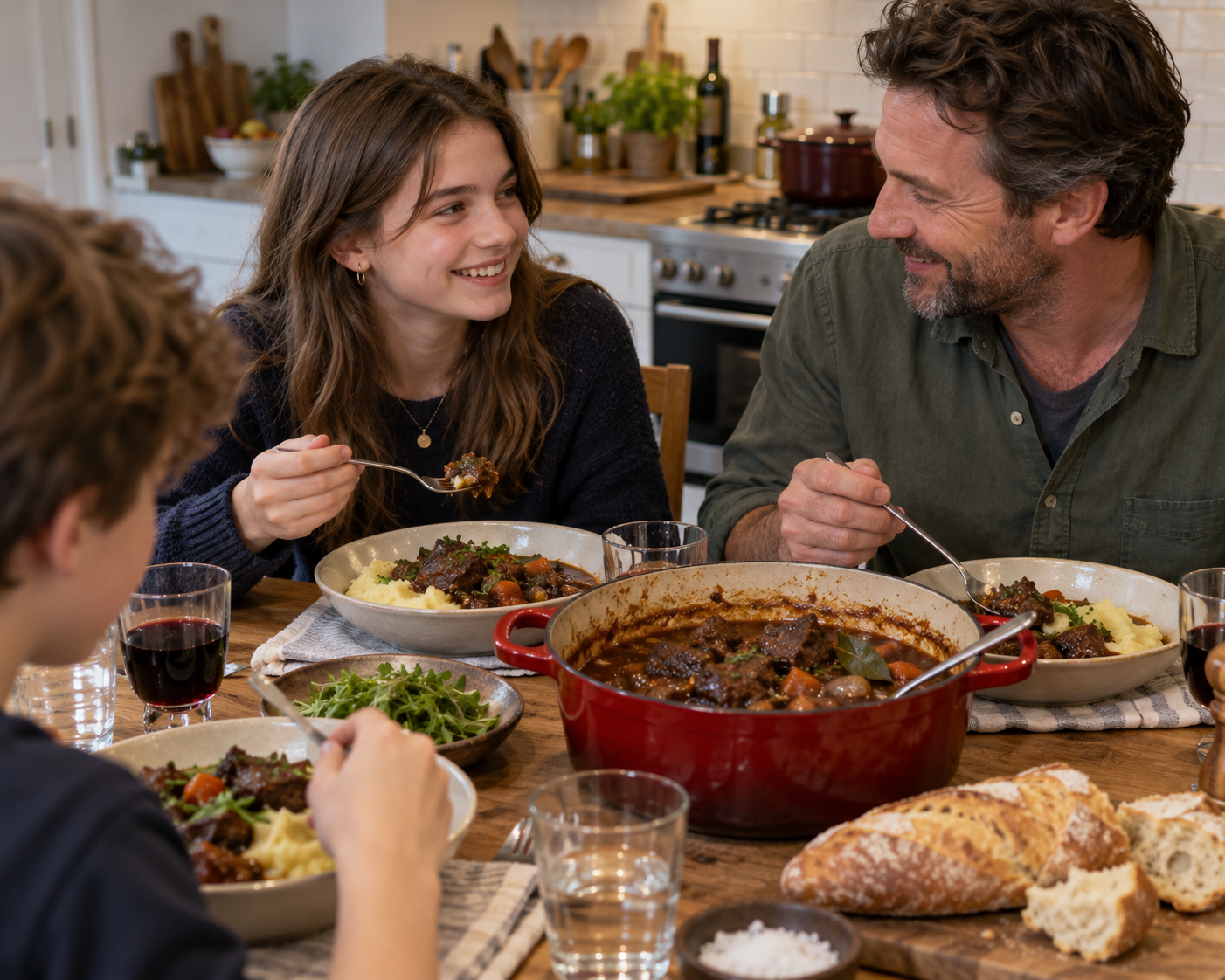
Here is what the cookbook version obscures: the elaborate, batch-browned, multi-pan bourguignon is the fancy end of French cooking, not the everyday reality. In French homes, across generations, ordinary cooks have made simple one-pot stews, humble daubes and pot-au-feu-style braises, without most of that ceremony, because home cooking on a weeknight never had time for it. The grandmother making a stew for her family after a day of work was not browning beef in three batches and sauteing pearl onions in a separate pan. She was putting the meat, the vegetables, the wine, and the herbs into one heavy pot, giving it a stir, and letting the stove do the slow work while she got on with the rest of her evening. That, far more than the restaurant showpiece, is what French home cooking actually looks like on a weeknight.
This is the tradition worth stealing, because it is both more authentic to how France actually eats and infinitely more doable.
The weeknight French stew, the one-pot daube, cheerfully ignores the rulebook. You can brown the meat all at once, or barely at all, and the stew still comes out rich and tender. Everything goes into a single pot, no separate pans for the garnish, no reuniting at the end. You use a cheap, tough cut, the kind the slow simmer was made for, not an expensive one. And it largely cooks itself, needing a stir now and then rather than your constant attention. What you end up with is not a lesser version of the famous dish but a different and older thing, the actual weeknight stew of French home kitchens, which was always far simpler than the restaurant showpiece that made it famous abroad in the first place.
Why Breaking the Rules Works
The natural worry is that skipping all those careful steps must mean a worse stew, thinner, flatter, less deep, and it is worth explaining why it mostly does not, because the reasons are reassuring.
Take the big one, browning in batches. The reason recipes insist on it is real: crowding the pan drops the temperature and steams the meat. But in a stew that is going to simmer in liquid for an hour or two anyway, a less-than-perfect sear matters far less than it would in a quick dish, because the long braise itself builds enormous flavor, breaking down the meat and marrying everything in the pot. The browning adds a layer; the braise provides the foundation, and the foundation is doing most of the work. Skip or shortcut the browning and you lose a little depth, a shade of richness, not the whole dish, and certainly not the comfort. Most people, served the shortcut version blind, would never guess what was left out.
The same logic covers the other shortcuts. Cooking the garnish in one pot with everything else, rather than in separate pans, costs you a little textural perfection and saves you three pans and an hour; on a weeknight, that is a trade almost anyone would take. The cheap, tough cut is not a compromise but the correct choice, because those well-marbled, collagen-rich cuts are exactly what long, slow, wet cooking transforms into something tender and rich, while an expensive lean cut would only dry out.
And the hands-off simmer works because, once everything is in the pot and bubbling gently, time and heat do the real cooking whether you are hovering over it or helping with homework in the next room. The honest summary is this: the rules make a very good stew slightly better, at a large cost in time and effort, and on a weeknight that trade simply is not worth it. You keep almost all of the reward and shed almost all of the labor.
What You Actually Gain
Strip away the ceremony and you do not just lose effort; you gain things that matter more on a weeknight than textbook perfection. The first is obvious: time, and lots of it. A one-pot stew you can assemble in twenty minutes and then largely leave alone is a dinner you can actually make after work, which means French stew moves out of the special-occasion file and into your regular rotation, where a dish this comforting belongs. A stew you make four times a winter feeds you far better than a perfect one you make once a year.
The second gain is the pot itself, the single pot.
One pot means one thing to wash, which is not a small consideration on a weeknight, and it means the whole dinner cooks in one place, filling the kitchen with one deepening smell rather than scattering across the stove. The third gain is forgiveness. A dish with four fussy, precisely timed steps has four chances to go wrong; a dish where you put everything in a pot and simmer it has almost none. It is nearly impossible to ruin, which makes it the opposite of intimidating, exactly the kind of cooking a tired person can do well without stress. And the final gain is the quiet confidence of knowing you are cooking the way French families actually cook, not performing a restaurant dish, but making the honest, everyday stew that France has eaten on ordinary nights for centuries. That is worth more than a perfect sear, and it is the quiet pleasure at the heart of this whole way of cooking: making something genuinely good, genuinely French, and genuinely comforting, without turning your kitchen into a battlefield to do it.
It Is a Method, Not Just a Dish
The best thing about learning the one-pot, rule-breaking approach is that it is not a single recipe but a template, and once you have it, it stretches far beyond beef. The same logic, cheap cut, one pot, brown loosely or not at all, aromatics and liquid and herbs, a long quiet simmer, produces a whole family of French weeknight stews from whatever you have. Swap the beef for chicken thighs and a splash of white or red wine and you have a weeknight coq au vin in spirit, without the fuss. Use lamb shoulder with spring vegetables and you are most of the way to a navarin. Use sausages and lentils, a classic of French home cooking, and dinner is almost embarrassingly easy.
The principle underneath them all is the same, and it is the real takeaway: a good braise is forgiving by nature, because the long, wet, gentle cooking is so powerful that it covers for a dozen shortcuts. Once you trust that, you stop seeing French stew as an intimidating performance and start seeing it as the flexible, friendly, one-pot weeknight workhorse it has always been in French homes. You are not memorizing recipes; you are learning a way of cooking that quietly handles most of your cold-weather dinners with the same cheap cut, the same single pot, and the same hour or two of doing nothing while something wonderful happens on the stove. That is a far more useful thing to own than any one recipe could ever be.
Make It: A One-Pot French Weeknight Stew
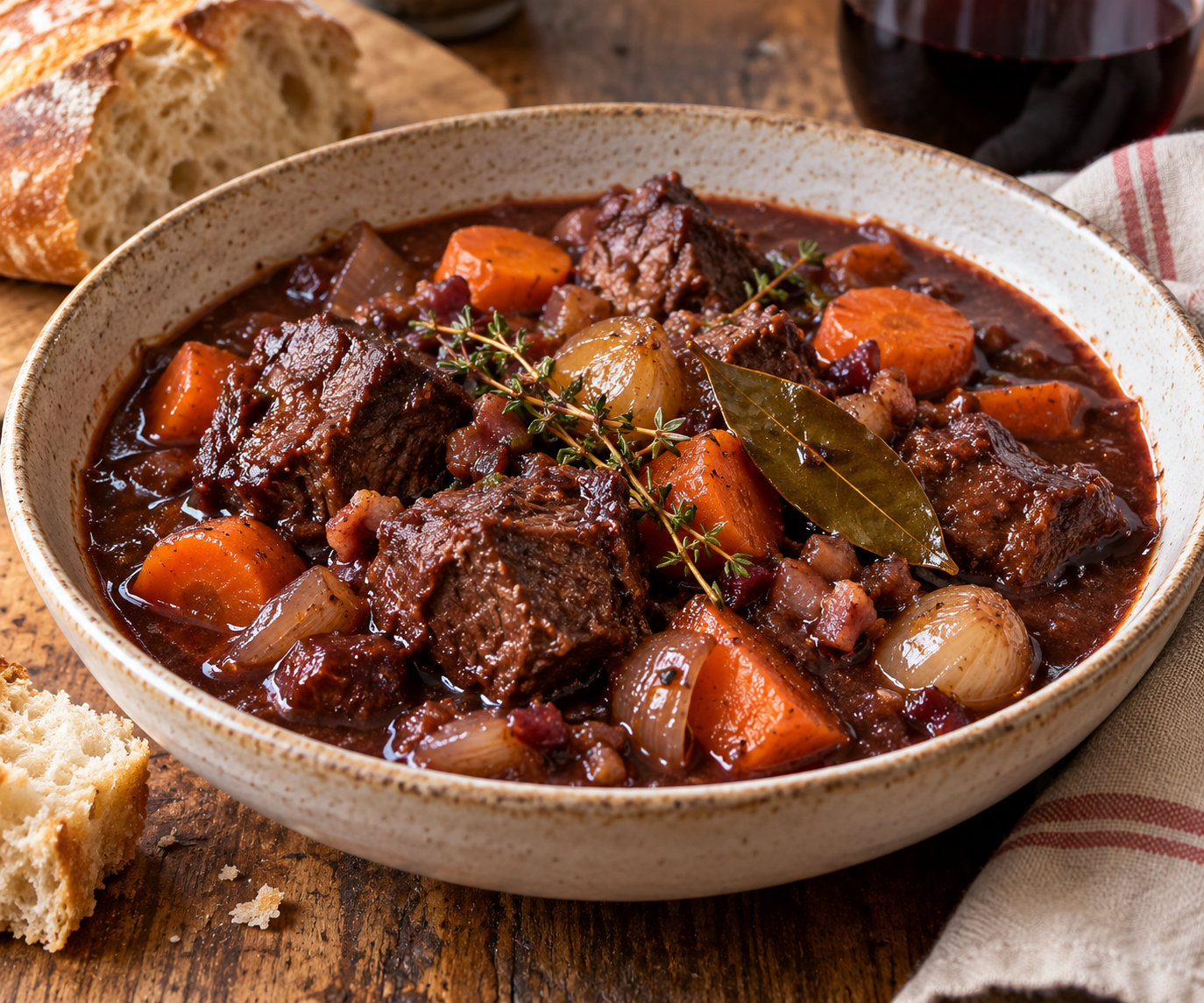
This is a simplified, one-pot French beef stew in the spirit of a daube, built for a weeknight. It breaks the rules on purpose, and it is rich, tender, and deeply comforting anyway.
Serves 4 to 6. About 20 minutes of prep and 1 and a half to 2 hours of mostly hands-off simmering.
Ingredients:
- About 1 kg (2 lb) beef chuck or other stewing beef, cut into large chunks
- 2 tablespoons olive oil
- 2 onions, chopped
- 3 carrots, cut into chunks
- 4 cloves garlic, chopped
- 2 tablespoons tomato paste
- About 400 ml (about 1 and two-thirds cups) red wine, nothing expensive
- About 400 ml (about 1 and two-thirds cups) beef broth, plus more if needed
- 2 bay leaves, a few sprigs of thyme
- Optional: a strip of orange peel, a handful of mushrooms, some chopped bacon
- Salt and pepper
Instructions
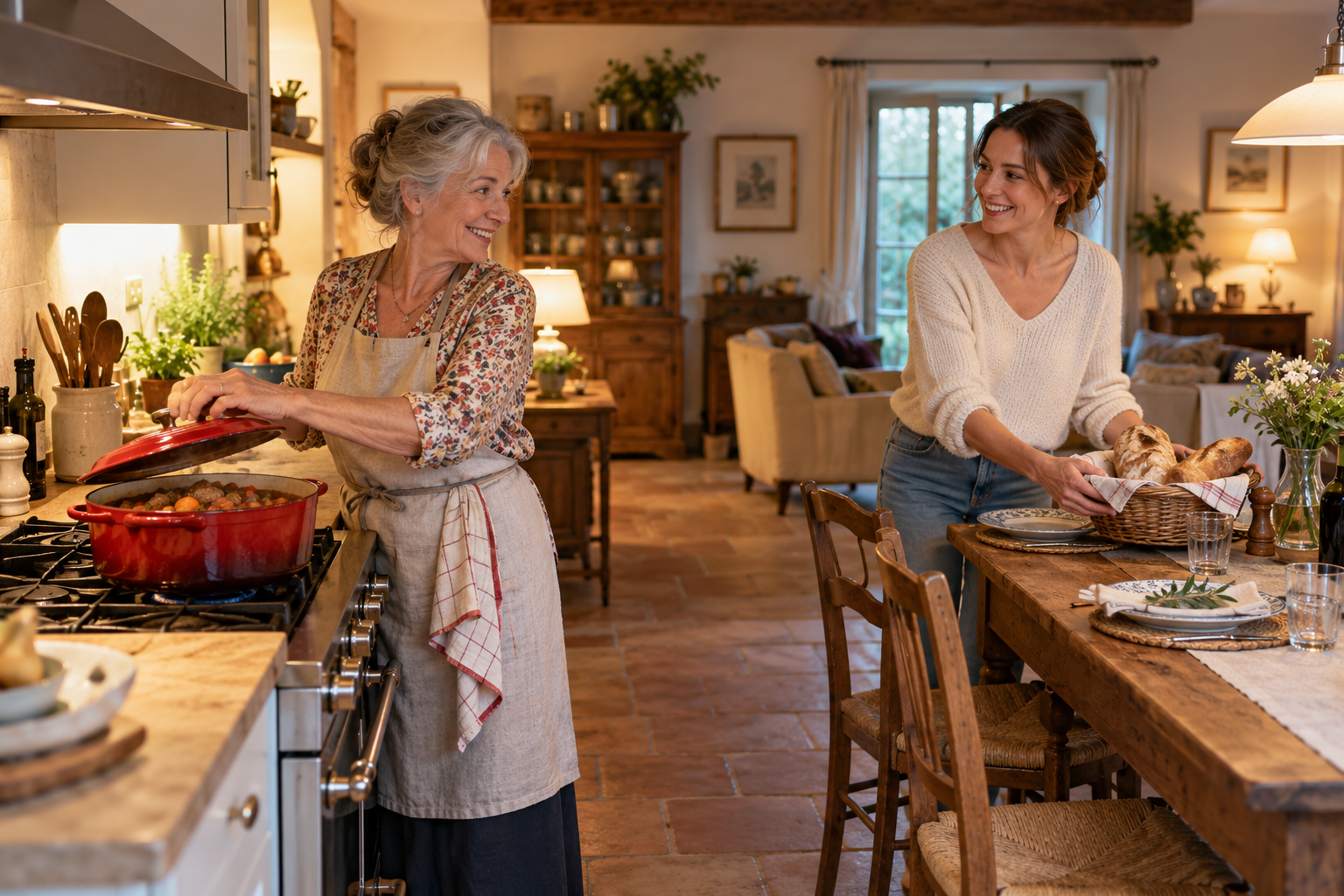
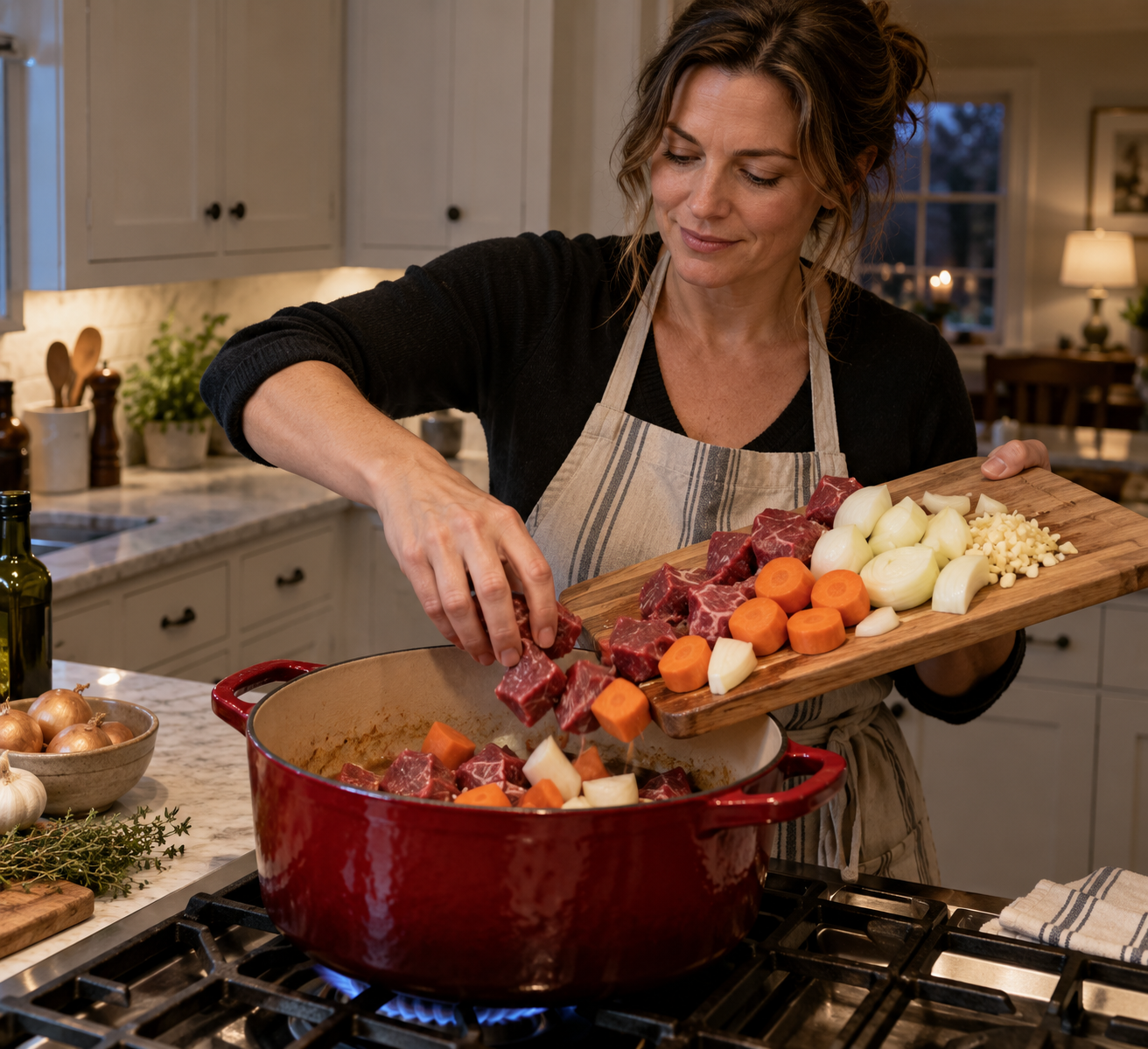
- Heat the oil in a large, heavy pot or Dutch oven over medium-high heat. Here is the first broken rule: add all the beef at once, season it with salt and pepper, and let it brown, stirring occasionally, for several minutes. Do not worry about a perfect sear or working in batches; a bit of color on most of the pieces is plenty.
- Add the onions, carrots, and garlic (and the bacon and mushrooms if using) right into the same pot with the meat, no separate pans, and cook for a few minutes until the onions soften. Stir in the tomato paste and let it cook for a minute.
- Pour in the red wine and scrape up any browned bits from the bottom of the pot. Add the beef broth, the bay leaves, the thyme, and the orange peel if using. The liquid should nearly cover everything; add a little more broth if needed.
- Bring to a gentle simmer, then lower the heat, cover, and let it cook quietly for about an hour and a half to two hours, stirring once in a while, until the beef is fork-tender and the sauce has thickened and deepened. That is it; the pot does the work while you do other things.
- Fish out the bay leaves, thyme stems, and orange peel, taste and adjust the salt and pepper, and serve hot, ideally over mashed potatoes, buttered noodles, or with plenty of crusty bread to mop the sauce.
A note on the shortcuts: if you want a slightly deeper flavor and have ten extra minutes, you can brown the meat in two batches, but you genuinely do not have to, and the stew is wonderful without it. If the sauce is thinner than you like at the end, let it simmer uncovered for a few minutes to reduce, or mash a little of the carrot into it. This is weeknight cooking; the whole point is that it bends to your evening rather than demanding it.

About the Author: Ruben, co-founder of Gamintraveler.com since 2014, is a seasoned traveler from Spain who has explored over 100 countries since 2009. Known for his extensive travel adventures across South America, Europe, the US, Australia, New Zealand, Asia, and Africa, Ruben combines his passion for adventurous yet sustainable living with his love for cycling, highlighted by his remarkable 5-month bicycle journey from Spain to Norway. He currently resides in Spain, where he continues sharing his travel experiences with his partner, Rachel, and their son, Han.