
There is a moment, somewhere in October across all of Europe, when the pot comes out of the cupboard. Not the frying pan, not the roasting tin, but the deep pot, the one for soup, the vessel every culture reaches for when the light shortens and the first real cold arrives. And what goes into that pot is one of the truest expressions of a place there is, because a nation’s soup is its humblest, most honest food, the thing it cooks not to impress anyone but simply to keep itself warm and fed through winter. Every European country has one, a defining soup that means home and cold weather and comfort, from Portugal’s green caldo verde to Poland’s sour zurek to Hungary’s paprika-red broth to France’s cheese-capped onion bowl. These are not restaurant dishes but kitchen ones, the soups people actually make at home when the temperature drops and the budget tightens. Here is the soup map of Europe, country by country, the pot each nation puts on when it gets cold, and, at the end, a full recipe for the one soup that may be the most beloved and most famous of them all.
What follows is why every country has its soup, the western pots, the eastern and sour soups, the northern broths, what they all share, and how to make Europe’s most famous soup yourself.
Why Every Country Has a Soup
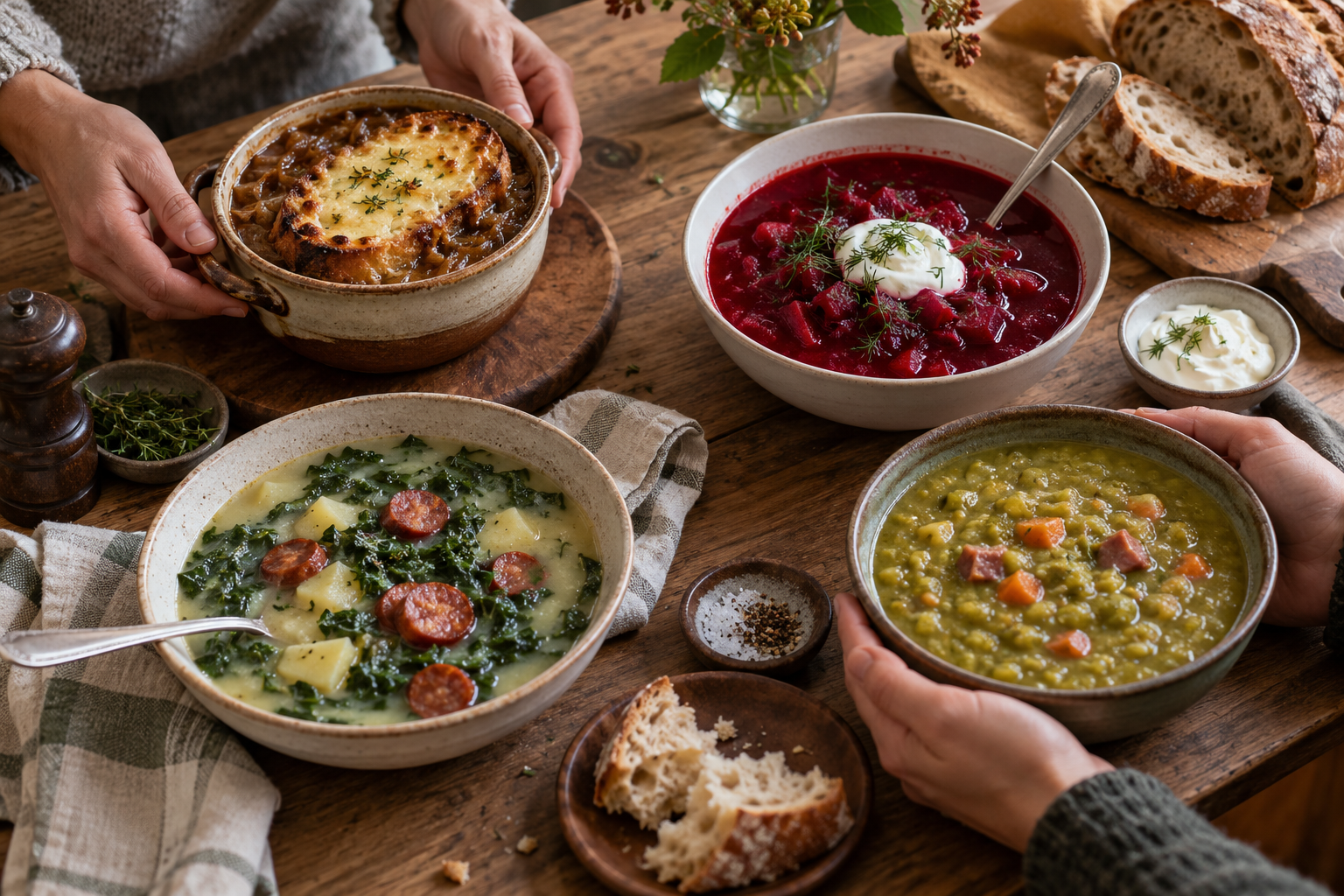
Before the map, a word on why soup, of all foods, carries such national weight. Soup is the original comfort food, the thing humans have made in a pot over a fire since there were pots and fires, and it is above all the food of thrift and warmth, the way a cold, poor kitchen turns a few cheap ingredients and some water into something hot, filling, and sustaining. Long before anyone wrote a cookbook, every culture already knew how to make its soup. That humble, universal function is exactly why soup became so deeply national: every culture faced the same problem, how to stay warm and fed through winter on little, and every culture solved it with the ingredients it had to hand, arriving at a soup as distinctive as a flag and very nearly as beloved. The soup is where necessity and identity meet in a single bowl.
So a country’s signature soup is a kind of portrait of the place. It tells you what grew there and what was cheap, kale and potato in Portugal, cabbage and beets in the east, peas in the north, onions in France. It tells you the local taste, the sourness Eastern Europe loves, the richness the Alps demand, the delicacy the Mediterranean prefers, the thrift the north perfected. A bowl of soup is a surprisingly complete sentence about a place.
And it tells you something about the national character, because the soup a country makes when it is cold and wants comforting is about as close to its culinary soul as you can get. To travel Europe by its soups is to travel it by its humblest truths, the food each place makes when no one is watching and everyone is cold. And as the weather turns and every one of these pots comes out at once across the continent, there is no better time to take the tour, spoon in hand.
The Western Pots
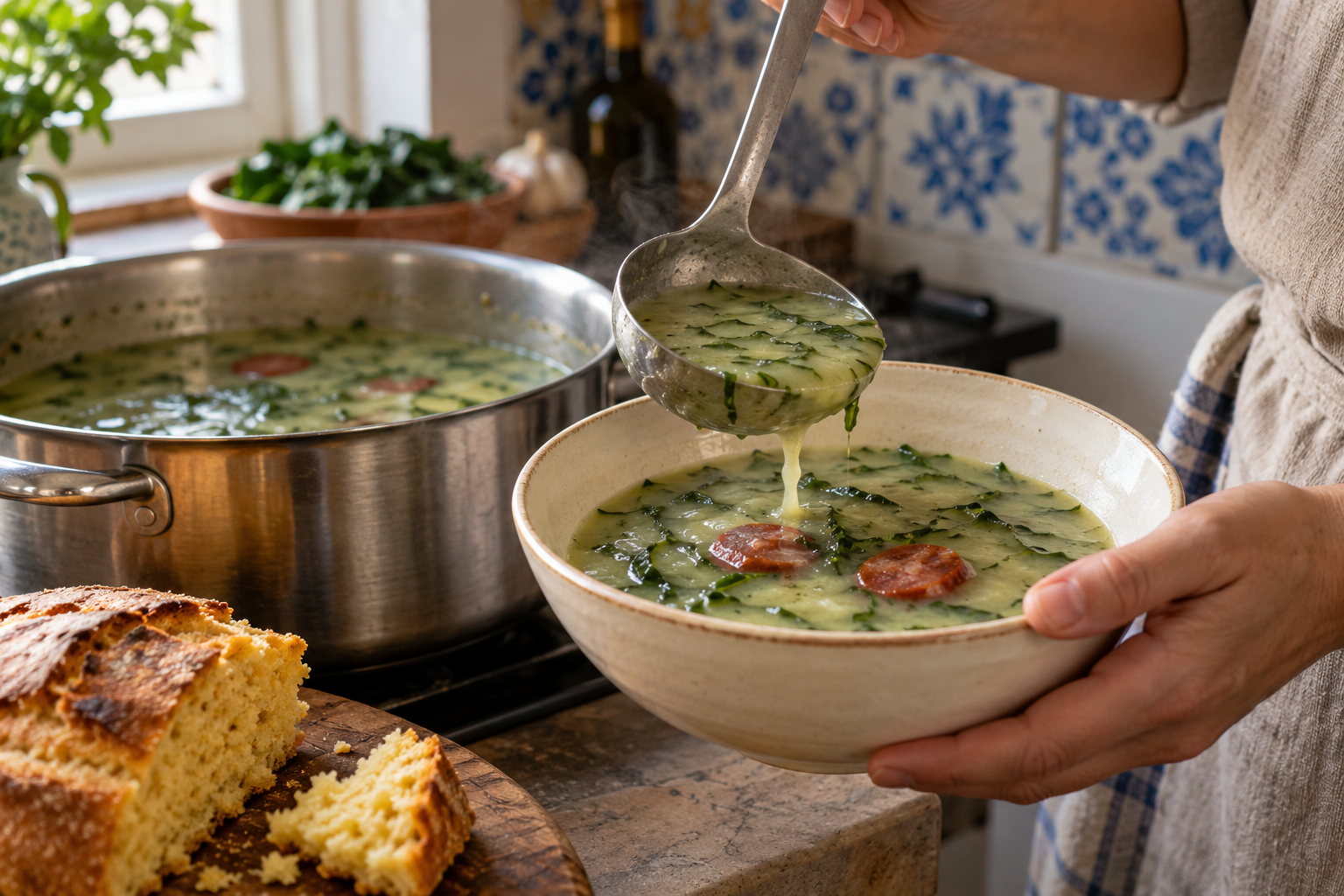
Begin in the west, where the soups run the full range from the elegant to the frankly rib-sticking, united mostly by a tendency to turn into a meal. France, naturally, gives us the most famous soup on the continent, soupe a l’oignon, the onion soup of long-caramelized onions in rich broth, capped with toasted bread and a blistered lid of melted cheese, a dish that began as humble peasant and late-night market food and climbed, improbably, to become one of the most famous soups in the world. But France is a nation of soups, also offering the vegetable-and-basil soupe au pistou of the south, the fish bouillabaisse of Marseille, and countless regional potages, so that onion soup is merely the most famous ambassador of a whole soup-loving culture. Portugal counters with caldo verde, widely considered its national soup, a simple and beautiful thing of pureed potato, thinly sliced kale, and a few coins of smoky chourico, eaten the length of the country as the weather cools.
Spain brings the garlicky sopa de ajo of the Castilian plains, little more than bread, garlic, paprika, and an egg poached in broth, the ultimate cheap and warming peasant soup, alongside its great regional soups like the Galician caldo gallego. And Italy, master of the thick and sustaining, offers minestrone, the great vegetable soup in a hundred regional and seasonal versions, pasta e fagioli, the soup of pasta and beans, and ribollita, the Tuscan soup of bread and beans so thick a spoon stands up in it. Italian soup is rarely a starter; it is often the whole meal. The western pots share a certain generosity, a tendency toward soups that are really meals, thickened with bread or beans or cheese, built to fill as much as to warm. They are the food of cultures that learned, over centuries, to eat remarkably well even when eating remarkably cheaply, which may be the highest culinary skill of all.
The Eastern and Sour Soups
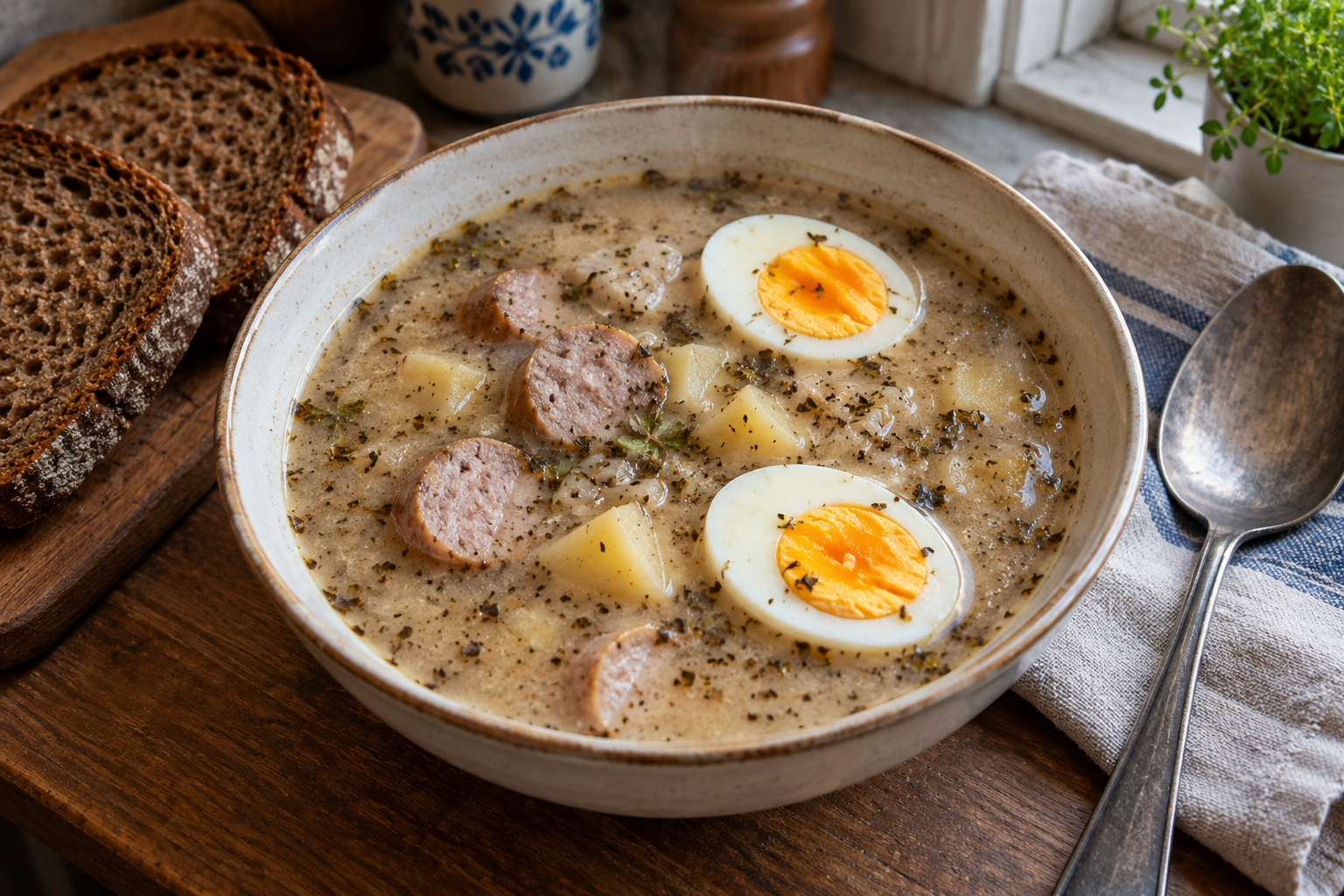
Travel east, and the soups take on a distinctive character all their own, often sour, often deep red, almost always hearty, reflecting a food culture that prizes the bright, tangy, fermented notes that cut cleanly through a long, heavy winter. The emblem of the whole region is borscht, the beetroot soup of Ukraine, Russia, Poland, and beyond, a deep ruby bowl of beets and vegetables and often meat, served with a dollop of sour cream, as beloved and as fiercely claimed by multiple nations as any dish in Europe. Poland alone fields a whole roster, led by zurek, the extraordinary sour rye soup, tangy and savory and often served in a hollowed bread bowl with sausage and a halved egg, along with its own ruby barszcz and the clear, golden chicken rosol that opens a Polish Sunday dinner the way few things can.
Hungary, as ever, is a world of its own, where goulash in its original form is a soup, gulyasleves, the paprika-stained broth of beef and vegetables from which the famous stew descends, alongside halaszle, the fiery red fisherman’s soup of the river towns. The Czech kitchen adds bramboracka, the thick potato soup, and the fiercely garlicky cesnecka, said to cure whatever ails you on a cold morning. What unites the eastern soups is that love of the sour and the deep, the fermented tang of rye, the earthy sweetness of beets cut with a swirl of sour cream, the generous hand with paprika, flavors built for cold and darkness and meant to wake up the palate and warm the body at once. There is nothing timid about an Eastern European soup; it arrives with opinions. These are soups with real backbone, and a country will defend its version of borscht or zurek with the passion others reserve for far grander dishes, because to an Eastern European the soup is not a lesser course but a pillar of the table, and getting it right is a matter of genuine pride.
The Northern Broths
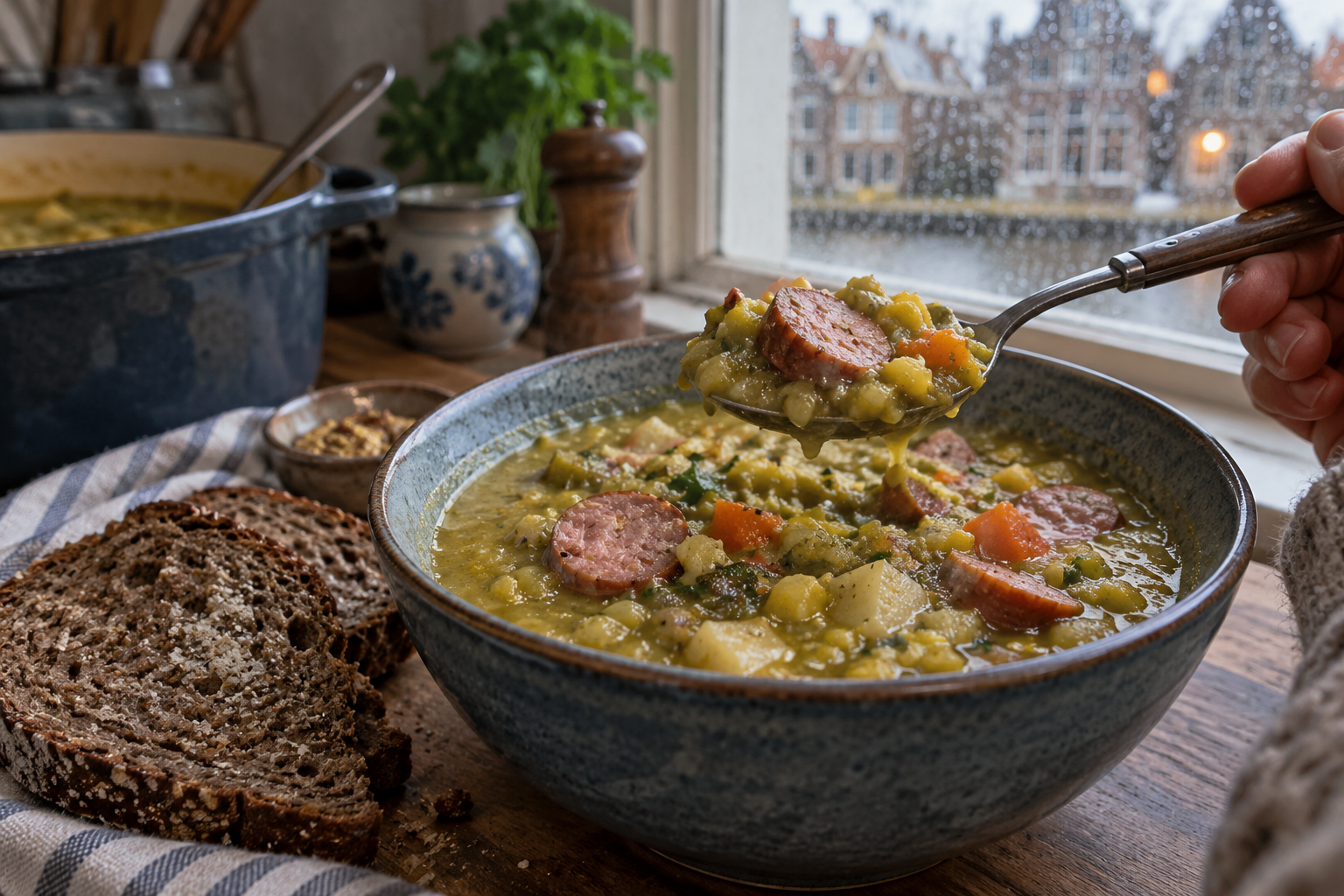
Go north, and the soups turn to the ingredients that survive a long winter in a cold cellar, above all the dried pea, the root vegetable, the barley, and the preserved meat, in soups built for genuine cold and genuine thrift, the cooking of places where fresh ingredients vanish for months and the larder has to carry you through. The great northern soup is the pea soup, made across the whole top of the continent in closely related forms: the Dutch snert, so thick a spoon is said to stand upright in it in it, studded with sausage and eaten when the canals freeze; the Swedish artsoppa, traditionally eaten on Thursdays with pancakes to follow; and the German Erbsensuppe. It is the same thrifty idea, a cheap dried legume slow-cooked for hours into a thick, warming, sustaining soup, repeated across the north with small variations, each country certain its pea soup is the proper one and the others merely imitations.
Britain and Ireland add their own, from the Scottish Scotch broth of barley, root vegetables, and lamb, and cock-a-leekie of chicken and leeks sweetened with prunes, to the humble leek and potato soup and the rich seafood chowders of the Atlantic coasts, thick with fish, potato, and cream against the sea wind. Germany rounds out its table with Kartoffelsuppe, the potato soup, and the hearty Gulaschsuppe borrowed from its neighbors. The northern broths are the least showy soups in Europe and among the most quietly brilliant, the food of long dark winters where a pot of something thick and hot made from almost nothing was the difference between a bleak evening and a bearable one. They were engineered, over generations, to squeeze the maximum of warmth and sustenance from the minimum of larder, and they carry, even now, that deep sense of comfort against the cold.
What They All Share
Lay the soup map out whole, and beneath all the glorious variety runs the same deep truth, which is perhaps the most human thing about food. Every one of these soups was born of the same impulse, the need to turn a little into enough, to make cheap ingredients and water into something hot and filling that would carry a family through a cold night. Soup is the food of thrift raised to the level of love, the dish a culture makes not to show off but to take care of its own, and that is why every country has one and why every country’s is so deeply felt.
The differences are the glory, the onion of France and the beet of Ukraine and the pea of the north and the kale of Portugal and the garlic of Spain, each shaped by a different land and larder and palate, each a small masterpiece of making much from little. But the impulse is one and the same across the whole continent: when it gets cold, put the pot on, make something warm from what you have, and feed the people you love. That is what the soup map of Europe really shows, a hundred different answers to the same ancient question, all of them hot, all of them humble, all of them home. And since soup season is well and truly upon us, there is no better moment to make one yourself, so here, to end the tour, is the recipe for the soup that may be the most famous and beloved of them all, and one of the cheapest and most satisfying to make at home.
Make It: French Onion Soup
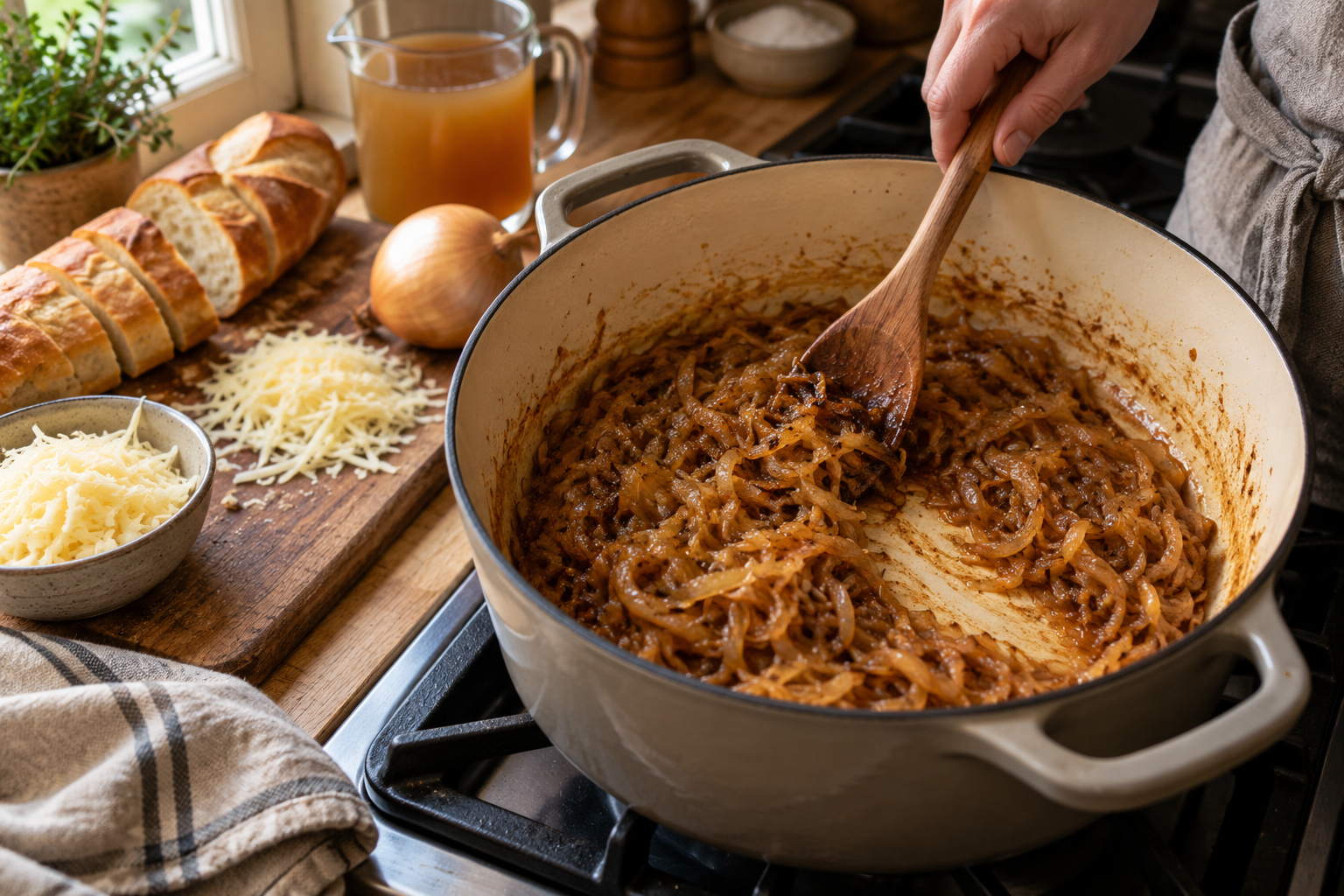
France’s soupe a l’oignon is the soup that best captures the whole spirit of the map: humble ingredients, mostly just onions and bread, transformed by patience into something rich enough to feel luxurious. It is the perfect soup to make on the first truly cold evening, when the smell of onions slowly browning fills the whole kitchen and the dark outside stops mattering quite so much.
Serves 4. About 15 minutes of prep and an hour of mostly unattended cooking.
Ingredients:
- 1 kg (about 2 lb) yellow onions, thinly sliced
- 3 tablespoons butter
- 1 tablespoon olive oil
- 1 teaspoon sugar, to help the onions caramelize
- Salt and black pepper
- 1 tablespoon plain flour
- 150 ml (about two-thirds of a cup) dry white wine, optional
- 1.2 liters (about 5 cups) good beef or vegetable stock
- 1 bay leaf and a sprig of thyme
- A baguette, sliced, and a generous amount of grated Gruyere or similar melting cheese
Instructions
- Melt the butter with the oil in a large, heavy pot over medium-low heat. Add the sliced onions and the sugar with a good pinch of salt, and cook them slowly, stirring often, for a full 30 to 40 minutes, until they are deeply golden-brown and jammy. This long, patient caramelizing is the whole secret of the soup, so do not rush it or turn the heat too high.
- Stir in the flour and cook for a minute, then pour in the white wine if using and let it bubble away for a couple of minutes, scraping up any browned bits from the bottom of the pot.
- Add the stock, the bay leaf, and the thyme, bring to a simmer, and cook gently for about 20 minutes. Season well with salt and pepper.
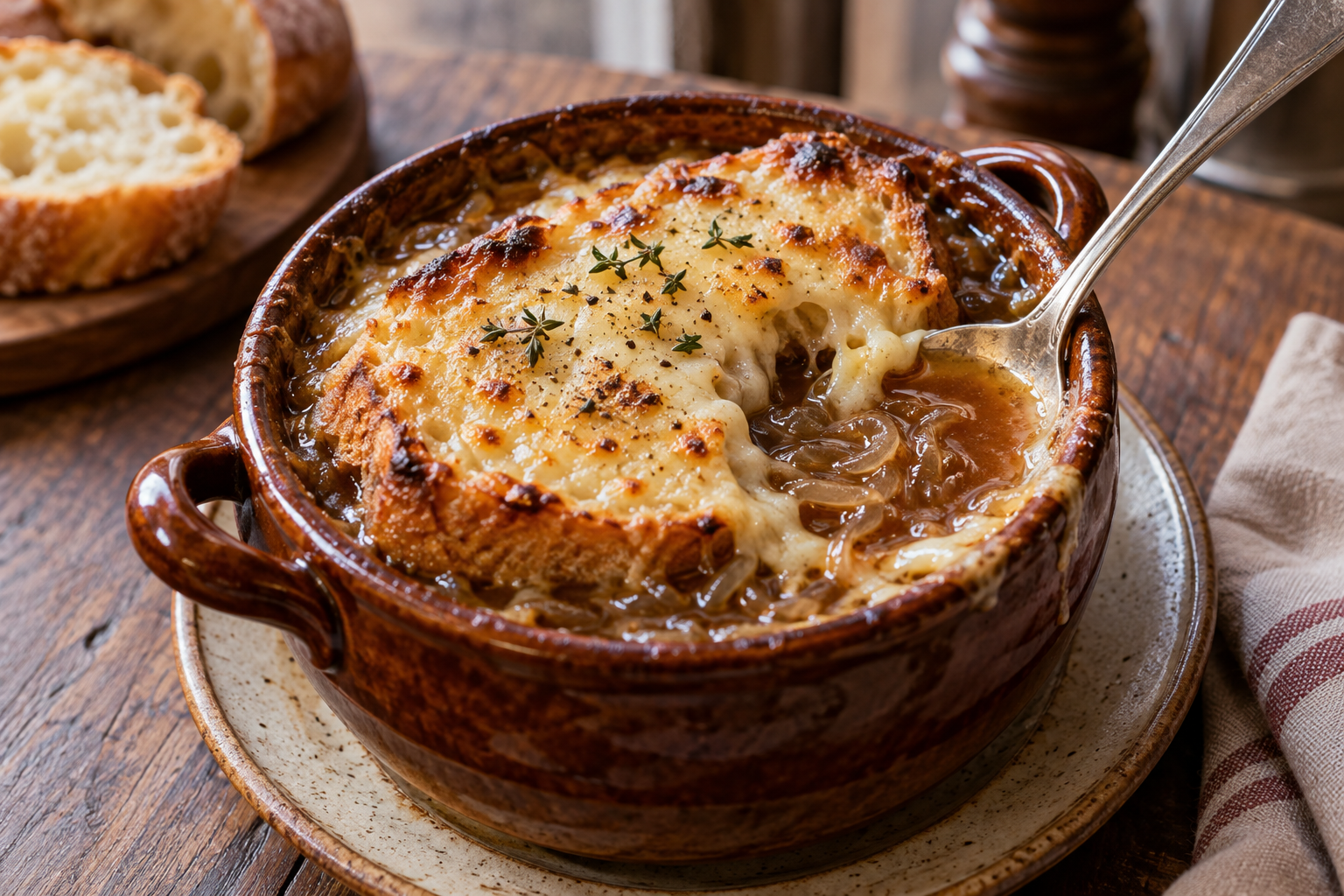
- Meanwhile, toast the baguette slices. When ready to serve, ladle the soup into bowls, float a slice or two of toast on top, pile on the grated cheese, and place the bowls under a hot grill for a few minutes until the cheese is melted and bubbling and golden.
- Serve at once, carefully, because the bowls will be very hot, and enjoy the best possible proof that the humblest ingredients, given time, make the finest soup.
A note on the stock: the traditional version uses beef stock for depth, but a good vegetable stock makes an excellent version too, so use whichever suits you. The one thing you cannot shortcut is the slow caramelizing of the onions, which is where all the flavor comes from, so give it the time it needs and the rest is easy.

About the Author: Ruben, co-founder of Gamintraveler.com since 2014, is a seasoned traveler from Spain who has explored over 100 countries since 2009. Known for his extensive travel adventures across South America, Europe, the US, Australia, New Zealand, Asia, and Africa, Ruben combines his passion for adventurous yet sustainable living with his love for cycling, highlighted by his remarkable 5-month bicycle journey from Spain to Norway. He currently resides in Spain, where he continues sharing his travel experiences with his partner, Rachel, and their son, Han.