
There are few foods that otherwise mild-mannered Europeans will argue about as fiercely as the roast potato. Bring up the subject at a table in Britain, especially, and you will unleash strong opinions on the correct fat, the ideal potato, the necessity or heresy of a flour coating, the exact oven temperature, and a dozen other points of doctrine, each one defended with the fierce conviction usually reserved for politics or football. Whole newspaper columns and television segments are devoted to the question every December, as though it had never been settled and never could be. The roast potato, that humble side dish of the Sunday lunch and the Christmas table, turns out to be a genuine battleground of technique, defended along family lines with a passion that baffles the uninitiated.
And yet, beneath all the arguing, there is one rule that every cook agrees on absolutely, the single step that separates a proper, crackling roast potato from a soft and disappointing one. So here is the great roast potato debate, the fat wars and the semolina question and all, and the one thing nobody disputes. Learn that one thing and you can happily ignore most of the rest of the shouting.
What follows is the argument over fat, the argument over coating, the argument over which potato, the one rule everyone agrees on, and how to actually make them.
Why Everyone Has an Opinion
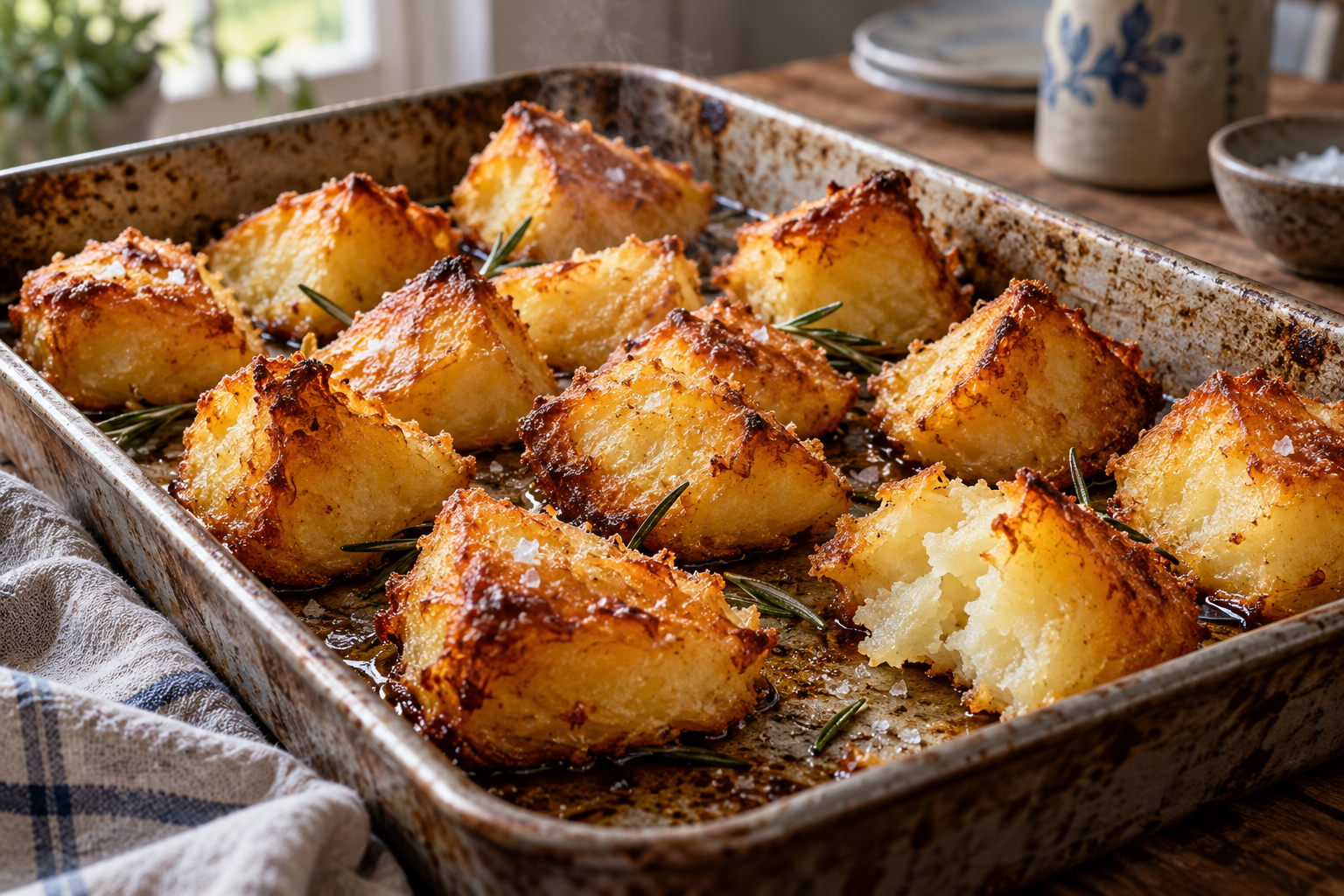
Before diving into the arguments, it is worth asking why a side dish of potatoes should inspire such passion in the first place, because the intensity is real and it is not really about the potatoes alone. The roast potato sits at the emotional heart of the meals that matter most in British and much of European family life, the Sunday roast and, above all, the Christmas dinner. These are the meals of childhood memory, of family gathered around a table, of a particular way things are supposed to taste, and the roast potato is one of their most beloved and scrutinized components. To get the roast potatoes right is, in a small but genuine way, to honor the whole tradition; to get them wrong is to let the meal down.
That is why people defend their method with such conviction: they are not really arguing about starch and fat but about the correct way to reproduce a taste bound up with home, family, and the best meals of the year. Each cook’s technique is usually the one they learned from a parent or grandparent, carried forward as a small inheritance, which is why challenging someone’s roast potato method can feel oddly personal, like challenging their family. The arguments are fierce precisely because the stakes, emotionally, are high. Understanding this makes the whole debate more endearing than absurd: these are people who care enormously about a good meal and about doing right by a tradition, expressing it through the unlikely medium of a roasting tin of potatoes. It also means that when you learn to make them well, you are learning to take part in something a good deal warmer than a cooking technique.
The Fat Wars
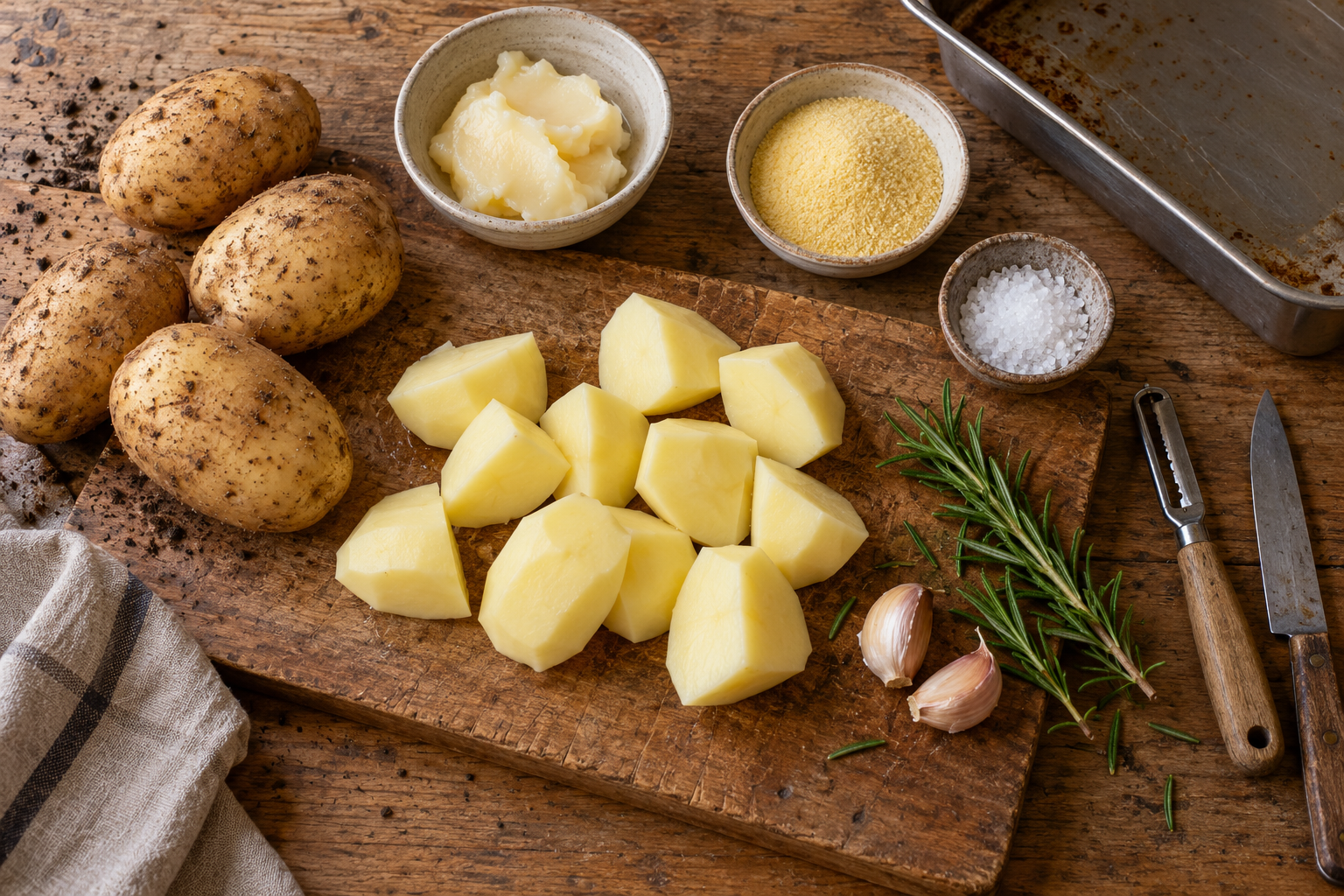
The first and fiercest argument is over what to roast the potatoes in, and here the traditionalists and the pragmatists have been fighting for generations. At the traditional end stands goose fat, long held up as the gold standard, the fat that great cooks swear produces the crispest, most golden, most flavorful roast potato, prized both for its taste and for its very high smoke point, which lets it get searingly hot without burning. For many British families a jar of goose fat appears in the cupboard once a year, at Christmas, purely for this one purpose, which is part of what gives it its aura. Duck fat runs a close second, and beef dripping has its devoted followers too, giving a deep, savory richness that some prefer to anything else. For a certain kind of cook, animal fat is simply non-negotiable, the thing that makes a roast potato a roast potato rather than a merely baked one. To suggest oil instead, in the wrong company, is to invite a lecture.
But the consensus around goose fat is not as settled as it sounds, and the arguments have grown more interesting lately. Some cooks who have tested the options exhaustively report that goose fat, for all its prestige, can be surprisingly underwhelming on flavor, and that other fats, ghee or beef tallow in particular, actually outperform it, while being more useful in the kitchen the rest of the year than a tub of goose fat that goes to waste after the holidays.
And the pragmatists point out, correctly, that a good high-smoke-point vegetable oil produces potatoes every bit as crisp, if not quite as richly flavored, at a fraction of the cost and fuss. So the fat wars rage on, between the goose-fat traditionalists, the tallow-and-ghee revisionists, and the just-use-oil pragmatists, and while the choice genuinely affects flavor, the one thing all sides agree on is that whatever fat you use, it must be brutally, searingly hot before the potatoes go near it. Cold fat is the enemy of every camp, the one point on which even sworn opponents in the fat wars fall silent and nod.
The Coating Question
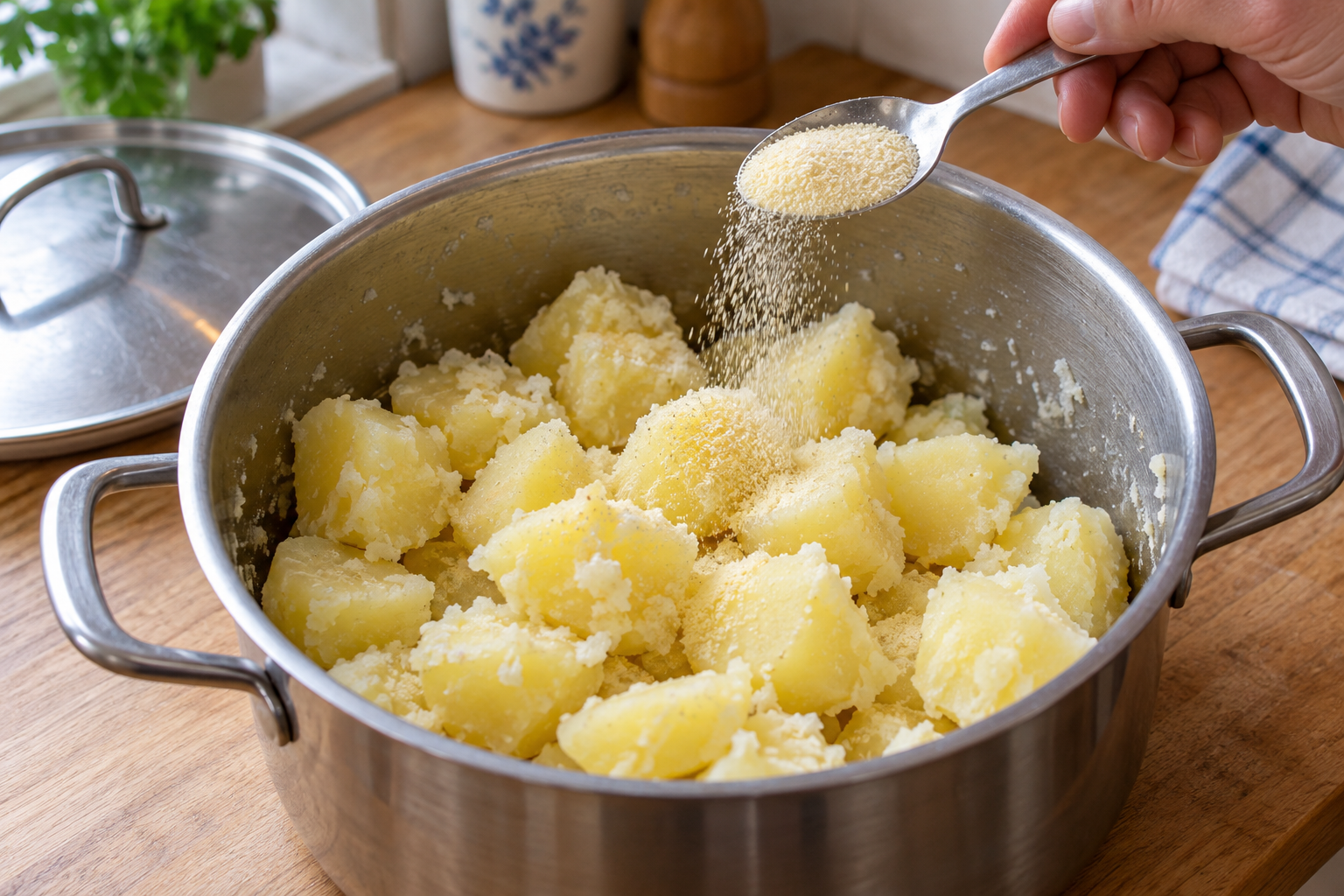
The second great argument is over whether, and with what, to coat the potatoes before they roast, and this one splits families. In one camp are those who dust the parboiled potatoes with plain flour before they go into the fat, on the theory that the flour absorbs the fat and crisps into an extra-crunchy shell. It is a common and much-loved trick, passed down through countless kitchens, and its devotees insist it is the secret to the crispest possible surface. A tablespoon of flour, shaken through the potatoes until lightly coated, and you are on your way to glory, or so this camp maintains. It is the most accessible of the tricks, requiring nothing you do not already have, which is much of its appeal.
In another camp, and this is the more rarefied position, are the devotees of semolina. Championed most famously by certain celebrated cooks as a family secret handed down the maternal line, semolina, the coarse-ground wheat, is dusted over the parboiled potatoes instead of flour, its grittier texture creating an even craggier, more shatteringly crisp crust than flour achieves.
To its believers, semolina is the difference between a good roast potato and a transcendent one, and they will tell you so at length, often with the fervor of the recently converted. Once someone has tried the semolina trick and seen the extra crunch, they rarely go back. Others swear by cornflour, or polenta, or a dusting of the potato’s own starch, and a hardy contingent maintains you need no coating at all, that the potato’s own surface, correctly prepared, crisps perfectly well on its own. The coating question, in other words, is genuinely unsettled, a matter of family tradition and personal faith as much as technique, and reasonable cooks land in every camp. The good news, for anyone anxious about choosing wrongly, is that a well-parboiled and roughed-up potato turns out beautifully with any of them, or none.
Which Potato, and How Hot
Two further fronts in the roast potato wars deserve mention, because they too provoke real disagreement. The first is the choice of potato, where at least there is broad agreement on the principle if not always the specific variety: you want a floury, starchy potato, not a waxy one, because the fluffy interior and the roughen-able surface that make a great roast potato come from starch. The classic British choices are named with reverence, the Maris Piper above all, with King Edward and the red-skinned Desiree, each with its partisans, while a waxy salad potato, everyone agrees, will only ever give you a sad, dense, un-crisp result. Americans reaching for the familiar Russet will do perfectly well, since it is floury enough, though it will not settle the which-variety argument for the British purists. Pick your floury variety, then, but expect an argument about exactly which one.
The second is temperature and, relatedly, the vexed question of preheating the fat. On temperature there is near-consensus that roast potatoes want a hot oven, high heat being essential to drive off moisture and crisp the surface rather than steaming it soft. On preheating the fat, though, a genuine debate persists. The traditional and majority view is that the fat must be preheated until it is smoking hot before the potatoes go in, so that they sizzle violently on contact and begin crisping immediately. A dissenting minority argues that you can achieve excellent results without significantly preheating the fat, avoiding the splatter, the burn risk, and the danger of scorching the fat to an acrid taste. Most cooks preheat; the brave few do not; and both produce good potatoes, which only adds to the sense that the roast potato is a dish surrounded by more strong opinion than almost any other.
The One Rule Everyone Agrees On
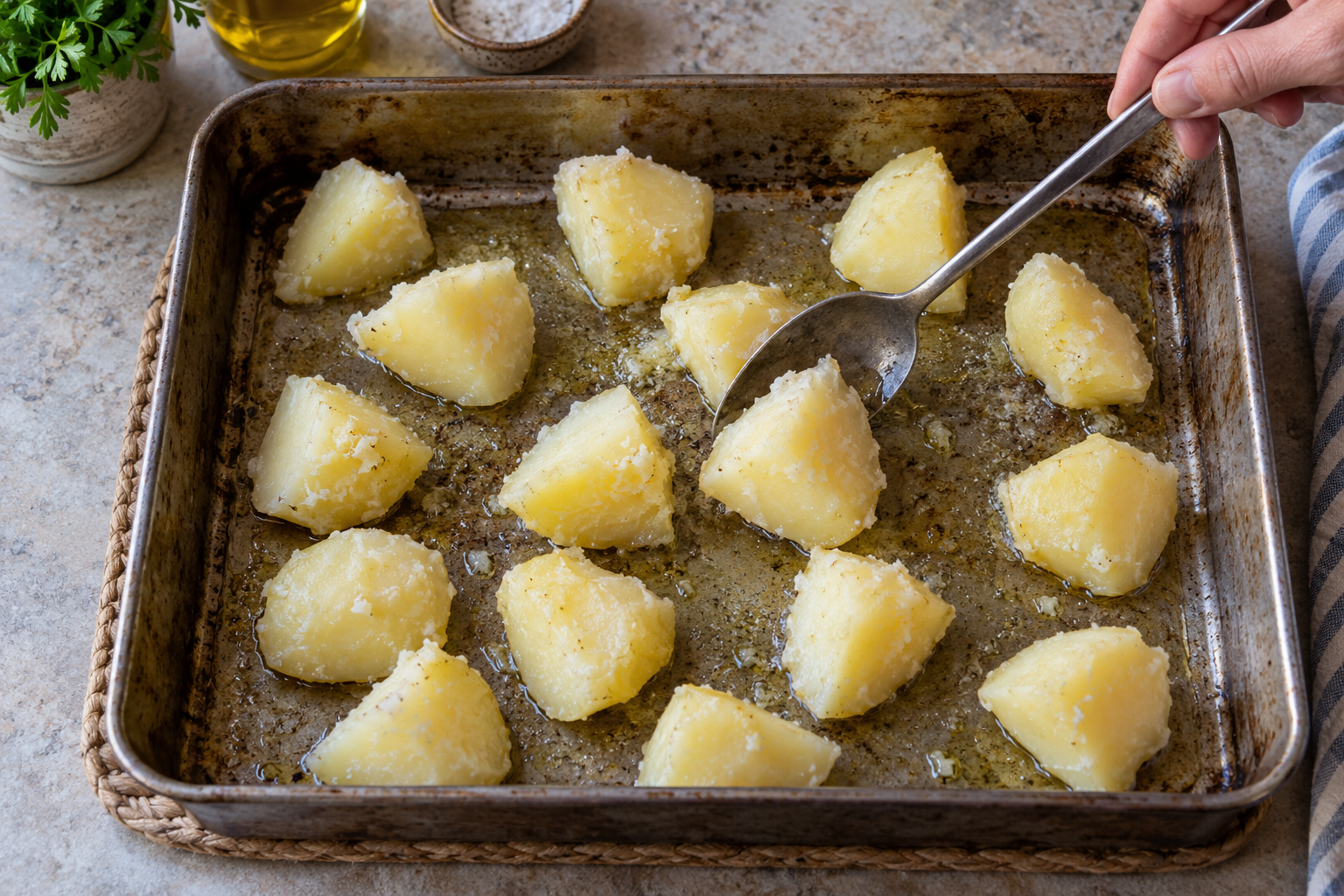
And yet, for all the fighting over fat and flour and potato and heat, there is one step that every single camp, every cook, every tradition holds to be absolutely essential, the one point on which the goose-fat traditionalist and the vegetable-oil pragmatist and the semolina devotee all nod in agreement. You must parboil the potatoes and then rough up their edges. This is the non-negotiable heart of the entire technique, the thing that actually makes a roast potato crisp, and no amount of the right fat or the right coating will save you if you skip it.
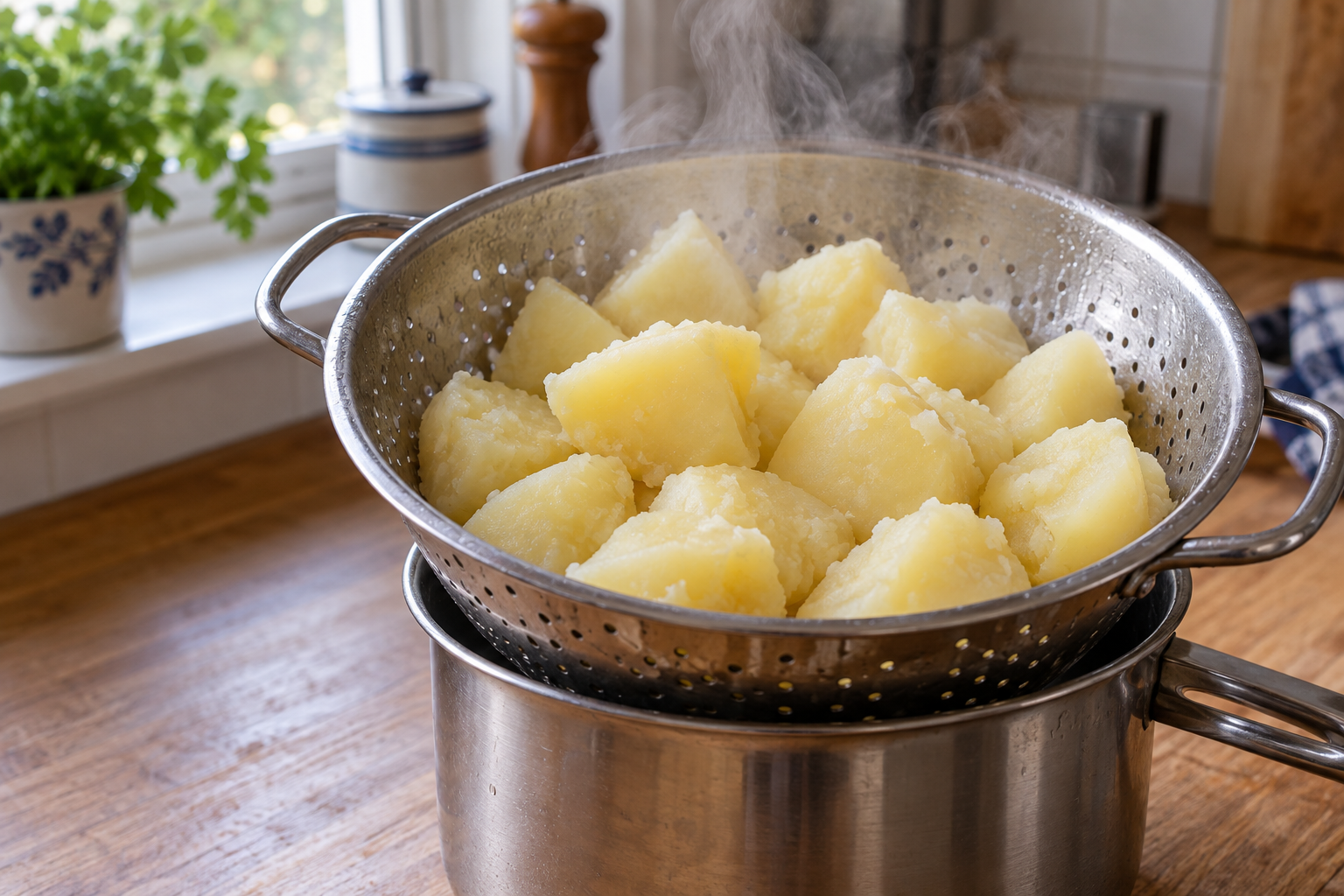
The logic is simple and universal. You boil the peeled, cut potatoes for a few minutes, just until the outsides begin to soften while the centers stay firm, and then you drain them and, crucially, shake them hard in the pan or a colander, bashing and chuffing them about until their surfaces are roughed up, slightly mashed, broken into countless craggy little edges and ridges. The British even have a word for it, chuffing, and doing it with real vigor, almost violently, is the mark of someone who knows what they are about. Those rough, broken surfaces are everything, because they are what catches and crisps in the hot fat, multiplying the surface area that turns golden and shattering.
A smooth, unroughed potato, however good the fat, roasts to a smooth, dull skin; a properly roughed-up one develops the craggy, crunchy exterior that is the entire point of the exercise. Every authority agrees: parboil, drain, steam off, and rough them up aggressively. It is the one instruction you will find, word for word in spirit, in every recipe from the fanciest chef to the plainest family cookbook. The debates about fat and coating are really arguments about how to gild a technique whose foundation is this single, universally agreed step. Get the roughing-up right and you are most of the way to a great roast potato; get it wrong, and nothing else you do will rescue you. It is the closest thing the roast potato has to a secret, hiding in plain sight, ignored by beginners and treated as gospel by everyone who has learned the hard way.
How to Actually Make Them
Pulling all of it together, and setting the arguments gently aside, a reliable roast potato is well within anyone’s reach, because the technique underneath the doctrine is straightforward. Start with a floury potato, a Maris Piper or the like, peeled and cut into fairly large, even chunks, remembering that smaller pieces give you more crunchy surface while larger ones give a fluffier middle, so cut to the balance you prefer. Put them into cold, well-salted water, bring to a boil, and parboil for around five minutes, until the edges are just softening but the potatoes still hold their shape, then drain them well and let them steam-dry for a few minutes in the colander, because dry potatoes crisp better than wet ones.
Now the crucial step: return them to the pan, put the lid on, and shake hard, roughing up the edges until the surfaces are craggy and slightly mashed, adding a dusting of semolina or flour at this point if you are in that camp.
Meanwhile, get your chosen fat, goose, duck, dripping, or a good high-smoke oil, thoroughly hot in a roasting tin in a hot oven, hot enough that the potatoes sizzle the moment they land. Tip the roughed-up potatoes carefully into the hot fat, turning them to coat, and spread them out in a single layer with space around each one, because crowding makes them steam rather than crisp. This is the most commonly broken of the supporting rules, since it is tempting to pile them in, and it is why a crowded tray of promising potatoes so often comes out pale and soft.
Roast in a hot oven, turning once or twice, for around an hour, until they are deep golden and audibly crunchy. Serve them at once, hot from the oven, ideally with a roast and plenty of gravy, because a roast potato waits for no one and loses its crunch as it cools. Argue afterward, if you must, about whether they would have been even better with goose fat instead of oil, or semolina instead of flour, but they will be excellent, because you did the one thing everyone agrees on. That is the freeing truth buried in all the doctrine: once the technique is right, every one of the disputed choices lands somewhere between good and slightly better, and there is no way left to truly ruin them. And that, in the end, is the quiet lesson under all the roast potato fighting: the arguments are the seasoning, but the roughed-up edge is the dish.
Perfect Roast Potatoes
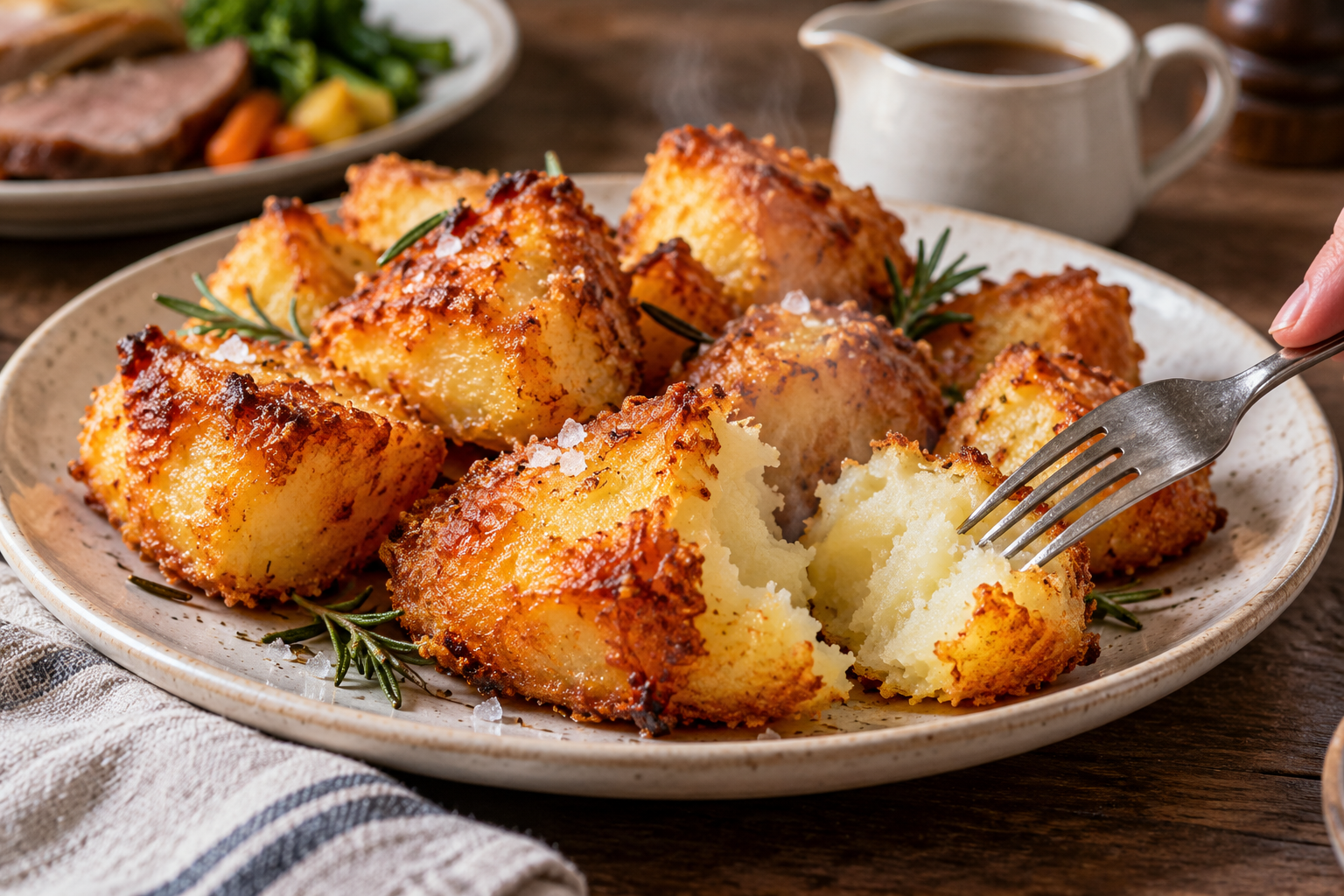
The whole argument of this piece in one tin: the fat and the coating are yours to choose, but the parboil-and-rough-up is non-negotiable. Here is the method that works whichever side of the debates you land on.
Serves 4 to 6 as a side. About 15 minutes to prep, an hour to roast.
Ingredients:
- 1 kg (about 2.2 lb) floury potatoes, such as Maris Piper, King Edward, or Russet, peeled and cut into large, even chunks
- 5 tablespoons goose fat, duck fat, beef dripping, or a high-smoke-point oil like sunflower or groundnut
- 2 tablespoons fine semolina or plain flour, optional, for an extra-craggy crust
- Salt, plus flaky salt to finish
- A few sprigs of rosemary or a few unpeeled, lightly crushed garlic cloves, optional
Instructions
- Heat the oven to 220C (425F). Spoon the fat into a roasting tin and put it in the oven to get searingly hot while you prepare the potatoes.
- Put the potato chunks into a pot of cold, well-salted water, bring to a boil, and parboil for about 6 to 8 minutes, until the edges are just softening but the centers are still firm. Drain them well and leave them to steam-dry in the colander for a few minutes, because dry potatoes crisp far better than wet ones.
- Return the potatoes to the empty pot, put the lid on, and shake them hard, bashing them about until the surfaces are roughed up, craggy, and slightly mashed at the edges. This is the step that makes them crisp, so do not be gentle. If you are using semolina or flour, add it now and shake again to coat.
- Carefully tip the potatoes into the screaming-hot fat, turning each one to coat it, then spread them out in a single layer with space around every piece, since crowding makes them steam instead of crisp.
- Roast for about 45 to 60 minutes, turning once or twice, until deep golden and audibly crunchy. If using rosemary or garlic, add it in the last 20 minutes so it flavors without burning.
- Lift onto a warm plate, finish with flaky salt, and serve at once, because a roast potato waits for no one.
A note on the choices: goose or duck fat gives the richest flavor, dripping the most savory, and a good high-smoke oil the cleanest crisp at the lowest cost, so use whichever you can get and keep. The semolina is optional but genuinely does produce a craggier crust than flour. The one thing you cannot skip is the parboiling and the roughing up.

About the Author: Ruben, co-founder of Gamintraveler.com since 2014, is a seasoned traveler from Spain who has explored over 100 countries since 2009. Known for his extensive travel adventures across South America, Europe, the US, Australia, New Zealand, Asia, and Africa, Ruben combines his passion for adventurous yet sustainable living with his love for cycling, highlighted by his remarkable 5-month bicycle journey from Spain to Norway. He currently resides in Spain, where he continues sharing his travel experiences with his partner, Rachel, and their son, Han.