
Spend a few days in a European city and you start to notice the dogs, or rather, you notice how little you notice them. They lie quietly under the cafe tables, trot down busy sidewalks off the leash without a glance at the traffic, ride the trains and buses without making a sound, and wait patiently outside the shops for owners who have disappeared inside for ten minutes. They do not bark, lunge, jump on strangers, or drag anyone down the street. The overwhelming impression is of animals that are entirely at ease in the human world, present but undemanding, part of the scene rather than a disruption to it.
To an American used to dogs that strain at the leash, bark at every passerby, and could never be trusted loose in a crowd, this is genuinely striking, and the question comes almost automatically: why are the dogs here so calm, and how do they do it? It is the sort of thing that nags at you by the third or fourth flawlessly behaved dog you pass, until you find yourself half-wanting to stop an owner and simply ask. It is genuinely one of the things visitors and expats ask about most of all. Here is the training culture behind Europe’s remarkably well-behaved dogs, and what actually explains the difference. The honest answer turns out to be less about clever training tricks than about a whole way of living with dogs, most of which an American can borrow even without moving abroad.
What follows is the phenomenon of dogs that go everywhere, why exposure matters more than anything, how Europeans think about training differently, the petting rule almost no one tells you about, and the honest picture behind the calm.
Dogs That Go Everywhere
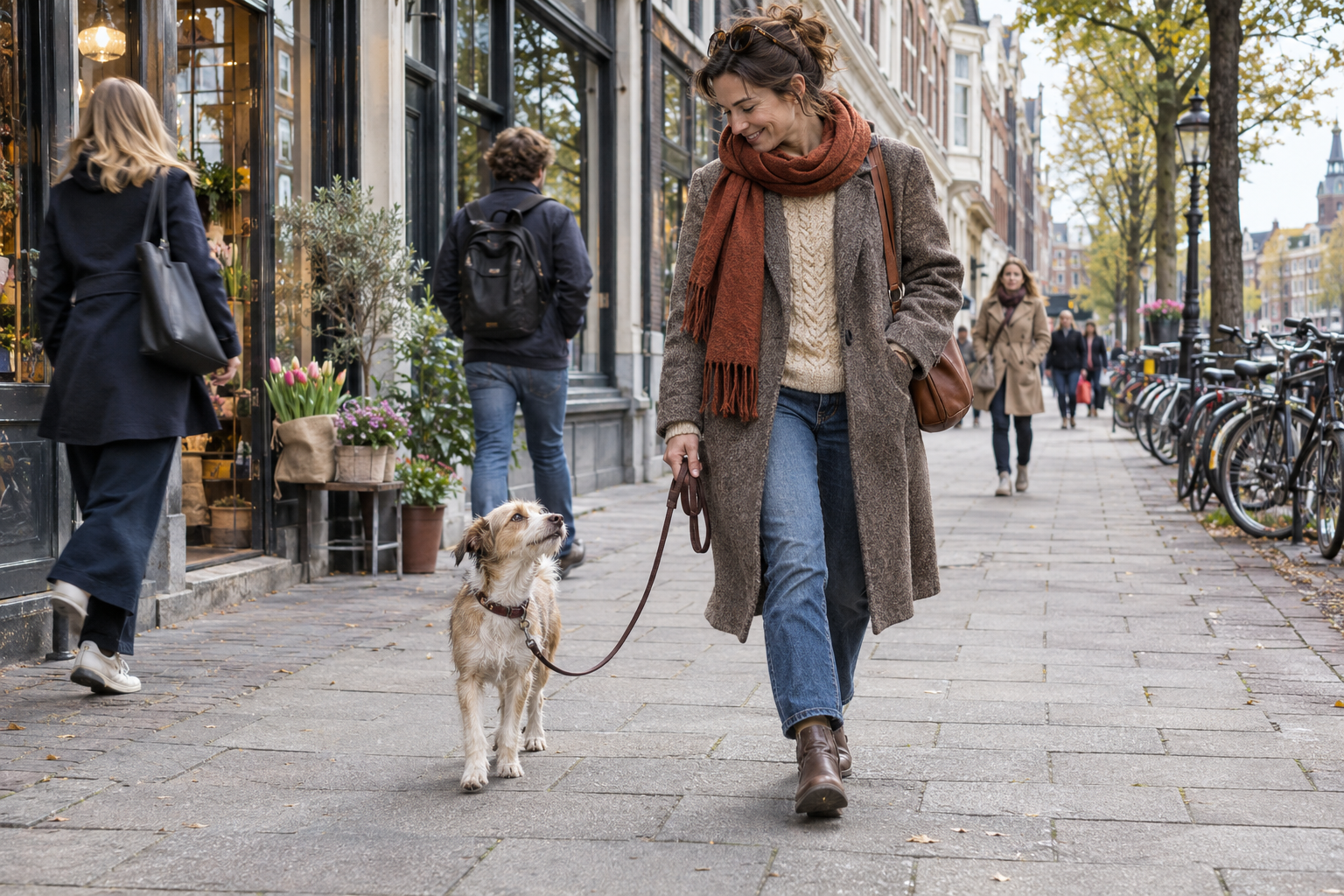
The first thing to understand is that European dogs are calm in public largely because they are in public, constantly, in a way American dogs mostly are not. Across much of Europe, dogs are woven into daily life to a degree that surprises Americans: they are welcome in a great many restaurants, cafes, shops, and hotels, allowed on trains and buses and metros, and a normal, expected presence almost everywhere their owners go, with only a few exceptions like food shops and museums. A dog is not something you leave at home; it comes with you, into the world, as a matter of course.
This changes everything about how the dog experiences life, and it is the root of the calm. An American dog often spends its days at home, walked on a leash around the neighborhood, and taken out into busy, stimulating environments only occasionally, so that a crowded street or a restaurant is a rare and exciting event to bark and strain at. A European dog, by contrast, is in those environments all the time, so a busy cafe or a packed train is simply Tuesday, nothing to react to. The dog lying utterly unbothered under the table has learned to be that way by being under a lot of tables, over and over, from an early age. Calm, in other words, is not a personality the dog was born with but a habit it was given, one boring, uneventful outing at a time.
This is the crucial insight that makes the rest make sense: the astonishing public calm of European dogs is not mainly a trick of training in the narrow sense but a product of a life lived out in the world, where the exciting becomes ordinary through sheer repetition, and the dog settles because it has nowhere new to be.
Why Exposure Matters Most
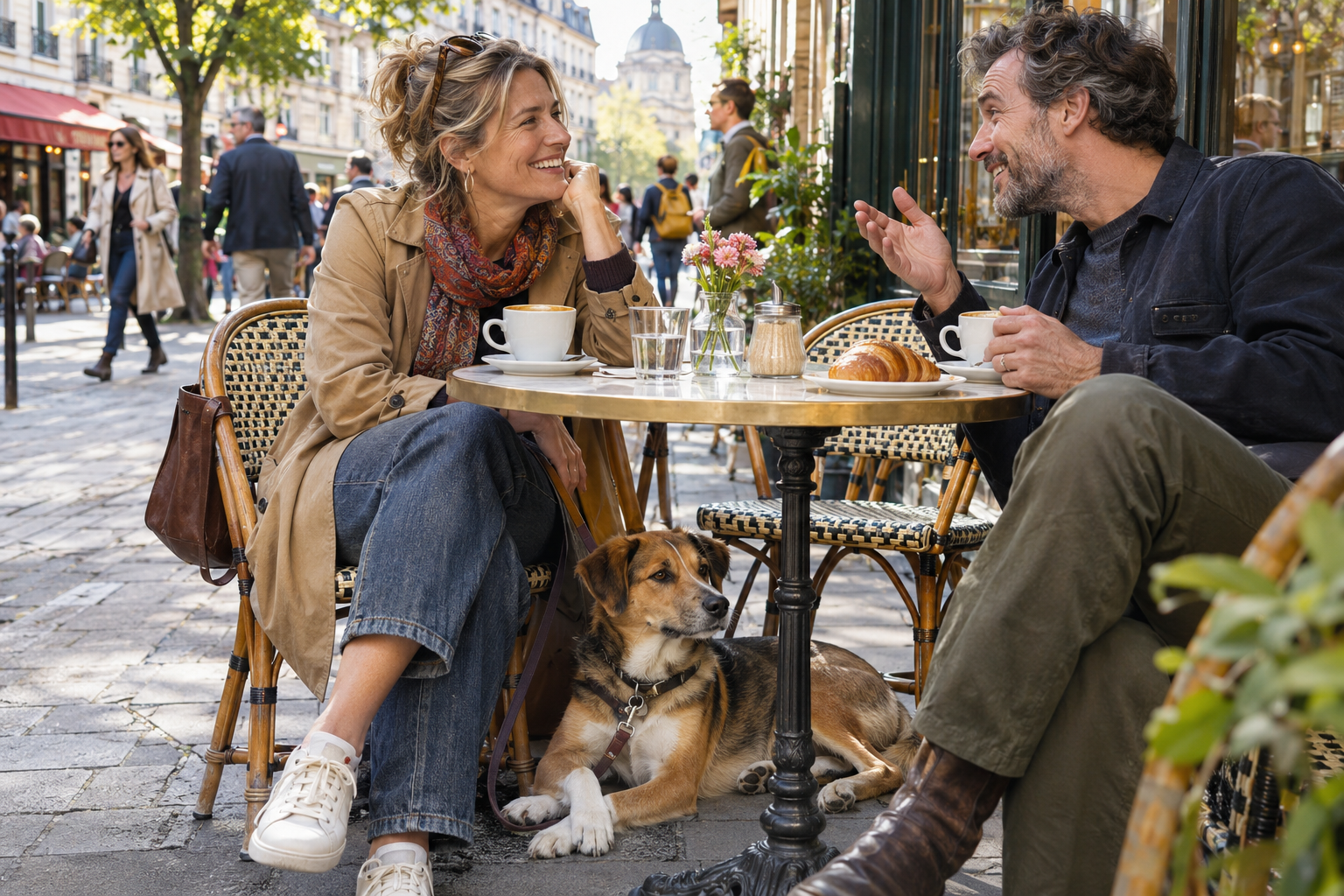
If there is a single answer to the American question of how they do it, the people who study and train dogs give it consistently, and it is exposure, early and constant. A European puppy is socialized intensively and continuously from the start, taken everywhere, exposed to crowds, noise, traffic, other dogs, and strangers as a routine part of growing up, so that by adulthood there is very little left in the ordinary world that can startle or over-excite it. The dog has, in effect, seen it all before, many times, and has learned that none of it requires a reaction. Novelty is what excites a dog, and for a European dog raised out in the world there is very little novelty left, because it met the trains and the crowds and the cafes as a puppy and long ago filed them under nothing to worry about.
This is different from a training class in the American sense, though those exist too; it is more a matter of how the dog is raised day to day. Because dogs are welcome in public, they get the exposure automatically, as a byproduct of simply accompanying their owners through normal life, a kind of continuous, real-world socialization no weekly obedience class can match. The American pattern, where a dog might be well-loved and even well-trained in commands but spends most of its time at home and is only occasionally thrust into stimulating public settings, produces a dog that knows how to sit and stay but has never learned to be calm amid chaos, because it has rarely been in the chaos. The lesson the experts keep returning to is that calmness in public is built by being in public, repeatedly and from young, until the extraordinary becomes routine. Exposure, not obedience drills, is the real engine, and it is why the European approach works almost by accident, as a side effect of a dog-friendly society.
Training as a Relationship, Not a Fix
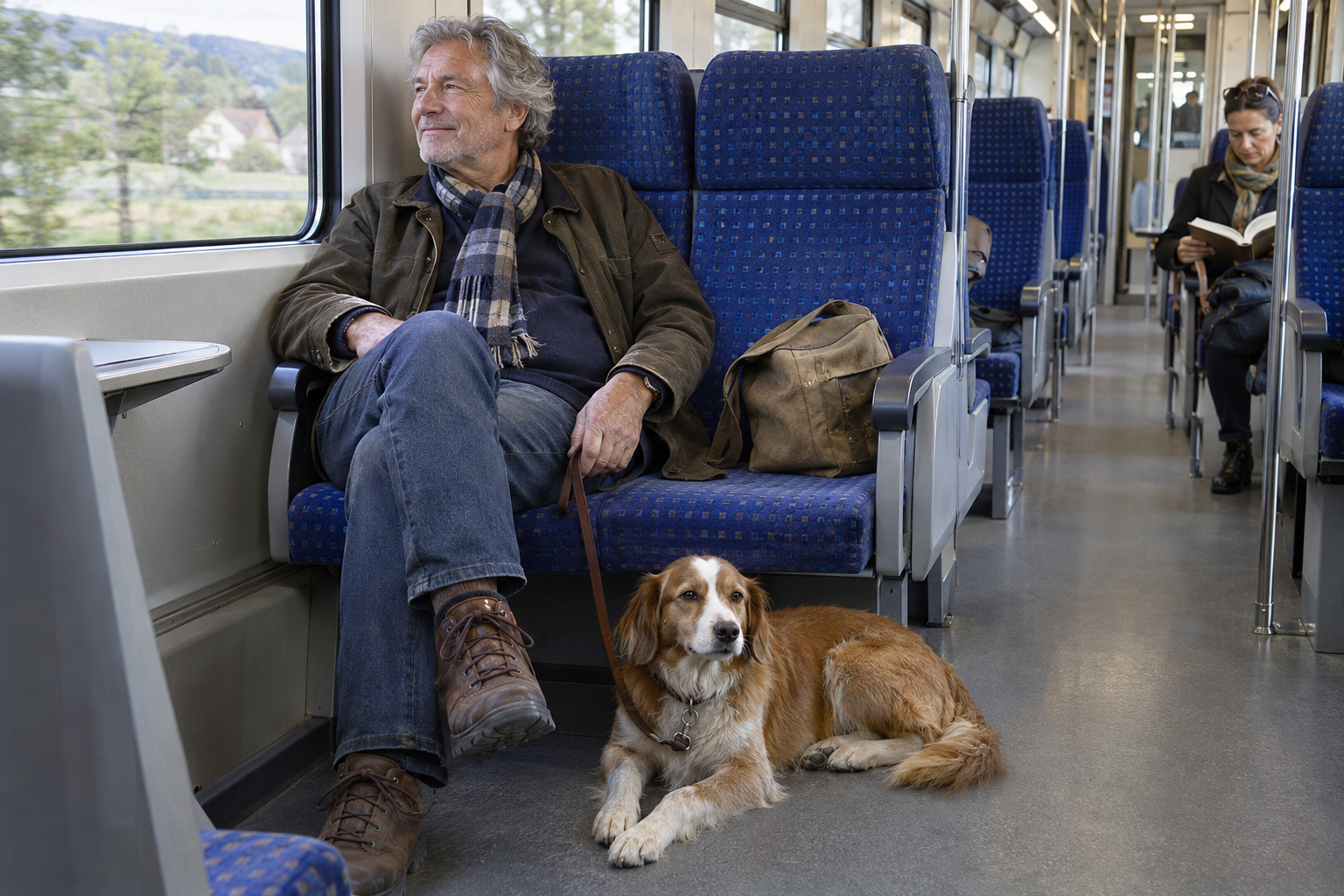
Beyond the sheer exposure, there is a difference in how Europeans, and Germans in particular, think about what training is for, and it shapes the results. Where an American owner struggling with a badly behaved dog often wants a trainer to fix the dog, to take it away and hand it back obedient, the European mindset sees training as being about the relationship between owner and dog, an ongoing, consistent, patient practice rather than a problem to be outsourced and solved. The owner is expected to do the work, continuously, not to buy a cure.
This is reinforced, in some countries, by real structure and expectation around dog ownership.
Germany, for instance, treats dog ownership as a serious responsibility backed by law and custom: there is an annual dog tax, animal welfare is strong enough that keeping a dog crated for long stretches or chained up is not allowed, and in some regions owners must even demonstrate a basic level of competence and control. Underlying it all is a simple social expectation that a dog in public will be well-behaved, and that if it is not, the owner will be called out and, quite possibly, asked to leave. That gentle but real social pressure means owning a dog carries an implied promise to keep it under control, and most owners take the promise seriously because their neighbors, and the cafe owner, plainly expect them to. That expectation does real work, because it means owners cannot treat poor behavior as merely their own private problem; the whole society quietly holds them to a standard, and dogs rise to what is expected of them. The result is not necessarily harsher training but more consistent, more serious, more relationship-focused ownership, in a culture that assumes a dog can and should learn to behave, rather than treating a wild dog as just the way some dogs are. The bar is simply set higher, by everyone, and dogs and owners alike tend to meet the bar that is set for them.
The Petting Rule Almost No One Tells You
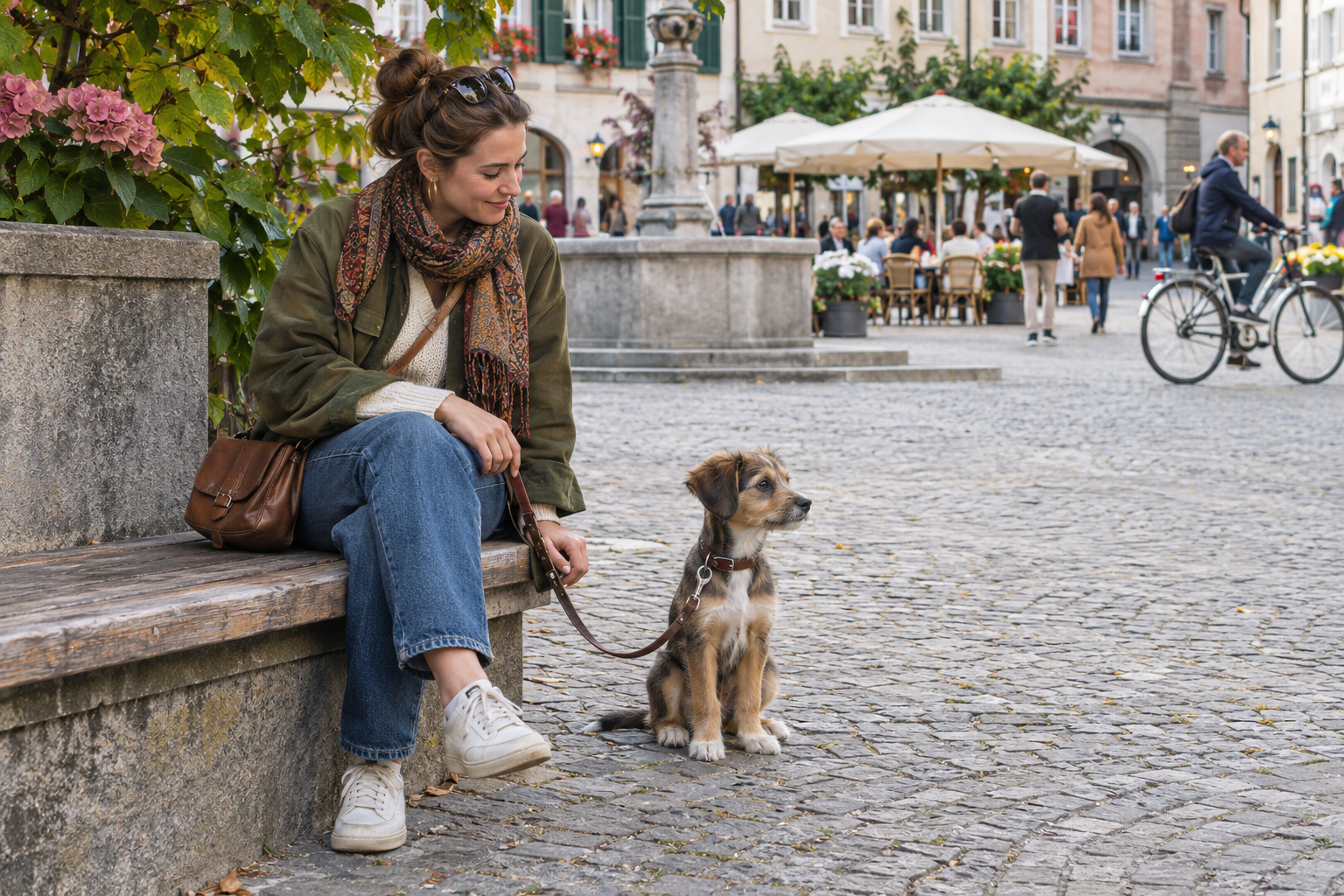
Here is a factor that Americans almost never guess and that turns out to matter a great deal: in much of Europe, you do not pet other people’s dogs, and other people do not pet yours. Where an American dog out in public is a magnet for strangers cooing, reaching out, and asking to say hello, the European norm is to leave a dog alone unless invited, treating a dog with its owner as going about its business rather than as public entertainment. Owners readily and unapologetically tell strangers, including children, not to pet the dog, and this is considered perfectly normal rather than rude.
This quiet difference has a large effect on how calm dogs can be, because a dog constantly approached and petted by strangers is kept in a state of high stimulation and social arousal, forever being wound up by attention.
A dog that is left alone in public, by contrast, can stay settled and focused on its owner, which is precisely what allows it the freedom to walk off-leash through a crowd or lie calm in a cafe without being provoked into excitement every few minutes. The off-leash calm that so impresses visitors depends partly on this: the dog can be trusted loose because it is not being constantly triggered by a world that insists on interacting with it. Take away the endless stream of strangers wanting to say hello, and a great deal of the excitement that makes an American dog hard to handle in public simply never gets sparked in the first place. So one of the most effective things behind European canine calm is not something done to the dog at all but a social restraint practiced by everyone else, the simple custom of leaving dogs be. It is the piece of the puzzle Americans, raised to greet every dog they meet, find hardest to see, and it is worth knowing precisely because it runs so counter to the American instinct. The kindest thing you can do for a calm dog, it turns out, is often to admire it and walk on by.
Bred for It, or Raised for It?
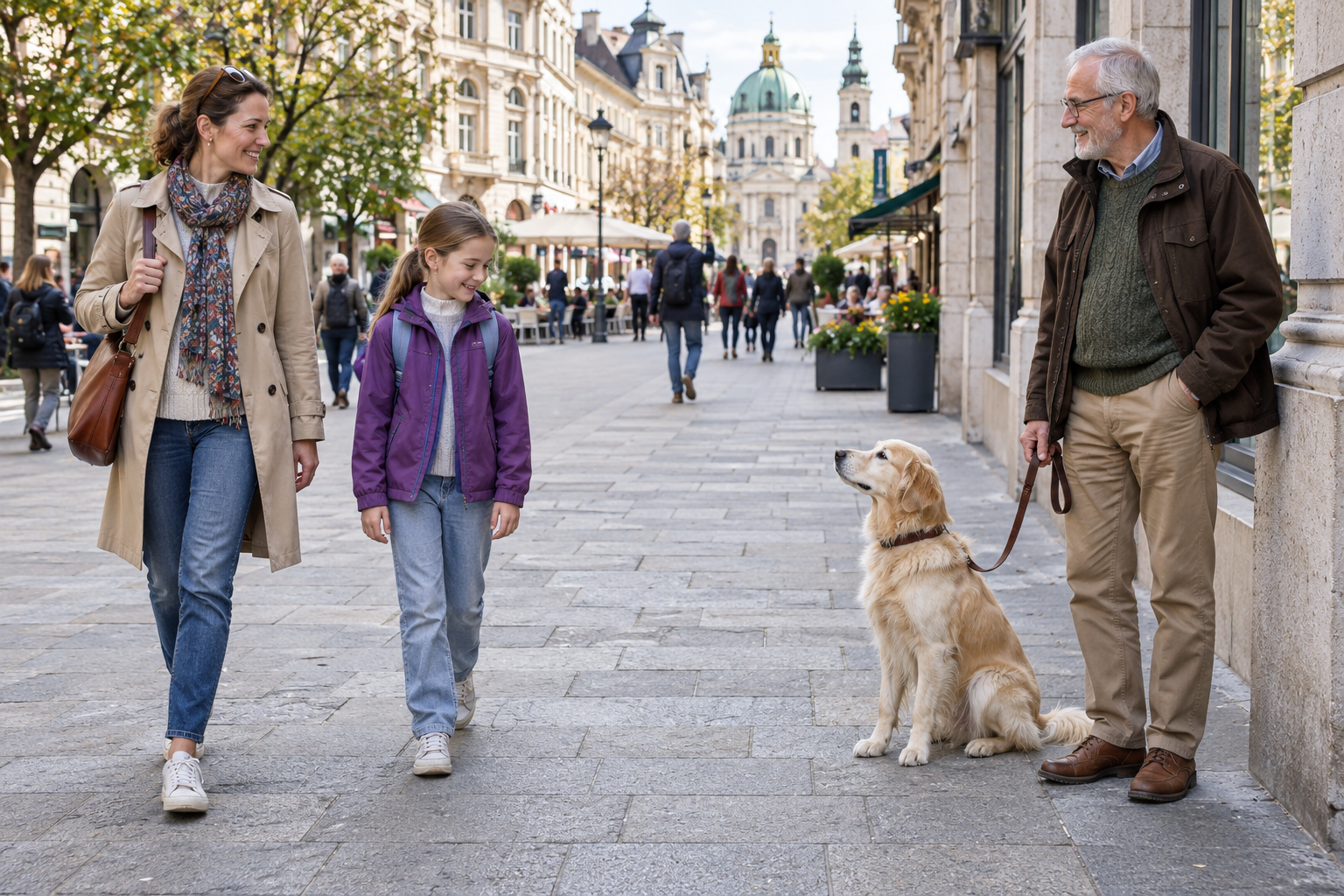
A natural question, once you have seen enough impossibly calm European dogs, is whether the difference is in the dogs themselves rather than in how they are raised, and it is worth addressing head-on because the answer matters. There are a few theories along these lines. Some point to the breeds, noting that certain European favorites are placid by nature, or that Americans gravitate toward more excitable types. Others note that Europe spays and neuters far less routinely than the United States, and wonder whether that plays some role in temperament. These ideas float around whenever the subject comes up.
But the weight of what trainers and long-term observers say lands firmly on nurture rather than nature. The clearest evidence is what happens to American dogs raised in Europe: the same breeds an American might own at home, taken to Germany and raised in the German way, become noticeably calmer and better behaved, while American families who move to Europe with their dogs often report the dog improving simply from the change in environment and routine.
Tellingly, the reverse is reported too, that an American dog transplanted to a European setting still tends not to reach quite the standard of the local dogs, not because of its breed but because its owners, shaped by American habits, do not raise it in quite the same way. That points squarely at upbringing, not genetics, as the decisive factor. It is reassuring, in a way, because it means the calm European dog is not a special animal you would have to import; it is an ordinary dog that was raised in a particular way, which is a thing that can be learned and copied rather than a lucky roll of the genetic dice. The dog is not the variable. The raising is, which is the most hopeful thing anyone frustrated with a bouncy, barking dog at home could hear.
The Honest Picture Behind the Calm
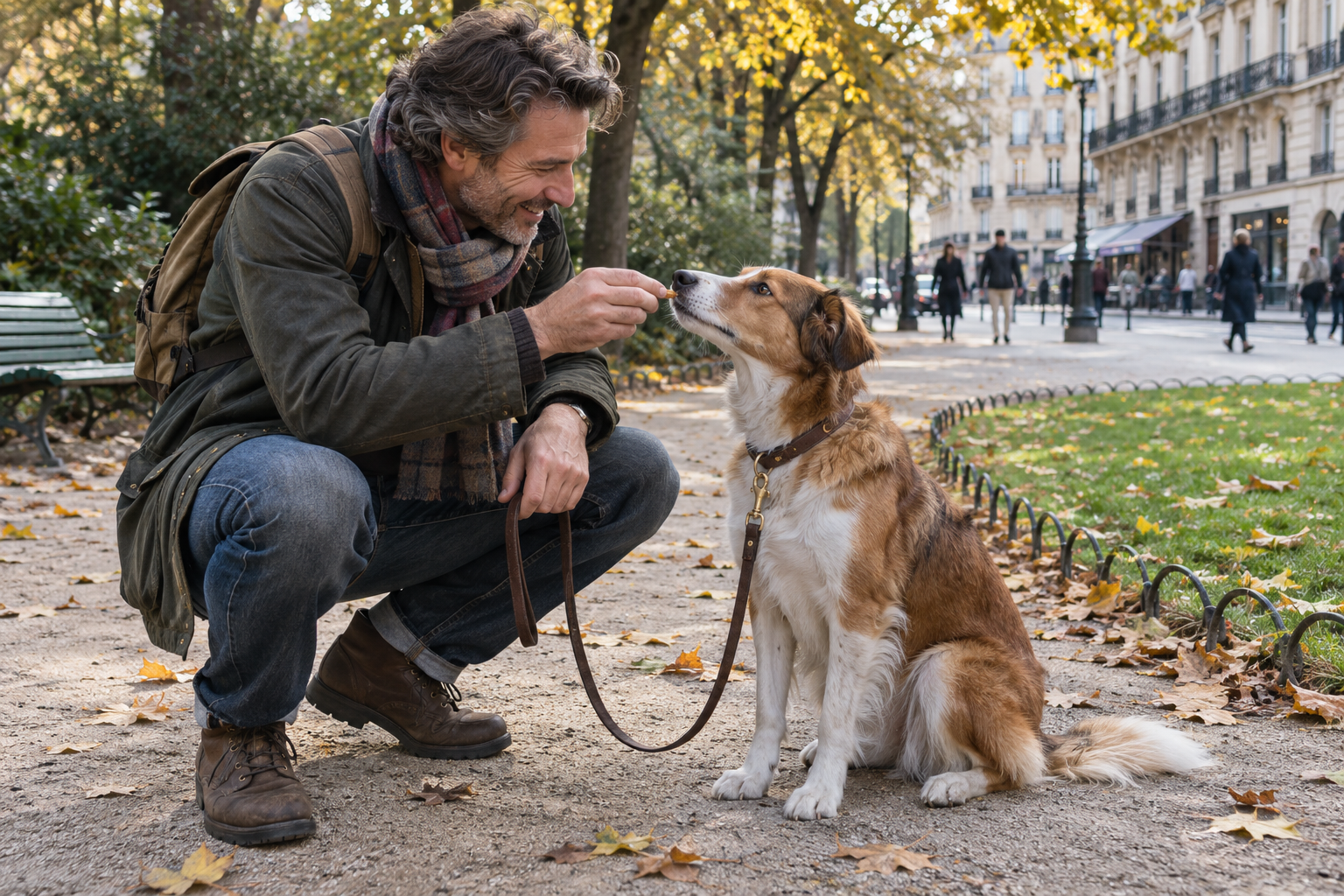
Before anyone concludes that European dogs are simply better and American dogs simply worse, the honest picture deserves a few qualifications, because the reality is more balanced than the admiring version suggests. For one thing, the calm comes with a trade-off that not everyone loves: European dogs, trained to be neutral and unbothered in public and are not constantly socialized to adore strangers, often come across as more aloof and less openly friendly than American dogs, missing some of the exuberant, goofy sociability that Americans cherish. More than one American who has lived with both has preferred the warmer, sillier, if less obedient, American dog. Calm and cuddly are not the same thing, and Europe optimizes for the former.
It is also fair to say that this is a generalization, since Europe has its share of badly behaved dogs and anxious owners too, and that the difference is as much about environment and culture as about superior training. A dog-friendly society that lets dogs everywhere, a custom of leaving them alone, laws and expectations around ownership, and the constant exposure all of that produces, these are the real ingredients, and an American cannot simply replicate the results by trying harder at home, because the surrounding conditions are different.
What an American can take from it, though, is the set of transferable lessons that genuinely travel: socialize a dog early and constantly, get it out into the world often rather than keeping it home, handle it calmly and consistently as an ongoing relationship, and resist the urge to let every dog be endlessly petted into excitement. Do those things, even in a less dog-friendly country, and a dog will move a long way toward the calm that makes European dogs so pleasant to be around. None of that requires moving to Germany. The European dog is not a different animal or the product of some secret technique; it is an ordinary dog raised in a setting that quietly teaches it, every single day, that the world is nothing to get worked up about, and that is a lesson any dog, anywhere, can begin to learn. Start it young, keep it up, and take the dog with you into the world, and a good deal of that famous European calm will follow you home.

About the Author: Ruben, co-founder of Gamintraveler.com since 2014, is a seasoned traveler from Spain who has explored over 100 countries since 2009. Known for his extensive travel adventures across South America, Europe, the US, Australia, New Zealand, Asia, and Africa, Ruben combines his passion for adventurous yet sustainable living with his love for cycling, highlighted by his remarkable 5-month bicycle journey from Spain to Norway. He currently resides in Spain, where he continues sharing his travel experiences with his partner, Rachel, and their son, Han.