
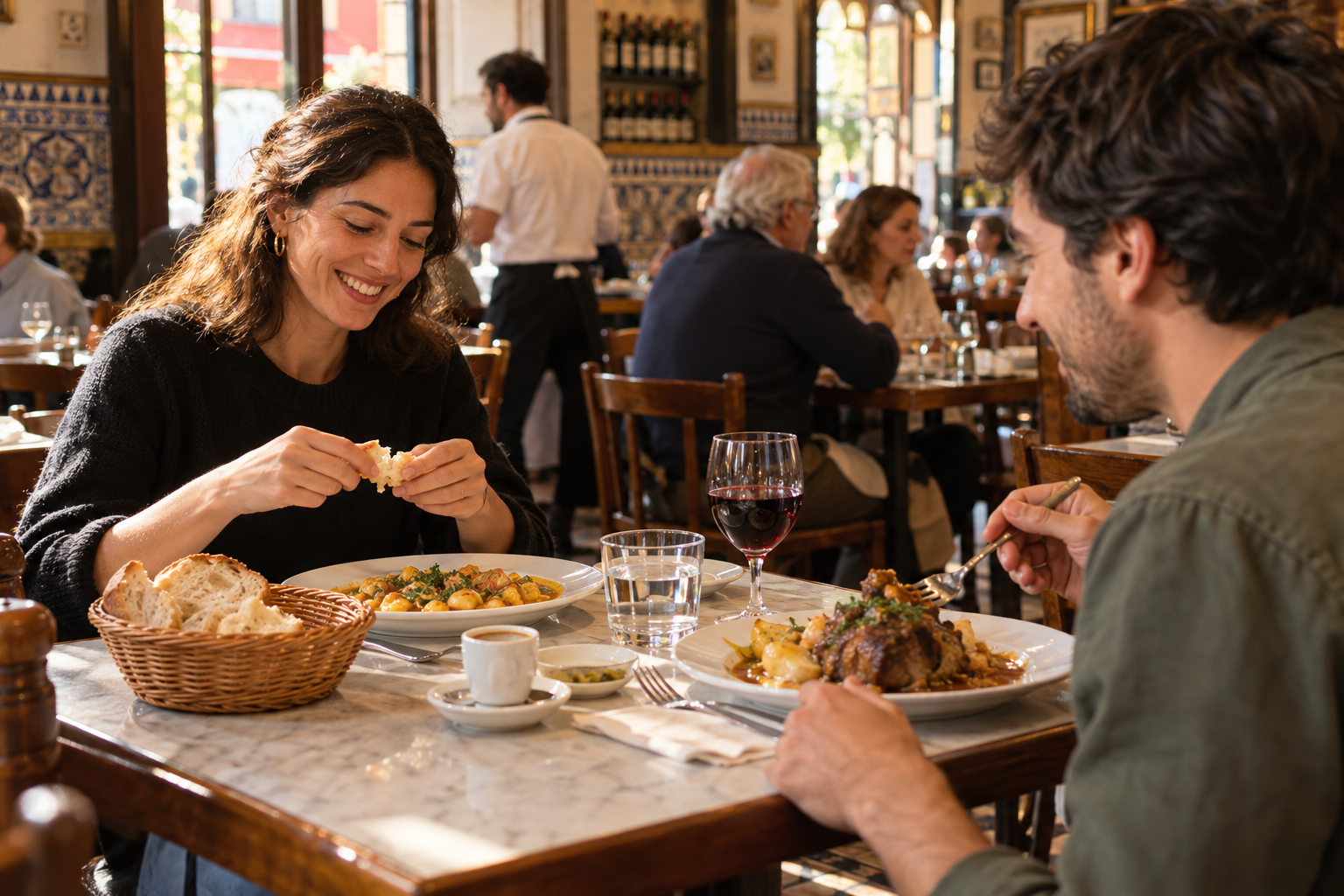
You sit down at a restaurant in Spain, and before you have even ordered, a basket of bread appears on the table.
You did not ask for it, but you eat a slice or two while you look at the menu, as anyone would, and think nothing of it, because where you come from bread on the table is free, a small courtesy of the house. That instinct, that bread simply comes with sitting down, is so automatic that you never examine it until the moment it turns out not to hold. Then the bill arrives, and there, among the dishes you ordered, is a modest charge for pan, bread, or sometimes for cubierto, a cover. It is rarely more than a euro or two, so it is hardly a scandal, but it catches almost every visitor off guard the first time, because it upends an assumption most people did not even know they were making. Here is what that charge actually is, when it is legitimate and when it is not, and how to handle it so you are never surprised or overcharged at a Spanish table again. It is a tiny thing, but it is the kind of tiny thing that can sour a nice meal for a visitor who feels, wrongly, that they have just been quietly cheated.
What follows is why the bread was never free, the fact that you can simply send it back, what Spanish law does and does not allow on your bill, why this is not the scam it can feel like, and how to read a Spanish bill with confidence.
The Bread Was Never Free
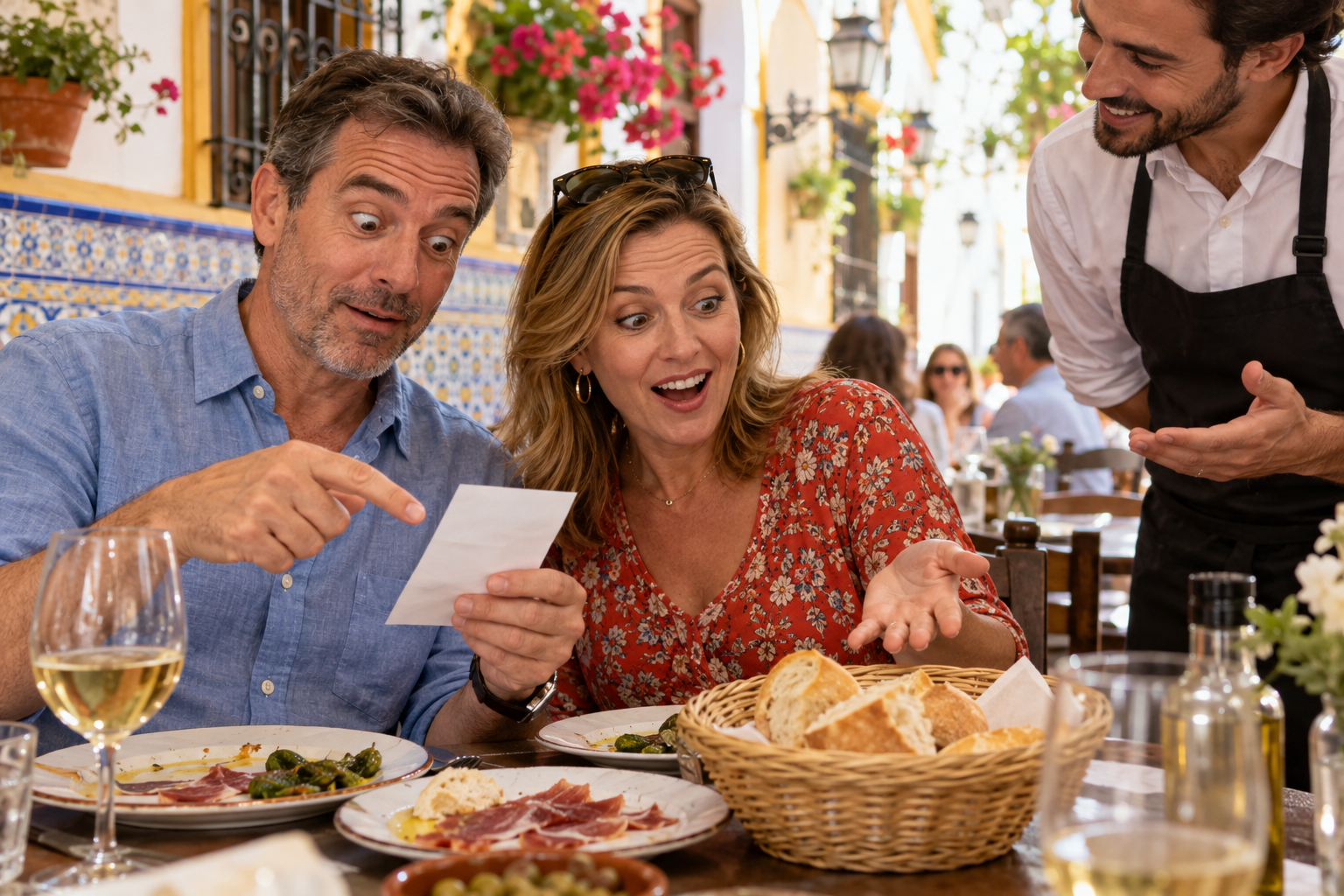
The heart of the confusion is a simple cultural difference about bread. In the United States and some other countries, the bread brought to your table is complimentary, part of the service, and no one expects to pay for it. In Spain, when you are dining a la carte, the bread is generally not free; it is a chargeable item, brought to the table and added to your bill, typically between fifty cents and two euros per person, occasionally more in very touristy places. It is not a huge sum, but it is a real one, and it is the default rather than the exception.
For an American this is genuinely surprising, because the free bread basket is such an ingrained part of the restaurant experience that its absence feels almost like a small betrayal, or a sign of being fleeced. It is neither. The Spanish simply treat bread as one of the things you might order and pay for, like a side dish, rather than as a free courtesy, and to a Spaniard there is nothing odd or grasping about it at all. It would no more occur to them to expect free bread than to expect a free glass of wine, and they are mildly baffled that visitors find the charge remarkable enough to complain about.
One useful thing to know is that this applies to a la carte dining, since bread, water, wine, and coffee are very often included in the price of a menu del dia, the set-price lunch menu that is one of the great bargains of Spanish eating, and in that case they cannot charge you extra for it. It is when you order individual dishes from the main menu that the bread becomes a separate, chargeable item, and the small charge appears on the bill. Knowing this in advance turns a moment of suspicion into a simple, expected line on the receipt. Once you stop expecting the American free basket, the small charge stops feeling like a trick and starts feeling like what it is, the price of a thing you were offered and chose to accept.
But You Can Send It Back
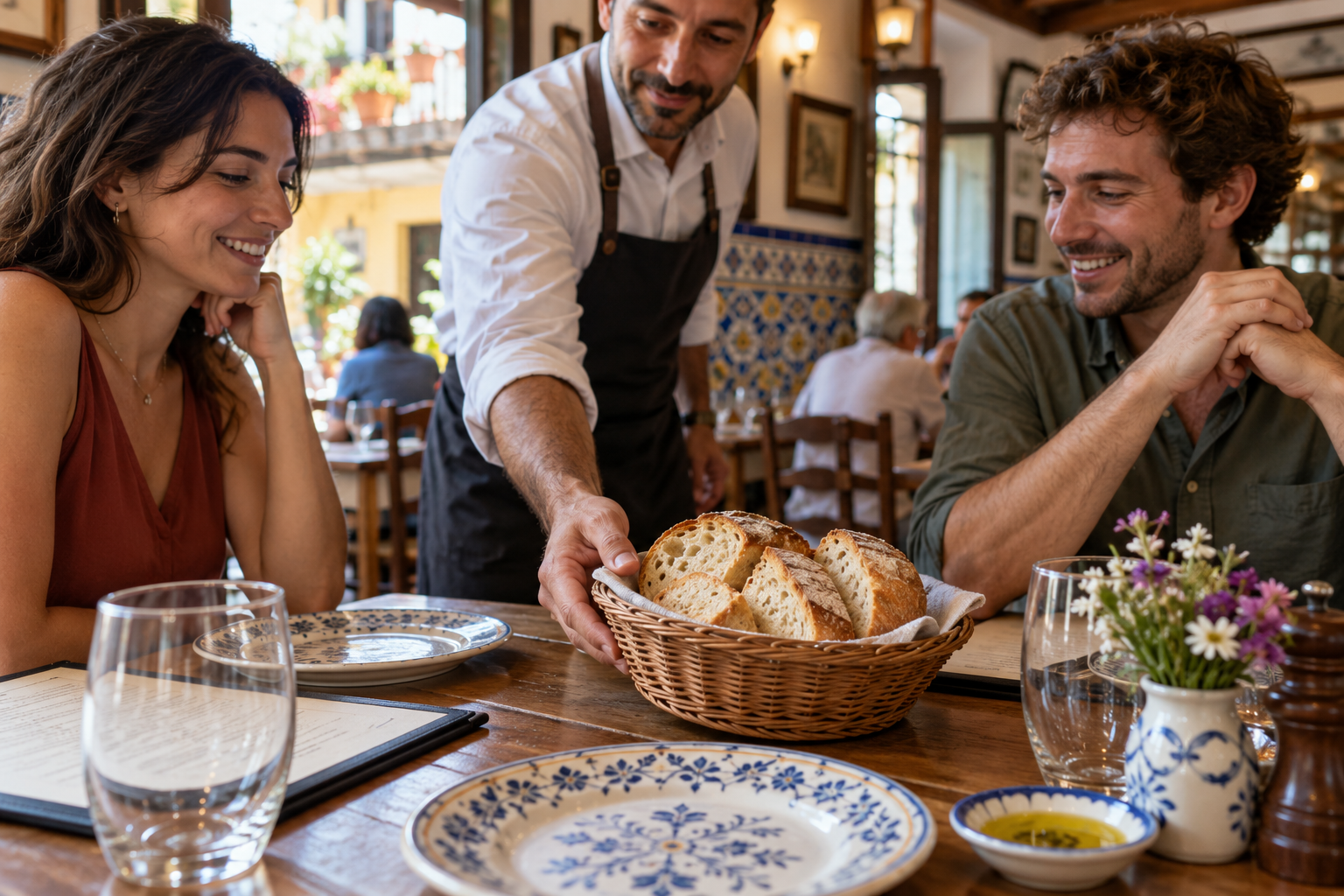
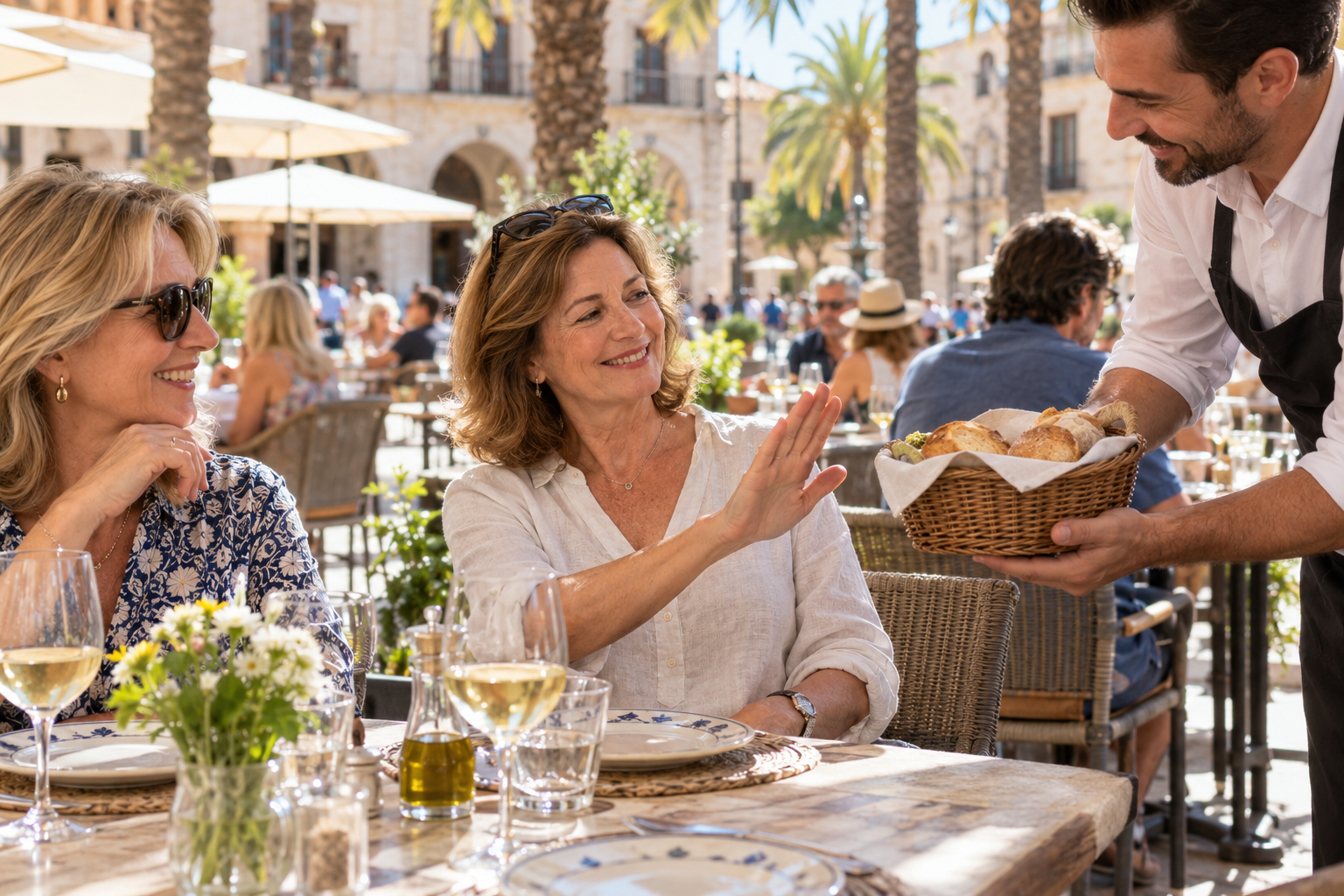
Here is the practical part that most tourists never realize, and that changes the whole thing: you do not have to accept the bread, and if you decline it, you are not charged. The bread is an offer, not an obligation, and when the waiter brings it, or asks if you would like it, you are entirely free to say no thank you, at which point they take it away and it never appears on your bill. If you do not want bread, or do not want to pay for it, simply refusing it is all it takes. A polite no gracias when the basket appears, or a shake of the head if the waiter asks, and the whole question is closed before it ever reaches the bill.
The corollary matters just as much: if the bread is brought and you leave it on the table, you will generally be charged whether or not you eat a slice, because its presence on the table is treated as your having accepted it.
So the moment of decision is when it arrives, not when the bill comes. If you want it, keep it and expect the small charge; if you do not, send it back straight away rather than letting it sit there untouched and then feeling aggrieved to find it on the bill. This is the single most useful thing to know about the whole business, because it puts the decision entirely in your hands. A great many tourists who grumble about being charged for bread they barely touched simply did not realize that a polite no when it arrived would have settled the matter. The waiter is not trying to sneak it past you; bringing the bread is simply the default, and declining it is a completely normal and expected response that no one will think twice about. Treat the arriving bread as a yes-or-no question, answer it, and the charge is never a surprise.
What Spanish Law Does and Doesn’t Allow
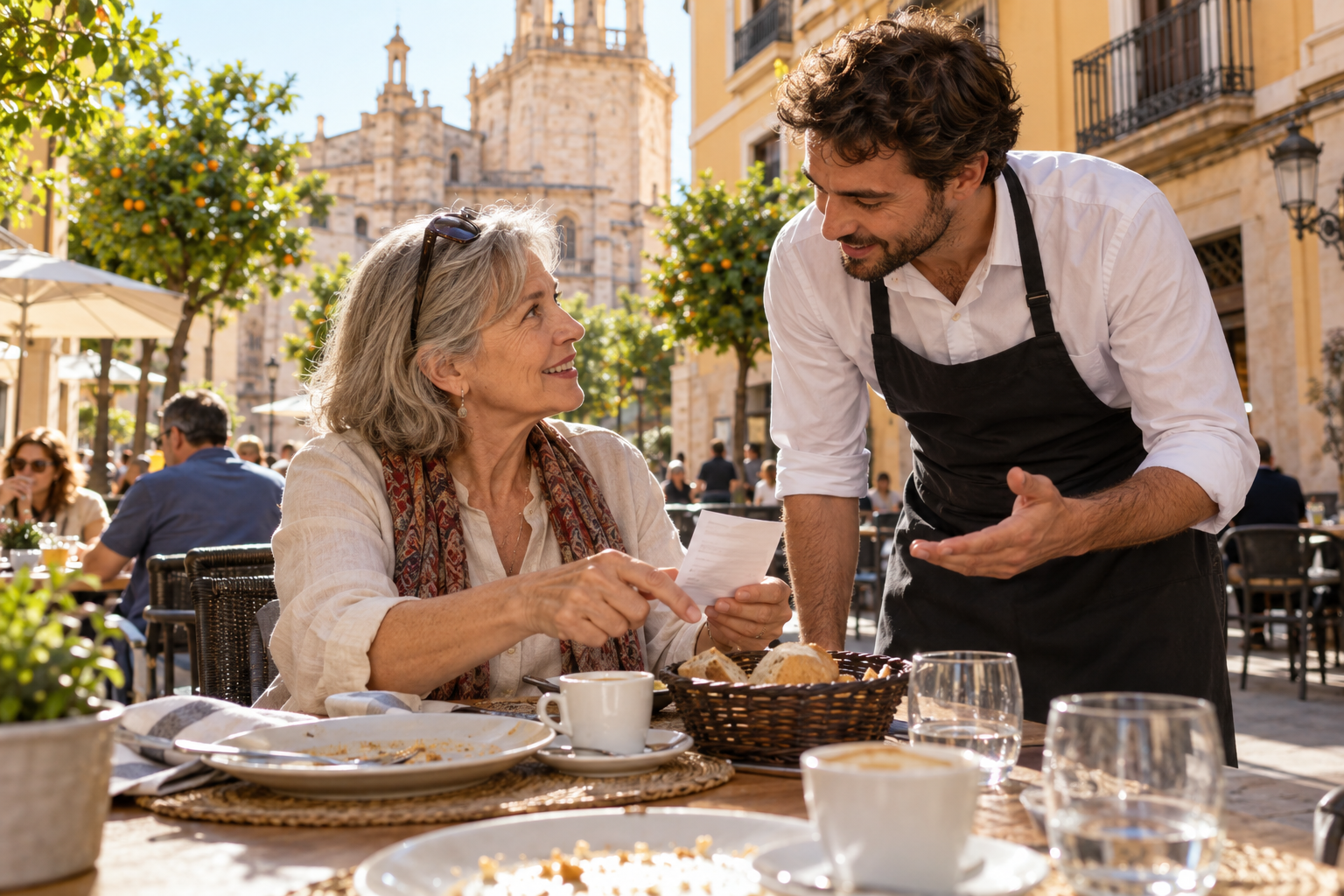
Behind all this sits a reassuring fact: Spain has strong consumer protection laws about what a restaurant can and cannot put on your bill, and knowing the basics lets you tell a legitimate charge from a dubious one. The governing principle is simple and powerful: a restaurant can only charge you for things listed, with their price, on the menu, and that you actually ordered or accepted. Anything chargeable, including bread, must be indicated on the menu, so a bread charge is legitimate precisely when it is disclosed there and you did not refuse the bread. If a charge appears for something that was never priced on the menu, that is the point at which you have a genuine grievance rather than merely a surprise, and Spanish consumer law is squarely on your side.
That same principle rules out a number of things that would be normal elsewhere. A pure cover charge or table-service charge, the idea of being charged simply for sitting down or for the use of cutlery, the thing an Italian menu calls coperto, is on much shakier ground in Spain, where consumer authorities regard a straight charge for service or for merely occupying a table as improper, and it is at best only arguable if spelled out clearly on the menu. Tap water must be provided free, by law, so you should never be forced to buy bottled water. And an unsolicited plate of olives can only be charged if it is on the menu and you actually eat it, so if something you did not order simply appears, you are within your rights to ask whether it is free before touching it or to send it back. The upshot is that Spain is, if anything, unusually protective of the diner, and the rules are on your side, which is precisely why a genuine scam is rare and a mysterious charge is usually either the legitimate bread or an error worth querying. Compared with countries where cover charges and service fees pile up unpredictably, Spain is refreshingly transparent, since the menu is supposed to tell you everything you can be charged for before you order a thing.
Why It Isn’t the Scam It Feels Like
Given all the forum threads and traveler complaints about being charged for bread in Spain, it is worth saying plainly that this is not, in the main, a case of tourists being ripped off, and reframing it that way makes for a much happier trip. The bread charge is a small, legal, everyday feature of Spanish dining, applied to locals and visitors alike, and a Spaniard sitting at the next table is paying the same euro or two for their bread without a second thought. It feels like a scam to a newcomer only because it collides with the free-bread assumption they brought with them, not because anything underhand is happening. Strip away that one imported expectation and the charge is revealed as completely ordinary, the price of a small thing you were offered, no more sinister than paying for a side of olives you asked for.
It also helps to see the charge in the context of how generous Spanish eating often is in other ways. The same restaurant that adds a euro for bread may well bring you a small free tapa with your drink, in the regions where that lovely custom survives, or send out a complimentary glass of something after your meal, so the tiny bread charge sits within a dining culture that is, on the whole, remarkably good value and often quietly generous. The menu del dia remains one of the best deals in European eating. Seen in the round, the bread charge is a minor, honest quirk of an otherwise diner-friendly system, not evidence of a rip-off, and approaching it with that understanding rather than suspicion is the difference between an irritating surprise and a shrug. The paranoid tourist, braced to be cheated, has a worse time than the informed one, who simply knows the bread costs a euro and decides whether they want it. Suspicion is a poor traveling companion at a Spanish table, where the food is good, the prices are fair, and the one small quirk on the bill is easily managed the moment you understand it.
Tipping Isn’t the Answer Either
The bread charge often prompts a second question from Americans, which is whether they are then expected to tip on top, and here Spain delivers another pleasant surprise that runs the opposite way to the bread. In Spain, tipping is not the obligatory institution it is in the United States, because service is considered part of the price of the meal and restaurant staff are paid a proper wage rather than living on gratuities. There is no expectation of the fifteen or twenty percent an American reflexively adds, and no social pressure to leave it.
What Spaniards actually do is modest and optional: rounding up the bill, or leaving a little loose change, or perhaps a euro or two per person after a nice meal, and often nothing at all after a casual coffee or drink. Leaving a large American-style tip is unnecessary and can even read as slightly odd, an overcorrection by someone who has not understood that the service is already covered. So the two things balance out in a way worth holding together: yes, you may pay a small charge for the bread that would be free at home, but no, you do not then layer on the hefty tip you would also pay at home, and on the whole the Spanish way of settling a bill is simpler and cheaper than the American one. Understanding both halves, the small bread charge and the minimal tipping, is what lets you pay a Spanish bill exactly as a local would, neither underpaying out of ignorance nor wildly overpaying out of imported habit.
How to Read a Spanish Bill With Confidence
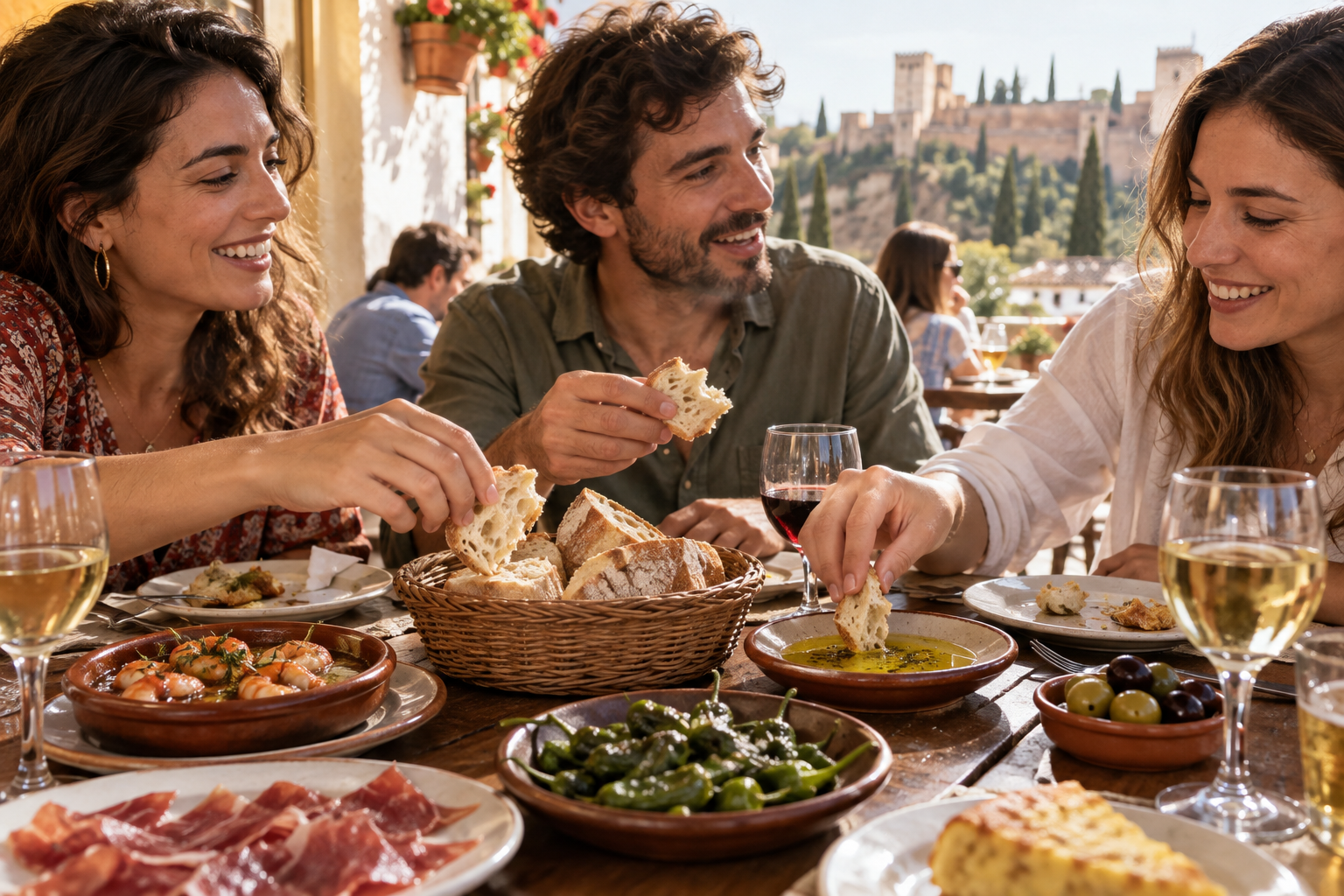
Put all of this together and you can approach a Spanish bill with the ease of someone who knows the rules rather than the wariness of someone waiting to be fleeced. When the bread arrives, make your simple decision: keep it and pay, or decline it and pay nothing. Know that on a menu del dia the bread and often the drink are already included, so no extra should appear. Do not pay for bottled water you did not want, since tap water is free for the asking. And if something you did not order shows up, from a plate of olives to a service charge, know that it is only chargeable if it was on the menu and, in the case of food, actually eaten, so you can politely question anything that does not meet that test.
Above all, it is always worth glancing over the bill before you pay, not out of suspicion but as sensible habit, since honest errors do happen and are usually corrected without fuss the moment you point them out. If you spot a charge you do not recognize or think is improper, calling the waiter over and asking politely is almost always enough to resolve it, whether it turns out to be a legitimate item you had forgotten or a genuine mistake. Spanish waiters deal with this all the time and will generally sort it out without any fuss, since the law is clear and there is rarely anything to argue about. None of this should make you tense at the table, because the whole point is that the Spanish system is fair and the sums involved are small; it is simply that a little knowledge turns the once-baffling bread charge into a non-event. Understand that the bread was never free, that you could have said no, and that the law is largely on your side, and you can eat your way around Spain paying exactly what you should, and not a cent more, without ever again being thrown by that small line on the bill. It is a tiny piece of local knowledge, but it is the difference between eating like a wary outsider and eating like someone who belongs, and belonging, in the end, is most of what makes a meal abroad a pleasure rather than a transaction.

About the Author: Ruben, co-founder of Gamintraveler.com since 2014, is a seasoned traveler from Spain who has explored over 100 countries since 2009. Known for his extensive travel adventures across South America, Europe, the US, Australia, New Zealand, Asia, and Africa, Ruben combines his passion for adventurous yet sustainable living with his love for cycling, highlighted by his remarkable 5-month bicycle journey from Spain to Norway. He currently resides in Spain, where he continues sharing his travel experiences with his partner, Rachel, and their son, Han.