
You check into a hotel in Paris or Rome, hand over your card at the desk, and a little later that evening your phone buzzes with an alert: a chunk of money, sometimes a few hundred euros, has vanished from your available balance. You have not bought anything at all. You have not even paid for the room yet. And when you check the charge, it says pending, not posted.
For a lot of travelers this is a small jolt of panic, the sudden fear that they have somehow been overcharged or that something has gone badly wrong, when in fact what has just happened is completely routine and, once you understand it, nothing to worry about at all. The hotel has placed a pre-authorization hold on your card, a temporary reservation of some of your funds that is not actually a charge at all, and and it is quietly one of the most misunderstood things in all of travel. Here is exactly what is happening, why hotels do it, and the one version of it that can genuinely catch you out. It is a small piece of financial machinery that everyone brushes against and almost nobody has had explained, which is why the same jolt of check-in panic repeats itself for traveler after traveler.
What follows is the difference between a hold and a charge, why hotels place the hold, the debit-card trap that turns a harmless hold into a real problem, why the money can take so long to reappear, and how to handle the whole thing without stress.
A Hold, Not a Charge

The single most important thing to understand, the thing that dissolves the panic, is that a pre-authorization is a hold, not a charge, and the difference is real. When the hotel processes your card at check-in, it is not taking your money; it is asking your bank to set aside a certain amount of it, to reserve it against costs you might run up during your stay. The funds are earmarked but not transferred, reduced from what you can spend but not actually gone, and no money has changed hands. It shows up as a pending amount rather than a posted charge precisely because it is a reservation, not a payment.
This is why the alert can be so alarming and yet so harmless at the same time. Your available balance drops, which looks exactly like being charged, but nothing has actually been paid, and when you finally check out and settle your real bill, the hold is released and only the genuine charge, the room and whatever you actually used, goes through.
For a brief window you might even see both the hold and the final charge sitting on your account at once, which fuels the fear of being double-charged, but the hold then drops away and you are left paying only what you owe. Understanding this one distinction, that the scary pending amount is reserved rather than spent, turns the whole experience from a source of anxiety into a non-event, which is what it is for the millions of travelers who check in and out every day without ever quite knowing what that hold was. The panic, in other words, comes entirely from not knowing the word for what is happening, and the word, once you have it, does all the reassuring.
Why Hotels Place the Hold
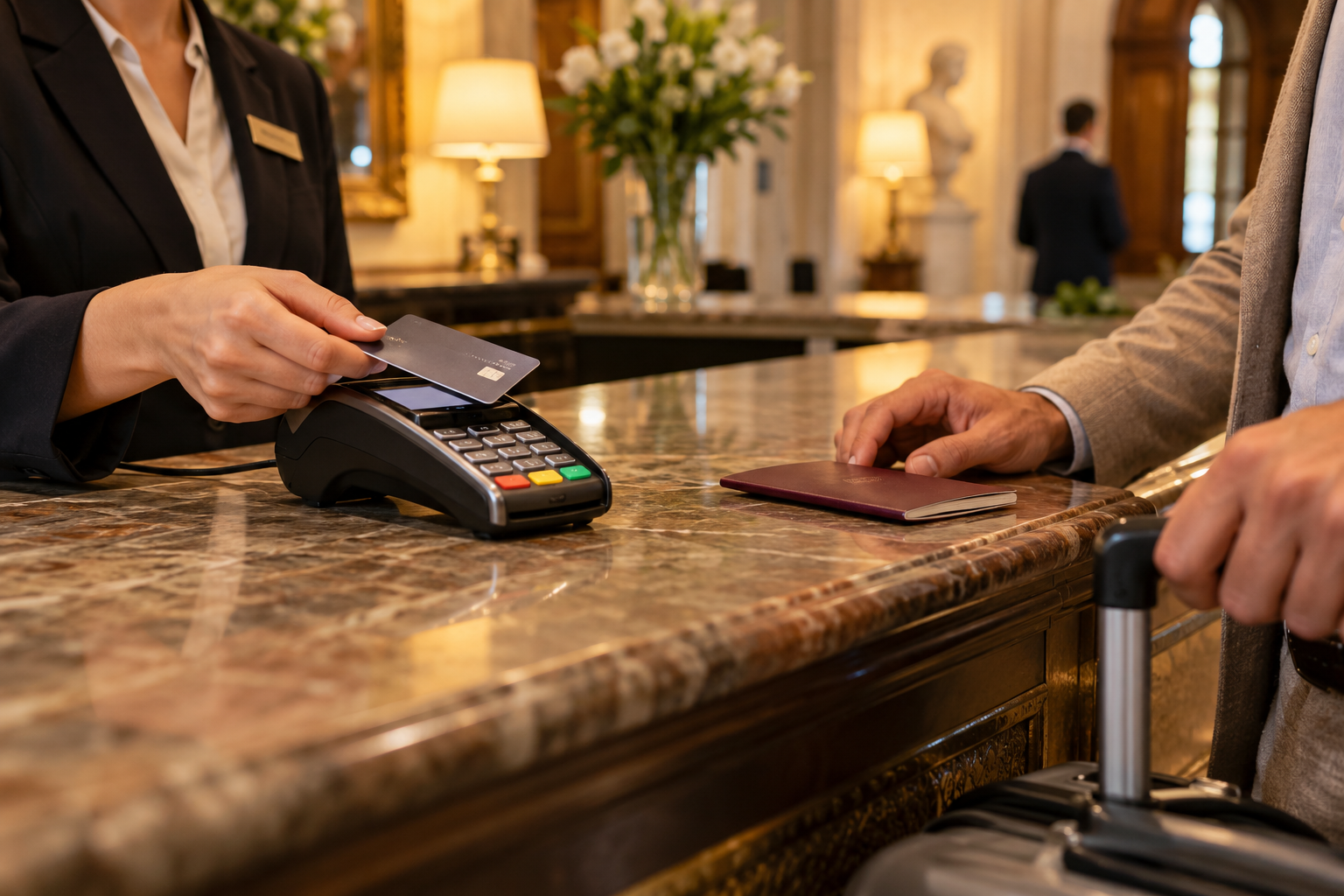
Once you know it is a hold rather than a charge, the natural question is why hotels bother, and the reasons are straightforward and reasonable from the hotel’s side. The first is simple verification: by placing a hold, the hotel confirms that your card is real, valid, and actually has funds on it, which protects them against a guest whose card turns out to be dead or empty when the bill finally comes. The hold is, in part, a way of checking that you can pay before you have run up anything to pay for. It is the digital equivalent of the old habit of asking to see a card at the start rather than trusting it will be good at the end, a quiet insurance policy taken out the moment you arrive.
The larger reason is incidentals and damage. Over the course of a stay a guest can rack up charges beyond the room, the minibar, room service, spa treatments, phone calls, or, in the worst case, damage to the room, and the hold reserves enough to cover those potential extras so the hotel is not left chasing you for them after you have gone.
That is why the hold is typically the cost of the room plus a buffer for incidentals, often somewhere in the range of fifty to two hundred a night on top of the room, more at luxury properties, though it varies widely. It also guards against no-shows and walkouts, giving the hotel a guarantee that a booked and occupied room will actually be paid for. From the hotel’s side it is simply prudent business, the same instinct that makes a landlord ask for a deposit, and it is applied uniformly to everyone rather than aimed at you in particular. None of this is the hotel trying to take extra money from you, since the hold is released if you do not use those extras or damage anything; it is simply the hotel protecting itself against the small minority of guests who would otherwise leave a mess or a bill behind, and you are caught up in a routine that applies to everyone. The honest guest who touches nothing in the minibar pays nothing extra and gets the whole hold back, which is worth remembering when the pending figure looks alarmingly large on arrival.
The Debit Card Trap

Here is the part that genuinely matters, the one place where an innocuous hold can turn into a real problem, and it comes down to what kind of card you hand over. If you use a credit card, the hold is close to painless, because it simply reduces your available credit limit for a while, tying up part of your borrowing capacity rather than any actual money of yours. You may not even notice, as long as the hold does not push you near your limit, and no real funds of yours are touched. This is the whole quiet argument for traveling on a credit card, that it lets the bank’s money absorb these routine holds while your own money stays exactly where it is, available to you throughout the trip.
If you use a debit card, the story is very different, and this is the trap. A hold on a debit card freezes actual money in your checking account, your own cash, making it unavailable to you for the duration of the hold and often for days after checkout. For a traveler that can be a serious problem: the frozen funds can leave you unable to pay for meals or transport, can tip you into an overdraft if you were near your balance, and can cause other transactions to be declined at the worst possible moment in a foreign country.
Worse, if the hotel does charge you incorrectly, a disputed minibar item or a damage fee you do not recognize, the money is already out of your account with a debit card, so you are fighting to get your own cash back rather than simply declining to pay, and disputes run slower on debit than on credit. The clear lesson, and the single most useful takeaway of the whole subject, is to use a credit card for hotel check-in, not a debit card, so that the hold ties up the bank’s money rather than yours. If you carry only one card abroad, make it a credit card for exactly this reason, and keep the debit card for cash machines where the hold problem does not arise.
It’s Not Just Hotels

Once you understand the hotel hold, you start to notice the same mechanism all over travel, which is useful, because the hotel desk is far from the only place it happens. Car rental companies are the other big one, and they can place holds that dwarf a hotel’s, often reserving a large sum against the value of the car and potential damage, sometimes well over a thousand euros, which sits frozen for the whole rental and beyond. Anyone renting a car abroad on a debit card can get a very unpleasant surprise indeed, for exactly the reasons that make debit a poor choice at the hotel desk.
The same holds turn up in smaller ways in other corners of a trip. Gas stations in some countries place a temporary hold when you pay at the pump before the final amount is known, restaurants occasionally pre-authorize a tab, and cruise lines and resorts that run on a room-charge system reserve funds against your onboard spending. The amounts and the timing vary, but the principle is identical everywhere: a temporary reservation of funds against a bill not yet finalized, released and replaced by the real charge once the total is known. Recognizing the pattern means that none of these holds needs to catch you off guard, and it makes the single piece of advice, favor a credit card over a debit card for travel, even more valuable, since it protects you not just at the hotel but at the rental counter, the pump, and everywhere else the hold quietly appears.
Why the Money Takes So Long to Reappear

Even when everything goes smoothly, travelers are often unsettled by how long the held money takes to come back after checkout, and this has its own explanation. When you check out, the hotel releases the hold, telling your card issuer that it no longer needs those reserved funds, and on the hotel’s side this often happens quickly, within hours. But the disappearance of the hold from your account is not up to the hotel alone; it is up to your bank, and banks can be slow to actually lift a pending authorization, taking anywhere from a day or two to a week or more.
Hotel holds are notorious for lingering longer than almost any other kind, and there is a reason for it: because the final bill at a hotel often differs from the amount originally held, the banking system gives these authorizations a long window to resolve, which means the pending hold can sit on your account well after you have left.
Check out on a Friday and the weekend alone can push the release into the following week.
Debit card holds, once again, tend to take longer to clear than credit card holds, compounding every disadvantage of using debit at check-in. The one card that causes the most trouble going in also causes the most waiting coming out, which is about as clear a verdict as travel advice ever delivers. This is why you might see, for a few uncomfortable days, both the released-but-still-pending hold and the actual charge on your statement, and it is why the held money does not spring back the instant you hand back the key. The two figures sitting there together are the single most common trigger for the double-charge panic, and they almost always resolve themselves without a phone call to anyone. It is coming back, but on the bank’s timetable rather than yours, and knowing that in advance saves a lot of needless worry in the days after a trip. The traveler who does not know this can spend a fretful week convinced they have been double-charged, phoning the hotel and the bank, when all that is needed is a little patience while the pending hold quietly ages off the account.
How to Handle It Without Stress

Put all of this together and handling hotel holds becomes simple, a matter of a few sensible habits rather than anxiety. The first and most important, as already said, is to use a credit card rather than a debit card for check-in, so that the hold tucks itself against your credit limit instead of freezing your actual cash. If you must use a debit card, make sure you have a comfortable cushion of funds in the account beyond the hold, so a frozen chunk does not leave you stranded or overdrawn. Better still, keep a dedicated credit card just for travel holds and deposits, so the freezing of funds simply never touches the account you actually live out of.
Beyond that, a little awareness goes a long way. Expect the hold, so the alert on your phone at check-in is a confirmation of something normal rather than a shock, and understand that the pending amount is reserved, not spent. Try to use the same card for the hold and the final payment, which helps the release go more smoothly.
Keep enough available credit or funds to absorb the hold on top of your actual spending, especially across several hotels on one trip, where the holds can stack up. And do not be alarmed if the money takes several days to return after you check out, since that is the banks being slow rather than anything being wrong. Do those few things and the pre-authorization goes back to being what it should be, an invisible piece of plumbing that protects the hotel and costs you nothing, rather than a mysterious vanishing of your money that spoils the start of a trip.
The whole thing is one of those cases where a single piece of knowledge converts a recurring worry into a shrug. It is one of those bits of how travel actually works that nobody explains until you have been caught out by it once, and knowing it in advance is quietly worth a great deal of peace of mind. Also, card terms and hold amounts vary by hotel and bank, so check your own card’s policies if a large hold would cause you trouble.

About the Author: Ruben, co-founder of Gamintraveler.com since 2014, is a seasoned traveler from Spain who has explored over 100 countries since 2009. Known for his extensive travel adventures across South America, Europe, the US, Australia, New Zealand, Asia, and Africa, Ruben combines his passion for adventurous yet sustainable living with his love for cycling, highlighted by his remarkable 5-month bicycle journey from Spain to Norway. He currently resides in Spain, where he continues sharing his travel experiences with his partner, Rachel, and their son, Han.