
In Spain, the meal does not end when the food does. The plates are cleared away, the last bite is long gone, and yet nobody at the table makes the slightest move to get up.
Instead they settle deeper into their chairs, order coffee or pour themselves a little more wine, and carry on talking, sometimes for an hour, sometimes for several hours, in a whole phase of the meal so distinct that the Spanish have given it its very own name. It is called sobremesa, and it is one of those wonderful words that has no real English equivalent, describing a whole social institution that other cultures feel all the time but never quite got around to naming. Literally it means over the table, and it refers to the cherished stretch of time spent lingering at the table after eating, purely for the simple pleasure of talk and good company. It is, in a very real sense, the whole point of the meal, and it is something modern Spain has fiercely and deliberately refused to give up even as the rest of the world sped up all around it. Here is what sobremesa is, why it matters so much, and why Spain guards it so jealously. It is one of those small cultural details that, once you understand it, quietly explains a dozen other things about the country, from the timing of the news to the pace of a Sunday.
What follows is what the word actually means, why the ritual exists, what it looks like in practice, why Spain refuses to abandon it, and how you might bring a little of it into your own life.
Over the Table
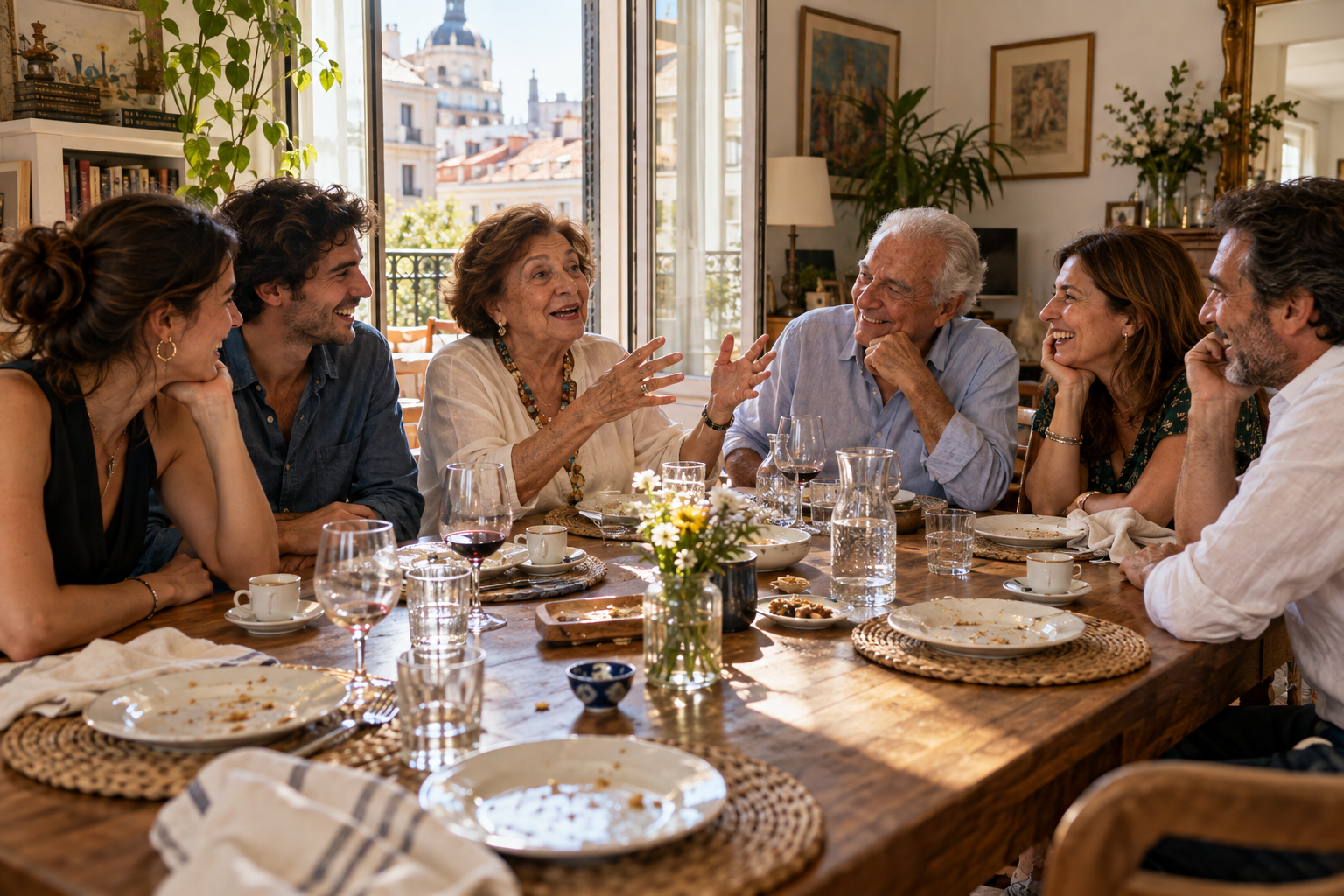
The word itself is the best way in, because it captures the thing precisely. Sobremesa is a compound of sobre, meaning over, and mesa, meaning table, so it translates literally as over the table, but its real meaning is the time spent at the table after a meal has ended. It is a noun for a specific activity, the act of staying seated and talking once the eating is done, and the fact that Spanish has a dedicated word for it, while English does not, tells you a great deal about how differently the two cultures treat the end of a meal.
English speakers reach for clumsy approximations, lingering over coffee, after-dinner conversation, but none of them quite fits, because they describe the form without the weight. Sobremesa is not an afterthought or a slow goodbye but a recognized, expected, almost ceremonial part of the meal, as real and as anticipated as the food itself. To a Spaniard, the sobremesa is not what happens when the meal is over; it is part of the meal, arguably the best part, the reason you gathered in the first place. The food, in a sense, is the excuse, the thing that brings everyone to the table, but the talk that follows is the payoff, and a Spaniard who has eaten well but had to rush off afterward feels the meal was somehow cut short.
This is the crucial thing an outsider has to grasp, that in Spain eating is only half of what a meal is for, and the other half, the talking, the connecting, the unhurried presence at the table, has its own name and its own honored place. Once you understand that the Spanish meal is built to have this second half, the whole rhythm of Spanish dining, so baffling and slow to a hurried visitor, suddenly makes sense. The American who fidgets and wonders why nothing is moving has simply not realized that the meal has entered its most important phase, not stalled.
A Word for a Feeling Everyone Knows
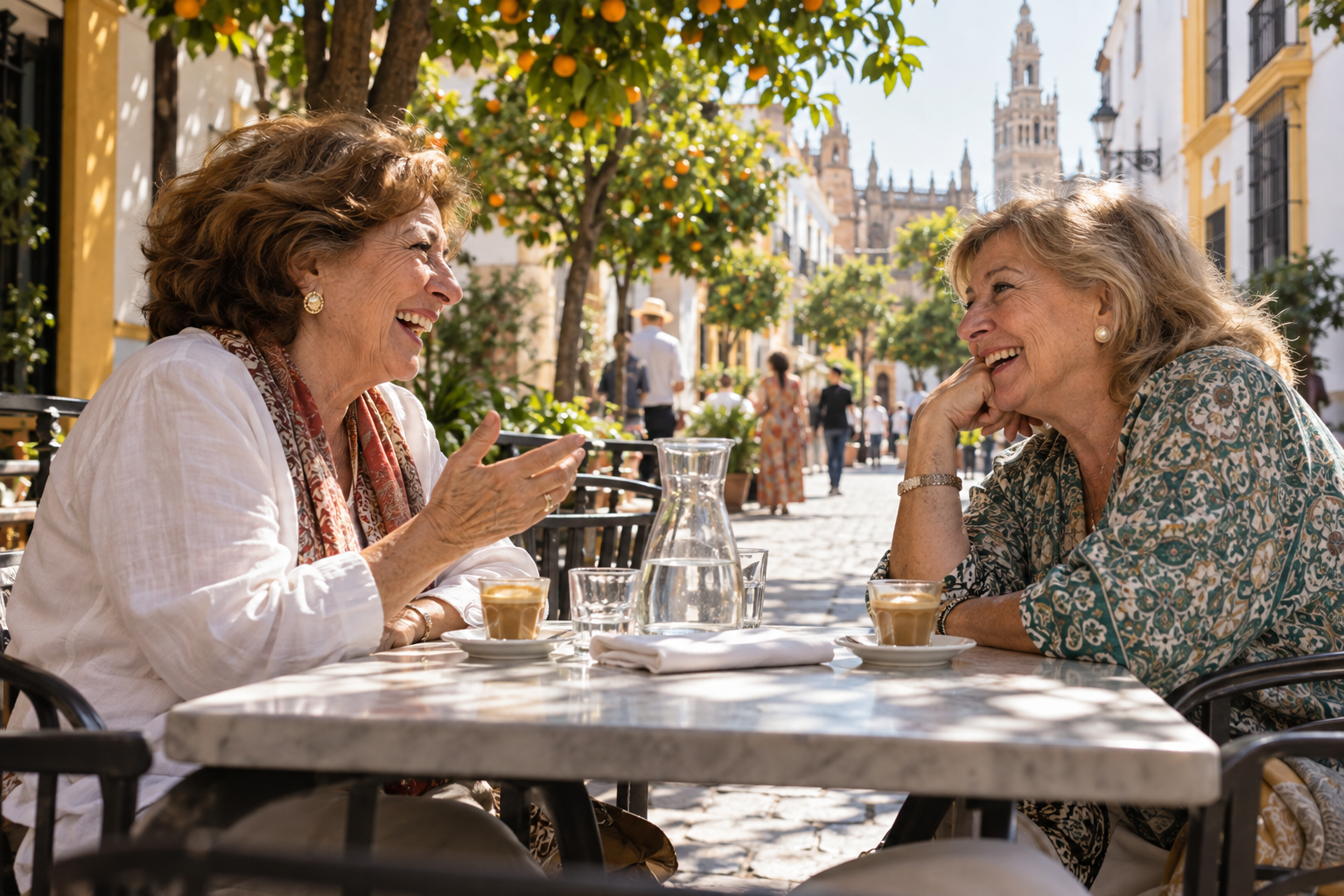
There is something worth pausing on in the untranslatability itself, because it is not that other cultures never linger after a meal but that they never named the lingering, and naming a thing changes how much it exists. Almost everyone, whatever their culture, has felt the sobremesa without a word for it, that warm reluctance to get up from a good meal with good company, the sense that leaving would break something pleasant. The feeling is universal; what Spain did was give it a name, and in naming it, make it into a thing you can plan, expect, honor, and protect rather than a happy accident that sometimes occurs.
That is the quiet power of having the word. A culture with a name for the after-meal lingering treats it as a real part of life, something to be set aside time for and passed down through generations, while a culture without the word leaves it to chance, to be squeezed out whenever the schedule is tight. The concept is not even exclusive to Spain, since the sobremesa is alive across the Spanish-speaking world, cherished in Mexico, Argentina, Colombia, and beyond, wherever the shared language carries the shared idea. But the point holds wherever it is found: giving the feeling a name is what turns a pleasant tendency into a protected institution, and it is part of why the thing has survived in Spanish-speaking cultures while quietly fading in others that felt it just as keenly but never thought to call it anything at all.
Why the Ritual Exists
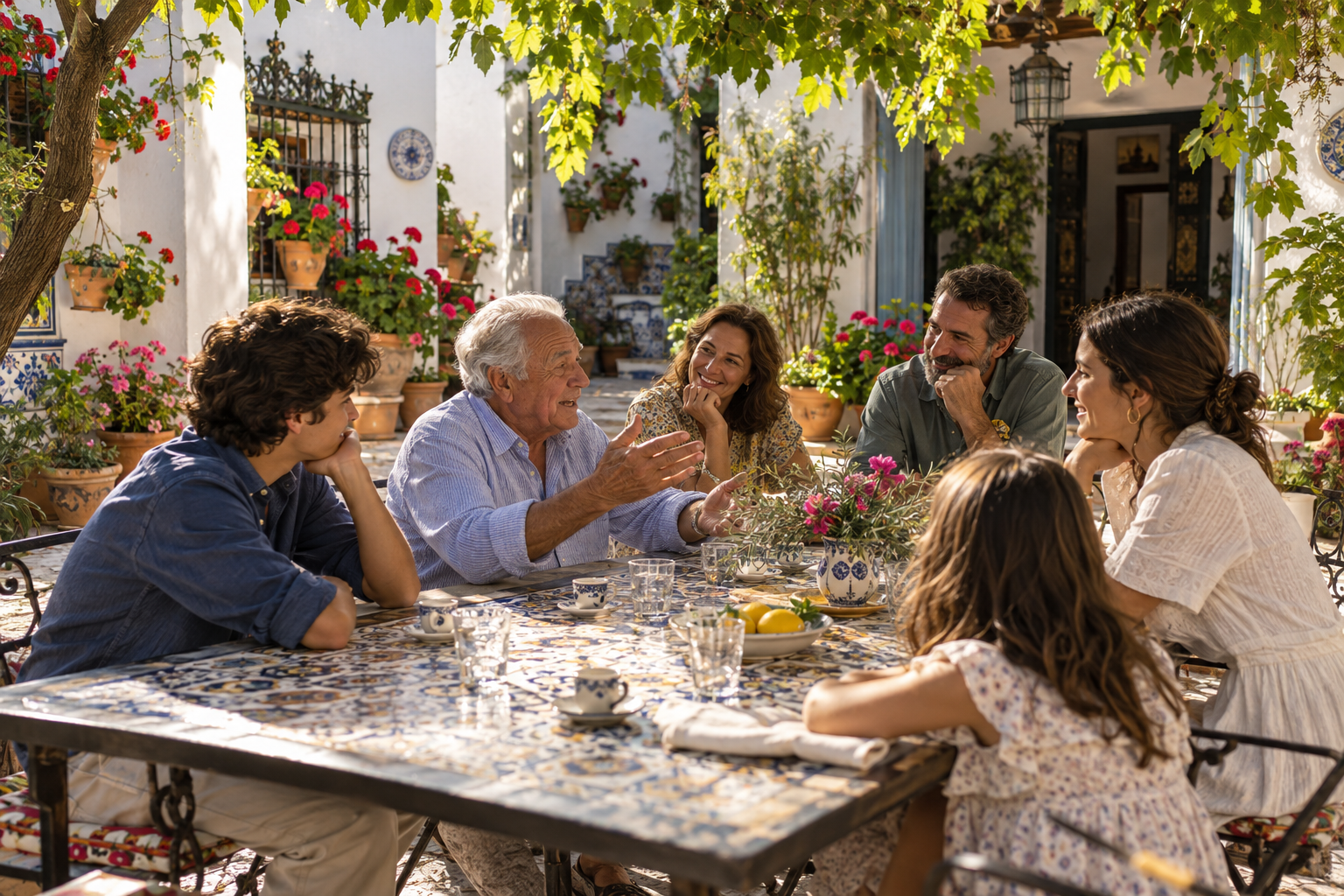
There is a practical root to sobremesa, and it starts with the shape of the Spanish meal, particularly lunch. In Spain, lunch, not dinner, is traditionally the main meal of the day, a substantial affair often running to several courses and eaten in the mid-afternoon, roughly between two and four o’clock. A large, multi-course midday meal is not something you can leap up from and rush back to work, since the body needs time to digest, and so a pause at the table after eating is, at the simplest level, a natural and sensible response to a big lunch. You could almost see the sobremesa as the civilized cousin of the siesta, a way of resting and settling after the main meal that keeps you at the table and in company rather than sending you off to sleep.
But to leave it there would miss the deeper reason, because sobremesa is far more than a digestive pause. It reflects a whole set of cultural values that run through Spanish life, a prizing of conversation over efficiency, of relationships over schedules, of being present with people over rushing on to the next task.
The meal in Spain is treated as something close to sacred, a genuine pause in the day and a gathering of the people who matter, and the sobremesa is where that gathering does its real work, in the unhurried talk that only happens once the business of eating is out of the way. This is especially true of the weekend family lunch, the comida familiar, which can stretch across a whole afternoon as several generations sit together long after the food is gone. Grandparents, parents, and children linger together for hours, and it is at this table, in the long unhurried talk of the sobremesa, that much of the ordinary business of family life gets done, the news shared, the arguments had and settled, the stories told again. The ritual exists, in the end, not because Spaniards need to digest but because they have decided that time spent together at the table is among the most valuable things there is, worth protecting and setting aside room for, which is a choice as much as a habit. Every long sobremesa is, in a small way, a statement of priorities, an afternoon quietly declaring that the people at the table matter more than whatever else the day might have demanded.
What It Looks Like in Practice
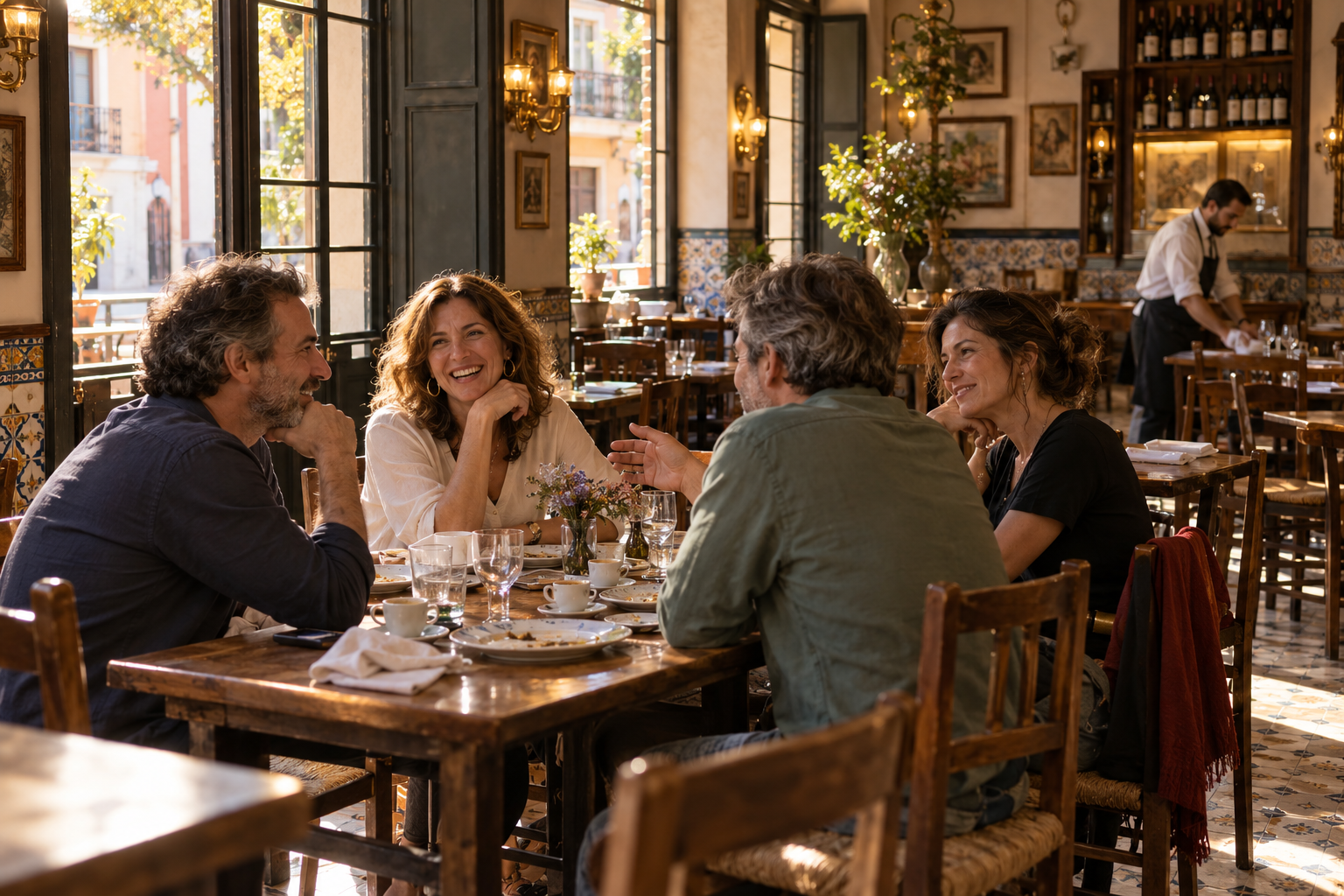
If you find yourself at a Spanish table as the meal winds down, the sobremesa has an unmistakable rhythm of its own. The plates are cleared, but the table does not empty, and instead of the check arriving or people reaching for their coats, coffee appears, a small strong cafe solo or a cortado, and perhaps a digestif, a little glass of something like orujo, pacharan, or brandy, or simply more wine. The conversation, freed from the distraction of eating, opens up and ranges widely, from the trivial gossip of the day to genuine debate to the deep, meandering talk that only comes when nobody is watching the clock. It is a particular quality of talk, this after-meal conversation, looser and more expansive than the chatter during the food, the kind that arrives only once everyone has eaten their fill and settled and time has gone soft at the edges.
The duration is the part that most astonishes visitors. A sobremesa might last a modest half hour on a weekday, but on a weekend or a special occasion it can stretch on for hours, the afternoon dissolving into talk while the empty coffee cups pile up.
It is not seen as idling or wasting time but as one of life’s real pleasures, actively enjoyed and unapologetically prioritized. Such is its place in Spanish life that the mid-afternoon sobremesa hour is one of the country’s television primetimes, with the main news airing around three o’clock, when much of the nation is at or just leaving the table. Crucially, this is not something restaurants fight, since Spanish eating places generally accommodate lingering diners without any rush to clear the table for the next customer, so a table you have sat down at for lunch can genuinely be yours deep into the afternoon. The sobremesa is not stolen time or a favor grudgingly granted; it is simply how a meal is done. Nobody is doing anything transgressive by staying, and nobody is being indulged by being allowed to; the whole culture has simply agreed that this is what a table is for.
Why Spain Refuses to Give It Up
What is genuinely remarkable about sobremesa is not that it exists, since many cultures have some version of lingering after a meal, but that Spain has held onto it so tenaciously in a world that has largely abandoned such things. As countries industrialized and modernized, the leisurely midday meal gave way in most places to the quick lunch break, the sandwich at the desk, the meal treated as refueling to be done as fast as possible so that work could resume. Spain, remarkably, largely refused to go along with this, and the sobremesa survived where equivalents elsewhere quietly died.
This survival is not an accident but something close to a cultural decision, a collective insistence on keeping something valuable that efficiency would have swept away. It is why many Spanish businesses still close for an extended midday break, partly to preserve exactly this space for a proper lunch and the sobremesa that follows, and why the rhythm of the Spanish day still bends around the long meal rather than the other way round. Foreigners often read that midday closing as inefficiency or laziness, when it is really the opposite, a deliberate decision about what the day is for and a refusal to let work colonize every hour of it. There is a quiet defiance in it, a refusal to accept that faster is always better or that time at the table is time wasted, and in an age of hurried, distracted, phone-lit meals eaten alone or on the move, there is something genuinely admirable about a whole culture holding the line on the unhurried, shared, conversational meal. Spain looked at the modern pressure to speed everything up, including eating, and decided that this, at least, it would not surrender, and the sobremesa endures as the daily proof of that choice. In a hundred small ways the modern world has crept into Spanish life as it has everywhere, but the long table after lunch has held, a stubborn island of slowness that the country seems to have no intention of giving up.
Bringing a Little Sobremesa Home
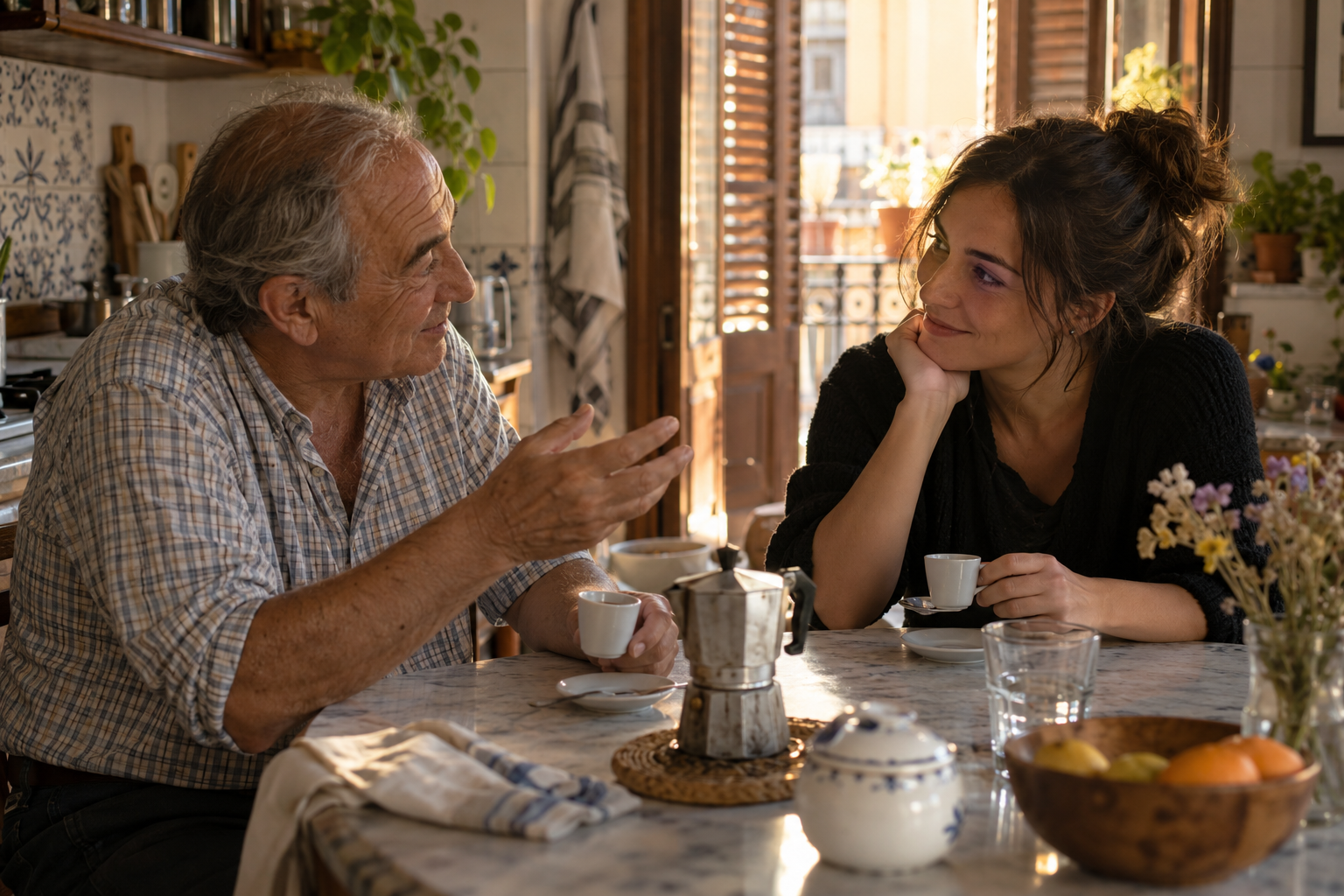
The lovely thing about sobremesa is that, unlike so much of what makes a culture distinctive, you do not need to be in Spain to practice it. It is not tied to Spanish food or Spanish weather or Spanish streets but is simply a way of treating the end of a meal, a decision to stay at the table rather than scatter the moment the plates are empty, and that decision is available to anyone, anywhere, at their own table. You can have a sobremesa in Ohio as easily as in Andalusia, if you simply choose to. The table is the same everywhere; all that changes is whether you decide to stay at it.
Doing it is almost absurdly simple, which is part of its appeal. Pick a meal, the Sunday lunch or a Friday dinner is a natural choice, and resolve simply not to get up when the eating is done.
Put the phones away, make some coffee or pour another glass, and stay at the table, letting the conversation go wherever it wants to go, for at least a little while, ten or twenty minutes to start with, and longer as you gradually get the taste for it. That is the whole of it, and yet in a culture built around speed and distraction it can feel almost radical, a small, quiet act of resistance against the constant tyranny of the next thing. What you may find is what Spaniards have always known, that some of the best conversations, the real connections, the moments people actually remember, happen not during the meal but after it, in that unhurried stretch when there is nothing left to do but be together. Spain has kept a name and a place for that stretch, and refuses to give it up, and the rest of us, name or no name, would do well to steal a little of it back for ourselves. It costs nothing, requires nobody’s permission, and gives back more than almost anything else you could do with the same half hour.

About the Author: Ruben, co-founder of Gamintraveler.com since 2014, is a seasoned traveler from Spain who has explored over 100 countries since 2009. Known for his extensive travel adventures across South America, Europe, the US, Australia, New Zealand, Asia, and Africa, Ruben combines his passion for adventurous yet sustainable living with his love for cycling, highlighted by his remarkable 5-month bicycle journey from Spain to Norway. He currently resides in Spain, where he continues sharing his travel experiences with his partner, Rachel, and their son, Han.