
There is a particular smell that tells you autumn has properly arrived in Europe, and it is not fallen leaves or wood smoke but something sweeter and nuttier, drifting from a street corner where a vendor is roasting chestnuts over hot coals. Come October, these carts and glowing braziers begin to appear in cities right across the continent, in the piazzas of Italy, the plazas of Spain, and the squares of France and Portugal, and the smell of the roasting nuts becomes one of the defining scents of the season, as much a marker of autumn as the first cold morning.
You buy them in a little paper cone, hot enough to warm your cold hands, and then peel and eat them one by one as you walk. It is one of Europe’s simplest and most beloved seasonal rituals, and the genuinely lovely thing is that you can recreate almost all of it at home with nothing more than a pan and an oven. Here is the story of the ritual, why it matters, and exactly how to roast chestnuts yourself. It is one of the easiest pieces of Europe to carry home, needing no special skill and no special equipment, only a bag of chestnuts and a cold evening to make it feel right.
What follows is the smell that means autumn, the many names the ritual goes by across Europe, the festivals built around the chestnut, the simple one-pan way to roast them at home, and how to make the whole thing your own seasonal habit.
The Smell That Means Autumn
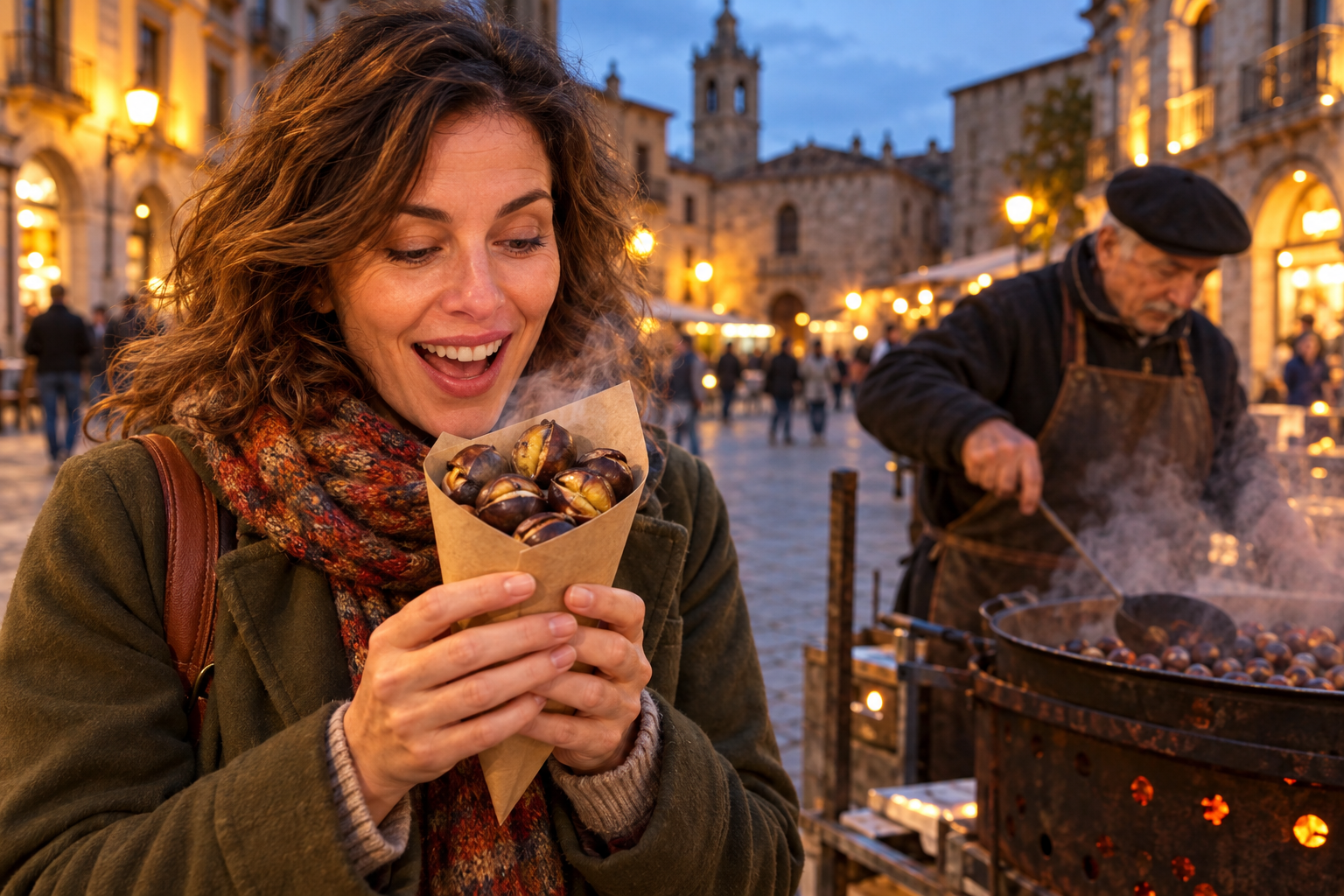
The street-corner chestnut vendor is one of those small fixtures of European life that visitors fall in love with, and once the weather turns cold the vendors appear as reliably as the leaves change. Set up on busy corners and in market squares, they roast the chestnuts over coals or in special little ovens, and the warm, sweet, smoky aroma drifts down the street and pulls people in, so that following your nose down the street to a chestnut stand becomes part of the pleasure. The nuts are sold hot, by the handful or the cone, wrapped in paper you can barely hold at first for the heat of them. There is a small theater to it, the vendor turning the chestnuts over the coals, the shells blackening and splitting, the little cloud of smoke and steam rising into the cold air, and you waiting your turn with your hands already cold enough to want them.
That heat is part of the ritual, because a paper cone of roasted chestnuts is as much a hand-warmer as a snack on a cold day, something to cup in your palms as you walk through a chilly city, peeling and eating them one at a time. The whole experience engages the senses in a way that makes it stick in the memory: the smell that draws you in, the warmth against cold fingers, the ritual of cracking the charred shell and peeling it back to the soft, sweet nut inside. For a great many people the smell of roasting chestnuts is inseparable from their memories of European autumns and Christmas markets, a scent that instantly conjures cold air, festive streets, and the cozy feeling of the season turning. It is a humble food sold cheaply from a cart, and yet it carries an outsized emotional weight, which is exactly what makes it a ritual rather than merely a snack. Ask anyone who has spent an autumn in a European city and they will remember the chestnut vendors long after they have forgotten the museums, because the smell reached them in a way a painting never quite could.
Every Country Has Its Name
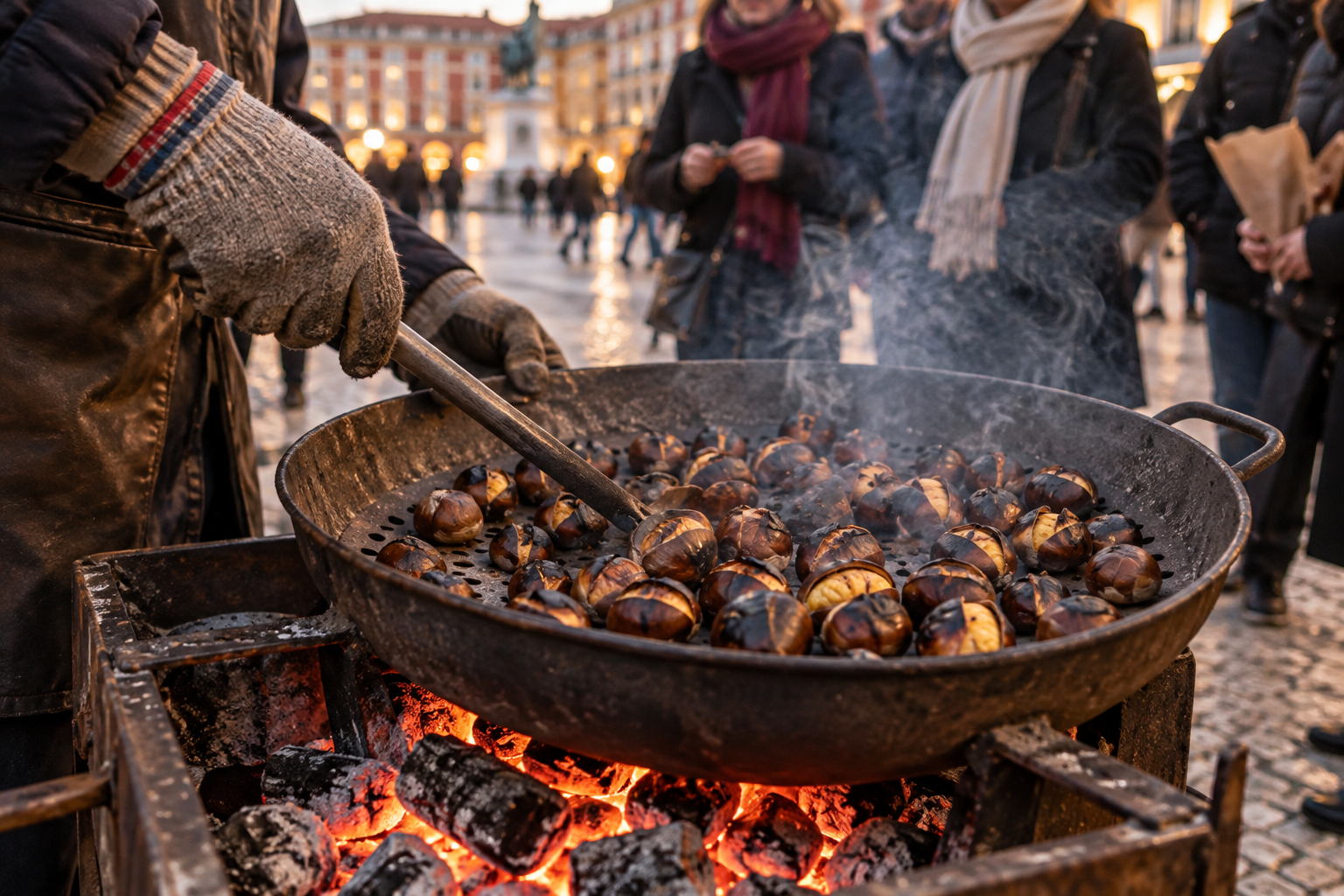
One of the pleasures of the roasted chestnut is how universal it is across Europe and yet how each country claims it as its own, with its own name and its own particular attachment to it. In Italy they are caldarroste, roasted in the piazzas from Rome to Bologna and sold to passersby who peel them with gloved hands. In France they are marrons chauds, hot chestnuts, marrons being the name for the larger, superior cultivated variety, roasted in little braziers from the boulevards of Paris to the ski towns of the Alps. The French take their chestnuts seriously, folding them into everything from stuffings to the glossy candied marrons glaces that are a Christmas luxury in their own right. In Spain they are castanas asadas, sold by the castanera at her street stall, and in Portugal castanhas assadas, roasted in perforated pans over coals.
Cross into the German-speaking countries and they become Maroni or Marroni, sold from small booths, and in Switzerland the chestnut is woven deep into autumn tradition. The names change from country to country but the thing itself is the same, a shared European ritual dressed in different languages, so that a traveler moving across the continent in autumn finds the same warm paper cone waiting under a dozen different names. There is something rather lovely in that, the way a simple roasted nut turns out to be a common thread linking the autumns of half a continent, each country convinced the tradition is peculiarly its own while sharing it with all its neighbors. Whatever you call it, the pleasure is identical: a warm handful of chestnuts on a cold street, and a small ritual understood everywhere. It is one of those rare things that needs no translation, since a paper cone of hot chestnuts means the same thing to a Roman, a Parisian, and a Lisboner, and would mean the same to you the moment you cupped one in your hands.
More Than a Snack: The Festivals
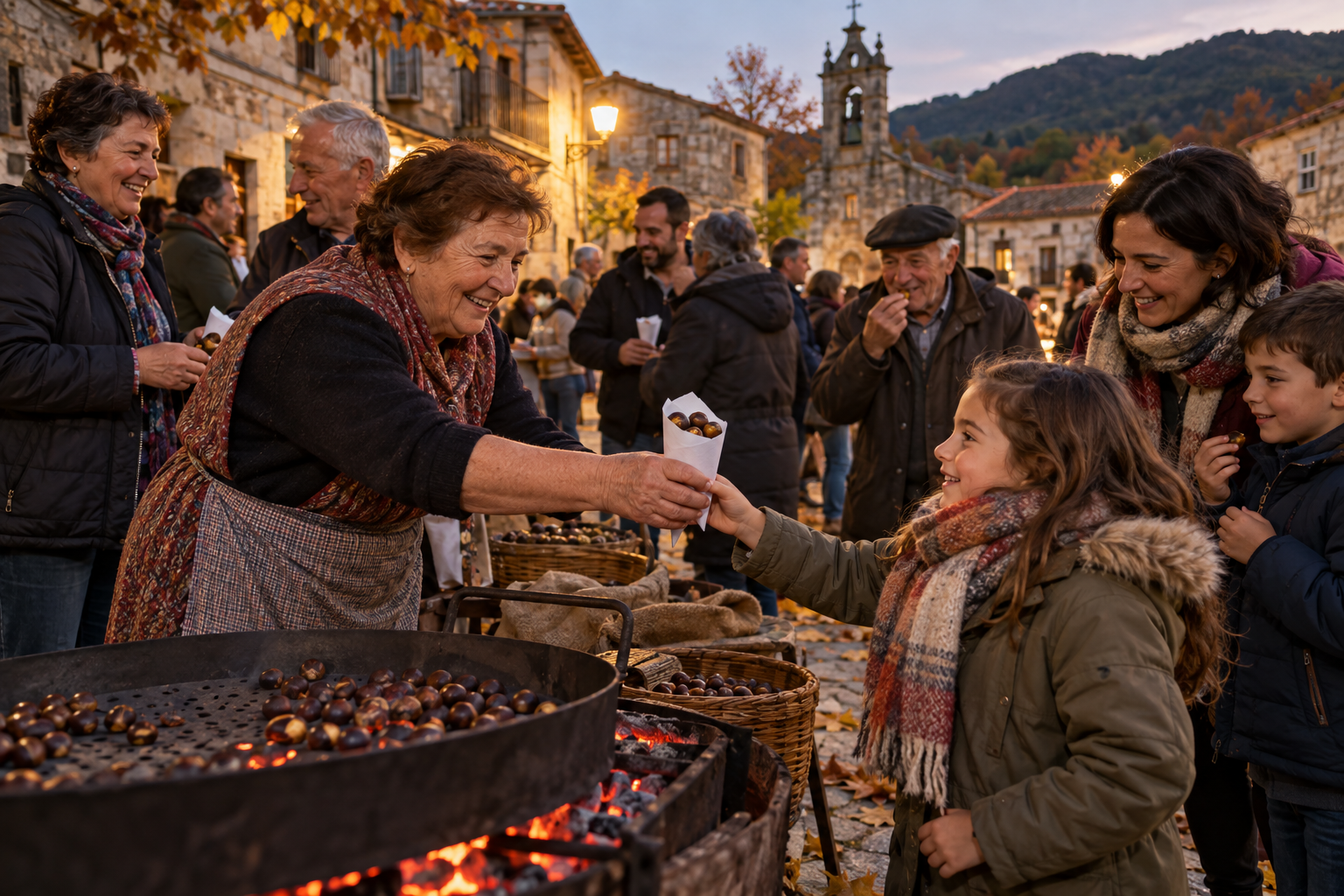
The chestnut is not only a street snack but the centerpiece of a whole cluster of autumn festivals, and understanding these gives the humble nut its deeper meaning. Across the Iberian Peninsula, the arrival of the chestnut harvest is marked by celebrations known as the Magosto, held around the start of November in regions like Galicia and northern Portugal, where communities gather to roast chestnuts over open fires, share them, and mark the turn of the season together. In Catalonia the same season brings La Castanyada, the autumn All Saints’ celebration where roasted chestnuts sit alongside other seasonal treats.
Portugal has its own version in the feast of Sao Martinho, celebrated in mid-November, when the newly made wine of the year is first tasted alongside freshly roasted chestnuts, a joyful pairing of the harvest’s nuts and its wine. These festivals share a common thread that reaches back a long way, tying the chestnut to the harvest, to the turning of the year, and often to the remembrance of the season’s dead, so that roasting and sharing chestnuts becomes a communal act with real meaning rather than just a snack. Children jump over bonfires, families gather, and the first cold of the year is met not with dread but with a fire and a feast, which is a rather wonderful way to greet the coming winter. The open fire, the gathered community, the shared warmth against the coming winter, all of it turns the simple chestnut into something ceremonial. Knowing that the paper cone from the street vendor descends from these old communal fires adds a quiet depth to the pleasure, connecting a quick snack on a city corner to a tradition centuries old.
A Nut That Fed Europe
Behind the cheerful street snack lies a longer and humbler story, one worth knowing because it explains why the chestnut is woven so deeply into European life. For centuries, long before it became a festive treat, the chestnut was a genuine staple food, the daily bread of poor mountain communities across southern Europe where grain would not grow well but chestnut trees flourished on the slopes. In parts of Italy, Spain, France, and Portugal, whole populations lived through the winter on chestnuts, drying them, grinding them into flour, and turning them into bread, porridge, and cakes, which is why the sweet chestnut tree earned the nickname the bread tree.
That history is the reason the chestnut carries such weight in the autumn festivals, since it was not a luxury but survival, the harvest that meant a community would make it through to spring. The roasted chestnut sold on the street today is a distant, comfortable echo of that older reality, when the same nut was a matter of getting fed rather than a treat to enjoy on a stroll. It also explains the chestnut’s afterlife in the kitchen, since the tradition of grinding it into flour survives in dishes like the chestnut-flour cakes of Tuscany and the sweet chestnut purees of the Alps, foods born of necessity that have become delicacies. What was once the flour of the poor is now sold at a premium in delicatessens, which is a fate that has befallen a good deal of humble peasant food and is usually a sign it was quietly excellent all along. Knowing that the warm handful in the paper cone descends from a food that once kept whole regions alive gives the humble chestnut a dignity that its cheerful street-corner role rather hides, and makes the seasonal ritual feel like a small act of remembrance as much as a pleasure.
The One-Pan Home Version
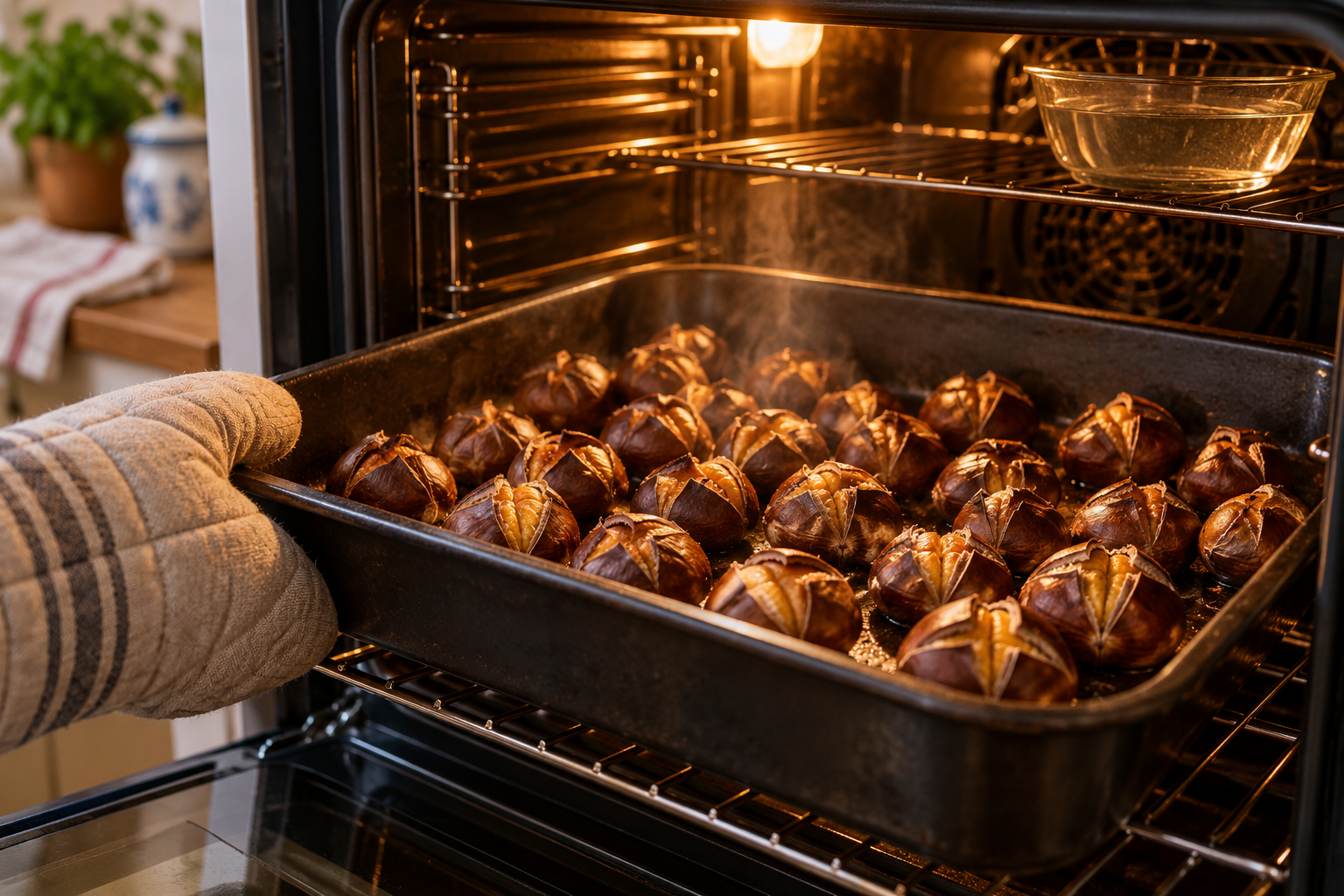
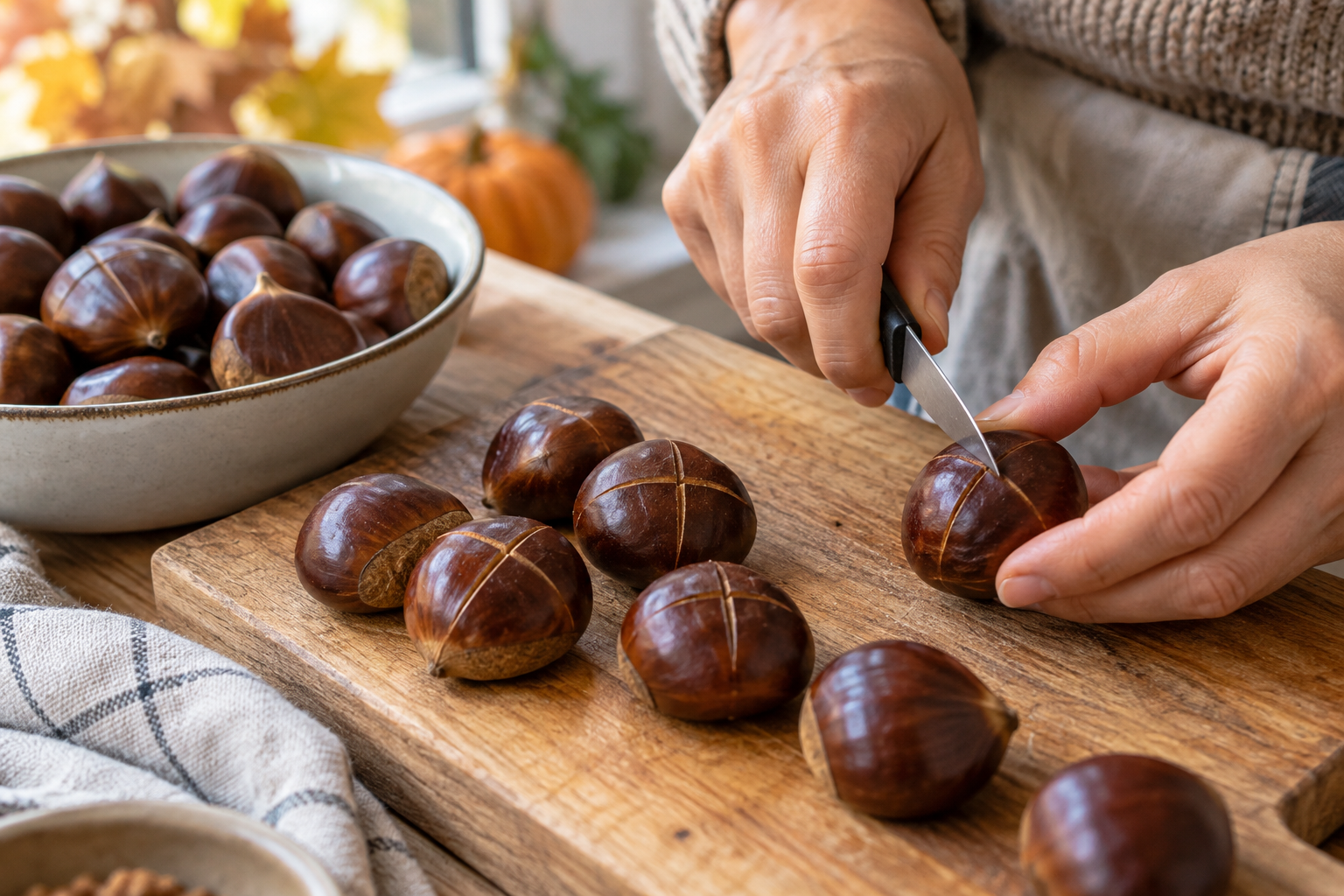
The best news is that you do not need a street vendor or an open fire to enjoy roasted chestnuts, because the home version is genuinely easy and needs nothing more than a pan and an oven. There is only one truly essential step, and skipping it is the classic beginner’s mistake: you must score each chestnut before roasting. Take a small sharp knife and cut a slit or an X through the shell on the flat or rounded side, cutting through the shell and the inner skin but not deep into the nut, because as the chestnut heats the steam inside needs somewhere to escape, and an unscored chestnut will simply explode in your oven. Score them all, and you have cleared the one real hurdle. It is worth doing carefully, since a shallow, confident cut is what you want, deep enough to break the shell and the papery skin beneath it but not so deep that you are hacking into the nut itself, and once you have scored a dozen you will have the knack of it.
From there it could not be simpler. Rinse the scored chestnuts, spread them in a single layer in one pan, and roast them in a hot oven, around 200 degrees Celsius or 400 Fahrenheit, for roughly twenty to thirty minutes, until the shells have peeled back at the cuts and the nuts inside are tender. You will know they are ready by the shells curling open at the X and by the smell, which fills the kitchen well before the timer goes and is half the reason to make them at all.
A small bowl of water in the oven keeps them from drying out, and if you prefer you can do the whole thing in a heavy skillet on the stovetop instead, shaking it now and then, which comes even closer to the street-vendor effect. The one trick for easy peeling is to peel them while they are still hot, wrapping them in a clean tea towel for a few minutes to steam, then cracking off the shell and the brown inner skin together while they are warm, since they become much harder to peel once cold. Choose plump, shiny, heavy chestnuts to start with, avoiding any that look dull or light, since a fresh chestnut feels heavy and firm while an old one has dried out and gone light and leathery inside. Get good ones and the whole thing takes barely half an hour of almost no effort, most of which is the oven doing the work while your kitchen slowly fills with the smell.
Bringing the Ritual Home
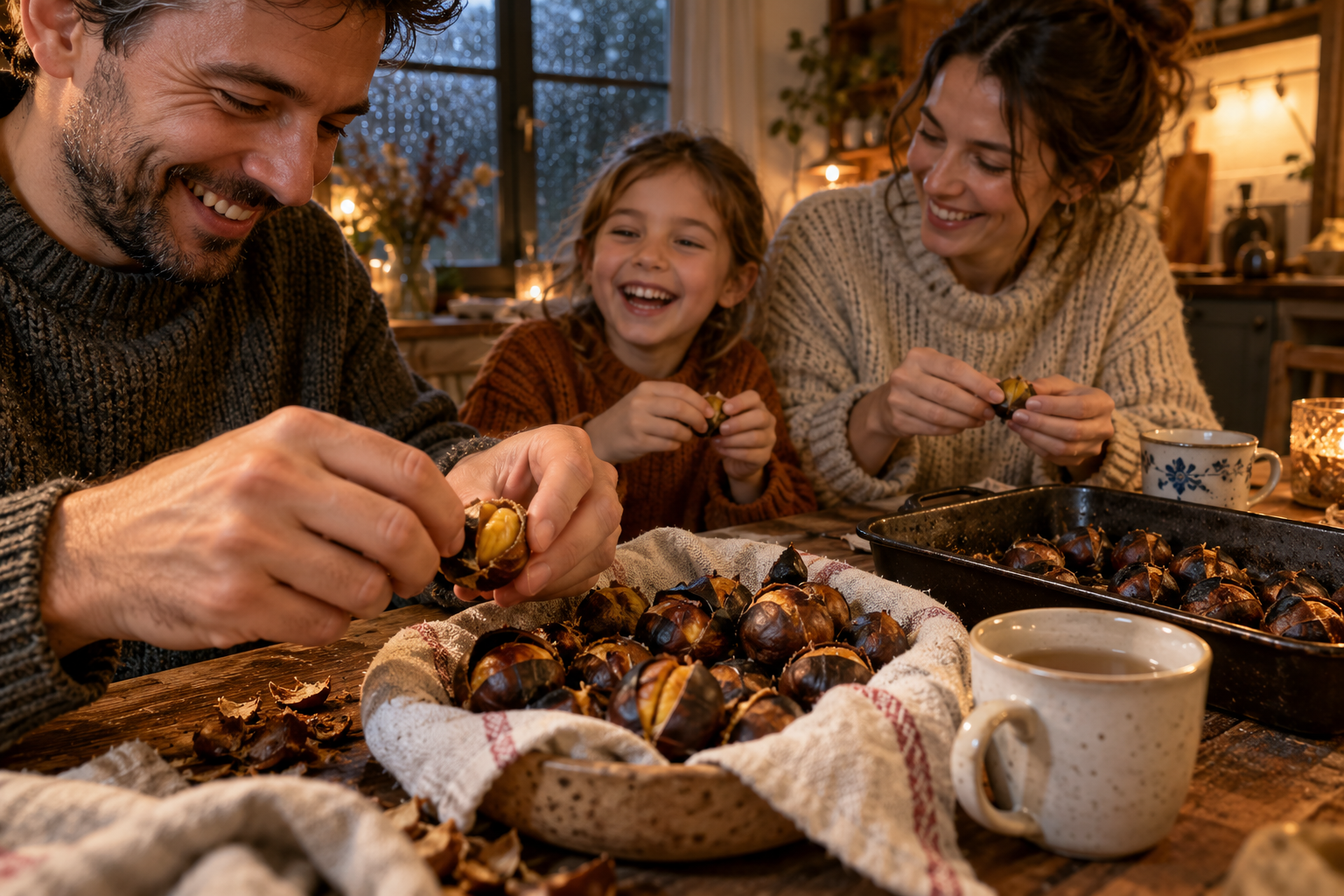
What makes roasting chestnuts at home worth doing is not really the nuts themselves, which you could buy from a vendor, but the ritual you bring into your own kitchen, because the smell and the warmth and the peeling are the whole point. Roast a pan of chestnuts on a cold autumn evening and your kitchen fills with that same sweet, nutty, unmistakable smell of the season, and the simple act of cracking and peeling the warm nuts together, perhaps with a glass of red wine or, in the Portuguese spirit, some young new wine, turns an ordinary evening into something cozy and seasonal. It is the kind of small occasion that costs almost nothing and yet makes an evening feel deliberately, pleasantly marked, set apart from the ordinary run of nights.
It is one of those rare pleasures that costs almost nothing, takes almost no skill, and yet delivers an outsized sense of occasion, a small celebration of autumn available to anyone with an oven. You do not need to be in Rome or Barcelona to have it; a bag of chestnuts, a scored X in each shell, and half an hour in the oven bring a genuine piece of the European autumn to a kitchen anywhere in the world. It is one of the cheapest, easiest ways to import a whole season’s worth of atmosphere, no plane ticket required. Make it a habit as the weather turns, once the first properly cold evening arrives, and you give yourself a small annual ritual to look forward to, the very same one that has warmed cold hands on European streets for generations. There is a real comfort in a pleasure that returns with the season, asks nothing of you but a little attention, and reliably delivers the same cozy magic year after year. The chestnuts are lovely, but it is the ritual, the smell and the warmth and the sharing, that you are really bringing home, and that is the part worth keeping.

About the Author: Ruben, co-founder of Gamintraveler.com since 2014, is a seasoned traveler from Spain who has explored over 100 countries since 2009. Known for his extensive travel adventures across South America, Europe, the US, Australia, New Zealand, Asia, and Africa, Ruben combines his passion for adventurous yet sustainable living with his love for cycling, highlighted by his remarkable 5-month bicycle journey from Spain to Norway. He currently resides in Spain, where he continues sharing his travel experiences with his partner, Rachel, and their son, Han.