
There is a cake that lives in Spanish kitchens the way a good loaf lives in a French one, made so often and so easily that it barely feels like baking at all in the usual sense, and it is called a bizcocho. Made with olive oil rather than butter, this humble sponge is the everyday cake of Spain, the one a parent whisks together on a quiet Sunday afternoon to see the whole family through a week of breakfasts, and it asks for almost nothing at all in return. No stand mixer, no creaming of butter and sugar, no special skill, just a single bowl, a whisk, and a handful of pantry staples.
What comes out is a tender, golden, gently citrus-scented cake that stays moist for days and is exactly right dunked in your morning coffee. This is the cake to make when you want something homemade and comforting with the least possible fuss, and once you have made it a few times you will stop needing the recipe at all. That is really the mark of a true everyday cake, one that lives in your hands rather than in a book, ready whenever the mood or the empty cake tin calls for it.
What follows is why the bizcocho is the everyday cake of Spain, why it is built on olive oil instead of butter, how the whole thing comes together in one bowl, the clever measuring trick and the one ingredient you must not skip, and exactly how to make it.
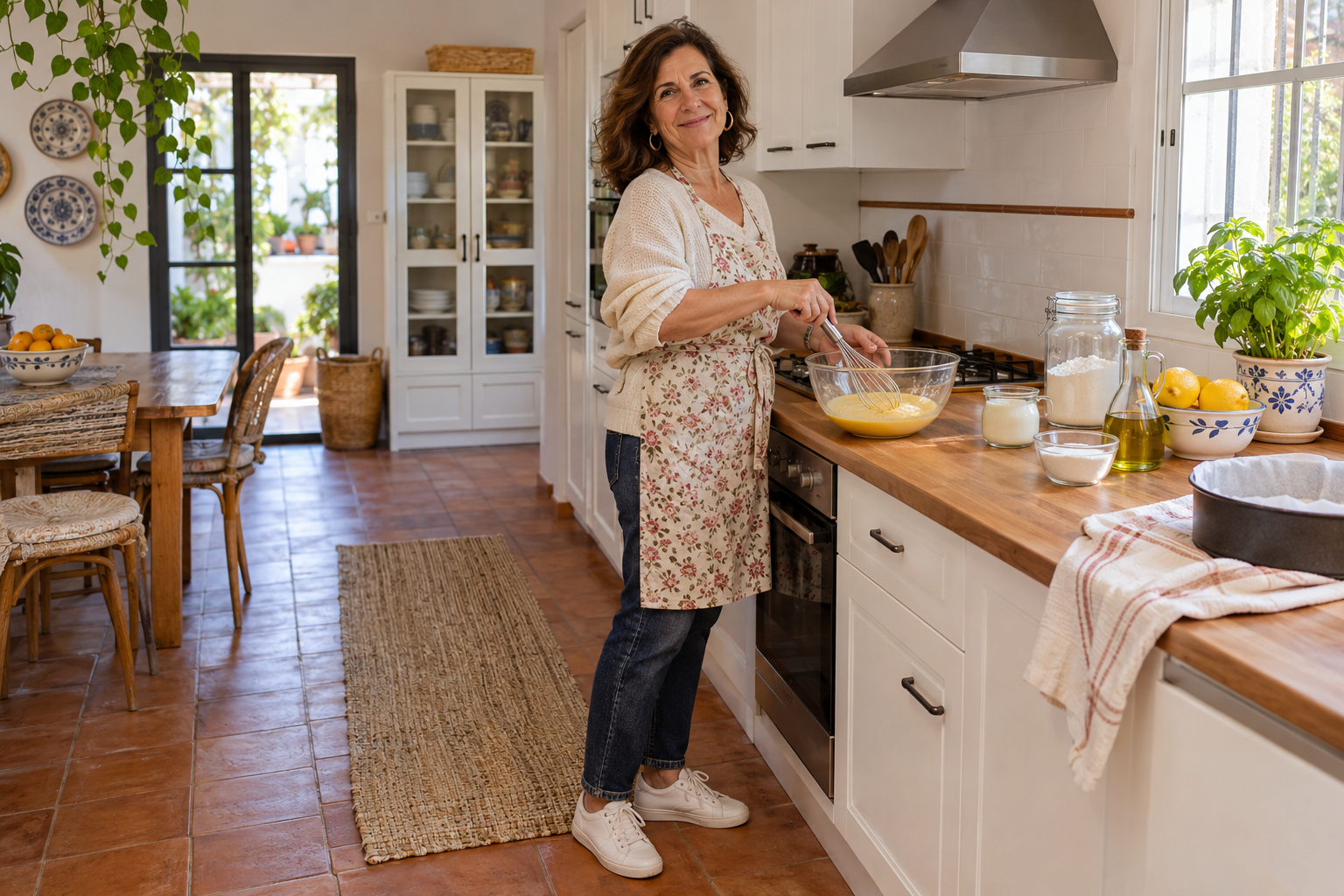
The Everyday Cake of Spain
The bizcocho is not a celebration cake or a showpiece, and understanding that is the key to understanding its charm. It is a plain, honest, everyday sponge, the kind of thing Spanish families keep on the counter under a cloth and slice into all week, for breakfast with coffee, for the afternoon merienda with a cup of hot chocolate, or as a small sweet bite whenever one is wanted. It is baked at home constantly, in countless regional variations, and it is one of the first things many Spaniards learn to make as children, precisely because it is so forgiving.
That everyday status shapes everything about it. Because it is meant to be made often and eaten casually, it is built for ease rather than drama, with no frosting to pipe, no layers to assemble, and no fragile technique to master. It keeps well, staying tender for days on the counter, which is exactly what you want from something you bake to eat gradually rather than all at once.
And it is endlessly adaptable, taking happily to a handful of berries, a swirl of chocolate, or slices of apple when the mood strikes, though the plain version dusted with a little powdered sugar is the one most Spaniards grew up on. The base is so reliable that it becomes a canvas, the same trusted batter dressed a dozen different ways across a year, yet never bettered, many would argue, than in its plainest form. This is home baking at its most practical and most beloved, a cake defined by how easily it fits into ordinary life. It is the opposite of the intimidating bakes that fill social media, asking nothing of you but a bowl and ten minutes, and giving back a week of small pleasures in return.
Why Olive Oil, Not Butter
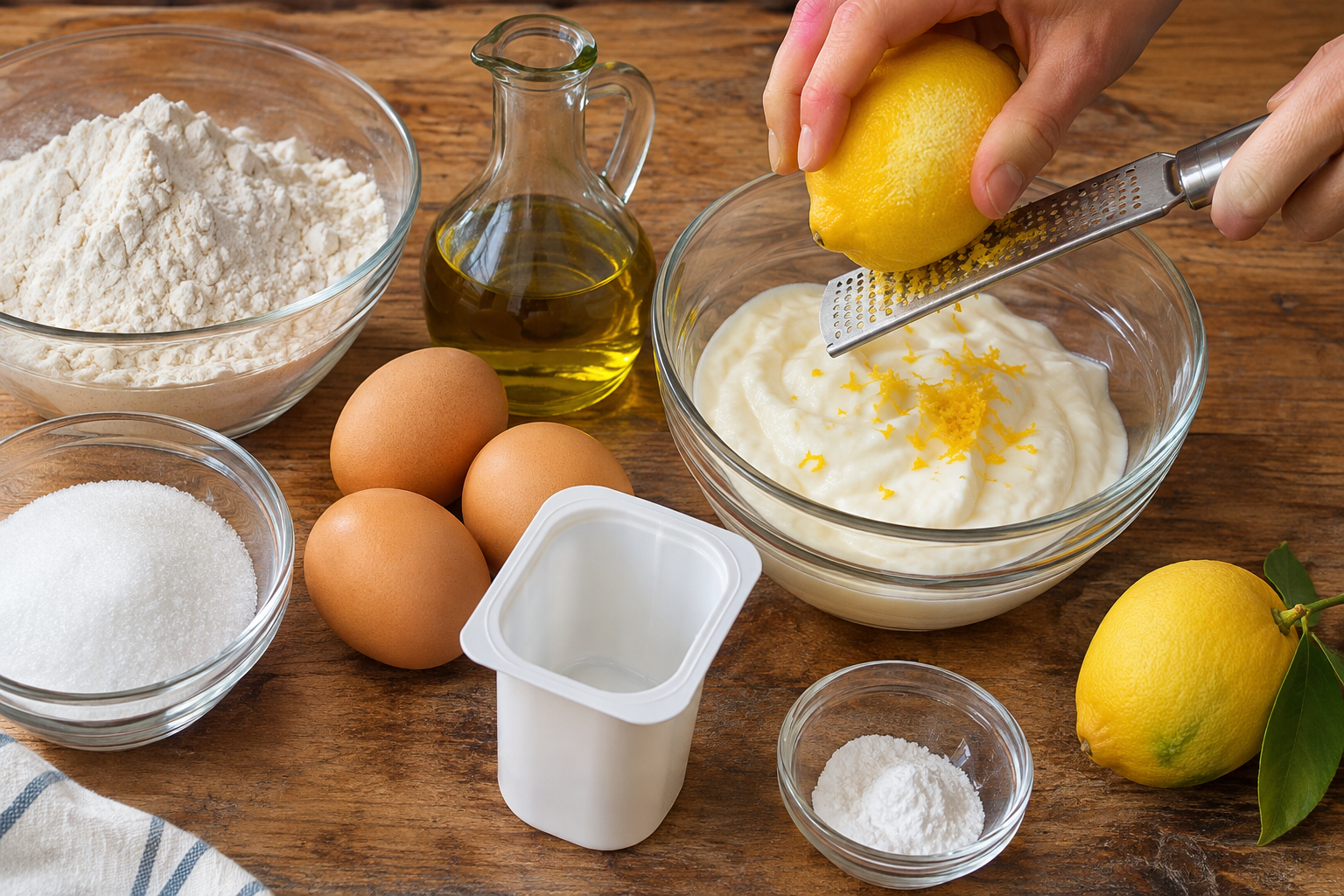
The defining choice in a Spanish bizcocho is the use of olive oil in place of butter, and it is not a substitution born of scarcity but a genuine preference that shapes the whole cake. Spain is, after all, the land of olive oil, where it is the everyday cooking fat rather than a special ingredient, so reaching for it to make a cake is as natural as an American reaching for a stick of butter. But beyond mere habit, the oil brings real advantages that have kept it the traditional choice for generations of home bakers.
The biggest of these is moisture, and it is the reason olive oil cakes have quietly become fashionable well beyond Spain. Because oil stays liquid at room temperature where butter sets firm, a cake made with olive oil is exceptionally moist and tender, and crucially it stays that way for days, remaining soft and fresh long after a butter cake would have dried out. For a cake meant to be eaten gradually across a week, that lasting moisture is exactly the point.
The oil also brings a subtle, pleasant fruitiness that butter cannot, a faint savory depth beneath the sweetness that pairs beautifully with the citrus most bizcochos carry. And it makes the method simpler too, since there is no cold butter to soften and cream, just a liquid you pour straight in, which is a large part of why the whole cake can be made in a single bowl. You do not even need to plan ahead and leave butter out to warm, which means the bizcocho can be a spur-of-the-moment decision rather than a project you prepare for.
One Bowl, One Whisk
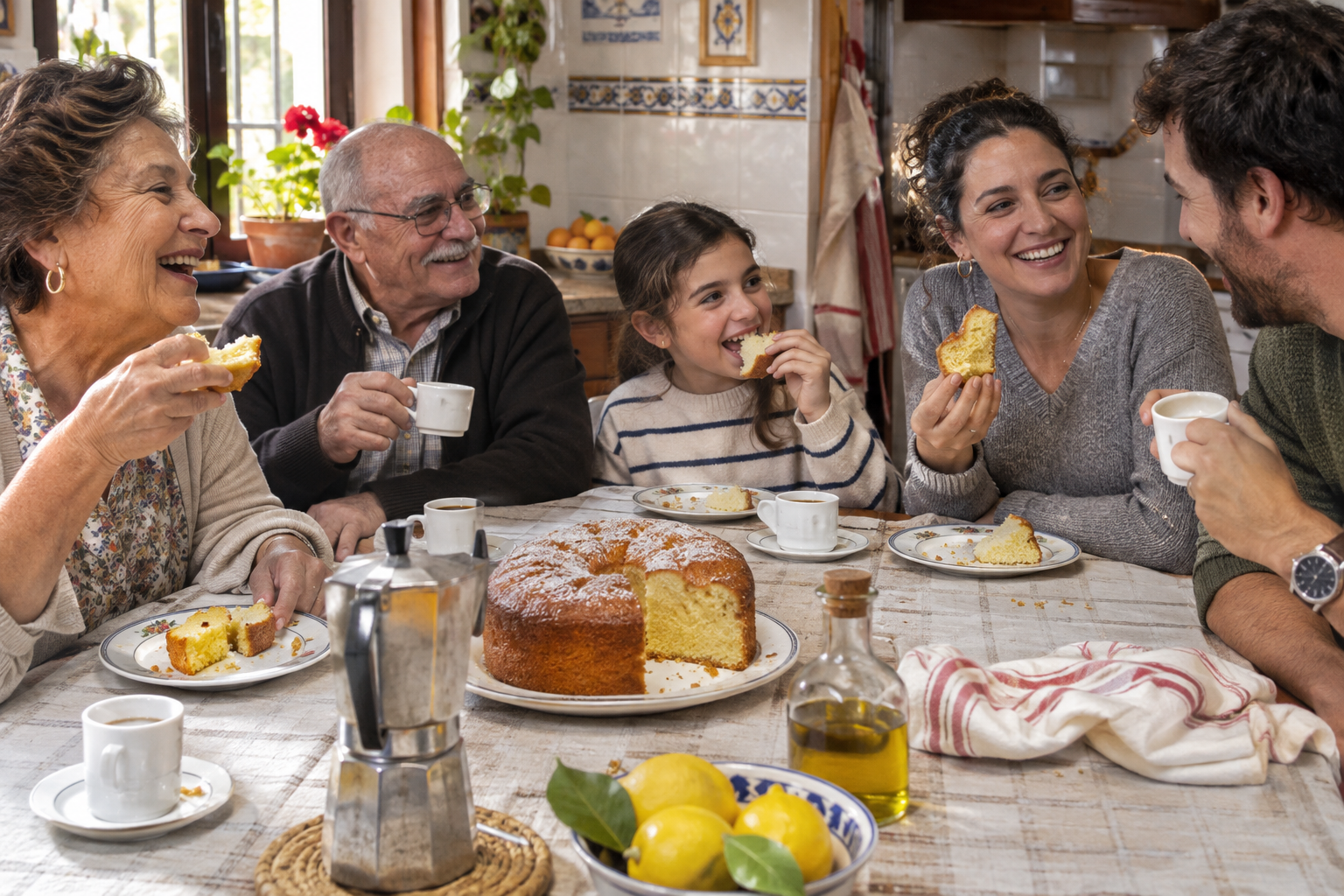
The great appeal of the bizcocho, beyond how it tastes, is how absurdly simple it is to make, and the whole thing really does come together in one bowl with a whisk. The method has just a couple of steps worth doing with care. First, you beat the eggs and sugar together well, until the mixture turns pale and roughly doubles in volume, and this is the one part that matters, because whisking air into the eggs is what gives the cake its light, springy rise without any need for creamed butter. A few minutes of energetic whisking, or a hand mixer if you happen to have one, does the job, and it is the only part of the recipe where a little effort genuinely pays off.
After that, it is simply a matter of adding everything else and folding it together gently. Into the airy egg mixture go the olive oil, a little milk or yogurt for extra moisture, and the citrus, all whisked briefly to combine, and then the flour and baking powder are sifted in and folded through until you have a smooth batter, taking care not to overmix so the air stays in. That batter goes into a greased tin, into a moderate oven, and bakes until golden and springy and a skewer comes out clean, usually somewhere around forty minutes.
That is the entire process, one bowl, one whisk, a pour, and a bake, with nothing to chill, cream, or fuss over, which is exactly why it has stayed the everyday cake of a whole country. A child can make it with a little supervision, and many Spanish children do, which is part of how the recipe passes down the generations without anyone ever writing it down.
The Yogurt Pot and the Lemon
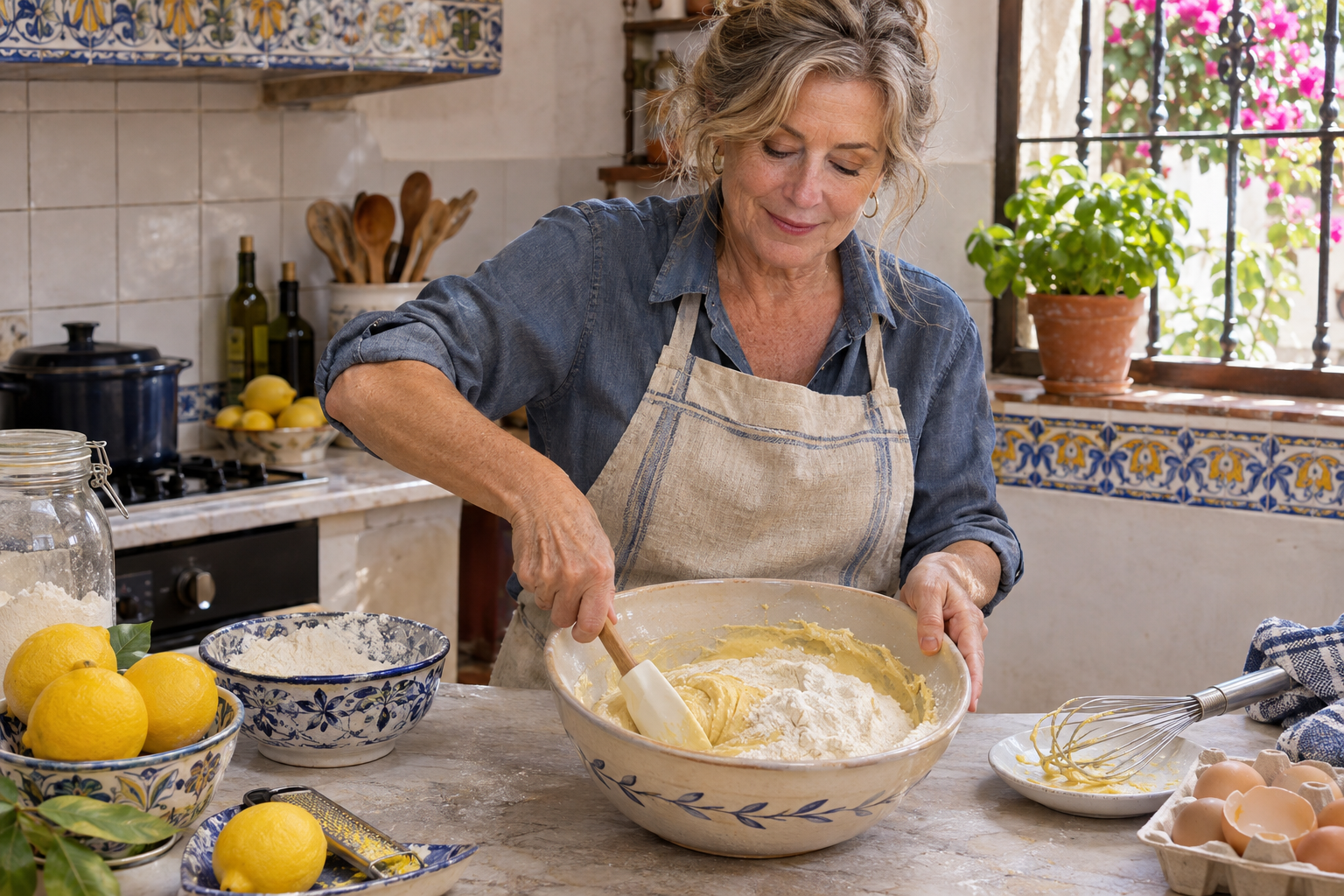
Two small pieces of Spanish wisdom make the bizcocho even easier and better, and they are worth knowing. The first is the famous measuring trick that has passed down through Spanish kitchens for generations, which uses a single-serving pot of yogurt as both an ingredient and the measuring cup. You tip in the yogurt, then use the empty pot to measure the rest in a simple ratio, one pot of oil, two pots of sugar, and three pots of flour, with the eggs and a sachet of baking powder added on top.
It is a wonderfully practical system that means you can make the cake anywhere, with no scales required, and it is how a great many Spaniards make it to this day, the recipe carried entirely in the head. It also scales up or down effortlessly, since you simply choose a bigger or smaller pot and the ratios hold, which is the kind of quiet cleverness that only comes from a recipe made in millions of ordinary kitchens over many decades.
The second piece of wisdom concerns the citrus, and here the advice is firm: do not skip the lemon. A bizcocho made without the zest, and often the juice, of a lemon or an orange is a duller thing entirely, a little flat and one-note, whereas the citrus lifts the whole cake, brightening it and cutting cleanly through the richness of the olive oil so that each bite tastes fresh rather than heavy. It is the small detail that makes the difference between a forgettable plain cake and one people ask you about, so grate in that zest generously and consider it as essential as the flour.
An orange works just as beautifully as a lemon, and some cooks use both, but the one thing you cannot do is leave the citrus out and expect the same cake, because without it the oil has nothing to play against. Get those two things right, the easy yogurt-pot ratio and the bright hit of citrus, and you have the bizcocho exactly as Spanish home cooks have made it for as long as anyone can remember.
Making Bizcocho de Aceite
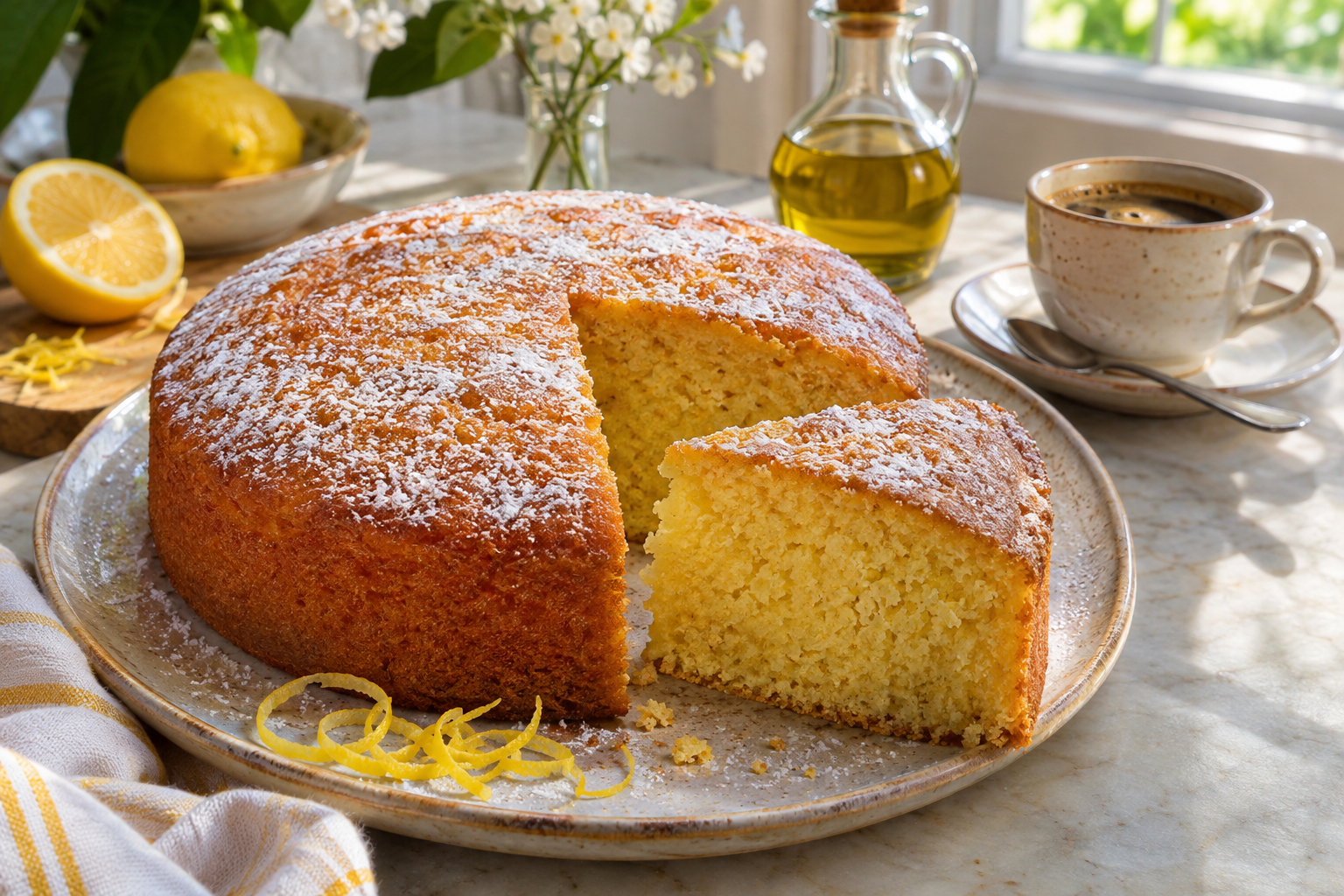
Here is a classic bizcocho de aceite, serving eight. It is built around a standard single-serve yogurt pot, but standard measures are given too.
Ingredients
- 3 eggs
- 1 pot plain or lemon yogurt, about 125 g
- 1 pot olive oil, about 120 ml
- 2 pots sugar, about 200 g
- 3 pots all-purpose flour, about 240 g
- 1 sachet baking powder, about 16 g
- Zest of 1 lemon, plus a squeeze of juice
- A pinch of salt
- Powdered sugar, to finish, optional
Instructions
- Preheat the oven to 180 C, about 350 F, and grease and flour a round or loaf tin.
- In a large bowl, whisk the eggs and sugar together until pale and roughly doubled in volume, a few minutes by hand or with a mixer.
- Whisk in the yogurt, the olive oil, the lemon zest, and a squeeze of lemon juice until smooth.
- Sift in the flour, baking powder, and salt, and fold gently until you have a smooth batter, without overmixing.
- Pour into the prepared tin and level the top.
- Bake for about 40 minutes, until golden and springy and a skewer inserted in the center comes out clean.
- Cool in the tin for a few minutes, then turn out onto a rack. Dust with powdered sugar before serving if you like.
And do keep it simple the way Spain does, since the bizcocho is at its best as an everyday cake rather than a project, so resist the urge to dress it up too much, make the plain lemon version first, and enjoy a slice with your coffee exactly as it was meant to be eaten.

About the Author: Ruben, co-founder of Gamintraveler.com since 2014, is a seasoned traveler from Spain who has explored over 100 countries since 2009. Known for his extensive travel adventures across South America, Europe, the US, Australia, New Zealand, Asia, and Africa, Ruben combines his passion for adventurous yet sustainable living with his love for cycling, highlighted by his remarkable 5-month bicycle journey from Spain to Norway. He currently resides in Spain, where he continues sharing his travel experiences with his partner, Rachel, and their son, Han.