
Some dishes are so old and so woven into a country’s table that they feel less like mere recipes than like edible heirlooms, and pollo en pepitoria is one of Spain’s. It is chicken braised in a golden, velvety sauce built from ground almonds, saffron, garlic, and egg yolks, a dish of quiet luxury that has graced Spanish tables since the age of Cervantes. This is not some modern invention or a passing regional novelty but a genuine classic of old Castile, documented in Spanish kitchens at the turn of the seventeenth century and beloved ever since, right up to being remembered as a favorite of a Spanish queen.
What makes it remarkable is not merely its great age but how genuinely good it still tastes today, a rich and fragrant chicken dish that still carries the unmistakable perfume of Moorish Spain in every single spoonful of its almond-thickened sauce. Here is the story of this ancient dish and how to make it yourself. It is the rare recipe that lets you cook a genuine piece of history, and one that happens to be as delicious now as it must have been four centuries ago.
What follows is the long history behind pollo en pepitoria, the almond-and-egg sauce that defines it, how it differs from other Spanish chicken dishes, the way it all comes together, and the recipe itself.
A Dish From the Age of Cervantes
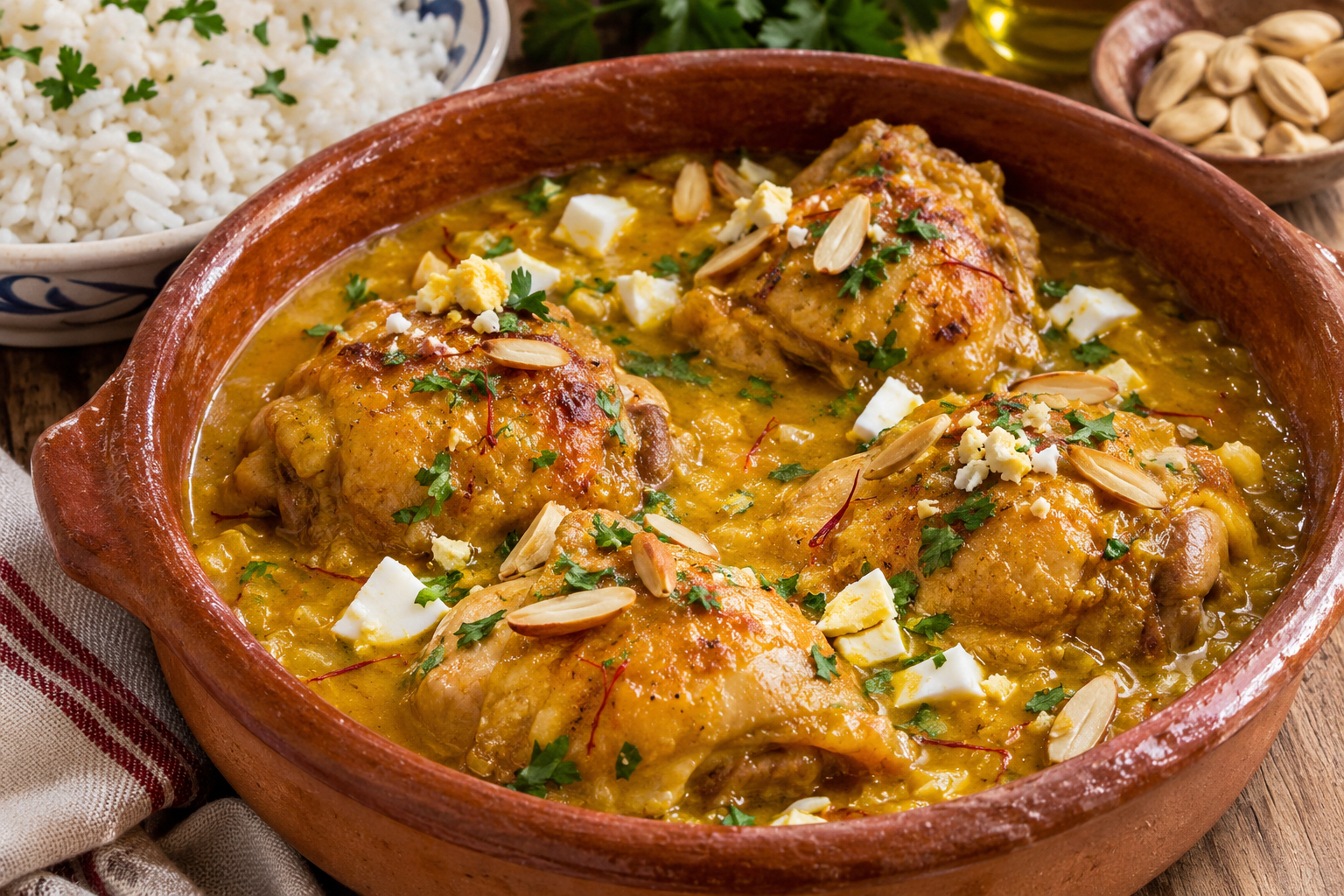
Pollo en pepitoria is genuinely old, old enough that pinning down its exact age takes you back to the very foundations of recorded Spanish cooking. The dish appears in a Spanish cookbook as far back as 1599, and it was well enough established in the language to belong to the era of Spain’s first great dictionary, the landmark work of 1611 that first set the Castilian tongue down in print. To put that in perspective, this is a chicken dish that Spaniards were already cooking, eating, and naming while Cervantes was busy writing Don Quixote, which makes it easily one of the oldest continuously cooked recipes in the entire Spanish repertoire.
Its roots reach back further still, into the long Moorish presence in Spain. The tell is in the ingredients, because the combination of almonds and saffron in a savory sauce is a signature of the Arab culinary influence that shaped so much of Spanish cooking, a legacy of the centuries when much of the peninsula was Al-Andalus.
Pepitoria is that heritage on a plate, a dish that carries the memory of medieval Spain in its fragrant, nutty, golden sauce. The almond, brought and championed by the Moors, and the saffron, that most precious of Spanish spices, together conjure a flavor that feels older and more perfumed than the rest of the Spanish table, a taste of Al-Andalus surviving quietly in a home-cooked chicken dish. Over the centuries it became a dish of some prestige, refined enough to be served at grand tables and, by tradition, said to have been a favorite of Queen Isabella II herself in the nineteenth century.
To cook it today is to make something with a genuinely unbroken thread back through four centuries of Spanish history. Few of the dishes we cook can claim that kind of lineage, and there is something quietly moving about following, more or less, the same steps a Spanish cook would have followed in the time of the Habsburgs.
The Sauce Is Everything
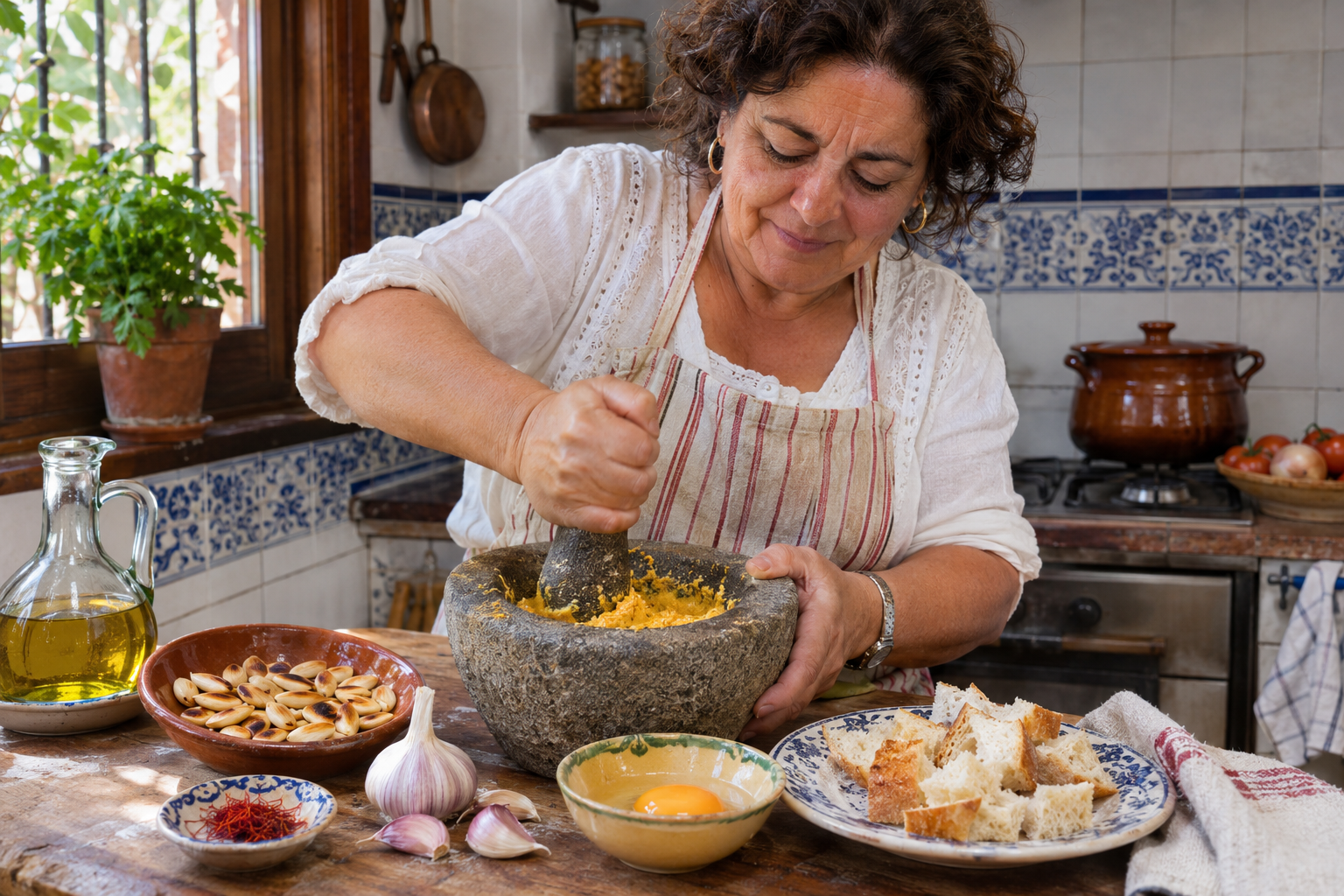
The soul of pollo en pepitoria is its sauce, and understanding that sauce is understanding the dish, because the chicken, good as it is, is really a vehicle for the extraordinary golden coating it braises in. That sauce is built from a Spanish technique called the picada, a thick paste that both flavors and thickens, made by grinding together a few humble ingredients into something far greater than their sum. It is the picada that gives pepitoria its body, its color, and its haunting flavor, and it is what has kept the dish beloved for four hundred years.
The picada here is a very particular one. You fry almonds, garlic, and a slice of bread in olive oil until golden and fragrant, then grind them together with hard-boiled egg yolks and a good pinch of saffron, loosening the paste with a little of the chicken’s cooking broth until it becomes a smooth, rich sauce.
Stirred into the braising chicken, this paste transforms the thin cooking liquid into a thick, velvety, golden sauce that clings to every piece, luxurious and utterly without cream, its richness coming entirely from the almonds and the egg yolks. It is a lovely piece of old kitchen alchemy, watching a pale, unremarkable braise turn glossy and golden the moment the picada goes in, thickening before your eyes into something that looks and tastes far richer than the handful of humble ingredients that made it.
The saffron lends its inimitable color and perfume, the garlic and the fried bread give savory depth, and the almonds give that unmistakable nutty body. It is one of the great sauces of Spanish home cooking, and it is astonishingly simple for how sophisticated it tastes. The trick that thickens a sauce with nuts and egg yolks rather than flour or cream is a genuinely old and clever one, and it gives a result no modern shortcut can quite match, silky and rich and deeply savory all at once.
Not the Same as Other Spanish Chicken
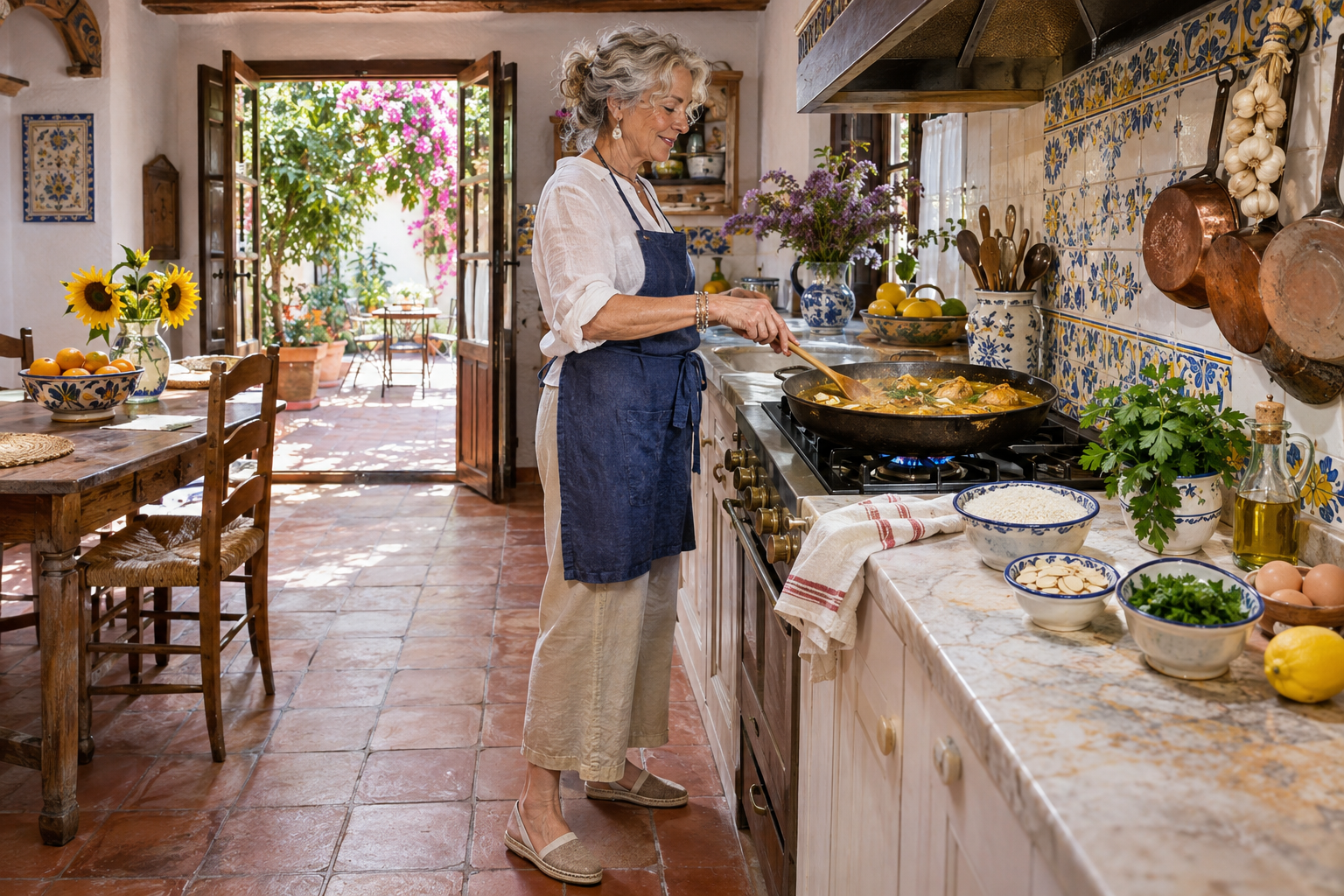
Spain has many beloved braised chicken dishes, and it helps to understand what sets pepitoria apart from its cousins, because the differences are all in the sauce. A dish like pollo al chilindron, from Aragon, braises its chicken in a sauce of peppers, tomatoes, and cured ham, giving something bright, red, and savory in a completely different register. Other Spanish chicken dishes lean on wine, garlic, and herbs for a simpler pan sauce, honest and good but nothing like as distinctive.
Pepitoria is in a category of its own, and once you have tasted that almond-and-saffron sauce you will never mistake it for anything else. Pepitoria stands apart from all of them because of that almond-and-egg-yolk thickening, which gives it a richness and a pale-golden color found in none of the others.
That distinctive sauce is why pepitoria reads as the more refined, more ancient, more special-occasion dish among Spanish chicken braises. Where a pepper-and-tomato braise tastes unmistakably of the sunny Mediterranean, pepitoria tastes of something older and more exotic, the almonds and saffron carrying that whisper of Moorish Spain that sets it in a class of its own. It is the dish you make when you want to serve chicken but make it feel like an occasion, a little grander and more storied than the everyday.
It turns an ordinary bird into something worth setting before guests, without any expensive ingredient beyond a pinch of saffron, which is exactly the kind of humble magic that keeps a dish alive for four hundred years. Knowing that distinction helps you understand why, of all Spain’s many ways with chicken, this is the one that carries the weight of history and the reputation of a queen’s favorite.
How It Comes Together
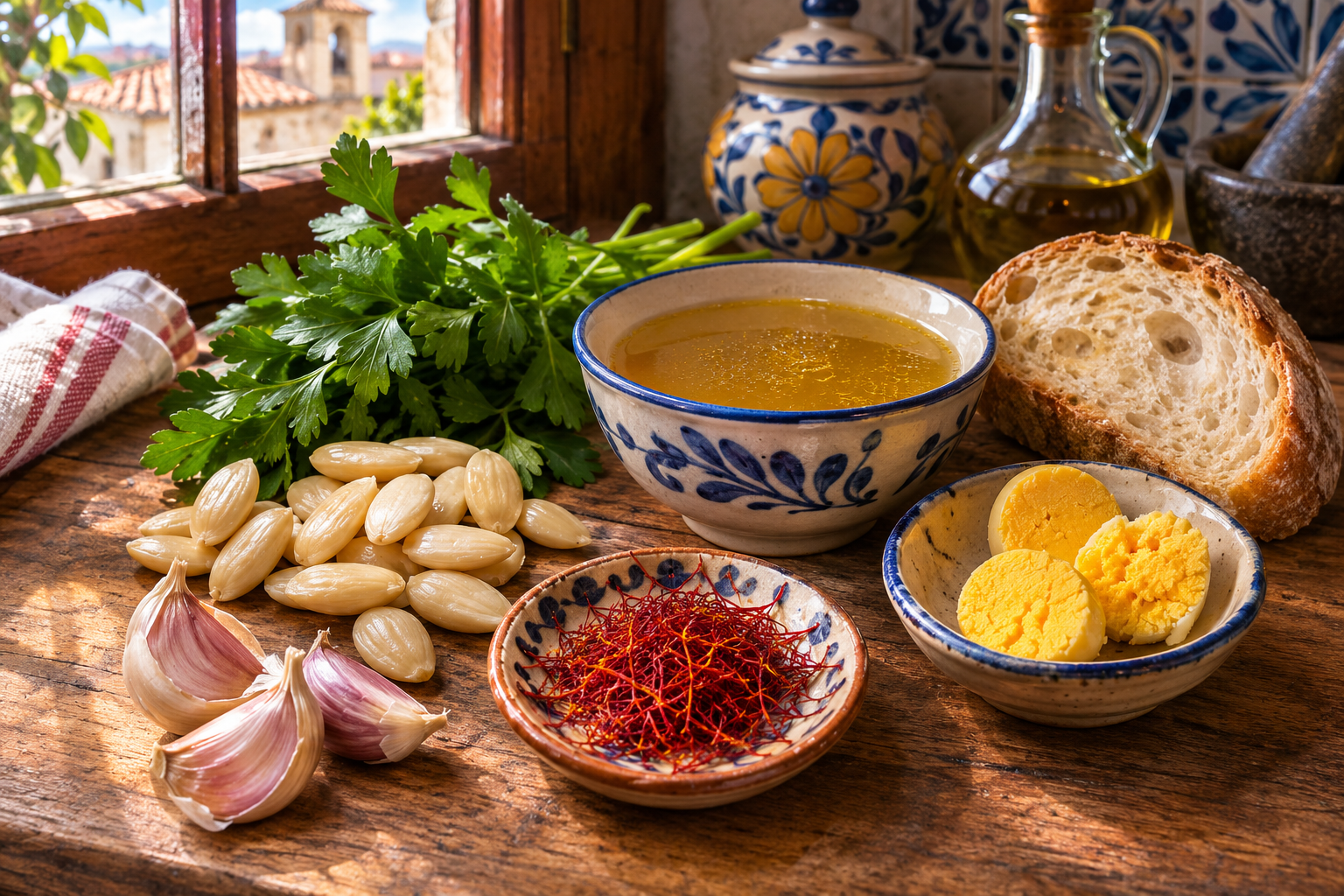
For all its pedigree, pollo en pepitoria is not a difficult dish to make, and the method follows a clear and satisfying logic. You begin by browning pieces of chicken, traditionally bone-in dark meat like thighs and drumsticks, in olive oil until golden, then setting them aside. In the same pan, you fry the almonds, garlic, and bread that will become the picada until fragrant, then set those aside too, before softening an onion in the flavorful oil that remains.
From there it comes together in stages. You return the chicken to the pan, add white wine and let it reduce, then pour in stock and let the chicken braise gently until tender. While it simmers, you build the picada, grinding the fried almonds, garlic, and bread with the hard-boiled egg yolks and saffron and a little of the braising liquid until smooth.
In the final stretch, you stir that golden paste into the pan, where it thickens the sauce almost magically, and let everything simmer together for a few more minutes so the flavors marry. A scattering of the chopped egg whites, some parsley, and perhaps a few slivered almonds finishes it, and it is ready to serve, traditionally with white rice or potatoes to soak up that precious sauce. Nothing about it should be rushed at the end, since those last few minutes of gentle simmering after the picada goes in are when the sauce comes together and the flavors settle into one another.
It is a dish that rewards a little patience with a great deal of flavor. None of the steps is hard on its own, and the whole thing can be made in a single pan, but the sequence of browning, frying, braising, and finally thickening is what builds the depth, so it is worth doing each stage properly rather than rushing to the end.
Making Pollo en Pepitoria
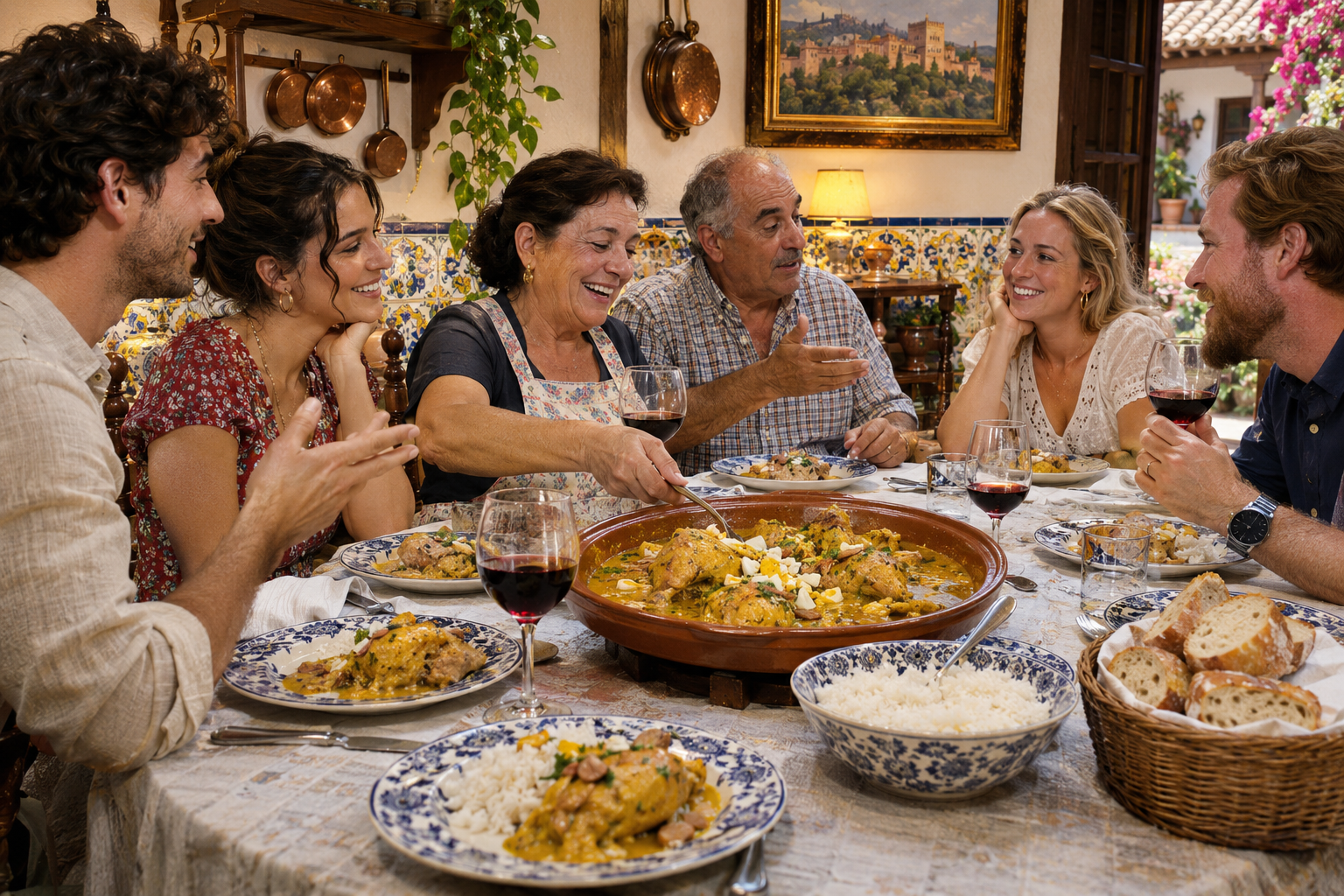
Here is a classic pollo en pepitoria, serving four. Use bone-in chicken for the best flavor, and do not skip the saffron.
Ingredients
- 8 bone-in, skin-on chicken thighs or drumsticks
- 2 hard-boiled eggs
- 20 whole blanched almonds
- 3 cloves garlic
- 1 slice of bread
- 1 onion, finely chopped
- 150 ml white wine
- 400 ml chicken stock
- A good pinch of saffron
- 1 bay leaf
- Olive oil, salt, and pepper
- Chopped parsley, to finish
Instructions
- Season the chicken and brown the pieces in olive oil in a large pan until golden all over. Remove and set aside.
- In the same oil, fry the almonds, garlic cloves, and the slice of bread until golden and fragrant. Remove and set aside.
- Soften the chopped onion in the pan until translucent. Return the chicken, pour in the white wine, and let it reduce for a minute.
- Add the stock and bay leaf, bring to a gentle simmer, cover, and cook until the chicken is tender, about 30 minutes.
- Meanwhile, separate the hard-boiled egg yolks from the whites. Grind the fried almonds, garlic, bread, egg yolks, and saffron with a ladle of the braising liquid into a smooth paste.
- Stir the paste into the pan and simmer gently for another 10 to 15 minutes, until the sauce is thick and golden. Season to taste.
- Chop the reserved egg whites and scatter them over with parsley. Serve hot with white rice or potatoes.
And do treat the picada as the heart of the dish, since it is the ground almonds, saffron, and egg yolk that turn plain braised chicken into pepitoria, so grind it smooth, stir it in with care, and let that four-hundred-year-old golden sauce be the thing everyone remembers.

About the Author: Ruben, co-founder of Gamintraveler.com since 2014, is a seasoned traveler from Spain who has explored over 100 countries since 2009. Known for his extensive travel adventures across South America, Europe, the US, Australia, New Zealand, Asia, and Africa, Ruben combines his passion for adventurous yet sustainable living with his love for cycling, highlighted by his remarkable 5-month bicycle journey from Spain to Norway. He currently resides in Spain, where he continues sharing his travel experiences with his partner, Rachel, and their son, Han.