
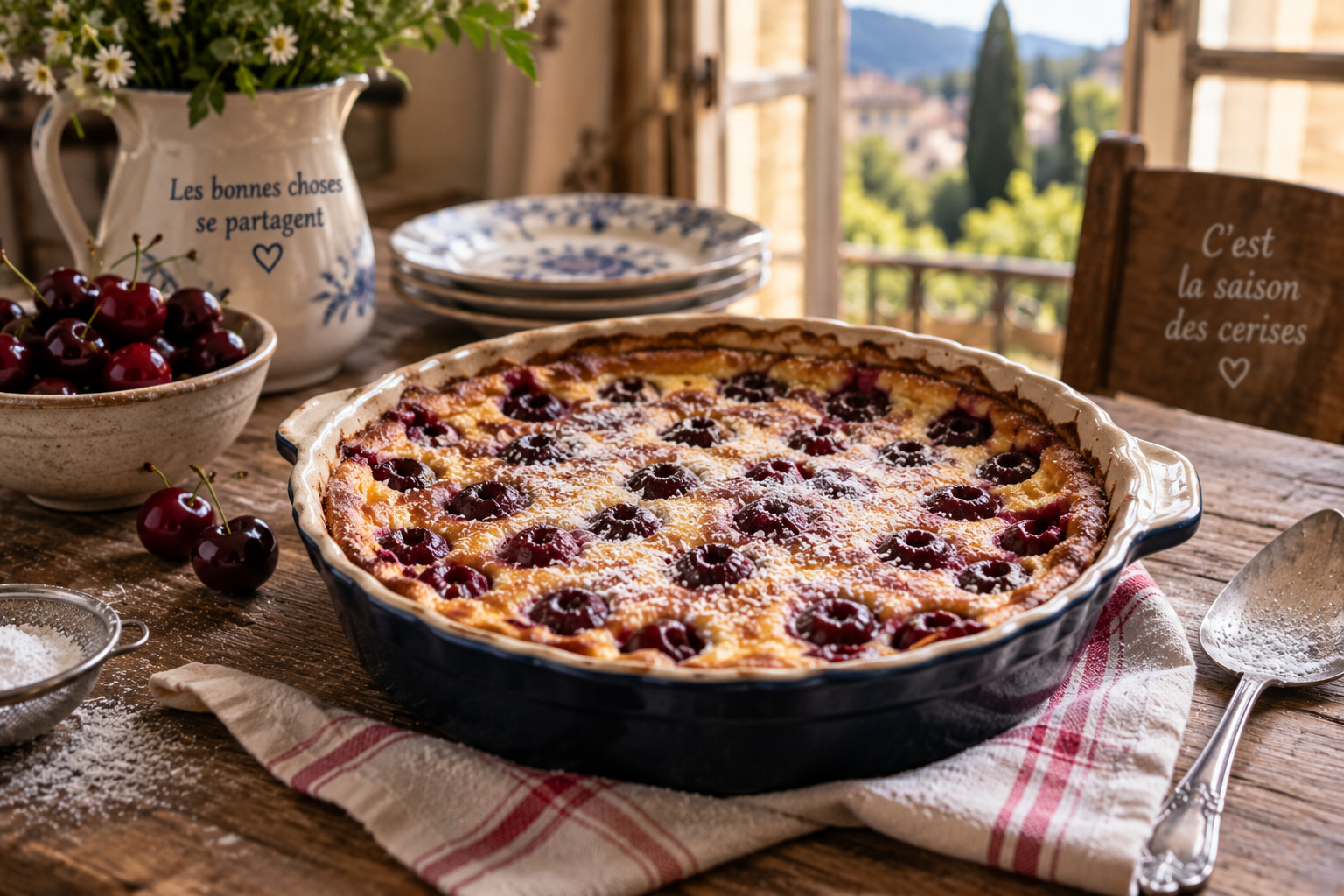
As the last fruit of the season lingers in the bowl, a little soft and a little past its best, the French reach for the perfect answer, and it may well be the single easiest impressive dessert there is. It is called clafoutis, a rustic baked pudding in which fresh fruit is drowned in a loose, eggy batter and baked until it sets into something halfway between a custard and a cake.
The genius of it, and the reason it belongs in every home cook’s back pocket, is that you do not assemble it in any real sense. You scatter fruit in a dish, whisk up a batter, pour it over, and bake. There is no pastry to roll out, no layers to build, no creaming or folding or fuss, just pour and bake, and out comes a golden, puffed, tender dessert that looks like a great deal more work than it actually was. It is the ideal way to see off the fruit season, whatever fruit you have left. Few desserts are so happy to take whatever is on hand and turn it into something worth serving, which is exactly why generations of French home cooks have leaned on it.
What follows is why this is a pour-not-assemble dessert, how it rescues the tail end of the fruit season, the great question of whether to pit the cherries, and exactly how to make it.
You Pour, Not Assemble
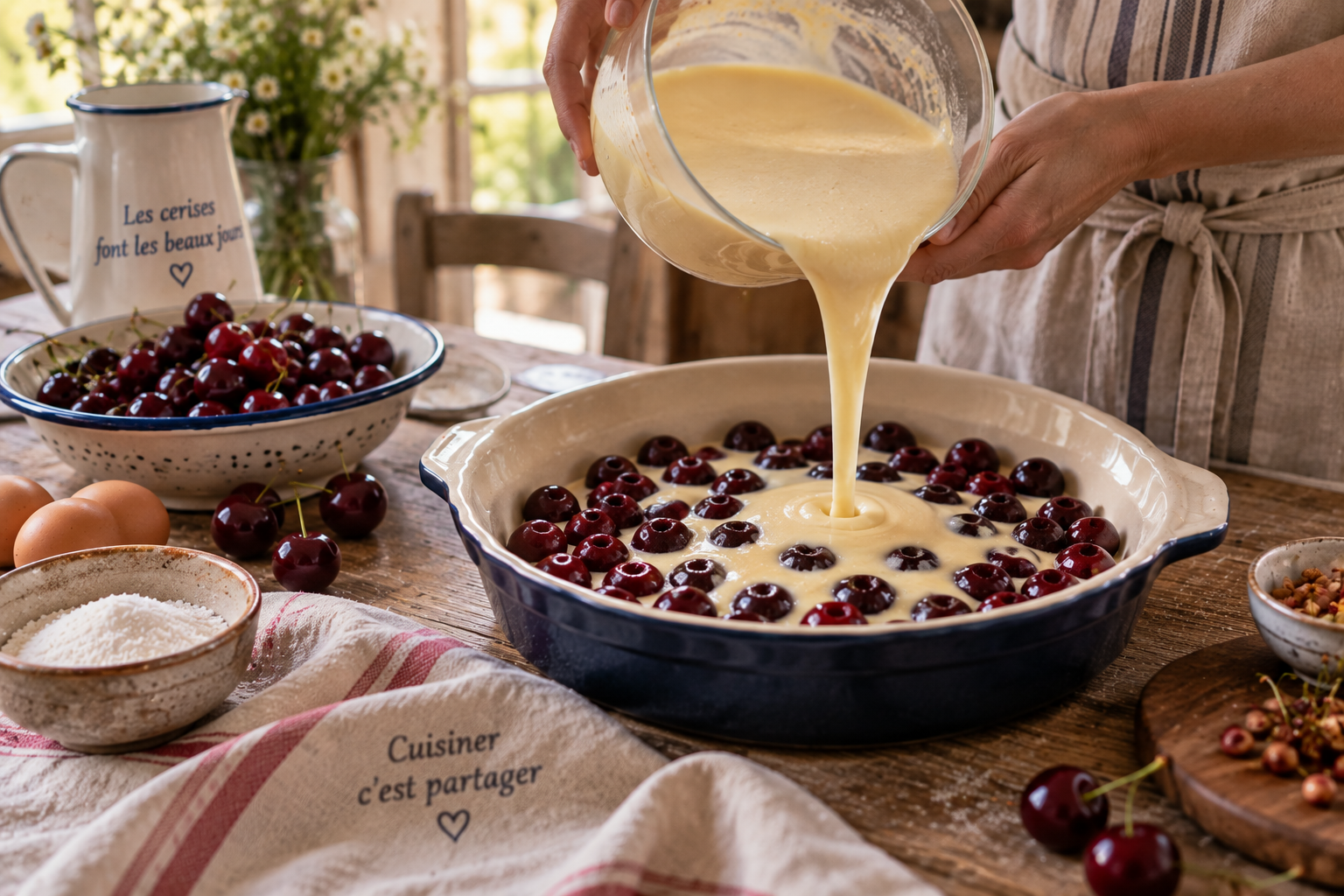
The whole appeal of clafoutis is captured in that one distinction: you pour it, you do not assemble it. Most impressive desserts demand real construction, a pastry case to blind-bake, layers to stack, cream to whip and fold, components to be made separately and brought together with care. Clafoutis throws all of that out. The entire method is to butter a baking dish, lay your fruit in it, whisk together a simple batter of eggs, milk, flour, and sugar until smooth, pour it straight over the fruit, and put it in the oven. That is genuinely the whole thing.
The result of that laziness is a dessert with a lovely, distinctive texture, one that sits somewhere between a baked custard and a light cake, or as some describe it, like a fruit-studded Dutch baby. The finished dessert, essentially a sweet crepe batter poured over fruit, puffs up dramatically around the fruit as it bakes and then settles into a tender, barely-set, custardy body with slightly crisp, golden edges, the fruit suspended within it, softened and jammy. That gentle rise and fall is part of the charm, and it means the dessert looks its most impressive in the few minutes straight out of the oven, which is a fine excuse to call everyone to the table at once. It is rustic rather than refined, thoroughly homely and forgiving, the opposite of a fussy patisserie showpiece, and that is exactly its charm. Because there is no technique to master and nothing delicate to go wrong, it is close to foolproof, which makes it the perfect dessert for anyone who feels they cannot bake. If you can whisk a batter and pour it into a dish, you can make clafoutis.
It is genuinely one of the best desserts for a nervous or reluctant baker, the kind of thing that builds confidence because it is so hard to get wrong, and it looks impressive enough at the table that no one else need ever know just how little you actually did to make it.
The Dessert That Ends the Season
Clafoutis has a special role as the dessert that uses up fruit, which is why it feels so right at the turning of the seasons. In its French home, the classic version is made with cherries in early summer, the moment they ripen, but the same simple formula welcomes almost any fruit, and it is especially perfect for catching the last of a season’s harvest before it is gone. Those slightly soft plums, the final handful of berries, the pears and apples of autumn, all of them find a happy home baked into that eggy batter.
This is what makes it such a practical and seasonal pleasure rather than just a recipe. When the fruit bowl holds the tail end of summer or the first of the orchard fruit, a little too ripe to eat out of hand but too good to waste, clafoutis turns it into something lovely with almost no effort.
The batter is gentle and mild, a soft, sweet backdrop that lets whatever fruit you have shine, and the baking concentrates and caramelizes the fruit’s flavor beautifully. Fruit that was merely fine eaten raw often tastes far better this way, its sweetness deepened and its juices thickened, so a slightly disappointing bowlful can become the best part of the dessert. As the weather cools and the summer stone fruit gives way to autumn’s pears, plums, and apples, clafoutis quietly shifts with it, always ready to make a warm, comforting dessert out of whatever the season is offering up last. It is the cook’s friend at exactly the moment the fruit needs using. There is a small satisfaction, too, in rescuing fruit that might otherwise have gone soft and been thrown away, turning the very end of a season into one last good thing rather than a waste. It is thrifty in the quiet, unshowy way that so much of the best home cooking is, making a virtue of what you already have.
To Pit or Not to Pit
No discussion of clafoutis is complete without the great and genuinely traditional debate that surrounds the classic cherry version: should you leave the pits in? It sounds a little mad to modern ears, but the authentic Limousin clafoutis is made with whole, unpitted cherries, and there is real reasoning behind it. The pits, it is said, release a subtle almond-like flavor into the custard as it bakes, a delicate note you lose when you remove them, and leaving them in also keeps the cherries from bleeding their juice and watering down the batter. Purists will tell you that a pitted clafoutis is simply a lesser thing, and in the Limousin the unpitted version is a point of real pride. It is one of those small food arguments the French relish, earnest and affectionate in equal measure.
The obvious drawback is equally real: nobody wants to bite down on a cherry stone, and serving unpitted fruit means warning every guest to eat carefully and spit out the pits.
Most modern cooks, sensibly, pit their cherries and accept the small loss of that almond note, sometimes adding a drop of almond extract to the batter to make up for it, which works beautifully. There is no wrong answer, only a choice between tradition and convenience, and you can decide which side you fall on. It is worth knowing, too, that strictly speaking clafoutis refers only to the cherry version, and the same dessert made with other fruit is technically called a flaugnarde, though almost everyone just calls it all clafoutis. Whatever you call it and however you handle the pits, the method stays exactly the same. The name and the fruit may change with the season and the region, but the simple act of pouring batter over fruit and baking it never does, which is what makes clafoutis such a reliable thing to know by heart.
Barely a Recipe at All
Part of what makes clafoutis so endearing is how little it asks of you beyond the pouring, right through to the serving. It comes together in a single bowl, or even a blender, with a handful of ingredients that live in any kitchen, and it is ready for the oven in the time it takes to whisk a batter smooth. There is nothing to chill, nothing to rest unless you want to, and no fiddly finishing, which makes it the sort of thing you can decide to make on a whim after dinner and have on the table within the hour.
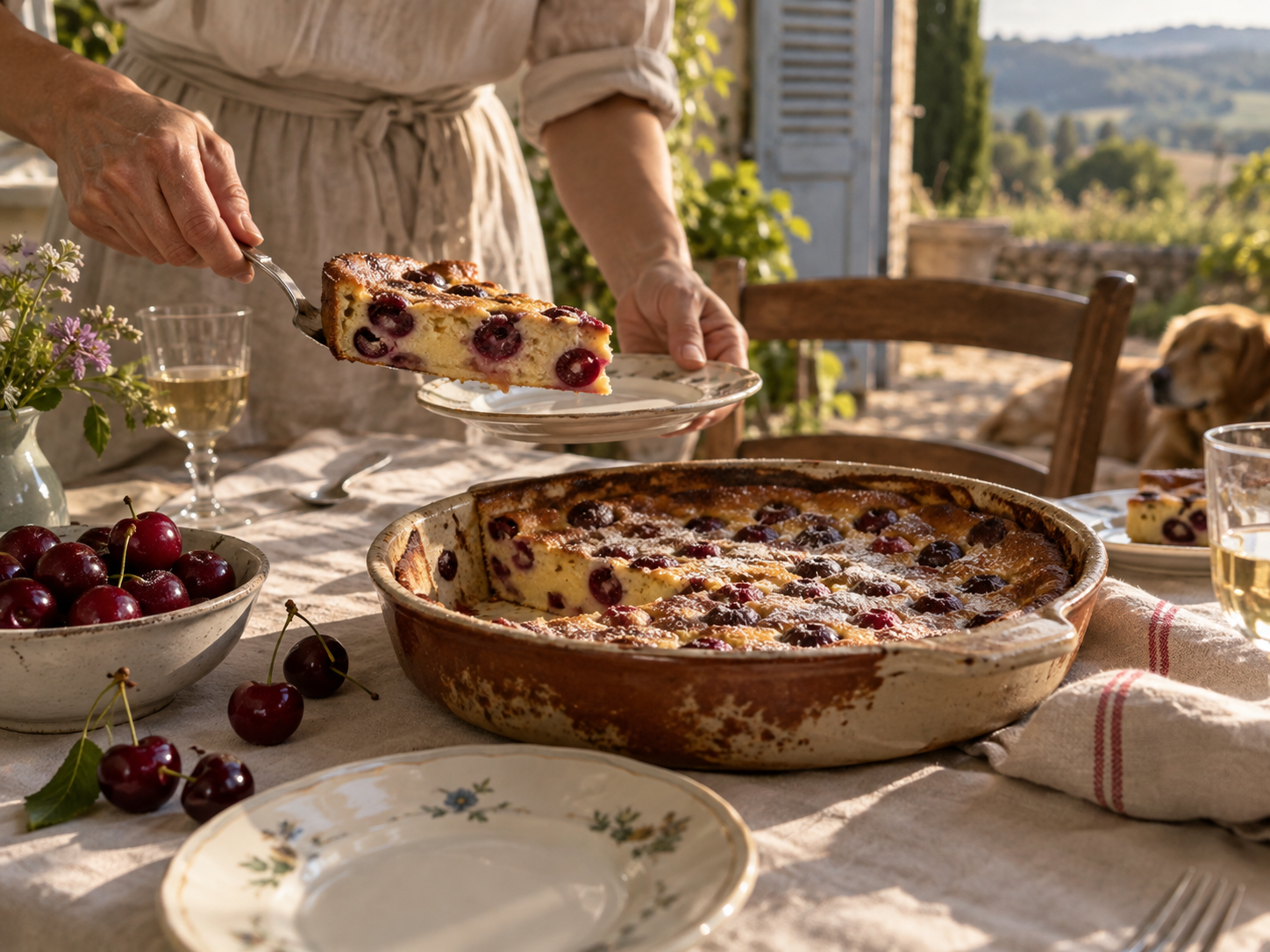
It is just as relaxed about how it is eaten. Clafoutis is lovely warm from the oven, when it is at its most puffed and tender, but it is equally good at room temperature or even cold from the fridge the next day, so there is no anxious rush to serve it at a precise moment.
A simple dusting of powdered sugar is the traditional finish, and a little cream or a scoop of ice cream alongside turns it into something more indulgent, though it truly needs nothing at all. The batter can even be whisked the night before and left in the fridge, ready to pour over fruit and bake when you want it, which makes it a genuinely stress-free choice for feeding guests. Do not be alarmed, either, when it sinks a little as it cools, since that gentle deflation is completely normal and part of its rustic character. It is, from start to finish, about as forgiving as a dessert can be.
Making Clafoutis
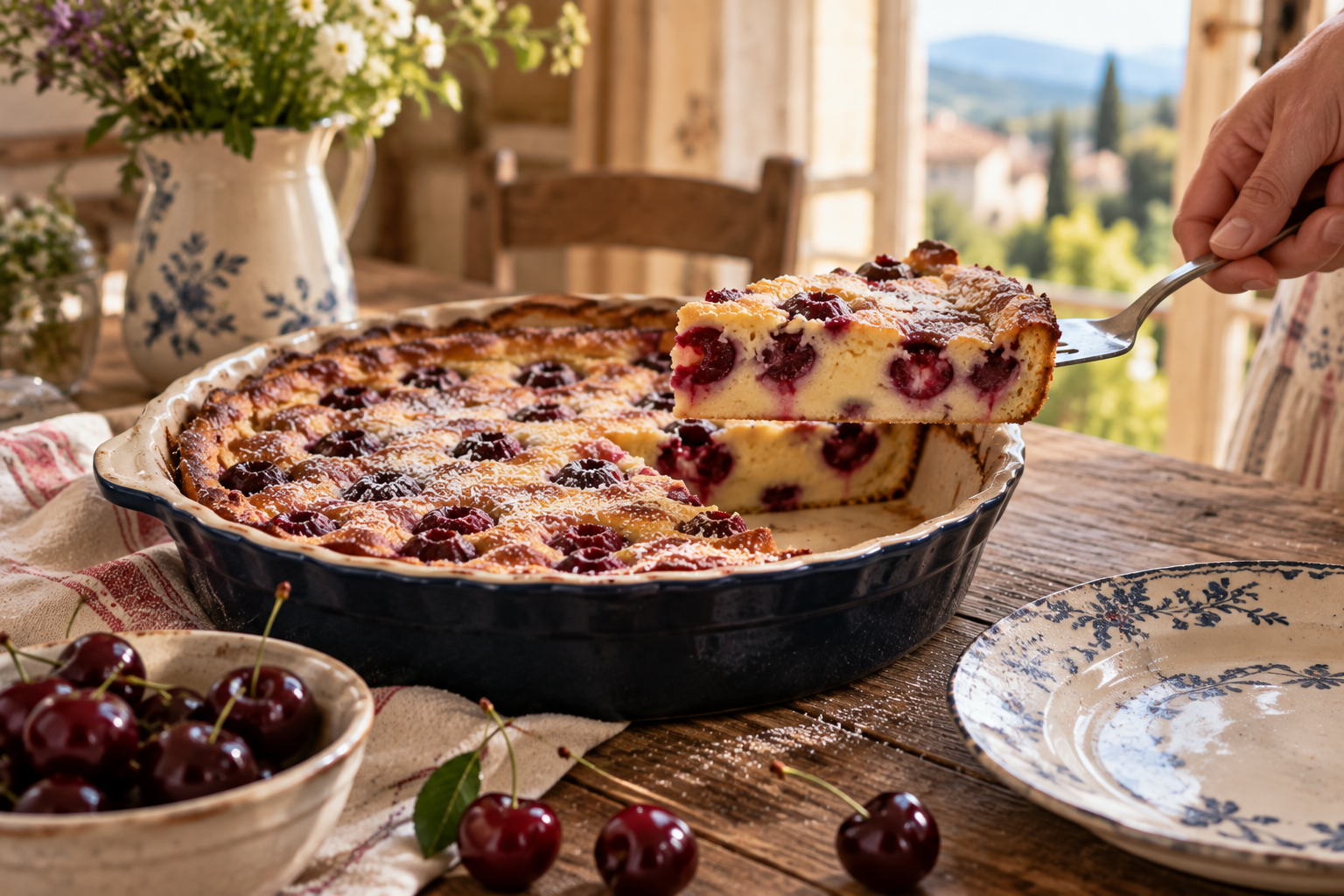
Here is a classic clafoutis, serving six. Use cherries in summer, or whatever ripe fruit the season is ending on.
Ingredients
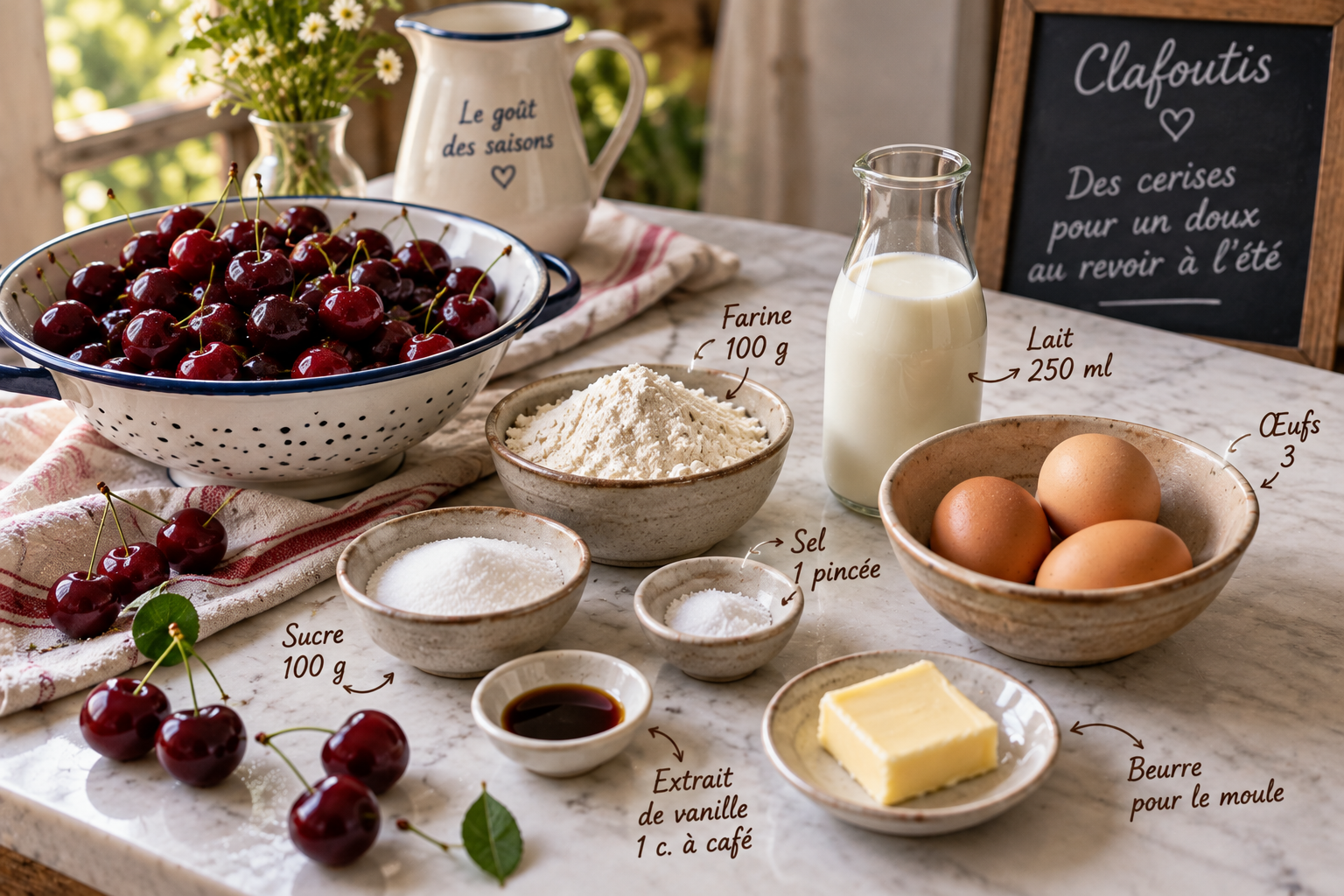
- Butter, for the dish
- 500 g cherries, or other fruit such as plums, berries, or sliced pears
- 3 eggs
- 100 g sugar, plus extra for the dish
- 100 g all-purpose flour
- 300 ml milk, or half milk and half cream for richness
- 1 teaspoon vanilla extract
- A drop of almond extract, optional
- A pinch of salt
- Powdered sugar, to serve
Instructions
- Preheat the oven to 375 F, about 190 C. Generously butter a baking dish and sprinkle it with a little sugar, shaking out the excess.
- Arrange the fruit in a single layer over the base of the dish. If using cherries, pit them or leave them whole in the traditional style, warning your guests if you do.
- In a bowl or blender, whisk together the eggs, sugar, flour, milk, vanilla, the almond extract if using, and the salt until completely smooth. The batter will be thin, like a crepe batter.
- Pour the batter evenly over the fruit in the dish.
- Bake for 35 to 45 minutes, until the clafoutis is puffed, golden, and just set with only a slight wobble in the center.
- Let it cool for at least 10 minutes, during which it will settle and sink a little, which is entirely normal.
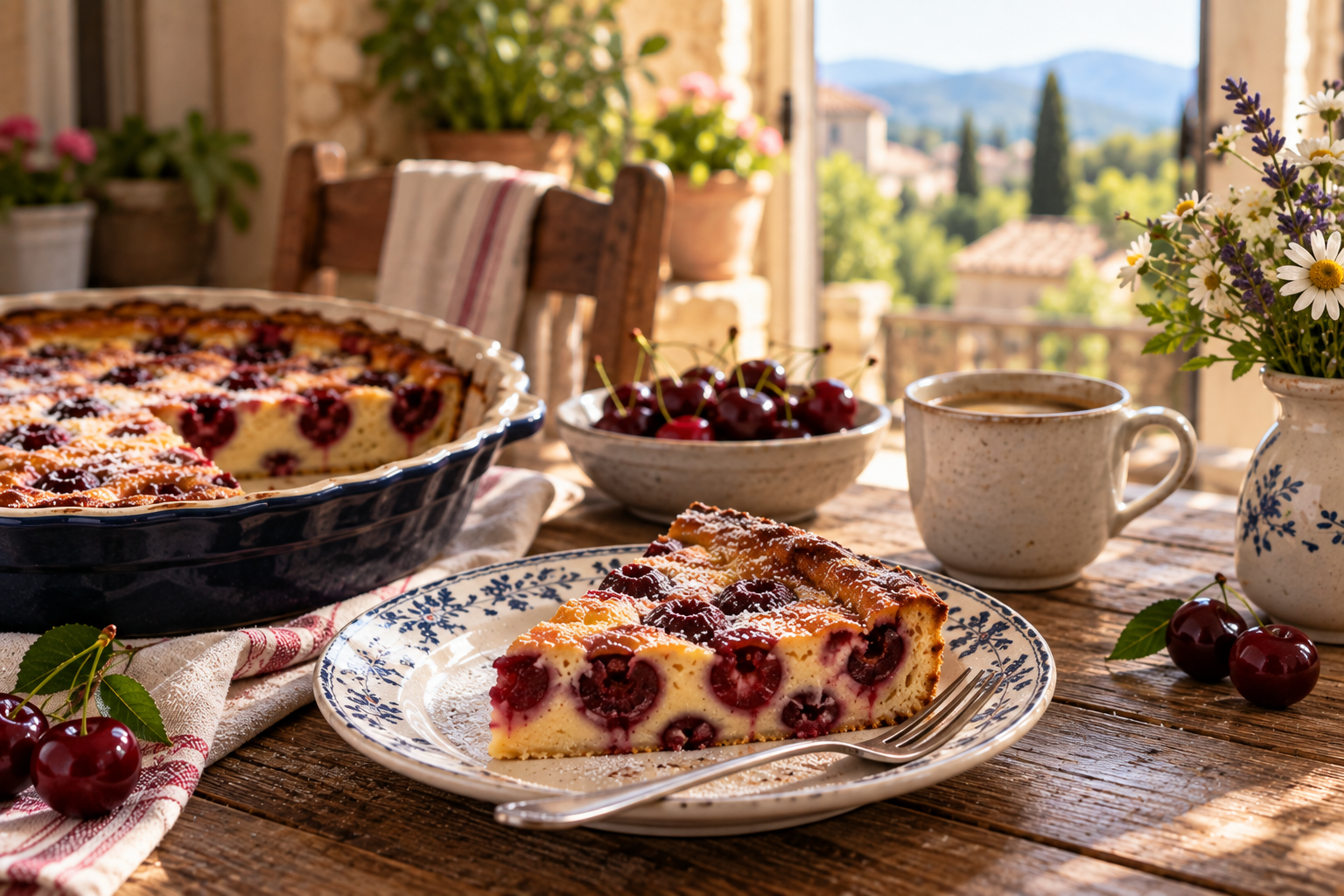
- Dust generously with powdered sugar and serve warm or at room temperature, plain or with a little cream.
And do treat the fruit as an open invitation rather than a rule, since the beauty of clafoutis is that it welcomes whatever you have, so reach for the ripest thing in the bowl at the end of the season and let the batter do the rest.

About the Author: Ruben, co-founder of Gamintraveler.com since 2014, is a seasoned traveler from Spain who has explored over 100 countries since 2009. Known for his extensive travel adventures across South America, Europe, the US, Australia, New Zealand, Asia, and Africa, Ruben combines his passion for adventurous yet sustainable living with his love for cycling, highlighted by his remarkable 5-month bicycle journey from Spain to Norway. He currently resides in Spain, where he continues sharing his travel experiences with his partner, Rachel, and their son, Han.