
For generations of Americans, the dream of a coastal retirement meant Florida, the sunshine, the beaches, the warm winters, the familiar comfort of staying in your own country. But a growing number of retirees are asking a question that would have seemed absurd a decade ago: does that same money actually go further on the coast of Spain instead? So let us actually run it, line by line, taking a nest egg of $250,000 and comparing what it buys a retiree on the coast of Florida against what it buys on the coast of Spain. The results are genuinely striking, lopsided in ways that surprise people, and complicated enough that money is not the whole story. The comparison has shifted sharply in just the last few years, too, as one particular Florida cost has spiraled in a way almost nobody planning a retirement a decade ago would have predicted. This is a comparison of illustrative figures, not financial advice, and everyone’s situation differs, but the line-by-line arithmetic is worth seeing laid out honestly.
What follows is the housing line, the insurance line that has quietly become a crisis, the healthcare line, the everyday cost of living, the tax picture where Florida fights back, and the honest verdict on where the money actually goes further.
The Housing Line

Start with the biggest expense of all, a place to live, and the gap opens immediately. On much of the desirable Florida coast, $250,000 no longer buys a great deal, since prices in popular coastal cities have climbed steeply, and in many sought-after areas that sum is a down payment on a modest condo rather than the price of a home, often one that comes saddled with substantial monthly fees. Those condo association fees are their own quiet drain, frequently running several hundred dollars a month and rising, and in older coastal buildings they increasingly come with special assessments for repairs that can land as sudden five-figure bills. The Florida coast is simply a very expensive place to own now, and a quarter of a million dollars, once real money there, increasingly is not. The gap between the beach house of the popular imagination and what the budget actually reaches has quietly widened into a gulf over the past several years.
On the Spanish coast, the same $250,000, roughly €230,000, stretches dramatically further. In many parts of the Costa Blanca, the Valencia region, and much of the Spanish coastline outside the very priciest enclaves, that sum can buy a comfortable two-bedroom apartment near the sea outright, with no mortgage at all, leaving a retiree owning their home free and clear. Prime spots like central Marbella will cost far more, of course, but the ordinary, pleasant, walkable-to-the-beach Spanish coast, the kind most retirees actually want, remains within reach of that budget in a way the equivalent Florida coast no longer is. That is the first and largest crack in the comparison: the money that is a down payment in coastal Florida can be a paid-off home in coastal Spain, which changes the entire financial shape of a retirement before a single other bill is counted. A retiree with no mortgage and no rent is playing an entirely different game from one still carrying housing costs into their seventies, and that single difference cascades through every other line below.
The Insurance Line That Became a Crisis
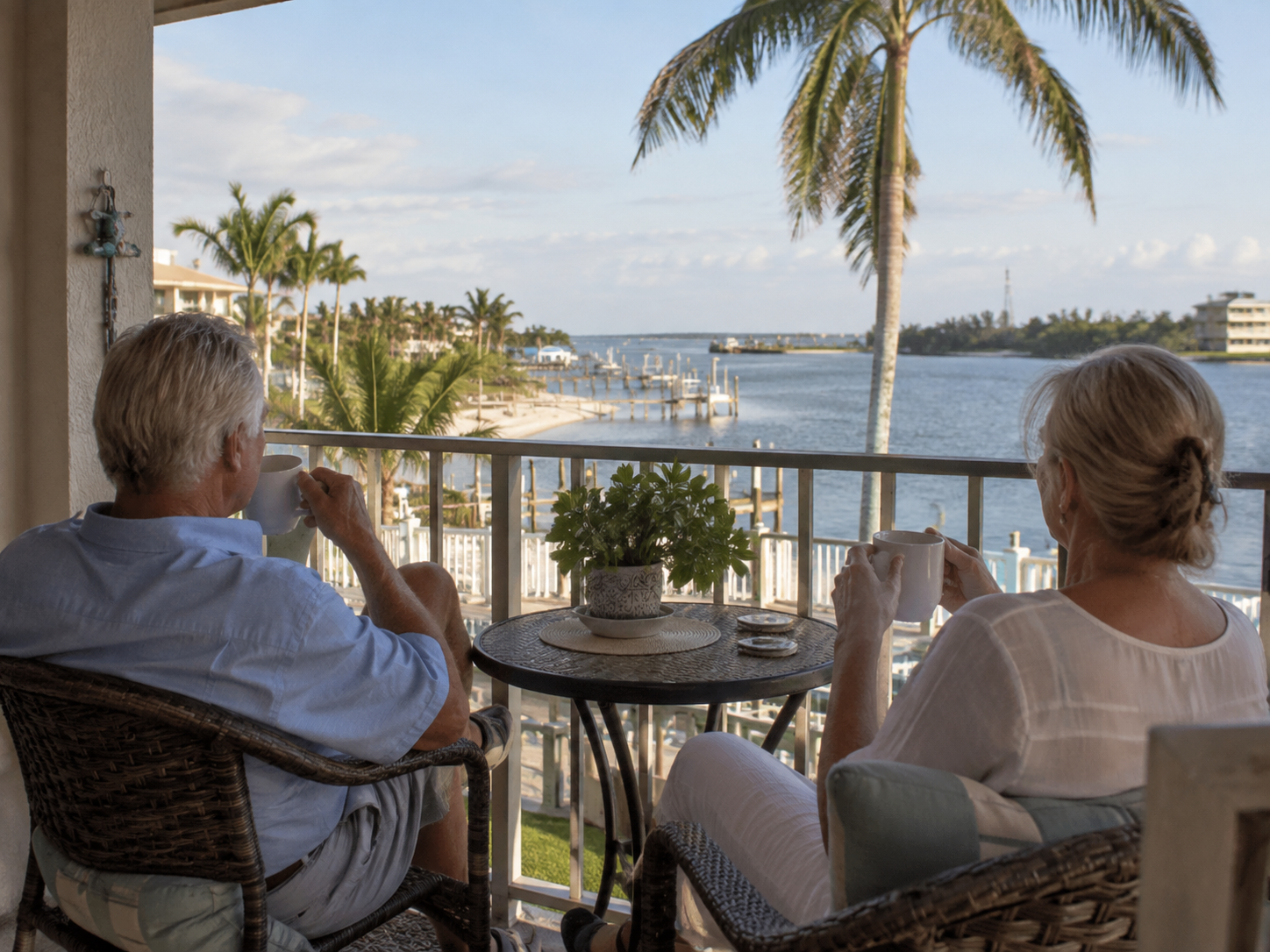
Here is the line that has quietly turned into the deciding factor for many, and it is one people rarely think about until it lands: home insurance. Florida is in the grip of a genuine property-insurance crisis, with premiums that have soared to among the highest in the nation, and on the coast the numbers are brutal. Statewide averages run into the thousands, and in South Florida and other coastal areas, annual premiums of five to eight thousand dollars are common, with some condo owners reporting figures far higher still, and flood coverage piled on top. Stories abound of policies that doubled or tripled in a few years, of insurers pulling out of the state entirely, and of retirees who bought a dream condo only to be blindsided by an insurance bill that rivals their mortgage. Premiums have been climbing year after year, far faster than any retiree’s income, driven by hurricane risk that is not going away.
In coastal Spain, home insurance is, by comparison, almost an afterthought, a modest annual cost of a few hundred euros rather than a budget-devouring line that grows every year. The contrast here is not small, it is enormous, and it is the single line most likely to shock an American running this comparison for the first time.
A Florida coastal retiree can pay more for home insurance in a single year than a Spanish coastal retiree pays in a decade, and because the Florida figure keeps rising while the Spanish one stays stable, the gap only widens over a long retirement. Over a twenty-five-year retirement, that difference does not just add up, it compounds into a sum large enough to fund whole years of Spanish living on its own. For many, this line alone tips the whole calculation. It is the kind of cost that does not just strain a fixed retirement budget but actively threatens it, since a premium that rises faster than your income every year is a slow-motion emergency, and it is precisely the sort of thing that is pushing some longtime Floridians to look abroad in the first place.
The Healthcare Line

Healthcare is the expense that terrifies American retirees most, and it is another place where the comparison runs strongly one way. In Florida, as anywhere in the US, healthcare means the American system, which for retirees means Medicare from age sixty-five, with its monthly premiums, deductibles, and gaps that push most people to buy supplemental coverage on top, and realistic all-in costs that run into five figures a year for a couple once you add it all up. That is the good scenario, the one where you have reached sixty-five and qualified, and even then the paperwork, the supplements, and the out-of-pocket surprises make American healthcare a source of ongoing low-grade financial anxiety. For anyone retiring before sixty-five, the picture is far worse, since private insurance in that gap can be ruinously expensive, and the fear of that gap keeps a great many Americans working years longer than they would like purely to hold onto employer coverage.
Spain offers a genuinely different world. The country has an excellent public healthcare system, and private health insurance, which non-EU residents typically need for their visa, is remarkably affordable by American standards, with comprehensive private cover often running a few hundred euros a month for a couple rather than the eye-watering sums Americans are used to.
The care is high quality, the private hospitals are good, and the cost is a fraction of the American equivalent. Spain consistently ranks among the healthiest countries in the world with one of the highest life expectancies, so this is not cheap care in the sense of poor care, but genuinely good medicine at a genuinely modest price, which is a combination Americans are simply not used to encountering. For a retiree, especially one not yet old enough for Medicare, the healthcare line in Spain is not the source of dread it is in the US, which for many is worth as much peace of mind as it is money. The freedom from worrying that a single serious illness could upend your finances is, for a lot of people, one of the quiet luxuries of European retirement.
The Everyday Cost of Living

Beyond the big fixed costs, there is the daily texture of spending, and here too Spain runs cheaper, though the gap is less dramatic than on insurance. Groceries, dining out, transport, and the ordinary business of living all tend to cost meaningfully less on the Spanish coast than the Floridian one, with estimates commonly putting a comparable coastal lifestyle somewhere around thirty to fifty percent cheaper in Spain before housing is even counted. And this is the coast, not some remote inland bargain; the Spanish seaside, for all its beauty and appeal, remains startlingly affordable by the standards of an American beach town. A set-menu lunch, a coffee, a bottle of good local wine, a meal out with friends, all of these are simply cheaper in Spain, and they add up across a year. The famous menu del dia, a multi-course set lunch with wine included for a handful of euros, has no real equivalent in a Florida beach town, and it is emblematic of how much more ordinary pleasure the same money buys on the Spanish coast. It is not just that Spain is cheaper on paper; it is that the cheaper life is also, by many measures, a richer one, heavy on the small daily good things that money buys easily there.
None of this is to say Spain is uniformly cheaper, and honesty requires noting the exceptions. Imported goods, cars, fuel, and some electronics can cost as much or more in Spain than in the US, and the very cheapest inland corners of America can undercut the Spanish coast on some lines. But for the specific comparison at hand, a pleasant life near the sea, the everyday cost of living clearly favors Spain, and combined with the paid-off home and the trivial insurance, it means a retiree’s monthly spending in coastal Spain can be markedly lower than the equivalent in coastal Florida, stretching that $250,000 much further year after year. When the three biggest lines, housing, insurance, and healthcare, all point the same way, the smaller everyday savings simply compound an advantage that is already decisive.
Where Florida Fights Back

It would be dishonest to present this as a rout, because Florida has real advantages, and one of them is significant: taxes. Florida famously has no state income tax, which means Social Security, pension income, retirement-account withdrawals, and capital gains all escape state taxation entirely, a genuine and valuable benefit for a retiree with meaningful income. Spain, by contrast, taxes its residents on their worldwide income, and the rates are not low, so a retiree with substantial income or investments could face a materially higher tax bill in Spain, which can offset some of the savings elsewhere and, for wealthier retirees, even reverse the math. This is the one line where the direction of the comparison flips, and for a high-income retiree it can flip hard, which is exactly why the tax question deserves careful, individual, professional attention rather than a rule of thumb.
Florida’s other advantages are not financial but they are real, and they matter enormously to the actual decision, sometimes more than any number on a spreadsheet. It is home, in your own language, near your own family, under familiar laws and systems, with no visa to secure and no bureaucracy to navigate in a foreign tongue, and with Medicare, the system you paid into your whole working life, available when you turn sixty-five. Spain, by contrast, asks you to qualify for and maintain residency, to file taxes in an unfamiliar system, and to build a whole new life far from the people and places you know, none of which is a dealbreaker but all of which is real work. For many retirees these comforts outweigh a great deal of money, and no honest comparison can wave them away, because a cheaper life far from your grandchildren and conducted in a language you do not speak is not automatically a better one. The savings are real, but so is the cost of missing a grandchild’s childhood or navigating a foreign hospital in a language you are still learning, and only the person living it can weigh those against the euros.
The Honest Verdict
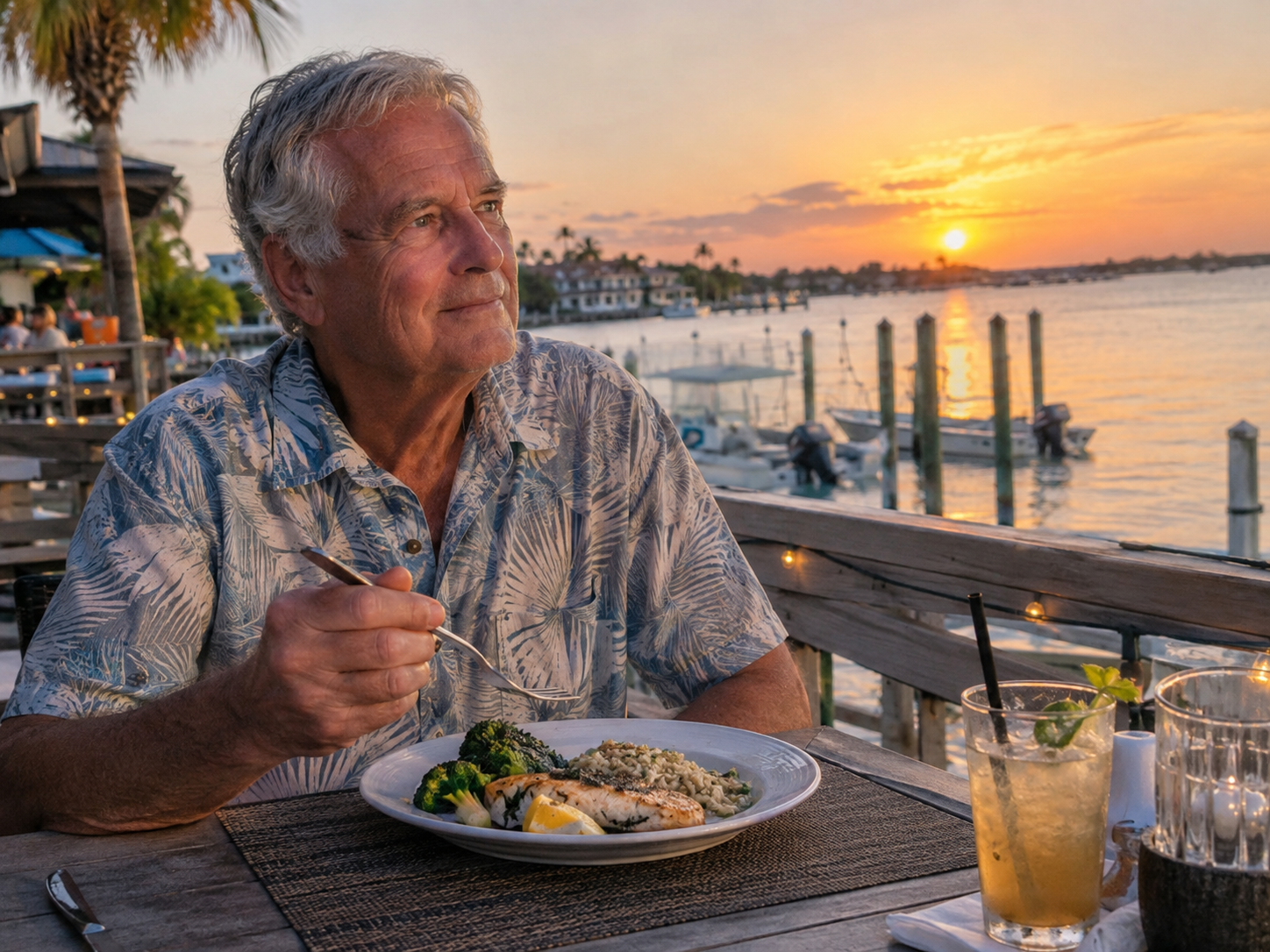
So, line by line, where does the $250,000 actually go further? On the pure numbers, the answer is not close: coastal Spain wins decisively, buying a paid-off home where Florida offers a down payment, charging a few hundred euros for the insurance that costs Florida thousands and climbs, providing affordable healthcare against America’s dear and dreaded system, and running a cheaper daily life on top. For a retiree of modest means, whose $250,000 has to do a lot of work, the Spanish coast can deliver a materially more comfortable and secure retirement than the Floridian one, and by a wide margin. When the money has to stretch, every one of the big lines breaking in Spain’s favor matters more, since a modest fixed income simply goes further where housing is owned outright, insurance is trivial, and healthcare is cheap.
But the honest verdict has to hold the other side too. Florida’s lack of income tax genuinely narrows or, for higher-income retirees, closes the gap, and its intangible advantages of home, family, language, and Medicare carry a weight that no spreadsheet captures.
The truest answer is that if the decision were purely financial, and especially for a retiree living mainly off modest fixed income rather than a large taxable one, coastal Spain is the plainly better deal, and the insurance crisis has only widened its lead. A generation ago the numbers were far closer, and Florida’s familiarity easily won the day; what has changed is not that Spain got cheaper but that coastal Florida got so much more expensive. But the decision is never purely financial, and for many the pull of staying home is worth the premium. What the line-by-line comparison really shows is not that everyone should move to Spain, but that the old assumption that Florida is the affordable coastal retirement no longer holds, and that the money now buys strikingly more across the Atlantic. That alone is worth knowing, because a great many people are still planning their retirements around a version of the numbers that quietly stopped being true. As always, these are illustrative figures rather than advice, and anyone weighing such a move should build their own detailed budget and consult qualified financial, tax, and immigration professionals before deciding.

About the Author: Ruben, co-founder of Gamintraveler.com since 2014, is a seasoned traveler from Spain who has explored over 100 countries since 2009. Known for his extensive travel adventures across South America, Europe, the US, Australia, New Zealand, Asia, and Africa, Ruben combines his passion for adventurous yet sustainable living with his love for cycling, highlighted by his remarkable 5-month bicycle journey from Spain to Norway. He currently resides in Spain, where he continues sharing his travel experiences with his partner, Rachel, and their son, Han.