
Fiber is the most boring health advice in the world, which is probably why almost nobody follows it. Health guidelines across Europe and the US suggest adults get somewhere around 30 grams a day, and yet the average person eats roughly half that, closer to fifteen grams, with surveys finding that the overwhelming majority of people fall short. I was almost certainly one of them, one of the great fiber-deficient majority, so for thirty days I decided to actually hit the target properly, tracking my intake carefully and pushing it up to a full thirty grams a day, to see what a month of doing the dull, sensible thing would actually do to me. The answer, honestly, was a mix of the genuinely noticeable and the completely invisible, and the honest part, the both-ways truth of what changed and what stubbornly did not, is the whole point of telling you about it. Too much health writing tells you only the good half; the useful version tells you both. This is one person’s month, not medical advice, and everybody’s body is different.
What follows is the target itself, the rocky first week nobody warns you about, what genuinely changed, what did not change at all, and why the real payoff is one you cannot feel in a month.
The 30-Gram Target

The number itself is worth understanding, because it is both modest and, for most people, surprisingly far away. Health authorities generally land somewhere in the range of twenty-five to thirty-eight grams of fiber a day for adults, and thirty grams works as a sensible round target that satisfies most guidelines. The trouble is the starting point, because the typical modern diet, heavy on processed and refined foods that have had their fiber stripped out, delivers only around fifteen grams a day, which means hitting the target is not a tweak but a near-doubling.
That gap is the quiet scandal of the modern diet, since fiber is not some exotic supplement but simply the part of plants your body does not fully digest, abundant in beans, whole grains, fruit, vegetables, nuts, and seeds, and largely absent from the packaged foods that fill most shopping carts. Processing tends to strip fiber out precisely because it is the part that does not break down easily, so the more of your diet comes from packages, the less fiber you are likely getting without realizing it. Getting to thirty grams, I quickly learned, is not hard in theory, it just requires actually building meals around those plant foods rather than around refined carbohydrates and processed convenience, which for most of us is a real shift. A day of white bread, a sandwich, and pasta will leave you far short no matter how much of it you eat, while a day built on beans, oats, fruit, and vegetables gets you there almost by accident. Before I could find out what thirty grams would do, I had to figure out how to eat that differently at all. It turned out to be less about adding a fiber supplement and more about quietly rebuilding my plate around plants, which is a bigger change of habit than a number on a label suggests.
The Rocky First Week

Here is the part the cheerful fiber advice tends to skip, and it nearly derailed the whole experiment: the first week was genuinely uncomfortable. When you roughly double your fiber intake overnight, as I foolishly did at the start, your digestive system rebels, and I spent the first several days bloated, gassy, and distinctly regretting the whole idea. This is not a sign that fiber is bad for you, it is simply that your gut bacteria need time, often two to four weeks, to adjust to fermenting all that extra plant material, and rushing them produces exactly the discomfort I felt. The bloating is the sound of your microbiome scrambling to catch up, and it quiets down as the right bacteria multiply to handle the new workload.
The fix, which I learned the hard way and then applied, is to ramp up gradually rather than all at once, adding just a few grams every few days so the gut can adapt, and to drink noticeably more water, since fiber absorbs fluid and without enough of it you can actually make constipation worse rather than better. Once I slowed the increase and upped my water, the bloating settled within a week or so, and the discomfort that had nearly made me quit disappeared entirely. So the honest first lesson of the experiment is a practical one: do not do what I did and leap straight to thirty grams, because the rocky start is real, avoidable, and the single most common reason people abandon the effort before they ever see the benefits. Give your gut two or three weeks to climb toward the target, and you skip almost all of the misery I inflicted on myself in that first impatient week.
What Genuinely Changed

Once my body had adjusted, the real changes arrived, and they were the ones you can actually feel within a couple of weeks. The most immediate and unmistakable was digestion, which became dramatically more regular and comfortable, the kind of quiet daily reliability that you do not appreciate until you have it. This is fiber’s most famous and fastest benefit, and it delivered exactly as advertised, turning something I had never much thought about into a small, genuine improvement in daily life. It is not a glamorous thing to write about, but anyone who has struggled with irregular digestion knows how much quiet daily comfort it buys.
The second real change was fullness. Meals built around high-fiber plant foods kept me satisfied for far longer than my old refined-carb-heavy eating had, and I noticed fewer hunger pangs between meals, fewer afternoon energy crashes, and a distinct drop in the mindless snacking and sugar cravings that fiber, by slowing digestion and steadying blood sugar, helps tame. I was not white-knuckling anything, I simply felt less hungry and more even through the day, which made eating well easier rather than harder. Those two changes, better digestion and steadier fullness, were real, noticeable, and worth the effort on their own, and they showed up well within the month. They are also, notably, the changes fiber’s boosters talk about least, perhaps because they are too humble to make a headline, even though they are the ones you actually feel.
What Didn’t Change
Now the other half of the honest ledger, because plenty of things did not change, and pretending otherwise would be exactly the kind of overclaiming that makes health writing untrustworthy. I did not undergo any dramatic weight transformation. The improved fullness may gently support eating less over time, but thirty days of fiber is not a weight-loss program, and anyone expecting the pounds to fall off from fiber alone will be disappointed, as I would have been had I expected it. It is a quiet helper, not a magic switch.
Nor did I see any measurable change in the things fiber is most celebrated for protecting, because those simply do not show up in a month. Fiber’s genuine, well-established benefits for cholesterol, blood sugar, and long-term disease risk are real, but they accrue over years, not weeks, and no blood test after thirty days was going to show a transformed cardiovascular profile or a rebuilt metabolism. I felt better day to day, but I had not measurably lengthened my life or lowered my long-term risk in a single month, and any honest account has to say so plainly. Thirty days is simply the wrong timescale for those benefits, which is worth stating clearly precisely because so much health content implies you can shortcut years of consistency into a dramatic month. The felt benefits were quick, the profound benefits are slow, and confusing the two is where a lot of nutrition hype goes wrong.
Why the Long Game Is the Point
This brings us to the genuinely important part, which is also the part you cannot feel, and it reframes the whole experiment. The reason health authorities push fiber so hard has little to do with the pleasant digestion and fullness I noticed in my month, and everything to do with the long-term outcomes that a month cannot reveal. Consistently eating enough fiber over years is associated with substantially lower risk of heart disease, type 2 diabetes, and certain cancers, particularly colorectal cancer, with some research tying adequate intake to a meaningfully lower risk of dying from cardiovascular disease. Those are not small claims, and they rest on a large and consistent body of evidence built over decades, which is exactly why the advice endures no matter how unfashionable it is.
Much of this works through the gut microbiome, the vast community of bacteria in your large intestine that ferment fiber into beneficial compounds that reduce inflammation, strengthen the gut lining, and support the immune system, a whole hidden ecosystem that fiber feeds and a fiber-poor diet starves. None of that is visible on any scale or any monthly blood test, which is precisely why fiber is such easy advice to ignore, since the payoff is invisible, delayed, and unglamorous. We are wired to chase the changes we can see and feel this week, and fiber offers mostly the kind you will only benefit from decades from now, which is a hard sell no matter how sound the science. But it is also why the month was worth doing, not for what I felt but for what it started, since the real case for thirty grams a day is a long, quiet investment in a body that holds up better over decades, not a quick transformation you can post about.
How I Actually Hit 30 Grams

For anyone wanting to try it, the practical mechanics turned out to be simpler than expected once I stopped relying on refined food. The key is to build each meal around genuinely fiber-rich whole foods and to spread the intake across the day rather than cramming it into one sitting, aiming for roughly six to eight grams per meal and snack. Legumes are the quiet superstars, since a single serving of lentils, chickpeas, or beans delivers a huge amount, and they became the backbone of my thirty grams. A cup of cooked lentils alone can supply half the daily target, which is why building a few meals a week around beans does more heavy lifting than almost anything else you can change.
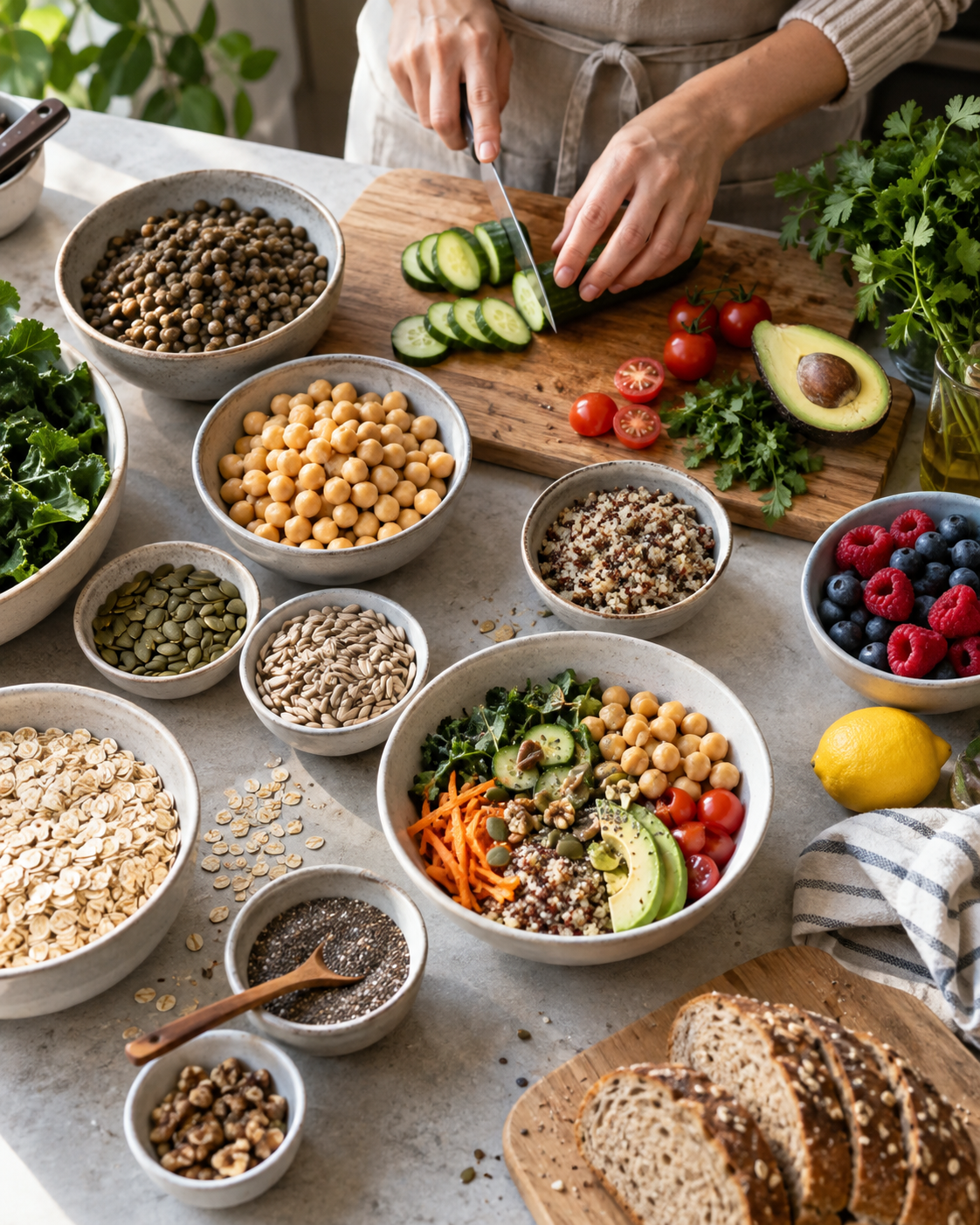
Around that, the rest fell into place with ordinary foods: whole grains like oats and whole wheat instead of their refined versions, fruit eaten with the skin on, plenty of vegetables, and a scattering of nuts and seeds as snacks and toppings. Small swaps did surprising work, brown rice for white, an apple with the peel rather than a juice, a sprinkle of seeds on a salad, none of it dramatic on its own but adding up steadily across the day. A bowl of oats with berries at breakfast, lentils or beans at lunch, a piece of fruit and a handful of nuts as snacks, and a dinner heavy on vegetables and whole grains got me to thirty grams without any exotic ingredients or supplements at all. Written out like that it looks almost suspiciously simple, and that is the point: the target that most people miss by half is reachable with a handful of ordinary swaps, not a diet overhaul. That is the reassuring practical truth underneath the whole experiment: hitting the target is not about special products but about steadily choosing the plant foods over the processed ones, meal after ordinary meal.
The Honest Verdict

So what is the real, both-ways verdict after thirty days of doing the most boring thing in nutrition? Fiber is not the transformation the wellness industry would love to sell you, since it will not melt away weight, hand you a dramatic before-and-after, or show up as a miracle on a monthly blood panel. If you go in expecting fireworks, you will be underwhelmed, and it would be dishonest to promise otherwise. The wellness world runs on dramatic before-and-afters, and fiber simply does not offer one, which is probably why it gets so little attention despite being among the best-supported dietary advice there is. What it delivers instead is quieter and, in its way, more trustworthy: real, felt improvements in digestion and fullness within a couple of weeks, and a long, invisible, well-evidenced investment in your future health that no single month can display.
I have kept the habit, not because that month changed how I look or feel in any dramatic way, but because the case for it is so sound and the cost so low, a matter of choosing beans and whole grains and fruit over the refined stuff, which is hardly a sacrifice.
Once the swaps became routine I stopped counting grams entirely, because a plate built the right way lands near the target on its own, and the whole thing faded from an experiment into just how I eat. If there is a lesson, it is that the most valuable health habits are often the least exciting ones, the quiet, cheap, unglamorous basics that no one can monetize and everyone overlooks. There is no supplement to sell, no brand to follow, no dramatic transformation to photograph, just beans and oats and fruit doing their patient work, which is perhaps exactly why fiber never gets the attention it deserves. Thirty grams of fiber a day is exactly that kind of habit, and the honest reason to do it is not what it does in a month, but what it quietly does over a life. It is an investment that pays no visible dividend for years and then, if the research is right, pays them for decades, which is about as good a long-term deal as anything on a dinner plate. As always, this is one person’s experience and not medical advice, so anyone with specific digestive or health concerns should talk to a doctor.

About the Author: Ruben, co-founder of Gamintraveler.com since 2014, is a seasoned traveler from Spain who has explored over 100 countries since 2009. Known for his extensive travel adventures across South America, Europe, the US, Australia, New Zealand, Asia, and Africa, Ruben combines his passion for adventurous yet sustainable living with his love for cycling, highlighted by his remarkable 5-month bicycle journey from Spain to Norway. He currently resides in Spain, where he continues sharing his travel experiences with his partner, Rachel, and their son, Han.