
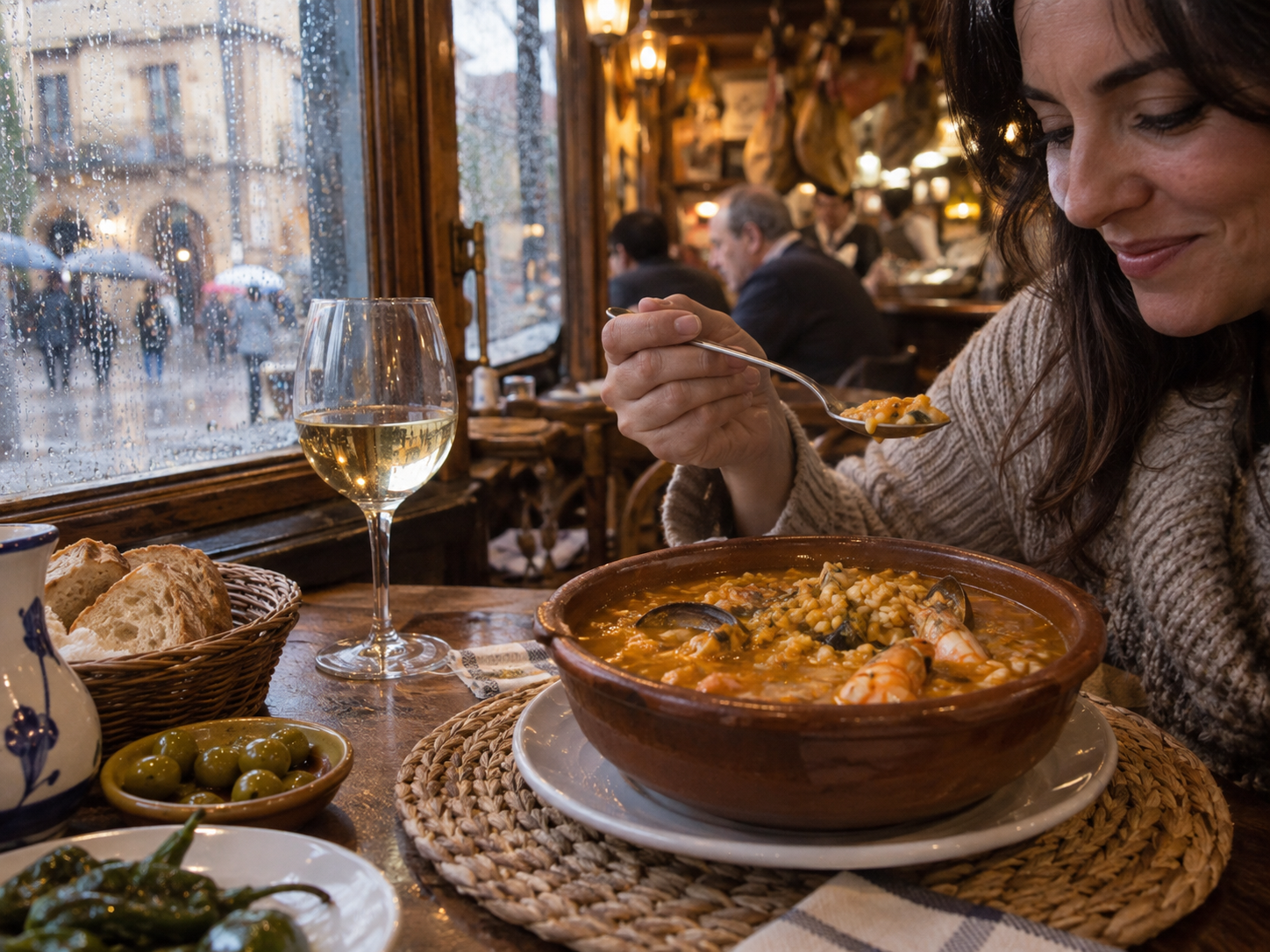
Everyone knows Spanish paella, the wide golden pan of dry, separate grains eaten in the summer sun. Far fewer people outside Spain know its cozy, rainy-day opposite, and it may be the more lovable of the two. It is called arroz caldoso, which simply means brothy rice, and it is exactly that: a soupy, spoonable rice swimming in a deeply flavored broth, cooked in one big pot and ladled steaming into bowls. Where paella is crisp and dry and summery, arroz caldoso is loose and warming and made for cold weather, the dish a Spanish family reaches for the moment the rain starts and everyone at the table wants something warm and comforting in a bowl. It is one pot and a big spoon, humble and generous, and once the first autumn chill arrives it is very hard to beat.
What follows is how arroz caldoso differs from the paella you know, why it is the ultimate rainy-day dish, the one rule you absolutely must follow, the versions worth making, and exactly how to cook it.
Paella’s Soupy Opposite
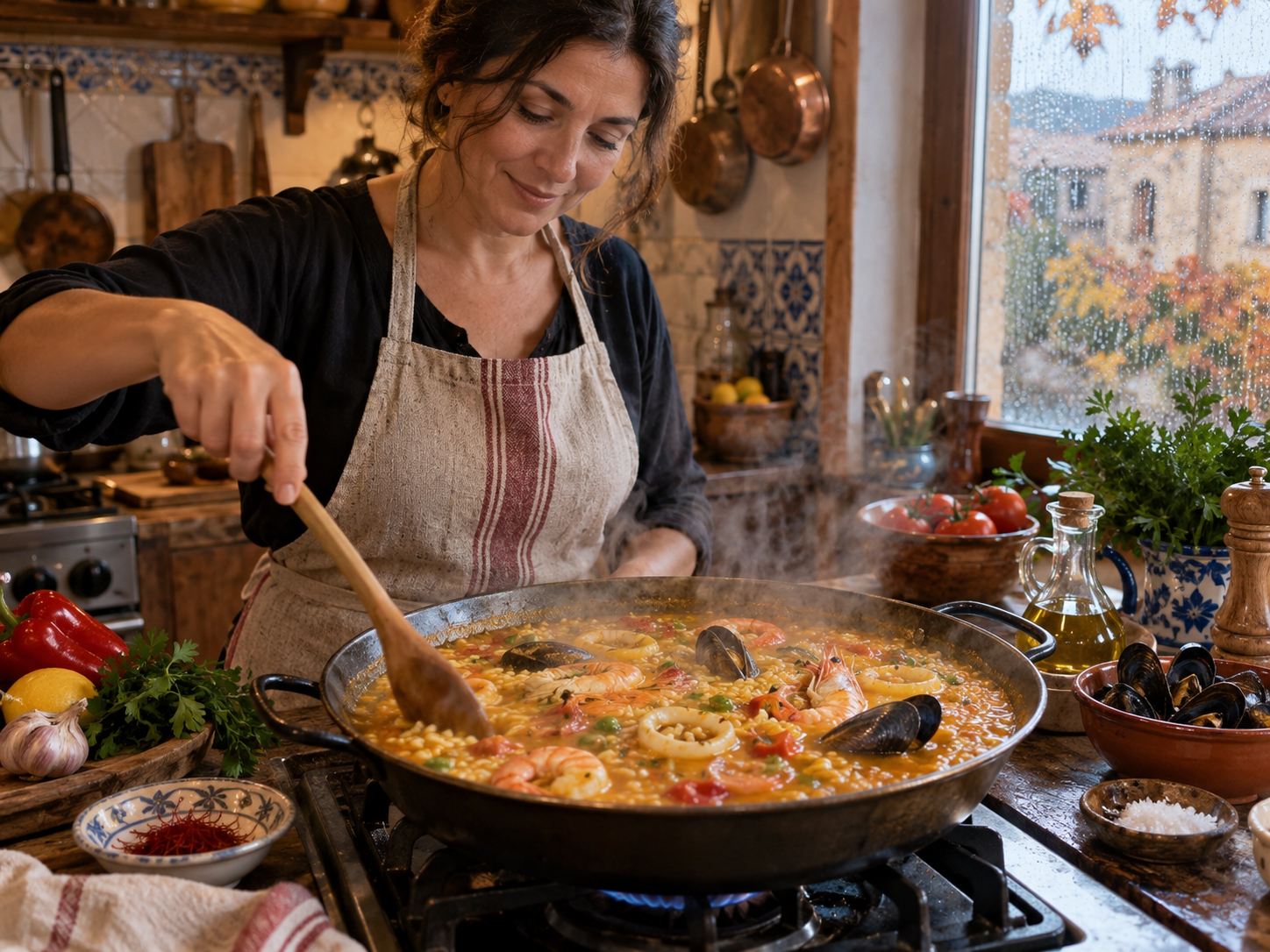
The simplest way to understand arroz caldoso is as the mirror image of paella, because the two dishes start from similar ingredients and end up in completely different places. Paella is a dry rice, cooked in a wide, shallow pan until every drop of liquid has been absorbed and the grains sit separate and firm, prized for the crisp toasted crust, the socarrat, that forms at the bottom. Arroz caldoso goes the other way entirely, cooked in a deep pot with far more liquid, roughly three to four parts broth to one part rice against paella’s two, and served while it is still gloriously soupy, closer to a hearty rice soup than to anything dry.
That difference changes everything about how you eat it and how it feels. Paella is eaten with a fork from a communal pan, a slightly formal, sunny, celebratory thing, while arroz caldoso is spooned from a bowl like a stew, homely and intimate and warming. It is cooked in an ordinary deep pot, the kind every kitchen has, rather than a special paella pan, which is part of why it is the everyday, unpretentious member of the Spanish rice family. If paella is the showpiece you cook to impress on a summer afternoon, arroz caldoso is the pot you make for your own family on a gray night, and it asks nothing fancy of you at all. There is no special pan to buy, no socarrat to fret over, no anxious moment when the rice must be caught at exactly the right second, just a good pot and a bit of patience.
The Rainy-Day Dish
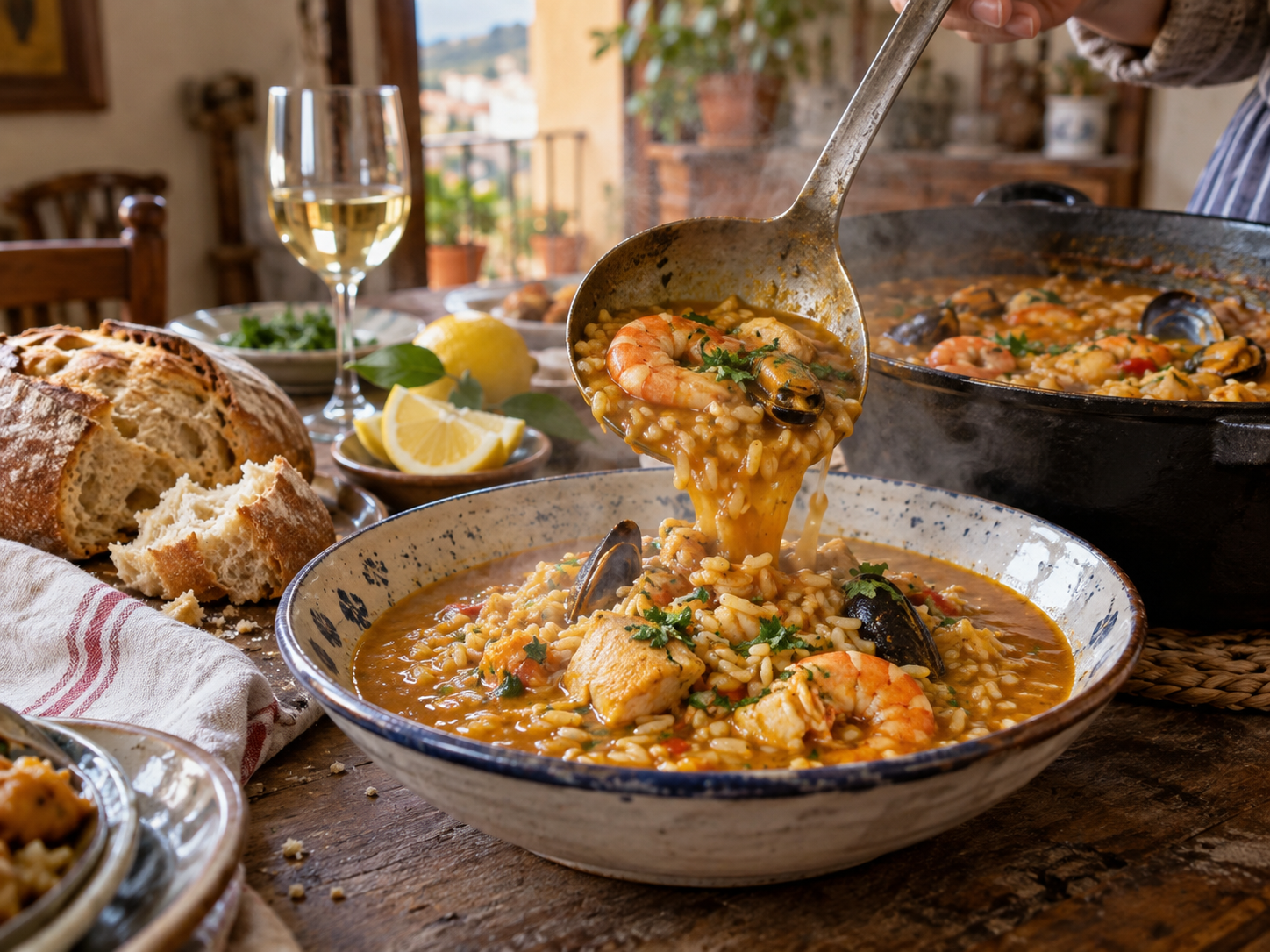
There is a reason arroz caldoso is so tied to cold and rainy weather in the Spanish imagination, and it comes down to what a bowl of it actually does for you. Hot, brothy, and rich, it warms you from the inside in a way a dry dish simply cannot, the steaming liquid as comforting as the rice and seafood within it. It is the Spanish answer to the universal human craving for something soupy and warm and restorative when the weather turns cold and miserable, the pot that goes on the stove when the first real rain of autumn rattles the windows and the light goes gray.
It is also a deeply generous, sociable dish, the kind that fills a big pot and feeds a whole table without fuss. Ladled out into deep bowls and set steaming in front of people who have come in from the cold, it does the essential work of good comfort food, making everyone feel cared for and full. A big pot of it in the middle of the table, everyone leaning in with their spoons, is one of those simple domestic scenes that no restaurant can quite manufacture. This is the food of the Spanish home rather than the smart restaurant, the unglamorous, soul-warming pot that a grandmother makes on a wet afternoon, and it carries all the cozy, gathered-around-the-table feeling that the season calls for. When the rain sets in and you want one dish that says warmth and comfort and plenty, this is it. It belongs to the same family of feelings as a bowl of chicken soup on a sick day or a stew on a snowy night, the food we reach for not to be impressed but to be comforted.
The One Rule That Matters
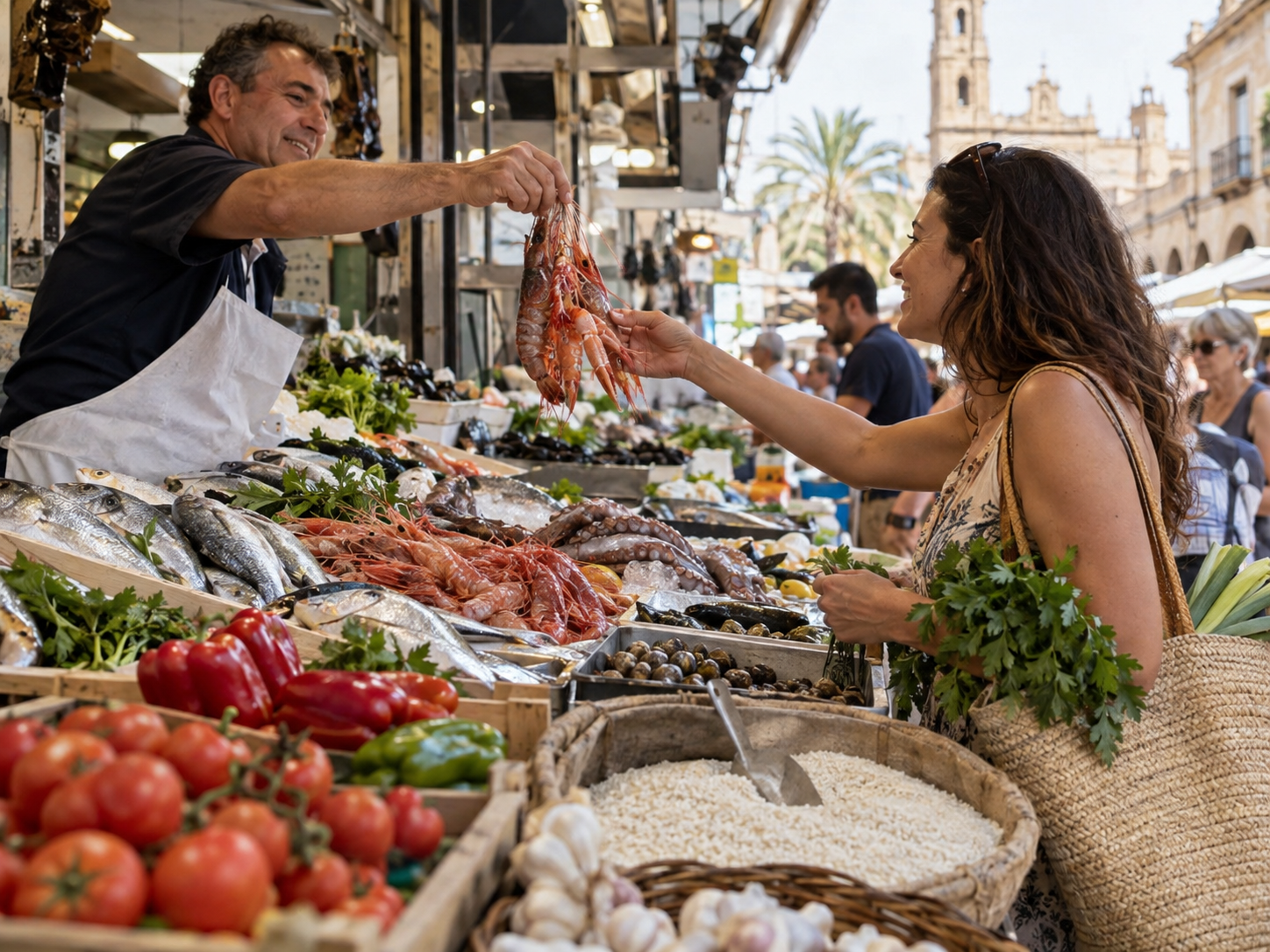
If you take away only one thing about cooking arroz caldoso, let it be this, because it is the rule that separates a perfect bowl from a disappointing one: you must serve it immediately, the moment it is ready, straight from the pot to the bowls. The reason is simple and unforgiving. The rice never stops drinking the broth, so a caldoso that is perfectly soupy the instant it finishes cooking will, if left to sit even for twenty minutes, keep absorbing liquid until the beautiful brothy dish turns thick, sticky, and dry, the whole point of it lost.
This is why arroz caldoso is one dish you genuinely cannot make ahead, cannot hold, and cannot really reheat successfully, since the leftovers, however tasty, will have swollen into something closer to a solid rice pudding than a soup. Plan around this rather than fighting it. Have everyone seated at the table and ready to eat before the rice even goes in, cook it right up to the moment of serving, and carry the pot straight to the table, because those last few minutes really are the whole dish. A caldoso served the instant it is done, still swimming in its broth, is a glorious thing, and one left to sit is a lesson you only need to learn once. Think of the finished rice as something alive and thirsty, and you will understand why the Spanish carry the pot to the table the very second it is ready.
Seafood, or Whatever You Have
While arroz caldoso comes in many forms, its most celebrated and iconic version is with seafood, and it is easy to see why, since the briny sweetness of shellfish flavors the whole pot of broth magnificently. The classic seafood, or marisco, version leans on prawns, clams, mussels, and squid, an affordable and glorious combination, while the true luxury version, arroz caldoso de bogavante, adds lobster and becomes a genuine showstopper worthy of any celebration. The lobster version is the one Spanish families splash out on for Christmas and big occasions, the humble soupy rice dressed up in its finest, proof that the same technique carries from an everyday supper to a feast. If you are cooking for the sea, this is the way to go, and a good seafood stock underneath it is the secret to the whole thing.
But the beauty of arroz caldoso is that it is endlessly adaptable, a template as much as a recipe, and by no means only for seafood. Wonderful versions are made with chicken or rabbit for a heartier, more rustic, inland pot, and a lovely vegetarian one leans on autumn mushrooms for an earthy, woodsy depth that suits the season perfectly. Whatever you build it on, the method and the soul of the dish stay the same, a good sofrito, well-toasted rice, plenty of flavorful broth, and that final soupy consistency, so you can cook it happily with whatever is in the market or the fridge on any given day. That forgiving flexibility is a large part of why it has stayed a beloved staple of the Spanish home for so long.
Where It Comes From
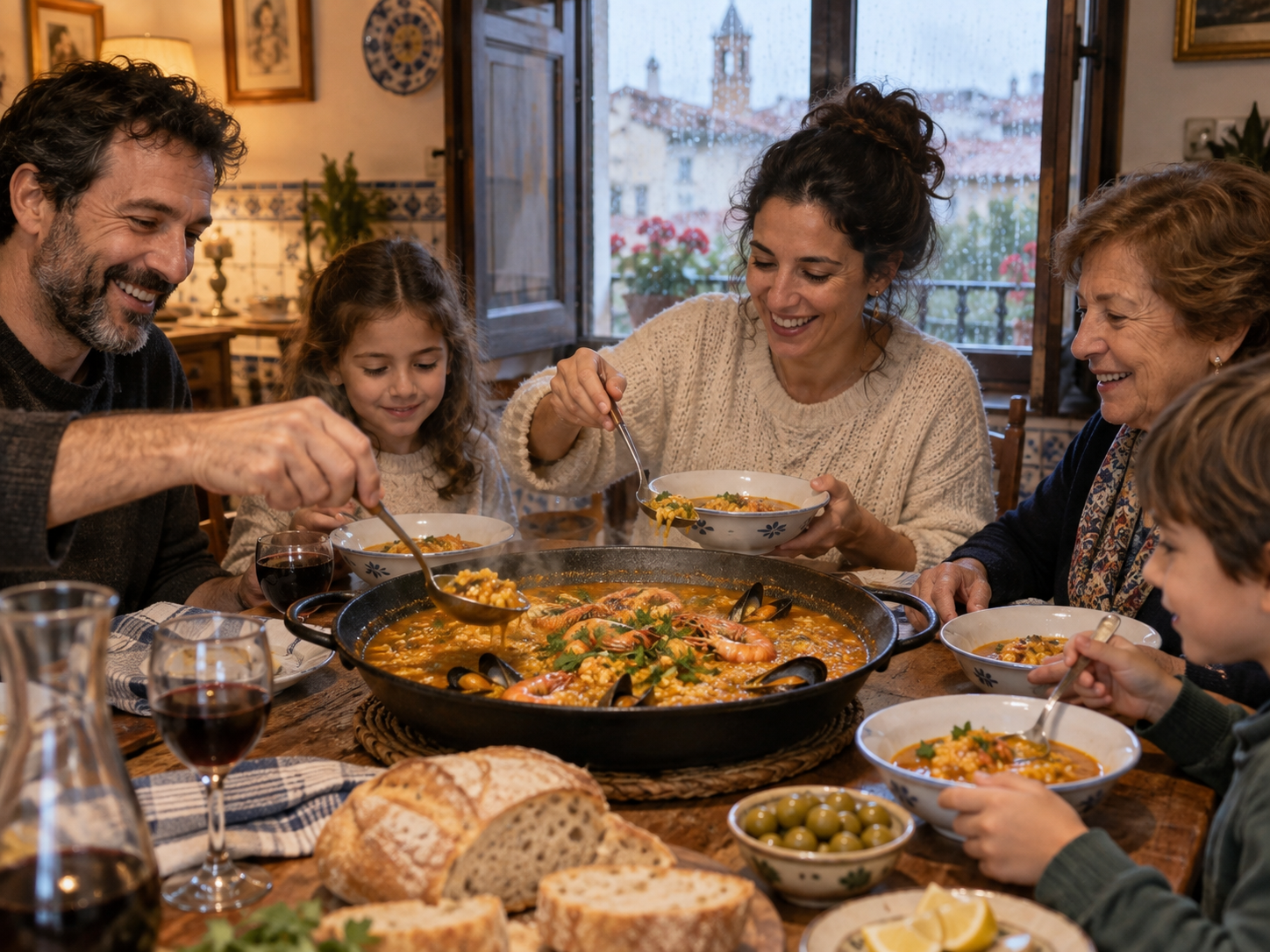
Like so much of the best Spanish food, arroz caldoso is a dish born of the sea and of thrift, with roots running deep into the coastal and rural history of the country. Along the Mediterranean, especially in Valencia and Catalonia, fishermen would take whatever of the day’s catch they could not sell, the odd bits and less pretty pieces, and turn them into a humble, warming stew of rice and stock, wasting nothing and feeding the family well. It is peasant cooking in the very finest sense, the humble transformation of scraps and staples into something genuinely, memorably delicious.
That humble origin is exactly why the dish is so forgiving and so unpretentious, since it was never meant to impress anyone, only to nourish. Inland, away from the coast, the same principle produced versions built on chicken, rabbit, or pork, whatever the farm could spare, cooked slowly with rice and good stock into the same soupy comfort. Across all its regional forms, the through-line is that arroz caldoso is resourceful, seasonal, homely food, the opposite of fancy, and understanding that is the key to cooking it well, because it rewards a relaxed, generous hand far more than a fussy, precise one. It is a dish that came from making the most of what you had, and it tastes all the better for it.
Making Arroz Caldoso
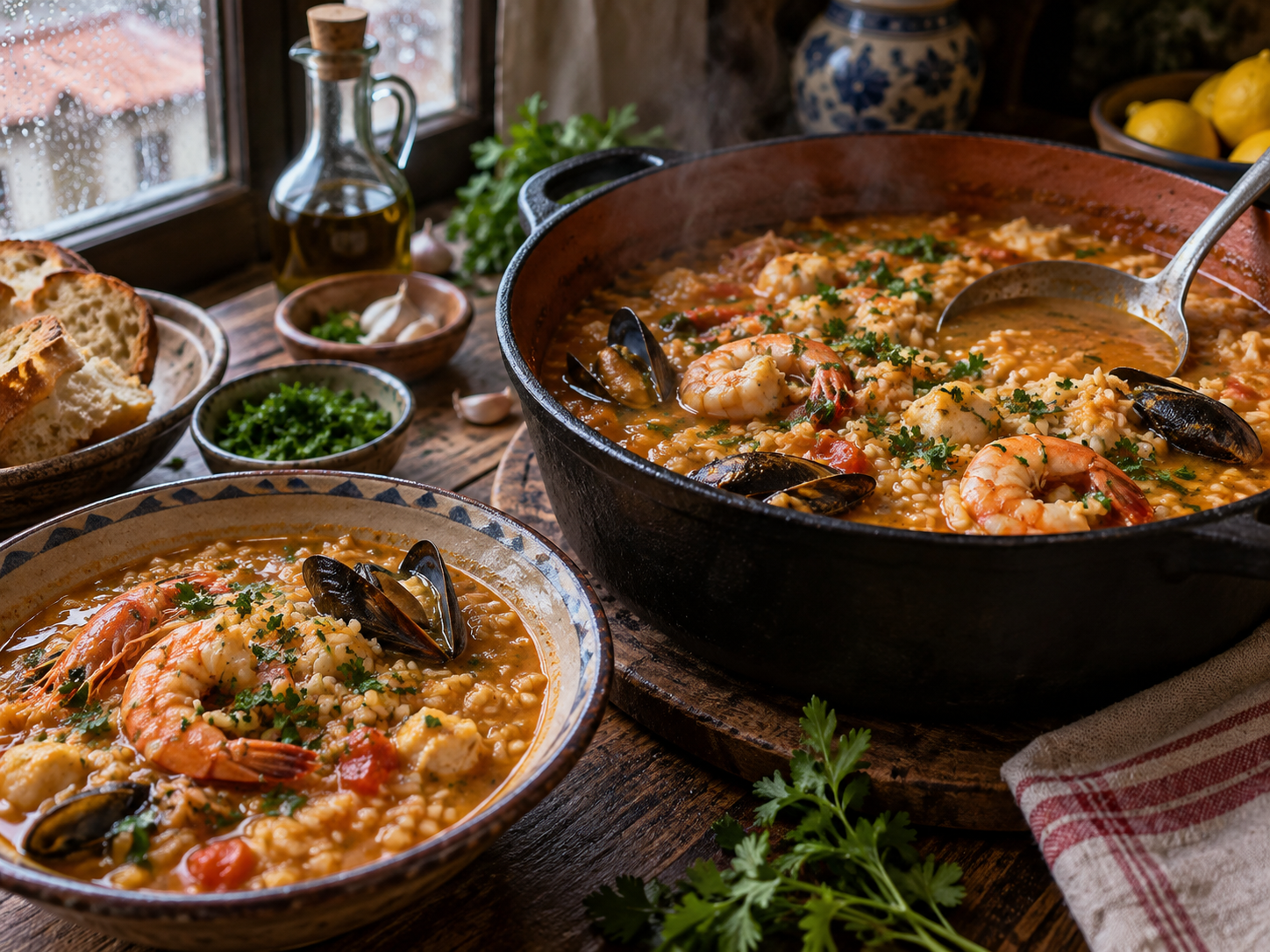
Here is a classic seafood arroz caldoso, in one pot, serving four. The key is a good stock and serving the instant it is done.
Ingredients
- 3 tablespoons olive oil
- 1 onion, finely chopped
- 1 red bell pepper, finely chopped
- 3 cloves garlic, minced
- 2 ripe tomatoes, grated, or 1 cup crushed tomatoes
- 1 teaspoon sweet paprika
- A generous pinch of saffron threads
- 1 and 1/2 cups (about 300 g) bomba or other short-grain Spanish rice
- 6 cups (about 1.5 liters) hot fish or seafood stock, plus more as needed
- 12 prawns, shell on
- 250 g clams or mussels, cleaned
- 250 g squid, cleaned and sliced into rings
- Salt, to taste
- Chopped fresh parsley and lemon wedges, to serve
Instructions
- In a large, deep pot, heat the olive oil over medium heat. Add the onion and red pepper and cook gently until soft, about 8 to 10 minutes.
- Stir in the garlic and cook for a minute, then add the grated tomato and cook down until thick and jammy, about 5 minutes, to make your sofrito.
- Stir in the paprika and saffron, then add the rice and stir for a minute or two so the grains toast slightly and take on the flavor of the sofrito.
- Pour in the hot stock, roughly four parts liquid to one part rice, and bring to a lively simmer. Season with salt and let it cook uncovered for about 10 minutes, stirring occasionally.
- Add the squid and continue simmering for another 5 minutes, then add the prawns and clams or mussels and cook until the shellfish open and the prawns turn pink, about 5 minutes more.
- Check the rice, which should be just tender, and the consistency, which should be distinctly soupy. Add a little more hot stock if it has thickened too much, since it should swim in broth.
- Serve immediately in deep bowls, scattered with parsley and with lemon wedges alongside, and carry it straight to the table.
And do treat the seafood as a suggestion rather than a rule, since a pot built on chicken, on rabbit, or on autumn mushrooms follows the exact same method and rewards you just as well, so cook it with whatever the season and your market offer and let the good broth and the soupy rice do the rest.

About the Author: Ruben, co-founder of Gamintraveler.com since 2014, is a seasoned traveler from Spain who has explored over 100 countries since 2009. Known for his extensive travel adventures across South America, Europe, the US, Australia, New Zealand, Asia, and Africa, Ruben combines his passion for adventurous yet sustainable living with his love for cycling, highlighted by his remarkable 5-month bicycle journey from Spain to Norway. He currently resides in Spain, where he continues sharing his travel experiences with his partner, Rachel, and their son, Han.