
There is a dish that appears on the little chalkboards outside Spanish bars at exactly one time of year, the moment the autumn rains come and the wild mushrooms push up in the woods. It is called revuelto de setas, a soft, creamy scramble of eggs and wild mushrooms, and it tastes, as one writer put it, like a walk through a forest after rain. It is not really breakfast, though it is eggs, but a beloved tapa and light supper, the eggs barely set and folded around garlicky, woodsy mushrooms, piled onto toast and eaten with a glass of wine as the weather turns. When the setas arrive, so does this dish, and for anyone who loves the flavors of fall it is one of the great simple pleasures of the Spanish autumn table. It is proof, if any were needed, that the most memorable food is often the least complicated, a handful of humble ingredients caught at exactly the right moment of the year.
What follows is what revuelto de setas actually is, why it belongs so completely to autumn, the one technique that makes or breaks it, the mushrooms and add-ins to use, and exactly how to make it.
What Revuelto de Setas Is
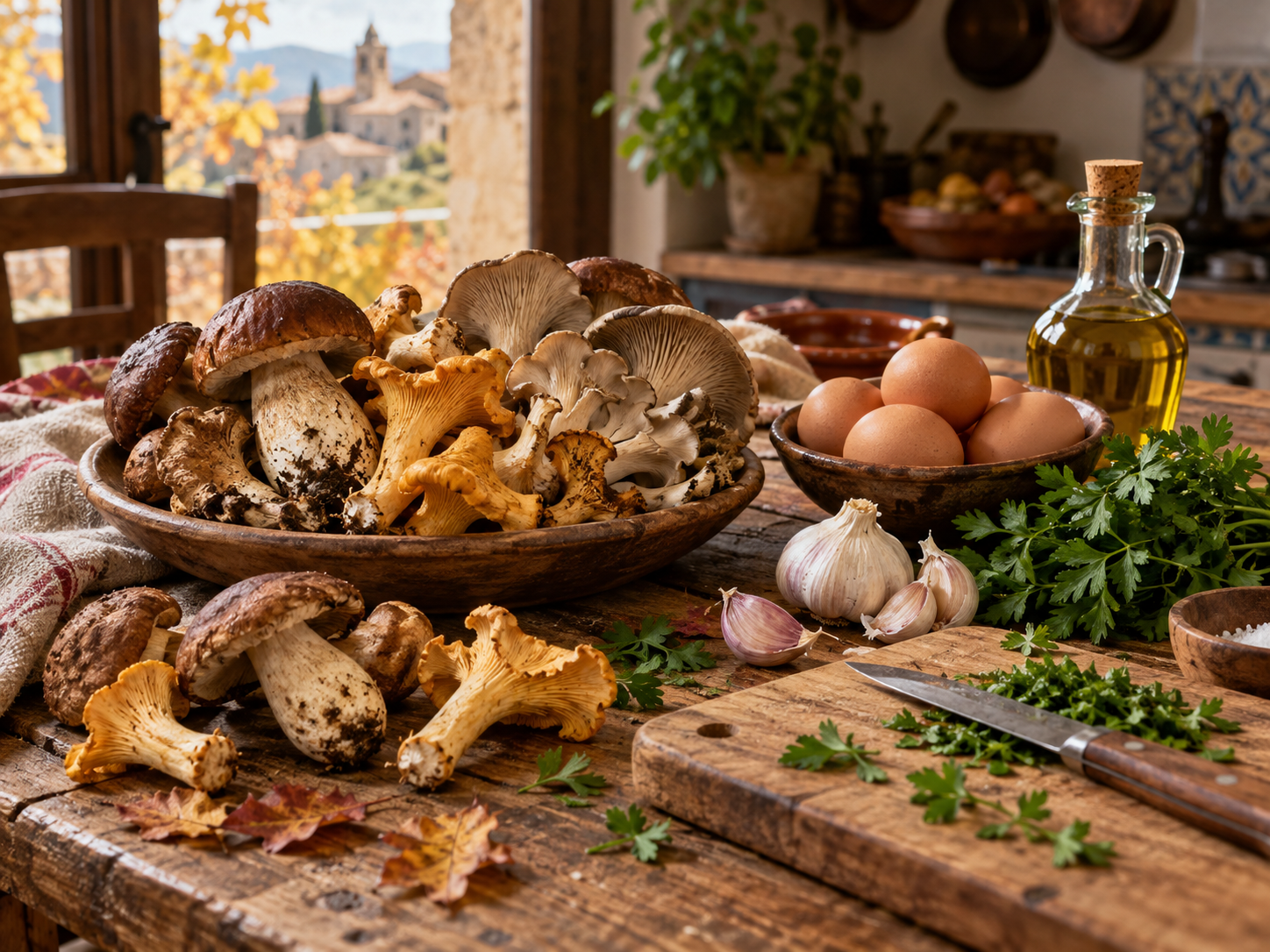
A revuelto is the Spanish soft scramble, and it is worth understanding as its own thing rather than as the firm, fluffy scrambled eggs of an American breakfast plate. The word means scrambled or jumbled, and the dish is exactly that, eggs cooked gently and briefly until they are just barely set, soft, loose, and creamy, folded through with whatever star ingredient the cook has chosen. It is served all over Spain as a starter or a light meal rather than a breakfast, a savory, grown-up little dish that turns up on tapas menus everywhere. The same soft-scramble technique is used with all sorts of fillings across the country, from prawns to green garlic to salt cod, but the mushroom version is the one that most belongs to the fall.
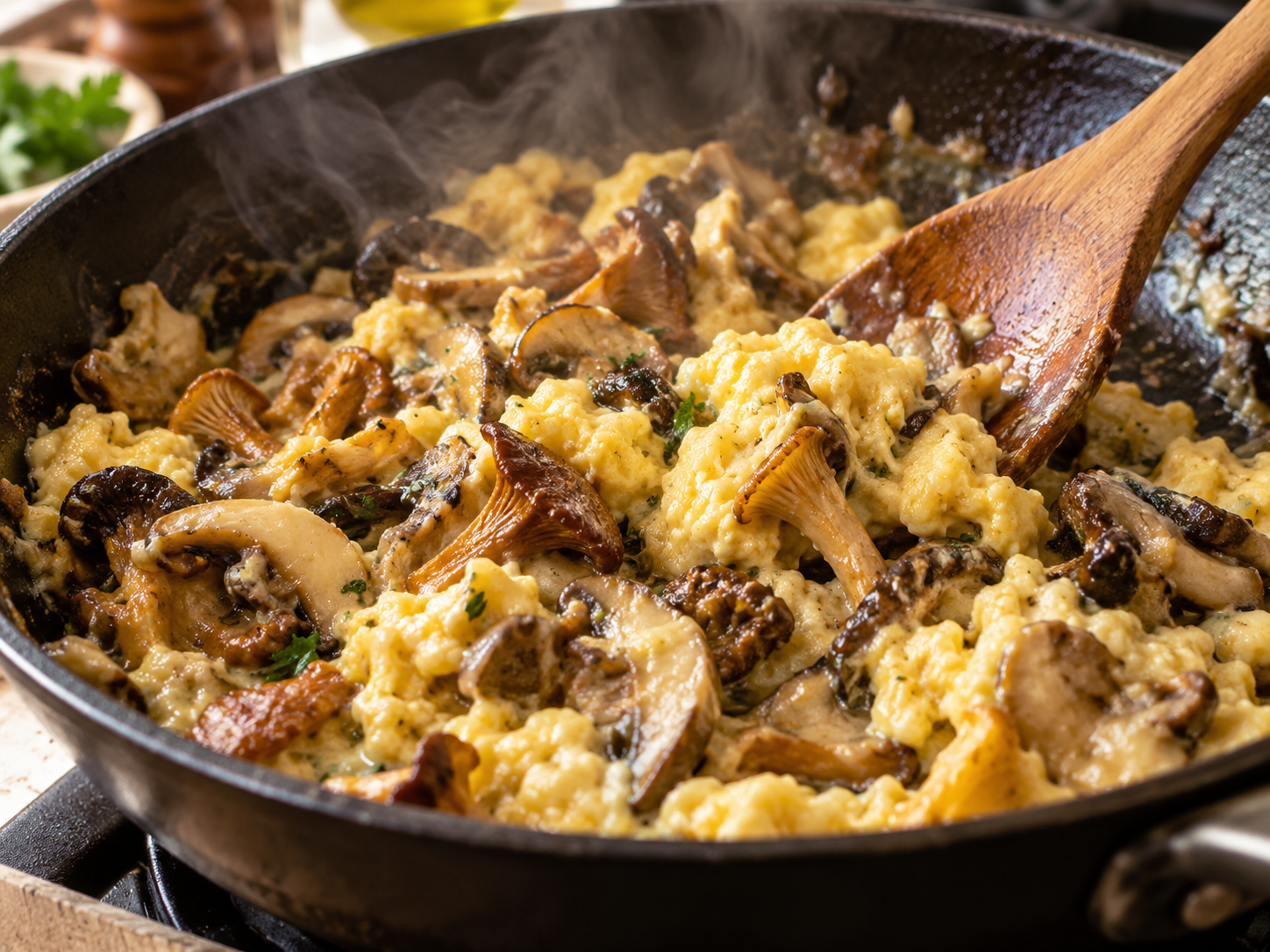
Add wild mushrooms, and you have revuelto de setas, one of the most beloved versions of all. The soft, barely-set eggs wrap around slices of earthy, garlicky mushroom, the two textures melting together into something silky and savory and deeply comforting, usually spooned onto or alongside crusty toast. It is humble food, just eggs and mushrooms and garlic and good olive oil, but done right it is genuinely lovely, the kind of unpretentious dish that Spanish bars have served for generations and that regulars order without a thought the moment it appears on the board. Simple as it is, it captures the whole flavor of the season in a few soft forkfuls. There is nothing clever or difficult about it, and that is precisely the point, since it lets the mushrooms, at their brief autumn best, be the entire star of the show.
Why It Belongs to Autumn
This dish is tied to fall as tightly as any in the Spanish calendar, and the reason is simply the mushrooms. Wild mushrooms, setas, are a seasonal treasure that appears in the autumn, when the combination of rain and cooling temperatures brings them up in the forests, and Spain, with some of the largest expanses of woodland in Europe, is extraordinarily rich in them. Mushroom foraging is a genuine autumn tradition, and the arrival of the first good setas of the season is a real event for people who love to eat.
That seasonality is exactly why revuelto de setas is a dish of a specific moment rather than a year-round staple, and why it appears on those chalkboards the instant the mushrooms do. When the woods deliver their autumn harvest, the bars and the home kitchens put it to immediate use, and for a few glorious weeks each year the wild-mushroom scramble is suddenly everywhere, a small, welcome celebration of the season on a plate. To eat it in Spain in the autumn is to taste the woods at their most generous, which is why the dish carries such a strong sense of place and time, and why it is precisely the thing to cook when the leaves start turning and you want your kitchen to smell of the forest. Few dishes are so completely of their season, and that is a large part of their magic, since a thing you can only have for a few weeks a year is always more precious than one available always.
The One Technique That Matters
If there is a single thing that separates a wonderful revuelto from a mediocre one, it is not the ingredients but the cooking, and specifically knowing when to stop. A revuelto must be soft, creamy, and just barely set, which means it must come off the heat while it still looks a touch underdone, since the residual heat will finish it. The cardinal sin, and the most common mistake, is overcooking, letting the eggs turn firm, dry, and rubbery, which turns a silky, luxurious dish into ordinary hard scrambled eggs and loses everything that makes a revuelto special.
The way to get it right is gentle heat and patience. You cook your mushrooms and garlic first, so they are done, then lower the heat, pour in the beaten eggs, and stir slowly and constantly, watching like a hawk, pulling the pan from the heat the moment the eggs have thickened into soft, glossy curds but are still slightly loose. It will finish cooking in the few seconds it takes to get it to the plate, arriving perfectly creamy. Err on the side of underdone every single time, because a slightly-too-soft revuelto is still delicious while an overcooked one is a lost cause, and that willingness to trust the residual heat and stop early is the whole secret of the dish. If you have only ever made firm, dry scrambled eggs, this is the one mental shift to make, and once you have felt the difference you will never willingly overcook eggs again.
The Mushrooms and the Extras
Part of the charm of revuelto de setas is its flexibility, and the first happy truth is that almost any mushroom works. In Spain the prized wild varieties change through the season, but you do not need anything exotic or expensive to make a wonderful version at home, since even humble cultivated mushrooms, or a mix of whatever the shop has, will do beautifully. A blend of a few different kinds gives the best depth of flavor, but the dish is forgiving, and a good handful of ordinary mushrooms cooked properly beats a fancy variety cooked carelessly every time. So do not be put off if the exotic wild setas of a Spanish autumn market are nowhere to be found near you, because the technique matters far more than the mushroom.
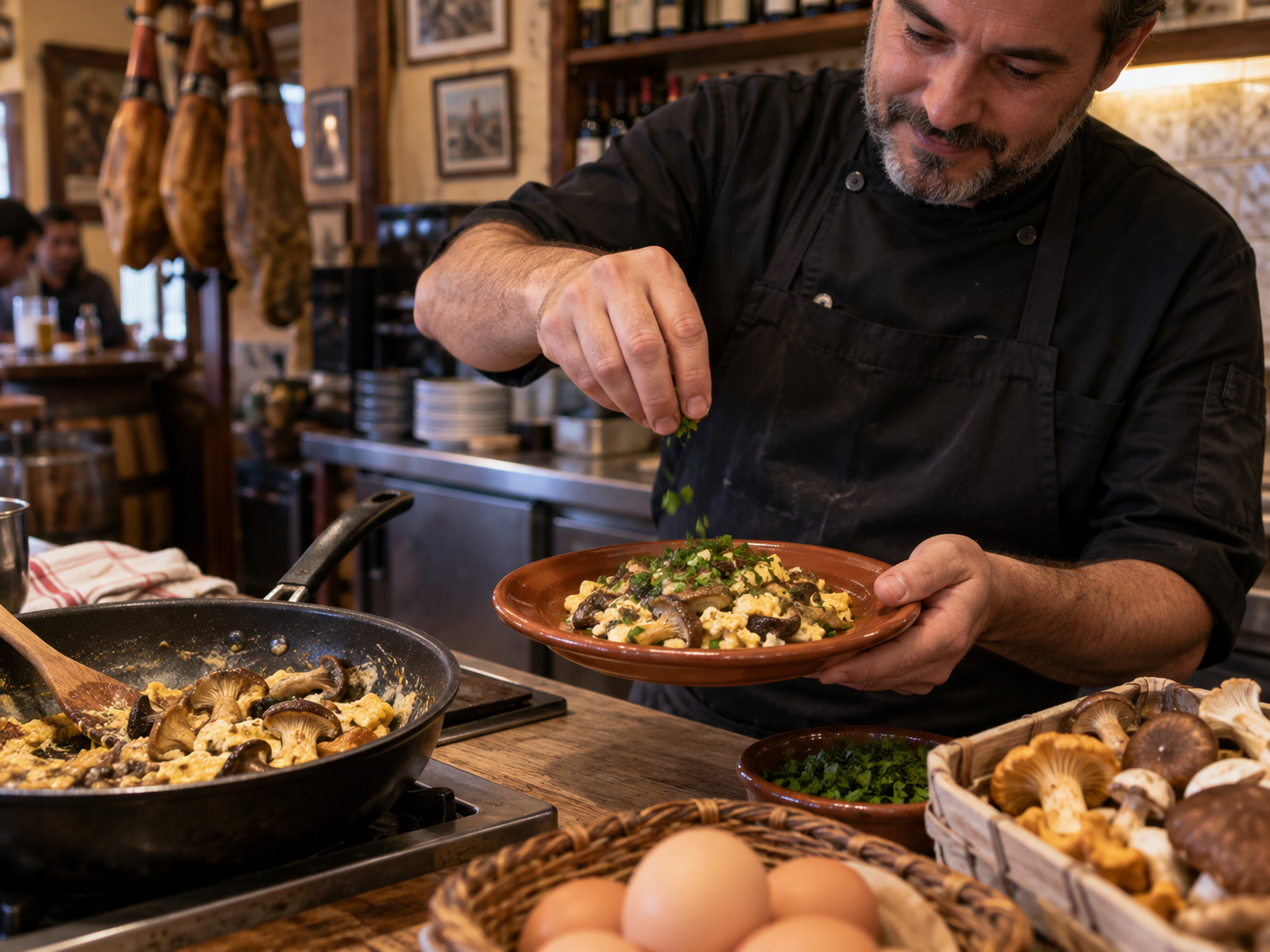
Around the mushrooms, a few classic additions make the dish sing, though none is essential. Garlic is close to non-negotiable, gently sizzled in the olive oil to perfume the whole thing, and a scatter of fresh parsley at the end brings brightness and color. Beyond that, Spanish cooks often fold in other treasures, a little diced jamon for a salty, savory hit, or a handful of prawns for a version that edges toward the sea, both of which turn the humble scramble into something more substantial. A final drizzle of good olive oil over the top before serving is a small luxury that finishes it beautifully. With good mushrooms, garlic, eggs, and oil, and whatever extra you fancy, you have everything the dish needs.
A Fixture of the Autumn Bar
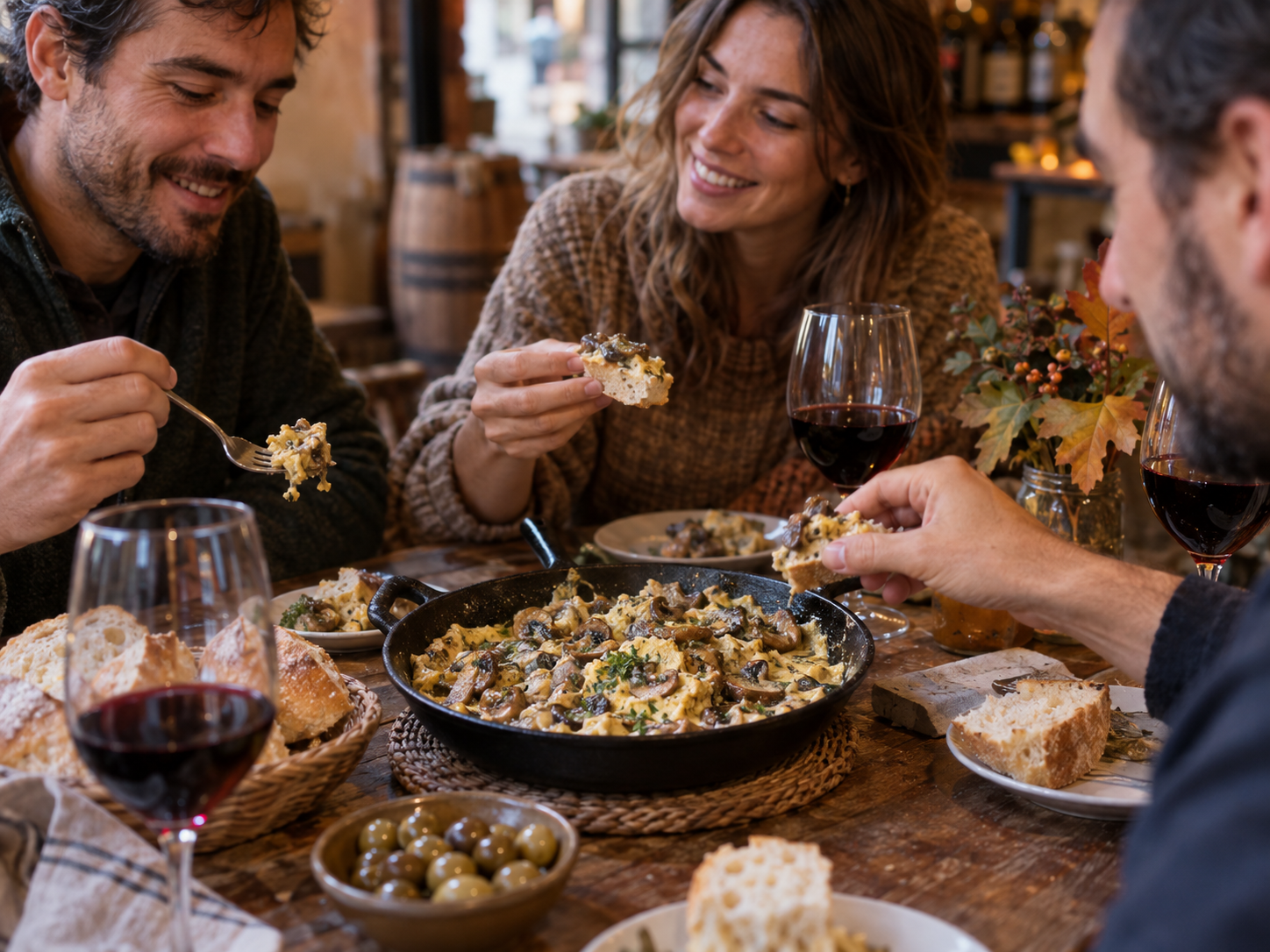
To understand revuelto de setas fully, it helps to picture where it is most often eaten, which is standing at the counter of a Spanish bar with a glass of wine in hand. It is quintessential tapas food, one of those warm, savory little dishes that appear on the day’s specials board and get ordered to share among friends over a drink before dinner, or as a light meal in themselves. When the season is right, it sits alongside the other autumn tapas on the chalkboard, a small, seasonal luxury that regulars watch for and pounce on the moment it appears.
There is a lovely ritual to it that has nothing to do with the recipe and everything to do with the culture around it. The reappearance of revuelto de setas on the bar menus is one of the small signs, alongside the chill in the evening air and the earlier sunsets, that autumn has properly arrived in Spain, a seasonal marker as reliable as any on the calendar. Eaten this way, shared over wine as the nights draw in, it is not just a dish but a small annual pleasure, a taste that means the turning of the year, and that sense of occasion is part of why Spaniards love it so and why it is worth making at home when the same season comes around wherever you are.
Making Revuelto de Setas
Here is a classic revuelto de setas, serving two as a light meal or four as a tapa. It comes together in minutes, so have your toast ready first.
Ingredients
- 3 tablespoons olive oil, plus more to finish
- 300 g mushrooms, wild or a mix, cleaned and torn or sliced
- 2 cloves garlic, finely chopped
- 5 large eggs
- Salt and black pepper, to taste
- 2 tablespoons chopped fresh parsley
- Crusty bread, toasted, to serve
- Optional: a handful of diced jamon or cooked prawns
Instructions
- Toast your bread and have it ready, since the revuelto must be served the moment it is done.
- Heat the olive oil in a large skillet over medium-high heat. Add the mushrooms and a pinch of salt and cook, stirring, until they have released their liquid and turned golden and tender, about 5 to 7 minutes. If using jamon or prawns, add them for the last minute or two.
- Stir in the garlic and cook for just under a minute, until fragrant but not browned.
- Beat the eggs lightly in a bowl with a little salt and pepper. Reduce the heat to low.
- Pour the eggs into the pan with the mushrooms and stir gently and constantly with a spatula, folding the eggs as they begin to set.
- The instant the eggs have come together into soft, creamy curds but still look slightly underdone and glossy, pull the pan off the heat, since they will finish cooking from residual warmth. Do not let them dry out.
- Stir through the parsley, spoon at once onto the toast, finish with a drizzle of olive oil, and serve immediately.
And do make it your own, since a splash of the season’s first wild mushrooms will make it special, but a weeknight version with ordinary mushrooms is every bit as comforting, so cook it whenever the weather turns and you want a taste of the autumn woods on toast.

About the Author: Ruben, co-founder of Gamintraveler.com since 2014, is a seasoned traveler from Spain who has explored over 100 countries since 2009. Known for his extensive travel adventures across South America, Europe, the US, Australia, New Zealand, Asia, and Africa, Ruben combines his passion for adventurous yet sustainable living with his love for cycling, highlighted by his remarkable 5-month bicycle journey from Spain to Norway. He currently resides in Spain, where he continues sharing his travel experiences with his partner, Rachel, and their son, Han.