
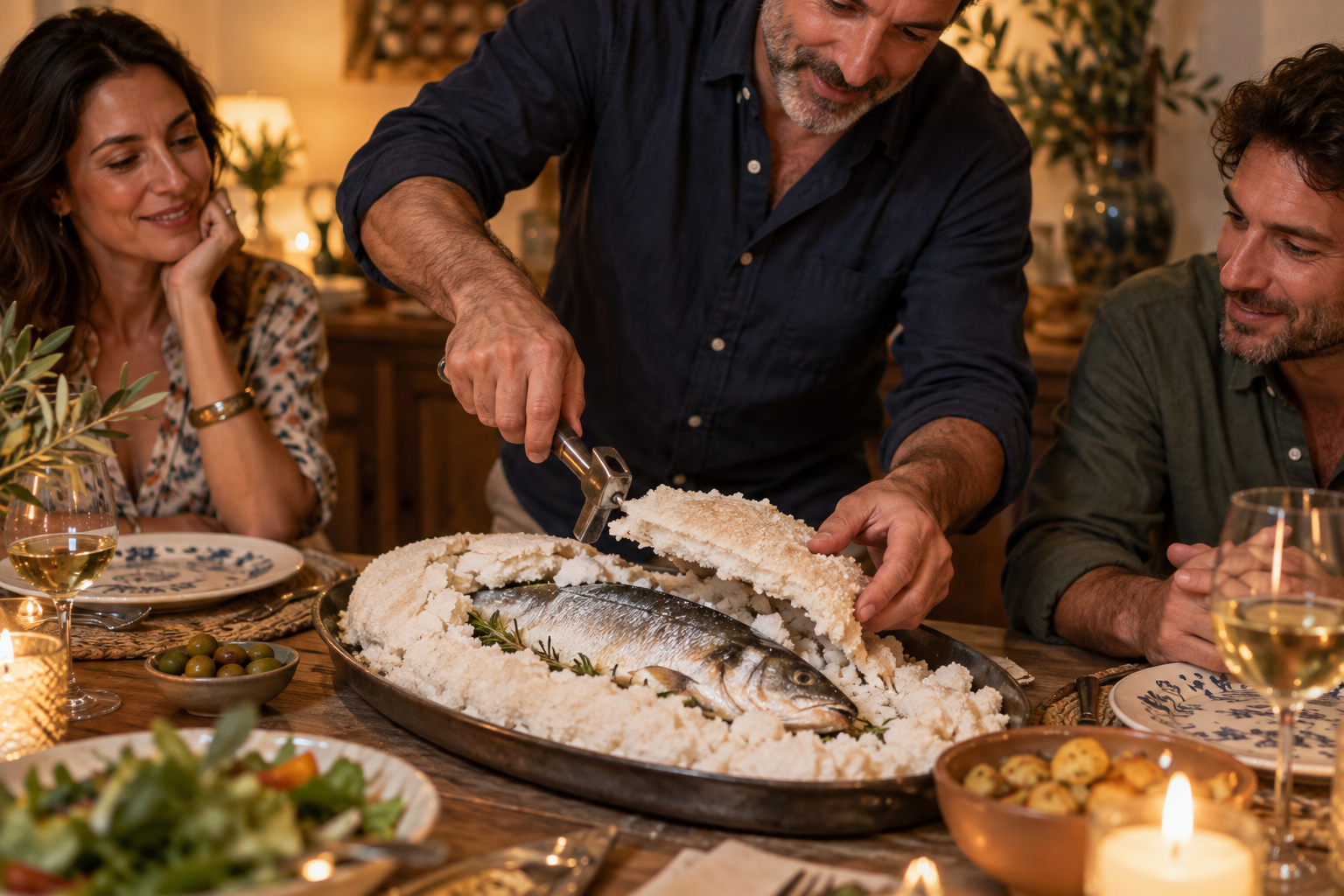
Picture a restaurant on the Spanish coast. A waiter carries a heavy dish to your table, and on it sits not a plate of food but a strange white mound, a whole fish entirely entombed in a hard shell of salt. Then, with a few sharp taps of a knife handle, the crust cracks open like an eggshell, is lifted away in great chunks, and beneath it lies the most tender, moist, perfectly cooked fish you have ever eaten. This is lubina a la sal, sea bass baked in salt, one of the great pieces of theater in Spanish cooking, and the astonishing thing is that this showstopping, magical-seeming dish is one of the easiest you will ever make. It is genuine dinner-party magic, all drama and almost no work, and once you know the trick you will wonder why you ever thought it was hard. It is the rare dish that impresses your guests and spares you effort in equal measure, which is about the best deal a home cook can hope for.
What follows is why burying a fish in salt sounds insane but works, why it comes out moist rather than salty, the tableside reveal that makes it magic, how genuinely simple it is, and exactly how to do it.
The Trick That Sounds Insane
Let us be honest about the first reaction almost everyone has to this dish, which is disbelief. You take a whole fish, you bury it completely in a mountain of coarse salt, often a kilo or more, until not a scrap of it is visible, and you bake the whole thing. Every instinct says the result must be a fish so salty as to be inedible, a ruined, over-seasoned mess, and it is precisely this fear that stops many people from ever trying it. It certainly stopped me for years, the idea seeming closer to a punishment than a recipe. Burying good fish in a kilo of salt felt like the kind of thing that could only end in tears, or at least in a very expensive, very salty disappointment.
And yet it is one of the oldest and most reliable cooking techniques in the Mediterranean, used since Roman times and beloved all along the sunny Spanish coast, precisely because it does not do what you fear. The salt does not make the fish salty. Instead it does something far cleverer, forming a sealed shell around the fish that transforms how it cooks, and the result is not a salty fish at all but an exceptionally moist, clean-tasting, gently cooked one. The technique that sounds like a mistake is in fact a small stroke of genius, and understanding why it works is the key to trusting it.
Why It Isn’t Salty
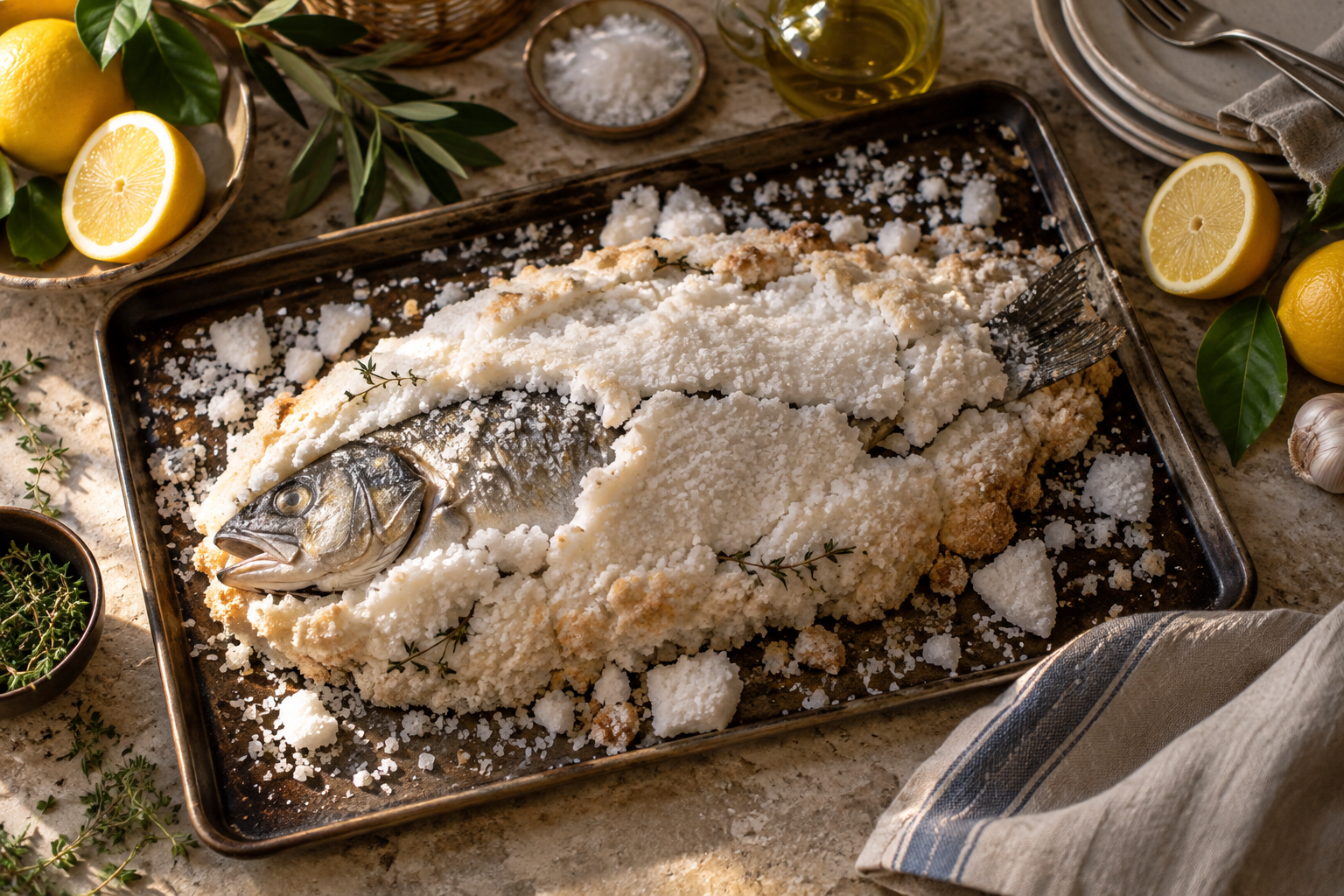
The secret to the whole thing lies in one crucial detail: the fish goes into the salt whole, with its skin and scales still on, and those form a protective barrier that the salt cannot penetrate. The skin seals the delicate flesh off from the salt entirely, so that despite being encased in the stuff, the fish inside absorbs almost none of it, emerging seasoned just perfectly rather than overwhelmed by the mountain of salt around it. This is why you must never scale the fish for this dish, and why thin-skinned or filleted fish will not do, since it is the intact skin that makes the magic possible.
What the salt does instead is turn into a hard crust in the oven, and that crust acts like a tiny sealed oven of its own around the fish. Trapped inside, the fish gently steams in its own juices, unable to dry out or lose its flavor, which is what produces that remarkably moist, tender flesh. So the salt is not a seasoning here at all but a cooking vessel, a disposable shell that holds in every bit of moisture and aroma while adding almost no saltiness of its own. Coarse salt is essential, since fine table salt is too dense and would behave differently, but with the right salt and the skin left on, you get clean, juicy, faintly seasoned fish every single time. It is one of the most satisfying bits of kitchen science there is, and once you have watched it work with your own eyes, the fear vanishes for good. The first time you crack open that crust and taste the clean, moist, barely-seasoned fish inside, you become a believer, and you never look at a bag of coarse salt quite the same way again.
The Tableside Reveal
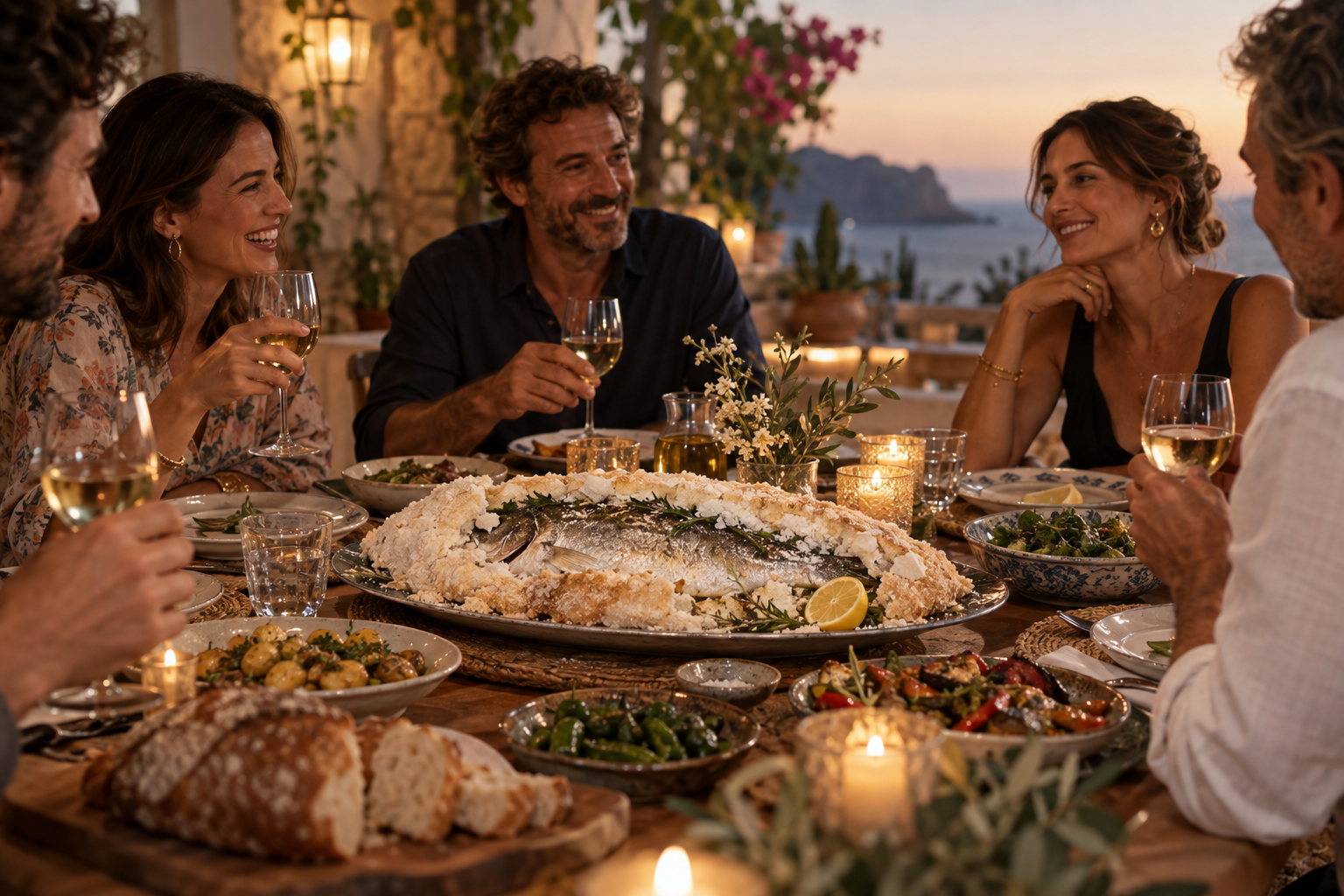
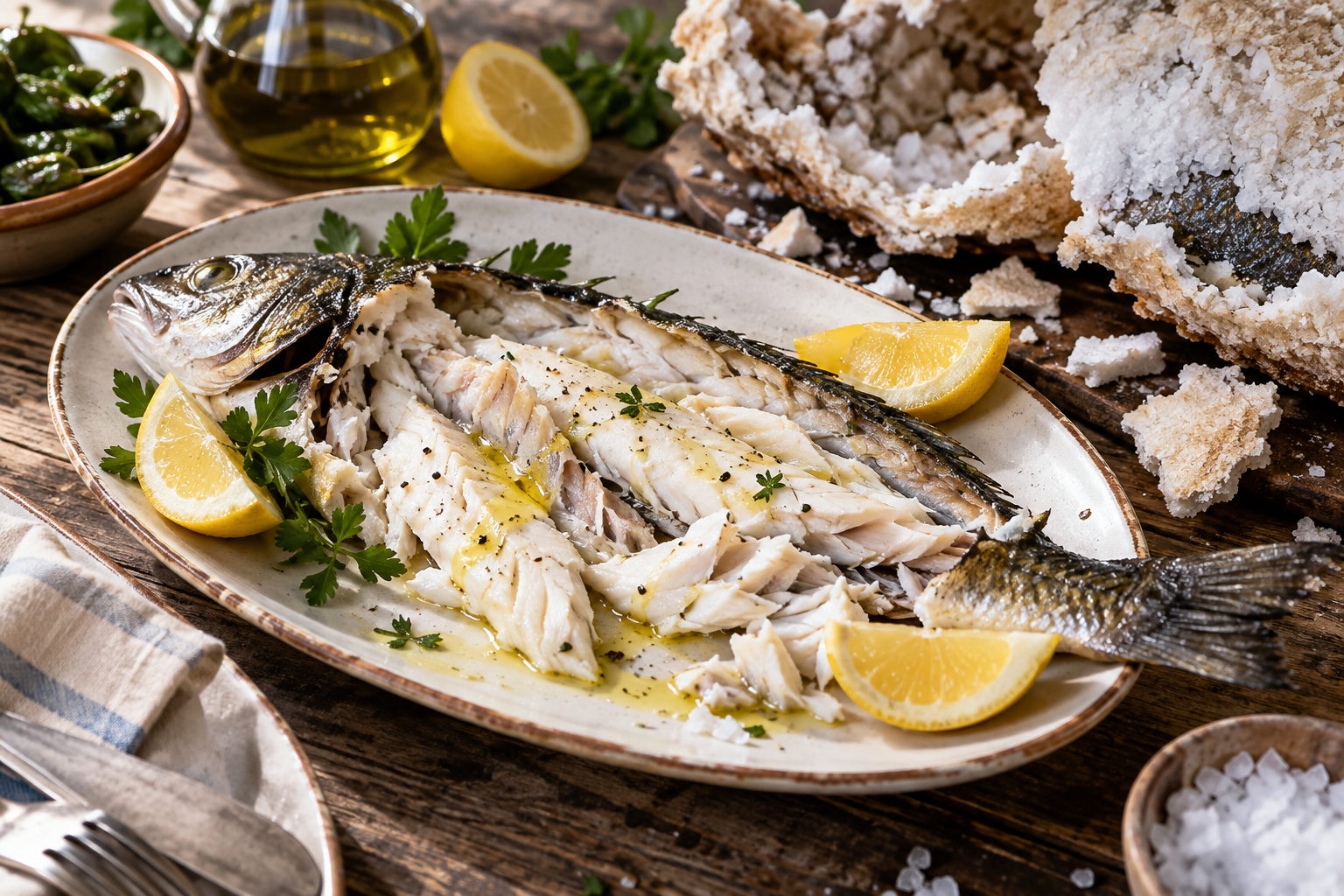
Now for the part that makes it a dinner-party legend rather than merely a good way to cook fish, which is the presentation. You bring the whole thing to the table still entombed, a smooth, hard, faintly golden mound of salt with the shape of a fish hidden inside, and the sheer anticipation alone does half the work of the meal. Then comes the moment: with the handle of a heavy knife, a spoon, or, for pure showmanship, a small mallet, you crack the salt crust open in front of your guests, and it breaks apart in big satisfying chunks, revealing the perfectly cooked fish steaming within.
It is, reliably, a showstopper, the kind of thing that draws an audible reaction from a table and makes you look like a far more accomplished cook than the effort could possibly justify. Once the crust is off, you peel away the skin, which lifts off easily and conveniently takes any stray salt with it, then lift the clean, pristine fillets from the bone and serve them, drizzled simply with good Spanish olive oil and a squeeze of lemon. The theater of the reveal, the sharp crack, the chunks of salt falling away, the pristine fish emerging, is what people remember afterward, and it turns a simple supper into an occasion. For a dinner party, few dishes deliver so much drama for so little work. It has the feel of a grand restaurant flourish, the sort of tableside performance you might pay handsomely for, and yet you have done nothing more taxing than pour salt over a fish and wait.
Easier Than It Looks
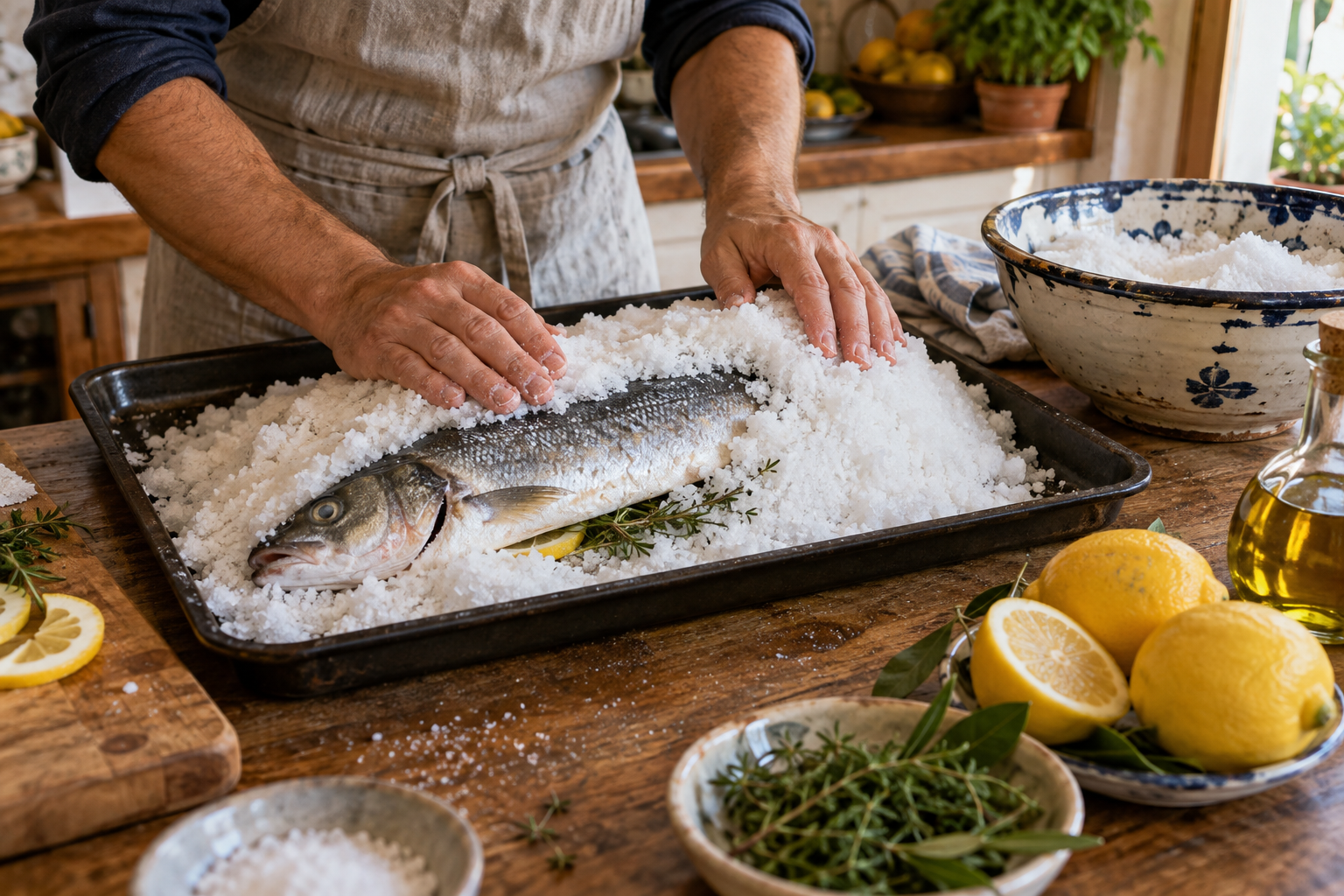
This is the truth that the impressive presentation conceals, and it is worth stating plainly: lubina a la sal is one of the simplest dishes in the entire Spanish repertoire. There is no technique to master, no sauce to balance, no precise timing to fret over, essentially nothing to go wrong. You make a bed of salt, you lay the fish on it, you cover it with more salt, and you put it in a hot oven, and that, very nearly, is the whole of the recipe.
The contrast between how difficult it looks and how easy it is may be the best thing about it, since almost no other dish offers such a spectacular return on so little effort. It is also, incidentally, one of the healthiest ways there is to cook a fish, using no fat at all in the cooking and producing flesh that is pure, moist, and clean, so you get a showpiece and a genuinely wholesome meal in one. If you have been intimidated by the idea of cooking a whole fish, this is the place to start, because it is more forgiving than almost any other method and rewards you with something that looks like the work of a professional. Impressive, healthy, and nearly foolproof is a rare combination, and this dish has all three.
A Dish of the Spanish Coast
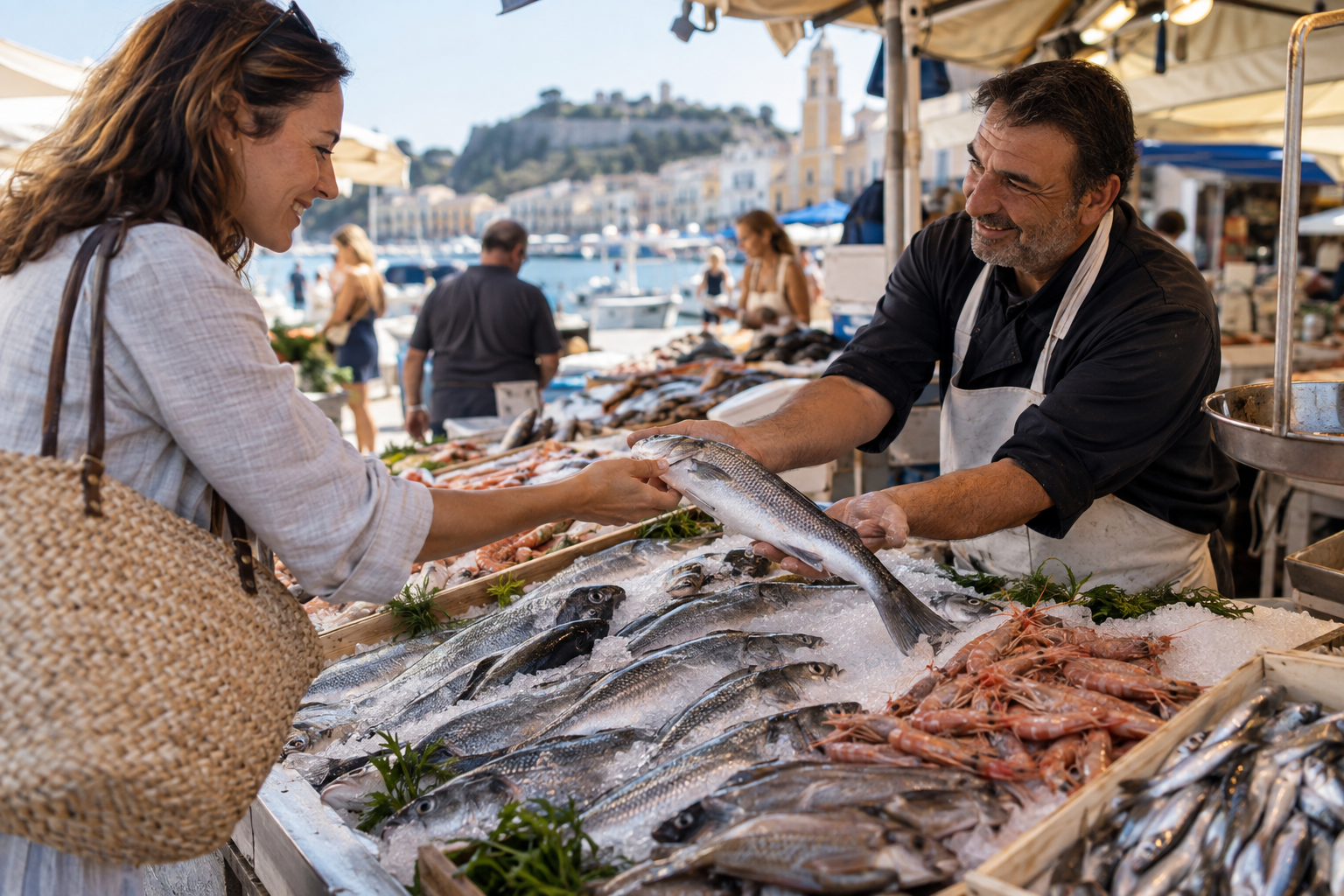
Lubina a la sal belongs, heart and soul, to the Spanish coast, and knowing that helps you understand it. Along the Mediterranean and down through Andalusia, in the seaside towns where the fish comes in fresh each morning and the great salt flats have supplied cooks for centuries, this is a beloved way to treat a good whole fish, letting a pristine catch shine with the least possible interference. It is coastal cooking at its most confident, the sort of dish a region makes only when its fish is so good that the smartest thing a cook can do is simply get out of its way.
That is the philosophy worth carrying home with you, because this dish rewards good fish above all else. The salt crust is a brilliant vessel, but it adds no flavor of its own, which means the whole thing lives or dies on the quality and freshness of the fish inside. Use the freshest whole fish you can find, and the method will show it off beautifully; use a tired one, and no amount of theater at the table will hide it. The traditional choice is lubina, Mediterranean sea bass, or dorada, gilthead bream, but any firm-fleshed whole fish with good skin will do, so buy the best the fishmonger has that day and let the salt do the rest. In that sense it is less a recipe than a frame around a beautiful ingredient.
Making Lubina a la Sal
Here is a classic lubina a la sal, serving two. Use a whole fish with the scales left on, and coarse salt, not fine.
Ingredients
- 1 whole sea bass (lubina) or sea bream (dorada), about 800 g to 1 kg, gutted but with scales left on
- 2 kg coarse sea salt
- 2 egg whites, lightly beaten (optional, to help bind the crust)
- A splash of water, if not using egg whites
- 1 lemon, sliced
- A few sprigs of fresh herbs, such as thyme or parsley
- Extra virgin olive oil and lemon wedges, to serve
Instructions
- Preheat the oven to 400 F, about 200 C. Pat the fish dry and tuck the lemon slices and herbs into the belly cavity.
- In a large bowl, mix the coarse salt with the beaten egg whites, or with a little water, until it has the texture of wet sand and holds together when pressed.
- Spread a 1 cm layer of the salt over the base of a baking dish or tray, roughly the shape of the fish.
- Lay the fish on the salt bed, then pack the remaining salt over and around it, pressing firmly to encase it completely so no part of the fish shows.
- Bake for about 25 to 35 minutes, depending on the size of the fish, until the crust is hard and lightly golden. As a guide, allow roughly 20 minutes per kilogram.
- Let it rest for a few minutes, then bring it to the table and crack the salt crust open with the handle of a knife, lifting away the chunks.
- Peel off and discard the skin, lift the fillets away from the bone, and serve at once, drizzled with olive oil and with lemon wedges alongside.
And do treat this as a method rather than a single recipe, since the same salt crust works beautifully on sea bream, snapper, or any firm whole fish with its skin on, so once you have done it once you have a showstopping trick for any fish you like.

About the Author: Ruben, co-founder of Gamintraveler.com since 2014, is a seasoned traveler from Spain who has explored over 100 countries since 2009. Known for his extensive travel adventures across South America, Europe, the US, Australia, New Zealand, Asia, and Africa, Ruben combines his passion for adventurous yet sustainable living with his love for cycling, highlighted by his remarkable 5-month bicycle journey from Spain to Norway. He currently resides in Spain, where he continues sharing his travel experiences with his partner, Rachel, and their son, Han.