
There is a dessert on nearly every Spanish restaurant menu, elegant and silky and crowned with a glossy caramel, that arrives at your table looking like something that took real skill to make and comes with a price to match. It is flan, the classic caramel custard, and here is the small secret the restaurants would rather you did not dwell on: it is made from three humble ingredients you already have, and the only technique it requires is a pot of hot water. A homemade flan costs mere pennies and is genuinely simple to make, yet it tastes every bit as good as the polished one you paid handsomely for at a restaurant, which makes it one of the most satisfying desserts you can ever learn. Once you make your own, you may never order it out again. It is the kind of dessert whose reputation for difficulty does all the work of justifying its price, and seeing through that is oddly liberating.
What follows is the three-ingredient truth of flan, the one technique that matters, the little bit of magic when you turn it out, why it is worth making at home, and exactly how to do it.
Three Ingredients, Really
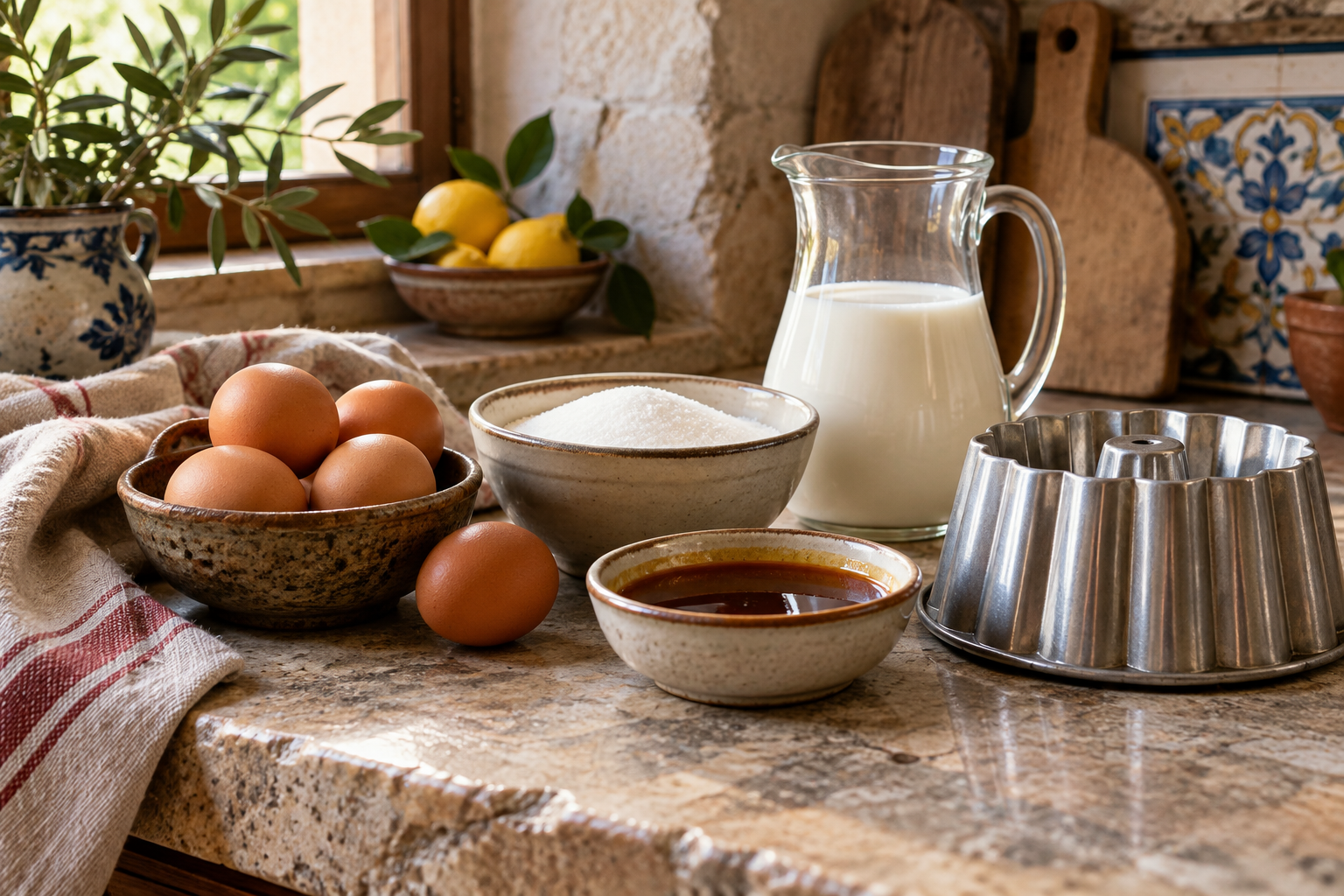
The first thing to know about traditional Spanish flan is how astonishingly short its ingredient list is. The classic homemade version, the one Spanish grandmothers have made for generations, uses just three things: eggs, milk, and sugar. That is genuinely it for the custard, with perhaps a little vanilla or a strip of lemon peel for flavor, and the caramel on top is nothing more than more of that same sugar, melted. There is no cream, no special flour, no exotic ingredient of any kind, just the sort of staples that live in every kitchen already.
This is what makes the dessert such a quiet marvel and such good value, because those three ordinary things, treated correctly, transform into something that tastes rich, silky, and special. The eggs set the custard, the milk gives it its tender creaminess, and the sugar sweetens it and, caramelized, crowns it, and from that humble trio alone comes the whole silky, luxurious result. It is a beautiful lesson in how the simplest ingredients, in the right hands, become more than the sum of their parts, and it is precisely why a homemade flan can hold its own against any restaurant version at a tiny fraction of the cost. Some of the very best food in the world works exactly this way, taking the cheapest, most ordinary things and coaxing something quietly wonderful out of them, and flan is a perfect small example of that alchemy. When you see how little goes into it, the markup on a restaurant flan starts to look rather cheeky.
The Water Bath Is Everything
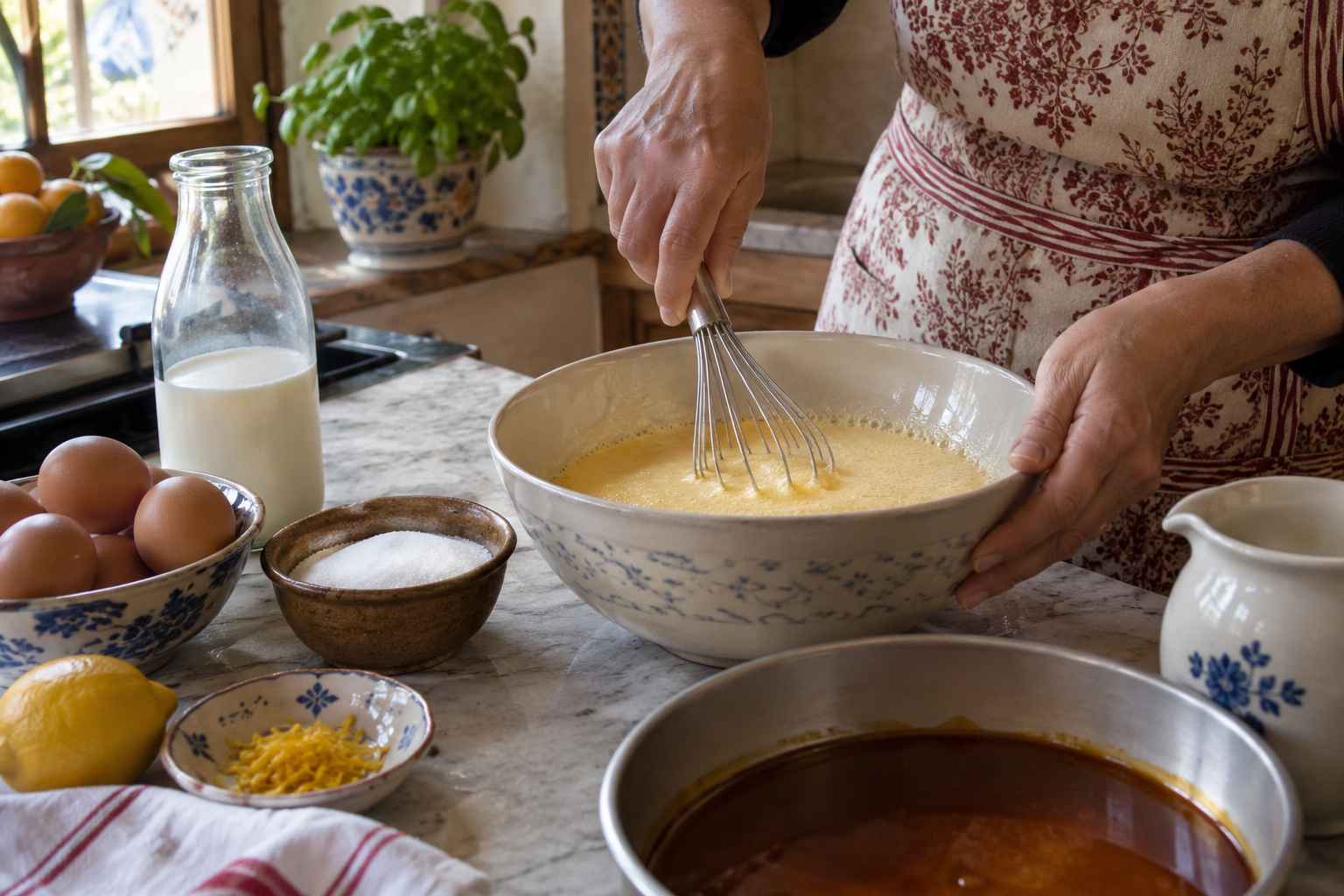
If flan is so simple, why does it seem intimidating, and why do people assume it is hard? The answer is that there is exactly one technique you must get right, and once you know it the whole thing becomes easy. That technique is the water bath, known in Spanish as the bano maria and in French as the bain-marie, and it is the single key to a perfect, silky flan. Rather than baking the custard directly in the dry heat of the oven, you set its mold inside a larger pan filled with hot water, and bake the whole arrangement together.
The reason this matters so much comes down to how eggs behave. Egg custard is delicate, and if it is exposed to harsh, direct heat it will overcook, curdling, cracking, or turning grainy and rubbery, ruining the smooth texture that is the whole point of flan. The water bath solves this beautifully, surrounding the custard with the gentle, even, moist warmth of hot water, which never exceeds boiling point, so the eggs cook slowly and evenly into a flawless, quivering, perfectly silky set. Skip the water bath and you risk a curdled, holey mess, but use it and success is nearly guaranteed. It sounds like a fussy professional trick, but in practice it is nothing more than sitting one dish inside another and adding hot water, which anyone can manage on their first try. That, and just one more small rule, pull the flan while it still jiggles in the center rather than baking it until firm, since it sets further as it cools, are all you truly need to master.
The Little Bit of Magic
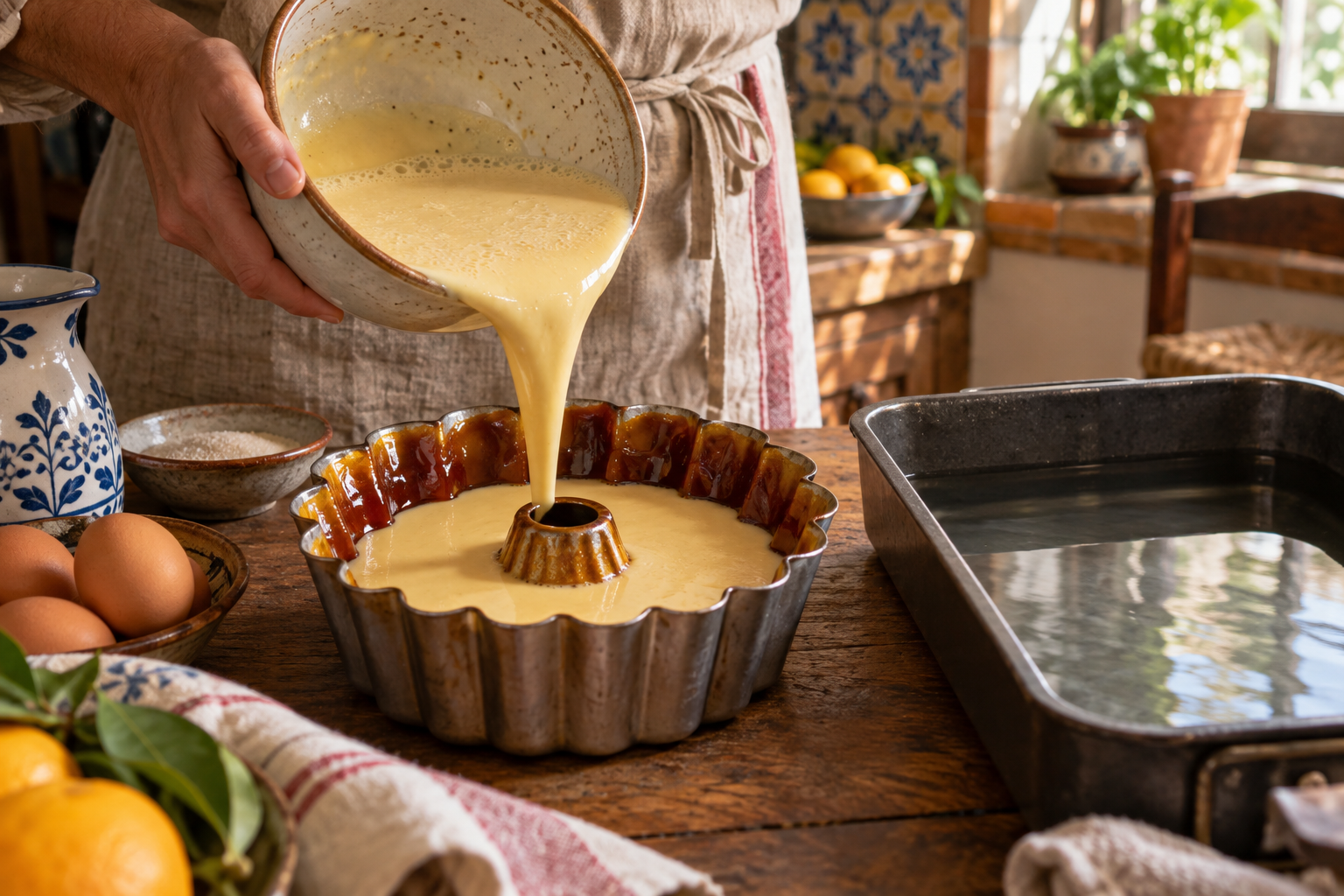
There is a moment in making flan that never stops being delightful, and it is the unmolding. You cook the flan with a layer of caramel sitting in the bottom of the mold and the custard poured on top, so it bakes upside down, in a sense, with the caramel beneath. Then, once it has baked and, crucially, chilled thoroughly in the fridge, you run a knife around the edge, place a serving plate over the top, and flip the whole thing over.
What happens next is the small piece of theater that makes flan so beloved. As you lift the mold away, the flan slides out onto the plate, and the caramel, which has turned to liquid, comes flowing down over the custard and pools golden around its base, transforming the plain top into a glossy, caramel-drenched dessert. It is genuinely magical to watch, the pale, quivering custard suddenly cloaked in a shining amber sauce, and it is the reason a homemade flan looks every bit as impressive as a restaurant one. This is why the chilling matters so much, since a warm flan will not release cleanly or hold its shape, so a little patience at the end is richly rewarded with that perfect, sauce-slicked turn-out. It is the payoff for the whole simple process, and it never gets old. Even seasoned cooks feel a small thrill at the turn-out, that held breath as you lift the mold and the caramel comes cascading down, and it is a large part of why people love making this dessert as much as eating it.
Why Make It at Home
Beyond the sheer economy of it, there are real reasons to make flan yourself rather than always ordering it out. It is, first of all, a make-ahead dream, since it not only can but should be made in advance and chilled for hours, which makes it a perfect dessert for entertaining, sitting done and waiting in the fridge while you deal with everything else. Few impressive desserts are so accommodating of a busy host.
It is also endlessly adaptable once you have the basic method down, since that plain three-ingredient custard is a canvas you can flavor as you like, with coffee, with orange, with cinnamon, or with a splash of something stronger, making it your own. And there is a genuine pleasure, and a small pride, in setting down a homemade flan that you know cost almost nothing and took very little effort, yet draws the same appreciation as a fancy restaurant dessert. Watching guests admire something you made from pennies of pantry staples is a particular kind of satisfaction, the sort that makes home cooking feel like a small, happy trick played on the whole idea of expensive dining. Flan belongs to a whole family of beloved Spanish custards, alongside crema catalana and natillas, but flan is the most universally loved and the easiest gateway into them. Learn this one dessert well and you have an elegant, thrifty, crowd-pleasing finish to any meal, forever, and a reliable little showpiece you can pull from the fridge whenever company comes.
From Spain to the Whole New World
Part of what makes flan so beloved is how far it has traveled, because this humble Spanish custard is one of the most widespread desserts on earth. Its roots reach back to ancient Roman cooking, where early egg custards were made both sweet and savory, but it was Spain that perfected the caramel-topped version and then carried it across the Atlantic. Wherever the Spanish went, flan went too, which is why today it is the beloved national dessert of country after country across Latin America, from Mexico to Argentina, each with its own small variations.
That vast reach is a quiet testament to how good and how adaptable the basic idea is, a dessert simple enough to take root anywhere yet special enough to become a treasured tradition wherever it landed. In Mexico and much of Latin America the custard is often enriched with condensed and evaporated milk for a denser, sweeter result, while the traditional Spanish version stays lighter and more delicate with its plain eggs, milk, and sugar, but the soul of the dish, the silky custard and the caramel crown, is the same everywhere. When you make one at home, you are joining an enormous and very old family of cooks stretching back to Rome and out across two continents, all making essentially the same magical little dessert. Few recipes connect you to so much history for so little effort.
Making Spanish Flan
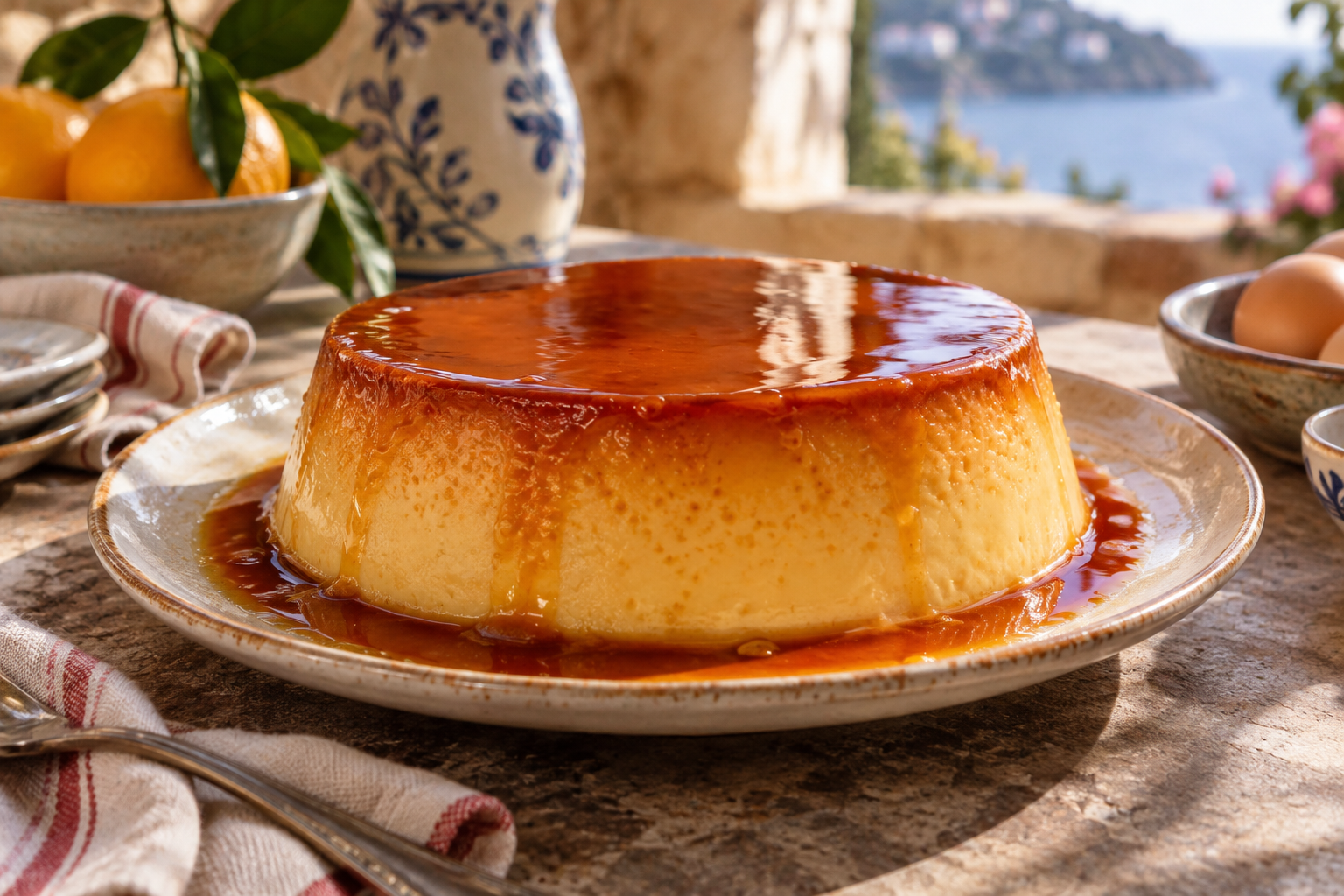
Here is a classic Spanish flan, serving six, using the traditional three ingredients. Start well ahead, as it must chill.
Ingredients
For the caramel:
- 150 g sugar
- 2 tablespoons water
For the custard:
- 4 large eggs
- 500 ml whole milk
- 100 g sugar
- 1 teaspoon vanilla extract, or a strip of lemon peel
Instructions
- Preheat the oven to 320 F, about 160 C, and boil a kettle of water for the water bath.
- Make the caramel: heat the sugar and water in a saucepan over medium heat, without stirring, until it turns a deep golden amber. Immediately pour it into the base of a flan mold or six ramekins, swirling to coat the bottom, and set aside to harden.
- Make the custard: gently warm the milk with the vanilla or lemon peel, then remove from the heat. In a bowl, whisk the eggs and sugar together until combined but not frothy.
- Slowly pour the warm milk into the eggs, whisking constantly, then strain the mixture through a sieve for a silky texture.
- Pour the custard over the set caramel in the mold. Place the mold inside a larger baking dish and pour hot water into the dish until it reaches halfway up the sides of the mold.
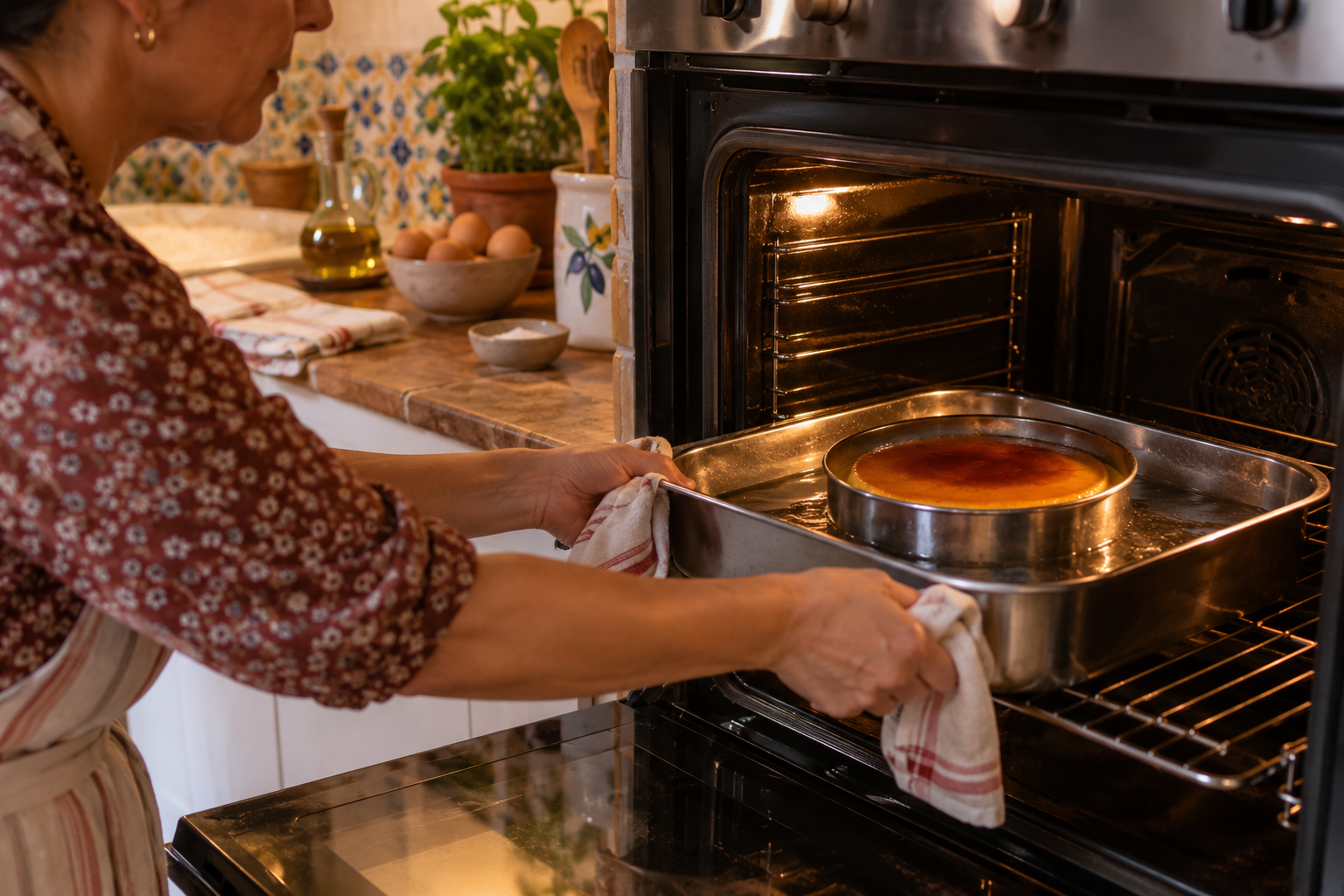
- Bake for about 45 to 60 minutes, until the flan is set around the edges but still jiggles slightly in the center. Remove from the water bath and cool, then refrigerate for at least 4 hours or overnight.
- To serve, run a knife around the edge, place a plate over the mold, and invert it. Lift the mold away and let the caramel flow down over the flan.
And do play with it once you are comfortable, since the same simple method takes happily to coffee, orange, or cinnamon, so you can turn three humble ingredients into a whole repertoire of desserts that no one need ever know cost you next to nothing.

About the Author: Ruben, co-founder of Gamintraveler.com since 2014, is a seasoned traveler from Spain who has explored over 100 countries since 2009. Known for his extensive travel adventures across South America, Europe, the US, Australia, New Zealand, Asia, and Africa, Ruben combines his passion for adventurous yet sustainable living with his love for cycling, highlighted by his remarkable 5-month bicycle journey from Spain to Norway. He currently resides in Spain, where he continues sharing his travel experiences with his partner, Rachel, and their son, Han.