
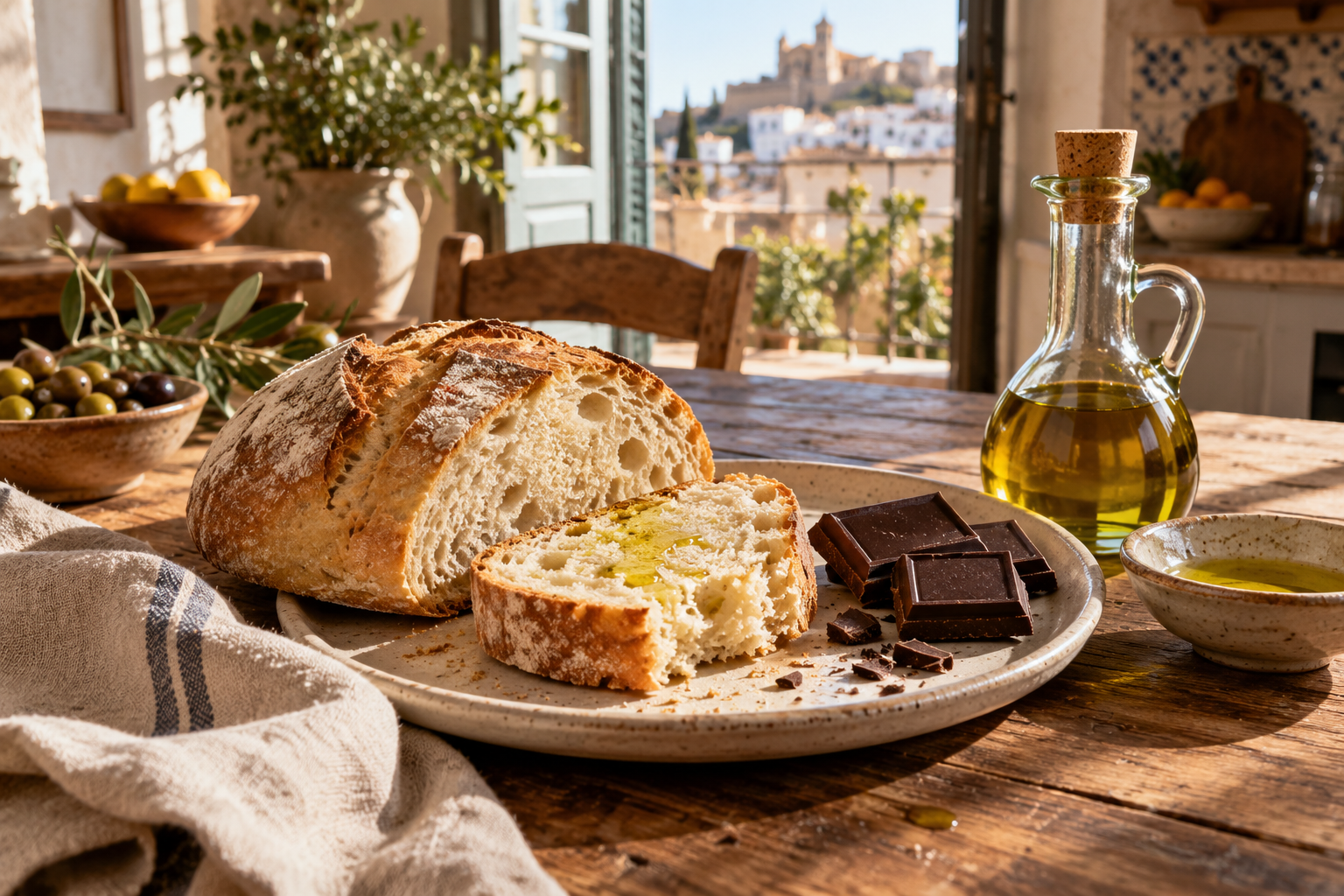
Tell an American that a beloved Spanish snack is a piece of bread topped with chocolate, drizzled with olive oil, and sprinkled with salt, and you will usually get a wrinkled nose. Olive oil on chocolate? Salt on a sweet snack? It sounds like a mistake, three or four things that seem to have no business at all sharing a plate.
And yet this exact combination, known in Catalan as pa amb xocolata, oli i sal, is one of the great after-school treats of Spain, the snack a Catalan grandmother made her grandchildren, so good and so quietly sophisticated that some of the world’s finest chefs have turned it into fine dining. It is the perfect example of a food that sounds wrong on paper and turns out, on the very first bite, to be gloriously, obviously right. Once you taste it, the wrinkled nose gives way to genuine surprise, and then to the sort of craving that has kept this humble snack alive in Spain for generations. It is one of those foods that converts skeptics in a single bite, and you may well find yourself, an hour later, making another.
What follows is what this snack actually is, why the odd-sounding combination works so beautifully, its surprising journey from home kitchens to top restaurants, and exactly how to make it yourself in about five minutes.
The Snack That Sounds Wrong
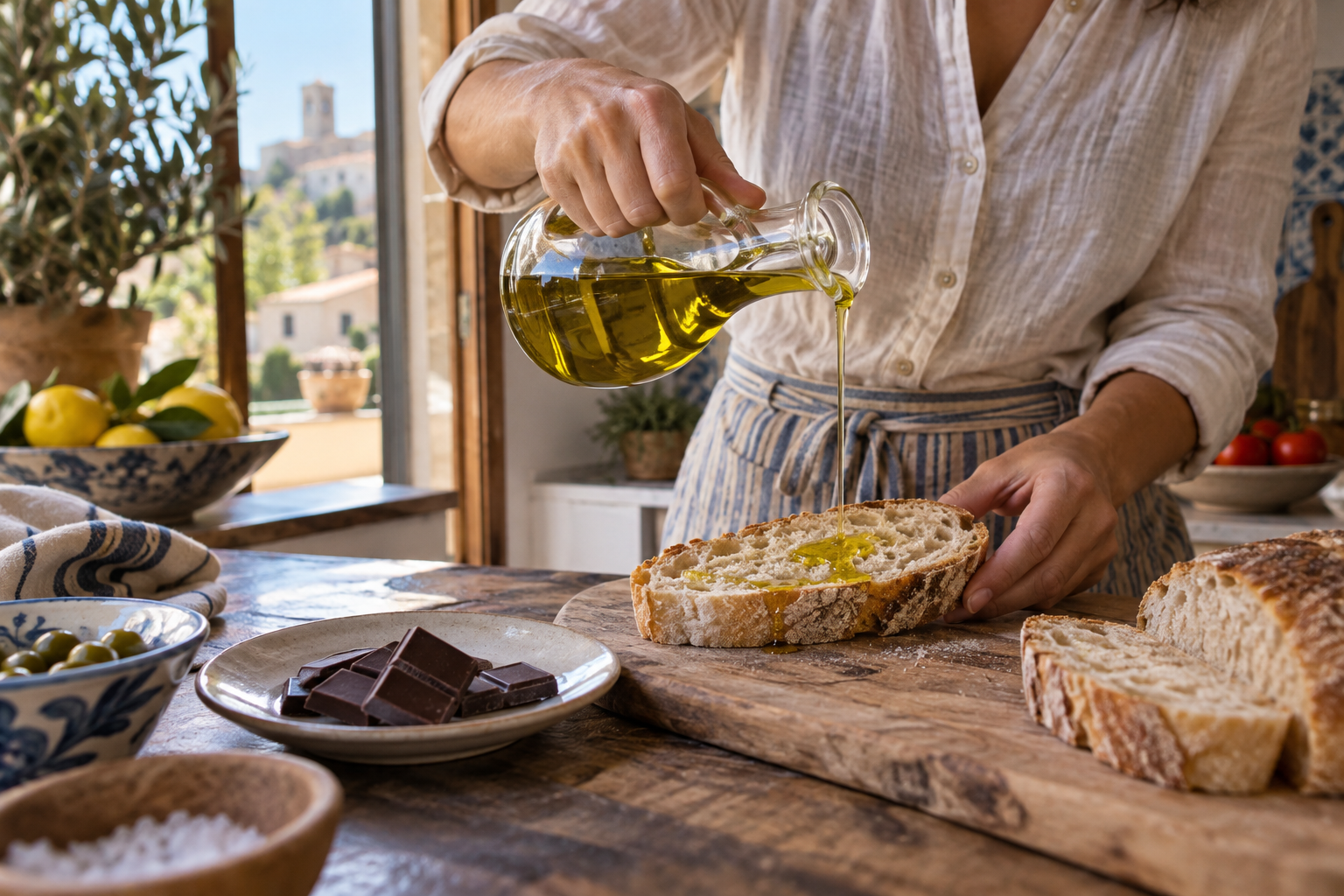
At its simplest, this is a snack of just four humble ingredients: bread, chocolate, olive oil, and salt. You take a slice of good bread, top it with a piece of dark chocolate, warm it just until the chocolate begins to soften, then drizzle it with fruity olive oil and finish with a pinch of flaky sea salt. That is the whole thing, and in Spain, particularly in Catalonia, it is a classic merienda, the late-afternoon snack that bridges lunch and a late Spanish dinner.
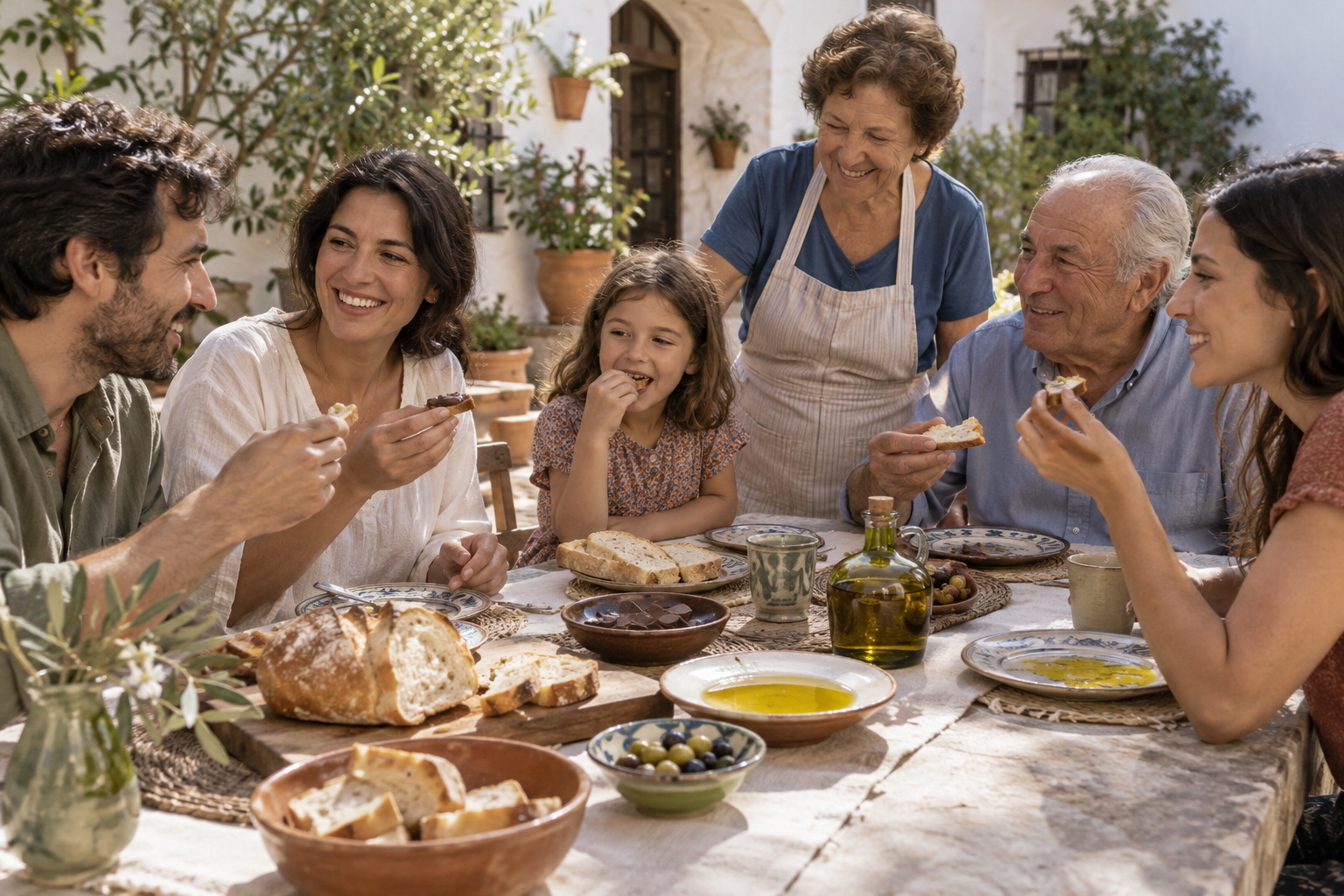
For generations, this is what Catalan children came home to, a thick slice of bread from the big country loaf, a chunk broken off a bar of chocolate, a splash of the family’s olive oil, and a little salt, handed over by a mother or grandmother as an everyday treat. It is nostalgic, humble food, nothing fancy about it, the kind of thing assembled in thirty seconds from what was always in the house. Every Spanish home had bread, a bar of chocolate, a bottle of olive oil, and salt, which is precisely why the snack became so universal, since it asked for nothing anyone did not already have on hand. The combination that sounds so strange to outsiders is, to a Spaniard, simply the taste of childhood, as normal and comforting as a peanut butter sandwich is to an American. The strangeness is entirely in the eye, or the ear, of the beholder. What sounds like an odd experiment to one culture is simply a cherished, unremarkable everyday pleasure to another, which is one of the quiet joys of learning how other people eat.
Why the Odd Pairing Works
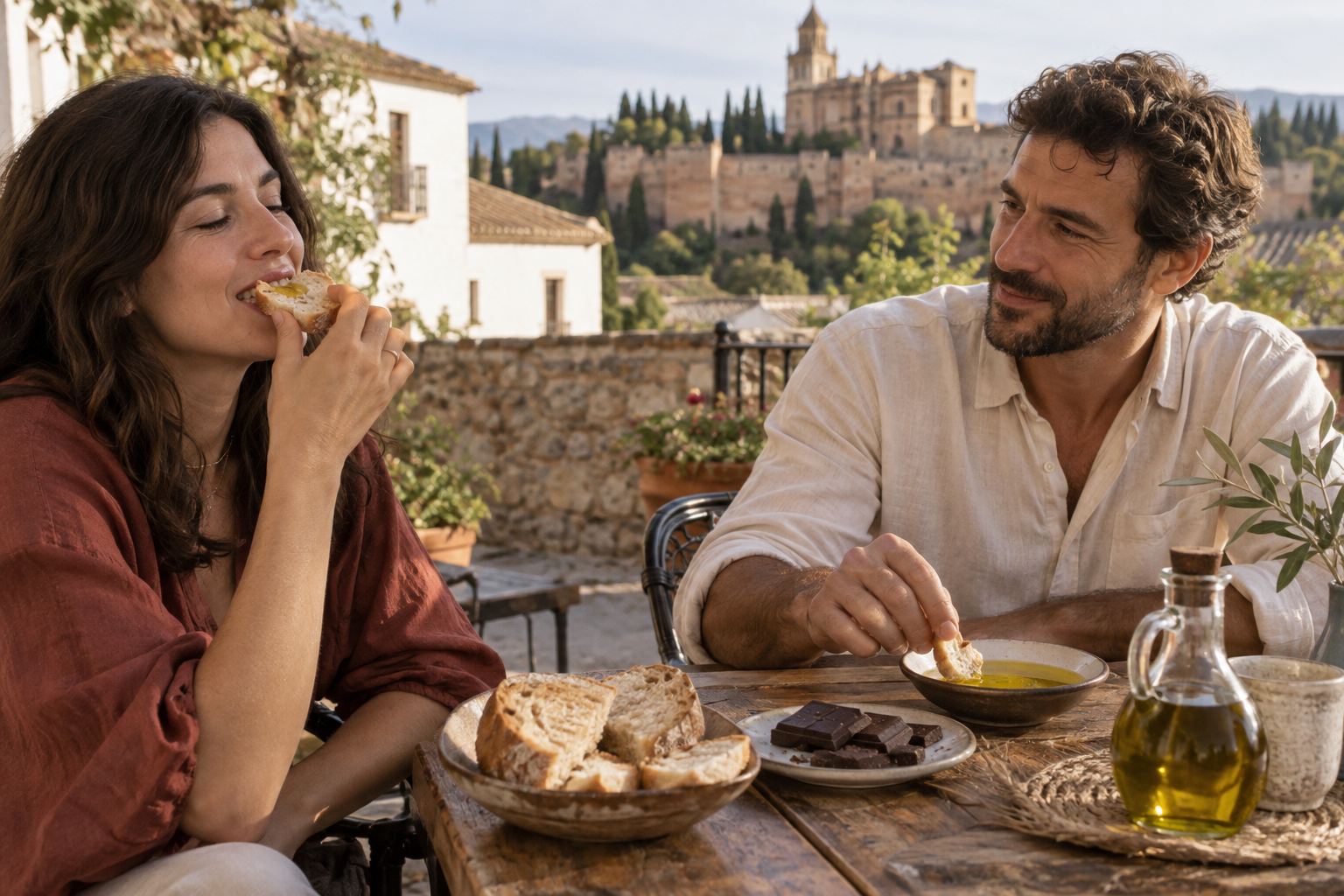
The reason this odd-sounding snack tastes so good comes down to one of the most reliable tricks in all of cooking, the magic of combining sweet and salty, and rich and bitter, in a single bite. Good dark chocolate is not purely sweet but deeply, pleasantly bitter, and a fruity extra-virgin olive oil brings its own green, peppery, savory notes, so the two turn out to be far more compatible than they first sound. Chocolate and olive oil are, it turns out, natural partners, each bringing a deep richness that flatters the other rather than clashing with it.
Then there is the salt, which is the secret weapon. A pinch of flaky sea salt on chocolate does something wonderful, sharpening and amplifying the flavor of the chocolate’s flavor and adding little bursts of savory crunch that make each bite more interesting than the last. This is the same reason salted caramel and chocolate with sea salt have become so beloved everywhere, and the Spanish snack simply arrived at the idea generations earlier. Add the warm, soft bread as a canvas, and you have a play of contrasts in every mouthful, sweet against salty, bitter against rich, soft bread against crunchy salt and melting chocolate. It is a genuinely brilliant little composition disguised as a thrown-together snack. Every element earns its place, the bread for structure and warmth, the chocolate for sweetness and bitterness, the oil for fruity richness, the salt for contrast and sparkle, and take any one away and the whole thing is diminished.
From Grandmother’s Kitchen to Michelin Stars
The most charming thing about this humble snack is how seriously the culinary world has come to take it. What began as the most ordinary of children’s treats has been embraced by some of the greatest chefs Spain has produced, who recognized in it a perfectly balanced idea worth celebrating. The legendary Ferran Adria, of the world-famous El Bulli, featured this simple bread, chocolate, olive oil, and salt in his writing on home cooking, giving the humble merienda a place on the culinary stage.
Others have gone further and reinvented it as high art. The celebrated chef Jose Andres has praised the Spanish pairing of olive oil and chocolate on bread as one of the finest examples of his country’s cooking, and the Michelin-starred Barcelona chef Jordi Artal took the exact snack his grandmother made him after school and transformed it into one of the most memorable desserts at his acclaimed restaurant. There is something lovely in that, a treat so fundamentally good that a great chef, given all the technique and luxury ingredients in the world, chooses to build one of his finest dishes around the flavors of his childhood snack. It says something about how deep the pull of these simple flavors runs, that even at the height of culinary ambition, a cook returns to the taste of home. It is proof that the humblest food, when the balance is right, can be as sophisticated as anything. Great cooking, it turns out, is not always about rare ingredients or difficult technique but about combinations that simply work, and a Catalan grandmother with four cheap ingredients had stumbled onto one of the great ones.
Olive Oil and Chocolate Are Old Friends
Once you have tasted this snack, the pairing of olive oil and chocolate stops sounding strange and starts sounding obvious, and you begin to notice it elsewhere. The combination is not some one-off Catalan quirk but a genuine culinary marriage that keeps turning up, precisely because it works so well. Bakers make olive oil chocolate cake, a moist, sophisticated dessert where the fruity oil deepens and enriches the chocolate rather than fighting it, and pastry chefs whisk good olive oil into chocolate ganache for a silkier, more grown-up result.
The reason is that both ingredients live in the same rich, slightly bitter, faintly fruity register, so they amplify rather than clash. A really good extra-virgin olive oil has notes of green fruit, grass, and pepper, and a good dark chocolate has notes of fruit and roasted bitterness, and laid over each other those flavors harmonize beautifully. Butter, by contrast, is pure creamy richness with little complexity of its own, so where butter simply carries chocolate, a good olive oil actually converses with it. Spain, as the world’s great olive-oil country, arrived at this truth long before the rest of us, and the humble childhood snack is really just the simplest, purest expression of a pairing that fine kitchens are still discovering. When you drizzle good oil over chocolate, you are doing something Spaniards have known to be delicious for a very long time.
When to Eat It
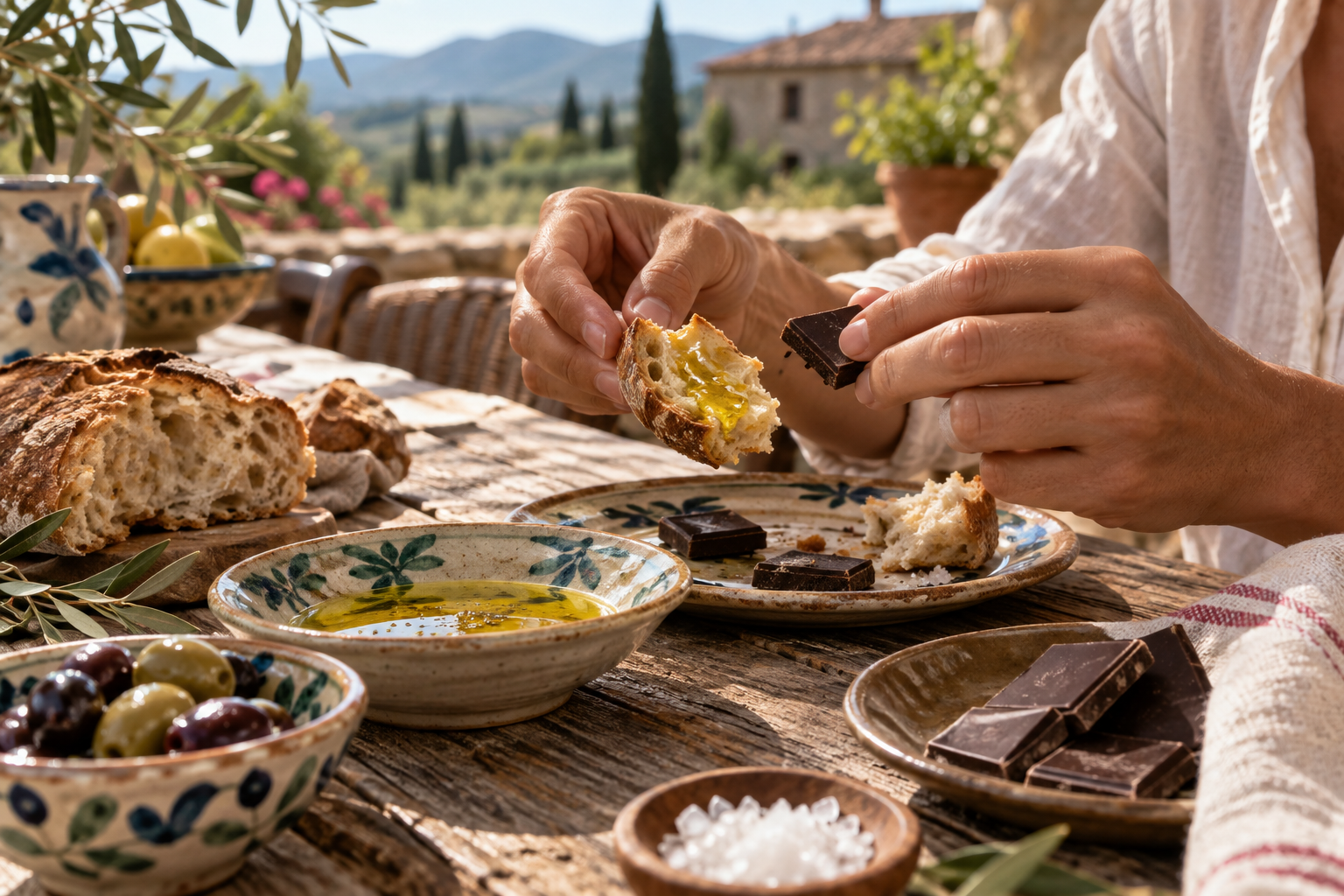
Though it began as an after-school merienda for children, this little snack is far too good to leave to the young, and it slots into almost any moment of the day. It makes a genuinely lovely quick breakfast, the warm chocolate and crisp bread every bit as satisfying as a pastry, and far quicker to put together than one. And it is perfect for that mid-afternoon slump when you want something sweet but not heavy, a little lift without the weight of a full dessert. Made with a little more care, on good bread with excellent chocolate and a fine oil, it becomes a grown-up treat to serve with coffee.
It even works as an effortless dessert, the kind of thing you can throw together in five minutes at the end of a meal when you have nothing planned, and it will feel far more special than the effort suggests. Add a scoop of vanilla or chocolate ice cream and the humble snack becomes a proper plated dessert, the cold ice cream against the warm chocolate and crisp, oily, salty bread making for a genuinely memorable few bites. Whenever you eat it, the appeal is the same, maximum pleasure for minimal effort, which is the very definition of a great snack.
Making Pan con Chocolate
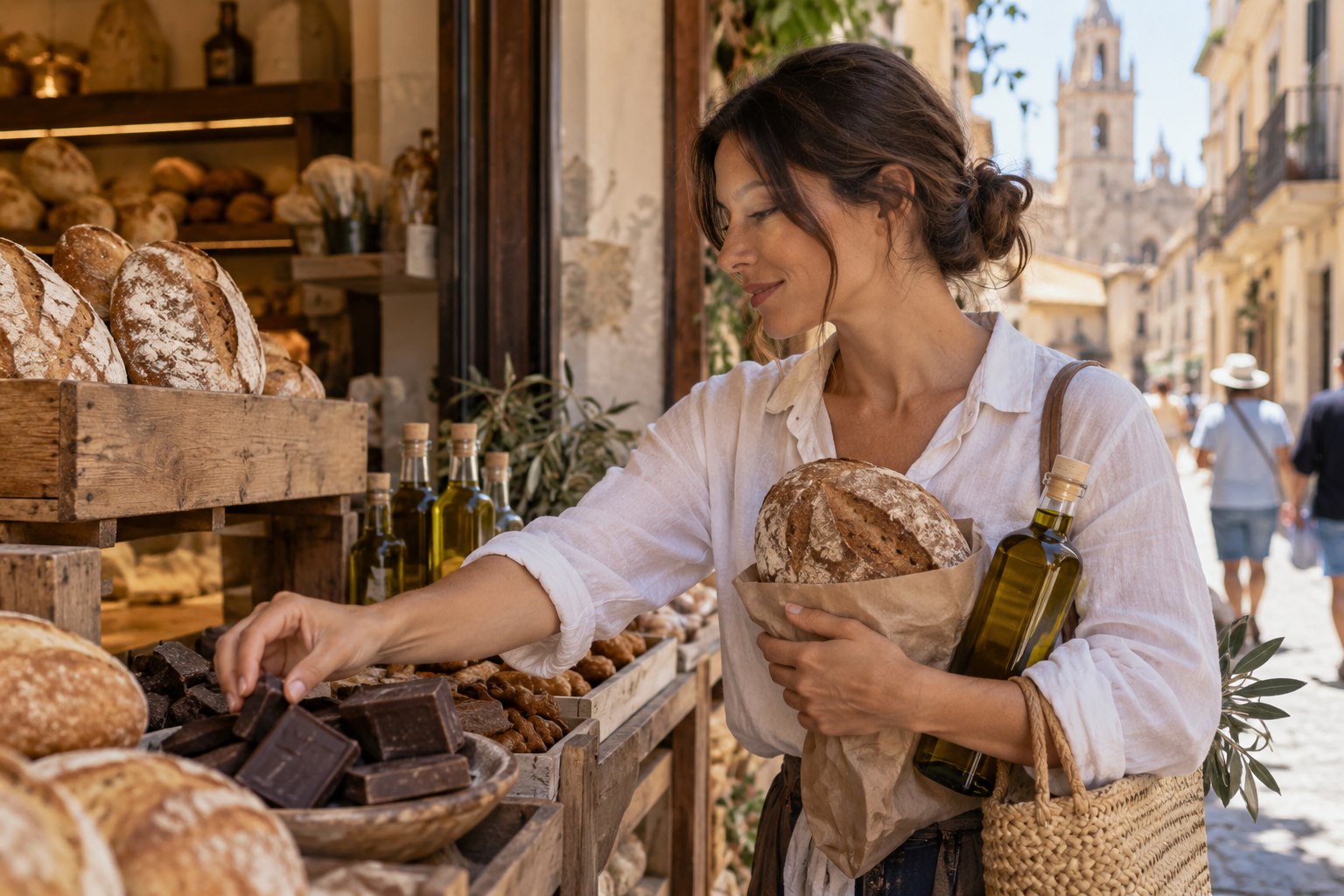
Here is the simple version, the one a Catalan grandmother would recognize. It takes about five minutes and rewards you far beyond the effort. This makes four small servings.
Ingredients
- 4 slices of good rustic bread, or a baguette cut into pieces
- 4 ounces good dark chocolate, about 100 g, broken into pieces
- Fruity extra-virgin olive oil, for drizzling
- Flaky sea salt, to finish
Instructions
- Heat the oven to a low temperature, around 200 F or 100 C, or simply have a toaster ready.
- Lightly toast the bread, either in the toaster or in the oven, until it is just crisp and warm but not hard.
- Scatter the pieces of dark chocolate evenly over the warm slices of bread.
- Return the bread to the low oven for just a few minutes, or leave it in the residual warmth, until the chocolate softens and begins to melt at the edges but still holds some shape. You do not want it fully liquid.
- Drizzle each slice generously with fruity extra-virgin olive oil, letting it pool a little on the chocolate and soak into the bread.
- Finish with a good pinch of flaky sea salt scattered over the top.
- Eat immediately, while the chocolate is warm and soft and the bread is still crisp, and prepare to be surprised.
And do play with it, since this is a template as much as a recipe, so try a milder milk chocolate for children, add a whisper of cinnamon or a few chili flakes for warmth, use the Spanish chocolate-hazelnut spread instead of a chocolate bar, or serve it with a scoop of ice cream to turn a snack into a proper dessert.

About the Author: Ruben, co-founder of Gamintraveler.com since 2014, is a seasoned traveler from Spain who has explored over 100 countries since 2009. Known for his extensive travel adventures across South America, Europe, the US, Australia, New Zealand, Asia, and Africa, Ruben combines his passion for adventurous yet sustainable living with his love for cycling, highlighted by his remarkable 5-month bicycle journey from Spain to Norway. He currently resides in Spain, where he continues sharing his travel experiences with his partner, Rachel, and their son, Han.