
There is a small irony hiding in one of the most familiar breakfasts in the world. Americans call it French toast, assuming it came from France and that the French eat it by that name, but neither of those things is quite true. The French do make it, and lovingly so, but they call it something far more poetic and revealing: pain perdu, which means lost bread. And the dish itself is not really French at all, but ancient, stretching back long before France existed, made across countless cultures under countless names. Unlike some famous foods whose glamorous origin stories fall apart the moment you examine them, French toast’s real history is genuinely charming, a tale not of invention but of thrift, of rescuing something about to be thrown away and turning it into a treat. It is a better story than the myth.
What follows is what pain perdu really means, how old the dish actually is, where the name French toast came from, and why its true story is lovelier than the legend. It is a small piece of food history that will change how you see your breakfast. Once you know it, you will never quite look at a plate of French toast the same way again, and you will find yourself itching to tell someone the real story over brunch.
Lost Bread, and What It Means

Start with that French name, because it explains the entire dish. Pain perdu translates literally as lost bread, and the loss it refers to is the fate of stale bread, which in a thrifty kitchen was never simply thrown away. When a loaf went hard and dry, past the point of being pleasant to eat fresh, it was in danger of being lost, wasted, discarded, and pain perdu was the clever, delicious way of rescuing it. In an age when bread was the very staff of life and nothing edible was ever thrown away lightly, saving a stale loaf was not a nice idea but a small necessity, and turning it into something delicious in the process was simply good sense rewarded with a treat. You soak the stale slices in a mixture of egg and milk, which softens the hardened bread and brings it back to life, then fry them until golden, transforming yesterday’s unwanted loaf into today’s treat.
That is the whole beautiful idea behind it, and it is a world away from the indulgent breakfast French toast has become. The modern version, piled with syrup and berries and whipped cream, would astonish the frugal cooks who first devised it as a way to stretch a household’s bread, though they would surely be glad to see their clever thrift survive as a beloved treat. Far from being a decadent invention, pain perdu was born of frugality, a way for households that could not afford to waste a scrap to turn something destined for the bin into something worth eating.
The name carries that history in it, honest and unglamorous, a reminder that this beloved dish began not as a luxury but as a humble act of not letting good food go to waste. There is something quietly lovely in a treat whose very name means the thing it was made to save. Where the American name flatters the dish by tying it to fashionable France, the French name is refreshingly honest about what it really is, humble bread saved from the bin, which somehow makes it all the more endearing.
A Dish Far Older Than France
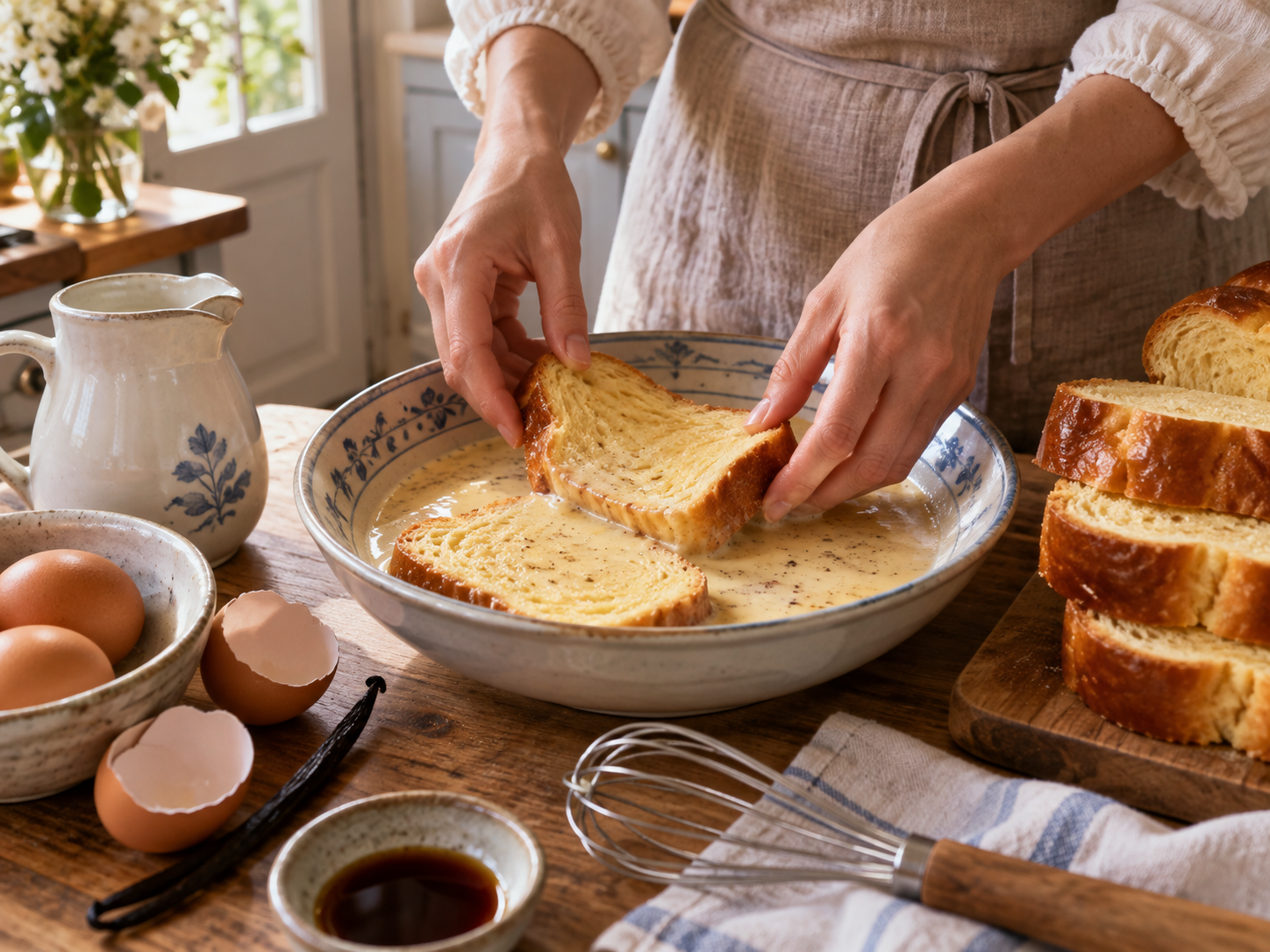
The bigger surprise is just how ancient the dish is, because pain perdu, or something very like it, has been made for the better part of two thousand years. Versions of soaking bread in a mixture of egg or milk and then cooking it appear in records going back to the Roman Empire, in a collection of recipes attributed to a Roman named Apicius, centuries before there was any such thing as France. That a dish we think of as quintessentially modern breakfast fare was being fried up in ancient Rome is a genuinely startling thought, and a reminder of how little the basics of good home cooking have changed in two thousand years. The basic idea, of reviving stale bread by soaking and frying it, is so simple and so useful that it seems to have occurred independently to cooks all over the world. Bread has been a staple for millennia, bread goes stale within days, and eggs and milk have long been on hand in most kitchens, so the solution was almost inevitable, waiting to be found wherever those three facts met.
This is why nearly every culture has its own version under its own name, each one a local answer to the same universal problem of what to do with stale bread. The pattern repeats so faithfully across the map that it is almost funny, a whole world of cooks independently arriving at the same golden solution.
Spain has its torrijas, soaked in milk or wine and fried, traditionally eaten around Easter. Germany and the wider region have their arme Ritter, or poor knights, the very name again hinting at the dish’s humble, thrifty roots. England once had poor knights of Windsor, and versions turn up across Europe and far beyond it, in Portugal and the Americas and much of Asia too. The names differ, the toppings differ, sweet in one place and savory in another, but the essential act is always the same, taking bread that has gone hard and giving it a second, better life. The dish belongs to no single country, least of all France specifically, but to the shared, sensible thrift of home cooks everywhere. It is one of those inventions so obvious and so useful that it was bound to be discovered again and again, wherever people baked bread and hated to see it wasted, which is to say almost everywhere on earth.
Where the Name French Toast Came From
So if the dish is ancient and universal, why do Americans call it French toast at all? The honest answer is that nobody is entirely certain, but the likeliest explanations have little to do with France being its birthplace. One popular story, charming but almost certainly apocryphal, credits an American innkeeper named Joseph French, who supposedly put the dish on his menu in the early eighteenth century and, lacking a firm grasp of the apostrophe, wrote French Toast when he meant French’s Toast. It is a fun tale, and quite possibly invented after the fact to explain a name that had no obvious source. Stories like this tend to spring up precisely because a name begs for an explanation, and a neat anecdote about a Mr. French is far more memorable than the messier truth that nobody really knows.
The more mundane truth is that the word French was long used loosely in English to mean fancy, refined, or done in a sophisticated European style, the way we still speak of a French manicure or French doors without implying French invention. To call something French was to call it elegant, and a rich, eggy, golden breakfast was a good deal more elegant than plain toast, so the label may simply have been a compliment that hardened into a name.
A dish of bread fried up rich with egg and served for a special breakfast could easily earn the label French simply as a mark of something a cut above plain toast. However the name arose, it stuck, and generations of Americans have grown up calling a genuinely ancient, pan-European dish by a name that quietly misattributes it to one country. It is a harmless enough error, and the French do make a lovely version, so the name is not entirely unearned, but it does obscure the far richer truth that this is not a French dish at all but a human one.
The Myths That Do Get Burned
To see why pain perdu’s story is such a pleasant surprise, it helps to look at the food legends that do fall apart, because plenty of famous dishes are not at all what their names and reputations suggest. Take Caesar salad, which sounds ancient and Roman and imperial, conjuring togas and the Colosseum. In truth it has nothing to do with Rome or with Julius Caesar, having been invented in the 1920s by a restaurateur named Caesar Cardini, an Italian immigrant running a restaurant not in Italy at all but in Tijuana, Mexico, reportedly thrown together from what he had on hand one busy night. The grand Roman association is pure accident of a first name.
The famous salad, in other words, is Mexican-Italian-American, born of a chef improvising in a border town, and has no more to do with ancient Rome than a Caesar haircut does.
Or take fettuccine Alfredo, which Americans imagine as a timeless Italian classic drowning in cream, the very picture of old-world Roman indulgence. The real dish, created by a Roman named Alfredo in the early twentieth century, was nothing but fresh pasta tossed with butter and Parmesan, no cream at all, and most Italians today have never heard of the heavy, creamy American version that bears the name. The beloved Italian classic, in its American form, is essentially an American invention.
Both dishes wear a borrowed grandeur, an assumed age and pedigree they never actually had, and both feel a little diminished once you know the truth. The romance was never in the food itself but in the story we told about it, and once that story turns out to be false, the dish is still tasty but somehow less magical. These are the food myths that get burned, where the reveal strips away the romance and leaves a more ordinary truth behind, and it is exactly this kind of deflation that makes pain perdu’s honest history feel so refreshing by comparison.
Why This Story Is Different
It is worth pausing on why this particular food history is so satisfying, because it stands in contrast to a whole genre of food-origin myths that crumble under scrutiny. Some of the most famous dishes people assume are old and Italian or classic and storied turn out to have surprisingly recent, often disappointing origins, invented by a single restaurateur for publicity, or born in a country nobody expects. Their legends get comprehensively debunked, and the reveal tends to feel like a small letdown, the magic replaced by a marketing story. You learn that the dish you thought had centuries of tradition behind it was really dreamed up a lifetime ago for a menu, and something of its romance quietly drains away.
French toast is the happy exception, because when you pull on the thread of its history, it does not unravel into a disappointing myth but opens into something genuinely lovely. There is no false claim to puncture, only a true story that turns out to be better than the assumption, a dish far older and more widespread than anyone thinks, with a name in its home country that means lost bread and a soul rooted in thrift and care rather than luxury. The more you learn about it, the more you like it, which is the exact opposite of how most food myths reward your curiosity. The truth about French toast does not spoil it, it deepens it, which is a rare and welcome thing in the world of food legends. Most kitchen myths are best left un-poked, since the poking so often ruins them, but this is one you can investigate all the way down and come out the other side liking the dish more than when you started.
How to Taste the History

The nicest way to appreciate all this is to make pain perdu the way it was meant to be made, which happens to be the way that produces the best version anyway. The secret the name has been telling you all along is to use stale bread, not fresh, because dry, slightly hardened bread soaks up the egg-and-milk custard far better than soft fresh bread, which turns soggy and falls apart. This is the whole point of the dish, so the next time you have a baguette or a loaf going hard on the counter, do not throw it out, rescue it. A slightly stale, sturdy bread like brioche, challah, or a good baguette makes the finest pain perdu of all, precisely because it can soak up the custard without collapsing, which is one more way the dish quietly rewards you for not wasting food.
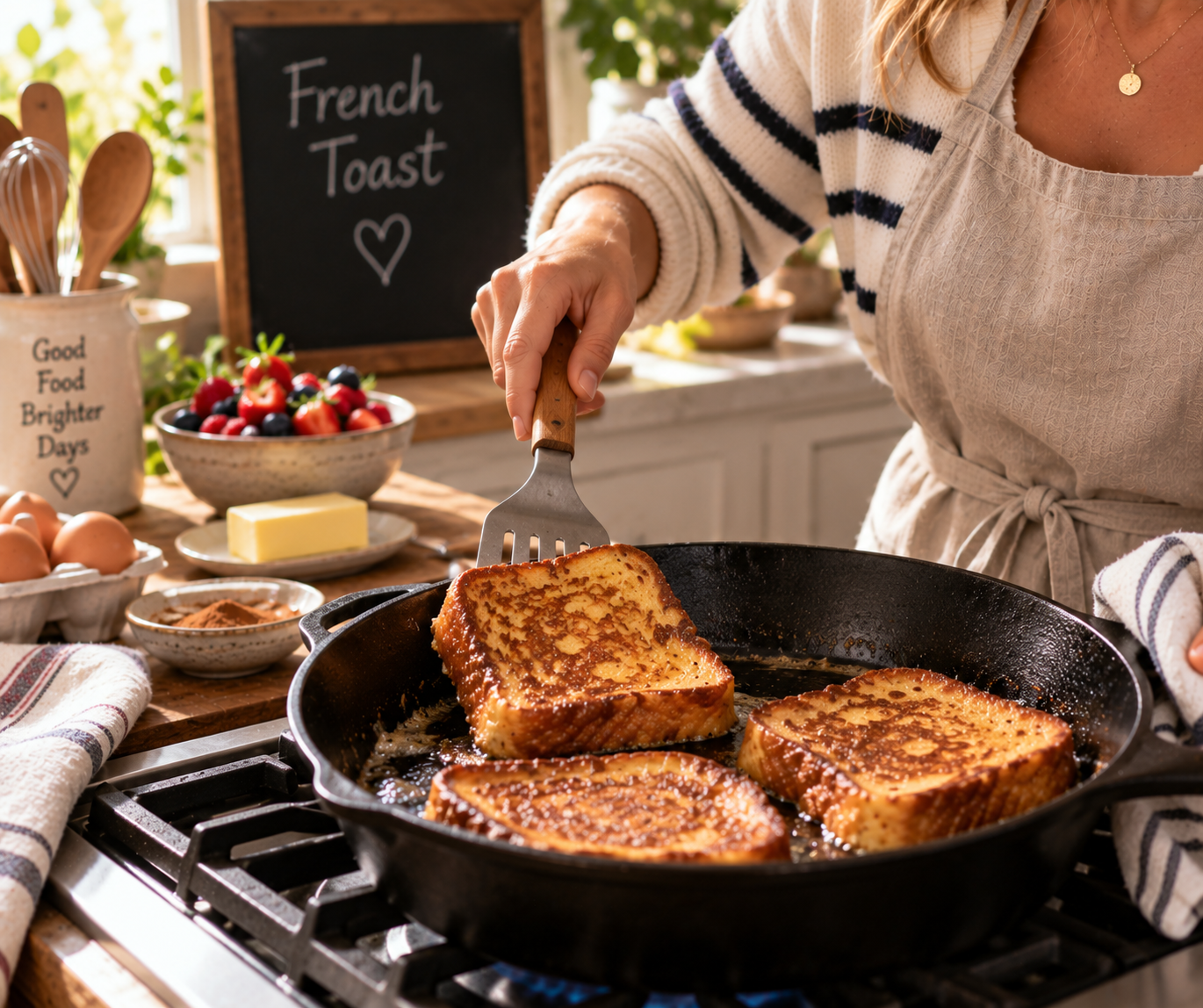
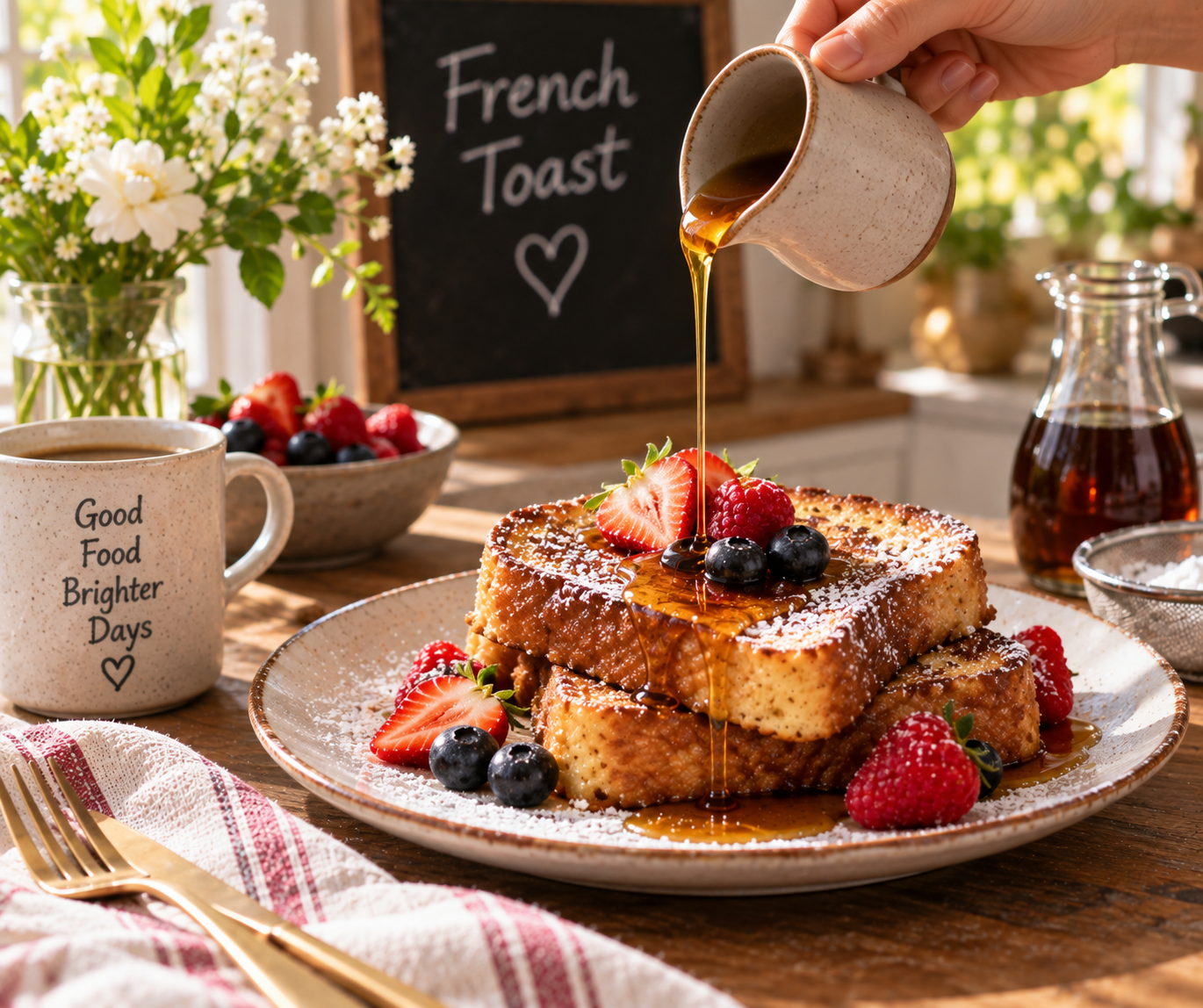
Soak thick slices of that stale bread in a mixture of beaten egg, milk or cream, a little sugar, and perhaps a touch of vanilla or cinnamon, letting them drink it in properly, then fry them gently in butter until golden and crisp at the edges and custardy within. Give the bread real time in the custard, a minute or more per side for stale slices, so it soaks all the way through rather than staying dry in the middle, which is the difference between good pain perdu and great. Serve them however you like, with fruit, with a dusting of sugar, or in the French way with a simple drizzle of honey or jam and nothing more. The French tend toward restraint here, letting the golden, custardy bread be the star rather than burying it, which is arguably the most elegant way to eat it and the truest to its humble roots. However you top it, you will be doing exactly what thrifty cooks have done for two thousand years, turning lost bread into one of the great small pleasures of the table, and now you will know the real, lovely story behind every bite. There is a quiet satisfaction in cooking something with that much history in it, in knowing that a Roman, a medieval peasant, a French grandmother, and you have all performed the same small act of rescue, and all been rewarded with the same golden, custardy result.

About the Author: Ruben, co-founder of Gamintraveler.com since 2014, is a seasoned traveler from Spain who has explored over 100 countries since 2009. Known for his extensive travel adventures across South America, Europe, the US, Australia, New Zealand, Asia, and Africa, Ruben combines his passion for adventurous yet sustainable living with his love for cycling, highlighted by his remarkable 5-month bicycle journey from Spain to Norway. He currently resides in Spain, where he continues sharing his travel experiences with his partner, Rachel, and their son, Han.