
On her very first day in France, in November 1948, a thirty-six-year-old American who did not yet know how to cook sat down to lunch in Rouen and ate a dish that changed the entire course of her life. The American was Julia Child, the restaurant was La Couronne, and the dish was sole meuniere, a simple fillet of sole floured and fried in butter and finished with lemon and parsley. She called it the most exciting meal of her life, an epiphany, and she opened her famous memoir with that single plate of fish. What is remarkable is that the dish which lit that fire is one of the easiest things you will ever cook, ready in about ten minutes with one pan and a handful of ingredients.
What follows is the story behind that famous lunch, what makes sole meuniere so good, and exactly how to cook this deceptively simple French classic yourself.
The Lunch That Started It All
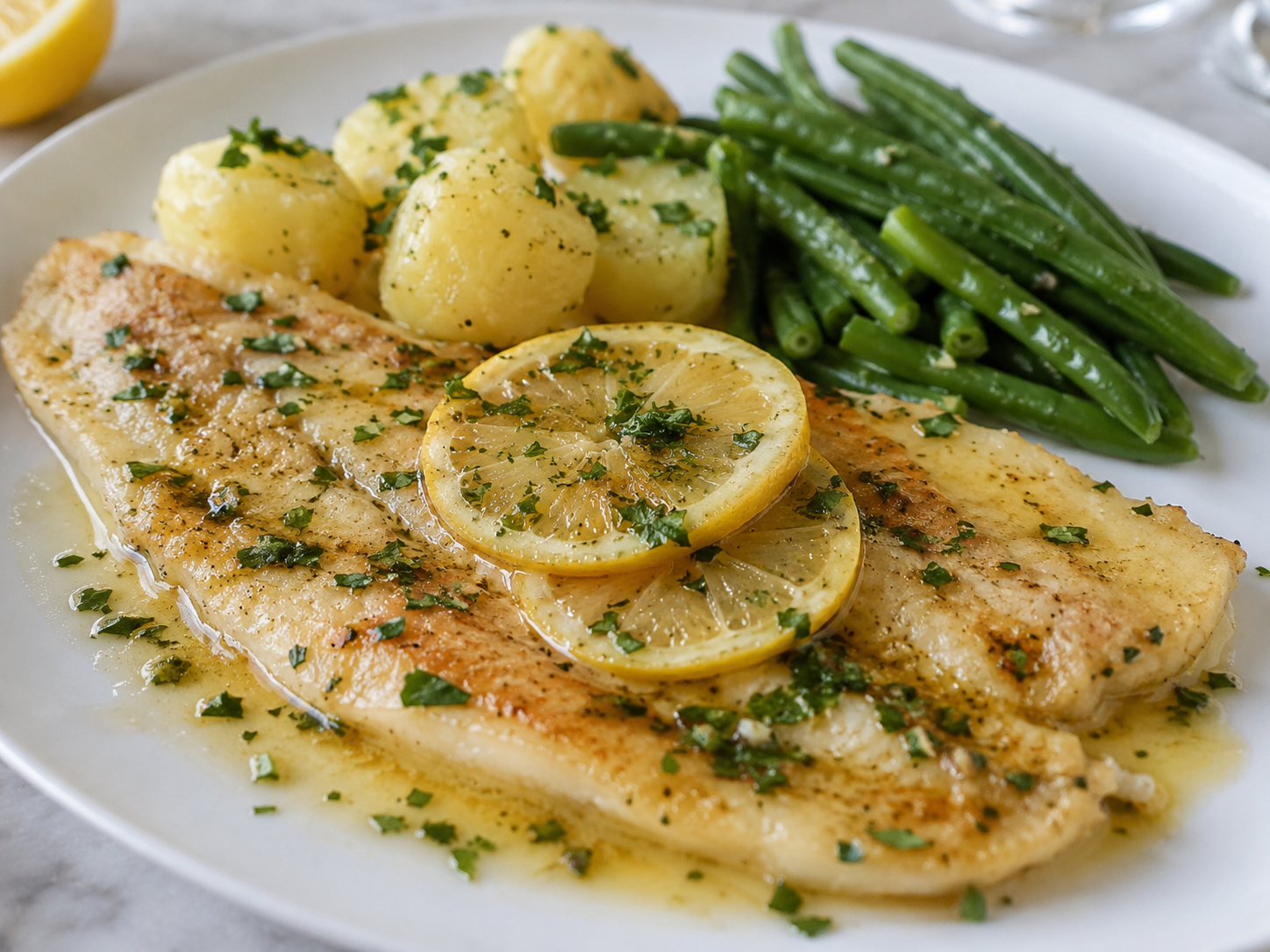
Julia Child arrived in France by ferry on November 3, 1948, and drove with her husband Paul toward Paris, stopping for lunch along the way in the Normandy city of Rouen. The restaurant was La Couronne, founded as an inn in 1345 and one of the oldest in France, and Paul, who spoke French and knew food, ordered them oysters, a green salad, and sole meuniere. Julia, who had grown up on plain American meat and potatoes and had never tasted anything like it, was utterly transported.
The fish arrived whole, perfectly browned in a sputtering butter sauce with a sprinkling of chopped parsley, and the first bite was a revelation she never forgot. She later wrote that it was the most exciting meal of her life and the standard against which she would measure every restaurant afterward, and she chose that exact scene to open her memoir My Life in France. That lunch set her on the path to Le Cordon Bleu, to years of work, and ultimately to the book and the television shows that taught a whole generation of Americans to cook French food. It is not an exaggeration to say that a plate of sole meuniere helped change the way America eats, which is a great deal of history for such a modest dish.
What Meuniere Actually Means
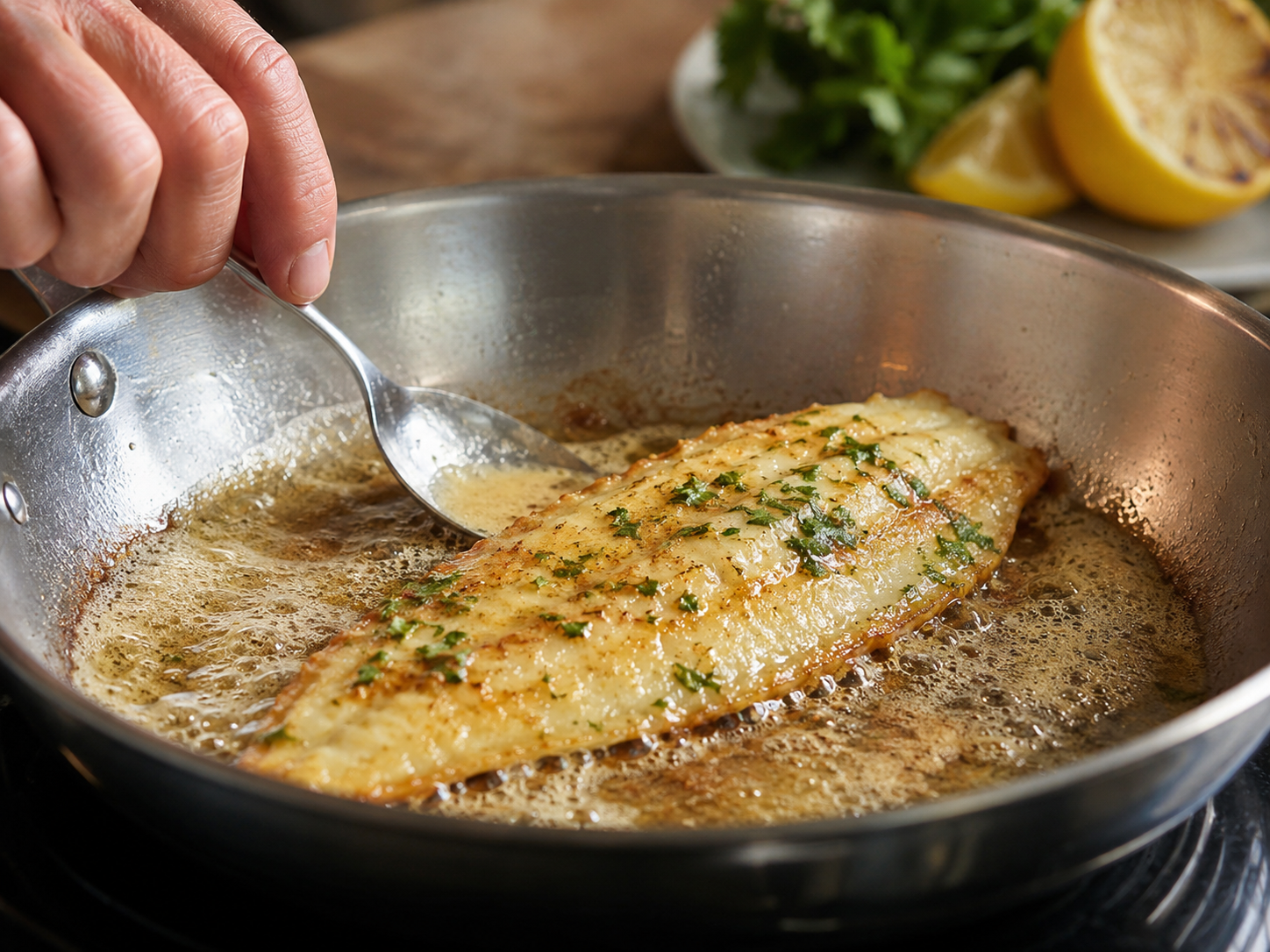
The name tells you the whole technique, once you know the trick of it. Meuniere means, roughly, in the manner of the miller’s wife, and it refers to the way the fish is lightly dredged in flour before cooking, the flour being the miller’s product. That thin coat of flour is the heart of the method, because it does two things at once, giving the fish a delicate golden crust and helping to thicken the butter it cooks in into a light sauce.
So a fish cooked meuniere is simply a fish that has been seasoned, dusted in flour, and sauteed in butter until golden, then finished with the trinity that defines the dish, browned butter, lemon, and parsley. That is genuinely all there is to it, and the elegance of the result comes not from complexity but from a few good ingredients treated correctly. It is one of the clearest lessons in French cooking, that technique and quality matter more than long lists or fancy steps, and that a beautiful meal can be built from fish, flour, butter, and a lemon.
The Magic Is in the Browned Butter
If sole meuniere has a soul, it is the beurre noisette, the browned butter, and understanding it is what turns a good version into a great one. After the fish is cooked and set aside, you keep cooking the butter in the pan just a little further, until the milk solids in it turn golden and it takes on a nutty, toasty aroma, which is exactly what noisette, meaning hazelnut, refers to. This browned butter is poured hot over the fish, and it is the single element that makes people close their eyes at the first taste.
The transformation is remarkable for how little effort it takes. Plain melted butter is pleasant, but browned butter is deep, complex, and almost caramel-like in its richness, and the change happens in under a minute of extra cooking, so it costs you nothing but attention. The trick is simply to watch it closely, because butter goes from perfectly browned and fragrant to burnt and bitter in seconds, so you pull it the moment it smells nutty and looks golden. Master that one small step and you have understood the thing that made Julia gasp, because the browned butter is where the ordinary becomes extraordinary.
Choosing Your Fish
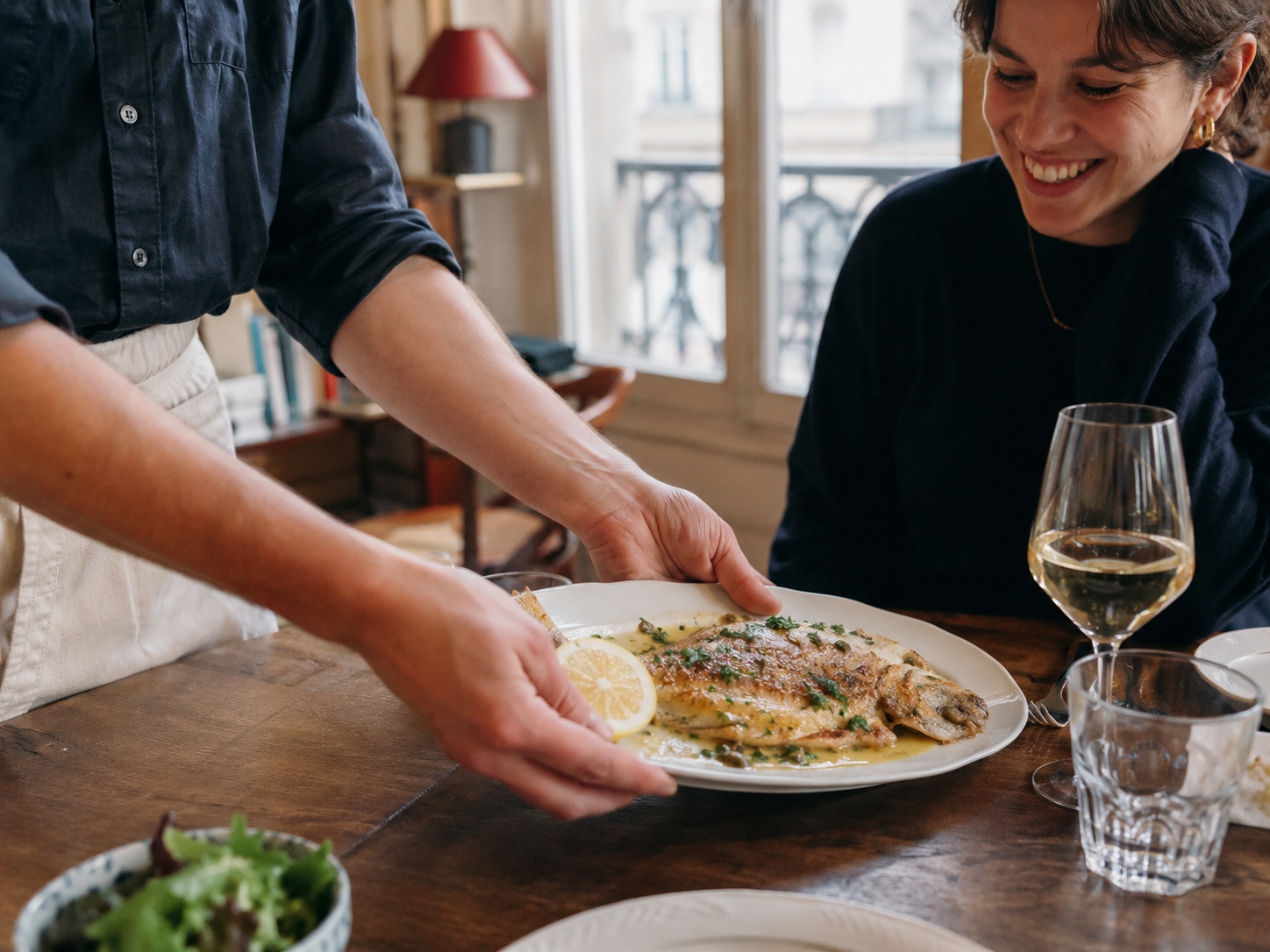
The classic fish for this is Dover sole, the delicate flatfish Julia ate in Rouen, prized for its firm, sweet flesh and its ability to hold together beautifully in the pan. Real Dover sole is wonderful but can be expensive and genuinely hard to find, particularly in the United States, which is worth knowing before you go hunting for it, and the good news is that the dish works beautifully with more available fish.
Any thin, mild, white fish fillet will take to the meuniere treatment happily, so flounder, other kinds of sole, or similar delicate flatfish are all excellent stand-ins, and even a fillet of something like tilapia or a thin piece of trout will work in a pinch. What matters is that the fillets are thin, so they cook through in the couple of minutes the method allows, and mild, so the butter and lemon can shine. Do not feel you have failed the dish by using flounder instead of Dover sole, because the technique is the star here and it flatters whatever gentle white fish you give it, which is part of what makes this such a practical weeknight luxury. Ask your fishmonger for thin white fish fillets and let what looks freshest decide, since a just-caught flounder will always beat a tired sole, and freshness matters far more to the finished plate than the exact species does.
The Two Things to Get Right
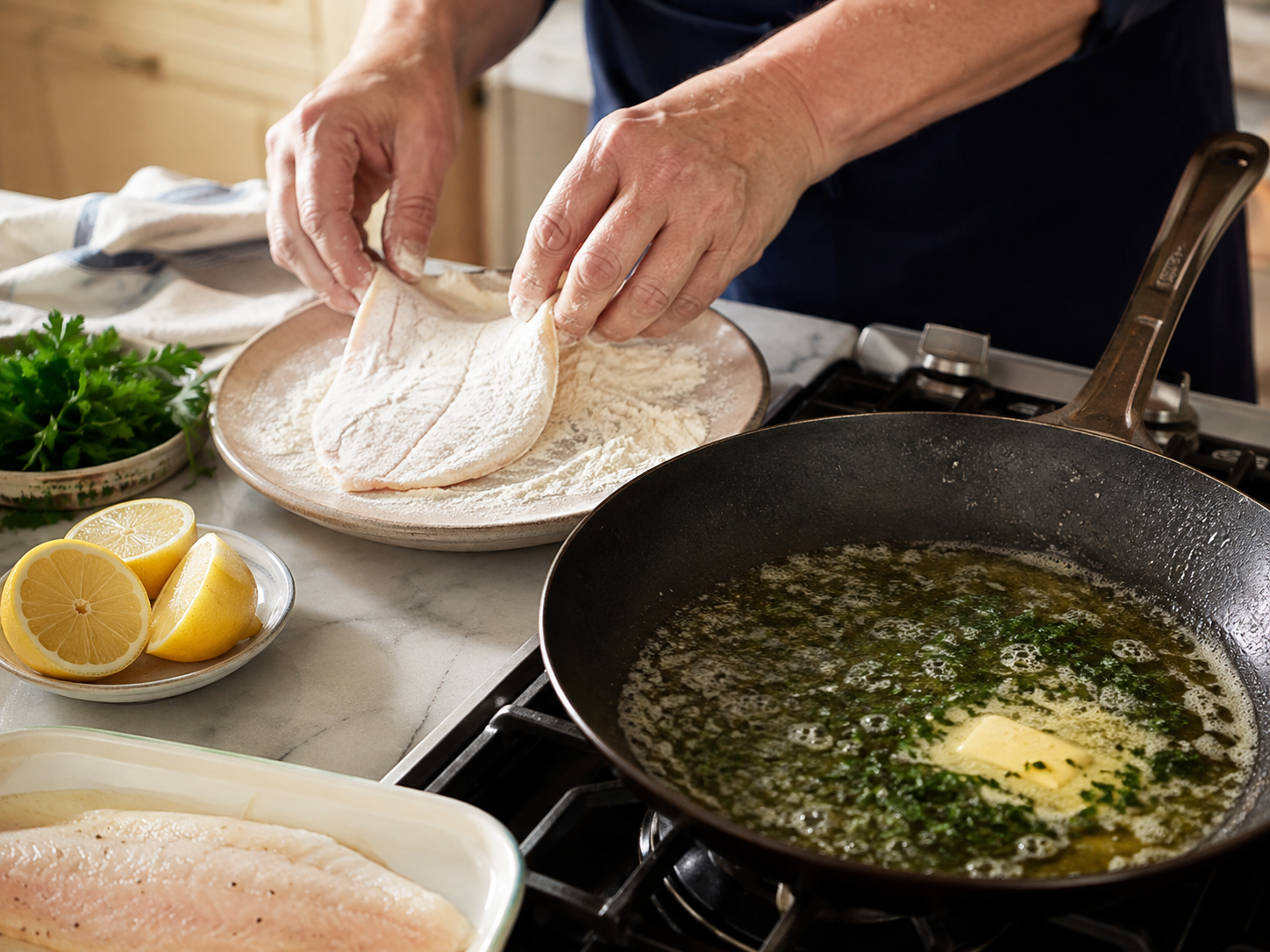
Sole meuniere is genuinely quick and forgiving, but two small things make the difference between good and perfect. The first is to dry the fish well and flour it just before cooking. A damp fillet will steam rather than brown, and flour left sitting on the fish turns gummy, so you pat the fillets thoroughly dry, season them, and dredge them in flour only at the last second before they hit the pan. Shake off the excess so the coat is thin and even.
The second is heat and timing, since this is fast cooking that does not forgive dawdling. The pan and butter need to be properly hot before the fish goes in so it sizzles and browns rather than sitting and stewing. Then the fish needs only a minute or two per side, because a thin fillet cooks through almost instantly and overcooking turns delicate fish dry and tough. Get it in a hot pan, give it just long enough to turn golden on each side, and take it out promptly, and you will have tender, flaky fish every time. Those two habits, a dry well-floured fillet and a hot fast pan, are the whole discipline of the dish.
The Weeknight Luxury Hiding in a Famous Dish
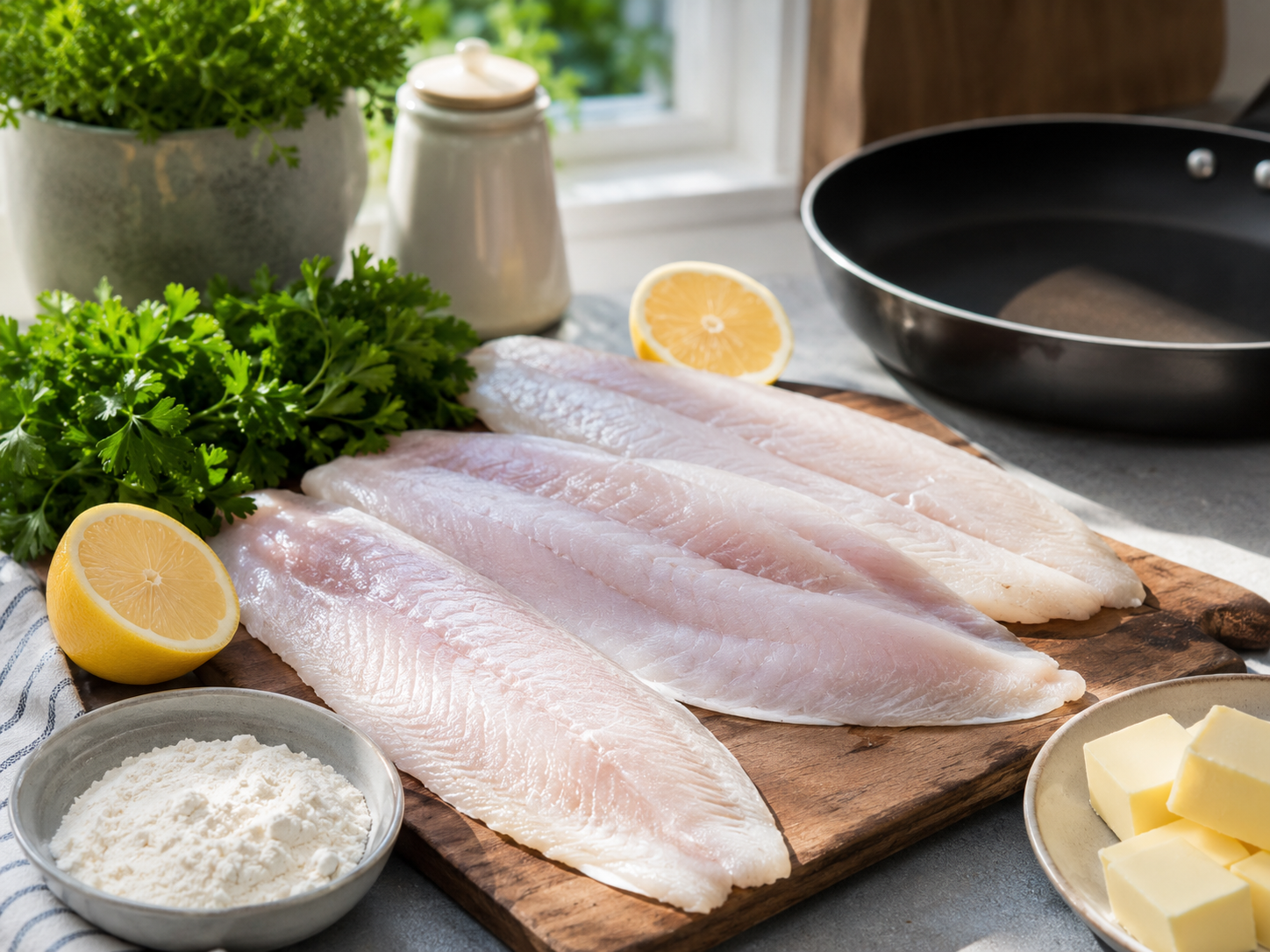
What makes sole meuniere so useful to know is the gap between how grand it sounds and how easy it is, because a dish with this much history and this famous a fan feels like it should be difficult, and it simply is not. There is no special equipment, no long ingredient list, and no technique that takes years to master, just a hot pan, a floured fillet, and a minute of browning butter, which means a genuine French classic sits well within reach of anyone on an ordinary evening.
That combination, real elegance from real simplicity, is exactly why it deserves a place in your regular cooking rather than being filed away as a restaurant dish. On a busy night it gives you a proper, beautiful dinner in the time it takes to boil a few potatoes, and on an occasion it impresses guests out of all proportion to the effort. Few dishes repay ten minutes of attention so richly, and once you have made it a couple of times it becomes the thing you reach for when you want something lovely without a project, which is precisely the role it can play in a home kitchen. The famous lunch in Rouen was extraordinary, but the dish behind it is wonderfully everyday.
Bringing It to the Table
Sole meuniere wants to be eaten the moment it is made, while the fish is hot and the browned butter is still foaming, so it is a dish to cook when everyone is already at the table rather than one to hold. It needs almost nothing alongside it, since the flavors are so pure that heavy accompaniments only get in the way, and the classic partners are the simplest, boiled or steamed potatoes, a few plain green beans, or just a green salad and good bread to catch the butter.
A glass of crisp white wine is the natural companion, the way Julia had hers with a Pouilly-Fume, and a wedge of lemon on the plate lets each person add a final bright squeeze. That is the whole meal, elegant and light and quick, and it is exactly the kind of thing that feels far grander than the effort it took. Serve it to guests and they will think you fussed for hours, when in truth you spent ten minutes at the stove, which is the quiet secret of so much of the best French home cooking.
Cooking Sole Meuniere
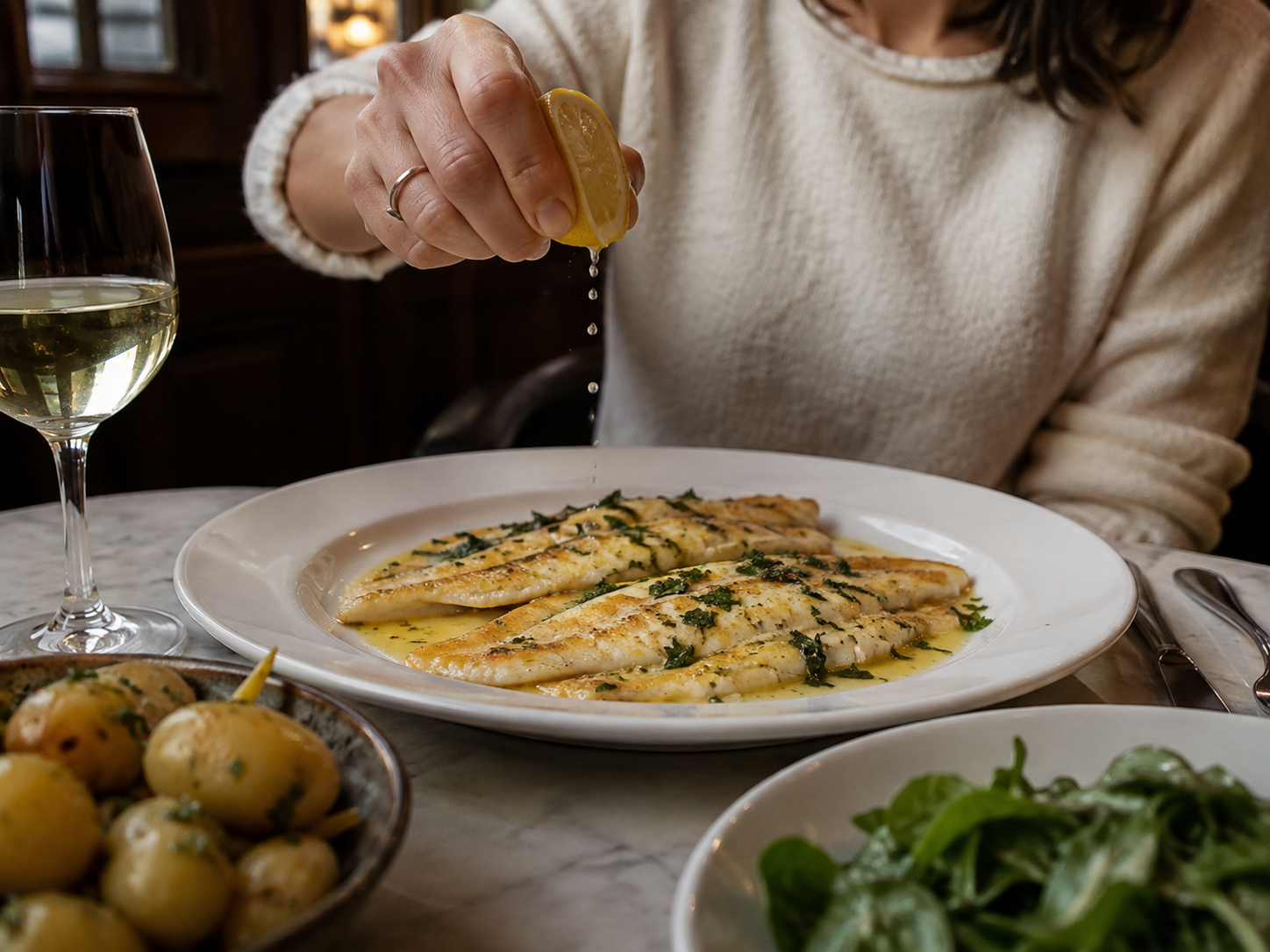
Here is the classic method, start to finish in about ten minutes, for two people. Scale it up as needed, but cook the fillets in batches rather than crowding the pan.
Ingredients
- 2 to 4 thin white fish fillets, such as sole or flounder, about 500 g, roughly 1 lb
- 4 tablespoons plain flour, for dredging
- 60 g butter, about 4 tablespoons, plus a little oil
- 1 lemon, half juiced and half in wedges
- 2 tablespoons fresh parsley, chopped
- Salt and black pepper, to taste
Instructions
- Pat the fish fillets thoroughly dry with paper towels, then season both sides with salt and pepper.
- Spread the flour on a plate. Just before cooking, dredge each fillet in the flour, coating both sides lightly and shaking off the excess.
- Heat a large frying pan over medium-high heat with a little oil and about half the butter. When it is hot and foaming, add the fillets without crowding the pan and cook for about 1 to 2 minutes per side, until golden and just cooked through. Work in batches if needed. Transfer the fish to warm plates.
- Wipe the pan if it has burnt bits, then add the remaining butter and let it melt and cook until it turns golden brown and smells nutty, about a minute. Watch it closely so it does not burn.
- Take the pan off the heat and stir in the lemon juice and most of the parsley. It will foam up.
- Pour the hot browned butter over the fish. Scatter with the remaining parsley and serve at once, with lemon wedges on the side.
And of course the dish is yours to make your own, since a spoon of capers in the butter is a lovely addition many cooks swear by, and any mild white fish will take to the method, so treat this as the classic template and let it flatter whatever good fish you can find.

About the Author: Ruben, co-founder of Gamintraveler.com since 2014, is a seasoned traveler from Spain who has explored over 100 countries since 2009. Known for his extensive travel adventures across South America, Europe, the US, Australia, New Zealand, Asia, and Africa, Ruben combines his passion for adventurous yet sustainable living with his love for cycling, highlighted by his remarkable 5-month bicycle journey from Spain to Norway. He currently resides in Spain, where he continues sharing his travel experiences with his partner, Rachel, and their son, Han.