
There is a moment in late September in the northwest of Spain when the light changes and the first real chill comes off the Atlantic, and all across Galicia the same pot goes back on the stove. That pot holds caldo gallego, the white-bean and greens soup that is less a recipe than a season made edible, and once you have eaten it on a grey afternoon with a hunk of dense country bread, you understand why the Galicians treat the first cold night of the year as a kind of quiet celebration rather than a loss. It is peasant food in the truest sense, built to be cheap, filling, and warming, and it has fed the rainy corner of Spain through hard winters for longer than anyone can say.
What follows is how to make it properly, what actually goes in it, the one ingredient you will probably have to improvise, and a recipe simple enough that the hardest part is remembering to soak the beans the night before.
A Pot Born of Hard Times
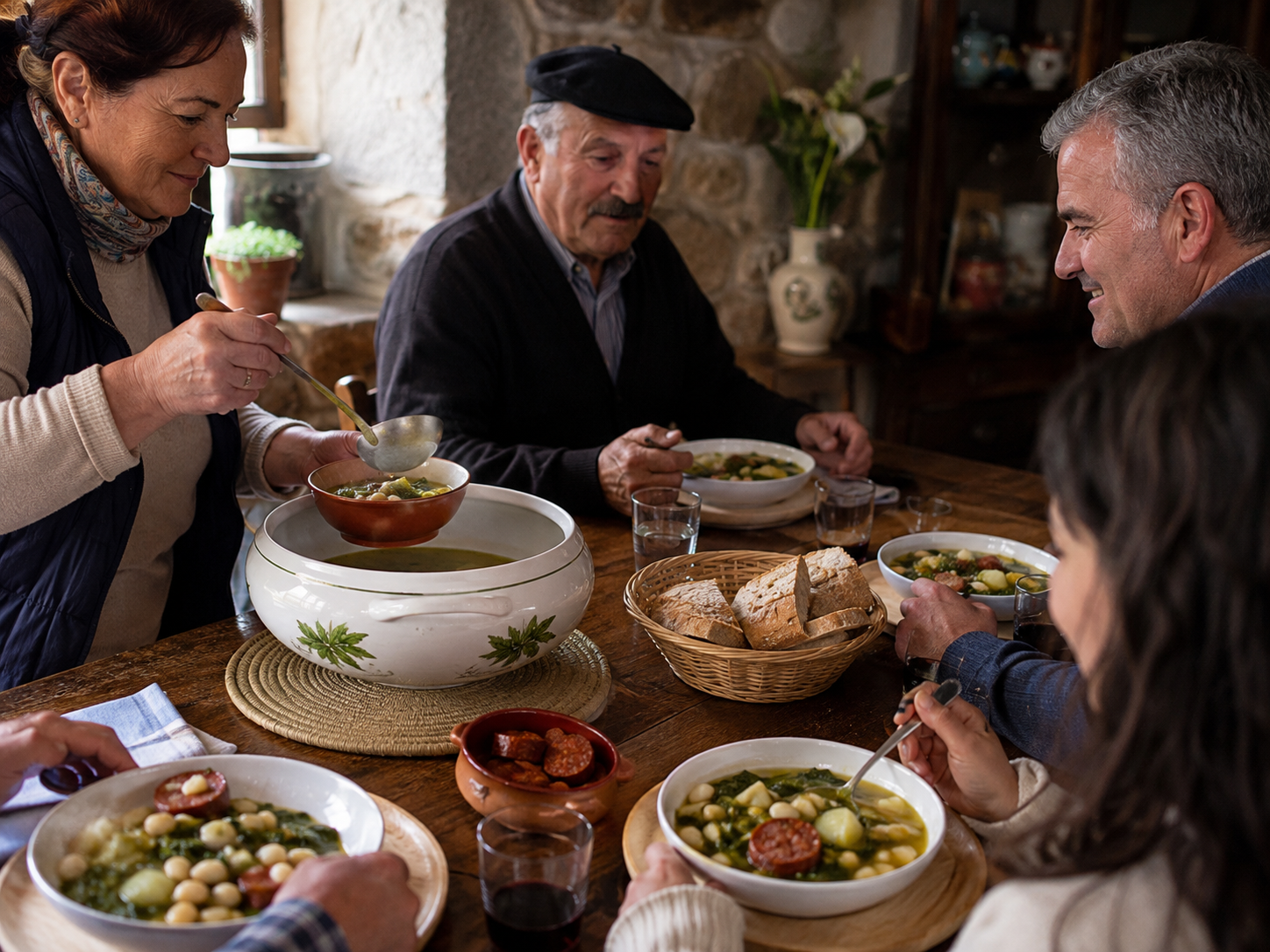
Caldo gallego is poverty food that became beloved food, which is the story of most of the world’s great peasant dishes. For centuries Galicia was one of the poorer corners of Spain, a region of small farms and large families scratching a living from a wet, green, unforgiving land. A pot that could turn a handful of dried beans, some greens from the garden, and a scrap of cured pig into a meal for everyone was not a lifestyle choice but a survival tool. The genius of it is how much warmth and nourishment it wrings from so little, stretching a few cheap ingredients across a whole table and a whole cold evening.
That history traveled, too, because Galicia sent waves of emigrants across the last two centuries to Argentina, Cuba, and beyond, and they carried the soup with them, so that in Buenos Aires and Havana there are still places serving a caldo gallego that a grandmother in Lugo or Ourense would recognize instantly. A dish like this becomes a way of holding onto a place you have left, which is part of why Galicians are so quietly fierce about it. It is not just dinner; it is a taste of home carried across an ocean, and it means something to eat it well.
What Caldo Gallego Actually Is
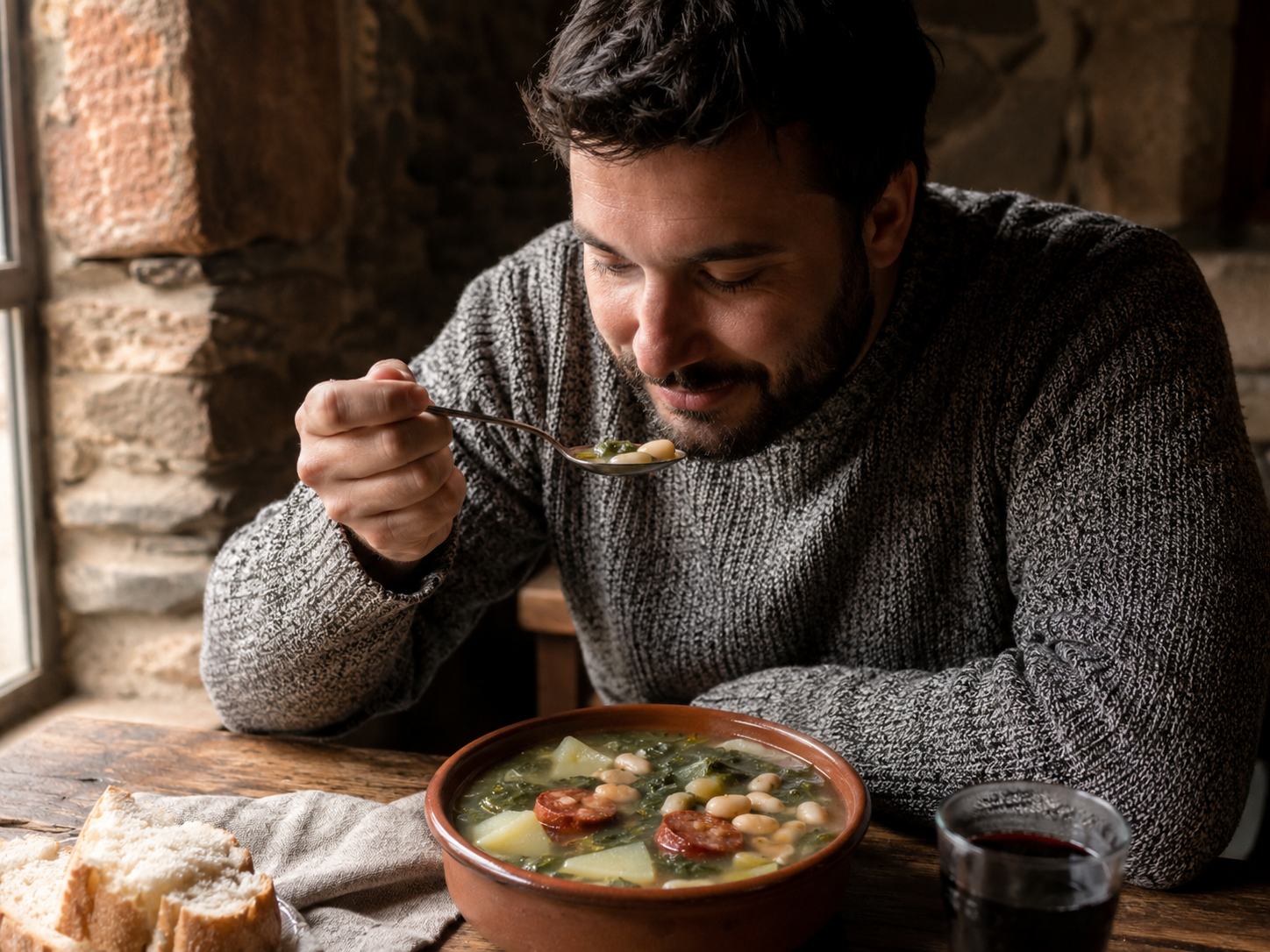
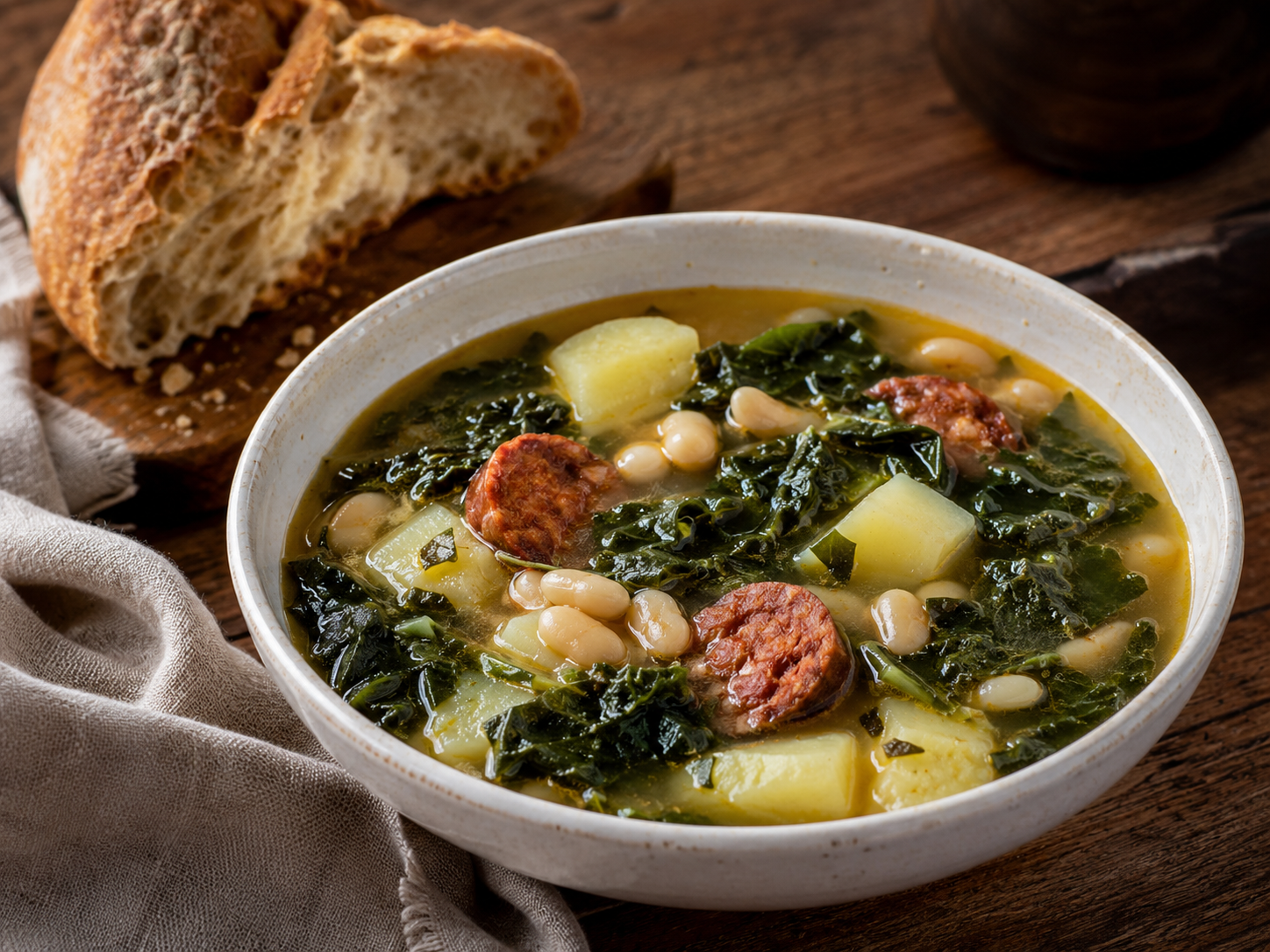
At its heart, caldo gallego is a soup of white beans, greens, and potato, given depth and body by pork, and every part of that description matters. The beans are the soul of it, traditionally the local white faba beans, cooked slow until they are creamy but still whole. They are what turns a thin vegetable broth into something that actually sustains a working body through a cold day. The greens are the character, most authentically grelos, the peppery turnip tops that grow through the Galician winter, though cabbage or kale stand in perfectly well when grelos are nowhere to be found outside Spain.
The pork is where the flavor lives, and it comes in more than one form: a piece of lacón, the cured pork shoulder that is Galicia’s answer to ham, some chorizo for color and a little smoke, and often a knuckle bone or a bit of pork rib to enrich the broth as it cooks. Binding all of it together, in the most traditional versions, is a spoonful of unto, cured and lightly aged pork fat that dissolves into the pot and gives caldo gallego its unmistakable depth, and that unto is the one ingredient nobody outside Galicia can easily find, which we will deal with honestly below. Get those four elements right, beans, greens, potato, and pork, and the soup more or less makes itself.
Why It Belongs to the End of Summer
Caldo gallego is a cold-weather soup, and there is a real logic to why it arrives exactly when the warmth leaves. Galicia is the green, wet, Atlantic corner of Spain, a place of long grey winters and a rain that the rest of the country jokes about, and its traditional food answers that climate directly, leaning toward the hot, the hearty, and the slow rather than the bright, quick dishes of the sunny south. When the tomatoes and peppers of summer fade and the turnip greens come into their own, the ingredients themselves tell you the season has turned.
There is also the rhythm of the farming year underneath it, because the pig was traditionally slaughtered and cured in the colder months, so the cured pork that flavors the pot was at its most plentiful just as the cold set in and the body most wanted it. So the soup is not arbitrary autumn comfort food; it is the direct edible result of what the land and the calendar handed a Galician family at that exact point in the year. Eating it in October in Galicia is eating the season itself, which is a large part of why it tastes the way it does, of place as much as of ingredients.
The One Ingredient You Will Have to Improvise
Let us be honest about the unto, because it is the authentic soul of the dish and it is also nearly impossible to buy outside Galicia. Unto is pork fat, salted and hung to cure and age until it turns faintly golden and takes on a distinct character, and a walnut-sized lump of it stirred into the pot is what gives a truly traditional caldo gallego its particular richness and its faint, savory funk. A Galician grandmother would no more skip it than she would skip the beans, and if you can find it in a specialist Spanish shop, use it and you will taste the difference immediately.
For everyone cooking outside Spain, though, the sensible substitution is a piece of good pancetta, a bit of unsmoked bacon, or simply letting the chorizo and lacón carry the fat and flavor on their own, which produces a soup that is genuinely excellent even if a purist would raise an eyebrow. The recipe below is built to be delicious without the unto, since insisting on an ingredient nobody can find would be a strange kind of authenticity, and the version most home cooks abroad make, leaning on chorizo and a good ham bone, is a soup worth eating in its own right. Chase the unto if you ever get to Galicia; do not let its absence stop you making the soup tonight.
How to Serve It, and What to Drink
Caldo gallego is a first course or, more often in a real Galician home, a whole modest meal in a bowl, and it asks for very little alongside it. What it genuinely needs is bread, and specifically the dense, chewy, thick-crusted pan gallego or any good rustic country loaf, because half the pleasure of the soup is tearing off bread to push through the broth and soak up what the spoon misses. A rough red wine, the kind Galicians drink from small white ceramic cups called cuncas, is the traditional partner, though the region’s crisp white albariño works beautifully too if you would rather.
Beyond the bread and the wine, it wants nothing, and that plainness is part of its dignity. This is not a dish you dress up or garnish or reinvent with a swirl of something on top; it is a bowl of honest, hot, filling food eaten at a plain table while the rain comes down outside, and any attempt to make it fancy misses the entire point of it. Make a big pot, because like most bean soups it is even better the second day once the flavors have had a night to settle, and it freezes well enough to pull winter out of the freezer whenever a grey afternoon demands it. In Galicia it is genuinely eaten this way, made in quantity on a Sunday and returned to through the week, each bowl a little deeper and rounder than the last as the beans keep giving themselves up to the broth. There is no shame at all in a soup that improves while you ignore it, and every reason to make twice what you think you need.
Variations Across Galicia
Like every dish this old, caldo gallego has no single correct version, and it shifts from valley to valley and house to house across Galicia. Some cooks leave the potato out entirely for a lighter, more brothy soup, while others load it in for something closer to a stew you could stand a spoon in, and both camps will tell you theirs is the real one. The greens change with what is growing, so grelos in the depths of winter give way to cabbage, kale, or the young turnip-top shoots called cimos at the edges of the season, and the soup takes on a slightly different character with each.
There is also a heartier cousin worth knowing, the pote gallego, which is essentially caldo gallego with more and larger pieces of meat added, chorizo and lacón and sometimes a bit of pork rib in generous quantity, tipping the whole thing from a soup toward a full winter feast. Where caldo is the everyday version, the modest bowl that feeds a family cheaply on a Tuesday, pote is what appears when there is a little more to spare or a reason to celebrate, and the line between the two is more a matter of abundance than of technique. Learn the basic caldo below and you have quietly learned the pote as well, since the difference is mostly in how much pork you are willing to spend.
A Few Notes Before You Start
Two small things make the difference between a good caldo gallego and a thin, sad one, and both are easy. The first is the beans, which must be dried white beans soaked overnight rather than tinned, because the long slow simmer of the dried beans is what thickens and flavors the broth, and tinned beans, added at the end, simply cannot build the same body. Soak them the night before in plenty of cold water, and factor in that the cooking will take a couple of unhurried hours, most of it unattended.
The second is salt, and specifically going easy on it early, because the lacón, the chorizo, and any ham bone are all cured and salty, and they release that salt into the pot as everything simmers together. Season properly only near the end, once the cured pork has given up its salt and you can taste the finished broth, or you risk a soup that is pleasant to make and impossible to eat. Beyond those two, caldo gallego is forgiving to the point of being foolproof, which is exactly what you want from a soup invented to feed a family cheaply through a long, wet winter.
The Recipe
Here is a straightforward, honest version built for a kitchen outside Galicia, without the unto but with all its heart. It serves a hungry family with leftovers, takes a little over two hours of mostly hands-off simmering, and rewards you the next day even more than the first.
Ingredients
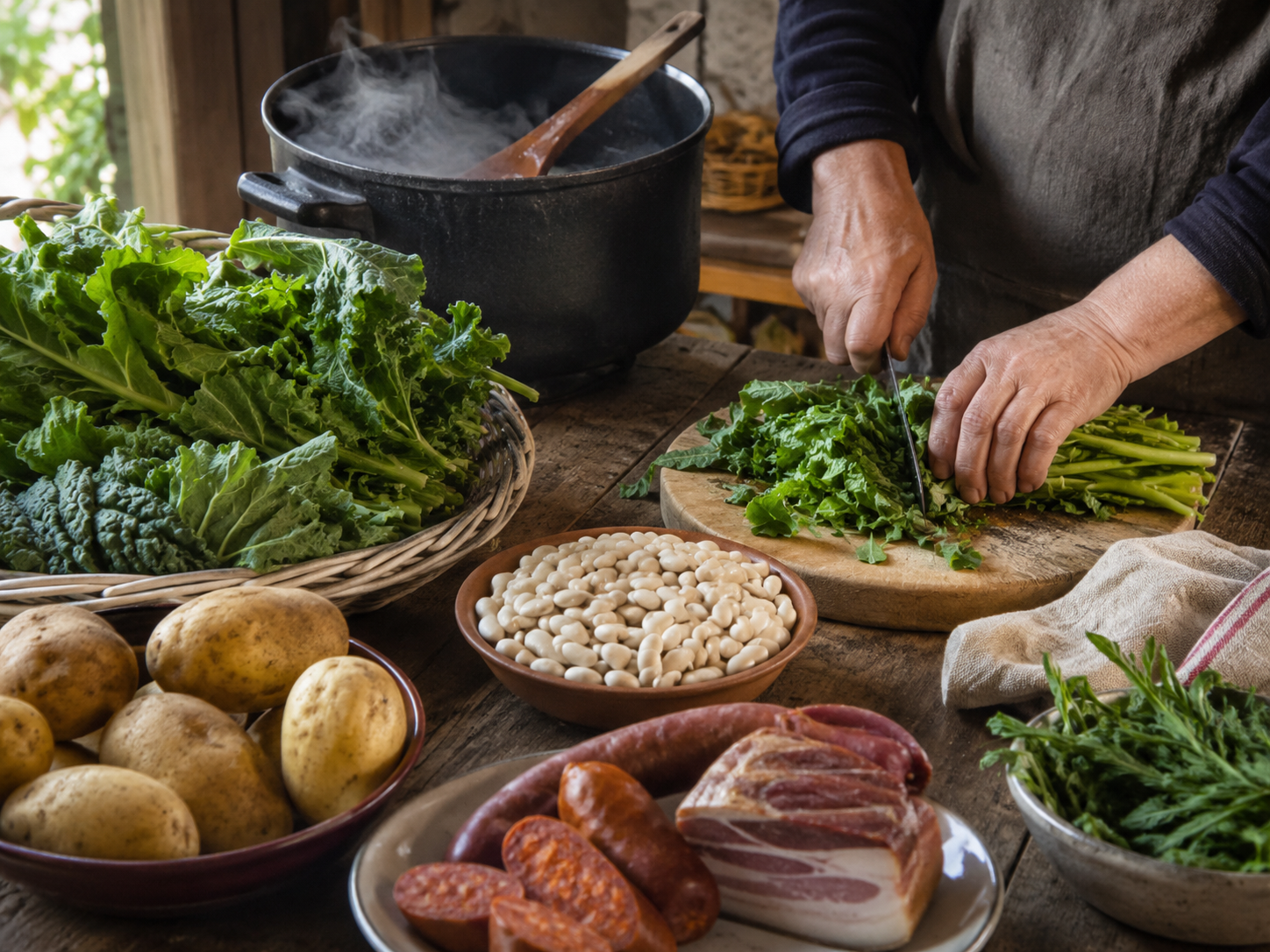
- 400 g dried white beans, soaked overnight, about 2 cups
- 300 g lacón or unsmoked cured pork shoulder, or a meaty ham bone, roughly 10 oz
- 2 chorizo sausages, the cooking kind, about 200 g
- 100 g pancetta or unsmoked bacon, in one piece, standing in for unto, about 3.5 oz
- 500 g potatoes, peeled and cut into rough chunks, about 1 lb
- 300 g grelos, or cabbage or kale, roughly chopped, about 10 oz
- 2.5 litres water, about 10 cups
- Salt, to taste, added only at the end
Instructions
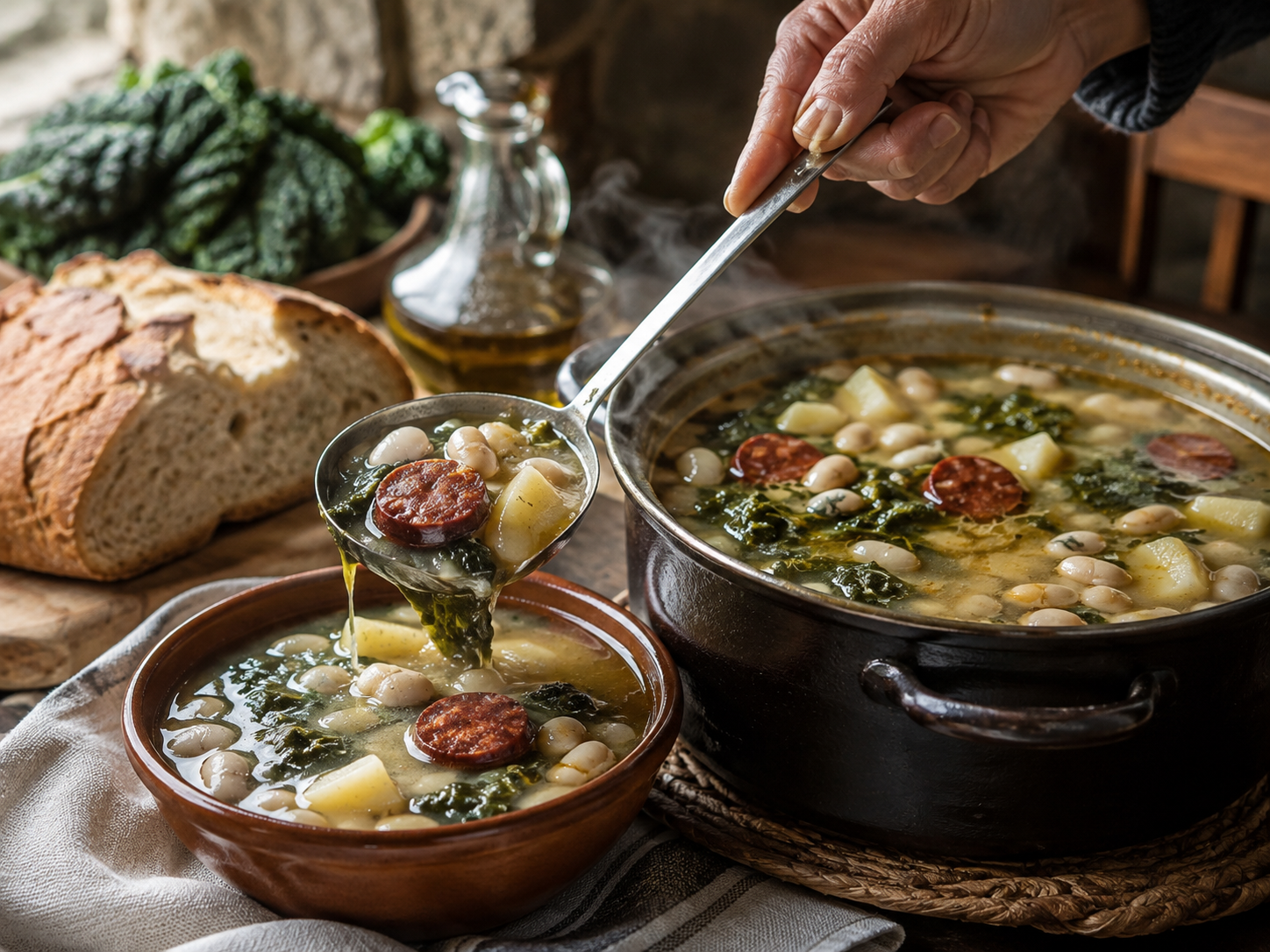
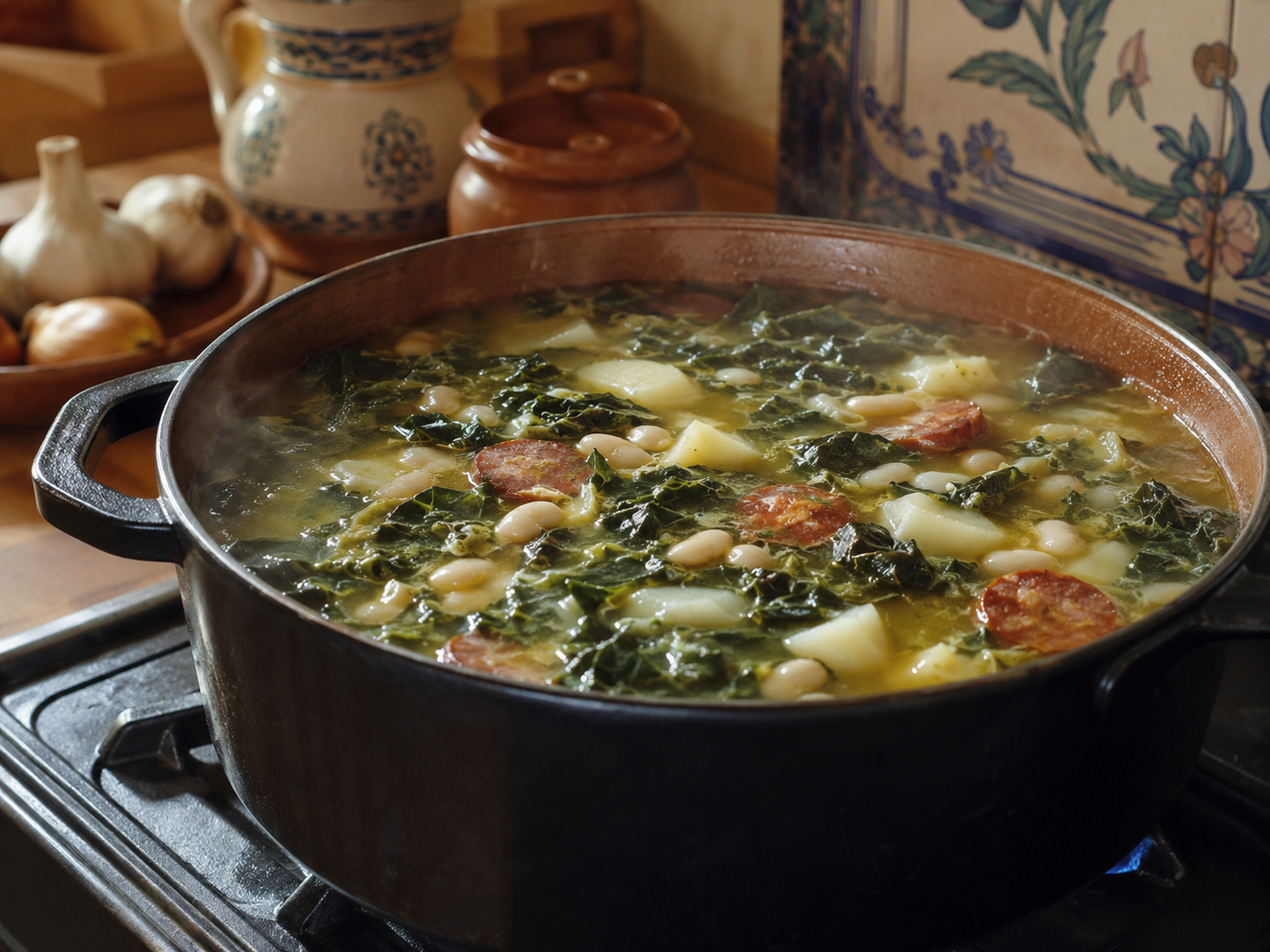
- Drain the soaked beans and put them in a large pot with the lacón or ham bone, the pancetta, and the cold water. Bring slowly to a boil, then skim off any foam that rises to the surface.
- Lower to a gentle simmer, cover partly, and cook for about 1 hour and 30 minutes, until the beans are turning tender. Keep an eye on the water level and top up with hot water if it drops below the beans.
- Add the whole chorizo sausages and the potato chunks, and simmer for another 20 minutes, until the potatoes are nearly soft and the chorizo has colored the broth a deep, appetizing red.
- Lift out the chorizo and the lacón or pork piece, slice or shred them into bite-sized pieces, discard any bone, and return the meat to the pot.
- Stir in the chopped grelos, cabbage, or kale, and simmer for a final 15 to 20 minutes, until the greens are tender but still green. If you like a thicker soup, crush a few of the beans against the side of the pot with a spoon.
- Now taste, and only now add salt as needed, remembering the cured pork has already salted the broth. Let it sit off the heat for ten minutes before serving, and serve very hot with plenty of rustic bread.
And of course the soup is yours to adjust once you know it, since every Galician family runs its own version with a little more of this and a little less of that, so treat the amounts above as a starting point rather than a rule, and make the pot the way your own table likes it.

About the Author: Ruben, co-founder of Gamintraveler.com since 2014, is a seasoned traveler from Spain who has explored over 100 countries since 2009. Known for his extensive travel adventures across South America, Europe, the US, Australia, New Zealand, Asia, and Africa, Ruben combines his passion for adventurous yet sustainable living with his love for cycling, highlighted by his remarkable 5-month bicycle journey from Spain to Norway. He currently resides in Spain, where he continues sharing his travel experiences with his partner, Rachel, and their son, Han.